-
【python项目推荐】键盘监控--统计打字频率
原文:https://greptime.com/blogs/2024-03-19-keyboard-monitoring
代码:https://github.com/GreptimeTeam/demo-scene/tree/main/keyboard-monitor项目简介
该项目实现了打字频率统计及可视化功能。
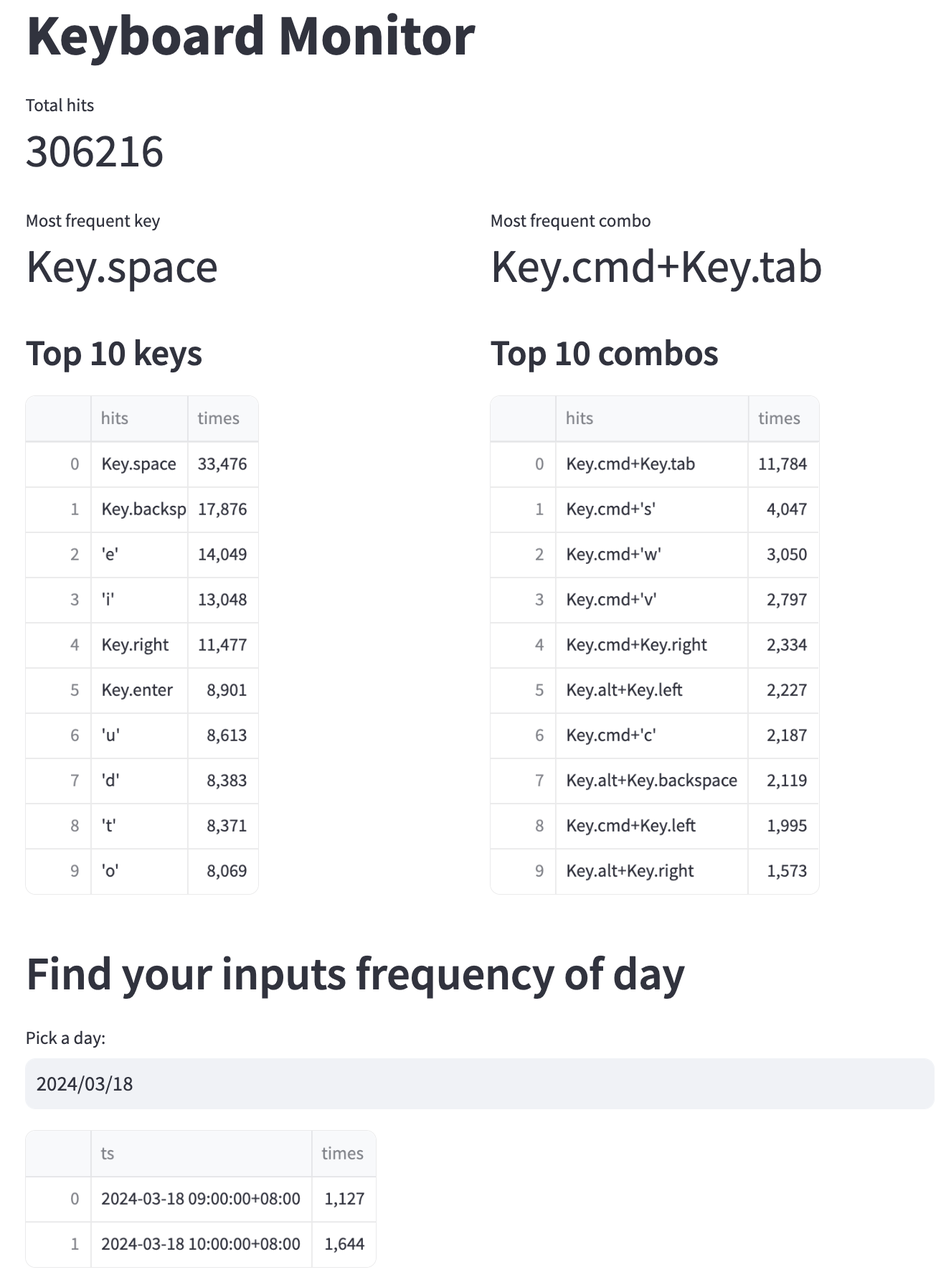
主要使用的库
pynput:允许您控制和监视输入设备。 这里我们用来获取键盘输入。
SQLAlchemy:数据库操作。 这里我们用来保存键盘输入。
streamlit:提供可视化界面。项目组成
agent.py :获得键盘输入 display.py:可视化- 1
- 2
补充说明
如果你不想用原文的数据库,也可以替换为本地的数据库,如免安装的
sqlite,agent.py# agent.py from dotenv import load_dotenv from pynput import keyboard from pynput.keyboard import Key import concurrent.futures import logging import os import queue import sqlalchemy import sqlalchemy.exc import sys import time MODIFIERS = { Key.shift, Key.shift_l, Key.shift_r, Key.alt, Key.alt_l, Key.alt_r, Key.alt_gr, Key.ctrl, Key.ctrl_l, Key.ctrl_r, Key.cmd, Key.cmd_l, Key.cmd_r, } TABLE = sqlalchemy.Table( 'keyboard_monitor', sqlalchemy.MetaData(), sqlalchemy.Column('hits', sqlalchemy.String), sqlalchemy.Column('ts', sqlalchemy.DateTime), ) if __name__ == '__main__': load_dotenv() log = logging.getLogger("agent") log.setLevel(logging.DEBUG) formatter = logging.Formatter('%(asctime)s %(levelname)s %(funcName)s %(message)s') file_handler = logging.FileHandler(f'agent-{time.time_ns()}.log', encoding='utf-8') file_handler.setLevel(logging.DEBUG) file_handler.setFormatter(formatter) stdout_handler = logging.StreamHandler(sys.stdout) stdout_handler.setLevel(logging.INFO) stdout_handler.setFormatter(formatter) log.addHandler(file_handler) log.addHandler(stdout_handler) #engine = sqlalchemy.create_engine(os.environ['DATABASE_URL'], # echo_pool=True, # isolation_level='AUTOCOMMIT') engine = sqlalchemy.create_engine("sqlite:///keyboard.db") current_modifiers = set() pending_hits = queue.Queue() cancel_signal = queue.Queue() def on_press(key): if key in MODIFIERS: current_modifiers.add(key) else: hits = sorted([ str(key) for key in current_modifiers ]) + [ str(key) ] hits = '+'.join(hits) pending_hits.put(hits) log.debug(f'{key} pressed, current_modifiers: {current_modifiers}') def on_release(key): if key in MODIFIERS: try: current_modifiers.remove(key) except KeyError: log.warning(f'Key {key} not in current_modifiers {current_modifiers}') log.debug(f'{key} released, current_modifiers: {current_modifiers}') #with engine.connect() as connection: # connection.execute(sqlalchemy.sql.text(""" # CREATE TABLE IF NOT EXISTS keyboard_monitor ( # hits STRING NULL, # ts TIMESTAMP(3) NOT NULL, # TIME INDEX ("ts") # ) ENGINE=mito WITH( regions = 1, ttl = '3months') # """)) # ... from sqlalchemy import create_engine, Table, Column, String, TIMESTAMP, MetaData, Index metadata = MetaData() keyboard_monitor = Table( 'keyboard_monitor', metadata, Column('hits', String, nullable=True), Column('ts', TIMESTAMP, nullable=False), ) metadata.create_all(engine) def sender_thread(): retries = 0 while True: hits = pending_hits.get() log.debug(f'got: {hits}') if hits is None: log.info("Exiting...") break with engine.connect() as connection: try: log.debug(f'sending: {hits}') connection.execute(TABLE.insert().values(hits=hits, ts=sqlalchemy.func.now())) connection.commit()# ... log.info(f'sent: {hits}') retries = 0 except sqlalchemy.exc.OperationalError as e: if retries >= 10: log.error(f'Retry exceeds. Operational error: {e}') pending_hits.put(hits) continue if e.connection_invalidated: log.warning(f'Connection invalidated: {e}') pending_hits.put(hits) continue msg = str(e) if "(1815, 'Internal error: 1000')" in msg: # TODO 1815 - should not handle internal error; # see https://github.com/GreptimeTeam/greptimedb/issues/3447 log.warning(f'Known operational error: {e}') pending_hits.put(hits) continue elif '2005' in msg and 'Unknown MySQL server host' in msg: log.warning(f'DNS temporary unresolved: {e}') pending_hits.put(hits) continue raise e finally: retries += 1 def listener_thread(): with keyboard.Listener(on_press=on_press, on_release=on_release) as listener: log.info("Listening...") cancel_signal.get() pending_hits.put(None) log.info("Exiting...") with concurrent.futures.ThreadPoolExecutor() as executor: sender = executor.submit(sender_thread) listener = executor.submit(listener_thread) try: f = concurrent.futures.wait([sender, listener], return_when=concurrent.futures.FIRST_EXCEPTION) for fut in f.done: log.error(f'Unhandled exception for futures: {fut.exception(timeout=0)}') except KeyboardInterrupt as e: log.info("KeyboardInterrupt. Exiting...") except Exception as e: log.error(f'Unhandled exception: {e}') finally: cancel_signal.put(True)- 1
- 2
- 3
- 4
- 5
- 6
- 7
- 8
- 9
- 10
- 11
- 12
- 13
- 14
- 15
- 16
- 17
- 18
- 19
- 20
- 21
- 22
- 23
- 24
- 25
- 26
- 27
- 28
- 29
- 30
- 31
- 32
- 33
- 34
- 35
- 36
- 37
- 38
- 39
- 40
- 41
- 42
- 43
- 44
- 45
- 46
- 47
- 48
- 49
- 50
- 51
- 52
- 53
- 54
- 55
- 56
- 57
- 58
- 59
- 60
- 61
- 62
- 63
- 64
- 65
- 66
- 67
- 68
- 69
- 70
- 71
- 72
- 73
- 74
- 75
- 76
- 77
- 78
- 79
- 80
- 81
- 82
- 83
- 84
- 85
- 86
- 87
- 88
- 89
- 90
- 91
- 92
- 93
- 94
- 95
- 96
- 97
- 98
- 99
- 100
- 101
- 102
- 103
- 104
- 105
- 106
- 107
- 108
- 109
- 110
- 111
- 112
- 113
- 114
- 115
- 116
- 117
- 118
- 119
- 120
- 121
- 122
- 123
- 124
- 125
- 126
- 127
- 128
- 129
- 130
- 131
- 132
- 133
- 134
- 135
- 136
- 137
- 138
- 139
- 140
- 141
- 142
- 143
- 144
- 145
- 146
- 147
- 148
- 149
- 150
- 151
- 152
- 153
- 154
- 155
- 156
- 157
display.py# display.py import datetime import os from dotenv import load_dotenv import pytz import streamlit as st import tzlocal import pandas st.title("Keyboard Monitor") load_dotenv() #conn = st.connection( ## type="sql", # url="sqlite:///keyboard.db", #) conn = st.connection('keyboard', type='sql', url="sqlite:///keyboard.db") df = conn.query("SELECT COUNT(*) AS total_hits FROM keyboard_monitor") st.metric("Total hits", df.total_hits[0]) most_frequent_key, most_frequent_combo = st.columns(2) df = conn.query(""" SELECT hits, COUNT(*) as times FROM keyboard_monitor WHERE hits NOT LIKE '%+%' GROUP BY hits ORDER BY times DESC limit 1; """) most_frequent_key.metric("Most frequent key", df.hits[0]) df = conn.query(""" SELECT hits, COUNT(*) as times FROM keyboard_monitor WHERE hits LIKE '%+%' GROUP BY hits ORDER BY times DESC limit 1; """) most_frequent_combo.metric("Most frequent combo", df.hits[0]) top_frequent_keys, top_frequent_combos = st.columns(2) df = conn.query(""" SELECT hits, COUNT(*) as times FROM keyboard_monitor WHERE hits NOT LIKE '%+%' GROUP BY hits ORDER BY times DESC limit 10; """) top_frequent_keys.subheader("Top 10 keys") top_frequent_keys.dataframe(df) df = conn.query(""" SELECT hits, COUNT(*) as times FROM keyboard_monitor WHERE hits LIKE '%+%' GROUP BY hits ORDER BY times DESC limit 10; """) top_frequent_combos.subheader("Top 10 combos") top_frequent_combos.dataframe(df) st.header("Find your inputs frequency of day") local_tz = tzlocal.get_localzone() hours = int(local_tz.utcoffset(datetime.datetime.now()).total_seconds() / 3600) if hours > 0: offset = f" + INTERVAL '{hours} hours'" elif hours < 0: offset = f" - INTERVAL '{hours} hours'" else: offset = '' d = st.date_input("Pick a day:", value=datetime.date.today()) query = f""" SELECT ts, COUNT(1) AS times FROM keyboard_monitor WHERE strftime('%Y-%m-%d', ts, 'localtime') = '{d}' GROUP BY strftime('%Y-%m-%d %H:00:00', ts) ORDER BY ts ASC LIMIT 10; """ df = conn.query(query) #print(df.keys()) df['ts'] = pandas.to_datetime(df['ts']) df['ts'] = df['ts'].dt.tz_localize(pytz.utc).dt.tz_convert(local_tz) st.dataframe(df)- 1
- 2
- 3
- 4
- 5
- 6
- 7
- 8
- 9
- 10
- 11
- 12
- 13
- 14
- 15
- 16
- 17
- 18
- 19
- 20
- 21
- 22
- 23
- 24
- 25
- 26
- 27
- 28
- 29
- 30
- 31
- 32
- 33
- 34
- 35
- 36
- 37
- 38
- 39
- 40
- 41
- 42
- 43
- 44
- 45
- 46
- 47
- 48
- 49
- 50
- 51
- 52
- 53
- 54
- 55
- 56
- 57
- 58
- 59
- 60
- 61
- 62
- 63
- 64
- 65
- 66
- 67
- 68
- 69
- 70
- 71
- 72
- 73
- 74
- 75
- 76
- 77
- 78
- 79
- 80
- 81
- 82
- 83
- 84
- 85
- 86
-
相关阅读:
tmux 命令快速入门
linux系统调用拦截Centos7.6(三)の内核调用拦截
Flink之Watermark策略代码模板
APP广告变现如何确定人均最佳广告展示频次?
博弈论——反应函数
NR 物理层 卷积|狄拉克函数 2- 狄拉克函数和傅里叶变换
matplotlib绘制动态正弦曲线
C# WPF入门学习主线篇(二十)—— 资源和样式
QML SplitView
MFC文本输出学习
- 原文地址:https://blog.csdn.net/qq_41068877/article/details/137727166

- 最新文章
-
沪漂五周年了:我越来越迷茫了
Agentic Skill Routing 实战:别再把所有 Skill 塞进 AI Agent 上下文
MySQL-Seconds_behind_master的精度误差
[MAF预定义ChatClient中间件-03]CachingChatClient——利用缓存省钱省时间
AI的至暗历史:从万众期待到被政府撤资,AI的两次死亡徘徊
Agent OS :五种驯服不确定性的范式
PortSwigger SQL注入LAB11
数据库即时编译JIT
[Begin]AI Learn Data Day 0
深度学习进阶(二十七)现代 LLM 的核心架构设计其二:SwiGLU