-
LeetCode反转链表的五种Java实现方式
给你单链表的头节点
head,请你反转链表,并返回反转后的链表。示例 1:
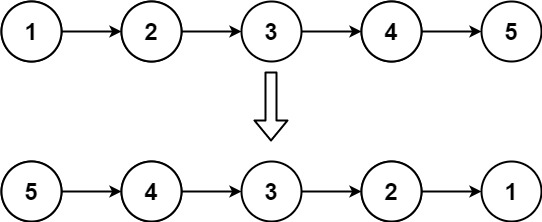
输入:head = [1,2,3,4,5]
输出:[5,4,3,2,1]
示例 2:

输入:head = [1,2]
输出:[2,1]
示例 3:
输入:head = []
输出:[]
提示:
- 链表中节点的数目范围是
[0, 5000] -5000 <= Node.val <= 5000
方法一
创建一个新链表,遍历旧链表中的数据并将其放入新链表的头部。实现方式如下
- class Solution {
- public ListNode reverseList(ListNode head) {
- //创建一个新链表,将旧链表的头部放入新链表头部
- ListNode o1 = null;
- ListNode p = head;
- while(p!=null){
- o1=new ListNode(p.val,o1);
- p= p.next;
- }
- return o1;
- }
- }
方法二
构造一个新链表,从旧链表头部移除节点,添加到新链表头部。与方法一的区别在于,没有新创建节点。
- class Solution {
- public ListNode reverseList(ListNode head) {
- //旧节点
- Link o1 = new Link(head);
- Link o2 = new Link(null);
- while(true){
- ListNode first = o1.removeFirst();
- if(first==null){
- break;
- }
- o2.addFirst(first);
- }
- return o2.head;
- }
- static class Link{
- private ListNode head;
- public Link(ListNode head){
- this.head = head;
- }
- //传入新链表
- public void addFirst(ListNode first){
- first.next=head;
- head=first;
- }
- public ListNode removeFirst(){
- ListNode first =head;
- if(first!=null){
- //说明还存在节点
- head = head.next;
- }
- return first;
- }
- }
- }
方法三
采用递归思想,遍历到最后节点后,将最后一个节点指向上一个节点。
图示如下:

代码实现如下
- class Solution {
- public ListNode reverseList(ListNode head) {
- if(head == null||head.next == null){
- return head;
- }
- //list作为头节点
- ListNode list = reverseList(head.next);
- //将当前节点作为list的最后一个节点
- head.next.next = head;
- //取消掉旧链表中的连接关系
- head.next =null;
- return list;
- }
- }
方法四
从链表每次拿到第二个节点,将其从链表断开,插入头部,直至它为 null 结束
图示如下

代码实现如下
- class Solution {
- public ListNode reverseList(ListNode head) {
- if(head==null || head.next==null){
- return head;
- }
- ListNode poniter = head.next;
- //用来充当头节点
- ListNode p = head;
- //不停的将第二个节点插入该链表的头部
- while(poniter!=null){
- //头节点指向第三个节点
- head.next = poniter.next;
- //第二个节点更改为头节点
- poniter.next = p;
- //将p指向当前链表的头部
- p = poniter;
- //pointer指向移动后原链表的第二个节点
- poniter = head.next;
- }
- return p;
- }
- }
方法五
把链表分成两部分,思路就是不断从链表2的头,往链表1的头搬移
图示如下:

代码实现如下
- class Solution {
- public ListNode reverseList(ListNode head) {
- if(head == null){
- return head;
- }
- ListNode p = null;
- while(head!=null){
- //第二个节点
- ListNode pointer = head.next;
- head.next = p;
- p = head;
- head = pointer;
- }
- return p;
- }
- }
- 链表中节点的数目范围是
-
相关阅读:
ssh 公钥和密钥
Nginx配置文件详解
React中插槽处理机制
Unity LayerMask 的切换功能的实现
软件工程中如何设计测试用例
【面试经典150 | 区间】合并区间
二十一、CANdelaStudio深入-SPRMIB的配置
【代码随想录】Day 50 动态规划11 (买卖股票Ⅲ、Ⅳ)
leetcode237 删除链表中的节点
每天一个前端小知识
- 原文地址:https://blog.csdn.net/zmbwcx/article/details/134408021
