-
YOLOv5 添加 OTA,并使用 coco、CrowdHuman数据集进行训练。
YOLO-OTA
第一步:拉取 YOLOv5 的代码
git clone https://github.com/ultralytics/yolov5.git- 1
第二步:添加 ComputeLossOTA 函数
打开 utils/loss.py 文件,向其中添加下面的部分:
import torch.nn.functional as F from utils.metrics import box_iou from utils.torch_utils import de_parallel from utils.general import xywh2xyxy class ComputeLossOTA: # Compute losses def __init__(self, model, autobalance=False): super(ComputeLossOTA, self).__init__() device = next(model.parameters()).device # get model device h = model.hyp # hyperparameters # Define criteria BCEcls = nn.BCEWithLogitsLoss(pos_weight=torch.tensor([h['cls_pw']], device=device)) BCEobj = nn.BCEWithLogitsLoss(pos_weight=torch.tensor([h['obj_pw']], device=device)) # Class label smoothing https://arxiv.org/pdf/1902.04103.pdf eqn 3 self.cp, self.cn = smooth_BCE(eps=h.get('label_smoothing', 0.0)) # positive, negative BCE targets # Focal loss g = h['fl_gamma'] # focal loss gamma if g > 0: BCEcls, BCEobj = FocalLoss(BCEcls, g), FocalLoss(BCEobj, g) det = de_parallel(model).model[-1] # Detect() module self.balance = {3: [4.0, 1.0, 0.4]}.get(det.nl, [4.0, 1.0, 0.25, 0.06, .02]) # P3-P7 self.ssi = list(det.stride).index(16) if autobalance else 0 # stride 16 index self.BCEcls, self.BCEobj, self.gr, self.hyp, self.autobalance = BCEcls, BCEobj, 1.0, h, autobalance for k in 'na', 'nc', 'nl', 'anchors', 'stride': setattr(self, k, getattr(det, k)) def __call__(self, p, targets, imgs): # predictions, targets, model device = targets.device lcls, lbox, lobj = torch.zeros(1, device=device), torch.zeros(1, device=device), torch.zeros(1, device=device) bs, as_, gjs, gis, targets, anchors = self.build_targets(p, targets, imgs) pre_gen_gains = [torch.tensor(pp.shape, device=device)[[3, 2, 3, 2]] for pp in p] # Losses for i, pi in enumerate(p): # layer index, layer predictions b, a, gj, gi = bs[i], as_[i], gjs[i], gis[i] # image, anchor, gridy, gridx tobj = torch.zeros_like(pi[..., 0], device=device) # target obj n = b.shape[0] # number of targets if n: ps = pi[b, a, gj, gi] # prediction subset corresponding to targets # Regression grid = torch.stack([gi, gj], dim=1) pxy = ps[:, :2].sigmoid() * 2. - 0.5 #pxy = ps[:, :2].sigmoid() * 3. - 1. pwh = (ps[:, 2:4].sigmoid() * 2) ** 2 * anchors[i] pbox = torch.cat((pxy, pwh), 1) # predicted box selected_tbox = targets[i][:, 2:6] * pre_gen_gains[i] selected_tbox[:, :2] -= grid iou = bbox_iou(pbox, selected_tbox, CIoU=True) # iou(prediction, target) if type(iou) is tuple: lbox += (iou[1].detach() * (1 - iou[0])).mean() iou = iou[0] else: lbox += (1.0 - iou).mean() # iou loss # Objectness tobj[b, a, gj, gi] = (1.0 - self.gr) + self.gr * iou.detach().clamp(0).type(tobj.dtype) # iou ratio # Classification selected_tcls = targets[i][:, 1].long() if self.nc > 1: # cls loss (only if multiple classes) t = torch.full_like(ps[:, 5:], self.cn, device=device) # targets t[range(n), selected_tcls] = self.cp lcls += self.BCEcls(ps[:, 5:], t) # BCE # Append targets to text file # with open('targets.txt', 'a') as file: # [file.write('%11.5g ' * 4 % tuple(x) + '\n') for x in torch.cat((txy[i], twh[i]), 1)] obji = self.BCEobj(pi[..., 4], tobj) lobj += obji * self.balance[i] # obj loss if self.autobalance: self.balance[i] = self.balance[i] * 0.9999 + 0.0001 / obji.detach().item() if self.autobalance: self.balance = [x / self.balance[self.ssi] for x in self.balance] lbox *= self.hyp['box'] lobj *= self.hyp['obj'] lcls *= self.hyp['cls'] bs = tobj.shape[0] # batch size loss = lbox + lobj + lcls return loss * bs, torch.cat((lbox, lobj, lcls)).detach() def build_targets(self, p, targets, imgs): indices, anch = self.find_3_positive(p, targets) device = torch.device(targets.device) matching_bs = [[] for pp in p] matching_as = [[] for pp in p] matching_gjs = [[] for pp in p] matching_gis = [[] for pp in p] matching_targets = [[] for pp in p] matching_anchs = [[] for pp in p] nl = len(p) for batch_idx in range(p[0].shape[0]): b_idx = targets[:, 0]==batch_idx this_target = targets[b_idx] if this_target.shape[0] == 0: continue txywh = this_target[:, 2:6] * imgs[batch_idx].shape[1] txyxy = xywh2xyxy(txywh) pxyxys = [] p_cls = [] p_obj = [] from_which_layer = [] all_b = [] all_a = [] all_gj = [] all_gi = [] all_anch = [] for i, pi in enumerate(p): b, a, gj, gi = indices[i] idx = (b == batch_idx) b, a, gj, gi = b[idx], a[idx], gj[idx], gi[idx] all_b.append(b) all_a.append(a) all_gj.append(gj) all_gi.append(gi) all_anch.append(anch[i][idx]) from_which_layer.append((torch.ones(size=(len(b),)) * i).to(device)) fg_pred = pi[b, a, gj, gi] p_obj.append(fg_pred[:, 4:5]) p_cls.append(fg_pred[:, 5:]) grid = torch.stack([gi, gj], dim=1) pxy = (fg_pred[:, :2].sigmoid() * 2. - 0.5 + grid) * self.stride[i] #/ 8. #pxy = (fg_pred[:, :2].sigmoid() * 3. - 1. + grid) * self.stride[i] pwh = (fg_pred[:, 2:4].sigmoid() * 2) ** 2 * anch[i][idx] * self.stride[i] #/ 8. pxywh = torch.cat([pxy, pwh], dim=-1) pxyxy = xywh2xyxy(pxywh) pxyxys.append(pxyxy) pxyxys = torch.cat(pxyxys, dim=0) if pxyxys.shape[0] == 0: continue p_obj = torch.cat(p_obj, dim=0) p_cls = torch.cat(p_cls, dim=0) from_which_layer = torch.cat(from_which_layer, dim=0) all_b = torch.cat(all_b, dim=0) all_a = torch.cat(all_a, dim=0) all_gj = torch.cat(all_gj, dim=0) all_gi = torch.cat(all_gi, dim=0) all_anch = torch.cat(all_anch, dim=0) pair_wise_iou = box_iou(txyxy, pxyxys) pair_wise_iou_loss = -torch.log(pair_wise_iou + 1e-8) top_k, _ = torch.topk(pair_wise_iou, min(10, pair_wise_iou.shape[1]), dim=1) dynamic_ks = torch.clamp(top_k.sum(1).int(), min=1) gt_cls_per_image = ( F.one_hot(this_target[:, 1].to(torch.int64), self.nc) .float() .unsqueeze(1) .repeat(1, pxyxys.shape[0], 1) ) num_gt = this_target.shape[0] cls_preds_ = ( p_cls.float().unsqueeze(0).repeat(num_gt, 1, 1).sigmoid_() * p_obj.unsqueeze(0).repeat(num_gt, 1, 1).sigmoid_() ) y = cls_preds_.sqrt_() pair_wise_cls_loss = F.binary_cross_entropy_with_logits( torch.log(y/(1-y)) , gt_cls_per_image, reduction="none" ).sum(-1) del cls_preds_ cost = ( pair_wise_cls_loss + 3.0 * pair_wise_iou_loss ) matching_matrix = torch.zeros_like(cost, device=device) for gt_idx in range(num_gt): _, pos_idx = torch.topk( cost[gt_idx], k=dynamic_ks[gt_idx].item(), largest=False ) matching_matrix[gt_idx][pos_idx] = 1.0 del top_k, dynamic_ks anchor_matching_gt = matching_matrix.sum(0) if (anchor_matching_gt > 1).sum() > 0: _, cost_argmin = torch.min(cost[:, anchor_matching_gt > 1], dim=0) matching_matrix[:, anchor_matching_gt > 1] *= 0.0 matching_matrix[cost_argmin, anchor_matching_gt > 1] = 1.0 fg_mask_inboxes = (matching_matrix.sum(0) > 0.0).to(device) matched_gt_inds = matching_matrix[:, fg_mask_inboxes].argmax(0) from_which_layer = from_which_layer[fg_mask_inboxes] all_b = all_b[fg_mask_inboxes] all_a = all_a[fg_mask_inboxes] all_gj = all_gj[fg_mask_inboxes] all_gi = all_gi[fg_mask_inboxes] all_anch = all_anch[fg_mask_inboxes] this_target = this_target[matched_gt_inds] for i in range(nl): layer_idx = from_which_layer == i matching_bs[i].append(all_b[layer_idx]) matching_as[i].append(all_a[layer_idx]) matching_gjs[i].append(all_gj[layer_idx]) matching_gis[i].append(all_gi[layer_idx]) matching_targets[i].append(this_target[layer_idx]) matching_anchs[i].append(all_anch[layer_idx]) for i in range(nl): if matching_targets[i] != []: matching_bs[i] = torch.cat(matching_bs[i], dim=0) matching_as[i] = torch.cat(matching_as[i], dim=0) matching_gjs[i] = torch.cat(matching_gjs[i], dim=0) matching_gis[i] = torch.cat(matching_gis[i], dim=0) matching_targets[i] = torch.cat(matching_targets[i], dim=0) matching_anchs[i] = torch.cat(matching_anchs[i], dim=0) else: matching_bs[i] = torch.tensor([], device='cuda:0', dtype=torch.int64) matching_as[i] = torch.tensor([], device='cuda:0', dtype=torch.int64) matching_gjs[i] = torch.tensor([], device='cuda:0', dtype=torch.int64) matching_gis[i] = torch.tensor([], device='cuda:0', dtype=torch.int64) matching_targets[i] = torch.tensor([], device='cuda:0', dtype=torch.int64) matching_anchs[i] = torch.tensor([], device='cuda:0', dtype=torch.int64) return matching_bs, matching_as, matching_gjs, matching_gis, matching_targets, matching_anchs def find_3_positive(self, p, targets): # Build targets for compute_loss(), input targets(image,class,x,y,w,h) na, nt = self.na, targets.shape[0] # number of anchors, targets indices, anch = [], [] gain = torch.ones(7, device=targets.device).long() # normalized to gridspace gain ai = torch.arange(na, device=targets.device).float().view(na, 1).repeat(1, nt) # same as .repeat_interleave(nt) targets = torch.cat((targets.repeat(na, 1, 1), ai[:, :, None]), 2) # append anchor indices g = 0.5 # bias off = torch.tensor([[0, 0], [1, 0], [0, 1], [-1, 0], [0, -1], # j,k,l,m # [1, 1], [1, -1], [-1, 1], [-1, -1], # jk,jm,lk,lm ], device=targets.device).float() * g # offsets for i in range(self.nl): anchors = self.anchors[i] gain[2:6] = torch.tensor(p[i].shape)[[3, 2, 3, 2]] # xyxy gain # Match targets to anchors t = targets * gain if nt: # Matches r = t[:, :, 4:6] / anchors[:, None] # wh ratio j = torch.max(r, 1. / r).max(2)[0] < self.hyp['anchor_t'] # compare # j = wh_iou(anchors, t[:, 4:6]) > model.hyp['iou_t'] # iou(3,n)=wh_iou(anchors(3,2), gwh(n,2)) t = t[j] # filter # Offsets gxy = t[:, 2:4] # grid xy gxi = gain[[2, 3]] - gxy # inverse j, k = ((gxy % 1. < g) & (gxy > 1.)).T l, m = ((gxi % 1. < g) & (gxi > 1.)).T j = torch.stack((torch.ones_like(j), j, k, l, m)) t = t.repeat((5, 1, 1))[j] offsets = (torch.zeros_like(gxy)[None] + off[:, None])[j] else: t = targets[0] offsets = 0 # Define b, c = t[:, :2].long().T # image, class gxy = t[:, 2:4] # grid xy gwh = t[:, 4:6] # grid wh gij = (gxy - offsets).long() gi, gj = gij.T # grid xy indices # Append a = t[:, 6].long() # anchor indices indices.append((b, a, gj.clamp_(0, gain[3] - 1), gi.clamp_(0, gain[2] - 1))) # image, anchor, grid indices anch.append(anchors[a]) # anchors return indices, anch- 1
- 2
- 3
- 4
- 5
- 6
- 7
- 8
- 9
- 10
- 11
- 12
- 13
- 14
- 15
- 16
- 17
- 18
- 19
- 20
- 21
- 22
- 23
- 24
- 25
- 26
- 27
- 28
- 29
- 30
- 31
- 32
- 33
- 34
- 35
- 36
- 37
- 38
- 39
- 40
- 41
- 42
- 43
- 44
- 45
- 46
- 47
- 48
- 49
- 50
- 51
- 52
- 53
- 54
- 55
- 56
- 57
- 58
- 59
- 60
- 61
- 62
- 63
- 64
- 65
- 66
- 67
- 68
- 69
- 70
- 71
- 72
- 73
- 74
- 75
- 76
- 77
- 78
- 79
- 80
- 81
- 82
- 83
- 84
- 85
- 86
- 87
- 88
- 89
- 90
- 91
- 92
- 93
- 94
- 95
- 96
- 97
- 98
- 99
- 100
- 101
- 102
- 103
- 104
- 105
- 106
- 107
- 108
- 109
- 110
- 111
- 112
- 113
- 114
- 115
- 116
- 117
- 118
- 119
- 120
- 121
- 122
- 123
- 124
- 125
- 126
- 127
- 128
- 129
- 130
- 131
- 132
- 133
- 134
- 135
- 136
- 137
- 138
- 139
- 140
- 141
- 142
- 143
- 144
- 145
- 146
- 147
- 148
- 149
- 150
- 151
- 152
- 153
- 154
- 155
- 156
- 157
- 158
- 159
- 160
- 161
- 162
- 163
- 164
- 165
- 166
- 167
- 168
- 169
- 170
- 171
- 172
- 173
- 174
- 175
- 176
- 177
- 178
- 179
- 180
- 181
- 182
- 183
- 184
- 185
- 186
- 187
- 188
- 189
- 190
- 191
- 192
- 193
- 194
- 195
- 196
- 197
- 198
- 199
- 200
- 201
- 202
- 203
- 204
- 205
- 206
- 207
- 208
- 209
- 210
- 211
- 212
- 213
- 214
- 215
- 216
- 217
- 218
- 219
- 220
- 221
- 222
- 223
- 224
- 225
- 226
- 227
- 228
- 229
- 230
- 231
- 232
- 233
- 234
- 235
- 236
- 237
- 238
- 239
- 240
- 241
- 242
- 243
- 244
- 245
- 246
- 247
- 248
- 249
- 250
- 251
- 252
- 253
- 254
- 255
- 256
- 257
- 258
- 259
- 260
- 261
- 262
- 263
- 264
- 265
- 266
- 267
- 268
- 269
- 270
- 271
- 272
- 273
- 274
- 275
- 276
- 277
- 278
- 279
- 280
- 281
- 282
- 283
- 284
- 285
- 286
- 287
- 288
- 289
- 290
- 291
- 292
- 293
- 294
- 295
第二步:修改 train 和 val 中损失函数为 ComputeLossOTA 函数
1、在 train.py 中 首先添加 ComputeLossOTA 库。
# 63 行 from utils.loss import ComputeLoss, ComputeLossOTA- 1
- 2
2、在 train.py 修改初始化的损失函数
# 263 行 if opt.losstype == "normloss": compute_loss = ComputeLoss(model) # init loss class elif opt.losstype == "otaloss": compute_loss = ComputeLossOTA(model) # init loss class- 1
- 2
- 3
- 4
- 5
3、在 train.py 修改一些必要的参数
因为 OTA 需要图片为收入,所以 ComputeLossOTA 和 ComputeLoss 相比,需要添加 imgs 为输入。
# 319 行 if opt.losstype == "normloss": loss, loss_items = compute_loss(pred, targets.to(device)) # loss scaled by batch_size elif opt.losstype == "otaloss": loss, loss_items = compute_loss(pred, targets.to(device), imgs) # loss scaled by batch_size- 1
- 2
- 3
- 4
- 5
4、修改一下 parser 参数,方便控制是否使用 OTALOSS
parser.add_argument('--losstype', type=str, default="normloss", help='choose loss type: loss otaloss')- 1
5、在 val.py 中修改一些必要的参数
# 212 行 # Loss if compute_loss: # loss += compute_loss(train_out, targets)[1] # box, obj, cls loss += compute_loss(train_out, targets, im)[1] # box, obj, cls- 1
- 2
- 3
- 4
- 5
开始训练
下载的话权重,去官网下载你需要的模型的权重。 如:yolov5s.pt
训练 coco128 数据集
Usage - Single-GPU training: $ python train.py --data coco128.yaml --weights yolov5s.pt --img 640 # from pretrained (recommended) $ python train.py --data coco128.yaml --weights '' --cfg yolov5s.yaml --img 640 # from scratch # 使用 OTA $ python train.py --data coco128.yaml --weights yolov5s.pt -losstype otaloss # from pretrained (recommended) -losstype otaloss $ python train.py --data coco128.yaml --weights '' --cfg yolov5s.yaml -losstype otaloss # from scratch Usage - Multi-GPU DDP training: $ python -m torch.distributed.run --nproc_per_node 4 --master_port 1 train.py --data coco128.yaml --weights yolov5s.pt --img 640 --device 0,1,2,3- 1
- 2
- 3
- 4
- 5
- 6
- 7
- 8
- 9
训练图片一个batch_size 如下:
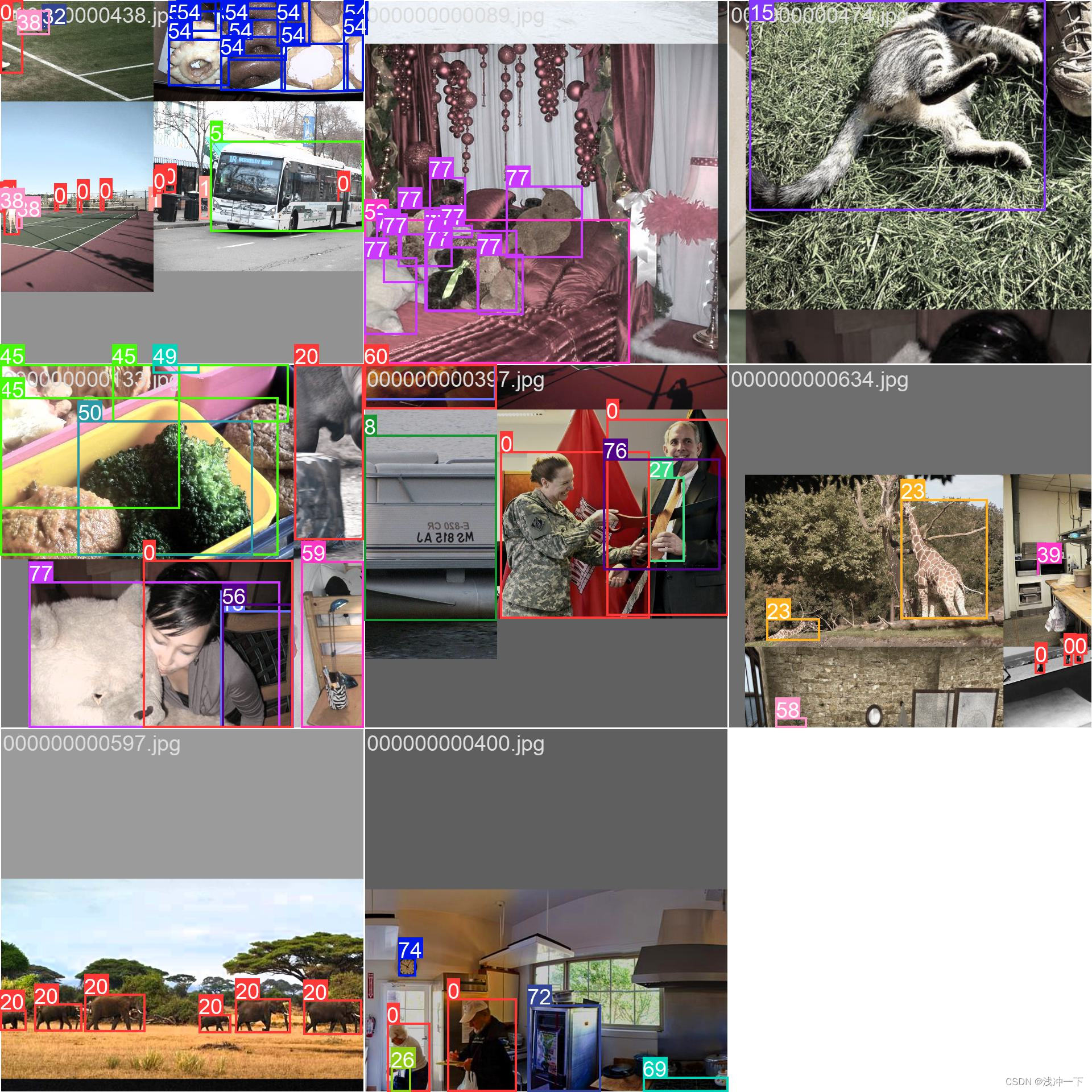
训练 coco 数据集
使用 coco 进行训练的命令如下:
Usage - Single-GPU training: $ python train.py --data coco.yaml --weights yolov5s.pt --img 640 # from pretrained (recommended) $ python train.py --data coco.yaml --weights '' --cfg yolov5s.yaml --img 640 # from scratch Usage - Multi-GPU DDP training: $ python -m torch.distributed.run --nproc_per_node 4 --master_port 1 train.py --data coco.yaml --weights yolov5s.pt --img 640 --device 0,1,2,3- 1
- 2
- 3
- 4
- 5
- 6
没有下载 coco 的话,这个命令会自动下载。最好在coco数据集里面自己新建一个 coco.ymal,内容可填写如下:
# COCO 2017 dataset http://cocodataset.org # download command/URL (optional) # download: bash ./scripts/get_coco.sh # train and val data as 1) directory: path/images/, 2) file: path/images.txt, or 3) list: [path1/images/, path2/images/] train: /home/adr/Desktop/Code/Python/2D/datasets/coco/train2017.txt # 118287 images val: /home/adr/Desktop/Code/Python/2D/datasets/coco/val2017.txt # 5000 images test: /home/adr/Desktop/Code/Python/2D/datasets/coco/test-dev2017.txt # 20288 of 40670 images, submit to https://competitions.codalab.org/competitions/20794 # number of classes nc: 80 # class names names: [ 'person', 'bicycle', 'car', 'motorcycle', 'airplane', 'bus', 'train', 'truck', 'boat', 'traffic light', 'fire hydrant', 'stop sign', 'parking meter', 'bench', 'bird', 'cat', 'dog', 'horse', 'sheep', 'cow', 'elephant', 'bear', 'zebra', 'giraffe', 'backpack', 'umbrella', 'handbag', 'tie', 'suitcase', 'frisbee', 'skis', 'snowboard', 'sports ball', 'kite', 'baseball bat', 'baseball glove', 'skateboard', 'surfboard', 'tennis racket', 'bottle', 'wine glass', 'cup', 'fork', 'knife', 'spoon', 'bowl', 'banana', 'apple', 'sandwich', 'orange', 'broccoli', 'carrot', 'hot dog', 'pizza', 'donut', 'cake', 'chair', 'couch', 'potted plant', 'bed', 'dining table', 'toilet', 'tv', 'laptop', 'mouse', 'remote', 'keyboard', 'cell phone', 'microwave', 'oven', 'toaster', 'sink', 'refrigerator', 'book', 'clock', 'vase', 'scissors', 'teddy bear', 'hair drier', 'toothbrush' ]- 1
- 2
- 3
- 4
- 5
- 6
- 7
- 8
- 9
- 10
- 11
- 12
- 13
- 14
- 15
- 16
- 17
- 18
- 19
- 20
- 21
- 22
- 23
这样使用其他 yolo 版本训练的时候,只需要把这个 coco.yaml 的文件的绝对路径给它也行。
python train.py --data /home/adr/Desktop/Code/Python/2D/datasets/coco.yaml --weights '' --cfg yolov5s.yaml- 1
训练图片一个batch_size 如下:

训练 CrowdHuman 数据集
1、下载 官网数据集下载
CrowdHuman dataset下载链接:https://www.crowdhuman.org/download.html
把里面链接都进行下载。然后按照步骤二给出的连接即可。2、转化为 coco 数据集格式
可以根据下面仓库的步骤进行 : https://github.com/Shaohu-Li/YOLOv5-Tools
3、使用下面命令进行训练。
# 不使用预训练权重 python train.py --data /home/adr/datasets/CrowdHuman/crowdhuman.yaml --cfg yolov5s.yaml --img 640 --batch-size 32 --weights '' # 使用预训练权重 python train.py --data /home/adr/datasets/CrowdHuman/crowdhuman.yaml --cfg yolov5s.yaml --img 640 --batch-size 32 --weights yolov5s.pt- 1
- 2
- 3
- 4
- 5
训练图片一个batch_size 如下:

本文参考 大神链接:
B 站: https://space.bilibili.com/286900343 -
相关阅读:
scratch报时的公鸡 电子学会图形化编程scratch等级考试一级真题和答案解析2022年6月
1.4 编写简易ShellCode弹窗
docker registry web ui 及私有镜像仓库 安装配置记录
SpringCloud Alibaba微服务第4章Docker安装Nacos
OpenCV之CNN年龄性别预测
[英雄星球六月集训LeetCode解题日报] 第26日 并查集
C#上位机序列10: Winform上位机通用框架
非自交任意多边形与矩形框的交集面积计算方法
java计算机毕业设计校园点餐系统源程序+mysql+系统+lw文档+远程调试
小白跟做江科大51单片机之DS1302可调时钟
- 原文地址:https://blog.csdn.net/To_be_little/article/details/134027753

- 最新文章
-
沪漂五周年了:我越来越迷茫了
Agentic Skill Routing 实战:别再把所有 Skill 塞进 AI Agent 上下文
MySQL-Seconds_behind_master的精度误差
[MAF预定义ChatClient中间件-03]CachingChatClient——利用缓存省钱省时间
AI的至暗历史:从万众期待到被政府撤资,AI的两次死亡徘徊
Agent OS :五种驯服不确定性的范式
PortSwigger SQL注入LAB11
数据库即时编译JIT
[Begin]AI Learn Data Day 0
深度学习进阶(二十七)现代 LLM 的核心架构设计其二:SwiGLU