-
排序算法:插入排序、冒泡排序、选择排序、希尔排序、堆排序、快速排序、归并排序
排序算法相关总结,涉及的排序算法有:插入排序、冒泡排序、选择排序、希尔排序、堆排序、快速排序、归并排序(动图不是自己画的🌞)。
稳定性概念:
假定在待排序的记录序列中,存在多个具有相同的关键字的记录,若经过排序,这些记录的相对次序保持不变,即在原序列中,r[i] = r[j],且r[i]在r[j]之前,而在排序后的序列中,r[i]仍在r[j]之前,则称这种排序算法是稳定的,否则称为不稳定的。
1.插入排序
思路:当前元素左边为有序序列,右边为待排序序列,当前元素与有序数列的最后一个元素依次比较,如果比它大,则不动,若比它小,则有序序列最后一个元素后移一位,为当前元素空出一个坑位,循环比较,直到找到当前元素的位置。
图示:
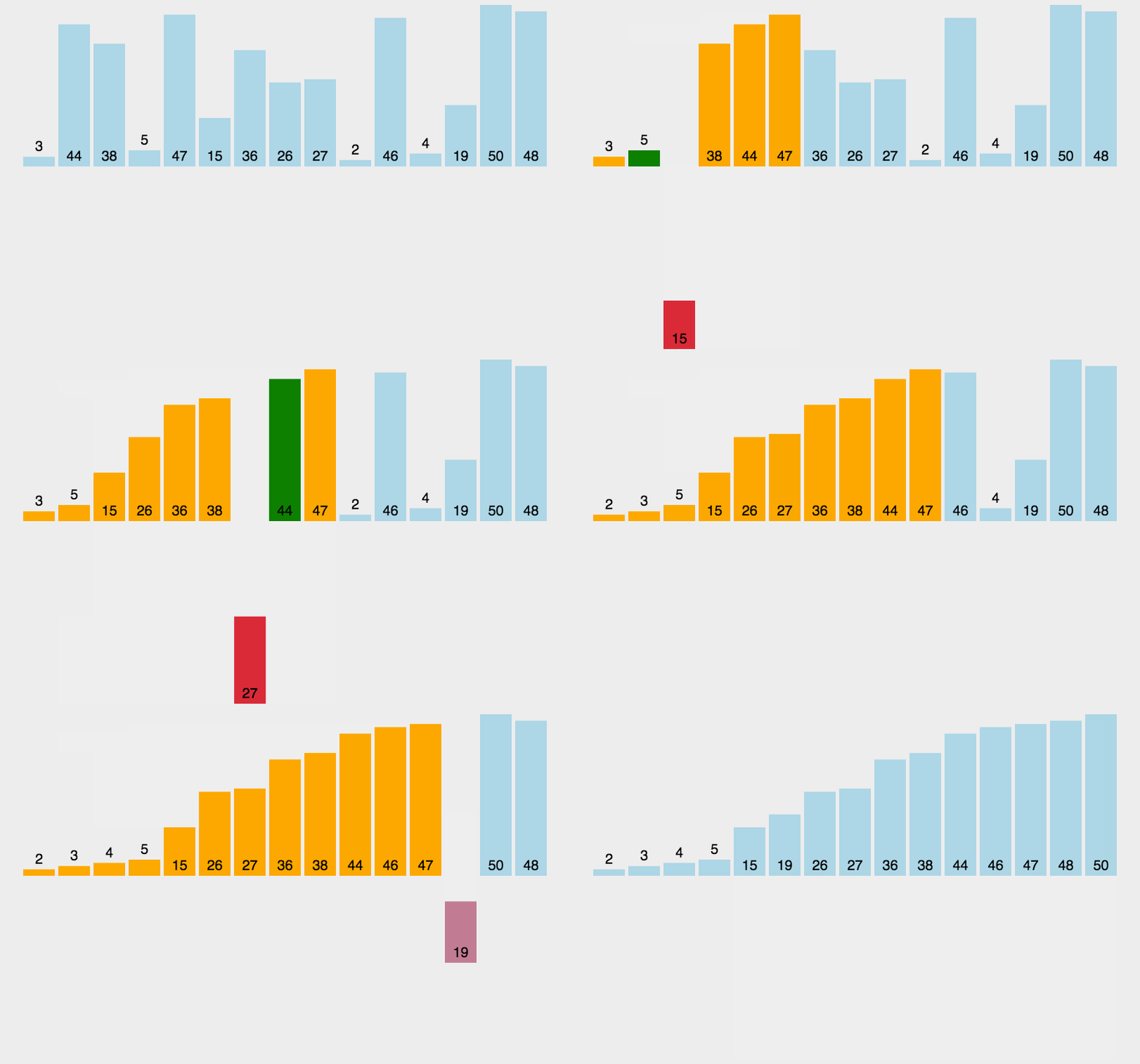
代码:时间复杂度O(n^2),空间复杂度O(1)
//插入排序 public class InsertSort { public static void main(String[] args) { //验证 int[] arr = new int[]{5, 4, 3, 8, 4, 1, 6, 0, 9, 10}; insertSort(arr); for (int i : arr) { System.out.print(i + " "); } } //插入排序 public static void insertSort(int[] arr) { for (int i = 0; i < arr.length; i++) { //有序区间为 [0,i) int k = i; //记录i下标当前值 与有序序列比较 int tmp = arr[i]; //如果下标合法且比tmp大 则元素后移 while (k > 0 && tmp < arr[k - 1]) { arr[k] = arr[k - 1]; k--; } arr[k] = tmp; } }- 1
- 2
- 3
- 4
- 5
- 6
- 7
- 8
- 9
- 10
- 11
- 12
- 13
- 14
- 15
- 16
- 17
- 18
- 19
- 20
- 21
- 22
- 23
- 24
- 25
- 26
- 27
2.冒泡排序
冒泡!!!好的解释完了
图示:
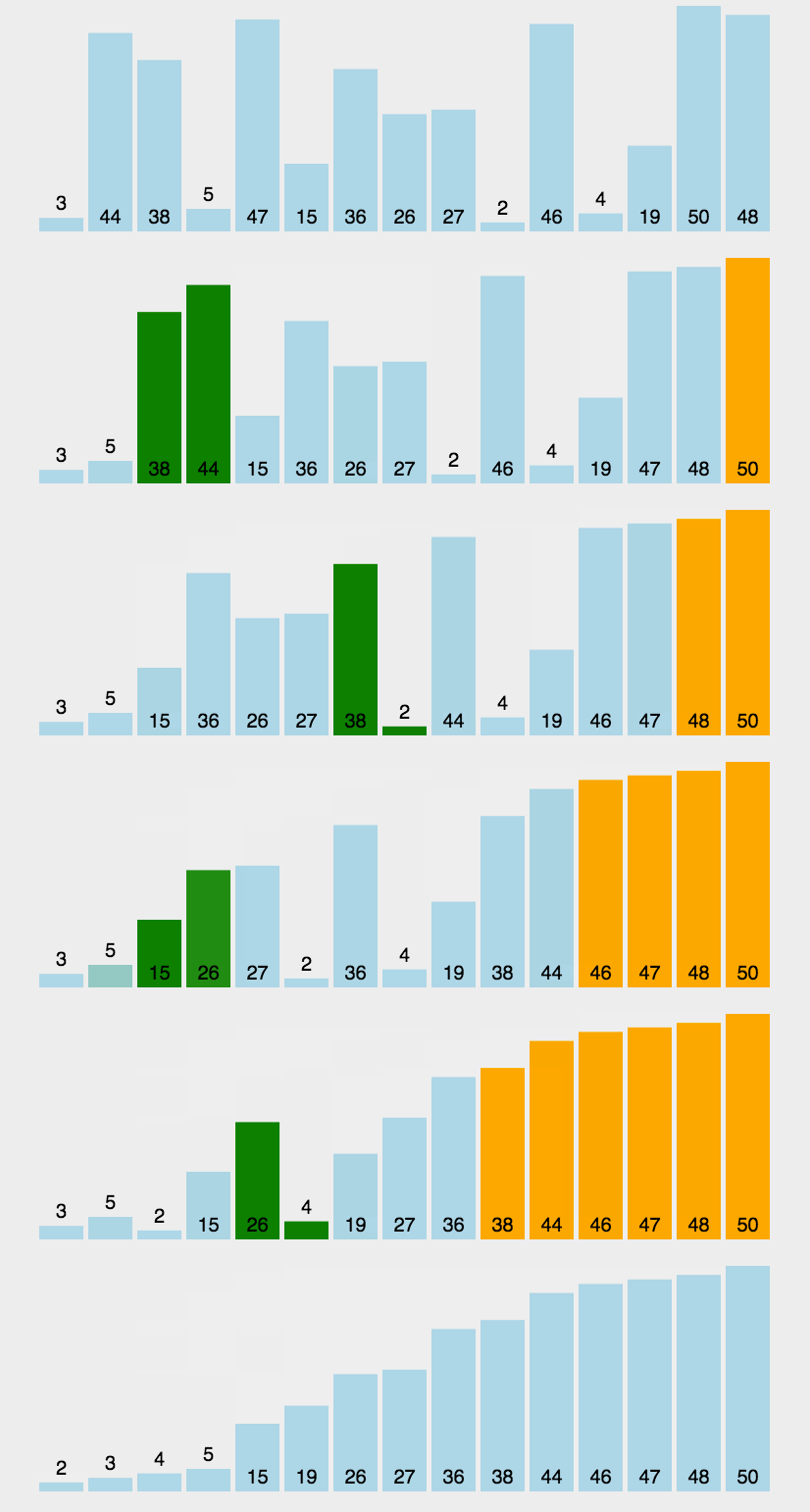
代码: 老老老朋友了,时间复杂度O(n^2),空间复杂度O(1)
//冒泡排序 public class BubbleSort { public static void main(String[] args) { //验证 int[] arr = new int[]{5, 4, 3, 8, 4, 1, 6, 0, 9, 10}; bubblesort(arr); for (int i : arr) { System.out.print(i + " "); } } //冒泡排序 public static void bubblesort(int[] arr) { for (int i = 0; i < arr.length; i++) { //判断该趟是否发生交换 boolean flag = true; for (int j = 0; j < arr.length - 1 - i; j++) { if (arr[j] > arr[j + 1]) { //交换 int tmp = arr[j]; arr[j] = arr[j + 1]; arr[j + 1] = tmp; flag = false; } } //如果没有发生交换 则说明后面的已经有序 结束循环 if (flag) { break; } } }- 1
- 2
- 3
- 4
- 5
- 6
- 7
- 8
- 9
- 10
- 11
- 12
- 13
- 14
- 15
- 16
- 17
- 18
- 19
- 20
- 21
- 22
- 23
- 24
- 25
- 26
- 27
- 28
- 29
- 30
- 31
- 32
3.选择排序
思路:每一次从待排序的数据元素中选出最小(或最大)的一个元素,存放在序列的起始位置,直到全部待排序的数据元素排完 。
图示:

代码: 时间复杂度O(n^2),空间复杂度O(1)
//选择排序(将找到的较大元素放置末尾 和上图演示的反着的 但不影响理解) public class SelectSort { public static void main(String[] args) { //验证 int[] arr = new int[]{5, 4, 3, 8, 4, 1, 6, 0, 9, 10}; selectSort(arr); for (int i : arr) { System.out.print(i + " "); } } public static void selectSort(int[] arr) { for (int i = 0; i < arr.length - 1; i++) { int maxIdx = 0; for (int j = 1; j < arr.length - i; j++) { if (arr[j] > arr[maxIdx]) { maxIdx = j; } } //swap int idx = arr.length - 1 - i; int tmp = arr[maxIdx]; arr[maxIdx] = arr[idx]; arr[idx] = tmp; } }- 1
- 2
- 3
- 4
- 5
- 6
- 7
- 8
- 9
- 10
- 11
- 12
- 13
- 14
- 15
- 16
- 17
- 18
- 19
- 20
- 21
- 22
- 23
- 24
- 25
- 26
- 27
4.希尔排序
我们知道插入排序元素越有序效率越高,当全部有序时,效率达到O(n),希尔排序正是利用这个特点,进行了大量的分组插入排序,从而达到有序目的。
基本思想是:先选定一个整数,把待排序文件中所有记录分成个组,所有距离为的记录分在同一组内,并对每一组内的记录进行排序。然后取重复上述分组和排序的工作。当到达=1时,所有记录在统一组内排好序。图示:

动图:

代码: 时间复杂度O(n^2),空间复杂度O(1)
//希尔排序 public class ShellSort { public static void main(String[] args) { //验证 int[] arr = new int[]{5, 4, 3, 8, 4, 1, 6, 0, 9, 10, -5, 50, 33, 41, 7, 30, 45, 11}; shellSort(arr); for (int i : arr) { System.out.print(i + " "); } } public static void shellSort(int[] arr) { if (arr.length == 0 || arr.length == 1) { return; } int gap = arr.length / 2; while (true) { for (int i = gap; i < arr.length; i++) { int tmp = arr[i]; int k = i; while (k - gap >= 0 && tmp < arr[k - gap]) { arr[k] = arr[k - gap]; k -= gap; } arr[k] = tmp; } if (gap == 1) { break; } gap /= 2; } }- 1
- 2
- 3
- 4
- 5
- 6
- 7
- 8
- 9
- 10
- 11
- 12
- 13
- 14
- 15
- 16
- 17
- 18
- 19
- 20
- 21
- 22
- 23
- 24
- 25
- 26
- 27
- 28
- 29
- 30
- 31
- 32
- 33
5.堆排序
**堆排序(Heapsort)是指利用堆积树(堆)这种数据结构所设计的一种排序算法,它是选择排序的一种。它是通过堆来进行选择数据。
首先,我们应该明白什么是堆,知道我们需要建什么。
堆的特点:- 堆是一棵完全二叉树;
- 堆序性 (heap order): 任意节点都优于它的所有孩子。
a. 如果是任意节点都大于它的所有孩子,这样的堆叫大顶堆,Max Heap;
b. 如果是任意节点都小于它的所有孩子,这样的堆叫小顶堆,Min Heap;
完全二叉树左右孩子与父节点的坐标关系:
父节点:k
左孩子:2 * k + 1
右孩子: 2 * k + 2图示:

代码: 时间复杂度O(N*log(N)),空间复杂度O(1)
//堆排序 public class HeapSort { public static void main(String[] args) { //验证 int[] arr = new int[]{5, 4, 3, 8, 4, 1, 6, 0, 9, 10, -5, 50, 33, 41, 7, 30, 45, 11}; heapSort(arr); for (int i : arr) { System.out.print(i + " "); } } public static void heapSort(int[] arr) { //建堆 createHeap(arr); for (int i = 0; i < arr.length - 1; i++) { swap(arr, 0, arr.length - 1 - i); adjustDown(arr, 0, arr.length - 1 - i); } } public static void createHeap(int[] arr) { for (int i = (arr.length - 1 - 1) / 2; i >= 0; i--) { adjustDown(arr, i, arr.length); } } //在无序区间内进行向下调整 public static void adjustDown(int[] arr, int idx, int len) { while (2 * idx + 1 < len) { int maxIdx = 2 * idx + 1; int rightIdx = maxIdx + 1; if (rightIdx < len && arr[maxIdx] < arr[rightIdx]) { maxIdx = rightIdx; } if (arr[maxIdx] < arr[idx]) { break; } swap(arr, maxIdx, idx); //更新 idx = maxIdx; } } private static void swap(int[] arr, int i, int j) { //swap int tmp = arr[i]; arr[i] = arr[j]; arr[j] = tmp; }- 1
- 2
- 3
- 4
- 5
- 6
- 7
- 8
- 9
- 10
- 11
- 12
- 13
- 14
- 15
- 16
- 17
- 18
- 19
- 20
- 21
- 22
- 23
- 24
- 25
- 26
- 27
- 28
- 29
- 30
- 31
- 32
- 33
- 34
- 35
- 36
- 37
- 38
- 39
- 40
- 41
- 42
- 43
- 44
- 45
- 46
- 47
- 48
- 49
- 50
6.快速排序
基本思想为:任取待排序元素序列中的某元素作为基准值,按照该排序码将待排序集合分割成两子序列,左子序列中所有元素均小于基准值,右子序列中所有元素均大于基准值,然后最左右子序列重复该过程,直到所有元素都排列在相应位置上为止。
代码:时间复杂度O(n*logn),空间复杂度O(log n) ~ O(n)
public static void quickSort(int[] arr, int from, int to) { //判断是否结束 if (to - from < 1) { return; } //划分方法 下面有实现 int div = partition(arr, from, to); quickSort(arr, from, div - 1); quickSort(arr, div + 1, to); }- 1
- 2
- 3
- 4
- 5
- 6
- 7
- 8
- 9
- 10
将区间按照基准值划分为左右两半部分的常见方式有:
1.Hoare:
1.选出一个基准值pivot,一般是最左边或最右边的为基准值
2.找到右边第一个小于pivot的值
3.找到左边第一个大于pivot的值
4.交换两个值,然后重复步骤2、3
5.将基准值放到i == j 的位置,返回基准值下标public static int partition(int[] arr, int left, int right) { int i = left; int j = right; int pivot = arr[left]; while (i < j) { //注意这里判断j与先判断i的区别 //先判断j:当i == j时 arr[i] == arr[j] <= povit //先判断i:当i == j时 arr[i] == arr[j] >= povit while (i < j && arr[j] >= povit) { j--; } while (i < j && arr[i] <= povit) { i++; } swap(arr, i, j); } swap(arr, left, i); return i; }- 1
- 2
- 3
- 4
- 5
- 6
- 7
- 8
- 9
- 10
- 11
- 12
- 13
- 14
- 15
- 16
- 17
- 18
- 19
图示:

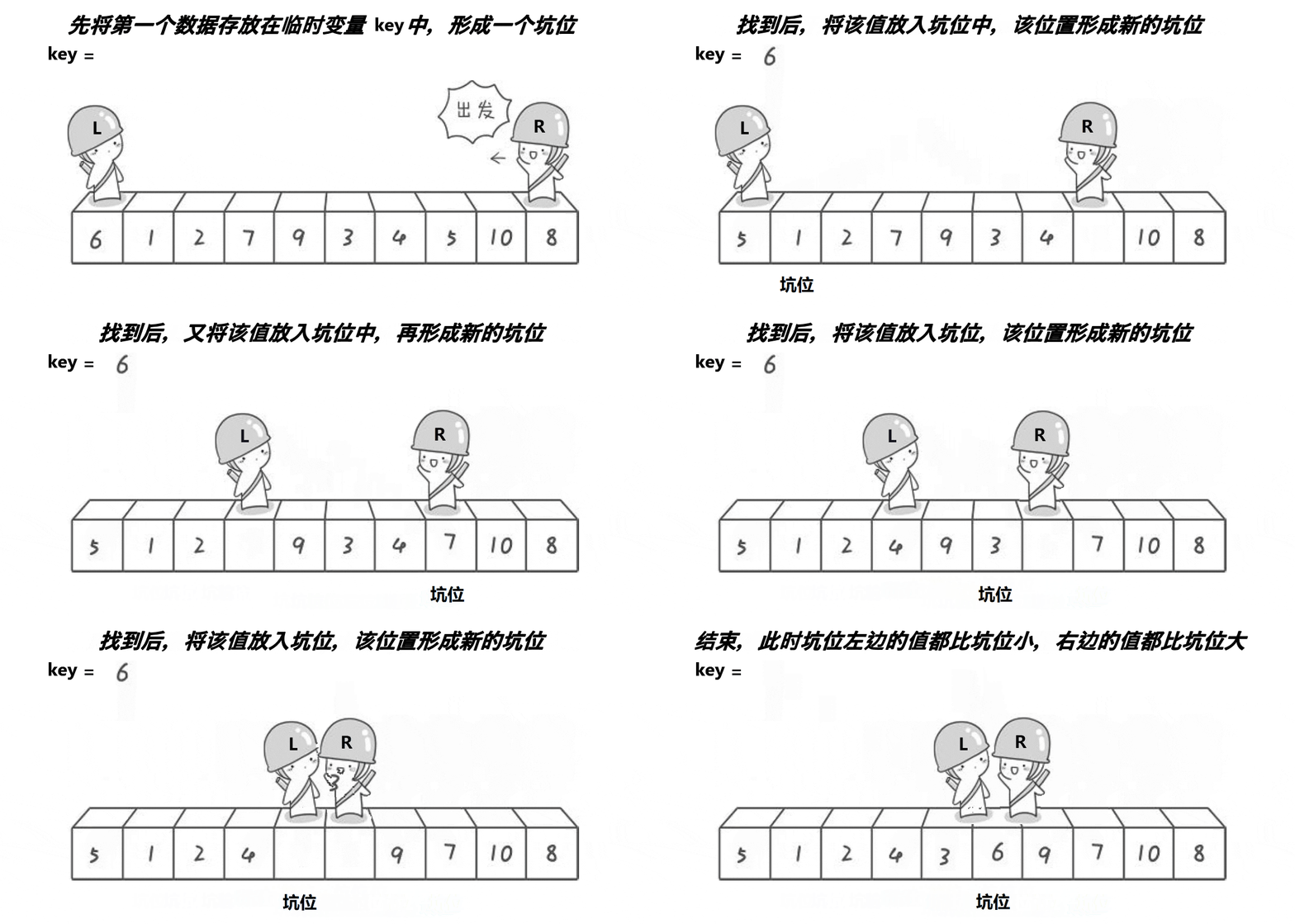
2.挖坑法:
1.选出一个基准值pivot,一般是最左边或最右边的为基准值 让它做坑位
2.找到右边第一个小于pivot的值 将该值放入坑位 该值的原下标做为新坑位
3.找到左边第一个大于pivot的值 将该值放入坑位 该值的原下标做为新坑位
4.重复步骤2、3
5.将基准值放到i == j 的位置,返回基准值下标public static int partition(int[] arr, int left, int right) { int i = left; int j = right; int pivot = arr[left]; while (i < j) { while (i < j && arr[j] >= pivot) { j--; } arr[i] = arr[j]; while (i < j && arr[i] <= pivot) { i++; } arr[j] = arr[i]; } arr[i] = pivot; return i; }- 1
- 2
- 3
- 4
- 5
- 6
- 7
- 8
- 9
- 10
- 11
- 12
- 13
- 14
- 15
- 16
- 17
图示:
3.前后指针法:
1.选出一个基准值pivot,一般是最左边或最右边的为基准值
2.规定[0,pre)为小于pivot的范围,[pre,right]为大于pivot的范围
3.遍历找小于pivot的值,交换arr[pre]和该值,然后pre++
4.最后将pivot值放入数组,放哪里合适呢?当然是pre - 1处,这样确保它的右边大于等于pivot,左边小于等于pivotpublic static int partition(int[] arr, int left, int right) { int pre = left + 1; int pivot = arr[left]; for (int cur = pre; cur <= right; cur++) { if (arr[cur] < pivot) { swap(arr, cur, pre); pre++; } } swap(arr, pre - 1, left); return pre - 1; }- 1
- 2
- 3
- 4
- 5
- 6
- 7
- 8
- 9
- 10
- 11
- 12
7.归并排序
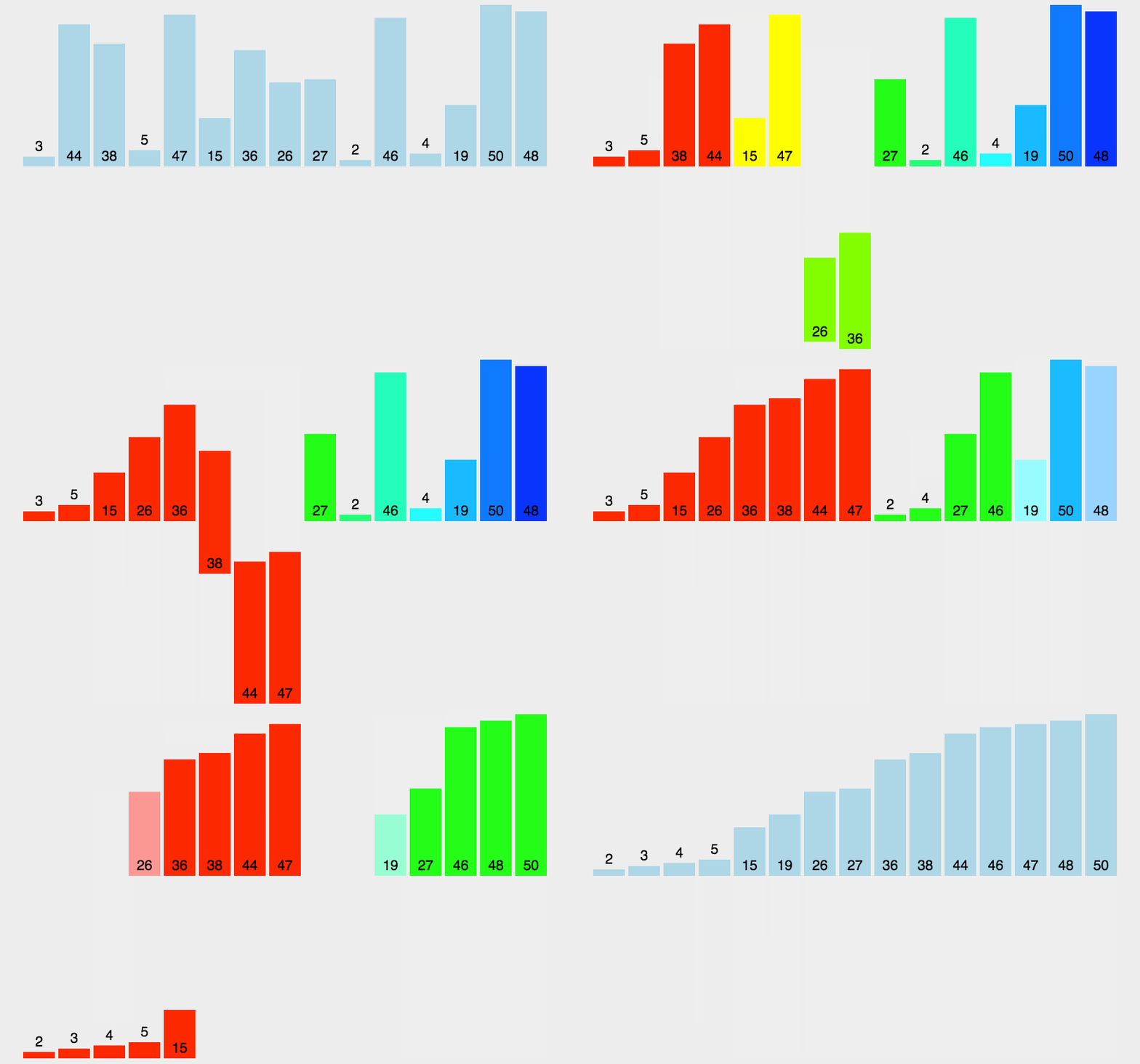
基本思想:归并排序是建立在归并操作上的一种有效的排序算法,该算法是采用分治法的一个非常典型的应用。将已有序的子序列合并,得到完全有序的序列;即先使每个子序列有序,再使子序列段间有序。若将两个有序表合并成一个有序表,称为二路归并。
图示:

动图:
代码:时间复杂度O(n*logn),空间复杂度O(n)//归并排序 public class MergeSort { public static void main(String[] args) { //验证 int[] arr = new int[]{5, 4, 3, 8, 4, 1, 6, 0, 9, 10, -5, 50, 33, 41, 7, 30, 45, 11}; mergeSort(arr, 0, arr.length); for (int i : arr) { System.out.print(i + " "); } } //[) public static void mergeSort(int[] arr, int start, int end) { if (end - start <= 1) { return; } int mid = start + (end - start) / 2; mergeSort(arr, start, mid); mergeSort(arr, mid, end); merge(arr, start, mid, end); } public static void merge(int[] arr, int start, int mid, int end) { int[] e = new int[end - start]; int eIdx = 0; int leftIdx = start; int rightIdx = mid; //归并 while (leftIdx < mid || rightIdx < end) { if (leftIdx == mid) { e[eIdx++] = arr[rightIdx++]; } else if (rightIdx == end) { e[eIdx++] = arr[leftIdx++]; } else if (arr[leftIdx] <= arr[rightIdx]) { e[eIdx++] = arr[leftIdx++]; } else { e[eIdx++] = arr[rightIdx++]; } } //放回原数组 for (int i = 0; i < e.length; i++) { arr[start + i] = e[i]; } } }- 1
- 2
- 3
- 4
- 5
- 6
- 7
- 8
- 9
- 10
- 11
- 12
- 13
- 14
- 15
- 16
- 17
- 18
- 19
- 20
- 21
- 22
- 23
- 24
- 25
- 26
- 27
- 28
- 29
- 30
- 31
- 32
- 33
- 34
- 35
- 36
- 37
- 38
- 39
- 40
- 41
- 42
- 43
- 44
- 45
- 46
- 47
- 48
总结
排序算法 时间复杂度(平均) 时间复杂度(最坏) 时间复杂度(最好) 空间复杂度 稳定性 插入排序 O(n^2) O(n^2) O(n) O(1) 稳定 冒泡排序 O(n^2) O(n^2) O(n) O(1) 稳定 选择排序 O(n^2) O(n^2) O(n^2) O(1) 不稳定 希尔排序 O(n^1.3) O(n^2) O(n) O(1) 不稳定 堆排序 O(n*log n) O(n*log n) O(n*log n) O(1) 不稳定 快速排序 O(n*log n) O(n^2) O(n*log n) O(log n) ~ O(n) 不稳定 归并排序 O(n*log n) O(n*log n) O(n*log n) O(n) 稳定 -
相关阅读:
算法——动态规划
格雷码与普通二进制码的相互转换——学习笔记
VMware安装Centos
一道前端面试题:验证回文子串
云厂商为什么都在冲这个KPI?
技术互联 创新交流 | 广汽研究院举办技术交流会圆满落幕
【STM32备忘录】二、FSMC做LCD控制器,使用stm32cube配置示例
React之组件实例的三大属性之props
SpringSecurity用户注销
最大异或和【可持久化Trie】
- 原文地址:https://blog.csdn.net/qq_53130059/article/details/127713510

- 最新文章
-
沪漂五周年了:我越来越迷茫了
Agentic Skill Routing 实战:别再把所有 Skill 塞进 AI Agent 上下文
MySQL-Seconds_behind_master的精度误差
[MAF预定义ChatClient中间件-03]CachingChatClient——利用缓存省钱省时间
AI的至暗历史:从万众期待到被政府撤资,AI的两次死亡徘徊
Agent OS :五种驯服不确定性的范式
PortSwigger SQL注入LAB11
数据库即时编译JIT
[Begin]AI Learn Data Day 0
深度学习进阶(二十七)现代 LLM 的核心架构设计其二:SwiGLU