-
哈希结构的实现
目录
unordered系列关联式容器
哈希的简介
哈希表闭散列实现
哈希表开散列实现
用哈希表来封装map和set
位图
布隆过滤器与哈希切割
全部代码
unordered系列关联式容器
unordered系列关联式容器有四种,这里主要对unordered_map和unordered_set这两种容器进行介绍
unordered_map
unordered_map是存储<key, value>键值对的关联式容器,其允许通过keys快速的索引到与其对应的value
在内部,unordered_map没有对<kye, value>按照任何特定的顺序排序
unordered_map容器通过key访问单个元素要比map快,但它通常在遍历元素子集的范围迭代方面效率较低
unordered_maps实现了直接访问操作符(operator[]),它允许使用key作为参数直接访问value
unordered_set
unordered_set和unordered_map在性质上差不多,因为底层结构是一致的,都是哈希结构,区别在与,unordered_set不支持[],因为它存储的是key与value相同,所以无需支持[]
哈希的简介
概念
如果构造一种存储结构,通过某种函数(hashFunc)使元素的存储位置与它的关键码之间能够建立一一映射的关系,那么在查找时通过该函数可以很快找到该元素
哈希函数有多种,这里采用除留余数法
哈希冲突
比如14和4取模后都是4,而4对应的位置只能存储一个数字,那么就出现了哈希冲突,而解决哈希冲突的常见两种方法有闭散列和开散列
哈希表闭散列实现
闭散列:也叫开放定址法,当发生哈希冲突时,如果哈希表未被装满,说明在哈希表中必然还有空位置,那么可以把key存放到冲突位置中的“下一个” 空位置中去
寻找下一空位置有线性探测和二次探测两种
线性探测
从发生冲突的位置开始,依次向后探测,直到寻找到下一个空位置为止

二次探测
从发生冲突的位置开始,跨越探测,直到寻找到下一个空位置为止

index是哈希表的下标
首先因为有闭散列和开散列两种,所以采用命名空间的形式来防止命名冲突


然后定义一个枚举类型,用来判断该下标的空间的状态,是存在数据,还是删除过数据,或者没有数据,便于插入,删除,及查找数据
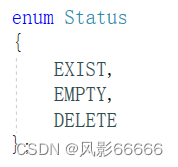
封装节点,开始必然为每个下标所在的空间必然为空状态,所以初始化为空状态

因为要是除留取余法,必然要是整数,所以还需要借助仿函数来实现
内置类型

string类型
string类型转整形,可以将字符串的每个字母的ASCII码值加起来,但要是只是顺序不同,那总数也会相同,出现哈希冲突,为了尽量减少哈希冲突,就有了下图的方法,其中31是累乘因子
string类型有下列两种写法,任选其一即可


对于其它自定义类型,比如日期,则按照特定方式取整即可
哈希表同样采用模板的形式实现,另外私有成员有中的_n是有效数据个数,便于后续插入数据扩容使用


查找数据
如果表为空,则直接返回nullptr即可

首先用待查找的key模表的长度取模作为待查找的初始下标,然后一直往后查找,同时往后走时,最后别忘了再取模一次,因为可能会存在初始下标空间的前面空间,找不到时,则直接返回nullptr
 删除数据
删除数据首先先查找数据,找到数据了有效数据就减少一个,然后将那个节点的状态置为删除状态,删除成功返回true即可,没找到就表示删除失败,返回false

插入数据
首先先查找数据,如果存在,就表示待插入的数据已经有了,所以无需再插入,返回false即可

根据有效数据个数,得到负载因子,如果负载因子大于等于0.7则表示需要扩容了,初始没有空间时,也一样需要扩容
负载因子越小,冲突概率越低,效率越高,空间浪费越多
负载因子越大,冲突概率越高,效率越低,空间浪费越少

如果是初始时则开10个空间,其它情况则直接开原来的2倍空间

创建一个新表,开辟新空间大小的空间,再将其数据拷贝到新表,然后将新表对象中的vector成员与this对象中的vector成员交换即可

如果不需要开辟新空间
则先将key取模,找到对应的下标,如果有空间,则直接插入数据,没有,则继续往后面找,与find()类似,最后有效数据+1,返回true即可

闭散列最大的缺陷就是空间利用率比较低,这也是哈希的缺陷
哈希表开散列实现
概念
开散列法又叫链地址法(开链法),首先对关键码集合用散列函数计算散列地址,具有相同地址的关键码归于同一子集合,每一个子集合称为一个桶,各个桶中的元素通过一个单链表链接起来,各链表的头结点存储在哈希表中,开散列中每个桶中放的都是发生哈希冲突的元素,如下图

封装节点,其实就是单链表的节点封装


私有成员与闭散列一致,同时,还是采用除留去余法,所以会用到仿函数,与上面闭散列一致

查找数据
如果哈希表为空,则直接返回nullptr

找到待查找的数据节点的下标,以及声明一个局部变量来保存这条链的头节点

从头开始往后找,找到了返回节点地址,没找到返回nullptr

删除数据
如果哈希表为空,返回false,表示删除失败

找到待删除数据节点的那条链的头节点

如果找到了,则分为两种情况,如果就是头节点,那就直接头删,否则就中间删除

如果没找到,则继续往后面找,找不到则返回false,表示删除失败

插入数据
首先先查找数据,如果存在,就表示待插入的数据已经有了,所以无需再插入,返回false即可

如果负载因子等于1时,则需要扩容,初始开空间时开10个空间,其余情况开原来的2倍空间

然后将原表的数据按头插拷贝到新表,将原表每条链的表头置空,最后再交换this对象的vector成员与新表的vector成员即可


如果不需要扩容,则直接头插,然后将有效数据个数+1,再返回true即可

为了减少哈希冲突,每次扩容后的空间大小都为素数


用哈希表来封装map和set
改善哈希表
因为既要封装map,又要封装set,所以将数据类型从pair类型变为了T类型

迭代器
因为会用到哈希表,所以提前声明一下

因为要封装map和set,所以多加了一个模板参数KeyOfT,采用了仿函数


因为map和set存储的数据不同,一个是pair<key,value>,一个是key所以对*和对->都要重载

判断相不相等,比较的是节点的地址相不相等

重载++运算符
如果这条链上还有节点,即没有遇到nullptr,则直接往后走即可

如果为nullptr,则从哈希表的下一个元素开始找,比如下图,走完11后,则继续往后面走,下一个元素表头为空,所以就走到了13,不为nullptr,则跳出循环


如果是循环自动结束的,即走完整个哈希表了,则直接置nullptr即可

如果是break出来的,则直接返回到那个节点,比如上述所说的13

拷贝构造
别忘了写一个默认构造函数,因为有了拷贝构造之后,编译器不会默认生成了

这里采用的是头插法,所以顺序会有变化

重载赋值运算符
将实参传给形参时会有一次拷贝构造,所以只需将this对象的两个成员与形参的交换即可

析构函数
从哈希表第一个元素开始销毁节点,直到走完哈希表结束

初始节点
如果哈希表第一个元素的头节点不为nullptr,则它就是初始节点,否则直接返回nullptr的迭代器

结尾节点,即nullptr

重载[]运算符
[]可查找value,也可修改或插入

位图
位图的作用:数据是否在给定的整形数据中,结果是在或者不在,刚好是两种状态,那么可以使用一个二进制比特位来代表数据是否存在的信息,如果二进制比特位为1,代表存在,为0代表不存在,比如在一堆数据中找5在不在,数据很多时,可以开辟整形最大值那么大的以bit为单位的空间,然后一个整数对应一个比特位,如果5对应的比特位是1,那就在这堆数据中,是0就不在
1byte=8bit,所以开空间数如下图


将某个bit位置为1

将某个bit位置为0

检查某个bit位是否为1
0为假,非0为真

位图:节省空间,效率高,但只能处理整数
布隆过滤器与哈希切割
概念
布隆过滤器是由布隆在1970年提出的 一种紧凑型的、比较巧妙的概率型数据结构,特点是高效地插入和查询,可以用来告诉你 “某样东西一定不存在或者可能存在”,它是用多个哈希函数,将一个数据映射到位图结构中。既可以提升查询效率,也可以节省大量的内存空间
作用:用来解决字符串,自定义类型对象在不在的问题
如果采用将字符串转整数,即将字符串的各个字符加起来取模作为下标,那就可能会存在哈希冲突,比如下图中eat和ate

这种方式,判断不在是准确的,比如eat和ate那个位置的比特位为0,则eat肯定不在,只是判断在会存在误判
解决方式
将一个元素用多个哈希函数映射到一个位图中,比如ate,只要三个种有一个bit位为0,则就表示ate不在,降低了误判率

这里以哈希函数中三个不同的哈希函数为例
 模板参数
模板参数- //hashTable-副本
- #pragma once
- #include<vector>
- template<class K>
- struct Hash
- {
- size_t operator()(const K& key)
- {
- return key;
- }
- };
- //特化
- template<>
- struct Hash< string >
- {
- size_t operator()(const string& s)
- {
- //BKDR
- size_t value = 0;
- for (auto ch : s)
- {
- value *= 31;
- value += ch;
- }
- return value;
- }
- };
- namespace CloseHash
- {
- enum Status
- {
- EXIST,
- EMPTY,
- DELETE
- };
- template<class K,class V>
- struct HashData
- {
- pair<K, V> _kv;
- Status _status = EMPTY;
- };
- struct HashStr
- {
- size_t operator()(const string& s)
- {
- //BKDR
- size_t value = 0;
- for (auto ch : s)
- {
- value *= 31;
- value += ch;
- }
- return value;
- }
- };
- template<class K,class V,class HashFunc = Hash<K>>
- class HashTable
- {
- public:
- bool Erase(const K& key)
- {
- HashData<K, V>* ret = Find(key);
- if (ret == nullptr)
- {
- return false;
- }
- else
- {
- --_n;
- ret->_status = DELETE;
- return true;
- }
- }
- HashData<K, V>* Find(const K& key)
- {
- if (_tables.size() == 0)
- {
- return nullptr;
- }
- HashFunc hf;
- size_t start = hf(key) % _tables.size();
- size_t i = 0;
- size_t index = start;
- //线性探测 or 二次探测
- while (_tables[index]._status != EMPTY)
- {
- if (_tables[index]._kv.first == key && _tables[index]._status == EXIST)
- {
- return &_tables[index];
- }
- ++i;
- //index = start + i*i;
- index = start + i;
- index %= _tables.size();
- }
- return nullptr;
- }
- bool Insert(const pair<K, V>& kv)
- {
- HashData<K, V>* ret = Find(kv.first);
- if (ret)
- {
- return false;
- }
- //负载因子到0.7,就扩容
- //负载因子越小,冲突概率越低,效率越高,空间浪费越多
- //负载因子越大,冲突概率越高,效率越低,空间浪费越少
- if (_tables.size() == 0 || _n * 10 / _tables.size() >= 7)
- {
- //扩容
- size_t newSize = _tables.size() == 0 ? 10 : _tables.size() * 2;
- //vector<HashData<K,V>> newTables;
- //newTables.resize(newSize);
- //遍历原表,把原表中的数据,重新按newSize映射到新表
- //for(size_t i = 0;i < _tables.size();++i)
- //{
- //
- //}
- //_tables.swap(newTables);
- HashTable<K, V, HashFunc> newHT;
- newHT._tables.resize(newSize);
- for (size_t i = 0; i < _tables.size(); ++i)
- {
- if (_tables[i]._status == EXIST)
- {
- newHT.Insert(_tables[i]._kv);
- }
- }
- _tables.swap(newHT._tables);
- }
- HashFunc hf;
- size_t start = hf(kv.first) % _tables.size();
- size_t i = 0;
- size_t index = start;
- //线性探测 or 二次探测
- while (_tables[index]._status == EXIST)
- {
- ++i;
- //index = start + i * i;
- index = start + i;
- index %= _tables.size();
- }
- _tables[index]._kv = kv;
- _tables[index]._status = EXIST;
- ++_n;
- return true;
- }
- private:
- vector<HashData<K, V>> _tables;
- size_t _n = 0;//有效数据个数
- };
- void TestHashTable1()
- {
- //HashTable<int,int,Hash<int>> ht;
- HashTable<int, int> ht;
- int a[] = { 2,12,22,32,42,52,62 };
- for (auto e : a)
- {
- ht.Insert(make_pair(e, e));
- }
- ht.Insert(make_pair(72, 72));
- ht.Insert(make_pair(72, 72));
- ht.Insert(make_pair(-1, -1));
- ht.Insert(make_pair(-999, -999));
- Hash<int> hs;
- cout << hs(9) << endl;
- cout << hs(-9) << endl;
- cout << ht.Find(12) << endl;
- ht.Erase(12);
- cout << ht.Find(12) << endl;
- }
- struct Date
- {
- };
- struct HashDate
- {
- size_t operator()(const Date& d)
- {
- //...
- }
- };
- void TestHashTable2()
- {
- HashStr hs;
- cout << hs("sort") << endl;
- cout << hs("insert") << endl;
- cout << hs("eat") << endl;
- cout << hs("ate") << endl;
- cout << hs("abcd") << endl;
- cout << hs("aadd") << endl;
- HashTable<string, string> ht;
- ht.Insert(make_pair("sort", "排序"));
- ht.Insert(make_pair("string", "字符串"));
- //当key是一个定义类型时,需要配置一个仿函数,将key转成整形
- HashTable<Date, string, HashDate> htds;
- }
- }
- namespace LinkHash
- {
- template<class K,class V>
- struct HashNode
- {
- pair<K, V> _kv;
- HashNode<K, V>* _next;
- HashNode(const pair<K, V>& kv):_kv(kv),_next(nullptr)
- {}
- };
- template<class K,class V,class HashFunc = Hash<K>>
- class HashTable
- {
- typedef HashNode<K, V> Node;
- public:
- bool Erase(const K& key)
- {
- if (_tables.empty())
- {
- return false;
- }
- HashFunc hf;
- size_t index = hf(key) % _tables.size();
- Node* prev = nullptr;
- Node* cur = _tables[index];
- while (cur)
- {
- if (cur->_kv.first == key)
- {
- if (prev == nullptr) //头删
- {
- _tables[index] = cur->_next;
- }
- else //中间删除
- {
- prev->_next = cur->_next;
- }
- --_n;
- delete cur;
- return true;
- }
- else
- {
- prev = cur;
- cur = cur->_next;
- }
- }
- return false;
- }
- Node* Find(const K& key)
- {
- if (_tables.empty())
- {
- return nullptr;
- }
- HashFunc hf;
- size_t index = hf(key) % _tables.size();
- Node* cur = _tables[index];
- while (cur)
- {
- if (cur->_kv.first == key)
- {
- return cur;
- }
- else
- {
- cur = cur->_next;
- }
- }
- return nullptr;
- }
- bool Insert(const pair<K, V>& kv)
- {
- Node* ret = Find(kv.first);
- if (ret)
- return false;
- HashFunc hf;
- if (_n == _tables.size())
- {
- size_t newSize = _tables.size() == 0 ? 10 : _tables.size() * 2;
- //...
- vector<Node*> newTables;
- newTables.resize(newSize);
- for (size_t i = 0; i < _tables.size(); ++i)
- {
- Node* cur = _tables[i];
- while (cur)
- {
- Node* next = cur->_next;
- size_t index = hf(cur->_kv.first) % newTables.size();
- //头插
- cur->_next = newTables[index];
- newTables[index] = cur;
- cur = next;
- }
- _tables[i] = nullptr;
- }
- _tables.swap(newTables);
- }
- size_t index = hf(kv.first) % _tables.size();
- Node* newnode = new Node(kv);
- //头插
- newnode->_next = _tables[index];
- _tables[index] = newnode;
- ++_n;
- return true;
- }
- private:
- /*struct Data
- {
- forward_list<T> _list;
- set<T> _rbtree;
- size_t len;
- };
- vector<Data> _table;*/
- vector<Node*> _tables;
- size_t _n = 0;//有效数据的个数
- };
- void TestHashTable()
- {
- int a[] = { 4,24,14,7,37,27,57,67,34,14,54 };
- HashTable<int, int> ht;
- for (auto e : a)
- {
- ht.Insert(make_pair(e, e));
- }
- ht.Insert(make_pair(84, 84));
- }
- };
- //hashTable
- #pragma once
- #include<vector>
- #include<string>
- template<class K>
- struct Hash
- {
- size_t operator()(const K& key)
- {
- return key;
- }
- };
- //特化
- template<>
- struct Hash< string >
- {
- size_t operator()(const string& s)
- {
- //BKDR
- size_t value = 0;
- for (auto ch : s)
- {
- value *= 31;
- value += ch;
- }
- return value;
- }
- };
- namespace CloseHash
- {
- enum Status
- {
- EXIST,
- EMPTY,
- DELETE
- };
- template<class K, class V>
- struct HashData
- {
- pair<K, V> _kv;
- Status _status = EMPTY;
- };
- //struct HashStr
- //{
- // size_t operator()(const string& s)
- // {
- // //BKDR
- // size_t value = 0;
- // for (auto ch : s)
- // {
- // value *= 31;
- // value += ch;
- // }
- // return value;
- // }
- //};
- template<class K, class V, class HashFunc = Hash<K>>
- class HashTable
- {
- public:
- bool Erase(const K& key)
- {
- HashData<K, V>* ret = Find(key);
- if (ret == nullptr)
- {
- return false;
- }
- else
- {
- --_n;
- ret->_status = DELETE;
- return true;
- }
- }
- HashData<K, V>* Find(const K& key)
- {
- if (_tables.size() == 0)
- {
- return nullptr;
- }
- HashFunc hf;
- size_t start = hf(key) % _tables.size();
- size_t i = 0;
- size_t index = start;
- //线性探测 or 二次探测
- while (_tables[index]._status != EMPTY)
- {
- if (_tables[index]._kv.first == key && _tables[index]._status == EXIST)
- {
- return &_tables[index];
- }
- ++i;
- //index = start + i*i;
- index = start + i;
- index %= _tables.size();
- }
- return nullptr;
- }
- bool Insert(const pair<K, V>& kv)
- {
- HashData<K, V>* ret = Find(kv.first);
- if (ret)
- {
- return false;
- }
- //负载因子到0.7,就扩容
- //负载因子越小,冲突概率越低,效率越高,空间浪费越多
- //负载因子越大,冲突概率越高,效率越低,空间浪费越少
- if (_tables.size() == 0 || _n * 10 / _tables.size() >= 7)
- {
- //扩容
- size_t newSize = _tables.size() == 0 ? 10 : _tables.size() * 2;
- //vector<HashData<K,V>> newTables;
- //newTables.resize(newSize);
- //遍历原表,把原表中的数据,重新按newSize映射到新表
- //for(size_t i = 0;i < _tables.size();++i)
- //{
- //
- //}
- //_tables.swap(newTables);
- HashTable<K, V, HashFunc> newHT;
- newHT._tables.resize(newSize);
- for (size_t i = 0; i < _tables.size(); ++i)
- {
- if (_tables[i]._status == EXIST)
- {
- newHT.Insert(_tables[i]._kv);
- }
- }
- _tables.swap(newHT._tables);
- }
- HashFunc hf;
- size_t start = hf(kv.first) % _tables.size();
- size_t i = 0;
- size_t index = start;
- //线性探测 or 二次探测
- while (_tables[index]._status == EXIST)
- {
- ++i;
- //index = start + i * i;
- index = start + i;
- index %= _tables.size();
- }
- _tables[index]._kv = kv;
- _tables[index]._status = EXIST;
- ++_n;
- return true;
- }
- private:
- vector<HashData<K, V>> _tables;
- size_t _n = 0;//有效数据个数
- };
- void TestHashTable1()
- {
- //HashTable<int,int,Hash<int>> ht;
- HashTable<int, int> ht;
- int a[] = { 2,12,22,32,42,52,62 };
- for (auto e : a)
- {
- ht.Insert(make_pair(e, e));
- }
- ht.Insert(make_pair(72, 72));
- ht.Insert(make_pair(72, 72));
- ht.Insert(make_pair(-1, -1));
- ht.Insert(make_pair(-999, -999));
- Hash<int> hs;
- cout << hs(9) << endl;
- cout << hs(-9) << endl;
- cout << ht.Find(12) << endl;
- ht.Erase(12);
- cout << ht.Find(12) << endl;
- }
- struct Date
- {
- };
- struct HashDate
- {
- size_t operator()(const Date& d)
- {
- //...
- }
- };
- void TestHashTable2()
- {
- /*HashStr hs;
- cout << hs("sort") << endl;
- cout << hs("insert") << endl;
- cout << hs("eat") << endl;
- cout << hs("ate") << endl;
- cout << hs("abcd") << endl;
- cout << hs("aadd") << endl;*/
- HashTable<string, string> ht;
- ht.Insert(make_pair("sort", "排序"));
- ht.Insert(make_pair("string", "字符串"));
- //当key是一个定义类型时,需要配置一个仿函数,将key转成整形
- HashTable<Date, string, HashDate> htds;
- }
- }
- namespace LinkHash
- {
- template<class T>
- struct HashNode
- {
- T _data;
- HashNode<T>* _next;
- HashNode(const T& data) :_data(data), _next(nullptr)
- {}
- };
- template<class K, class T,class KeyOfT, class HashFunc>
- class HashTable;
- template<class K,class T,class Ref,class Ptr,class KeyOfT,class HashFunc>
- struct __HTIterator
- {
- typedef HashNode<T> Node;
- typedef __HTIterator<K, T, Ref, Ptr, KeyOfT, HashFunc> Self;
- Node* _node;
- HashTable<K, T, KeyOfT, HashFunc>* _pht;
- __HTIterator(Node* node,HashTable<K,T,KeyOfT,HashFunc>* pht):_node(node),_pht(pht)
- {}
- Ref operator*()
- {
- return _node->_data;
- }
- Ptr operator->()
- {
- return &_node->_data;
- }
- Self& operator++()
- {
- if (_node->_next)
- {
- _node = _node->_next;
- }
- else
- {
- KeyOfT kot;
- HashFunc hf;
- size_t index = hf(kot(_node->_data)) % _pht->_tables.size();
- ++index;
- //找下一个不为空的值
- while (index < _pht->_tables.size())
- {
- if (_pht->_tables[index])
- {
- break;
- }
- else
- {
- ++index;
- }
- }
- //表走完了,都没有找到下一个桶
- if (index == _pht->_tables.size())
- {
- _node = nullptr;
- }
- else
- {
- _node = _pht->_tables[index];
- }
- }
- return *this;
- }
- bool operator!=(const Self& s) const
- {
- return _node != s._node;
- }
- bool operator==(const Self& s) const
- {
- return _node = s._node;
- }
- };
- template<class K,class T,class KeyOfT,class HashFunc>
- class HashTable
- {
- typedef HashNode<T> Node;
- template<class K,class T,class Ref,class Ptr,class KeyOfT,class HashFunc>
- friend struct __HTIterator;
- typedef HashTable<K, T, KeyOfT, HashFunc> self;
- public:
- typedef __HTIterator<K, T, T&, T*, KeyOfT, HashFunc> iterator;
- HashTable()
- {}
- //显示指定编译器去生成默认构造函数
- //HashTable() = default;
- HashTable(const self& ht)
- {
- _tables.resize(ht._tables.size());
- for (size_t i = 0; i < ht._tables.size(); ++i)
- {
- Node* cur = ht._tables[i];
- while (cur)
- {
- Node* copy = new Node(cur->_data);
- copy->_next = _tables[i];
- _tables[i] = copy;
- cur = cur->_next;
- }
- }
- }
- //ht1 = ht2
- self& operator=(self copy)
- {
- swap(_n, copy._n);
- _tables.swap(copy._tables);
- return *this;
- }
- ~HashTable()
- {
- for (size_t i = 0; i < _tables.size(); ++i)
- {
- Node* cur = _tables[i];
- while (cur)
- {
- Node* next = cur->_next;
- delete cur;
- cur = next;
- }
- _tables[i] = nullptr;
- }
- }
- iterator begin()
- {
- for (size_t i = 0; i < _tables.size(); ++i)
- {
- if (_tables[i])
- {
- return iterator(_tables[i], this);
- }
- }
- return end();
- }
- iterator end()
- {
- return iterator(nullptr, this);
- }
- bool Erase(const K& key)
- {
- if (_tables.empty())
- {
- return false;
- }
- HashFunc hf;
- size_t index = hf(key) % _tables.size();
- Node* prev = nullptr;
- Node* cur = _tables[index];
- KeyOfT kot;
- while (cur)
- {
- if (kot(cur->_data) == key)
- {
- if (prev == nullptr) //头删
- {
- _tables[index] = cur->_next;
- }
- else //中间删除
- {
- prev->_next = cur->_next;
- }
- --_n;
- delete cur;
- return true;
- }
- else
- {
- prev = cur;
- cur = cur->_next;
- }
- }
- return false;
- }
- iterator Find(const K& key)
- {
- if (_tables.empty())
- {
- return end();
- }
- HashFunc hf;
- size_t index = hf(key) % _tables.size();
- Node* cur = _tables[index];
- KeyOfT kot;
- while (cur)
- {
- if (kot(cur->_data) == key)
- {
- return iterator(cur,this);
- }
- else
- {
- cur = cur->_next;
- }
- }
- return end();
- }
- size_t GetNextPrime(size_t num)
- {
- static const unsigned long __stl_prime_list[28] =
- {
- 53,97,193,389,769,
- 1543,3079,6151,12289,24593,
- 49157,98317,196613,393241,786433,
- 1572869,3145739,6291469,12582917,25165843,
- 50331653,100663319,201326611,402653189,805306457,
- 1610612741,3221225473,4294967291
- };
- for(size_t i = 0;i < 28;++i)
- {
- if (__stl_prime_list[i] > num)
- {
- return __stl_prime_list[i];
- }
- }
- return __stl_prime_list[27];
- }
- pair<iterator,bool> Insert(const T& data)
- {
- KeyOfT kot;
- iterator ret = Find(kot(data));
- if (ret != end())
- return make_pair(ret,false);
- HashFunc hf;
- //负载因子 == 1时扩容
- if (_n == _tables.size())
- {
- //size_t newSize = _tables.size() == 0 ? 10 : _tables.size() * 2;
- //...
- size_t newSize = GetNextPrime(_tables.size());
- /*if (newSize == _tables.size())
- {
- break;
- }*/
- vector<Node*> newTables;
- newTables.resize(newSize);
- for (size_t i = 0; i < _tables.size(); ++i)
- {
- Node* cur = _tables[i];
- while (cur)
- {
- Node* next = cur->_next;
- size_t index = hf(kot(cur->_data)) % newTables.size();
- //头插
- cur->_next = newTables[index];
- newTables[index] = cur;
- cur = next;
- }
- _tables[i] = nullptr;
- }
- _tables.swap(newTables);
- }
- size_t index = hf(kot(data)) % _tables.size();
- Node* newnode = new Node(data);
- //头插
- newnode->_next = _tables[index];
- _tables[index] = newnode;
- ++_n;
- return make_pair(iterator(newnode,this),false);
- }
- private:
- /*struct Data
- {
- forward_list<T> _list;
- set<T> _rbtree;
- size_t len;
- };
- vector<Data> _table;*/
- vector<Node*> _tables;
- size_t _n = 0;//有效数据的个数
- };
- }
- //unordered-map
- #pragma once
- #include"HashTable.h"
- namespace bit
- {
- template<class K,class V,class hash = Hash<K>>
- class unordered_map
- {
- struct MapKeyOfT
- {
- const K& operator()(const pair<K, V>& kv)
- {
- return kv.first;
- }
- };
- public:
- typedef typename LinkHash::HashTable<K, pair<K, V>, MapKeyOfT, hash>::iterator iterator;
- iterator begin()
- {
- return _ht.begin();
- }
- iterator end()
- {
- return _ht.end();
- }
- V& operator[](const K& key)
- {
- auto ret = _ht.Insert(make_pair(key, V()));
- return ret.first->second;
- }
- pair<iterator,bool> insert(const pair<K, V>& kv)
- {
- return _ht.Insert(kv);
- }
- private:
- LinkHash::HashTable<K, pair<K,V>, MapKeyOfT, hash > _ht;
- };
- void test_unordered_map()
- {
- unordered_map<string, string> dict;
- dict.insert(make_pair("sort", "排序"));
- dict.insert(make_pair("string", "字符串"));
- dict.insert(make_pair("map", "地图、映射"));
- /*cout << dict["sort"] << endl;
- cout << dict["string"] << endl;
- cout << dict["map"] << endl;*/
- //dict["right"] = "右边";
- unordered_map<string, string>::iterator it = dict.begin();
- while (it != dict.end())
- {
- cout << it->first << ":" << it->second << endl;
- ++it;
- }
- cout << endl;
- unordered_map<string, string> copy(dict);
- for (auto& kv : copy)
- {
- cout << kv.first << ":" << kv.second << endl;
- }
- cout << endl;
- }
- }
- //unordered-set
- #pragma once
- namespace bit
- {
- template<class K,class hash = Hash<K>>
- class unordered_set
- {
- struct SetKeyOfT
- {
- const K& operator()(const K& key)
- {
- return key;
- }
- };
- public:
- typedef typename LinkHash::HashTable<K, K, SetKeyOfT, hash>::iterator iterator;
- iterator begin()
- {
- return _ht.begin();
- }
- iterator end()
- {
- return _ht.end();
- }
- pair<iterator,bool> insert(const K& key)
- {
- return _ht.Insert(key);
- }
- private:
- LinkHash::HashTable<K, K, SetKeyOfT, hash> _ht;
- };
- void test_unordered_set()
- {
- unordered_set<int> us;
- us.insert(4);
- us.insert(14);
- us.insert(34);
- us.insert(7);
- us.insert(24);
- us.insert(17);
- unordered_set<int>::iterator it = us.begin();
- while (it != us.end())
- {
- cout << *it << " ";
- ++it;
- }
- cout << endl;
- unordered_set<int> uss(us);
- unordered_set<int>::iterator It = uss.begin();
- while (It != uss.end())
- {
- cout << *It << " ";
- ++It;
- }
- cout << endl;
- /*unordered_set<string> uss;
- uss.insert("sort");
- uss.insert("hash");*/
- /*unordered_set<int> us;
- for (size_t i = 0; i < 100; ++i)
- {
- us.insert(i);
- }*/
- }
- }
- //bitSet
- #pragma once
- #include<vector>
- namespace bit
- {
- template<size_t N>
- class bitset
- {
- public:
- bitset()
- {
- _bits.resize(N / 8 + 1, 0);
- }
- void set(size_t x)
- {
- size_t i = x / 8;
- size_t j = x % 8;
- _bits[i] |= (1 << j);
- }
- void reset(size_t x)
- {
- size_t i = x / 8;
- size_t j = x % 8;
- _bits[i] &= (~(1 << j));
- }
- bool test(size_t x)
- {
- size_t i = x / 8;
- size_t j = x % 8;
- return _bits[i] & (1 << j);
- }
- private:
- std::vector<char> _bits;
- //std::vector<int> _bits;
- };
- void test_bitset()
- {
- bitset<100> bs;
- bs.set(5);
- bs.set(4);
- bs.set(10);
- bs.set(20);
- cout << bs.test(5) << endl;
- cout << bs.test(4) << endl;
- cout << bs.test(10) << endl;
- cout << bs.test(20) << endl;
- cout << bs.test(21) << endl;
- cout << bs.test(6) << endl << endl;
- bs.reset(20);
- bs.reset(10);
- bs.reset(5);
- cout << bs.test(5) << endl;
- cout << bs.test(4) << endl;
- cout << bs.test(10) << endl;
- cout << bs.test(20) << endl;
- cout << bs.test(21) << endl;
- cout << bs.test(6) << endl;
- //bitset<0xffffffff> bs;
- //bitset<-1> bs;
- }
- }
- template<size_t N>
- class TwoBitSet
- {
- public:
- void Set(size_t x)
- {
- if (!_bs1.test(x) && !_bs2.test(x)) //00 -> 01
- {
- _bs2.set(x);
- }
- else if (!_bs1.test(x) && _bs2.test(x)) //01 -> 10
- {
- _bs1.set(x);
- _bs2.reset(x);
- }
- //10 表示已经出现2次或以上,不用处理
- }
- void PrintOnceNum()
- {
- for (size_t i = 0; i < N; ++i)
- {
- if (!_bs1.test(i) && _bs2.test(i)) // 01
- {
- cout << i << endl;
- }
- }
- }
- private:
- bit::bitset<N> _bs1;
- bit::bitset<N> _bs2;
- };
- void TestTwoBitSet()
- {
- int a[] = { 99,0,4,50,33,44,2,5,99,0,50,99,50,2 };
- TwoBitSet<100> bs;
- for (auto e : a)
- {
- bs.Set(e);
- }
- bs.PrintOnceNum();
- }
- void TestFindIntersection()
- {
- int a1[] = { 5,30,1,99,10 };
- int a2[] = { 8,10,11,9,30,10,30 };
- }
- //BloomFilter
- #pragma once
- #include<bitset>
- #include<string>
- #include<time.h>
- struct BKDRHash
- {
- size_t operator()(const string& s)
- {
- //BKDR
- size_t value = 0;
- for (auto ch : s)
- {
- value *= 3;
- value += ch;
- }
- return value;
- }
- };
- struct APHash
- {
- size_t operator()(const string& s)
- {
- size_t hash = 0;
- for (long i = 0; i < s.size(); i++)
- {
- if ((i & 1) == 0)
- {
- hash ^= ((hash << 7) ^ s[i] ^ (hash >> 3));
- }
- else
- {
- hash ^= (~((hash << 11) ^ s[i] ^ (hash >> 5)));
- }
- }
- return hash;
- }
- };
- struct DJBHash
- {
- size_t operator()(const string& s)
- {
- size_t hash = 5381;
- for(auto ch : s)
- {
- hash += (hash << 5) + ch;
- }
- return hash;
- }
- };
- template<size_t N,
- size_t X = 8,
- class K = string,
- class HashFunc1 = BKDRHash,
- class HashFunc2 = APHash,
- class HashFunc3 = DJBHash>
- class BloomFilter
- {
- public:
- void Set(const K& key)
- {
- size_t len = X * N;
- size_t index1 = HashFunc1()(key) % len;
- size_t index2 = HashFunc2()(key) % len;
- size_t index3 = HashFunc3()(key) % len;
- cout << index1 << endl;
- cout << index2 << endl;
- cout << index3 << endl << endl;
- _bs.set(index1);
- _bs.set(index2);
- _bs.set(index3);
- }
- bool Test(const K& key)
- {
- size_t len = X * N;
- size_t index1 = HashFunc1()(key) % len;
- if (_bs.test(index1) == false)
- return false;
- size_t index2 = HashFunc2()(key) % len;
- if (_bs.test(index2) == false)
- return false;
- size_t index3 = HashFunc3()(key) % len;
- if (_bs.test(index3) == false)
- return false;
- return true; //存在误判的
- }
- //不支持删除,删除可能会影响其它值。
- void Reset(const K& key);
- private:
- bitset<X* N> _bs;
- };
- void TestBloomFilter1()
- {
- BloomFilter<100> bm;
- bm.Set("sort");
- bm.Set("left");
- bm.Set("right");
- bm.Set("eat");
- bm.Set("ate");
- bm.Set("https://www.cnblogs.com/-clq/archive/2012/05/31/2528153.html");
- }
- void TestBloomFilter2()
- {
- BloomFilter<100> bf;
- bf.Set("张三");
- bf.Set("李四");
- bf.Set("牛魔王");
- bf.Set("红孩儿");
- bf.Set("eat");
- cout << bf.Test("张三") << endl;
- cout << bf.Test("李四") << endl;
- cout << bf.Test("牛魔王") << endl;
- cout << bf.Test("红孩儿") << endl;
- cout << bf.Test("孙悟空") << endl;
- cout << bf.Test("二郎神") << endl;
- cout << bf.Test("猪八戒") << endl;
- cout << bf.Test("ate") << endl;
- //BloomFilter<100> bf;
- srand(time(0));
- size_t N = 100;
- std::vector<std::string> v1;
- for (size_t i = 0; i < N; ++i)
- {
- std::string ur1 = "https://www.cnblogs.com/-clq/archive/2012/05/31/2528153.html";
- ur1 += std::to_string(1234 + i);
- v1.push_back(ur1);
- }
- for (auto& str : v1)
- {
- bf.Set(str);
- }
- for (auto& str : v1)
- {
- cout << bf.Test(str) << endl;
- }
- cout << endl << endl;
- std::vector<std::string> v2;
- for (size_t i = 0; i < N; ++i)
- {
- std::string ur1 = "https://www.cnblogs.com/-clq/archive/2012/05/31/2528153.html";
- ur1 += std::to_string(6789 + i);
- v2.push_back(ur1);
- }
- size_t n2 = 0;
- for (auto& str : v2)
- {
- if (bf.Test(str))
- {
- ++n2;
- }
- }
- cout << "相似字符串误判率:" << (double)n2 / (double)N << endl;
- std::vector<std::string> v3;
- for (size_t i = 0; i < N; ++i)
- {
- string ur1 = "zhihu.com";
- //std::string ur1 = "https://mail.qq.com/cgi-bin/frame_html?sid=0QvJ6bvfhn3EC1Iw&r=5976c09322eae24513a5ff315428cd86&lang=zh";
- //std::string ur1 = "https://www.sogou.com/tx?query=%E5%88%98%E5%BC%BA%E4%B8%9C%E4%BA%8B%E4%BB%B6%20%E5%A5%B3%E6%96%B9%E7%A7%B0%E8%87%AA%E6%84%BF%E5%8F%91%E7%94%9F%E5%85%B3%E7%B3%BB&hdq=sogou-site-706608cfdbcc1886&ekv=3&ie=utf8&";
- //std::string ur1 = "https://www.sogou.com/sogou?ie=utf8&pid=sogou-wsse-af64b05ee108fa0c&query=%E4%BA%BA%E6%B0%91%E7%BD%91%3A%E5%BE%B7%E4%BA%91%E7%A4%BE%E8%AF%A5%E8%87%AA%E6%88%91%E6%A3%80%E8%A7%86%E4%BA%86";
- ur1 += std::to_string(rand());
- v3.push_back(ur1);
- }
- size_t n3 = 0;
- for (auto& str : v3)
- {
- if (bf.Test(str))
- {
- ++n3;
- }
- }
- cout << "不相似字符串误判率:" << (double)n3 / (double)N << endl;
- }

设置为1
首先先用三个哈希函数算出对应的下标

再复用前面的位图的函数将其bit位设为1即可

注意:当len越大时,即空间开的越大时,误判率会越低
检查在不在
三个bit位,只要有一个bit位为0,则表示不在

注意:布隆过滤器不支持删除,因为支持删除会消耗很多空间,而且会存在误删,比如上图中的ate和eat,如果删除ate,那就会改变eat中的其中一个bit位
哈希切割
例:给两个文件,分别有100亿个query,我们只有1G内存,如何找到两个文件交集?分别给出精确算法和近似算法,这里就要用到哈希切割
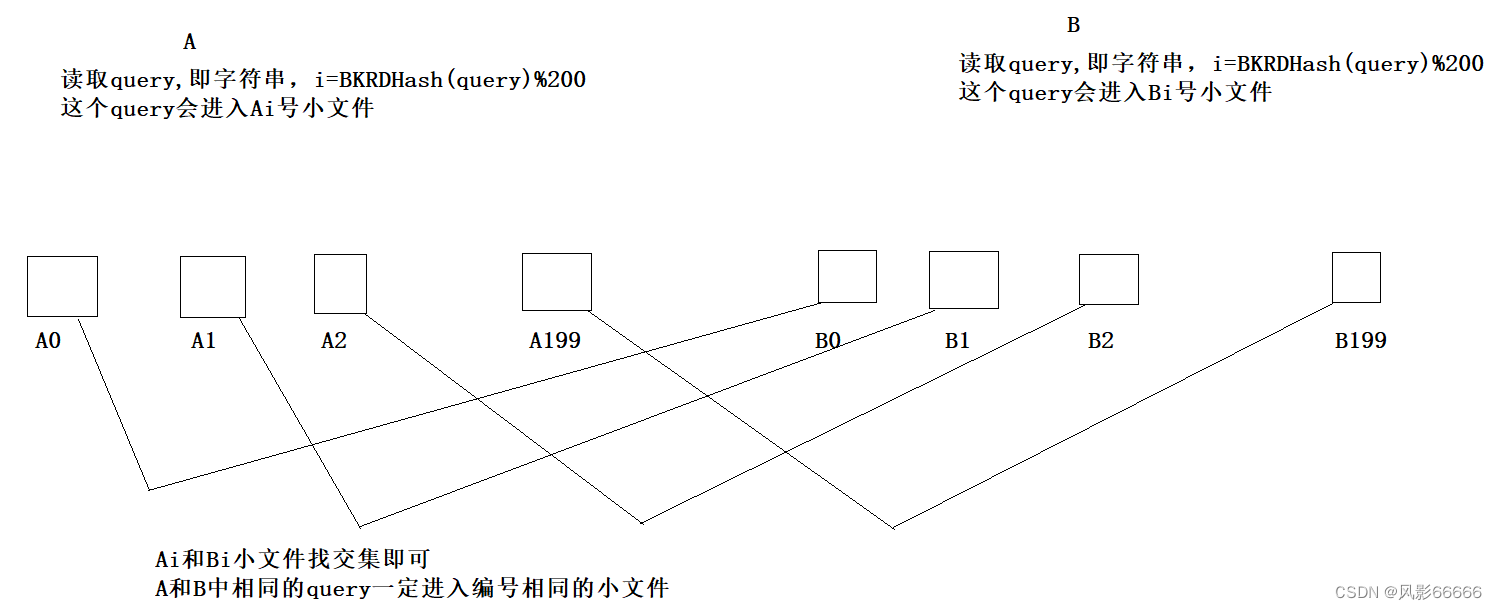
注意:如果Ai和Bi都太大,可以考虑换个哈希函数,再切割一次
全部代码
-
相关阅读:
自然之州阿肯色及温泉国家公园
如果你是一个 Java 面试官,你会问哪些问题?
怎样才能让百度搜索到自己的博客?--九五小庞
Mybatis SQL构建器
jdk1.8中list按对象的某个属性分组
每日练习------随机产生一个1-100之间的整数,看能几次猜中。要求:猜的次数不能超过7次,每次猜完之后都要提示“大了”或者“小了”。
云端炼丹,算力白嫖,基于云端GPU(Colab)使用So-vits库制作AI特朗普演唱《国际歌》
原码,反码,补码以及计算
Flutter布局组件:水平/垂直组件、叠加布局组件、流式布局组件
取证之查看本机保存的WiFi密码
- 原文地址:https://blog.csdn.net/weixin_58867976/article/details/125464703

- 最新文章
-
沪漂五周年了:我越来越迷茫了
Agentic Skill Routing 实战:别再把所有 Skill 塞进 AI Agent 上下文
MySQL-Seconds_behind_master的精度误差
[MAF预定义ChatClient中间件-03]CachingChatClient——利用缓存省钱省时间
AI的至暗历史:从万众期待到被政府撤资,AI的两次死亡徘徊
Agent OS :五种驯服不确定性的范式
PortSwigger SQL注入LAB11
数据库即时编译JIT
[Begin]AI Learn Data Day 0
深度学习进阶(二十七)现代 LLM 的核心架构设计其二:SwiGLU