-
图论01-【无权无向】-图的基本表示-邻接矩阵/邻接表
1. 代码仓库
https://github.com/Chufeng-Jiang/Graph-Theory/tree/main/src/Chapt01_Adjacency
2. 图的基本表示的比较
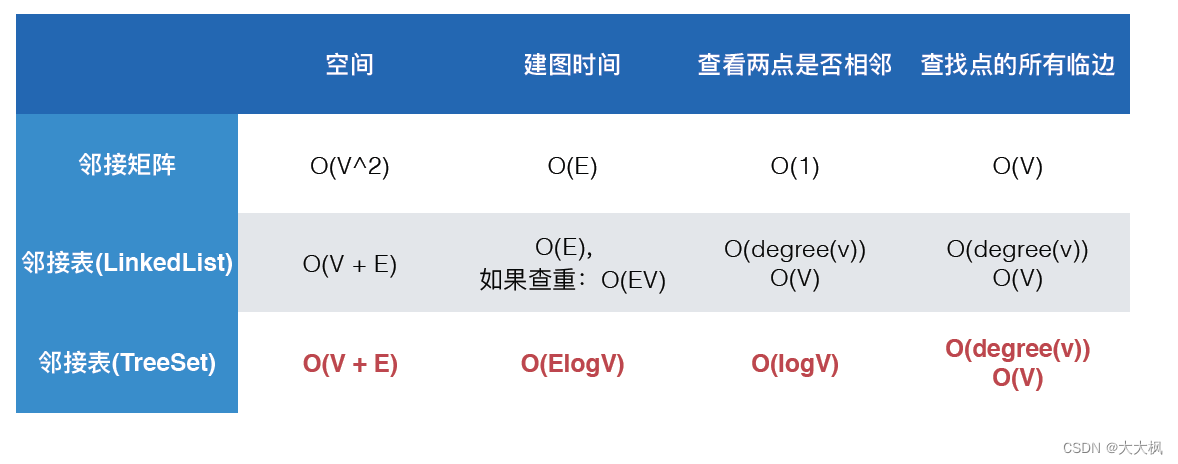
3. 邻接矩阵:Array和TreeSet
3.1 图示
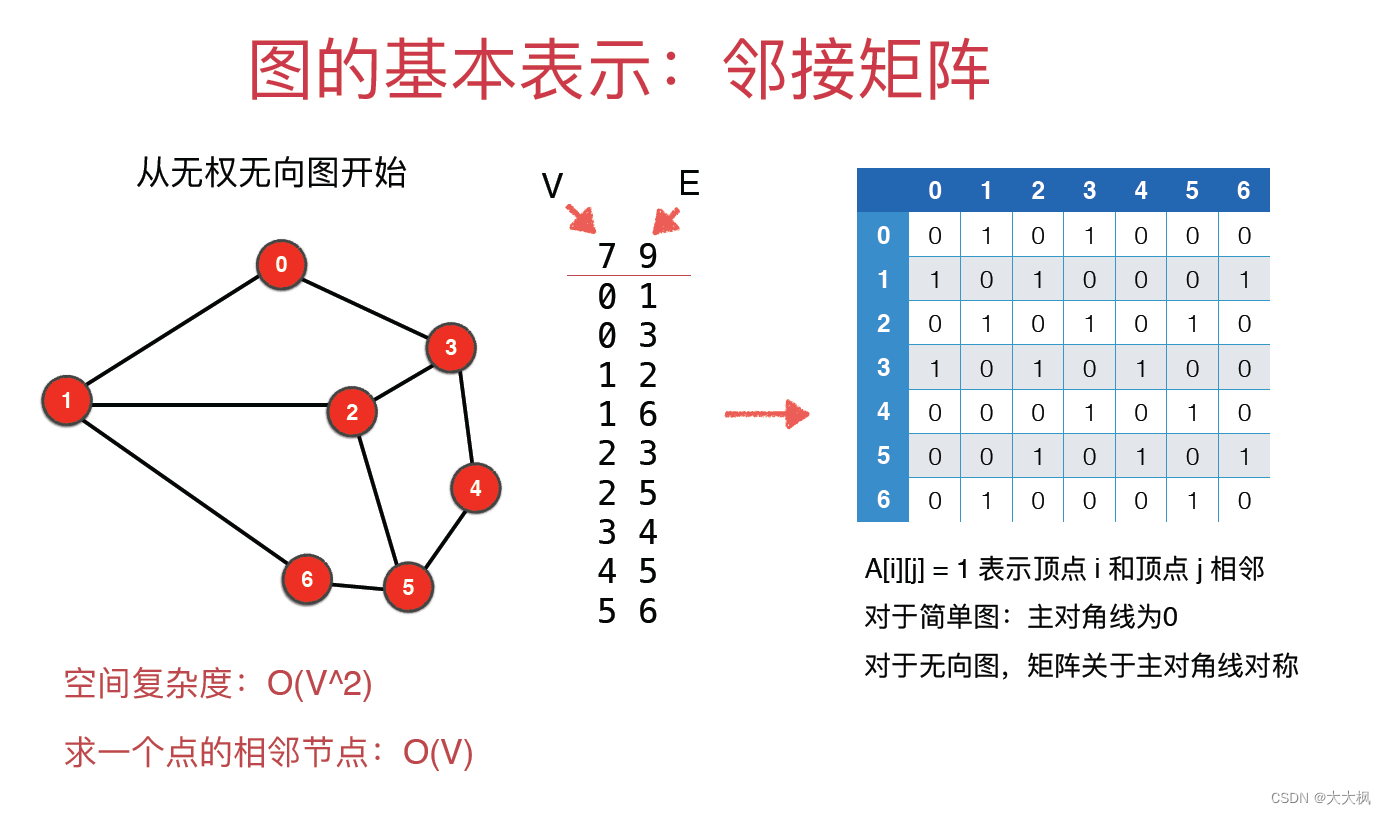
3.2 Array主要代码解析
代码有删减public AdjMatrix(String filename){ File file = new File(filename); try(Scanner scanner = new Scanner(file)){ V = scanner.nextInt(); //读取第一行第一个数,代表图中的顶点数 //构造邻接矩阵 adj = new int[V][V]; E = scanner.nextInt(); //读取第一行第二个数,代表图中边的数量 // E是边的数量,在g.txt中表示为第二行开始的E行 for (int i = 0; i < E; i++) { int a = scanner.nextInt(); //读取边的一个顶点 int b = scanner.nextInt(); //读取边的另一个顶点 adj[a][b] = 1; //存在边则设置为1 adj[b][a] = 1; } } }- 1
- 2
- 3
- 4
- 5
- 6
- 7
- 8
- 9
- 10
- 11
- 12
- 13
- 14
- 15
- 16
- 17
- 18
- 19
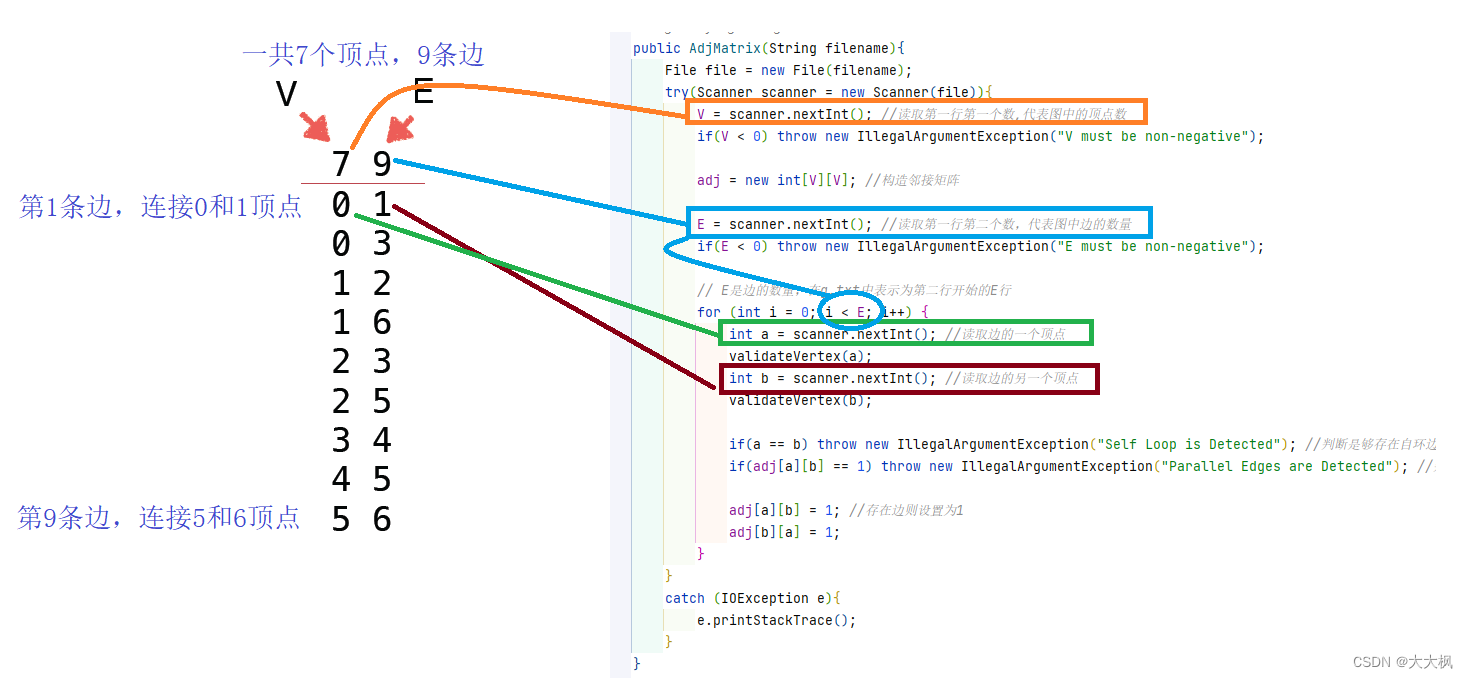
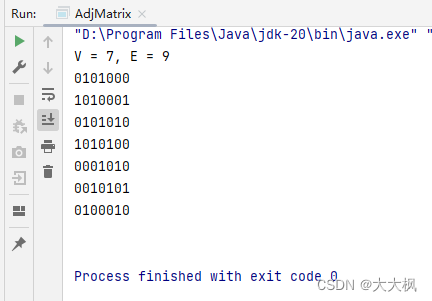
3.3 测试输出
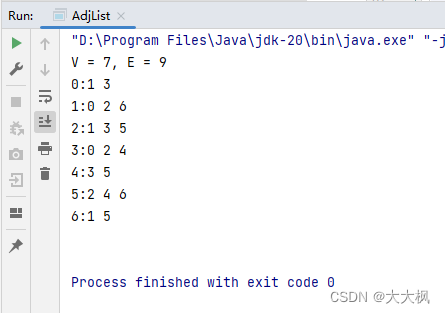
3.4 使用TreeSet的代码
代码有删减
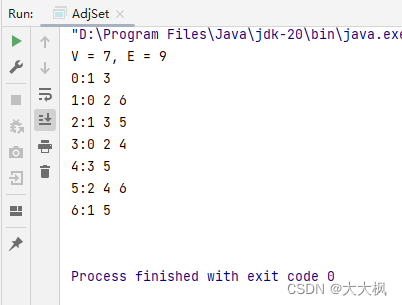
只需要改动一行adj = new TreeSet[V]; //构造邻接表, V行,V个LinkedList
4. 邻接表:LinkedList
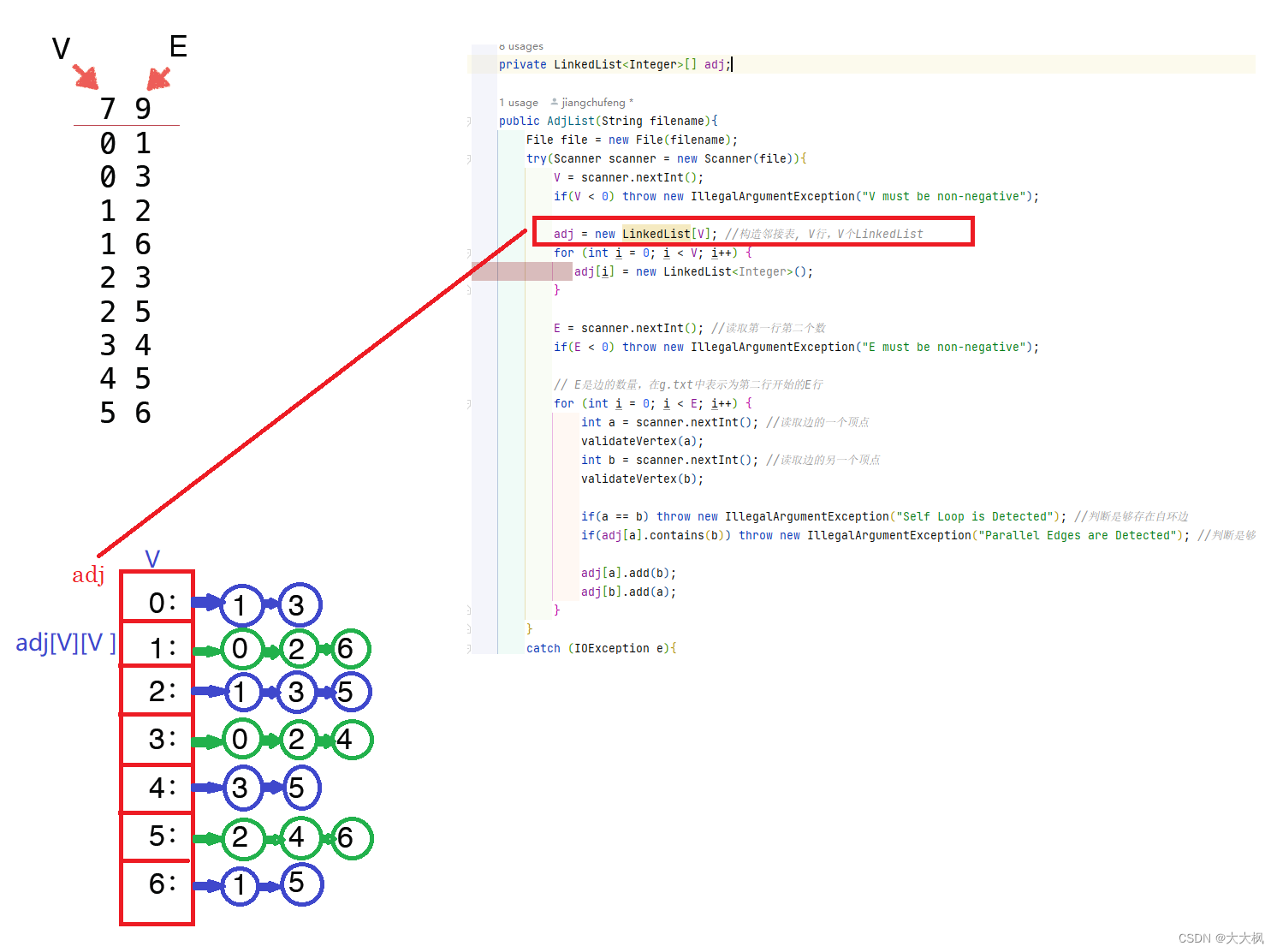
4.1 图示
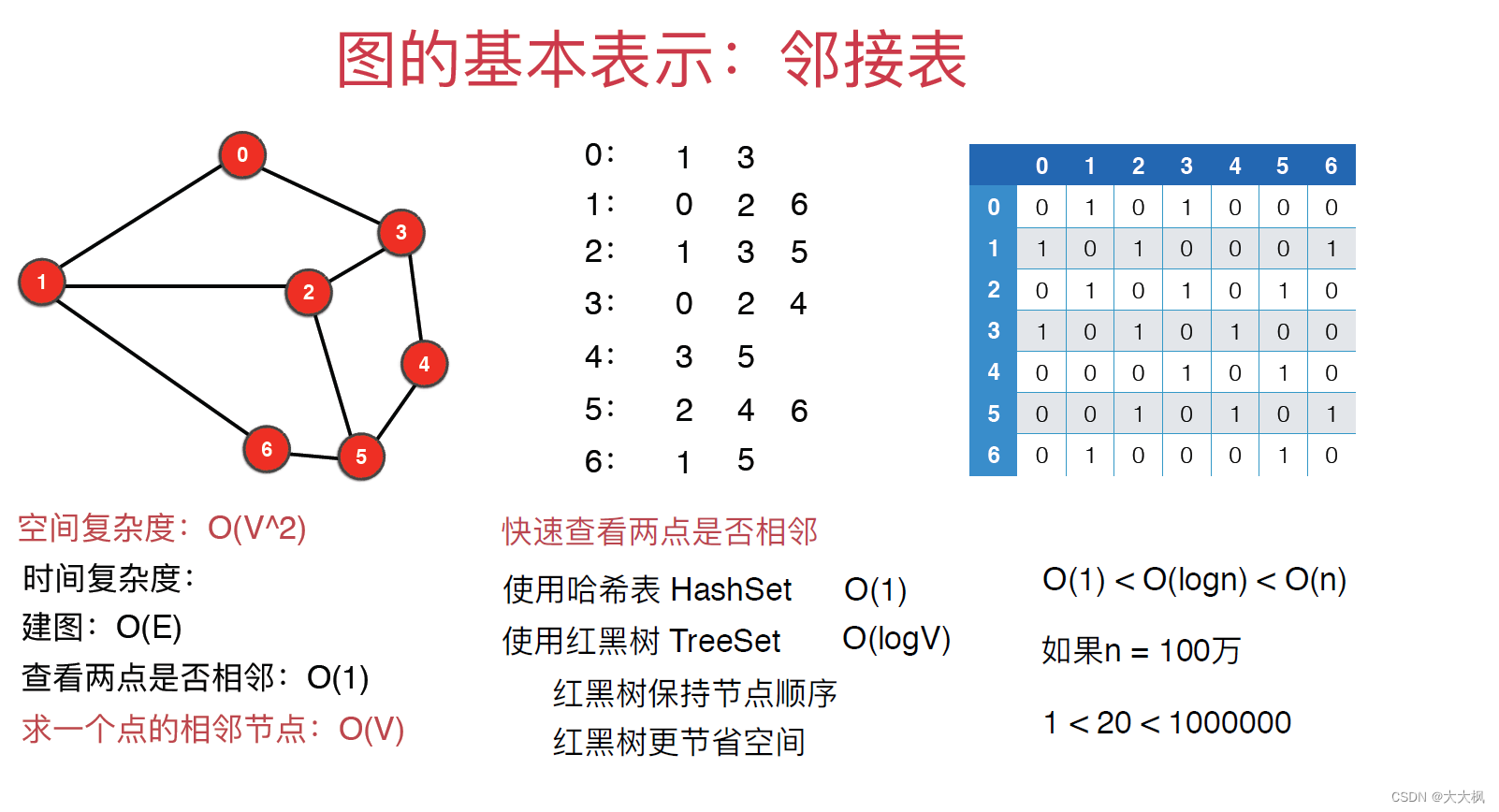
4.2 LinkedList主要代码解析
代码有删减public class AdjList { private int V; private int E; private LinkedList<Integer>[] adj; public AdjList(String filename){ File file = new File(filename); try(Scanner scanner = new Scanner(file)){ V = scanner.nextInt(); /*构造邻接表, V行,V个LinkedList*/ adj = new LinkedList[V]; for (int i = 0; i < V; i++) { adj[i] = new LinkedList<Integer>(); } E = scanner.nextInt(); //读取第一行第二个数 // E是边的数量,在g.txt中表示为第二行开始的E行 for (int i = 0; i < E; i++) { int a = scanner.nextInt(); //读取边的一个顶点 int b = scanner.nextInt(); //读取边的另一个顶点 adj[a].add(b); adj[b].add(a); } } }- 1
- 2
- 3
- 4
- 5
- 6
- 7
- 8
- 9
- 10
- 11
- 12
- 13
- 14
- 15
- 16
- 17
- 18
- 19
- 20
- 21
- 22
- 23
- 24
- 25
- 26
- 27
4.3 测试输出
5. 完整代码
5.1 邻接表 - Array
package Chapt01_Adjacency; import java.io.File; import java.io.IOException; import java.util.LinkedList; import java.util.Scanner; public class AdjList { private int V; private int E; private LinkedList<Integer>[] adj; public AdjList(String filename){ File file = new File(filename); try(Scanner scanner = new Scanner(file)){ V = scanner.nextInt(); if(V < 0) throw new IllegalArgumentException("V must be non-negative"); adj = new LinkedList[V]; //构造邻接表, V行,V个LinkedList for (int i = 0; i < V; i++) { adj[i] = new LinkedList<Integer>(); } E = scanner.nextInt(); //读取第一行第二个数 if(E < 0) throw new IllegalArgumentException("E must be non-negative"); // E是边的数量,在g.txt中表示为第二行开始的E行 for (int i = 0; i < E; i++) { int a = scanner.nextInt(); //读取边的一个顶点 validateVertex(a); int b = scanner.nextInt(); //读取边的另一个顶点 validateVertex(b); if(a == b) throw new IllegalArgumentException("Self Loop is Detected"); //判断是够存在自环边 if(adj[a].contains(b)) throw new IllegalArgumentException("Parallel Edges are Detected"); //判断是够存在平行l边 adj[a].add(b); adj[b].add(a); } } catch (IOException e){ e.printStackTrace(); } } private void validateVertex(int v){ if(v < 0 || v >= V) throw new IllegalArgumentException("vertex" + v + "is invalid"); } public int V(){ return V; } public int E(){ return E; } public boolean hasEdge(int v, int w){ validateVertex(v); validateVertex(w); return adj[v].contains(w); } public LinkedList<Integer> adj(int v){ validateVertex(v); return adj[v]; } public int degree(int v){ return adj(v).size(); } @Override public String toString(){ StringBuilder sb = new StringBuilder(); sb.append(String.format("V = %d, E = %d\n", V, E)); for (int i = 0; i < V; i++) { sb.append(String.format("%d:",i)); for (int w: adj[i]) { sb.append(String.format("%d ",w)); } sb.append('\n'); } return sb.toString(); } public static void main(String[] args){ AdjList adjList = new AdjList("g1.txt"); //新建邻接矩阵,并从文件内容初始化 System.out.println(adjList); } }- 1
- 2
- 3
- 4
- 5
- 6
- 7
- 8
- 9
- 10
- 11
- 12
- 13
- 14
- 15
- 16
- 17
- 18
- 19
- 20
- 21
- 22
- 23
- 24
- 25
- 26
- 27
- 28
- 29
- 30
- 31
- 32
- 33
- 34
- 35
- 36
- 37
- 38
- 39
- 40
- 41
- 42
- 43
- 44
- 45
- 46
- 47
- 48
- 49
- 50
- 51
- 52
- 53
- 54
- 55
- 56
- 57
- 58
- 59
- 60
- 61
- 62
- 63
- 64
- 65
- 66
- 67
- 68
- 69
- 70
- 71
- 72
- 73
- 74
- 75
- 76
- 77
- 78
- 79
- 80
- 81
- 82
- 83
- 84
- 85
- 86
- 87
- 88
- 89
- 90
- 91
- 92
- 93
- 94
- 95
5.2 邻接表-TreeSet
package Chapt01_Adjacency; import java.io.File; import java.io.IOException; import java.util.Scanner; import java.util.TreeSet; public class AdjSet { private int V; private int E; private TreeSet<Integer>[] adj; public AdjSet(String filename){ File file = new File(filename); try(Scanner scanner = new Scanner(file)){ V = scanner.nextInt(); if(V < 0) throw new IllegalArgumentException("V must be non-negative"); adj = new TreeSet[V]; //构造邻接表, V行,V个LinkedList for (int i = 0; i < V; i++) { adj[i] = new TreeSet<Integer>(); } E = scanner.nextInt(); //读取第一行第二个数 if(E < 0) throw new IllegalArgumentException("E must be non-negative"); // E是边的数量,在g.txt中表示为第二行开始的E行 for (int i = 0; i < E; i++) { int a = scanner.nextInt(); //读取边的一个顶点 validateVertex(a); int b = scanner.nextInt(); //读取边的另一个顶点 validateVertex(b); if(a == b) throw new IllegalArgumentException("Self Loop is Detected"); //判断是够存在自环边 if(adj[a].contains(b)) throw new IllegalArgumentException("Parallel Edges are Detected"); //判断是够存在平行l边 adj[a].add(b); adj[b].add(a); } } catch (IOException e){ e.printStackTrace(); } } private void validateVertex(int v){ if(v < 0 || v >= V) throw new IllegalArgumentException("vertex" + v + "is invalid"); } public int V(){ return V; } public int E(){ return E; } public boolean hasEdge(int v, int w){ validateVertex(v); validateVertex(w); return adj[v].contains(w); } public Iterable<Integer> adj(int v){ // 可以是TreeSet,但是数组、链表、红黑树都是实现了Iterable的接口,因此可以统一写成这样 validateVertex(v); return adj[v]; } public int degree(int v){ validateVertex(v); return adj[v].size(); // Iterable没有size()方法 } @Override public String toString(){ StringBuilder sb = new StringBuilder(); sb.append(String.format("V = %d, E = %d\n", V, E)); for (int i = 0; i < V; i++) { sb.append(String.format("%d:",i)); for (int w: adj[i]) { sb.append(String.format("%d ",w)); } sb.append('\n'); } return sb.toString(); } public static void main(String[] args){ AdjSet adjSet = new AdjSet("g1.txt"); //新建邻接矩阵,并从文件内容初始化 System.out.println(adjSet); } }- 1
- 2
- 3
- 4
- 5
- 6
- 7
- 8
- 9
- 10
- 11
- 12
- 13
- 14
- 15
- 16
- 17
- 18
- 19
- 20
- 21
- 22
- 23
- 24
- 25
- 26
- 27
- 28
- 29
- 30
- 31
- 32
- 33
- 34
- 35
- 36
- 37
- 38
- 39
- 40
- 41
- 42
- 43
- 44
- 45
- 46
- 47
- 48
- 49
- 50
- 51
- 52
- 53
- 54
- 55
- 56
- 57
- 58
- 59
- 60
- 61
- 62
- 63
- 64
- 65
- 66
- 67
- 68
- 69
- 70
- 71
- 72
- 73
- 74
- 75
- 76
- 77
- 78
- 79
- 80
- 81
- 82
- 83
- 84
- 85
- 86
- 87
- 88
- 89
- 90
- 91
- 92
- 93
- 94
5.3 邻接矩阵-LinkedList
package Chapt01_Adjacency; import java.io.File; import java.io.IOException; import java.util.ArrayList; import java.util.Scanner; public class AdjMatrix { private int V; private int E; private int[][] adj; // 构造函数,从文件内容初始化邻接矩阵 public AdjMatrix(String filename){ File file = new File(filename); try(Scanner scanner = new Scanner(file)){ V = scanner.nextInt(); //读取第一行第一个数,代表图中的顶点数 if(V < 0) throw new IllegalArgumentException("V must be non-negative"); adj = new int[V][V]; //构造邻接矩阵 E = scanner.nextInt(); //读取第一行第二个数,代表图中边的数量 if(E < 0) throw new IllegalArgumentException("E must be non-negative"); // E是边的数量,在g.txt中表示为第二行开始的E行 for (int i = 0; i < E; i++) { int a = scanner.nextInt(); //读取边的一个顶点 validateVertex(a); int b = scanner.nextInt(); //读取边的另一个顶点 validateVertex(b); if(a == b) throw new IllegalArgumentException("Self Loop is Detected"); //判断是够存在自环边 if(adj[a][b] == 1) throw new IllegalArgumentException("Parallel Edges are Detected"); //判断是否存在平行l边 adj[a][b] = 1; //存在边则设置为1 adj[b][a] = 1; } } catch (IOException e){ e.printStackTrace(); } } private void validateVertex(int v){ if(v < 0 || v >= V) throw new IllegalArgumentException("vertex" + v + "is invalid"); } public int V(){ return V; } public int E(){ return E; } public boolean hasEdge(int v, int w){ validateVertex(v); validateVertex(w); return adj[v][w] == 1; } public ArrayList<Integer> adj(int v){ validateVertex(v); ArrayList<Integer> res = new ArrayList<>(); for (int i = 0; i < V; i++) { if(adj[v][i] == 1) res.add(i); } return res; } public int degree(int v){ return adj(v).size(); //adj(v)是上方的adj方法,size()是ArrayList的接口 } // 用于在控制台打印该临接矩阵 @Override public String toString(){ StringBuilder sb = new StringBuilder(); sb.append(String.format("V = %d, E = %d\n", V, E)); //打印顶点数和边的数量 for (int i = 0; i < V; i++) { //行 for (int j = 0; j < V; j++) { //列 sb.append(String.format("%d",adj[i][j])); //读取矩阵的值 } sb.append('\n'); //行尾换行 } return sb.toString(); //返回该邻接矩阵 } public static void main(String[] args){ AdjMatrix adjMatrix = new AdjMatrix("g1.txt"); //新建邻接矩阵,并从文件内容初始化 System.out.println(adjMatrix); } }- 1
- 2
- 3
- 4
- 5
- 6
- 7
- 8
- 9
- 10
- 11
- 12
- 13
- 14
- 15
- 16
- 17
- 18
- 19
- 20
- 21
- 22
- 23
- 24
- 25
- 26
- 27
- 28
- 29
- 30
- 31
- 32
- 33
- 34
- 35
- 36
- 37
- 38
- 39
- 40
- 41
- 42
- 43
- 44
- 45
- 46
- 47
- 48
- 49
- 50
- 51
- 52
- 53
- 54
- 55
- 56
- 57
- 58
- 59
- 60
- 61
- 62
- 63
- 64
- 65
- 66
- 67
- 68
- 69
- 70
- 71
- 72
- 73
- 74
- 75
- 76
- 77
- 78
- 79
- 80
- 81
- 82
- 83
- 84
- 85
- 86
- 87
- 88
- 89
- 90
- 91
- 92
- 93
- 94
- 95
- 96
- 97
5.4 输入文件
7 9 0 1 0 3 1 2 1 6 2 3 2 5 3 4 4 5 5 6- 1
- 2
- 3
- 4
- 5
- 6
- 7
- 8
- 9
- 10
- 11
-
相关阅读:
tp5使用sum()聚合函数分组查询
淘宝API接口,item_get-获得淘宝商品详情(淘宝商品详情 API 返回值说明)
苍穹外卖 day12 Echats 营业台数据可视化整合
[附源码]java毕业设计基于的图书馆管理系统
一百七十九、Linux——Linux报错No package epel-release available
12 个强大的现代 CSS 技术
20220701 Barbalat引理证明
webrtc USB摄像头
服务器数据恢复—Storwize V3700存储数据恢复案例
Elasticsearch8.4.3单机版安装
- 原文地址:https://blog.csdn.net/jiangchufeng123/article/details/133956784

- 最新文章
-
【FHE】我们如何实现同态加密推理(八):SiLU 的密文化——两条路径,和一个 8 字节的开关
SQLcl 中 c/old/new 替换变量为何失效?先定位再替换
不让模型写作文,直接从它脑子里读答案:Jev 决策在 .NET 的两条路线
Halo插件:支持GitHub的图床附件策略
电视投屏界的“一股清流”!SimpleTVCast 6.0.0-beta 抢先体验:无需TV端App,界面大换血!✨
华三VXLAN集中式网关实战指南:Spine多活网关 + 双活接入(M-LAG)
软件更好写之后口碑会更重要
大 O、大 Omega、大 Theta 的区别,O(n) 复杂度是什么意思
Java标签跳转:一个鲜为人知但却很实用的小技巧
多智能体系统论文速读