-
c语言练习94:分割链表
分割链表
给你一个链表的头节点
head和一个特定值x,请你对链表进行分隔,使得所有 小于x的节点都出现在 大于或等于x的节点之前。你不需要 保留 每个分区中各节点的初始相对位置。
示例 1:

输入:head = [1,4,3,2,5,2], x = 3
输出:[1,2,2,4,3,5]
示例 2:
输入:head = [2,1], x = 2
输出:[1,2]
提示:
- 链表中节点的数目在范围
[0, 200]内 -100 <= Node.val <= 100-200 <= x <= 200
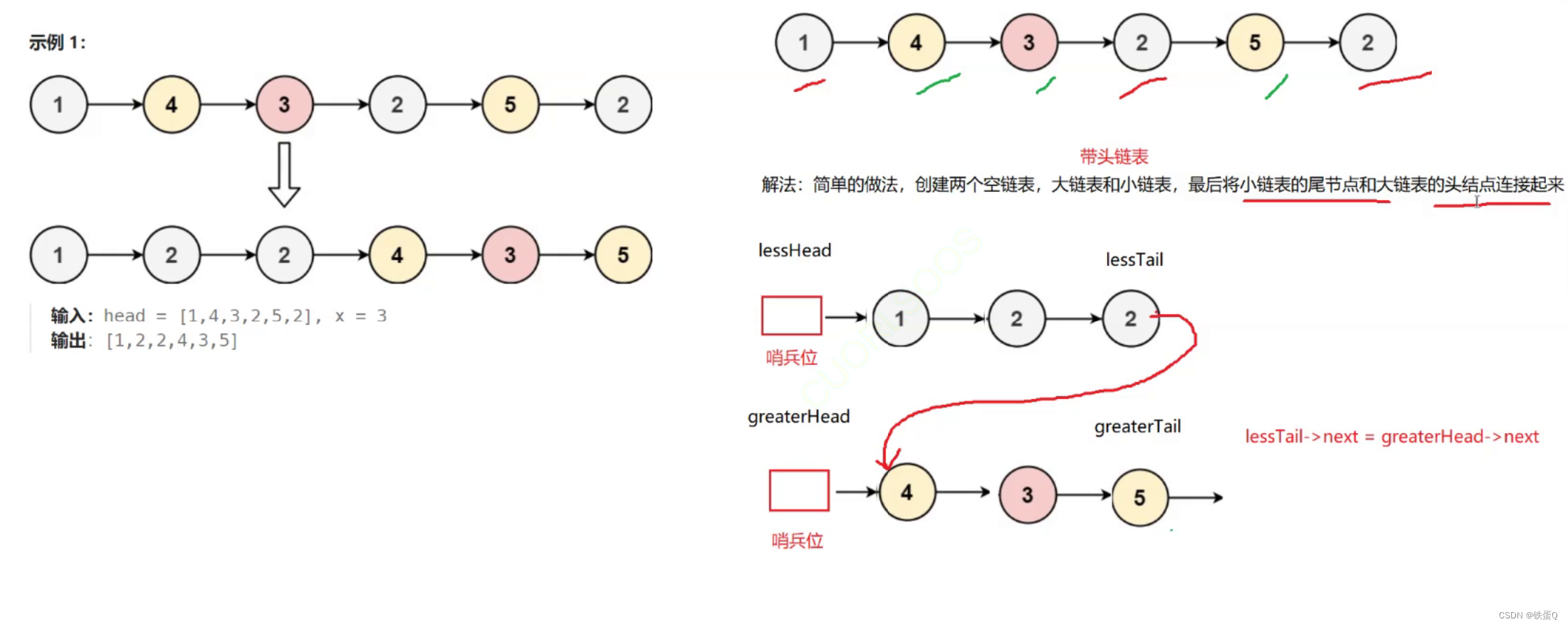

代码:
- /**
- * Definition for singly-linked list.
- * struct ListNode {
- * int val;
- * struct ListNode *next;
- * };
- */
- typedef struct ListNode ListNode;
- struct ListNode* partition(struct ListNode* head, int x){
- if(head==NULL){
- return head;
- }
- //创建带头的大小链表
- ListNode*lessHead,*lessTail,*greaterHead,*greaterTail;
- //大小链表的哨兵卫
- lessHead=lessTail=(ListNode*)malloc(sizeof(ListNode));
- greaterHead=greaterTail=(ListNode*)malloc(sizeof(ListNode));
- ListNode*cur=head;
- //遍历原链表,将结点放到大小链表中
- while(cur){
- if(cur->val//放到小链表中lessTail->next=cur;lessTail=lessTail->next;}else{//放到大链表中greaterTail->next=cur;greaterTail=greaterTail->next;}cur=cur->next;}if(greaterTail){greaterTail->next=NULL;}//小链表的尾和大链表的头(第一个有效结点)连接起来lessTail->next=greaterHead->next;//把动态开辟的空间释放掉free(greaterHead);ListNode*rethead=lessHead->next;free(lessHead);return rethead;}


理解exit
1、exit的功能为:退出当前运行的程序,并将参数value返回给主调进程。
2、exit(0),exit(1) 和 exit(-1)的区别
- exit(0)表示程序正常退出;除了0之外,其他参数均代表程序异常退出,如:exit(1),exit(-1)。
- exit(1)和exit(-1)是分别返回1和-1到主调程序。
- exit(0)则是返回0。exit(0)表示程序正常退出,非0表示非正常退出。
3、return与exit的区别
- return是语言级别的,它表示了调用堆栈的返回;
- 而exit是系统调用级别的,它表示了一个进程的结束。
return和exit作用大致相同。
在main中:
return v; 与 exit(v); 的效果相同。
但是在其它功能函数中就会有所区别:
return会跳出函数,而exit会结束程序。
即: return是返回函数调用,如果返回的是main函数,则为退出程序 ;
exit是在调用处强行退出程序,运行一次该程序就被强制结束 。
4、通常可以借助exit()的返回值判断程序结束状态,
0表示程序正常退出,
其它值是异常退出,
在退出前可以给出一些提示信息,方便在调试程序时察看出错原因。
- 相关阅读:
some和every
关于栈迁移的那些事儿
Go语言excelize包-02-工作表操作
汽车流通行业4S门店生存性指标:零服吸收率
免费活动-11月4日敏捷武林上海站 | Scrum.org CEO 亲临现场
持续交付知易行难,想做成这事你要理解这几个关键点
Java 入门-02-人机交互-图形化界面的小故事
Bloc入门之Cubit详解
c++ || STL关联式容器
VoLTE基础自学系列 | VoLTE中的DNS和eNUM需要定哪些资源记录?
- 原文地址:https://blog.csdn.net/2301_77479435/article/details/133924148
- 链表中节点的数目在范围
