-
大数据安全 | 【实验】DES加密解密
📚DES介绍
-
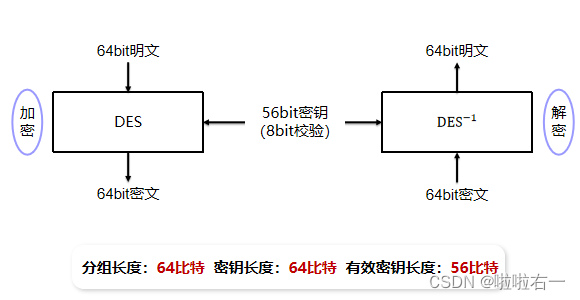
DES (Data Encryption Standard)是一种使用56位密钥对64位长分组进行加密的密码,是一种迭代算法。
-
DES算法是属于对称密码算法中的分组加密算法,是第一个公开的分组加密算法。

-
DES对明文中每个分组的加密过程都包含16轮,且每轮的操作都完全相同。每轮使用不同的子密钥,但是子密钥是从主密钥中推导而来。


📚基本流程


- Step1:对明文二进制的一块(每64位为一块)进行IP置换
- Step2:对IP置换后的数据进行切分,左32位 L 0 L_0 L0、右32位 R 0 R_0 R0
- Step3:根据密钥计算每一轮的子密钥: K 1 K_1 K1、 K 2 K_2 K2…、 K 16 K_{16} K16(在这里我们从1开始标号,在后续代码中,考虑到索引从0开始,对应子密钥生成标号一并从0开始标)
- Step4:获取得到下一轮的
L
n
L_n
Ln 与
R
n
R_n
Rn ,中间参与运算的有
K
n
K_n
Kn,以及
F函数等 - Step5:重复步骤 4 操作16次
- Step6:合并最后计算得到的 L 16 L_{16} L16 与 R 16 R_{16} R16【注意看!这里最后R在左边L在右边】
- Step7:进行IP逆置换得到最后的密文
🐇初始IP置换和逆置换
-
关于置换

- 示例:明文的二进制为:
0100100101001100010011110101011001000101010110010100111101010101
(ILOVEYOU:每个字符以8位转换) - 那么明文的第 1 为 0 需要置换为第 58 位的值,即 1,同理每一位按置换表重新排列。
- 故:IP置换后的数为:
1111111110101000110111101111010100000000000000000110011101001100 - 同理IP逆置换也是一样的操作。
- 示例:明文的二进制为:
-
初始数据置换表
IP
[ 58 50 42 34 26 18 10 2 60 52 44 36 28 20 12 4 62 54 46 38 30 22 14 6 64 56 48 40 32 24 16 8 57 49 41 33 25 17 9 1 59 51 43 35 27 19 11 3 61 53 45 37 29 21 13 5 63 55 47 39 31 23 15 7 ]58606264575961635052545649515355424446484143454734363840333537392628303225272931182022241719212310121416911131524681357 [ 58 50 42 34 26 18 10 2 60 52 44 36 28 20 12 4 62 54 46 38 30 22 14 6 64 56 48 40 32 24 16 8 57 49 41 33 25 17 9 1 59 51 43 35 27 19 11 3 61 53 45 37 29 21 13 5 63 55 47 39 31 23 15 7 ] -
最终置换表
IP_1(逆置换表)
[ 40 8 48 16 56 24 64 32 39 7 47 15 55 23 63 31 38 6 46 14 54 22 62 30 37 5 45 13 53 21 61 29 36 4 44 12 52 20 60 28 35 3 43 11 51 19 59 27 34 2 42 10 50 18 58 26 33 1 41 9 49 17 57 25 ]40393837363534338765432148474645444342411615141312111095655545352515049242322212019181764636261605958573231302928272625 [ 40 8 48 16 56 24 64 32 39 7 47 15 55 23 63 31 38 6 46 14 54 22 62 30 37 5 45 13 53 21 61 29 36 4 44 12 52 20 60 28 35 3 43 11 51 19 59 27 34 2 42 10 50 18 58 26 33 1 41 9 49 17 57 25 ] # 按照给定的置换表进行置换 def replace(self, table: str, replace_table: list) -> str: new_table = "" for i in replace_table: # 因为列表的索引是从0开始的,而替换表中的位置索引是从1开始的,所以需要进行减1的操作。 new_table += table[i - 1] return new_table- 1
- 2
- 3
- 4
- 5
- 6
- 7
🐇计算每一轮的子密钥
-
DES的密钥每个字节的第8位作为奇偶校验位(8,16,24,32,40,48,56和64),密钥实际有效位为56位。
-
56位密钥由以下的密钥初始置换表(PC_1)置换默认密钥获得。
[ 57 49 41 33 25 17 9 1 58 50 42 34 26 18 10 2 59 51 43 35 27 19 11 3 60 52 44 36 63 55 47 39 31 23 15 7 62 54 46 38 30 22 14 6 61 53 45 37 29 21 13 5 28 20 12 4 ]57110196371421495821155626134150593475461533425160394653282534435231384520172635442330371291827361522294 [ 57 49 41 33 25 17 9 1 58 50 42 34 26 18 10 2 59 51 43 35 27 19 11 3 60 52 44 36 63 55 47 39 31 23 15 7 62 54 46 38 30 22 14 6 61 53 45 37 29 21 13 5 28 20 12 4 ] -
每一轮的子密钥由这56位密钥产生,生成方法如下:
- 将56位的密钥分成两部分,每部分28位
- 根据轮数,这两部分分别循环左移1位或两位(具体见下表)
[ 1 1 2 2 2 2 2 2 1 2 2 2 2 2 2 1 ][1122222212222221][ 1 1 2 2 2 2 2 2 1 2 2 2 2 2 2 1 ]
-
移动后,又从56位中选出48位(没有9,18,22,25,35,39,43,54)。通过置换,最终确定子密钥,这个过程称为密钥压缩置换。密钥压缩置换表PC_2如下:
[ 14 17 11 24 1 5 3 28 15 6 21 10 23 19 12 4 26 8 16 7 27 20 13 2 41 52 31 37 47 55 30 40 51 45 33 48 44 49 39 56 34 53 46 42 50 36 29 32 ]1432316413044461728197524049421115122731513950246420374556361212613473334295108255485332 [ 14 17 11 24 1 5 3 28 15 6 21 10 23 19 12 4 26 8 16 7 27 20 13 2 41 52 31 37 47 55 30 40 51 45 33 48 44 49 39 56 34 53 46 42 50 36 29 32 ] # 返回加密过程中16轮的子密钥 def get_sonkey(self): # 56位密钥由密钥初始置换表(PC_1)置换默认密钥获得 key = self.replace(self.K, self.PC_1) # 将56位的密钥分成两部分,每部分28位 left_key = key[0:28] right_key = key[28:56] # 存储子密钥 keys = [] for i in range(0, 16): # 由轮换表确定当前轮次的移动次数 move = self.k0[i] # 对左右部分分别进行移位操作 move_left = left_key[move:28] + left_key[0:move] move_right = right_key[move:28] + right_key[0:move] # 更新left_key和right_key left_key = move_left right_key = move_right # 合并形成当前轮次的子密钥 move_key = left_key + right_key # 按照密钥压缩置换表(PC_2)进行置换,得到长度为48位的子密钥ki,并将其添加到keys列表中。 ki = self.replace(move_key, self.PC_2) keys.append(ki) # 返回加密过程中的16轮子密钥。 return keys- 1
- 2
- 3
- 4
- 5
- 6
- 7
- 8
- 9
- 10
- 11
- 12
- 13
- 14
- 15
- 16
- 17
- 18
- 19
- 20
- 21
- 22
- 23
- 24
- 25


- 解密时密钥的使用顺序与加密时的顺序应当相反。
🐇迭代与F函数
-
由流程图可以得知 F 函数参数有 R n R_n Rn 以及 K n K_n Kn。 R n R_n Rn的长度是32位, K n K_n Kn的长度是48( K n K_n Kn即为每一轮的子密钥)。

-
每一次迭代
- L n = R n − 1 L_n=R_{n-1} Ln=Rn−1
- R n = L n − 1 ⊕ F ( R n − 1 , K n ) R_n=L_{n-1}\oplus {F(R_{n-1},K_n)} Rn=Ln−1⊕F(Rn−1,Kn)
-
F函数
- E扩展置换:将右半部分数据 R n R_n Rn从32位置换成48位,之后与当前子密钥进行异或运算
- S盒代替:将48位数据代替为32位数据。共有8个S盒,将E置换得到的48位数据,分为8组,每组6位,每个盒子输入6位输出4位,组合得到32位。
- P盒置换:S盒代替运算的32位输出按照P盒进行置换。该置换把输入的每位映射到输出位,任何一位不能被映射两次,也不能被略去,得到的数据还是32位的。

⭐️E扩展置换
-
将IP置换后获得的右半部分Rn,将32位输入扩展为48位(分为4位×8组)输出,生成与密钥相同长度的数据以进行异或运算。

-
E扩展表如下:
[ 32 1 2 3 4 5 4 5 6 7 8 9 8 9 10 11 12 13 12 13 14 15 16 17 16 17 18 19 20 21 20 21 22 23 24 25 24 25 26 27 28 29 28 29 30 31 32 1 ]3248121620242815913172125292610141822263037111519232731481216202428325913172125291 [ 32 1 2 3 4 5 4 5 6 7 8 9 8 9 10 11 12 13 12 13 14 15 16 17 16 17 18 19 20 21 20 21 22 23 24 25 24 25 26 27 28 29 28 29 30 31 32 1 ] -
最外边两列是扩展的数据,分别是从相邻行上取/下取一位所得。表中第二行的4取自上组中的末位,9取自下组中的首位。


-
扩展置换之后,右半部分数据 R n R_n Rn变为48位,与密钥置换得到的48位子密钥进行异或操作。
# 异或操作 def xor(self, xor1: str, xor2: str): size = len(xor1) result = "" for i in range(0, size): result += '0' if xor1[i] == xor2[i] else '1' return result- 1
- 2
- 3
- 4
- 5
- 6
- 7
⭐️S盒压缩
-
经过扩展的48位明文和48位密钥进行异或运算后,再使用8个S盒压缩处理得到32位数据
-
将48位分为8*6位
-
根据8个6进4出S盒进行压缩


-
每个S盒都是一个4行16列的表,盒中的每一项都是一个4位的数。
-
8*6位中第几个6位就对应第几个盒子。
-
6个输入确定了其对应的输出在哪一行哪一列,输入的首尾比特为行数H,中间四位比特为列数L,在S盒中查找第H行L列对应的数据。

-
代替过程产生8个4位的分组,在最后组合在一起形成32位数据。
# S盒代替 def s_box(self, xor_result: str): result = "" # 迭代8轮,每轮处理6位二进制数据 for i in range(0, 8): # 将48位数据分为8组,每组6位,循环进行 block = xor_result[i * 6:(i + 1) * 6] # 首尾比特得行数(十进制) line = int(block[0] + block[5], 2) # 中间四位比特得列数(十进制) column = int(block[1:5], 2) # 在S盒中查找,将所查到的十进制数转为二进制并通过[2:]切片去除二进制字符串的前缀"0b" res = bin(self.S[i][line * column])[2:] if len(res) < 4: # 如果结果的长度不足4位,则在左边用'0'进行填充 res = '0' * (4 - len(res)) + res result += res # result中存储了经过S盒替换后的32位二进制数据 return result- 1
- 2
- 3
- 4
- 5
- 6
- 7
- 8
- 9
- 10
- 11
- 12
- 13
- 14
- 15
- 16
- 17
- 18
- 19
⭐️P盒置换
- 由S盒置换后得到的数据,进行P置换。P置换表如下:
[ 16 7 20 21 29 12 28 17 1 15 23 26 5 18 31 10 2 8 24 14 32 27 3 9 19 13 30 6 22 11 4 25 ]1629152321922712151882713112028233124330421172610149625 [ 16 7 20 21 29 12 28 17 1 15 23 26 5 18 31 10 2 8 24 14 32 27 3 9 19 13 30 6 22 11 4 25 ]
- P盒置换之后就将结果与 L n − 1 L_{n-1} Ln−1进行异或。
⭐️最后的F函数及迭代实现
-
F函数
# F函数,进行E扩展,与key异或操作,S盒替代及P盒置换操作后返回32位01字符串 def F_function(self, right: str, key: str): # 对right进行E扩展 e_result = self.replace(right, self.E) # 与key 进行异或操作 xor_result = self.xor(e_result, key) # 进入S盒子 s_result = self.s_box(xor_result) # 进行P置换 p_result = self.replace(s_result, self.P) return p_result- 1
- 2
- 3
- 4
- 5
- 6
- 7
- 8
- 9
- 10
- 11
-
迭代实现
# 16轮迭代加密 def iteration(self, bin_plaintext: str, key_list: list): # 分组切分 left = bin_plaintext[0:32] right = bin_plaintext[32:64] for i in range(0, 16): # L(n) = R(n-1) # R(n) = L(n-1)⊕F(R(n-1),K(n)) next_left = right f_result = self.F_function(right, key_list[i]) next_right = self.xor(left, f_result) left = next_left right = next_right # 注意看!这里最后R在左边,L在右边 return right + left- 1
- 2
- 3
- 4
- 5
- 6
- 7
- 8
- 9
- 10
- 11
- 12
- 13
- 14
- 15
📚DES加密解密实现
-
加密函数
# DES加密函数 def encrypt(self, plaintext): # 将给定明文转换为二进制 plaintext_2 = self.convert_to_2(plaintext) # 将二进制明文分为64位一组的块 plaintext_block = self.get_block(plaintext_2) # 存储加密后的分组 ciphertext_block = [] # 获取生成的16个子密钥列表 key_list = self.get_sonkey() for block in plaintext_block: # 初代IP置换 replaced_IP = self.replace(block, self.IP) # 16轮迭代操作 ite_result = self.iteration(replaced_IP, key_list) # 逆IP置换 replaced_IP_1 = self.replace(ite_result, self.IP_1) # 密文块replaced_IP_1添加到ciphertext_block列表中,以便后续拼接 ciphertext_block.append(replaced_IP_1) ciphertext = ''.join(ciphertext_block) return ciphertext- 1
- 2
- 3
- 4
- 5
- 6
- 7
- 8
- 9
- 10
- 11
- 12
- 13
- 14
- 15
- 16
- 17
- 18
- 19
- 20
- 21
-
解密函数
#DES解密函数 def decrypt(self, ciphertext): # 存储解密后的分组 plaintext_block = [] # 获取生成的16个子密钥列表 key_list = self.get_sonkey() # 解密时密钥的使用顺序与加密时的顺序应当相反。 key_list = key_list[::-1] # 将二进制密文分为64位一组的块 ciphertext_block = [ciphertext[i:i + 64] for i in range(0, len(ciphertext), 64)] for block in ciphertext_block: # 初代IP置换 replaced_IP = self.replace(block, self.IP) # 16轮迭代操作 ite = self.iteration(replaced_IP, key_list) # 逆IP置换 replaced_IP_1 = self.replace(ite, self.IP_1) # 明文块replaced_IP_1添加到plaintext_block列表中,以便后续拼接 plaintext_block.append(replaced_IP_1) # 拼接,并移除其中的所有全零块。 # 消除加密过程中可能引入的填充块,使得最终的二进制明文表示更加紧凑和直观。 plaintext = ''.join(plaintext_block).replace('00000000', '') # 将二进制明文转为字符串返回 return self.convert_to_str(plaintext)- 1
- 2
- 3
- 4
- 5
- 6
- 7
- 8
- 9
- 10
- 11
- 12
- 13
- 14
- 15
- 16
- 17
- 18
- 19
- 20
- 21
- 22
- 23
- 24
-
完整代码
class DES(): # 初始化DES加密的参数 def __init__(self): # 初始数据置换表IP,用于初始IP置换 self.IP = [ 58, 50, 42, 34, 26, 18, 10, 2, 60, 52, 44, 36, 28, 20, 12, 4, 62, 54, 46, 38, 30, 22, 14, 6, 64, 56, 48, 40, 32, 24, 16, 8, 57, 49, 41, 33, 25, 17, 9, 1, 59, 51, 43, 35, 27, 19, 11, 3, 61, 53, 45, 37, 29, 21, 13, 5, 63, 55, 47, 39, 31, 23, 15, 7, ] # 密钥初始置换表PC_1,用于获得最初的56位密钥 self.PC_1 = [ 57, 49, 41, 33, 25, 17, 9, 1, 58, 50, 42, 34, 26, 18, 10, 2, 59, 51, 43, 35, 27, 19, 11, 3, 60, 52, 44, 36, 63, 55, 47, 39, 31, 23, 15, 7, 62, 54, 46, 38, 30, 22, 14, 6, 61, 53, 45, 37, 29, 21, 13, 5, 28, 20, 12, 4, ] # 密钥压缩置换表PC_2,用于获得子密钥 self.PC_2 = [ 14, 17, 11, 24, 1, 5, 3, 28, 15, 6, 21, 10, 23, 19, 12, 4, 26, 8, 16, 7, 27, 20, 13, 2, 41, 52, 31, 37, 47, 55, 30, 40, 51, 45, 33, 48, 44, 49, 39, 56, 34, 53, 46, 42, 50, 36, 29, 32, ] # 密钥每一轮的对应左移位数 self.k0 = [1, 1, 2, 2, 2, 2, 2, 2, 1, 2, 2, 2, 2, 2, 2, 1, ] # E扩展表,用于将右半部分数据Rn从32位置换成48位 self.E = [ 32, 1, 2, 3, 4, 5, 4, 5, 6, 7, 8, 9, 8, 9, 10, 11, 12, 13, 12, 13, 14, 15, 16, 17, 16, 17, 18, 19, 20, 21, 20, 21, 22, 23, 24, 25, 24, 25, 26, 27, 28, 29, 28, 29, 30, 31, 32, 1, ] # S盒,将48位数据代替为32位数据 self.S = [ [ 14, 4, 13, 1, 2, 15, 11, 8, 3, 10, 6, 12, 5, 9, 0, 7, 0, 15, 7, 4, 14, 2, 13, 1, 10, 6, 12, 11, 9, 5, 3, 8, 4, 1, 14, 8, 13, 6, 2, 11, 15, 12, 9, 7, 3, 10, 5, 0, 15, 12, 8, 2, 4, 9, 1, 7, 5, 11, 3, 14, 10, 0, 6, 13, ], [ 15, 1, 8, 14, 6, 11, 3, 4, 9, 7, 2, 13, 12, 0, 5, 10, 3, 13, 4, 7, 15, 2, 8, 14, 12, 0, 1, 10, 6, 9, 11, 5, 0, 14, 7, 11, 10, 4, 13, 1, 5, 8, 12, 6, 9, 3, 2, 15, 13, 8, 10, 1, 3, 15, 4, 2, 11, 6, 7, 12, 0, 5, 14, 9, ], [ 10, 0, 9, 14, 6, 3, 15, 5, 1, 13, 12, 7, 11, 4, 2, 8, 13, 7, 0, 9, 3, 4, 6, 10, 2, 8, 5, 14, 12, 11, 15, 1, 13, 6, 4, 9, 8, 15, 3, 0, 11, 1, 2, 12, 5, 10, 14, 7, 1, 10, 13, 0, 6, 9, 8, 7, 4, 15, 14, 3, 11, 5, 2, 12, ], [ 7, 13, 14, 3, 0, 6, 9, 10, 1, 2, 8, 5, 11, 12, 4, 15, 13, 8, 11, 5, 6, 15, 0, 3, 4, 7, 2, 12, 1, 10, 14, 9, 10, 6, 9, 0, 12, 11, 7, 13, 15, 1, 3, 14, 5, 2, 8, 4, 3, 15, 0, 6, 10, 1, 13, 8, 9, 4, 5, 11, 12, 7, 2, 14, ], [ 2, 12, 4, 1, 7, 10, 11, 6, 8, 5, 3, 15, 13, 0, 14, 9, 14, 11, 2, 12, 4, 7, 13, 1, 5, 0, 15, 10, 3, 9, 8, 6, 4, 2, 1, 11, 10, 13, 7, 8, 15, 9, 12, 5, 6, 3, 0, 14, 11, 8, 12, 7, 1, 14, 2, 13, 6, 15, 0, 9, 10, 4, 5, 3, ], [ 12, 1, 10, 15, 9, 2, 6, 8, 0, 13, 3, 4, 14, 7, 5, 11, 10, 15, 4, 2, 7, 12, 9, 5, 6, 1, 13, 14, 0, 11, 3, 8, 9, 14, 15, 5, 2, 8, 12, 3, 7, 0, 4, 10, 1, 13, 11, 6, 4, 3, 2, 12, 9, 5, 15, 10, 11, 14, 1, 7, 6, 0, 8, 13, ], [ 4, 11, 2, 14, 15, 0, 8, 13, 3, 12, 9, 7, 5, 10, 6, 1, 13, 0, 11, 7, 4, 9, 1, 10, 14, 3, 5, 12, 2, 15, 8, 6, 1, 4, 11, 13, 12, 3, 7, 14, 10, 15, 6, 8, 0, 5, 9, 2, 6, 11, 13, 8, 1, 4, 10, 7, 9, 5, 0, 15, 14, 2, 3, 12, ], [ 13, 2, 8, 4, 6, 15, 11, 1, 10, 9, 3, 14, 5, 0, 12, 7, 1, 15, 13, 8, 10, 3, 7, 4, 12, 5, 6, 11, 0, 14, 9, 2, 7, 11, 4, 1, 9, 12, 14, 2, 0, 6, 10, 13, 15, 3, 5, 8, 2, 1, 14, 7, 4, 10, 8, 13, 15, 12, 9, 0, 3, 5, 6, 11, ], ] # P盒置换表,S盒代替运算的32位输出按照P盒进行置换 self.P = [ 16, 7, 20, 21, 29, 12, 28, 17, 1, 15, 23, 26, 5, 18, 31, 10, 2, 8, 24, 14, 32, 27, 3, 9, 19, 13, 30, 6, 22, 11, 4, 25, ] # 最终置换表IP_1,用于逆置换 self.IP_1 = [ 40, 8, 48, 16, 56, 24, 64, 32, 39, 7, 47, 15, 55, 23, 63, 31, 38, 6, 46, 14, 54, 22, 62, 30, 37, 5, 45, 13, 53, 21, 61, 29, 36, 4, 44, 12, 52, 20, 60, 28, 35, 3, 43, 11, 51, 19, 59, 27, 34, 2, 42, 10, 50, 18, 58, 26, 33, 1, 41, 9, 49, 17, 57, 25, ] # 设置默认密钥 self.K = '0110000101100010011000110110010001000001010000100100001101000100' # 进制转换——字符串转为二进制 def convert_to_2(self, string: str) -> str: # 将字符串转成bytes类型,再转成list str_list = list(bytes(string, 'utf8')) result = [] for num in str_list: # 用bin(num)将当前字节转换为二进制,然后使用[2:]切片操作去掉二进制字符串前面的"0b"标识。 # 用zfill(8)函数给二进制字符串添加前导零,确保二进制字符串长度为8位 # 一个字节由8个二进制位组成,保持一致性 result.append(bin(num)[2:].zfill(8)) # 将结果列表中的所有二进制字符串连接 return "".join(result) # 进制转换——二进制转成字符串 def convert_to_str(self, binary: str) -> str: # 将二进制字符串分组,每8位为一组 bin_list = [binary[i:i + 8] for i in range(0, len(binary), 8)] # 存储每个8位二进制数字所代表的整数值 list_int = [] for b in bin_list: # 将当前8位二进制数转换为对应的十进制整数 list_int.append(int(b, 2)) # 将整数列表转换为字节序列,再解码得到字符串 result = bytes(list_int).decode() return result # 对明文二进制进行分块,每64位为一块 def get_block(self, binary: str) -> list: # 首先获取给定二进制字符串的长度 len_binary = len(binary) if len_binary % 64 != 0: # 如果不能整除,说明按每64块分块不能刚好分块,需要添加前导零。 new_binary = ("0" * (64 - (len_binary % 64))) + binary # 分块 return [new_binary[i:i + 64] for i in range(0, len(new_binary), 64)] else: # 能被64整除,就不用补零,直接分块 return [binary[j:j + 64] for j in range(0, len(binary), 64)] # 按照给定的置换表进行置换 def replace(self, table: str, replace_table: list) -> str: new_table = "" for i in replace_table: # 因为列表的索引是从0开始的,而替换表中的位置索引是从1开始的,所以需要进行减1的操作。 new_table += table[i - 1] return new_table # 返回加密过程中16轮的子密钥 def get_sonkey(self): # 56位密钥由密钥初始置换表(PC_1)置换默认密钥获得 key = self.replace(self.K, self.PC_1) # 将56位的密钥分成两部分,每部分28位 left_key = key[0:28] right_key = key[28:56] # 存储子密钥 keys = [] for i in range(0, 16): # 由轮换表确定当前轮次的移动次数 move = self.k0[i] # 对左右部分分别进行移位操作 move_left = left_key[move:28] + left_key[0:move] move_right = right_key[move:28] + right_key[0:move] # 更新left_key和right_key left_key = move_left right_key = move_right # 合并形成当前轮次的子密钥 move_key = left_key + right_key # 按照密钥压缩置换表(PC_2)进行置换,得到长度为48位的子密钥ki,并将其添加到keys列表中。 ki = self.replace(move_key, self.PC_2) keys.append(ki) # 返回加密过程中的16轮子密钥。 return keys # 异或操作 def xor(self, xor1: str, xor2: str): size = len(xor1) result = "" for i in range(0, size): result += '0' if xor1[i] == xor2[i] else '1' return result # S盒代替 def s_box(self, xor_result: str): result = "" # 迭代8轮,每轮处理6位二进制数据 for i in range(0, 8): # 将48位数据分为8组,循环进行 block = xor_result[i * 6:(i + 1) * 6] # 首尾比特得行数 line = int(block[0] + block[5], 2) # 中间四位比特得列数 column = int(block[1:5], 2) # 在S盒中查找,将所得转为二进制并通过[2:]切片去除二进制字符串的前缀"0b" res = bin(self.S[i][line * column])[2:] if len(res) < 4: # 如果结果的长度不足4位,则在左边用'0'进行填充 res = '0' * (4 - len(res)) + res result += res # result中存储了经过S盒替换后的32位二进制数据 return result # F函数,进行E扩展,与key异或操作,S盒替代及P盒置换操作后返回32位01字符串 def F_function(self, right: str, key: str): # 对right进行E扩展 e_result = self.replace(right, self.E) # 与key 进行异或操作 xor_result = self.xor(e_result, key) # 进入S盒子 s_result = self.s_box(xor_result) # 进行P置换 p_result = self.replace(s_result, self.P) return p_result # 16轮迭代加密 def iteration(self, bin_plaintext: str, key_list: list): # 分组切分 left = bin_plaintext[0:32] right = bin_plaintext[32:64] for i in range(0, 16): # L(n) = R(n-1) # R(n) = L(n-1)⊕F(R(n-1),K(n)) next_left = right f_result = self.F_function(right, key_list[i]) next_right = self.xor(left, f_result) left = next_left right = next_right # 最后R在左边,L在右边 return right + left # DES加密函数 def encrypt(self, plaintext): # 将给定明文转换为二进制 plaintext_2 = self.convert_to_2(plaintext) # 将二进制明文分为64位一组的块 plaintext_block = self.get_block(plaintext_2) # 存储加密后的分组 ciphertext_block = [] # 获取生成的16个子密钥列表 key_list = self.get_sonkey() for block in plaintext_block: # 初代IP置换 replaced_IP = self.replace(block, self.IP) # 16轮迭代操作 ite_result = self.iteration(replaced_IP, key_list) # 逆IP置换 replaced_IP_1 = self.replace(ite_result, self.IP_1) # 密文块replaced_IP_1添加到ciphertext_block列表中,以便后续拼接 ciphertext_block.append(replaced_IP_1) ciphertext = ''.join(ciphertext_block) return ciphertext #DES解密函数 def decrypt(self, ciphertext): # 存储解密后的分组 plaintext_block = [] # 获取生成的16个子密钥列表 key_list = self.get_sonkey() # 解密时密钥的使用顺序与加密时的顺序应当相反。 key_list = key_list[::-1] # 将二进制密文分为64位一组的块 ciphertext_block = [ciphertext[i:i + 64] for i in range(0, len(ciphertext), 64)] for block in ciphertext_block: # 初代IP置换 replaced_IP = self.replace(block, self.IP) # 16轮迭代操作 ite = self.iteration(replaced_IP, key_list) # 逆IP置换 replaced_IP_1 = self.replace(ite, self.IP_1) # 明文块replaced_IP_1添加到plaintext_block列表中,以便后续拼接 plaintext_block.append(replaced_IP_1) # 拼接,并移除其中的所有全零块。 # 消除加密过程中可能引入的填充块,使得最终的二进制明文表示更加紧凑和直观。 plaintext = ''.join(plaintext_block).replace('00000000', '') # 将二进制明文转为字符串返回 return self.convert_to_str(plaintext) def main(self): select = input("加密(1) or 解密(2)\n") if select == '1': plaintext = input("输入要加密的明文:") ciphertext = self.encrypt(plaintext) print("加密得:{}".format(ciphertext)) elif select == '2': plaintext = input("输入要解密的密文:") plaintext = self.decrypt(plaintext) print("解密得:{}".format(plaintext)) else: input("重新选择!") self.main() if __name__ == '__main__': DES = DES() while True: DES.main() print("")- 1
- 2
- 3
- 4
- 5
- 6
- 7
- 8
- 9
- 10
- 11
- 12
- 13
- 14
- 15
- 16
- 17
- 18
- 19
- 20
- 21
- 22
- 23
- 24
- 25
- 26
- 27
- 28
- 29
- 30
- 31
- 32
- 33
- 34
- 35
- 36
- 37
- 38
- 39
- 40
- 41
- 42
- 43
- 44
- 45
- 46
- 47
- 48
- 49
- 50
- 51
- 52
- 53
- 54
- 55
- 56
- 57
- 58
- 59
- 60
- 61
- 62
- 63
- 64
- 65
- 66
- 67
- 68
- 69
- 70
- 71
- 72
- 73
- 74
- 75
- 76
- 77
- 78
- 79
- 80
- 81
- 82
- 83
- 84
- 85
- 86
- 87
- 88
- 89
- 90
- 91
- 92
- 93
- 94
- 95
- 96
- 97
- 98
- 99
- 100
- 101
- 102
- 103
- 104
- 105
- 106
- 107
- 108
- 109
- 110
- 111
- 112
- 113
- 114
- 115
- 116
- 117
- 118
- 119
- 120
- 121
- 122
- 123
- 124
- 125
- 126
- 127
- 128
- 129
- 130
- 131
- 132
- 133
- 134
- 135
- 136
- 137
- 138
- 139
- 140
- 141
- 142
- 143
- 144
- 145
- 146
- 147
- 148
- 149
- 150
- 151
- 152
- 153
- 154
- 155
- 156
- 157
- 158
- 159
- 160
- 161
- 162
- 163
- 164
- 165
- 166
- 167
- 168
- 169
- 170
- 171
- 172
- 173
- 174
- 175
- 176
- 177
- 178
- 179
- 180
- 181
- 182
- 183
- 184
- 185
- 186
- 187
- 188
- 189
- 190
- 191
- 192
- 193
- 194
- 195
- 196
- 197
- 198
- 199
- 200
- 201
- 202
- 203
- 204
- 205
- 206
- 207
- 208
- 209
- 210
- 211
- 212
- 213
- 214
- 215
- 216
- 217
- 218
- 219
- 220
- 221
- 222
- 223
- 224
- 225
- 226
- 227
- 228
- 229
- 230
- 231
- 232
- 233
- 234
- 235
- 236
- 237
- 238
- 239
- 240
- 241
- 242
- 243
- 244
- 245
- 246
- 247
- 248
- 249
- 250
- 251
- 252
- 253
- 254
- 255
- 256
- 257
- 258
- 259
- 260
- 261
- 262
- 263
- 264
- 265
- 266
- 267
- 268
- 269
- 270
- 271
- 272
- 273
- 274
- 275
- 276
- 277
- 278
- 279
- 280
- 281
- 282
- 283
- 284
- 285
- 286
- 287
- 288
- 289
- 290
- 291
- 292
- 293
- 294
- 295
- 296
- 297
- 298
- 299
- 300
- 301
- 302
- 303
- 304
- 305
- 306
- 307
- 308
- 309
- 310
- 311
- 312
- 313
- 314
- 315
- 316
- 317
- 318
- 319

111001110000101001010100001100000000010110001100011011110011101000110010110111001000111010100010101011000001010101010100000011100101110011111101110000111010111001001011001100101000000001000111📚关于雪崩效应
- 雪崩效应是指:明文或秘钥的某一位发生变化会导致密文的很多位发生改变。
- 这意味着对于输入数据的任何微小更改,加密结果都应该是随机且不可预测的,这是密码学安全的重要特性之一。
- 已知密钥abcdABCD
- 明文块1为(0000000000000000000000000000000000000000000000000000000000000000)
- 明文块2为(1000000000000000000000000000000000000000000000000000000000000000)
- 使用同一密钥对两组明文分别进行加密,统计两个密文块间不同数据位的数量

所得的密文分别是:
- 00001110111111010100111010101101011010011010000101011111011011110000111011111101010011101010110101101001101000010101111101101111000011101111110101001110101011010110100110100001010111110110111100001110111111010100111010101101011010011010000101011111011011110000111011111101010011101010110101101001101000010101111101101111000011101111110101001110101011010110100110100001010111110110111100001110111111010100111010101101011010011010000101011111011011110000111011111101010011101010110101101001101000010101111101101111
- 01110100110011010000011001010000101011101010100010000001010111110000111011111101010011101010110101101001101000010101111101101111000011101111110101001110101011010110100110100001010111110110111100001110111111010100111010101101011010011010000101011111011011110000111011111101010011101010110101101001101000010101111101101111000011101111110101001110101011010110100110100001010111110110111100001110111111010100111010101101011010011010000101011111011011110000111011111101010011101010110101101001101000010101111101101111
def count_different_bits(bin_str1, bin_str2): # 检查两个二进制字符串长度是否相同 if len(bin_str1) != len(bin_str2): return -1 # 返回-1代表长度不匹配 # 统计不同位的数量 count = 0 for i in range(len(bin_str1)): if bin_str1[i] != bin_str2[i]: count += 1 return count bin_str1 = "00001110111111010100111010101101011010011010000101011111011011110000111011111101010011101010110101101001101000010101111101101111000011101111110101001110101011010110100110100001010111110110111100001110111111010100111010101101011010011010000101011111011011110000111011111101010011101010110101101001101000010101111101101111000011101111110101001110101011010110100110100001010111110110111100001110111111010100111010101101011010011010000101011111011011110000111011111101010011101010110101101001101000010101111101101111" bin_str2 = "01110100110011010000011001010000101011101010100010000001010111110000111011111101010011101010110101101001101000010101111101101111000011101111110101001110101011010110100110100001010111110110111100001110111111010100111010101101011010011010000101011111011011110000111011111101010011101010110101101001101000010101111101101111000011101111110101001110101011010110100110100001010111110110111100001110111111010100111010101101011010011010000101011111011011110000111011111101010011101010110101101001101000010101111101101111" result = count_different_bits(bin_str1, bin_str2) print("这两个二进制序列有", result, "位不同。")- 1
- 2
- 3
- 4
- 5
- 6
- 7
- 8
- 9
- 10
- 11
- 12
- 13
- 14
- 15
- 16

若发现错误,欢迎评论区讨论!!
参考博客及视频:
-
-
相关阅读:
帝国竞争算法(ICA)(Matlab代码实现)
无纸化办公小程序数据交互、wxs的使用
【多用户商城系统】多用户商城系统网站怎么做?
VSCode Python代码逐行运行
AR人脸美颜特效解决方案,打造全方位美颜美妆新时代
快速排序
Unity获取脚本的CustomEditor(自定义编辑)数据
Mac 如何安装Redis
spring-session-core导致的接口调用问题,排查记录
【探索AI】四:AI(人工智能)自然语言处理(NLP)
- 原文地址:https://blog.csdn.net/m0_63398413/article/details/133715739
