-
多维时序 | MATLAB实现PSO-BP多变量时间序列预测(粒子群优化BP神经网络)
多维时序 | MATLAB实现PSO-BP多变量时间序列预测(粒子群优化BP神经网络)
效果一览


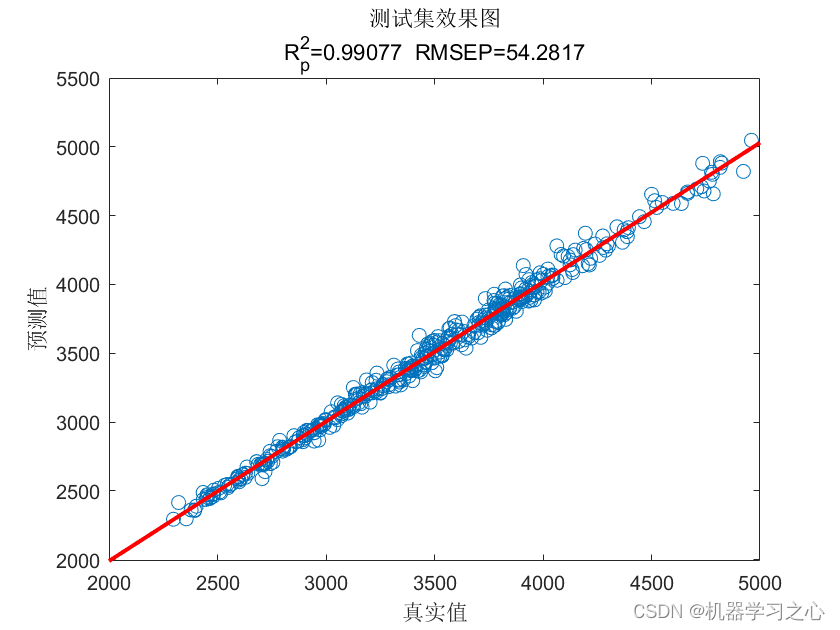


基本介绍
1.Matlab实现PSO-BP粒子群优化BP神经网络多变量时间序列预测;
2.运行环境为Matlab2018b;
3.输入多个特征,输出单个变量,考虑历史特征的影响,多变量时间序列预测;
4.data为数据集,PSO_BPNTS.m为主程序,运行即可,所有文件放在一个文件夹;
5.命令窗口输出R2、MSE、MAE、MAPE和MBE多指标评价;程序设计
- 完整程序和数据下载:私信博主回复MATLAB实现PSO-BP多变量时间序列预测(粒子群优化BP神经网络)。
%------------------------------------------------------------------------------------------------------------------------------------------------------------------------------------------------ %% 清空环境变量 warning off % 关闭报警信息 close all % 关闭开启的图窗 clear % 清空变量 clc % 清空命令行 %------------------------------------------------------------------------------------------------------------------------------------------------------------------------------------------------ P_train = res(temp(1: 700), 1: 7)'; T_train = res(temp(1: 700), 8)'; M = size(P_train, 2); P_test = res(temp(701: end), 1: 7)'; T_test = res(temp(701: end), 8)'; N = size(P_test, 2); %% 数据归一化 [p_train, ps_input] = mapminmax(P_train, 0, 1); p_test = mapminmax('apply', P_test, ps_input); [t_train, ps_output] = mapminmax(T_train, 0, 1); t_test = mapminmax('apply', T_test, ps_output); %% 节点个数 inputnum = size(p_train, 1); % 输入层节点数 hiddennum = 5; % 隐藏层节点数 outputnum = size(t_train, 1); % 输出层节点数 %% 建立网络 net = newff(p_train, t_train, hiddennum); %% 设置训练参数 net.trainParam.epochs = 1000; % 训练次数 net.trainParam.goal = 1e-6; % 目标误差 net.trainParam.lr = 0.01; % 学习率 net.trainParam.showWindow = 0; % 关闭窗口 %% 参数初始化 c1 = 4.494; % 学习因子 c2 = 4.494; % 学习因子 maxgen = 30; % 种群更新次数 sizepop = 5; % 种群规模 Vmax = 1.0; % 最大速度 Vmin = -1.0; % 最小速度 popmax = 1.0; % 最大边界 popmin = -1.0; % 最小边界 %% 节点总数 numsum = inputnum * hiddennum + hiddennum + hiddennum * outputnum + outputnum; for i = 1 : sizepop pop(i, :) = rands(1, numsum); % 初始化种群 V(i, :) = rands(1, numsum); % 初始化速度 fitness(i) = fun(pop(i, :), hiddennum, net, p_train, t_train); end %% 个体极值和群体极值 [fitnesszbest, bestindex] = min(fitness); zbest = pop(bestindex, :); % 全局最佳 gbest = pop; % 个体最佳 fitnessgbest = fitness; % 个体最佳适应度值 BestFit = fitnesszbest; % 全局最佳适应度值 %% 迭代寻优 for i = 1: maxgen for j = 1: sizepop % 速度更新 V(j, :) = V(j, :) + c1 * rand * (gbest(j, :) - pop(j, :)) + c2 * rand * (zbest - pop(j, :)); V(j, (V(j, :) > Vmax)) = Vmax; V(j, (V(j, :) < Vmin)) = Vmin; % 种群更新 pop(j, :) = pop(j, :) + 0.2 * V(j, :); pop(j, (pop(j, :) > popmax)) = popmax; pop(j, (pop(j, :) < popmin)) = popmin; % 自适应变异 pos = unidrnd(numsum); if rand > 0.85 pop(j, pos) = rands(1, 1); end % 适应度值 fitness(j) = fun(pop(j, :), hiddennum, net, p_train, t_train); end for j = 1 : sizepop % 个体最优更新 if fitness(j) < fitnessgbest(j) gbest(j, :) = pop(j, :); fitnessgbest(j) = fitness(j); end % 群体最优更新 if fitness(j) < fitnesszbest zbest = pop(j, :); fitnesszbest = fitness(j); end end BestFit = [BestFit, fitnesszbest]; end- 1
- 2
- 3
- 4
- 5
- 6
- 7
- 8
- 9
- 10
- 11
- 12
- 13
- 14
- 15
- 16
- 17
- 18
- 19
- 20
- 21
- 22
- 23
- 24
- 25
- 26
- 27
- 28
- 29
- 30
- 31
- 32
- 33
- 34
- 35
- 36
- 37
- 38
- 39
- 40
- 41
- 42
- 43
- 44
- 45
- 46
- 47
- 48
- 49
- 50
- 51
- 52
- 53
- 54
- 55
- 56
- 57
- 58
- 59
- 60
- 61
- 62
- 63
- 64
- 65
- 66
- 67
- 68
- 69
- 70
- 71
- 72
- 73
- 74
- 75
- 76
- 77
- 78
- 79
- 80
- 81
- 82
- 83
- 84
- 85
- 86
- 87
- 88
- 89
- 90
- 91
- 92
- 93
- 94
- 95
- 96
- 97
- 98
- 99
- 100
- 101
- 102
- 103
- 104
- 105
- 106
- 107
参考资料
[1] https://blog.csdn.net/kjm13182345320/article/details/128163536?spm=1001.2014.3001.5502
[2] https://blog.csdn.net/kjm13182345320/article/details/128151206?spm=1001.2014.3001.5502 -
相关阅读:
Spring5 框架-尚硅谷
Linux 环境下 Nacos2.2.1启动报错
《低代码指南》——维格云和Airtable的比较
NET中使用Flurl高效处理Http请求
信道复用技术
LM小型可编程控制器软件(基于CoDeSys)笔记二十:plc通过驱动器控制步进电机
浅析Redis基础数据结构
剑指 Offer 68 - 二叉树的最近公共祖先
渗透测试-xml注入以及xxe漏洞
el-date-picker 禁止选择当前年之前或者之后的年份
- 原文地址:https://blog.csdn.net/kjm13182345320/article/details/133282367
