-
浅析Open vSwitch数据结构:哈希表hmap/smap/shash
概述
在OVS软件中,hmap提供了基础的哈希表存储结构,smap和shash基于hmap进行实现,其中smap支持存储字符串,而sshash则支持存储任意类型的数据。
hmap
OVS软件的hmap是基于分离链接法实现的,分离链接法使用链表解决散列冲突,其做法是散列值相同的元素都保存到一个链表中。当查询的时候,首先根据散列值找到元素所在的链表,然后遍历链表查找对应的元素。
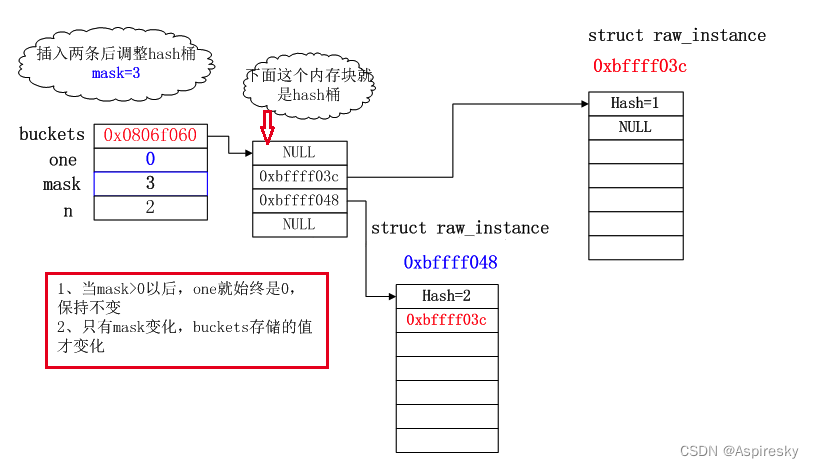
hmap数据结构
struct hmap { struct hmap_node **buckets; // 哈希数组,本质上是一个分离链表数组,当mask=0时,指向成员one的地址 struct hmap_node *one; // 仅在mask为0时使用 size_t mask; // 哈希桶的大小 size_t n; // 哈希表中存储的hmap_node节点数量 }; // 哈希节点 struct hmap_node { size_t hash; // 哈希值 struct hmap_node *next; // 单向链表,所有哈希值相同的节点会链接到一个链表中 };- 1
- 2
- 3
- 4
- 5
- 6
- 7
- 8
- 9
- 10
- 11
- 12
初始化hmap
void hmap_init(struct hmap *hmap) { hmap->buckets = &hmap->one; hmap->one = NULL; hmap->mask = 0; hmap->n = 0; }- 1
- 2
- 3
- 4
- 5
- 6
- 7
插入节点
#define hmap_insert(HMAP, NODE, HASH) \ hmap_insert_at(HMAP, NODE, HASH, OVS_SOURCE_LOCATOR) static inline void hmap_insert_at(struct hmap *hmap, struct hmap_node *node, size_t hash, const char *where) { hmap_insert_fast(hmap, node, hash); // 执行快速插入 if (hmap->n / 2 > hmap->mask) { // 当存储节点数量的一半大于mask时,需要对hmap进行扩容 hmap_expand_at(hmap, where); } } static inline void hmap_insert_fast(struct hmap *hmap, struct hmap_node *node, size_t hash) { struct hmap_node **bucket = &hmap->buckets[hash & hmap->mask]; // 计算hash值,并根据hash值确定数组索引 node->hash = hash; node->next = *bucket; *bucket = node; // 新节点插入到链表头部 hmap->n++; // 更新hmap存储节点数量 }- 1
- 2
- 3
- 4
- 5
- 6
- 7
- 8
- 9
- 10
- 11
- 12
- 13
- 14
- 15
- 16
- 17
- 18
- 19
- 20
- 21
- 22
扩展hmap空间
void hmap_expand_at(struct hmap *hmap, const char *where) { size_t new_mask = calc_mask(hmap->n); // 根据已存储节点的数量计算出新的mask值 if (new_mask > hmap->mask) { COVERAGE_INC(hmap_expand); resize(hmap, new_mask, where); } } static size_t calc_mask(size_t capacity) { size_t mask = capacity / 2; mask |= mask >> 1; mask |= mask >> 2; mask |= mask >> 4; mask |= mask >> 8; mask |= mask >> 16; #if SIZE_MAX > UINT32_MAX mask |= mask >> 32; #endif mask |= (mask & 1) << 1; return mask; }- 1
- 2
- 3
- 4
- 5
- 6
- 7
- 8
- 9
- 10
- 11
- 12
- 13
- 14
- 15
- 16
- 17
- 18
- 19
- 20
- 21
- 22
- 23
- 24
- 25
- 26
- 27
resize函数
static void resize(struct hmap *hmap, size_t new_mask, const char *where) { struct hmap tmp; size_t i; ovs_assert(is_pow2(new_mask + 1)); hmap_init(&tmp); // 初始化临时的hmap if (new_mask) { tmp.buckets = xmalloc(sizeof *tmp.buckets * (new_mask + 1)); // 根据new_mask创建哈希数组 tmp.mask = new_mask; for (i = 0; i <= tmp.mask; i++) { tmp.buckets[i] = NULL; } } int n_big_buckets = 0; int biggest_count = 0; int n_biggest_buckets = 0; for (i = 0; i <= hmap->mask; i++) { struct hmap_node *node, *next; int count = 0; for (node = hmap->buckets[i]; node; node = next) { next = node->next; hmap_insert_fast(&tmp, node, node->hash); // 将原hmap的元素插入到临时hmap中 count++; } } hmap_swap(hmap, &tmp); // 交换两个hmap的结构,此时hmap的数据与原tmp是相同的 hmap_destroy(&tmp); }- 1
- 2
- 3
- 4
- 5
- 6
- 7
- 8
- 9
- 10
- 11
- 12
- 13
- 14
- 15
- 16
- 17
- 18
- 19
- 20
- 21
- 22
- 23
- 24
- 25
- 26
- 27
- 28
- 29
- 30
- 31
删除节点
static inline void hmap_remove(struct hmap *hmap, struct hmap_node *node) { struct hmap_node **bucket = &hmap->buckets[node->hash & hmap->mask]; while (*bucket != node) { bucket = &(*bucket)->next; } *bucket = node->next; hmap->n--; }- 1
- 2
- 3
- 4
- 5
- 6
- 7
- 8
- 9
- 10
遍历所有节点
// 普通版本的遍历,不支持删除节点 #define HMAP_FOR_EACH(NODE, MEMBER, HMAP) \ HMAP_FOR_EACH_INIT(NODE, MEMBER, HMAP, (void) 0) #define HMAP_FOR_EACH_INIT(NODE, MEMBER, HMAP, ...) \ for (INIT_CONTAINER(NODE, hmap_first(HMAP), MEMBER), __VA_ARGS__; \ (NODE != OBJECT_CONTAINING(NULL, NODE, MEMBER)) \ || ((NODE = NULL), false); \ ASSIGN_CONTAINER(NODE, hmap_next(HMAP, &(NODE)->MEMBER), MEMBER)) // 安全版本的遍历,支持删除节点 #define HMAP_FOR_EACH_SAFE(NODE, NEXT, MEMBER, HMAP) \ HMAP_FOR_EACH_SAFE_INIT(NODE, NEXT, MEMBER, HMAP, (void) 0) #define HMAP_FOR_EACH_SAFE_INIT(NODE, NEXT, MEMBER, HMAP, ...) \ for (INIT_CONTAINER(NODE, hmap_first(HMAP), MEMBER), __VA_ARGS__; \ ((NODE != OBJECT_CONTAINING(NULL, NODE, MEMBER)) \ || ((NODE = NULL), false) \ ? INIT_CONTAINER(NEXT, hmap_next(HMAP, &(NODE)->MEMBER), MEMBER), 1 \ : 0); \ (NODE) = (NEXT))- 1
- 2
- 3
- 4
- 5
- 6
- 7
- 8
- 9
- 10
- 11
- 12
- 13
- 14
- 15
- 16
- 17
- 18
- 19
- 20
- 21
辅助函数hmap_first
static inline struct hmap_node * hmap_next__(const struct hmap *hmap, size_t start) { size_t i; for (i = start; i <= hmap->mask; i++) { struct hmap_node *node = hmap->buckets[i]; if (node) { return node; } } return NULL; } static inline struct hmap_node * hmap_first(const struct hmap *hmap) { return hmap_next__(hmap, 0); }- 1
- 2
- 3
- 4
- 5
- 6
- 7
- 8
- 9
- 10
- 11
- 12
- 13
- 14
- 15
- 16
- 17
- 18
辅助函数hmap_next
static inline struct hmap_node * hmap_next(const struct hmap *hmap, const struct hmap_node *node) { return (node->next ? node->next // 下一节点非空,返回下一节点 : hmap_next__(hmap, (node->hash & hmap->mask) + 1)); }- 1
- 2
- 3
- 4
- 5
- 6
- 7
smap
smap基于hmap实现,是一个专用于存储
key-value的哈希表,其中key和value类型都是字符串。smap数据结构
struct smap { struct hmap map; }; struct smap_node { struct hmap_node node; char *key; char *value; };- 1
- 2
- 3
- 4
- 5
- 6
- 7
- 8
- 9
插入节点
struct smap_node * smap_add(struct smap *smap, const char *key, const char *value) { size_t key_len = strlen(key); return smap_add__(smap, xmemdup0(key, key_len), xstrdup(value), hash_bytes(key, key_len, 0)); // 为key和value申请内存空间 } static struct smap_node * smap_add__(struct smap *smap, char *key, void *value, size_t hash) { struct smap_node *node = xmalloc(sizeof *node); node->key = key; node->value = value; hmap_insert(&smap->map, &node->node, hash); // 调用hmap接口插入节点 return node; }- 1
- 2
- 3
- 4
- 5
- 6
- 7
- 8
- 9
- 10
- 11
- 12
- 13
- 14
- 15
- 16
- 17
删除节点
void smap_remove_node(struct smap *smap, struct smap_node *node) { hmap_remove(&smap->map, &node->node); free(node->key); free(node->value); free(node); } void smap_remove(struct smap *smap, const char *key) { struct smap_node *node = smap_get_node(smap, key); if (node) { smap_remove_node(smap, node); } }- 1
- 2
- 3
- 4
- 5
- 6
- 7
- 8
- 9
- 10
- 11
- 12
- 13
- 14
- 15
- 16
- 17
- 18
查找节点
struct smap_node * smap_get_node(const struct smap *smap, const char *key) { size_t key_len = strlen(key); return smap_find__(smap, key, key_len, hash_bytes(key, key_len, 0)); } static struct smap_node * smap_find__(const struct smap *smap, const char *key, size_t key_len, size_t hash) { struct smap_node *node; HMAP_FOR_EACH_WITH_HASH (node, node, hash, &smap->map) { if (!strncmp(node->key, key, key_len) && !node->key[key_len]) { return node; } } return NULL; }- 1
- 2
- 3
- 4
- 5
- 6
- 7
- 8
- 9
- 10
- 11
- 12
- 13
- 14
- 15
- 16
- 17
- 18
- 19
- 20
- 21
遍历所有节点
// 普通版本的遍历,不支持删除,调用hmap的接口 #define SMAP_FOR_EACH(SMAP_NODE, SMAP) \ HMAP_FOR_EACH_INIT (SMAP_NODE, node, &(SMAP)->map, \ BUILD_ASSERT_TYPE(SMAP_NODE, struct smap_node *), \ BUILD_ASSERT_TYPE(SMAP, struct smap *)) // 安全版本的遍历,支持删除,调用hmap的接口 #define SMAP_FOR_EACH_SAFE(SMAP_NODE, NEXT, SMAP) \ HMAP_FOR_EACH_SAFE_INIT ( \ SMAP_NODE, NEXT, node, &(SMAP)->map, \ BUILD_ASSERT_TYPE(SMAP_NODE, struct smap_node *), \ BUILD_ASSERT_TYPE(NEXT, struct smap_node *), \ BUILD_ASSERT_TYPE(SMAP, struct smap *))- 1
- 2
- 3
- 4
- 5
- 6
- 7
- 8
- 9
- 10
- 11
- 12
- 13
shash
shash也是基于hmap进行扩展,支持存储任意类型的数据。
shash数据结构
struct shash_node { struct hmap_node node; char *name; void *data; }; struct shash { struct hmap map; };- 1
- 2
- 3
- 4
- 5
- 6
- 7
- 8
- 9
插入节点
static struct shash_node * shash_add_nocopy__(struct shash *sh, char *name, const void *data, size_t hash) { struct shash_node *node = xmalloc(sizeof *node); node->name = name; node->data = CONST_CAST(void *, data); // 去除const属性进行存储 hmap_insert(&sh->map, &node->node, hash); return node; } struct shash_node * shash_add_nocopy(struct shash *sh, char *name, const void *data) { return shash_add_nocopy__(sh, name, data, hash_name(name)); } struct shash_node * shash_add(struct shash *sh, const char *name, const void *data) { return shash_add_nocopy(sh, xstrdup(name), data); // 为key申请内存空间 }- 1
- 2
- 3
- 4
- 5
- 6
- 7
- 8
- 9
- 10
- 11
- 12
- 13
- 14
- 15
- 16
- 17
- 18
- 19
- 20
- 21
删除节点
void shash_delete(struct shash *sh, struct shash_node *node) { free(shash_steal(sh, node)); } char * shash_steal(struct shash *sh, struct shash_node *node) { char *name = node->name; hmap_remove(&sh->map, &node->node); free(node); return name; }- 1
- 2
- 3
- 4
- 5
- 6
- 7
- 8
- 9
- 10
- 11
- 12
- 13
- 14
- 15
查找节点
static struct shash_node * shash_find__(const struct shash *sh, const char *name, size_t name_len, size_t hash) { struct shash_node *node; HMAP_FOR_EACH_WITH_HASH (node, node, hash, &sh->map) { if (!strncmp(node->name, name, name_len) && !node->name[name_len]) { return node; } } return NULL; } struct shash_node * shash_find(const struct shash *sh, const char *name) { return shash_find__(sh, name, strlen(name), hash_name(name)); }- 1
- 2
- 3
- 4
- 5
- 6
- 7
- 8
- 9
- 10
- 11
- 12
- 13
- 14
- 15
- 16
- 17
- 18
- 19
遍历所有节点
#define SHASH_FOR_EACH(SHASH_NODE, SHASH) \ HMAP_FOR_EACH_INIT (SHASH_NODE, node, &(SHASH)->map, \ BUILD_ASSERT_TYPE(SHASH_NODE, struct shash_node *), \ BUILD_ASSERT_TYPE(SHASH, struct shash *)) #define SHASH_FOR_EACH_SAFE(SHASH_NODE, NEXT, SHASH) \ HMAP_FOR_EACH_SAFE_INIT ( \ SHASH_NODE, NEXT, node, &(SHASH)->map, \ BUILD_ASSERT_TYPE(SHASH_NODE, struct shash_node *), \ BUILD_ASSERT_TYPE(NEXT, struct shash_node *), \ BUILD_ASSERT_TYPE(SHASH, struct shash *))- 1
- 2
- 3
- 4
- 5
- 6
- 7
- 8
- 9
- 10
- 11
-
相关阅读:
SpringMVC基础入门及工作流程---全方面详细介绍
Celery笔记八之数据库操作定时任务
PHP基于thinkphp的教材管理系统#毕业设计
Ubuntu18.04安装onnxruntime(c++版)与CUDA运行Demo
uniapp打包安卓apk的隐私政策配置
redis过期key的清理/删除策略
【react】点击空白处隐藏
创建简单的 Docker 数据科学映像
【气动学】基于Matlab模拟各类导弹跟踪
Bash中的变量引用:单引号和双引号的差异
- 原文地址:https://blog.csdn.net/anyegongjuezjd/article/details/132819009

- 最新文章
-
沪漂五周年了:我越来越迷茫了
Agentic Skill Routing 实战:别再把所有 Skill 塞进 AI Agent 上下文
MySQL-Seconds_behind_master的精度误差
[MAF预定义ChatClient中间件-03]CachingChatClient——利用缓存省钱省时间
AI的至暗历史:从万众期待到被政府撤资,AI的两次死亡徘徊
Agent OS :五种驯服不确定性的范式
PortSwigger SQL注入LAB11
数据库即时编译JIT
[Begin]AI Learn Data Day 0
深度学习进阶(二十七)现代 LLM 的核心架构设计其二:SwiGLU