-
使用Resnet网络对人脸图像分类识别出男女性别(包含数据集制作+训练+测试)
文章目录
目标检测+分类数据集大全https://blog.csdn.net/DeepLearning_/article/details/127276492?spm=1001.2014.3001.5502:
前言
本打算昨天写这篇博客的,推迟到今天晚上。实际上,上午我已经把模型训练完了,迭代100次,最后准确率可达到95%,考虑到用的台式机没有装显卡,所以使用的数据集一共只有340张。分布情况如下。
【训练集】女性:150张; 男性:150张
【验证集】女性:20张; 男性:20张
数据集预览

女性数据
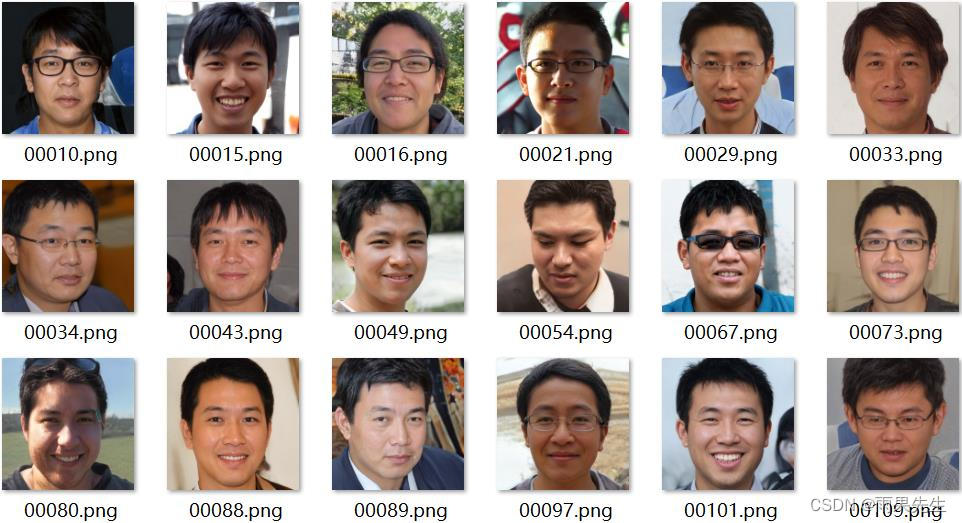
男性数据
提示:以下是本篇文章正文内容,下面案例可供参考一、数据预处理
1.分类数据存放
分类数据是不需要像目标检测数据样,每张图片去打标签,我们唯一需要做的就是把同类照片放到一个文件夹。如我们新建一个名字为“0”的文件夹,用于存放所有用于训练的150张女性图片,新建一个名字为“1”的文件夹,用于存放所有用于训练的150张男性图片。同理,验证集也如此排布。如下图所示,为我的数据排布情况,数据集存放在gender_data文件夹里。

2.生成train.txt与val.txt
图片数据排布完后,还需要做的就是使用脚本工具,分别生成训练集和验证集的存储路径及对应标签(0或者1)。这一步至关重要,必不可少。因为训练时,就是通过读取这两个txt文件里的路径,来读取训练集和验证集的图片,并输送给网络,同时给对应的标签类别。
脚本命名Build_all_classes_path_to_txt.py
**注意:**需要分两次执行,分别创建train.txt与val.txt,记得更改路径import os import os.path def listfiles(rootDir, txtfile, foldnam =''): ftxtfile = open(txtfile, 'a') list_dirs = os.walk(rootDir) #foldnam = FolderName[0] #print(foldnam) count = 0 dircount = 0 for root,dirs,files in list_dirs: for d in dirs: #print(os.path.join(root, d)) dircount += 1 for f in files: #print(os.path.join(root, f)) ftxtfile.write(os.path.join(root, f) + ' ' + foldnam + '\n') count += 1 #print(rootDir + ' has ' + str(count) + ' files') #获取路径下所有文件夹的完整路径,用于读取文件用 def GetFileFromThisRootDir(dir): allfolder = [] folder_name = '' for root,dirs,files in os.walk(dir): allfolder.append(root) """ for filespath in files: filepath = os.path.join(root, filespath) #print(filepath) extension = os.path.splitext(filepath)[1][1:] if needExtFilter and extension in ext: allfiles.append(filepath) elif not needExtFilter: allfiles.append(filepath) """ All_folder = allfolder #print(All_folder) for folder_num in All_folder[1:]: #print(folder_num) folder_name = folder_num.split('/')[:] print (folder_name) listfiles(folder_num, txtfile_path, folder_name[-1]) return #def Generate_path_to_txt(FolderPath=[]): # print(FolderPath) if __name__=='__main__': folder_path = 'F:/Study_code/classification-pytorch/Classification-MaleFemale-pytorch/gender_data/val/' #val and train folder txtfile_path = 'F:/Study_code/classification-pytorch/Classification-MaleFemale-pytorch/gender_data/val.txt' folder_path = GetFileFromThisRootDir(folder_path)- 1
- 2
- 3
- 4
- 5
- 6
- 7
- 8
- 9
- 10
- 11
- 12
- 13
- 14
- 15
- 16
- 17
- 18
- 19
- 20
- 21
- 22
- 23
- 24
- 25
- 26
- 27
- 28
- 29
- 30
- 31
- 32
- 33
- 34
- 35
- 36
- 37
- 38
- 39
- 40
- 41
- 42
- 43
- 44
- 45
- 46
- 47
- 48
- 49
- 50
- 51
- 52
- 53
- 54
- 55
- 56
- 57
- 58
- 59
- 60
- 61
生成的.txt文件内容如下

二、更改配置文件
1.自定义修改
实际上很多可以修改,如loss选择、梯度下降方法、学习率、衰减率等等。

代码如下(示例):
class Config(object): num_classes = 2 loss = 'softmax' #focal_loss test_root = 'gender_data/' test_list = 'gender_data/val.txt' train_batch_size = 16 # batch size train_root = 'gender_data/' train_list = 'gender_data/train.txt' finetune = False load_model_path = 'checkpoints/model-epoch-1.pth' save_interval = 1 input_shape = (3, 112, 112) optimizer = 'sgd' # optimizer should be sgd, adam num_workers = 4 # how many workers for loading data print_freq = 10 # print info every N batch milestones = [60, 100] # adjust lr lr = 0.1 # initial learning rate max_epoch = 100 # max epoch lr_decay = 0.95 # when val_loss increase, lr = lr*lr_decay weight_decay = 5e-4- 1
- 2
- 3
- 4
- 5
- 6
- 7
- 8
- 9
- 10
- 11
- 12
- 13
- 14
- 15
- 16
- 17
- 18
- 19
- 20
- 21
- 22
- 23
- 24
- 25
- 26
- 27
- 28
三、定义resnet网络
实际上resnet网络pytorch内部经典网络中已存在,但作者还是参考开源代码自己构建了一个resnet网络的py文件resnet.py。这个可直接拿来使用。本次训练使用的是resnet18.
代码如下(示例):"""resnet in pytorch [1] Kaiming He, Xiangyu Zhang, Shaoqing Ren, Jian Sun. Deep Residual Learning for Image Recognition https://arxiv.org/abs/1512.03385v1 """ import torch import torch.nn as nn class Flatten(nn.Module): def forward(self, input): #print(input.view(input.size(0), -1).shape) return input.view(input.size(0), -1) class BasicBlock(nn.Module): """Basic Block for resnet 18 and resnet 34 """ expansion = 1 def __init__(self, in_channels, out_channels, stride=1): super().__init__() #residual function self.residual_function = nn.Sequential( nn.Conv2d(in_channels, out_channels, kernel_size=3, stride=stride, padding=1, bias=False), nn.BatchNorm2d(out_channels), nn.ReLU(inplace=True), nn.Conv2d(out_channels, out_channels * BasicBlock.expansion, kernel_size=3, padding=1, bias=False), nn.BatchNorm2d(out_channels * BasicBlock.expansion) ) #shortcut self.shortcut = nn.Sequential() #the shortcut output dimension is not the same with residual function #use 1*1 convolution to match the dimension if stride != 1 or in_channels != BasicBlock.expansion * out_channels: self.shortcut = nn.Sequential( nn.Conv2d(in_channels, out_channels * BasicBlock.expansion, kernel_size=1, stride=stride, bias=False), nn.BatchNorm2d(out_channels * BasicBlock.expansion) ) def forward(self, x): return nn.ReLU(inplace=True)(self.residual_function(x) + self.shortcut(x)) class BottleNeck(nn.Module): """Residual block for resnet over 50 layers """ expansion = 4 def __init__(self, in_channels, out_channels, stride=1): super().__init__() self.residual_function = nn.Sequential( nn.Conv2d(in_channels, out_channels, kernel_size=1, bias=False), nn.BatchNorm2d(out_channels), nn.ReLU(inplace=True), nn.Conv2d(out_channels, out_channels, stride=stride, kernel_size=3, padding=1, bias=False), nn.BatchNorm2d(out_channels), nn.ReLU(inplace=True), nn.Conv2d(out_channels, out_channels * BottleNeck.expansion, kernel_size=1, bias=False), nn.BatchNorm2d(out_channels * BottleNeck.expansion), ) self.shortcut = nn.Sequential() if stride != 1 or in_channels != out_channels * BottleNeck.expansion: self.shortcut = nn.Sequential( nn.Conv2d(in_channels, out_channels * BottleNeck.expansion, stride=stride, kernel_size=1, bias=False), nn.BatchNorm2d(out_channels * BottleNeck.expansion) ) def forward(self, x): return nn.ReLU(inplace=True)(self.residual_function(x) + self.shortcut(x)) class ResNet(nn.Module): def __init__(self, block, num_block, scale=0.25, num_classes=2): super().__init__() self.in_channels = int(64 * scale) self.conv1 = nn.Sequential( nn.Conv2d(3, int(64 * scale), kernel_size=3, padding=1, bias=False), nn.BatchNorm2d(int(64 * scale)), nn.ReLU(inplace=True)) #we use a different inputsize than the original paper #so conv2_x's stride is 1 self.conv2_x = self._make_layer(block, int( 64 * scale), num_block[0], 2) self.conv3_x = self._make_layer(block, int(128 * scale), num_block[1], 2) self.conv4_x = self._make_layer(block, int(256 * scale), num_block[2], 2) self.conv5_x = self._make_layer(block, int(512 * scale), num_block[3], 2) self.output = nn.Sequential( nn.Conv2d(int(512*scale), int(512*scale), kernel_size=(7, 7), stride=1, groups=int(512*scale), bias=False), nn.BatchNorm2d(int(512*scale)), Flatten(), #nn.Linear(int(32768 * scale), num_classes) nn.Linear(int(512 * scale), num_classes) ) def _make_layer(self, block, out_channels, num_blocks, stride): """make resnet layers(by layer i didnt mean this 'layer' was the same as a neuron netowork layer, ex. conv layer), one layer may contain more than one residual block Args: block: block type, basic block or bottle neck block out_channels: output depth channel number of this layer num_blocks: how many blocks per layer stride: the stride of the first block of this layer Return: return a resnet layer """ # we have num_block blocks per layer, the first block # could be 1 or 2, other blocks would always be 1 strides = [stride] + [1] * (num_blocks - 1) layers = [] for stride in strides: layers.append(block(self.in_channels, out_channels, stride)) self.in_channels = out_channels * block.expansion return nn.Sequential(*layers) def forward(self, x): output = self.conv1(x) output = self.conv2_x(output) output = self.conv3_x(output) output = self.conv4_x(output) output = self.conv5_x(output) output = self.output(output) return output def resnet18(): """ return a ResNet 18 object """ return ResNet(BasicBlock, [2, 2, 2, 2]) def resnet34(): """ return a ResNet 34 object """ return ResNet(BasicBlock, [3, 4, 6, 3]) def resnet50(): """ return a ResNet 50 object """ return ResNet(BottleNeck, [3, 4, 6, 3]) def resnet101(): """ return a ResNet 101 object """ return ResNet(BottleNeck, [3, 4, 23, 3]) def resnet152(): """ return a ResNet 152 object """ return ResNet(BottleNeck, [3, 8, 36, 3]) from thop import profile from thop import clever_format if __name__=='__main__': input = torch.Tensor(1, 3, 112, 112) model = resnet18() #print(model) flops, params = profile(model, inputs=(input, )) flops, params = clever_format([flops, params], "%.3f") #print(model) print('VoVNet Flops:', flops, ',Params:' ,params)- 1
- 2
- 3
- 4
- 5
- 6
- 7
- 8
- 9
- 10
- 11
- 12
- 13
- 14
- 15
- 16
- 17
- 18
- 19
- 20
- 21
- 22
- 23
- 24
- 25
- 26
- 27
- 28
- 29
- 30
- 31
- 32
- 33
- 34
- 35
- 36
- 37
- 38
- 39
- 40
- 41
- 42
- 43
- 44
- 45
- 46
- 47
- 48
- 49
- 50
- 51
- 52
- 53
- 54
- 55
- 56
- 57
- 58
- 59
- 60
- 61
- 62
- 63
- 64
- 65
- 66
- 67
- 68
- 69
- 70
- 71
- 72
- 73
- 74
- 75
- 76
- 77
- 78
- 79
- 80
- 81
- 82
- 83
- 84
- 85
- 86
- 87
- 88
- 89
- 90
- 91
- 92
- 93
- 94
- 95
- 96
- 97
- 98
- 99
- 100
- 101
- 102
- 103
- 104
- 105
- 106
- 107
- 108
- 109
- 110
- 111
- 112
- 113
- 114
- 115
- 116
- 117
- 118
- 119
- 120
- 121
- 122
- 123
- 124
- 125
- 126
- 127
- 128
- 129
- 130
- 131
- 132
- 133
- 134
- 135
- 136
- 137
- 138
- 139
- 140
- 141
- 142
- 143
- 144
- 145
- 146
- 147
- 148
- 149
- 150
- 151
- 152
- 153
- 154
- 155
- 156
- 157
- 158
- 159
- 160
- 161
- 162
- 163
- 164
- 165
- 166
- 167
四、train.py训练
训练代码及书写逻辑也是个常规操作,很好理解,关键点在于如何去加载数据,并做预处理变换。
代码如下(示例),仅供参考:import torch from torch.utils import data import os import time import numpy as np from models.resnet import * #resnet34 from models.mobilenetv2 import mobilenetv2 #from models.mobilenetv3 import * #from models.repvgg import * from data.dataset import Dataset from config.config import Config from loss.focal_loss import FocalLoss from utils.cosine_lr_scheduler import CosineDecayLR #from torch.autograd import Variable def train(model, criterion, optimizer, scheduler, trainloader, epoch): model.train() for ii, data in enumerate(trainloader): start = time.time() iters = epoch * len(trainloader) + ii scheduler.step(iters + 1) data_input, label = data #print(data_input, label) #data_input, label = Variable(data_input), Variable(label)-1 data_input = data_input.to(device) label = label.to(device).long() output = model(data_input) #print(output) #print(label) loss = criterion(output, label) optimizer.zero_grad() loss.backward() optimizer.step() if iters % opt.print_freq == 0: output = output.data.cpu().numpy() output = np.argmax(output, axis=1) label = label.data.cpu().numpy() acc = np.mean((output == label).astype(int)) speed = opt.print_freq / (time.time() - start) time_str = time.asctime(time.localtime(time.time())) print(time_str, 'epoch', epoch, 'iters', iters, 'speed', speed, 'lr',optimizer.param_groups[0]['lr'], 'loss', loss.cpu().detach().numpy(), 'acc', acc) def eval_train(model, criterion, testloader): model.eval() test_loss = 0.0 # cost function error correct = 0.0 with torch.no_grad(): for (datas, labels) in testloader: datas = datas.to(device) labels = labels.to(device).long() outputs = model(datas) loss = criterion(outputs, labels) test_loss += loss.item() _, preds = outputs.max(1) correct += preds.eq(labels).sum() print('Test set: Average loss: {:.4f}, Accuracy: {:.4f}'.format( test_loss / len(testloader), correct.float() / len(testloader) )) if __name__ == '__main__': opt = Config() #os.environ['CUDA_VISIBLE_DEVICES'] = '0' #device = torch.device("cuda" if torch.cuda.is_available() else "cpu") device = torch.device("cpu") test_dataset = Dataset(opt.test_root, opt.test_list, phase='test', input_shape=opt.input_shape) testloader = data.DataLoader(test_dataset, shuffle=False, pin_memory=True, num_workers=opt.num_workers) train_dataset = Dataset(opt.train_root, opt.train_list, phase='train', input_shape=opt.input_shape) trainloader = data.DataLoader(train_dataset, batch_size=opt.train_batch_size, shuffle=True, pin_memory=True, num_workers=opt.num_workers) if opt.loss == 'focal_loss': criterion = FocalLoss(gamma=2) else: criterion = torch.nn.CrossEntropyLoss() model = resnet18() #model = get_RepVGG_func_by_name('RepVGG-B0') #model = mobilenetv2() if opt.finetune == True: model.load_state_dict(torch.load(opt.load_model_path)) model = torch.nn.DataParallel(model) model.to(device) total_batch = len(trainloader) NUM_BATCH_WARM_UP = total_batch * 5 optimizer = torch.optim.SGD(model.parameters(), lr=opt.lr, weight_decay=opt.weight_decay) scheduler = CosineDecayLR(optimizer, opt.max_epoch * total_batch, opt.lr, 1e-6, NUM_BATCH_WARM_UP) print('{} train iters per epoch in dataset'.format(len(trainloader))) for epoch in range(0, opt.max_epoch): train(model, criterion, optimizer, scheduler, trainloader, epoch) if epoch % opt.save_interval == 0 or epoch == (opt.max_epoch - 1): torch.save(model.module.state_dict(), 'checkpoints/model-epoch-'+str(epoch) + '.pth') eval_train(model, criterion, testloader)- 1
- 2
- 3
- 4
- 5
- 6
- 7
- 8
- 9
- 10
- 11
- 12
- 13
- 14
- 15
- 16
- 17
- 18
- 19
- 20
- 21
- 22
- 23
- 24
- 25
- 26
- 27
- 28
- 29
- 30
- 31
- 32
- 33
- 34
- 35
- 36
- 37
- 38
- 39
- 40
- 41
- 42
- 43
- 44
- 45
- 46
- 47
- 48
- 49
- 50
- 51
- 52
- 53
- 54
- 55
- 56
- 57
- 58
- 59
- 60
- 61
- 62
- 63
- 64
- 65
- 66
- 67
- 68
- 69
- 70
- 71
- 72
- 73
- 74
- 75
- 76
- 77
- 78
- 79
- 80
- 81
- 82
- 83
- 84
- 85
- 86
- 87
- 88
- 89
- 90
- 91
- 92
- 93
- 94
- 95
- 96
- 97
- 98
- 99
- 100
- 101
- 102
- 103

训练过程日志打印如下,最后的预测准确率还不错:

五、预测predict.py实现
代码如下(示例),仅供参考:
from torch.autograd import Variable from torchvision import datasets, models, transforms import matplotlib.pyplot as plt # plt 用于显示图片 from PIL import Image, ImageDraw, ImageFont import cv2 import numpy as np from models.resnet import * from config.config import Config from models.mobilenetv2 import * def show_infer_result(result): font = ImageFont.truetype('data/font/HuaWenXinWei-1.ttf', 50) plt.rcParams['font.sans-serif'] = ['SimHei'] # 中文乱码 plt.subplot(121) plt.imshow(image) plt.title('测试图片') #不显示坐标轴 plt.axis('off') #子图2 plt.subplot(122) img2_2 = cv2.imread('./test2.jpg') cv2img = cv2.cvtColor(img2_2, cv2.COLOR_BGR2RGB) img_PIL = Image.fromarray(cv2img) draw = ImageDraw.Draw(img_PIL) label = '' if result == 0: label = '女性' else: label = '男性' draw.text((170, 150), label, fill=(255, 0, 255), font=font, align='center') cheng = cv2.cvtColor(np.array(img_PIL), cv2.COLOR_RGB2BGR) plt.imshow(cheng) plt.title('预测结果') plt.axis('off') # #设置子图默认的间距 plt.tight_layout() #显示图像 plt.show() def model_infer(img, model_path): data_transforms = transforms.Compose([ transforms.Resize([112, 112]), transforms.ToTensor(), transforms.Normalize([0.5, 0.5, 0.5], [0.5, 0.5, 0.5])]) # net = resnet18().cuda().eval() # 实例化自己的模型; net = resnet18().eval() # resnet模型 net.load_state_dict((torch.load(model_path)), False) imgblob = data_transforms(img).unsqueeze(0).type(torch.FloatTensor).cpu() #print(imgblob) imgblob = Variable(imgblob) torch.no_grad() output = net(imgblob) _, pred = output.max(1) # print("output ---> ",output) predict_result = pred.numpy() show_infer_result(predict_result) return predict_result if __name__ == "__main__": imagepath = './gender_data/val/1/14901.png' image = Image.open(imagepath) model_path = "./checkpoints/model-epoch-99.pth" model_infer(image, model_path) print("====infer over!")- 1
- 2
- 3
- 4
- 5
- 6
- 7
- 8
- 9
- 10
- 11
- 12
- 13
- 14
- 15
- 16
- 17
- 18
- 19
- 20
- 21
- 22
- 23
- 24
- 25
- 26
- 27
- 28
- 29
- 30
- 31
- 32
- 33
- 34
- 35
- 36
- 37
- 38
- 39
- 40
- 41
- 42
- 43
- 44
- 45
- 46
- 47
- 48
- 49
- 50
- 51
- 52
- 53
- 54
- 55
- 56
- 57
- 58
- 59
- 60
- 61
- 62
- 63
- 64
- 65
- 66
- 67
- 68
- 69
- 70
- 71
- 72
- 73
- 74
- 75
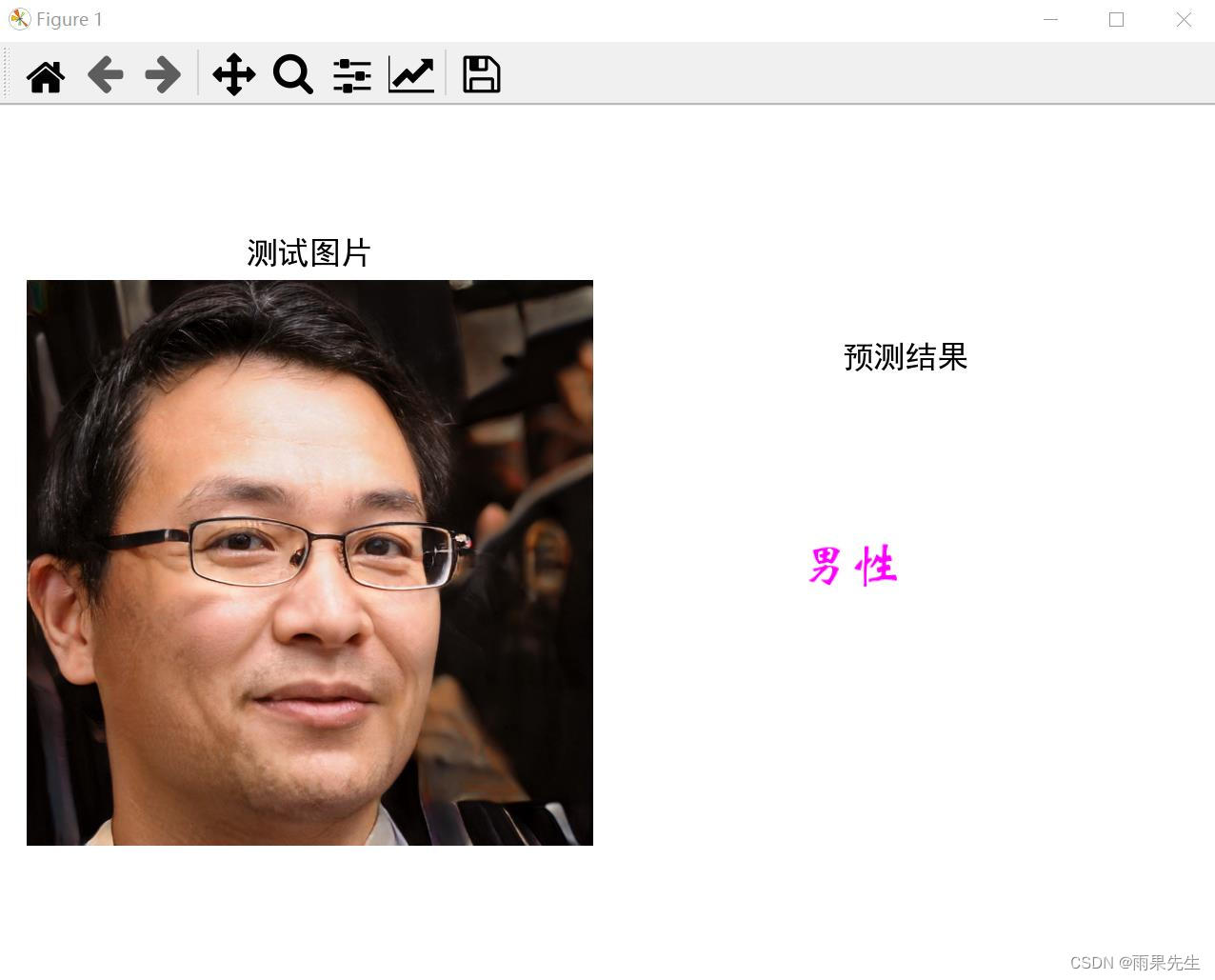
六、预测结果
女性图片测试

男性图片测试
七、完整项目代码+数据集(大于1500张)
源码(训练代码及预测代码)+模型+数据集下载:https://download.csdn.net/download/DeepLearning_/87190601
觉得有用的,感谢先点赞+收藏+关注吧,
如何快速搭建神经网络并训练,请参考另外博客:五步教你使用Pytorch搭建神经网络并训练
总结
本文属于使用resnet网络+pytorch深度学习框架,实现男女性别识别分类模型的训练+预测,当然还包括了分类数据集制作,公开了项目部分代码仅供参考学习,后续会补上多组对比实验和代码模型。敬请关注!
-
相关阅读:
为什么使用Hooks?
Python冷知识:如何找出新版本增加或删除了哪些标准库?
Mac命令关闭代理设置
python 读取文件 下载文件
Mysql数据库
“高级小程序开发指南“
SpringCloud复习:(6)feign整合hystrix
Day711. 档案类-Java8后最重要新特性
MindSpore图学习模块
TRC心血管研究之艾美捷TRC心肌梗塞研究领域
- 原文地址:https://blog.csdn.net/DeepLearning_/article/details/127943096

- 最新文章
-
沪漂五周年了:我越来越迷茫了
Agentic Skill Routing 实战:别再把所有 Skill 塞进 AI Agent 上下文
MySQL-Seconds_behind_master的精度误差
[MAF预定义ChatClient中间件-03]CachingChatClient——利用缓存省钱省时间
AI的至暗历史:从万众期待到被政府撤资,AI的两次死亡徘徊
Agent OS :五种驯服不确定性的范式
PortSwigger SQL注入LAB11
数据库即时编译JIT
[Begin]AI Learn Data Day 0
深度学习进阶(二十七)现代 LLM 的核心架构设计其二:SwiGLU