-
【数据结构】栈和队列重点知识汇总(附有OJ题)
目录
思维导图:
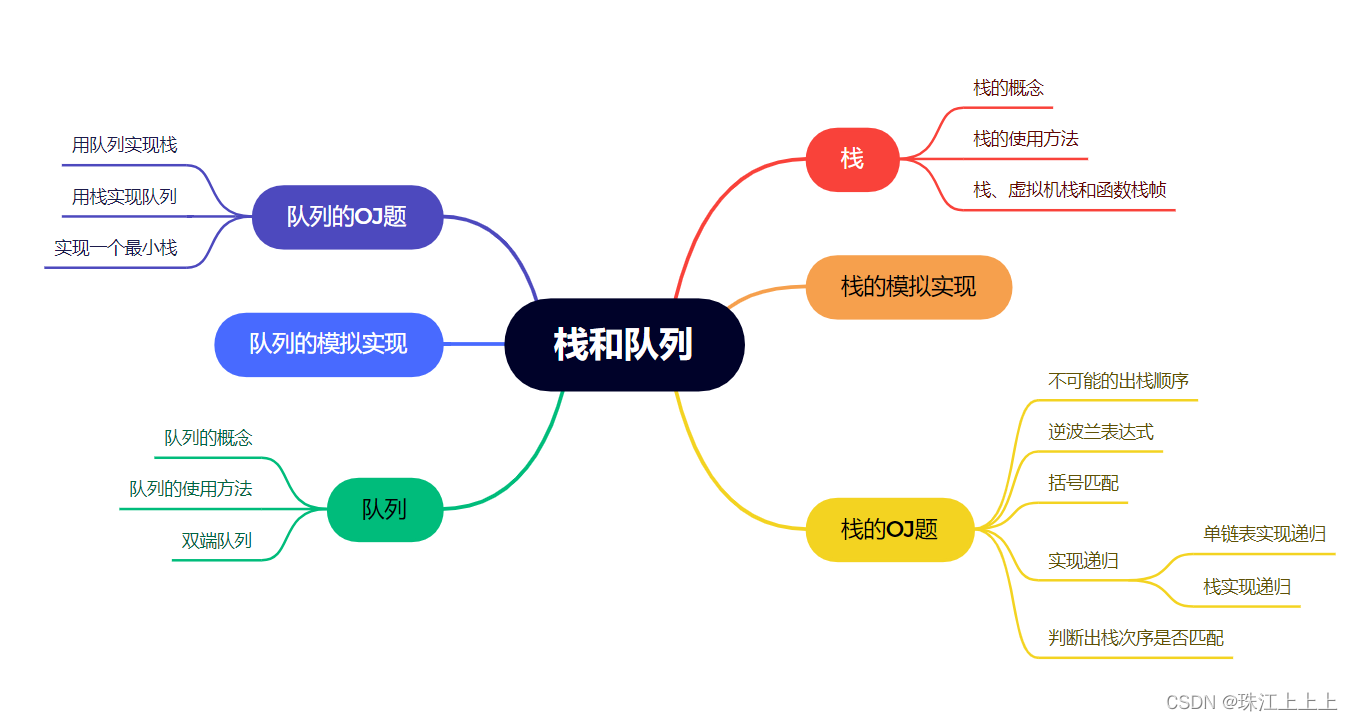
1.栈(Stack):
- 栈是一种线性表,只允许固定的一端进行插入和删除操作,栈中元素遵循着“先进后出”的原则。往栈中插入元素叫做压栈;栈中弹出删除元素叫做出栈。想象一下装满子弹的弹夹,先装的子弹最后才会被打出去;而最后装的子弹最先打出去,栈就和弹夹的类似。底层上看栈就类似于数组。
- 栈的使用方法
方法 作用 push(x); 压栈,将元素x入栈 pop(); 出栈,删除栈顶元素 peek(); 获取栈顶元素,但不删除 size(); 获取栈中有效的元素个数 empty(); 检测栈是否为空,空返回 true - 栈和虚拟机栈还有函数栈帧不是一个东西!
2.栈的模拟实现:
底层是数组实现的
- public class MyStack {
- public int[] elem;
- public int usedSize;//存放有效元素个数
- public static final int DEFAULT_CAPACITY = 20;//默认容量
- public MyStack(){
- elem = new int[DEFAULT_CAPACITY];
- }
- //压栈
- public void push(int data){
- if(isFull()){
- elem = Arrays.copyOf(elem,elem.length*2);
- }
- elem[usedSize] = data;
- usedSize++;
- }
- //判断elem有没有满,满了返回true
- private boolean isFull() {
- return elem.length == usedSize;
- }
- //判断elem是否为空,空则返回true
- public boolean isEmpty(){
- return usedSize==0;
- }
- //删除栈顶元素
- public int pop(){
- if(isEmpty()){
- return -1;
- }
- int oldvalue = elem[usedSize-1];
- usedSize--;
- return oldvalue;
- }
- //查看栈顶元素,不删除
- public int peek(){
- if(isEmpty()){
- return -1;
- }
- int ret = elem[usedSize-1];
- return ret;
- }
- //获取栈中元素个数
- public int size(){
- return usedSize;
- }
- }
3.栈的OJ题:
1.不可能的出栈顺序:出栈的时候也可以进栈。
2.逆波兰表达式(往栈中存放数字,遇到符号就从栈中拿出俩个数字,运算后结果放回栈中)。
- public class Test {
- public int evalRPN(String[] tokens) {
- Stack
stack = new Stack<>(); - for (String x : tokens){
- if(!isOpeation(x)){
- stack.push(Integer.parseInt(x));
- }else{
- //num2在+-*/的右边,num1在左边。顺序不能换
- int num2 = stack.pop();
- int num1 = stack.pop();
- switch (x){
- case "+":
- stack.push(num1+num2);
- break;
- case "-":
- stack.push(num1-num2);
- break;
- case "*":
- stack.push(num1*num2);
- break;
- case "/":
- stack.push(num1/num2);
- break;
- }
- }
- }
- return stack.pop();
- }
- private boolean isOpeation(String str) {
- if(str.equals("+")||str.equals("-")
- ||str.equals("*")||str.equals("/")){
- return true;
- }
- return false;
- }
- }
3.判断括号匹配(判断匹配有俩个条件,字符串遍历完成了;栈为空)。
- class Solution {
- public boolean isValid(String s) {
- Stack
stack = new Stack<>(); - for (int i = 0; i < s.length(); i++) {
- char ch = s.charAt(i);
- if(ch=='[' || ch=='{' || ch=='('){
- stack.push(ch);
- }else{
- //必须要判断栈是否为空,否则会报错
- if(stack.empty()){
- return false;
- }
- if(ch == ']' && stack.peek() == '['
- ||ch == '}' && stack.peek() == '{'
- ||ch == ')' && stack.peek() == '('){
- stack.pop();
- }else{
- return false;
- }
- }
- }
- //如果栈不为空,则左括号多
- if(stack.empty()){
- return true;
- }else{
- return false;
- }
- }
- }
4.实现递归:逆序打印链表。
- class Solution {
- //实现递归
- public void printList(ListNode head){
- if(head == null) return;
- if(head.next == null){
- System.out.println(head.val+" ");
- return;
- }
- printList(head.next);
- System.out.println(head.val+" ");
- }
- //栈实现递归,使用到了单链表
- public void printList2(ListNode head){
- Stack
stack = new Stack<>(); - ListNode cur = head;
- while(cur != null){
- stack.push(cur);
- cur = cur.next;
- }
- while(!stack.empty()){
- System.out.print(stack.pop());
- }
- }
- }
5.判断出栈次序是否匹配。
- public class Solution {
- public boolean IsPopOrder(int [] pushA,int [] popA) {
- if(pushA.length == 0 || popA.length == 0){
- return false;
- }
- Stack
stack = new Stack<>(); - int j = 0;
- for (int i = 0; i < pushA.length; i++) {
- stack.push(pushA[i]);
- //特别注意这个循环条件
- while(i < popA.length
- && !stack.empty()
- //stack.peek()和popA[j]比较时用equal更好,==不严谨
- && stack.peek().equals(popA[j])){
- stack.pop();
- j++;
- }
- }
- return stack.empty();
- }
- }
4.队列(Queue):
- 队列是允许一端进行插入元素和另外一端进行删除操作,队列遵循“先进先出”的原则。类似于大家排队做核酸,先来的人就先做。Queue是一个接口,底层是通过链表实现的;在实例化时必须实例化LinkedList的对象,因为LinkedList实现了Queue接口。
- 队列的使用方法
方法 作用 offer(x); 将元素x尾插放入队列 poll(); 将队头元素移出队列,返回改元素 peek(); 获取队头元素 size(); 获取队列中有效元素的个数 isEmpty(); 检测队列是否为空,空返回 true - 双端队列(Deque):元素可以从队头入队和出队,也可以从队尾出队和入队。
5.队列的模拟实现:
底层是由单链表实现的采用链式存储,加上了一个尾节点,这样尾插法入队还是头节点出队时间复杂度都为O(1)。
- public class MyQueue {
- static class ListNode{
- public int val;
- public ListNode next;
- public ListNode(int val) {
- this.val = val;
- }
- }
- public ListNode head;
- public ListNode last;//队列的尾巴节点
- //入队
- public void offer(int data){
- ListNode node = new ListNode(data);
- if(head == null){
- head = node;
- last = node;
- }else{
- last.next = node;
- last = last.next;
- }
- }
- //出队
- public int poll(){
- if(head == null){
- return -1;
- }
- int oldvalue = head.val;
- if(head.next == null){
- head = null;
- last = null;
- }else{
- head = head.next;
- }
- return oldvalue;
- }
- //peek()查看当前队头元素是谁
- public int peek(){
- if(head == null){
- return -1;
- }
- return head.val;
- }
- //检查队列是否为空
- public boolean isEmpty(){
- return head == null;
- }
- //获取队列中有效元素的个数
- public int size(){
- if(head == null) return 0;
- int count = 0;
- ListNode cur = head;
- while(cur != null){
- count++;
- cur = cur.next;
- }
- return count;
- }
- }
6.队列的OJ题:
1.用队列实现栈(用到俩个队列,俩个队列之间元素的相互调整来实现栈的基本功能)。
- public class MyStack {
- //用队列来实现栈
- Queue
qu1; - Queue
qu2; - public int usedSize;
- public MyStack(){
- qu1 = new LinkedList<>();
- qu2 = new LinkedList<>();
- }
- //入栈
- public void push(int data){
- if(!qu1.isEmpty()){
- qu1.offer(data);
- } else if (! qu2.isEmpty()) {
- qu2.offer(data);
- }else{
- qu1.offer(data);
- }
- usedSize++;
- }
- //出栈
- public int poll(){
- if (empty()) {
- return -1;
- }
- if(! qu1.isEmpty()){
- //size()会发生变化,用cursize记录下来就好
- int cursize = qu1.size();
- for (int i = 0; i < cursize-1; i++) {
- int ret = qu1.poll();
- qu2.offer(ret);
- }
- usedSize--;
- return qu1.poll();
- }else{
- int cursize = qu2.size();
- for (int i = 0; i < cursize-1; i++) {
- int ret = qu2.poll();
- qu1.offer(ret);
- }
- usedSize--;
- return qu2.poll();
- }
- }
- //如果为空返回true
- private boolean empty(){
- return usedSize==0;
- }
- //获取栈顶元素
- public int peek(){
- if (empty()) {
- return -1;
- }
- if(! qu1.isEmpty()){
- int cursize = qu1.size();
- int ret = -1;
- for (int i = 0; i < cursize; i++) {
- ret = qu1.poll();
- qu2.offer(ret);
- }
- return ret;
- }else{
- int cursize = qu2.size();
- int ret = -1;
- for (int i = 0; i < cursize; i++) {
- ret = qu2.poll();
- qu1.offer(ret);
- }
- return ret;
- }
- }
- }
2.用栈实现队列(用到俩个栈,将元素从一个栈转到另外一个栈从而完成队列的基本功能)。
- //用栈来模拟实现队列
- public class MyQueue {
- Stack
s1; - Stack
s2; - public MyQueue(){
- s1 = new Stack<>();
- s2 = new Stack<>();
- }
- //入队
- public void offer(int data){
- s1.push(data);
- }
- //出栈
- public int pop(){
- if(isEmpty()){
- return -1;
- }
- if(s2.empty()){
- while(!s1.empty()){
- s2.push(s1.pop());
- }
- }
- return s2.pop();
- }
- //查看队头元素
- public int peek(){
- if(isEmpty()){
- return -1;
- }
- if(s2.empty()){
- while(!s1.empty()){
- s2.push(s1.pop());
- }
- }
- return s2.peek();
- }
- //检查元素是否为空,空返回
- public boolean isEmpty(){
- return s1.empty() && s2.empty();
- }
- }
3.实现一个最小栈(用到俩个栈,一个存放push进来的元素,一个存放最小的元素)。
- public class MinStack {
- Stack
s; - Stack
minStack; - public MinStack(){
- s = new Stack<>();
- minStack = new Stack<>();
- }
- //入栈
- public void push(int data){
- s.push(data);
- if(minStack.empty()){
- minStack.push(data);
- }else{
- if(minStack.peek() >= data){
- minStack.push(data);
- }
- }
- }
- //出栈
- public void pop(){
- if(!s.empty()) {
- int popV = s.pop();
- int minV = minStack.peek();
- if (popV == minV) {
- minStack.pop();
- }
- }
- }
- //获取栈顶元素,不是删除
- public int peek(){
- if(!s.empty()){
- return s.peek();
- }
- return -1;
- }
- //获取栈顶最小元素
- public int peekmin(){
- if(!minStack.empty()){
- return minStack.peek();
- }
- return -1;
- }
- }
如果对您有帮助的话,
不要忘记点赞+关注哦,蟹蟹
如果对您有帮助的话,
不要忘记点赞+关注哦,蟹蟹
如果对您有帮助的话,
不要忘记点赞+关注哦,蟹蟹
-
相关阅读:
23种设计模式之创建型模式篇
【学习记录】autoware标定相机与激光雷达外参
2022/7/27 考试总结
集成crawlergo和xray的src漏洞挖掘利器(hscan)
Linux下的多线程编程:原理、工具及应用(2)
二十、一起学习Lua 面向对象
java 上机练习题
GDB符号表概念及Linux获取符号表的方式
维视智造x西安电子科技大学,联合授课助力AI产业人才培养
环状分组柱状图 Python
- 原文地址:https://blog.csdn.net/qq_68993495/article/details/127033640