-
【React源码】(十三) Hook 原理(概览)
Hook 原理(概览)
在前文状态与副作用中, 总结了
class组件, function组件中通过api去改变fiber节点的状态和副作用. 其中对于function组件来讲, 其内部则需要依靠Hook来实现.官方文档上专门用了一个版块来介绍Hook, 这里摘抄了几个比较关心的问题(其他
FAQ请移步官网):-
- 在组件之间复用状态逻辑很难; 复杂组件变得难以理解; 难以理解的 class. 为了解决这些实际开发痛点, 引入了
Hook.
- 在组件之间复用状态逻辑很难; 复杂组件变得难以理解; 难以理解的 class. 为了解决这些实际开发痛点, 引入了
-
Hook是一个特殊的函数, 它可以让你“钩入”React的特性. 如,useState是允许你在React函数组件中添加state的Hook.- 如果你在编写函数组件并意识到需要向其添加一些
state, 以前的做法是必须将其转化为class. 现在你可以在现有的函数组件中使用Hook.
-
- 不会. 在现代浏览器中,闭包和类的原始性能只有在极端场景下才会有明显的差别. 除此之外,可以认为
Hook的设计在某些方面更加高效:Hook避免了class需要的额外开支,像是创建类实例和在构造函数中绑定事件处理器的成本.- 符合语言习惯的代码在使用
Hook时不需要很深的组件树嵌套. 这个现象在使用高阶组件、render props、和context的代码库中非常普遍. 组件树小了,React的工作量也随之减少.
- 不会. 在现代浏览器中,闭包和类的原始性能只有在极端场景下才会有明显的差别. 除此之外,可以认为
所以
Hook是React团队在大量实践后的产物, 更优雅的代替class, 且性能更高. 故从开发使用者的角度来讲, 应该拥抱Hook所带来的便利.Hook 与 Fiber
通过官网文档的讲解, 能快速掌握
Hook的使用. 再结合前文状态与副作用的介绍, 我们知道使用Hook最终也是为了控制fiber节点的状态和副作用. 从fiber视角, 状态和副作用相关的属性如下(这里不再解释单个属性的意义, 可以回顾状态与副作用):- export type Fiber = {|
- // 1. fiber节点自身状态相关
- pendingProps: any,
- memoizedProps: any,
- updateQueue: mixed,
- memoizedState: any,
- // 2. fiber节点副作用(Effect)相关
- flags: Flags,
- nextEffect: Fiber | null,
- firstEffect: Fiber | null,
- lastEffect: Fiber | null,
- |};
使用
Hook的任意一个api, 最后都是为了控制上述这几个fiber属性.Hook 数据结构
在ReactFiberHooks中, 定义了
Hook的数据结构:- type Update
- lane: Lane,
- action: A,
- eagerReducer: ((S, A) => S) | null,
- eagerState: S | null,
- next: Update
- priority?: ReactPriorityLevel,
- |};
- type UpdateQueue
- pending: Update
- dispatch: (A => mixed) | null,
- lastRenderedReducer: ((S, A) => S) | null,
- lastRenderedState: S | null,
- |};
- export type Hook = {|
- memoizedState: any, // 当前状态
- baseState: any, // 基状态
- baseQueue: Update
- queue: UpdateQueue
- next: Hook | null, // next指针
- |};
从定义来看,
Hook对象共有 5 个属性(有关这些属性的应用, 将在Hook 原理(状态)章节中具体分析.):hook.memoizedState: 保持在内存中的局部状态.hook.baseState:hook.baseQueue中所有update对象合并之后的状态.hook.baseQueue: 存储update对象的环形链表, 只包括高于本次渲染优先级的update对象.hook.queue: 存储update对象的环形链表, 包括所有优先级的update对象.hook.next:next指针, 指向链表中的下一个hook.
所以
Hook是一个链表, 单个Hook拥有自己的状态hook.memoizedState和自己的更新队列hook.queue(有关 Hook 状态的分析, 在Hook原理(状态)章节中解读).
注意: 其中
hook.queue与fiber.updateQueue虽然都是update环形链表, 尽管update对象的数据结构与处理方式都高度相似, 但是这 2 个队列中的update对象是完全独立的.hook.queue只作用于hook对象的状态维护, 切勿与fiber.updateQueue混淆.Hook 分类
在
v17.0.2中, 共定义了14 种 Hook- export type HookType =
- | 'useState'
- | 'useReducer'
- | 'useContext'
- | 'useRef'
- | 'useEffect'
- | 'useLayoutEffect'
- | 'useCallback'
- | 'useMemo'
- | 'useImperativeHandle'
- | 'useDebugValue'
- | 'useDeferredValue'
- | 'useTransition'
- | 'useMutableSource'
- | 'useOpaqueIdentifier';
官网上已经将其分为了 2 个类别, 状态
Hook(State Hook), 和副作用Hook(Effect Hook).这里我们可以结合前文状态与副作用, 从
fiber的视角去理解状态Hook与副作用Hook的区别.状态 Hook
狭义上讲,
useState, useReducer可以在function组件添加内部的state, 且useState实际上是useReducer的简易封装, 是一个最特殊(简单)的useReducer. 所以将useState, useReducer称为状态Hook.广义上讲, 只要能实现数据持久化
且没有副作用的Hook, 均可以视为状态Hook, 所以还包括useContext, useRef, useCallback, useMemo等. 这类Hook内部没有使用useState/useReducer, 但是它们也能实现多次render时, 保持其初始值不变(即数据持久化)且没有任何副作用.得益于双缓冲技术(double buffering), 在多次
render时, 以fiber为载体, 保证复用同一个Hook对象, 进而实现数据持久化. 具体实现细节, 在Hook原理(状态)章节中讨论.副作用 Hook
回到
fiber视角,状态Hook实现了状态持久化(等同于class组件维护fiber.memoizedState), 那么副作用Hook则会修改fiber.flags. (通过前文fiber树构造系列的解读, 我们知道在performUnitOfWork->completeWork阶段, 所有存在副作用的fiber节点, 都会被添加到父节点的副作用队列后, 最后在commitRoot阶段处理这些副作用节点.)另外,
副作用Hook还提供了副作用回调(类似于class组件的生命周期回调), 比如:- // 使用useEffect时, 需要传入一个副作用回调函数.
- // 在fiber树构造完成之后, commitRoot阶段会处理这些副作用回调
- useEffect(() => {
- console.log('这是一个副作用回调函数');
- }, []);
在
react内部,useEffect就是最标准的副作用Hook. 其他比如useLayoutEffect以及自定义Hook, 如果要实现副作用, 必须直接或间接的调用useEffect.有关
useEffect具体实现细节, 在Hook原理(副作用)章节中讨论.组合 Hook
虽然官网并无
组合Hook的说法, 但事实上大多数Hook(包括自定义Hook)都是由上述 2 种Hook组合而成, 同时拥有这 2 种 Hook 的特性.- 在
react内部有useDeferredValue, useTransition, useMutableSource, useOpaqueIdentifier等. - 平时开发中,
自定义Hook大部分都是组合 Hook.
比如官网上的自定义 Hook例子:
- import { useState, useEffect } from 'react';
- function useFriendStatus(friendID) {
- // 1. 调用useState, 创建一个状态Hook
- const [isOnline, setIsOnline] = useState(null);
- // 2. 调用useEffect, 创建一个副作用Hook
- useEffect(() => {
- function handleStatusChange(status) {
- setIsOnline(status.isOnline);
- }
- ChatAPI.subscribeToFriendStatus(friendID, handleStatusChange);
- return () => {
- ChatAPI.unsubscribeFromFriendStatus(friendID, handleStatusChange);
- };
- });
- return isOnline;
- }
调用 function 前
在调用
function之前,react内部还需要提前做一些准备工作.处理函数
从
fiber树构造的视角来看, 不同的fiber类型, 只需要调用不同的处理函数返回fiber子节点. 所以在performUnitOfWork->beginWork函数中, 调用了多种处理函数. 从调用方来讲, 无需关心处理函数的内部实现(比如updateFunctionComponent内部使用了Hook对象,updateClassComponent内部使用了class实例).本节讨论
Hook, 所以列出其中的updateFunctionComponent函数:- // 只保留FunctionComponent相关:
- function beginWork(
- current: Fiber | null,
- workInProgress: Fiber,
- renderLanes: Lanes,
- ): Fiber | null {
- const updateLanes = workInProgress.lanes;
- switch (workInProgress.tag) {
- case FunctionComponent: {
- const Component = workInProgress.type;
- const unresolvedProps = workInProgress.pendingProps;
- const resolvedProps =
- workInProgress.elementType === Component
- ? unresolvedProps
- : resolveDefaultProps(Component, unresolvedProps);
- return updateFunctionComponent(
- current,
- workInProgress,
- Component,
- resolvedProps,
- renderLanes,
- );
- }
- }
- }
- function updateFunctionComponent(
- current,
- workInProgress,
- Component,
- nextProps: any,
- renderLanes,
- ) {
- // ...省略无关代码
- let context;
- let nextChildren;
- prepareToReadContext(workInProgress, renderLanes);
- // 进入Hooks相关逻辑, 最后返回下级ReactElement对象
- nextChildren = renderWithHooks(
- current,
- workInProgress,
- Component,
- nextProps,
- context,
- renderLanes,
- );
- // 进入reconcile函数, 生成下级fiber节点
- reconcileChildren(current, workInProgress, nextChildren, renderLanes);
- // 返回下级fiber节点
- return workInProgress.child;
- }
在
updateFunctionComponent函数中调用了renderWithHooks(位于ReactFiberHooks) , 至此Fiber与Hook产生了关联.全局变量
在分析
renderWithHooks函数前, 有必要理解ReactFiberHooks头部定义的全局变量(源码中均有英文注释):- // 渲染优先级
- let renderLanes: Lanes = NoLanes;
- // 当前正在构造的fiber, 等同于 workInProgress, 为了和当前hook区分, 所以将其改名
- let currentlyRenderingFiber: Fiber = (null: any);
- // Hooks被存储在fiber.memoizedState 链表上
- let currentHook: Hook | null = null; // currentHook = fiber(current).memoizedState
- let workInProgressHook: Hook | null = null; // workInProgressHook = fiber(workInProgress).memoizedState
- // 在function的执行过程中, 是否再次发起了更新. 只有function被完全执行之后才会重置.
- // 当render异常时, 通过该变量可以决定是否清除render过程中的更新.
- let didScheduleRenderPhaseUpdate: boolean = false;
- // 在本次function的执行过程中, 是否再次发起了更新. 每一次调用function都会被重置
- let didScheduleRenderPhaseUpdateDuringThisPass: boolean = false;
- // 在本次function的执行过程中, 重新发起更新的最大次数
- const RE_RENDER_LIMIT = 25;
每个变量的解释, 可以对照源码中的英文注释, 其中最重要的有:
currentlyRenderingFiber: 当前正在构造的 fiber, 等同于 workInProgresscurrentHook 与 workInProgressHook: 分别指向current.memoizedState和workInProgress.memoizedState
注: 有关
current和workInProgress的区别, 请回顾双缓冲技术(double buffering)renderWithHooks 函数
renderWithHooks源码看似较长, 但是去除 dev 后保留主干, 逻辑十分清晰. 以调用
function为分界点, 逻辑被分为 3 个部分:- // ...省略无关代码
- export function renderWithHooks<Props, SecondArg>(
- current: Fiber | null,
- workInProgress: Fiber,
- Component: (p: Props, arg: SecondArg) => any,
- props: Props,
- secondArg: SecondArg,
- nextRenderLanes: Lanes,
- ): any {
- // --------------- 1. 设置全局变量 -------------------
- renderLanes = nextRenderLanes; // 当前渲染优先级
- currentlyRenderingFiber = workInProgress; // 当前fiber节点, 也就是function组件对应的fiber节点
- // 清除当前fiber的遗留状态
- workInProgress.memoizedState = null;
- workInProgress.updateQueue = null;
- workInProgress.lanes = NoLanes;
- // --------------- 2. 调用function,生成子级ReactElement对象 -------------------
- // 指定dispatcher, 区分mount和update
- ReactCurrentDispatcher.current =
- current === null || current.memoizedState === null
- ? HooksDispatcherOnMount
- : HooksDispatcherOnUpdate;
- // 执行function函数, 其中进行分析Hooks的使用
- let children = Component(props, secondArg);
- // --------------- 3. 重置全局变量,并返回 -------------------
- // 执行function之后, 还原被修改的全局变量, 不影响下一次调用
- renderLanes = NoLanes;
- currentlyRenderingFiber = (null: any);
- currentHook = null;
- workInProgressHook = null;
- didScheduleRenderPhaseUpdate = false;
- return children;
- }
- 调用
function前: 设置全局变量, 标记渲染优先级和当前fiber, 清除当前fiber的遗留状态. - 调用
function: 构造出Hooks链表, 最后生成子级ReactElement对象(children). - 调用
function后: 重置全局变量, 返回children.- 为了保证不同的
function节点在调用时renderWithHooks互不影响, 所以退出时重置全局变量.
- 为了保证不同的
调用 function
Hooks 构造
在
function中, 如果使用了Hook api(如:useEffect,useState), 就会创建一个与之对应的Hook对象, 接下来重点分析这个创建过程.有如下 demo:hook-summary - CodeSandbox
12
在
function组件中, 同时使用了状态Hook和副作用Hook.初次渲染时, 逻辑执行到
performUnitOfWork->beginWork->updateFunctionComponent->renderWithHooks前, 内存结构如下(本节重点是Hook, 有关fiber树构造过程可回顾前文):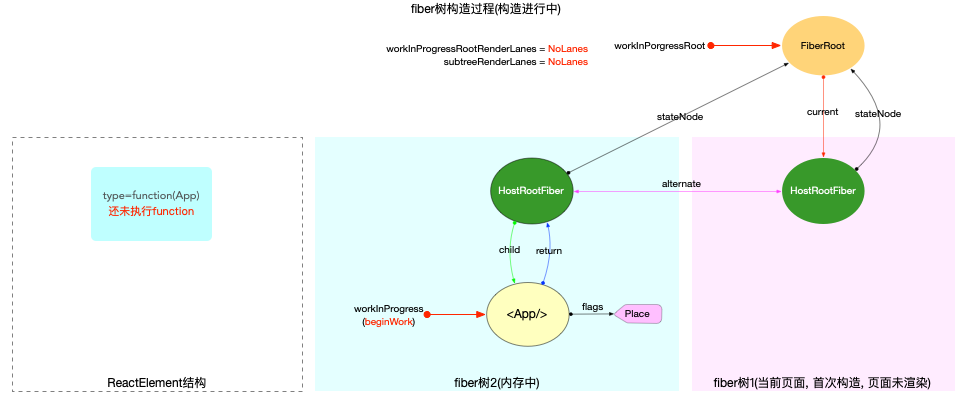
当执行
renderWithHooks时, 开始调用function. 本例中, 在function内部, 共使用了 4 次Hook api, 依次调用useState, useEffect, useState, useEffect.而
useState, useEffect在fiber初次构造时分别对应mountState和mountEffect->mountEffectImpl- function mountState
( - initialState: (() => S) | S,
- ): [S, Dispatch<BasicStateAction
>] { - const hook = mountWorkInProgressHook();
- // ...省略部分本节不讨论
- return [hook.memoizedState, dispatch];
- }
- function mountEffectImpl(fiberFlags, hookFlags, create, deps): void {
- const hook = mountWorkInProgressHook();
- // ...省略部分本节不讨论
- }
无论
useState, useEffect, 内部都通过mountWorkInProgressHook创建一个 hook.链表存储
而mountWorkInProgressHook非常简单:
f
- unction mountWorkInProgressHook(): Hook {
- const hook: Hook = {
- memoizedState: null,
- baseState: null,
- baseQueue: null,
- queue: null,
- next: null,
- };
- if (workInProgressHook === null) {
- // 链表中首个hook
- currentlyRenderingFiber.memoizedState = workInProgressHook = hook;
- } else {
- // 将hook添加到链表末尾
- workInProgressHook = workInProgressHook.next = hook;
- }
- return workInProgressHook;
- }
逻辑是创建
Hook并挂载到fiber.memoizedState上, 多个Hook以链表结构保存.本示例中,
function调用之后则会创建 4 个hook, 这时的内存结构如下:
可以看到: 无论
状态Hook或副作用Hook都按照调用顺序存储在fiber.memoizedState链表中.
顺序克隆
fiber树构造(对比更新)阶段, 执行updateFunctionComponent->renderWithHooks时再次调用function,调用function前的内存结构如下:
注意: 在
renderWithHooks函数中已经设置了workInProgress.memoizedState = null, 等待调用function时重新设置.接下来调用
function, 同样依次调用useState, useEffect, useState, useEffect. 而useState, useEffect在fiber对比更新时分别对应updateState->updateReducer和updateEffect->updateEffectImpl无论
useState, useEffect, 内部调用updateWorkInProgressHook获取一个 hook.- function updateWorkInProgressHook(): Hook {
- // 1. 移动currentHook指针
- let nextCurrentHook: null | Hook;
- if (currentHook === null) {
- const current = currentlyRenderingFiber.alternate;
- if (current !== null) {
- nextCurrentHook = current.memoizedState;
- } else {
- nextCurrentHook = null;
- }
- } else {
- nextCurrentHook = currentHook.next;
- }
- // 2. 移动workInProgressHook指针
- let nextWorkInProgressHook: null | Hook;
- if (workInProgressHook === null) {
- nextWorkInProgressHook = currentlyRenderingFiber.memoizedState;
- } else {
- nextWorkInProgressHook = workInProgressHook.next;
- }
- if (nextWorkInProgressHook !== null) {
- // 渲染时更新: 本节不讨论
- } else {
- currentHook = nextCurrentHook;
- // 3. 克隆currentHook作为新的workInProgressHook.
- // 随后逻辑与mountWorkInProgressHook一致
- const newHook: Hook = {
- memoizedState: currentHook.memoizedState,
- baseState: currentHook.baseState,
- baseQueue: currentHook.baseQueue,
- queue: currentHook.queue,
- next: null, // 注意next指针是null
- };
- if (workInProgressHook === null) {
- currentlyRenderingFiber.memoizedState = workInProgressHook = newHook;
- } else {
- workInProgressHook = workInProgressHook.next = newHook;
- }
- }
- return workInProgressHook;
- }
updateWorkInProgressHook函数逻辑简单: 目的是为了让currentHook和workInProgressHook两个指针同时向后移动.- 由于
renderWithHooks函数设置了workInProgress.memoizedState=null, 所以workInProgressHook初始值必然为null, 只能从currentHook克隆. - 而从
currentHook克隆而来的newHook.next=null, 进而导致workInProgressHook链表需要完全重建.
所以
function执行完成之后, 有关Hook的内存结构如下:
可以看到:
- 以双缓冲技术为基础, 将
current.memoizedState按照顺序克隆到了workInProgress.memoizedState中. Hook经过了一次克隆, 内部的属性(hook.memoizedState等)都没有变动, 所以其状态并不会丢失.

总结
本节首先引入了官方文档上对于
Hook的解释, 了解Hook的由来, 以及Hook相较于class的优势. 然后从fiber视角分析了fiber与hook的内在关系, 通过renderWithHooks函数, 把Hook链表挂载到了fiber.memoizedState之上. 利用fiber树内部的双缓冲技术, 实现了Hook从current到workInProgress转移, 进而实现了Hook状态的持久化. -
-
相关阅读:
c++:二叉搜索树的简析与详细实现(万字)
基于Java+SpringBoot+Mybaties+layui+Vue+elememt 实习管理系统 的设计与实现
《数据结构》复试问答题总结
pve lxc debian 11安装docker遇到bash: sudo: command not解决办法
2024最新华为OD机试(C卷+D卷)真题目录+使用说明+在线评测
基于KubeAdm搭建多节点K8S集群
云效-流水线(基本教程)
Rust Rocket简单入门
基于大数据的计算机就业数据可视化分析项目
快讯:华为启动鸿蒙开发者大赛;腾讯会议发布“万室如意”计划
- 原文地址:https://blog.csdn.net/weixin_44828588/article/details/126525511
