-
LeetCode·23.合并K个升序链表·递归·迭代
链接:https://leetcode.cn/problems/merge-k-sorted-lists/solution/by-xun-ge-v-huf8/
来源:力扣(LeetCode)
著作权归作者所有。商业转载请联系作者获得授权,非商业转载请注明出处。题目
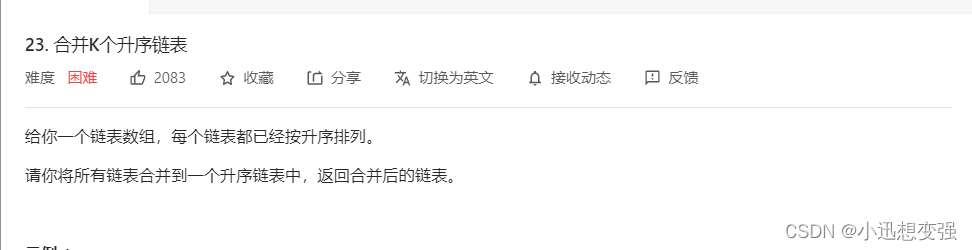
示例

思路
解题思路
- 暴力解法
正所谓暴力永不过时,没有暴力解决不了的问题,只有硬件不行,超时就是过
对于本题,需要合并多个链表,对于链表相关问题,将链表转换为用数组存储基本上都能解决问题,我们将链表所有元素用数组进行存储,然后将数组进行排序,再将数组元素转换到链表中存储即可
- 逐一比较
对于暴力求解,显然看着不高级,那就稍微改进一下
题目给我们的链表已经是升序的了,对于所有链表来说第一个元素都是相对于最小的元素,那么我们按行进行比较,每次取第一行最小的元素加入返回链表中即可。接下来的解法就存在两种情况,使用递归实现,还是使用迭代,使用递归对我们自己来说简单易写,但是坏处就是程序资源开销大,迭代就和递归相反了。
- 对于多个链表合并,可以转换为同一个子问题
- 任意两个链表合并
对于任意多个链表,我们都可以对其中两个进行合并,然后在对其中任意两个合并。比如4个链表,先合并其中任意两个 -> 3 个再任意两个合并 -> 2 个再任意两个合并 -> 1个即为所求
对于任意两个链表合并可以使用迭代和递归实现,对于转换子问题也可以使用递归和迭代两种方法
迭代可以封装为函数,也可以不需要- 递归
任意两个链表合并递归实现,直接上代码吧
struct ListNode * dfs(struct ListNode * l1, struct ListNode * l2)
{
if(l1 == NULL)
{
return l2;
}
if(l2 == NULL)
{
return l1;
}
if(l1->val < l2->val)//比较两个链表元素大小,将小的作为头结点
{
l1->next = dfs(l1->next, l2);
return l1;
}
l2->next = dfs(l1, l2->next);
return l2;
}转换子问题递归实现 -> 其实就是归并排序思路 或者分治思路,看下面代码
- 迭代
任意两个链表合并迭代实现,直接上代码吧
struct ListNode * iterate(struct ListNode * l1, struct ListNode * l2)
{
struct ListNode * head = malloc(sizeof(struct ListNode));
struct ListNode * tail = head;
while(l1 && l2){
if (l1->val <= l2->val){
tail->next = l1;
l1 = l1->next;
}
else{
tail->next = l2;
l2 = l2->next;
}
tail = tail->next;
}
tail->next = l1 ? l1 : l2;
return head->next;
}
对于转换子问题迭代实现,看下面代码代码
- 暴力解法
- /**
- * Definition for singly-linked list.
- * struct ListNode {
- * int val;
- * struct ListNode *next;
- * };
- */
- int cmp(const void * a, const void * b)//升序子函数
- {
- return *(int *)a - *(int *)b;
- }
- struct ListNode* mergeKLists(struct ListNode** lists, int listsSize){
- if(listsSize == 0 )
- {
- return NULL;
- }
- int ans[10000];//临时保存链表值
- int node = 0;
- for(int i = 0; i
- {
- while(lists[i])
- {
- ans[node++] = lists[i]->val;
- lists[i] = lists[i]->next;
- }
- }
- qsort(ans, node, sizeof(int), cmp);//排序
- struct ListNode * h = NULL;
- struct ListNode * root = NULL;
- for(int i = 0; i < node; i++)//转换为链表存储
- {
- struct ListNode * r = malloc(sizeof(struct ListNode));
- r->val = ans[i];
- r->next = NULL;
- if(root == NULL)
- {
- h = r;
- root = r;
- }
- else
- {
- h->next = r;
- h = r;
- }
- }
- return root;
- }
- 逐一比较
- struct ListNode* mergeKLists(struct ListNode** lists, int listsSize){
- int i = 0, j = 0, m = 0;
- struct ListNode *head = malloc(sizeof(struct ListNode)); //头结点
- head->next = NULL;
- struct ListNode *tail = head, *min = head;
- while(1){
- for(i = 0; (i < listsSize) && !lists[i]; i++){
- //找到链表数组里第一个非空的元素
- }
- if(i < listsSize){
- min = lists[i];
- m = i;
- }
- else{ //链表全空,退出循环
- break;
- }
- for(j=i+1; j
- if(lists[j] && (lists[j]->val < min->val)){
- min = lists[j];
- m = j;
- }
- }
- tail->next = min; //将最小结点加入head链表
- tail = tail->next;
- lists[m] = lists[m]->next;
- }
- return head->next;
- }
- 转换子问题递归实现 -> 其实就是归并排序思路 或者分治思路
- //递归实现
- struct ListNode * dfs(struct ListNode * l1, struct ListNode * l2)
- {
- if(l1 == NULL)
- {
- return l2;
- }
- if(l2 == NULL)
- {
- return l1;
- }
- if(l1->val < l2->val)
- {
- l1->next = dfs(l1->next, l2);
- return l1;
- }
- l2->next = dfs(l1, l2->next);
- return l2;
- }
- struct ListNode* TwoLists(struct ListNode** lists, int l, int r){//递归分治
- if(l == r) return lists[l];
- if(l > r) return NULL;
- int mid = l + (r - l)/2;
- struct ListNode *l1 = TwoLists(lists, l, mid);//任意两个链表之一
- struct ListNode *l2 = TwoLists(lists, mid+1, r);//任意两个链表之一
- /*
- //迭代方法
- struct ListNode * head = malloc(sizeof(struct ListNode));
- struct ListNode * tail = head;
- while(l1 && l2){
- if (l1->val <= l2->val){
- tail->next = l1;
- l1 = l1->next;
- }
- else{
- tail->next = l2;
- l2 = l2->next;
- }
- tail = tail->next;
- }
- tail->next = l1 ? l1 : l2;
- return head->next;
- */
- //递归方法
- return dfs(l1, l2);
- }
- struct ListNode* mergeKLists(struct ListNode** lists, int listsSize){
- if(!listsSize) return NULL;
- return TwoLists(lists, 0, listsSize-1);//将多个链表合并转换为任意两个链表合并,转换子问题
- }
- 转换子问题迭代实现
- //递归方法
- struct ListNode * dfs(struct ListNode * l1, struct ListNode * l2)
- {
- if(l1 == NULL)
- {
- return l2;
- }
- if(l2 == NULL)
- {
- return l1;
- }
- if(l1->val < l2->val)
- {
- l1->next = dfs(l1->next, l2);
- return l1;
- }
- l2->next = dfs(l1, l2->next);
- return l2;
- }
- //迭代方法
- struct ListNode * bfs(struct ListNode * l1, struct ListNode * l2)
- {
- struct ListNode * head = malloc(sizeof(struct ListNode));
- struct ListNode * tail = head;
- while(l1 && l2){
- if (l1->val <= l2->val){
- tail->next = l1;
- l1 = l1->next;
- }
- else{
- tail->next = l2;
- l2 = l2->next;
- }
- tail = tail->next;
- }
- tail->next = l1 ? l1 : l2;
- return head->next;
- }
- struct ListNode* mergeKLists(struct ListNode** lists, int listsSize){
- if(!listsSize) return NULL;
- struct ListNode * head = NULL;
- for(int i = 0; i < listsSize; i++)
- {
- //递归实现
- head = dfs(head, lists[i]);
- //迭代实现
- //head = bfs(head, lists[i]);
- }
- return head;
- }
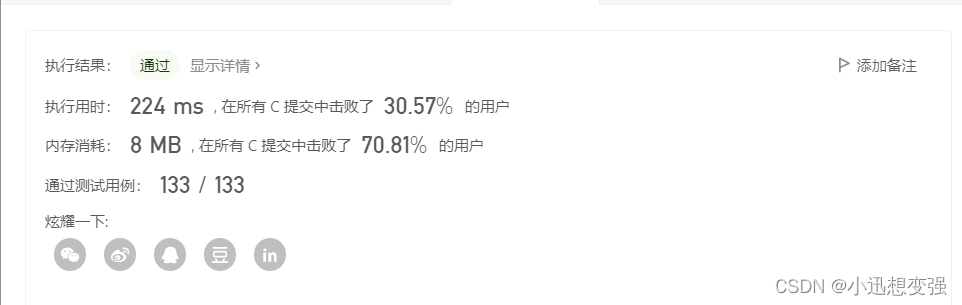
时间空间复杂度
-
相关阅读:
screen_main.c
大学生网课答案查询公众号搭建教程
《Ubuntu20.04环境下的ROS进阶学习1》
kubernetes pod日志查看用户创建
MySQL基础入门教程(InsCode AI 创作助手)
Impedit odio facilis ad.Quinze également passer billet mensonge animer libre.
【笔记篇】13供应链项目养成记——之《实战供应链》
快速清除PPT缓存文件或C盘隐藏大文件
数据结构之赫曼夫树(哈曼夫树)
【Spring中的设计模式】
- 原文地址:https://blog.csdn.net/m0_64560763/article/details/126076674
