-
MAX/MSP SDK学习04:Messages selector的使用
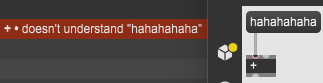
其实消息选择器在simplemax示例中就接触到了,但这文档非要讲那么抽象。目前为止对消息选择器的理解是:可判断接收过来的消息是否符合本Object的处理要求,比如加法对象只可接收数值型的消息以处理,但不能接收t_symbol型的消息,如下:
1. Messages selector
如下面自定义的myObjectABC可从出口发送消息选择器为 "ABC" 的消息,myObjectInt可发送消息选择器为 "int" 的消息。MAX/MSP SDK学习03:Atoms and Messages的使用中的IsMatchABC组件可接收处理 "ABC" 消息和 "int" 消息。
myObjectABC:
- #include "ext.h" // standard Max include, always required
- #include "ext_obex.h" // required for new style Max object
- typedef struct _myObjectABC {
- t_object ob; // the object itself (must be first)
- void* outLet; // 出口
- } t_myObjectABC;
- // function prototypes
- void* myObjectABC_new(t_symbol* s, long argc, t_atom* argv);
- void myObjectABC_free(t_myObjectABC* x);
- void myObjectABC_assist(t_myObjectABC* x, void* b, long m, long a, char* s);
- void myObjectABC_bang(t_myObjectABC* x);
- // global class pointer variable
- void* myObjectABC_class;
- void ext_main(void* r) {
- t_class* c;
- // "myObjectABC" 建议和项目名一样,否则在max/msp中创建自定义组件会出问题
- c = class_new("myObjectABC", (method)myObjectABC_new, (method)myObjectABC_free, (long)sizeof(t_myObjectABC),
- 0L /* leave NULL!! */, A_GIMME, 0);
- /* you CAN'T call this from the patcher */
- // Object将接收到的消息(int、bang、assist等)与消息选择器中的对比,比对成功则可调用相关C方法,否则"Object dosen't understand message"
- // A_CANT、A_LONG等指定typed方法,A_GIMME:a list of atoms,适用于超过四个参数或者多个浮点数
- class_addmethod(c, (method)myObjectABC_assist, "assist", A_CANT, 0);
- class_addmethod(c, (method)myObjectABC_bang, "bang", 0);
- class_register(CLASS_BOX, c); /* CLASS_NOBOX */
- myObjectABC_class = c;
- post("I am the myObjectABC object");
- }
- void myObjectABC_assist(t_myObjectABC* x, void* b, long m, long a, char* s) {
- if (m == ASSIST_INLET) { // inlet
- sprintf(s, "I am inlet %ld", a);
- } else { // outlet
- sprintf(s, "I am outlet %ld", a);
- }
- }
- void myObjectABC_free(t_myObjectABC* x) {
- ;
- }
- /* argc指在创建组件时,直接跟在组件后面的参数个数;argv存储参数具体值*/
- void* myObjectABC_new(t_symbol* s, long argc, t_atom* argv) { // 分配内存创建object,初始化属性,创建入口和出口(默认一个入口,无出口)
- t_myObjectABC* x = NULL;
- long i;
- if ((x = (t_myObjectABC*)object_alloc(myObjectABC_class))) { // 使用全局指针创建新实例
- object_post((t_object*)x, "a new %s object was instantiated: %p", s->s_name, x);
- object_post((t_object*)x, "it has %ld arguments", argc);
- x->outLet = outlet_new((t_object*)x, NULL);
- }
- return (x);
- }
- void myObjectABC_bang(t_myObjectABC* x) {
- t_atom argv[3]; // t_atom类型可存储整型、浮点型、t_symbol类型、指针。
- atom_setlong(argv, 666);
- atom_setsym(argv + 1, gensym("MYM")); // 字符串需要用gensym转换成t_symbol* 类型
- atom_setfloat(argv + 2, 0.123);
- outlet_anything(x->outLet, gensym("ABC"), 3, argv);
- }
myObjectInt:
- #include "ext.h" // standard Max include, always required
- #include "ext_obex.h" // required for new style Max object
- typedef struct _myObjectInt {
- t_object ob; // the object itself (must be first)
- void* outLet; // 出口
- } t_myObjectInt;
- // function prototypes
- void* myObjectInt_new(t_symbol* s, long argc, t_atom* argv);
- void myObjectInt_free(t_myObjectInt* x);
- void myObjectInt_assist(t_myObjectInt* x, void* b, long m, long a, char* s);
- void myObjectInt_bang(t_myObjectInt* x);
- // global class pointer variable
- void* myObjectInt_class;
- void ext_main(void* r) {
- t_class* c;
- // "myObjectInt" 建议和项目名一样,否则在max/msp中创建自定义组件会出问题
- c = class_new("myObjectInt", (method)myObjectInt_new, (method)myObjectInt_free, (long)sizeof(t_myObjectInt),
- 0L /* leave NULL!! */, A_GIMME, 0);
- /* you CAN'T call this from the patcher */
- // Object将接收到的消息(int、bang、assist等)与消息选择器中的对比,比对成功则可调用相关C方法,否则"Object dosen't understand message"
- // A_CANT、A_LONG等指定typed方法,A_GIMME:a list of atoms,适用于超过四个参数或者多个浮点数
- class_addmethod(c, (method)myObjectInt_assist, "assist", A_CANT, 0);
- class_addmethod(c, (method)myObjectInt_bang, "bang", 0);
- class_register(CLASS_BOX, c); /* CLASS_NOBOX */
- myObjectInt_class = c;
- post("I am the myObjectInt object");
- }
- void myObjectInt_assist(t_myObjectInt* x, void* b, long m, long a, char* s) {
- if (m == ASSIST_INLET) { // inlet
- sprintf(s, "I am inlet %ld", a);
- } else { // outlet
- sprintf(s, "I am outlet %ld", a);
- }
- }
- void myObjectInt_free(t_myObjectInt* x) {
- ;
- }
- /* argc指在创建组件时,直接跟在组件后面的参数个数;argv存储参数具体值*/
- void* myObjectInt_new(t_symbol* s, long argc, t_atom* argv) { // 分配内存创建object,初始化属性,创建入口和出口(默认一个入口,无出口)
- t_myObjectInt* x = NULL;
- long i;
- if ((x = (t_myObjectInt*)object_alloc(myObjectInt_class))) { // 使用全局指针创建新实例
- object_post((t_object*)x, "a new %s object was instantiated: %p", s->s_name, x);
- object_post((t_object*)x, "it has %ld arguments", argc);
- x->outLet = outlet_new((t_object*)x, NULL);
- }
- return (x);
- }
- void myObjectInt_bang(t_myObjectInt* x) {
- t_atom argv[3]; // t_atom类型可存储整型、浮点型、t_symbol类型、指针。
- atom_setlong(argv, 666);
- atom_setsym(argv + 1, gensym("MYM")); // 字符串需要用gensym转换成t_symbol* 类型
- atom_setfloat(argv + 2, 0.123);
- outlet_anything(x->outLet, gensym("int"), 3, argv);
- }
将myObjectABC和myObjectInt的出口都接入IsMatchABC的左入口,测试消息选择器的使用。
运行结果:


2. anything method
若某t_symbol消息匹配不到消息选择器,则可定义通用处理方法anything method,如下:
- #include "ext.h" // standard Max include, always required
- #include "ext_obex.h" // required for new style Max object
- typedef struct _anything {
- t_object ob; // the object itself (must be first)
- } t_anything;
- void* anything_new(t_symbol* s, long argc, t_atom* argv);
- void anything_free(t_anything* x);
- void anything_assist(t_anything* x, void* b, long m, long a, char* s);
- void anything_anything(t_anything* x, t_symbol* s, long argc, t_atom* argv);
- void* anything_class;
- void ext_main(void* r) {
- t_class* c;
- // "anything" 建议和项目名一样,否则在max/msp中创建自定义组件会出问题
- c = class_new("anything", (method)anything_new, (method)anything_free, (long)sizeof(t_anything),
- 0L /* leave NULL!! */, A_GIMME, 0);
- class_addmethod(c, (method)anything_assist, "assist", A_CANT, 0);
- class_addmethod(c, (method)anything_anything, "anything", A_GIMME, 0);
- class_register(CLASS_BOX, c); /* CLASS_NOBOX */
- anything_class = c;
- post("I am the anything object");
- }
- void anything_assist(t_anything* x, void* b, long m, long a, char* s) {
- if (m == ASSIST_INLET) { // inlet
- sprintf(s, "I am inlet %ld", a);
- } else { // outlet
- sprintf(s, "I am outlet %ld", a);
- }
- }
- void anything_free(t_anything* x) {
- ;
- }
- /* argc指在创建组件时,直接跟在组件后面的参数个数;argv存储参数具体值*/
- void* anything_new(t_symbol* s, long argc, t_atom* argv) { // 分配内存创建object,初始化属性,创建入口和出口(默认一个入口,无出口)
- t_anything* x = NULL;
- x = (t_anything*)object_alloc(anything_class);
- return (x);
- }
- void anything_anything(t_anything* x, t_symbol* s, long argc, t_atom* argv) {
- object_post((t_object*)x, "Invoked by [%s] message", s->s_name);
- }
运行结果:

-
相关阅读:
闲话状态模式
Carla安装记录
MyBatis流程以及套路
JavaCV + FFmpeg 播放音视频
〖Python 数据库开发实战 - MySQL篇⑰〗- 聚合函数的使用
微信小程序进阶(1)--自定义组件
多线程 - 单例模式
人员定位在安全生产管理中的应用
热噪声 Thermal noise
微服务实战|集中配置中心Config非对称加密与安全管理
- 原文地址:https://blog.csdn.net/qq_38967414/article/details/134531745
