-
手撕code(1~5)
手撕code
01 交叉打印ABC
#include#include #include #include using namespace std; int flag = 0; mutex mtx; condition_variable cv; void printA() { unique_lock<mutex> lk(mtx); int count = 0; while (count < 10) { while (flag != 0) cv.wait(lk); cout << "thread 1: a" << endl; flag = 1; cv.notify_all(); count++; } cout << "thread 1 has finsihed" << endl; } void printB() { unique_lock<mutex> lk(mtx); int count = 0; while (count < 10) { while (flag != 1) cv.wait(lk); cout << "thread 2: b" << endl; flag = 2; cv.notify_all(); count++; } cout << "thread 2 has finsihed" << endl; } void printC() { unique_lock<mutex> lk(mtx); int count = 0; while (count < 10) { while (flag != 2) cv.wait(lk); cout << "thread 3: c" << endl; flag = 0; cv.notify_all(); count++; } cout << "thread 3 has finsihed" << endl; } int main() { thread t1(printA); thread t2(printB); thread t3(printC); t1.join(); t2.join(); t3.join(); system("pause"); return 0; } - 1
- 2
- 3
- 4
- 5
- 6
- 7
- 8
- 9
- 10
- 11
- 12
- 13
- 14
- 15
- 16
- 17
- 18
- 19
- 20
- 21
- 22
- 23
- 24
- 25
- 26
- 27
- 28
- 29
- 30
- 31
- 32
- 33
- 34
- 35
- 36
- 37
- 38
- 39
- 40
- 41
- 42
- 43
- 44
- 45
- 46
- 47
- 48
- 49
- 50
- 51
- 52
- 53
- 54
- 55
- 56
- 57
- 58
- 59
- 60
- 61
- 62
- 63
运行结果:
02 智能指针
原理:利用栈上的对象出作用域自动析构的特征,采用了栈上面的指针去管理堆上面的内容
//不带引用计数智能指针 #includeusing namespace std; template<typename T> class SmartPtr { public: SmartPtr(T* ptr = nullptr) :_mptr(ptr) {} ~SmartPtr() { delete _mptr; } T& operator*() { return *_mptr; }//传引用 传值 传*_mptr T* operator->() { return _mptr; }//传指针 传_mptr; private: T* _mptr; }; class Test { public: void test() { cout << "call Test::test" << endl; } }; int main() { SmartPtr<int> ptr1(new int); *ptr1 = 20; cout << *ptr1 << endl; SmartPtr<Test> ptr2(new Test()); ptr2->test(); system("pause"); return 0; } - 1
- 2
- 3
- 4
- 5
- 6
- 7
- 8
- 9
- 10
- 11
- 12
- 13
- 14
- 15
- 16
- 17
- 18
- 19
- 20
- 21
- 22
- 23
- 24
- 25
- 26
- 27
- 28
- 29
- 30
- 31
- 32
- 33
运行结果:

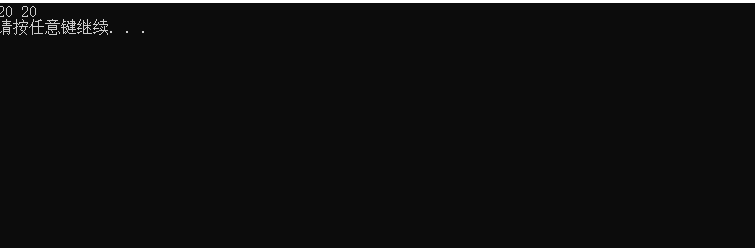
//带引用计数智能指针 #include#include using namespace std; template<typename T> class RefCnt { public: RefCnt(T *ptr = nullptr):mptr (ptr) { if (mptr != nullptr) mcount = 1; } void addRef(){ mcount++; }//增加引用计数 int delRef(){ return --mcount;}//减少引用计数 private : T *mptr; int mcount; }; template<typename T> class Csmartptr { public: Csmartptr(T* ptr = nullptr) :mptr(ptr) { mpRefCnt = new RefCnt<T>(mptr); } /*Csmartptr(const Csmartptr &src) { mptr = new T(*src .mptr) ; }*/ ~Csmartptr() { if (0 == mpRefCnt->delRef () ) { delete mptr; mptr = nullptr; } } T& operator*() { return *mptr; } T* operator->() {return mptr; } Csmartptr(const Csmartptr<T> &src):mptr(src.mptr), mpRefCnt(src.mpRefCnt) { if (mptr != nullptr) mpRefCnt->addRef() ; } Csmartptr<T>& operator= (const Csmartptr<T> &src) { if (this == &src) return *this; //删除原有对象指向的资源 if (0 == mpRefCnt->delRef () ) { delete mptr; } mptr = src.mptr; mpRefCnt = src.mpRefCnt ; mpRefCnt->addRef () ; return *this; } private: T* mptr;//指向资源的指针 RefCnt<T> *mpRefCnt;//指向该资源引用计数对象的指针 }; int main() { Csmartptr<int> ptr1 (new int) ; Csmartptr<int> ptr2(ptr1) ; Csmartptr<int> ptr3; ptr3 = ptr2; *ptr1 = 20; cout << *ptr2 << " " << *ptr3 << endl ; system("pause"); return 0; }- 1
- 2
- 3
- 4
- 5
- 6
- 7
- 8
- 9
- 10
- 11
- 12
- 13
- 14
- 15
- 16
- 17
- 18
- 19
- 20
- 21
- 22
- 23
- 24
- 25
- 26
- 27
- 28
- 29
- 30
- 31
- 32
- 33
- 34
- 35
- 36
- 37
- 38
- 39
- 40
- 41
- 42
- 43
- 44
- 45
- 46
- 47
- 48
- 49
- 50
- 51
- 52
- 53
- 54
- 55
- 56
- 57
- 58
- 59
- 60
- 61
- 62
- 63
- 64
- 65
- 66
- 67
- 68
- 69
- 70
- 71
- 72
- 73
- 74
- 75
- 76
- 77
- 78
- 79
- 80
- 81
- 82
- 83
(1)auto_ptr c++98引入
拷贝构造时,将原先的auto_ptr对象置为空,而通常我们说赋值或者拷贝的时候应该两个对象具有相同的值
缺点:
- 不能使用auto_ptr指向动态分配的数组的指针,因为当释放对象的时候它使用的只是一个普通的delete操作符。不是delete[]
- 尽量不要对他进程赋值和拷贝
- 不能使用两个auto_ptr对象指向同一对象,这会导致对空间析构两次
(2)scoped_ptr
方便管理单个堆内存对象,但是scoped_ptr独享所有权,避免了auto_ptr的烦恼,主要的设计思想就是防拷贝,底层源码直接delete掉了
(3)unique_ptr C++11
unique_ptr 独享所有权语义,转移一个unique_ptr将会把所有权全部从源指针转移给目标指针,源指针被置空;所以unique_ptr不支持普通的拷贝和赋值操作,配合move移动语义(类型强转强制把左值转为右值)。
(4)shared_ptr C++11 带引用计数
采用引用计数的方法,允许多个智能指针指向同一个对象,指向该对象的所有智能指针内部的引用计数会加1,每减少一个智能指针指向对象时引用计数减一,当引用计数为0时自动析构
(5)weak_ptr C++11 不带引用计数
主要为了解决引用计数形成的问题也就是循环引用,即互相交叉引用,这样两个指针指向的内存都无法被释放,需要weak_ptr打破环形引用。weak_ptr是为了配合强指针而引入的弱指针,它指向由shared_ptr指向的对象同时不会影响对象的生命周期,它的构造和析构不改变引用计数。
当使用shared_ptr指向对方的对象的时候,使用weak_ptr就不会出现资源无法释放
循环引用问题:
总结来说无法释放内存的原因是,由于对象是动态分配的,而对象本身又含有shared_ptr指针,释放对象需要shared_ptr的释放使引用计数减为零,而shared_ptr的释放又需要对象的释放,两者互相等待对方先释放,往往是两者都无法释放。
03 设计模式
单例模式
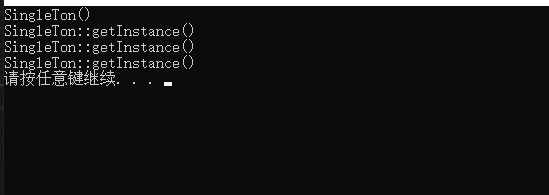
//懒汉式单例模式 #includeusing namespace std; //懒汉式单例模式 class SingleTon { public: static SingleTon* getInstance() { cout << "SingleTon::getInstance()" << endl; return &instance; } private: SingleTon() { cout << "Singleton()" << endl; } static SingleTon instance; SingleTon(const SingleTon&) = delete; SingleTon& operator=(const SingleTon&) = delete; }; SingleTon SingleTon::instance; int main() { SingleTon* p1 = SingleTon::getInstance(); SingleTon* p2 = SingleTon::getInstance(); SingleTon* p3 = SingleTon::getInstance(); system("pause"); return 0; } - 1
- 2
- 3
- 4
- 5
- 6
- 7
- 8
- 9
- 10
- 11
- 12
- 13
- 14
- 15
- 16
- 17
- 18
- 19
- 20
- 21
- 22
- 23
- 24
- 25
- 26
- 27
- 28
- 29
- 30
- 31
[外链图片转存失败,源站可能有防盗链机制,建议将图片保存下来直接上传(img-Y2L5hk51-1662965236503)(…/…/…/…/…/…/AppData/Roaming/Typora/typora-user-images/image-20220906095240291.png)]
//饿汉式单例模式 #includeusing namespace std; class SingleTon { public: static SingleTon* getInstance() { static SingleTon instance; cout << "SingleTon::getInstance()" << endl; return &instance; } private: SingleTon() { cout << "SingleTon()" << endl; } SingleTon(const SingleTon&) = delete; SingleTon& operator=(const SingleTon&) = delete; }; int main() { SingleTon* p1 = SingleTon::getInstance(); SingleTon* p2 = SingleTon::getInstance(); SingleTon* p3 = SingleTon::getInstance(); system("pause"); return 0; } - 1
- 2
- 3
- 4
- 5
- 6
- 7
- 8
- 9
- 10
- 11
- 12
- 13
- 14
- 15
- 16
- 17
- 18
- 19
- 20
- 21
- 22
- 23
- 24
- 25
- 26
- 27
- 28
- 29
工厂模式
简单工厂模式
#includeusing namespace std; enum Type { type1, type2 }; class product { public: virtual void show() = 0; }; class productA : public product{ public: void show() { cout << "productA" << endl; } }; class productB : public product{ public: void show() { cout << "productB" << endl; } }; class Factory { public: product *Create(enum Type type) { switch(type) { case type1: return new productA(); case type2: return new productB(); default: break; } } }; int main() { Factory factory; factory.Create(type1)->show(); factory.Create(type2)->show(); system("pause"); return 0; } - 1
- 2
- 3
- 4
- 5
- 6
- 7
- 8
- 9
- 10
- 11
- 12
- 13
- 14
- 15
- 16
- 17
- 18
- 19
- 20
- 21
- 22
- 23
- 24
- 25
- 26
- 27
- 28
- 29
- 30
- 31
- 32
- 33
- 34
- 35
- 36
- 37
- 38
- 39
- 40
- 41
- 42
- 43
- 44
- 45
- 46
- 47
- 48

04 move与forward
左值:能在内存中取得地址,即是左值 左值持久 左值通常是变量
右值:在内存中无法取得地址的是右值 右值短暂 右值通常是表达式求值过程中创建的临时对象
左值引用:绑定到确定存储空间以及变量名的对象上,表达式结束后对象依然存在
右值引用:绑定到要求转换的表达式、字面常量、返回右值的临时对象上,表达式结束后对象就会销毁
move移动语义的基本实现原理:
引用折叠
左值引用 + 左值引用 = 左值引用
左值引用 + 右值引用 = 左值引用
右值引用 + 左值引用 = 左值引用
右值引用 + 右值引用 = 右值引用
move:使用移动语义,强制把一个左值转为右值,减少了一次临时对象的创建,提升效率
forward:完美转发 在函数模板中,完全按照模板参数的类型传递给调用的另一个函数 ,侦测是左值还是右值,然后进行对应类型的转发
#includeusing namespace std; void other_func(int& a) { cout << "int&" << endl; } void other_func(int&& a) { cout << "int&&" << endl; } void other_func(const int& a) { cout << "const int&" << endl; } void other_func(const int&& a) { cout << "const int&&" << endl; } template<typename T> void func(T&& t) { other_func(forward<T>(t)); } int main() { int a = 0; int b = 0; const int c = 0; const int d = 0; other_func(a); other_func(move(b)); other_func(c); other_func(move(c)); system("pause"); return 0; } - 1
- 2
- 3
- 4
- 5
- 6
- 7
- 8
- 9
- 10
- 11
- 12
- 13
- 14
- 15
- 16
- 17
- 18
- 19
- 20
- 21
- 22
- 23
- 24
- 25
- 26
- 27
- 28
- 29
- 30
- 31
- 32
- 33
- 34
- 35
- 36
- 37
- 38

05 排序算法
冒泡排序
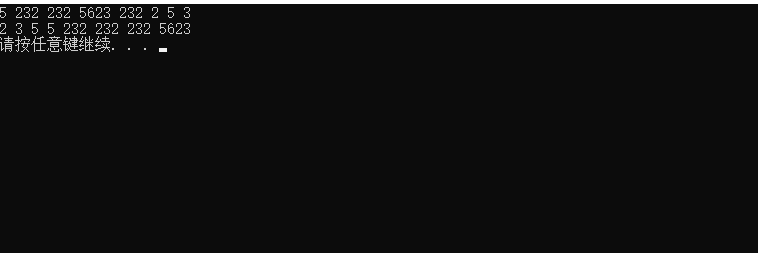
#include#include using namespace std; void bubbleSort(vector<int>& nums) { int n = nums.size(); bool flag = false; for (int i = 0; i < n - 1; i++) { flag = false; for (int j = 0; j < n - 1 - i; j++) { if (nums[j] > nums[j + 1]) { swap(nums[j], nums[j + 1]); flag = true; } } if (!flag) break; } } int main() { int val; vector<int> nums; while (cin >> val) { nums.push_back(val); if (cin.get() == '\n') break; } bubbleSort(nums); for (int num : nums) { cout << num << " "; } cout << endl; system("pause"); return 0; } - 1
- 2
- 3
- 4
- 5
- 6
- 7
- 8
- 9
- 10
- 11
- 12
- 13
- 14
- 15
- 16
- 17
- 18
- 19
- 20
- 21
- 22
- 23
- 24
- 25
- 26
- 27
- 28
- 29
- 30
- 31
- 32
- 33
- 34
- 35
- 36
- 37
选择排序
#include#include using namespace std; void choiceSort(vector<int>& nums) { int n = nums.size(); int minIndex = 0; for (int i = 0; i < n; i++) { minIndex = i; for (int j = i + 1; j < n; j++) { if (nums[j] < nums[minIndex]) minIndex = j; } swap(nums[i], nums[minIndex]); } } int main() { int val; vector<int> nums; while (cin >> val) { nums.push_back(val); if (cin.get() == '\n') break; } choiceSort(nums); for (int num : nums) { cout << num << " "; } cout << endl; system("pause"); return 0; } - 1
- 2
- 3
- 4
- 5
- 6
- 7
- 8
- 9
- 10
- 11
- 12
- 13
- 14
- 15
- 16
- 17
- 18
- 19
- 20
- 21
- 22
- 23
- 24
- 25
- 26
- 27
- 28
- 29
- 30
- 31
- 32
- 33
- 34

插入排序
#include#include using namespace std; void insertSort(vector<int>& nums) { int n = nums.size(); for (int i = 1; i < n; i++) { int val = nums[i]; int j = i - 1; for (; j >= 0; j--) { if (nums[j] <= val) break; nums[j + 1] = nums[j]; } nums[j + 1] = val; } } int main() { int val; vector<int> nums; while (cin >> val) { nums.push_back(val); if (cin.get() == '\n') break; } insertSort(nums); for (int num : nums) { cout << num << " "; } cout << endl; system("pause"); return 0; } - 1
- 2
- 3
- 4
- 5
- 6
- 7
- 8
- 9
- 10
- 11
- 12
- 13
- 14
- 15
- 16
- 17
- 18
- 19
- 20
- 21
- 22
- 23
- 24
- 25
- 26
- 27
- 28
- 29
- 30
- 31
- 32
- 33
- 34
- 35

希尔排序
#include#include using namespace std; void shellSort(vector<int>& nums) { int n = nums.size(); for (int gap = n / 2; gap > 0; gap /= 2) { for (int i = gap; i < n; i++) { int val = nums[i]; int j = i - gap; for (; j >= 0; j -= gap) { if (nums[j] <= val) break; nums[j + gap] = nums[j]; } nums[j + gap] = val; } } } int main() { int val; vector<int> nums; while (cin >> val) { nums.push_back(val); if (cin.get() == '\n') break; } shellSort(nums); for (int num : nums) { cout << num << " "; } cout << endl; system("pause"); return 0; } - 1
- 2
- 3
- 4
- 5
- 6
- 7
- 8
- 9
- 10
- 11
- 12
- 13
- 14
- 15
- 16
- 17
- 18
- 19
- 20
- 21
- 22
- 23
- 24
- 25
- 26
- 27
- 28
- 29
- 30
- 31
- 32
- 33
- 34
- 35
- 36
- 37
快速排序
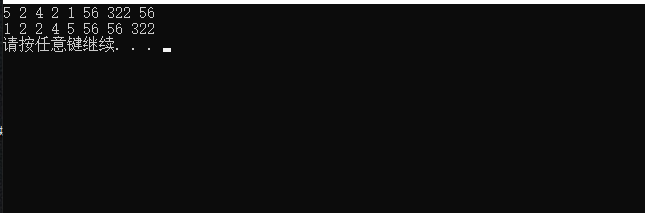
#includeusing namespace std; #include void quickSort(vector<int>& nums, int begin, int end) { //数组可以直接传递 vector对象必须要引用传递 值传递无法改变实参 if (begin >= end) return; //选择基准数 int l = begin, r = end; int val = nums[l]; // 一次快排处理 while (l < r) { while (l < r && nums[r] > val) { r--; } if (l < r) { nums[l] = nums[r]; l++; } while (l < r && nums[l] < val) { l++; } if (l < r) { nums[r] = nums[l]; r--; } } //直至 l == r nums[l] = val; //递归两端 quickSort(nums, begin, l - 1); quickSort(nums, l + 1, end); } int main() { int data; vector<int> nums; while (cin >> data) { nums.push_back(data); if (cin.get() == '\n') break; } int n = nums.size(); quickSort(nums, 0, n - 1); for (int i = 0; i < n; i++) { cout << nums[i] << " "; } cout << endl; system("pause"); return 0; } - 1
- 2
- 3
- 4
- 5
- 6
- 7
- 8
- 9
- 10
- 11
- 12
- 13
- 14
- 15
- 16
- 17
- 18
- 19
- 20
- 21
- 22
- 23
- 24
- 25
- 26
- 27
- 28
- 29
- 30
- 31
- 32
- 33
- 34
- 35
- 36
- 37
- 38
- 39
- 40
- 41
- 42
- 43
- 44
- 45
- 46
- 47
- 48
- 49
- 50
- 51
- 52
- 53
- 54
- 55
- 56
- 57

归并排序
#includeusing namespace std; #include void mergeSort(vector<int>& nums, int begin, int end, int* p) { //数组可以直接传递 vector对象必须要引用传递 值传递无法改变实参 if (begin >= end) return; int mid = (begin + end) / 2; // 先递 mergeSort(nums, begin, mid, p); mergeSort(nums, mid + 1, end, p); //再归并 int index = 0; int i = begin; int j = mid + 1; while (i <= mid && j <= end) { if (nums[i] <= nums[j]) { p[index++] = nums[i++]; } else { p[index++] = nums[j++]; } } while (i <= mid) { p[index++] = nums[i++]; } while (j <= end) { p[index++] = nums[j++]; } for (i = begin, j = 0; i <= end; i++, j++) { nums[i] = p[j]; } } int main() { int data; vector<int> nums; while (cin >> data) { nums.push_back(data); if (cin.get() == '\n') break; } int n = nums.size(); int* p = new int[n]; mergeSort(nums, 0, n - 1, p); delete[] p; for (int i = 0; i < n; i++) { cout << nums[i] << " "; } cout << endl; system("pause"); return 0; } - 1
- 2
- 3
- 4
- 5
- 6
- 7
- 8
- 9
- 10
- 11
- 12
- 13
- 14
- 15
- 16
- 17
- 18
- 19
- 20
- 21
- 22
- 23
- 24
- 25
- 26
- 27
- 28
- 29
- 30
- 31
- 32
- 33
- 34
- 35
- 36
- 37
- 38
- 39
- 40
- 41
- 42
- 43
- 44
- 45
- 46
- 47
- 48
- 49
- 50
- 51
- 52
- 53
- 54
- 55
- 56
- 57
- 58
- 59
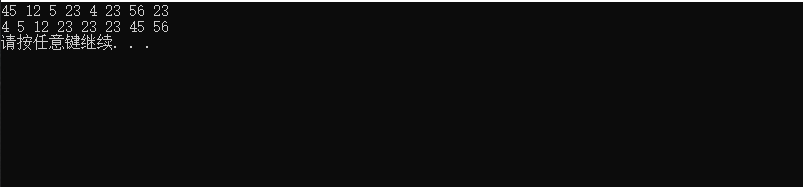
堆排序
#include#include using namespace std; //堆的下沉调整 大根堆 void siftDown(vector<int>& arr, int i, int size) { int val = arr[i]; while (i < size / 2) { // i <= (size - 2) / 2 = size / 2 - 1 等价于 i < size / 2 int child = 2 * i + 1; //左孩子 if (child + 1 < size && arr[child + 1] > arr[child]) { child = child + 1; // 记录值比较大的孩子 } if (arr[child] > val) { arr[i] = arr[child]; i = child; // i继续指向它的孩子,继续调整,一直调整到最后有孩子的节点处 } else { break; } arr[i] = val; } } void heap_Sort(vector<int>& arr, int size) { int n = size - 1; // 从第一个非叶子节点 成为大根堆 for (int i = (n - 1) / 2; i >= 0; i--) { siftDown(arr, i, size); } //把堆顶元素和末尾元素进行交换,从堆顶进行下沉操作 只是大根堆 并非升序 for (int i = n; i >= 0; i--) { int tmp = arr[0]; arr[0] = arr[i]; arr[i] = tmp; siftDown(arr, 0, i); //第三个参数表示参与调整元素的个数 } } int main() { int data; vector<int> nums; while (cin >> data) { nums.push_back(data); if (cin.get() == '\n') break; } int size = nums.size(); heap_Sort(nums, size); for (int val : nums) { cout << val << " "; } cout << endl; system("pause"); return 0; } - 1
- 2
- 3
- 4
- 5
- 6
- 7
- 8
- 9
- 10
- 11
- 12
- 13
- 14
- 15
- 16
- 17
- 18
- 19
- 20
- 21
- 22
- 23
- 24
- 25
- 26
- 27
- 28
- 29
- 30
- 31
- 32
- 33
- 34
- 35
- 36
- 37
- 38
- 39
- 40
- 41
- 42
- 43
- 44
- 45
- 46
- 47
- 48
- 49
- 50
- 51
- 52
- 53
- 54
- 55
- 56
- 57
- 58
- 59
- 60

基数排序
#include#include #include using namespace std; //基数排序 void radixSort(vector<int>& nums) { int n = nums.size(); int maxData = nums[0]; //获取最大值 以及桶排序的趟数(位数) for (int i = 1; i < n; i++) { if (maxData < nums[i]) { maxData = nums[i]; } } cout << maxData << endl; int len = to_string(maxData).size(); // 存储桶 vector<vector<int>> vecs; int mod = 10; int dev = 1; for (int i = 0; i < len; mod *= 10, dev *= 10, i++) { // o(d) d:数据长度 vecs.resize(10); // 0-9号桶 改为20个桶 为了能处理负数 -9 到 9 for (int j = 0; j < n; j++) { //o(n) //得到当前元素第i个位置的数字 int index = nums[j] % mod / dev; // 0-9 放负数 10-19 放正数 vecs[index].push_back(nums[j]); } //依次遍历所有的桶,把元素拷贝回原始数组中 int idx = 0; for (auto vec : vecs) { //o(20) for (int v : vec) { //o(n) * o(20) = o(20n) = o(n) 与上面的o(n) 并列 nums[idx++] = v; } } //清空所有元素 vecs.clear(); } } //整体复杂度为 时间 o(nd) 空间o(n) 稳定性:稳定排序 不改变相同的元素的顺序 int main() { int val; vector<int> nums; while (cin >> val) { nums.push_back(val); if (cin.get() == '\n') break; } radixSort(nums); for (int num : nums) { cout << num << " "; } cout << endl; system("pause"); return 0; } //浮点数 、 负数无法处理 - 1
- 2
- 3
- 4
- 5
- 6
- 7
- 8
- 9
- 10
- 11
- 12
- 13
- 14
- 15
- 16
- 17
- 18
- 19
- 20
- 21
- 22
- 23
- 24
- 25
- 26
- 27
- 28
- 29
- 30
- 31
- 32
- 33
- 34
- 35
- 36
- 37
- 38
- 39
- 40
- 41
- 42
- 43
- 44
- 45
- 46
- 47
- 48
- 49
- 50
- 51
- 52
- 53
- 54
- 55
- 56
- 57
- 58
- 59
- 60
- 61
- 62
- 63
- 64
- 65
- 66
- 67

-
相关阅读:
Direct3D拾取
GeoServer扩展功能之发布矢量瓦片
java基于BS结构的中俄师生学术交流平台
C++笔记之获取线程ID以及线程ID的用处
Revit插件实现【快速扣减】的两种操作
Python配置镜像源
02--Spring中AOP
android 布局 横屏 android横屏适配
SkyWalking内置MQE语法
java 面试题
- 原文地址:https://blog.csdn.net/qq_41945053/article/details/126817265
