-
<<JavaEE>> 线程安全问题
目录
今天我们就围绕这个代码 去理解一下什么是线程安全!
- class Counter {
- public int counter = 0;
- public void increase() {
- this.counter++;
- }
- }
- public class demo1 {
- public static void main(String[] args) throws InterruptedException {
- Counter count = new Counter();
- Thread thread1 = new Thread(() -> {
- for (int i = 0; i < 5000; i++) {
- count.increase();
- }
- });
- Thread thread2 = new Thread(() -> {
- for (int i = 0; i < 5000; i++) {
- count.increase();
- }
- });
- thread1.start();
- thread2.start();
- thread1.join();
- thread2.join();
- System.out.println(count.counter);
- }
- }
- 代码的执行结果 是随机的 并不是10000
一 、线程不安全?
1. 什么是线程不安全??
我们可以看上述的代码 我们想让counter通过两个线程同时对counter进行++,但是运算结果却跟我们的预期不符,这就是线程不安全的结果。
2. 为什么这个代码会出现线程不安全??
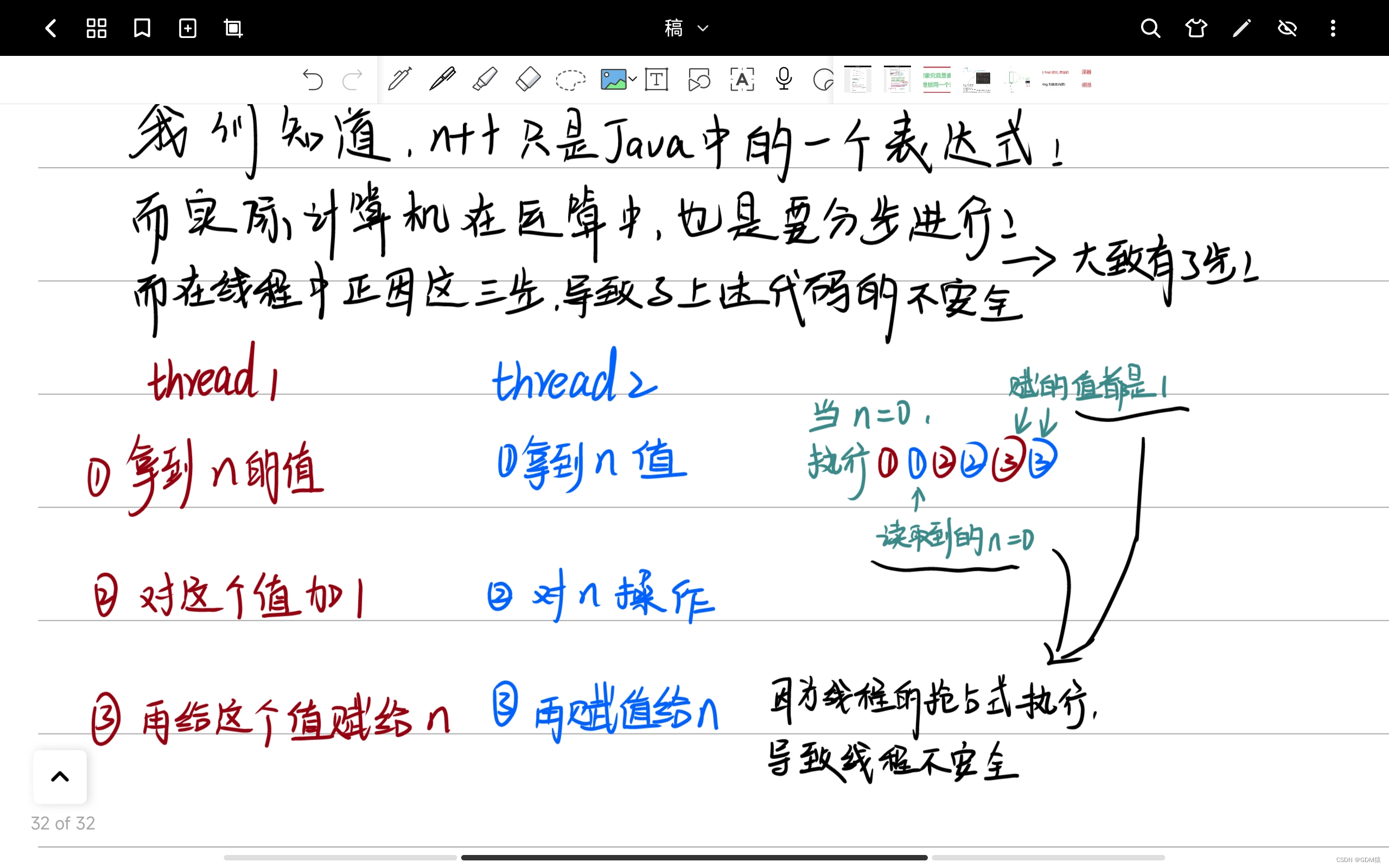
3. 线程不安全的原因总结
①抢占式执行
线程不安全的万恶之源,也要注意并不是完全随机,但在应用层程序中是没有规律的
②修改的操作不是原子的
比如修改的n变量,不是原子的,修改的时候有可能读取到的n是脏数据
③内存可见性问题
这个是JVM代码优化而带来的问题,在逻辑等效的情况下编译器会自动优化代码!
④指令序重排
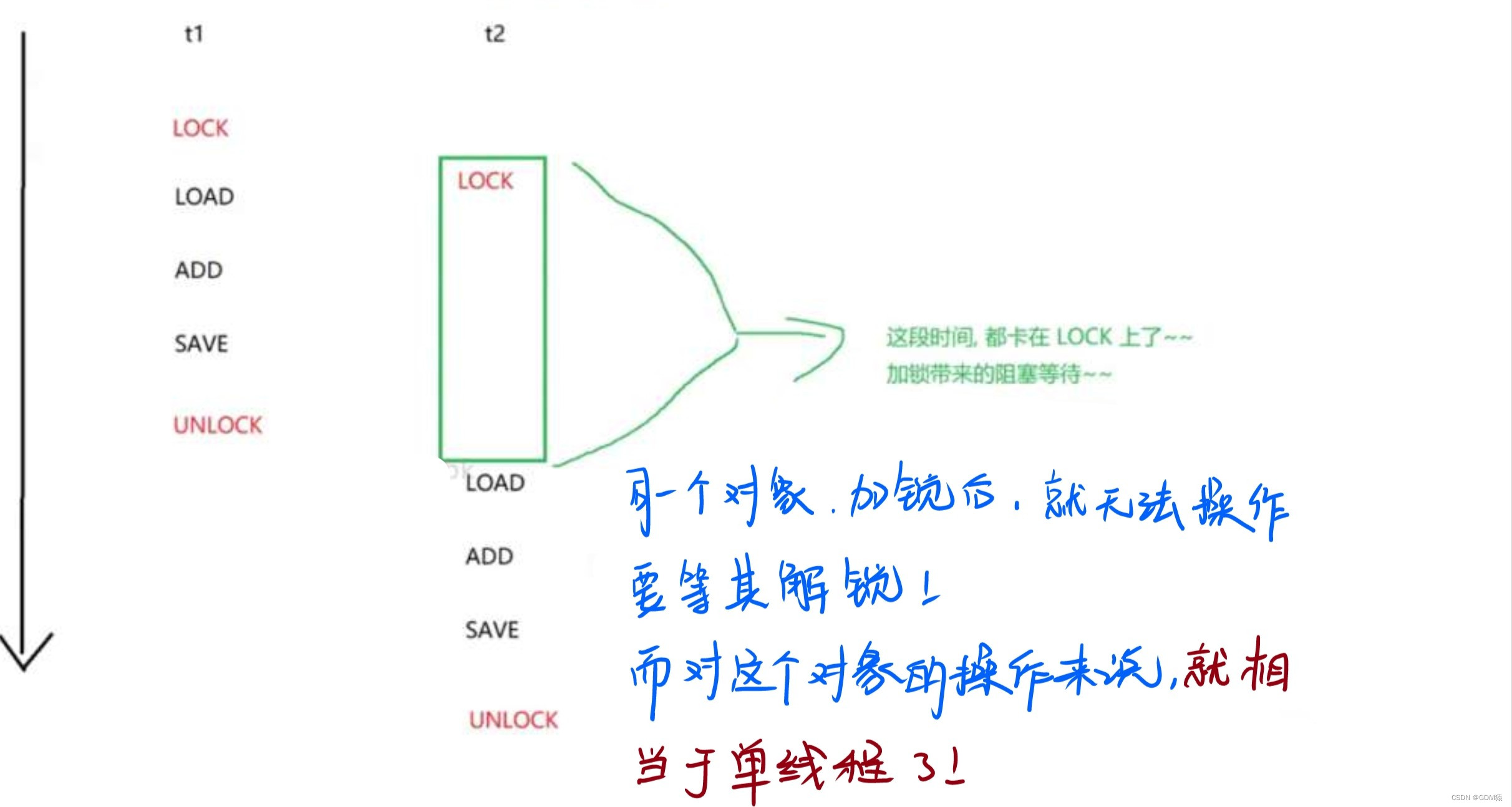
二、如何让线程安全呢???--- 加锁
使用锁 synchronized
我们可以对一个对象进行加锁,让其线程安全!比如下面对上述countrer的加锁优化
- class Counter {
- public int counter = 0;
- public synchronized void increase() {//这里就相当于加锁
- this.counter++;
- }
- }
- 这样线程在调用synchronized关键字修饰的increase方法的时候 就不会发生线程的不安全
三、synchronized 关键字的使用
1. 锁方法 -- 静态方法也可以修饰
- class Counter {
- public int counter = 0;
- public synchronized void increase() {//对increase这个方法加锁
- this.counter++;
- }
- }
2. 锁代码块
- class Counter {
- public int counter = 0;
- public void increase() {
- synchronized(this){//谁调用的increase方法,这个this就代表谁
- this.counter++;//对这个只有一句的代码块进行加锁
- }
- }
- }
-
相关阅读:
Docker 进阶之镜像分层详解
Linux实操篇-组管理和权限管理
wcdma基站的重选和切换
SpringBoot日期参数设置和Json序列化日期设置
互联网Java工程师面试题·Spring篇·第四弹
vnc服务
微服务架构陷阱与挑战
数据库开发-Mysql03
GH6159镍铬钴变形高温合金材料
win10下yolox tensorrt模型部署
- 原文地址:https://blog.csdn.net/qq_52328493/article/details/126749188

- 最新文章
-
【FHE】我们如何实现同态加密推理(八):SiLU 的密文化——两条路径,和一个 8 字节的开关
SQLcl 中 c/old/new 替换变量为何失效?先定位再替换
不让模型写作文,直接从它脑子里读答案:Jev 决策在 .NET 的两条路线
Halo插件:支持GitHub的图床附件策略
电视投屏界的“一股清流”!SimpleTVCast 6.0.0-beta 抢先体验:无需TV端App,界面大换血!✨
华三VXLAN集中式网关实战指南:Spine多活网关 + 双活接入(M-LAG)
软件更好写之后口碑会更重要
大 O、大 Omega、大 Theta 的区别,O(n) 复杂度是什么意思
Java标签跳转:一个鲜为人知但却很实用的小技巧
多智能体系统论文速读