-
python加密Django框架代码(通过修改Cpython解释器)
前言
注意此博文代码仅限于在linux系统下使用,因为没有做windows的适配。
本文承接上篇博文链接: 加密python单文件代码(无import自造模块)。
并在其上进行以下改进:
1.现在在import自造模块之前会对模块代码进行解密,并加载进内存。
2.去掉了Cpython解释器中默认的pyc文件缓存(即__pycache__目录)以减少通过pyc文件解密py文件的可能。
3.新增可以在目录中递归查找.py后缀文件的工具,以方便用户将指定目录下的所有py文件全部加密。
4.可以加密django框架代码,并保证代码的运行正常。
一、实现效果
1.加密之前文件树

2.使用工具加密py文件

3.加密后文件树

注意其中的bw_code目录是加密后的文件,文件已经按原来项目的结构安排好了。4.运行加密后的项目
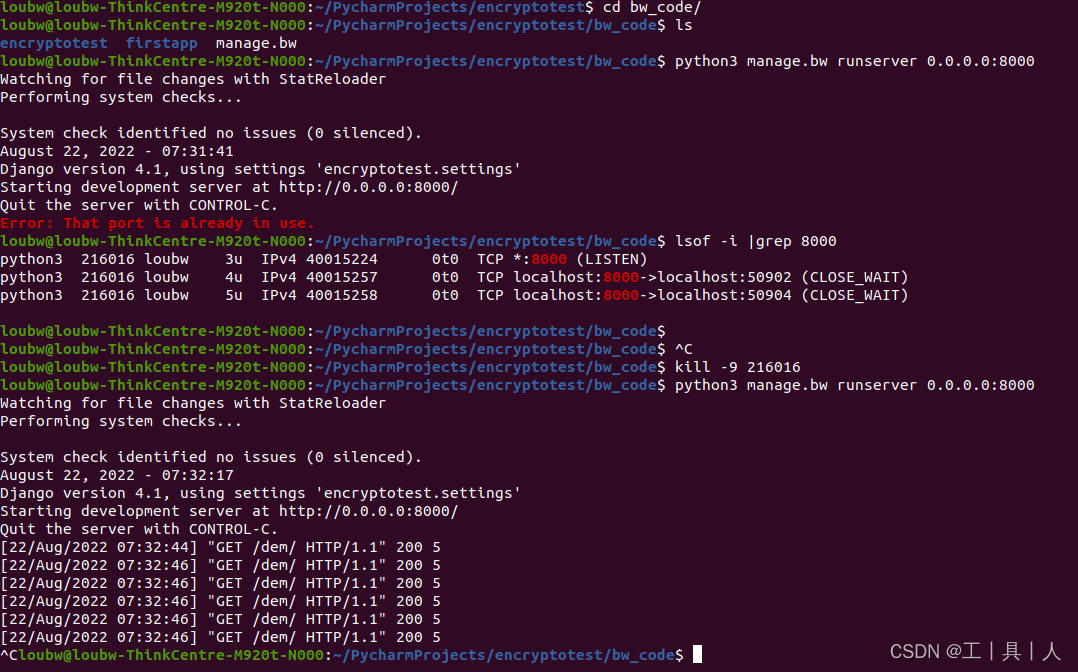
成功运行。
5.访问网页

二、代码修改
1.加密工具代码
代码如下:
#include#include #include #include #include #include #include #define FILEPATHLENGTH 1024 char *bw_dir_path_preffix = "/bw_code"; // 读取文件 long fileRead(char fileName[FILEPATHLENGTH],char **buffer){ //打开文件 FILE *fp = fopen(fileName,"rb"); if(fp == NULL){ printf("open file is failed"); exit(1); } //把文件指针移到文件末尾 fseek(fp,0,SEEK_END); //保存文件的长度 long fileSize = ftell(fp); //把文件指针移到文件开头 fseek(fp,0,SEEK_SET); //读取文件,保存到buffer中 *buffer = (char*)malloc(fileSize); fread(*buffer,1,fileSize,fp); //关闭文件 fclose(fp); return fileSize; } // 加密文件写入 void fileWrite(char fileName[FILEPATHLENGTH],char *buffer,long fileSize){ //创建文件进行写入 FILE *fp = fopen(fileName,"wb"); if(fp == NULL){ printf("open file is failed"); exit(1); } fwrite(buffer,1,fileSize,fp); fclose(fp); } // 加密主要函数 void encrypt_decode(char encryptFile[FILEPATHLENGTH],char encryptedFile[FILEPATHLENGTH],int key){ char *buffer; long fileSize = fileRead(encryptFile,&buffer); //加密 / 解密 for(int i = 0; i < fileSize; i++){ buffer[i] = buffer[i]^key; } fileWrite(encryptedFile,buffer,fileSize); } // 获取文件后缀 char *get_file_ext(char *filename){ int len = (int)strlen(filename); for(int i=len-1;i>=0;i--){ if(filename[i]=='.'){ return filename+i+1; } } return NULL; } // 创建文件夹 int mkdirs(char *path) { char str[512]; strncpy(str, path, 512); int len=strlen(str); for(int i=0; i<len; i++ ) { if( str[i]=='/' ) { str[i] = '\0'; if( access(str,0)!=0 ) { mkdir( str, 0755 ); } str[i]='/'; } } if( len>0 && access(str,0)!=0 ) { mkdir( str, 0755 ); } struct stat s; stat(path,&s); if(S_ISDIR(s.st_mode) )return 0; return 1; } // 此函数介绍不知道咋写,建议自己意会 char *get_remain_path(char *base_path, char *dir_path){ if(strlen(base_path)>=strlen(dir_path)){ return NULL; } for(int i=0; i<strlen(base_path);i++){ if(base_path[i]!=dir_path[i]){ return &(dir_path[i]); } } return &(dir_path[strlen(base_path)]); } // 加密逻辑函数 int encrypt(char * path, char *base_path , int recursive) { DIR * p_dir; struct dirent * entry; size_t len; char * sub_path; p_dir = opendir(path); if (p_dir == NULL) { printf("Can not open %s/n", path); return -1; } while((entry = readdir(p_dir)) != NULL) { len = strlen(path) + strlen(entry->d_name) + 3; sub_path = calloc(len, 1); if (sub_path == NULL) { printf("out of memory/n"); closedir(p_dir); return -1; } char code_dir_root[strlen(base_path)+strlen(bw_dir_path_preffix)+1]; strcpy(code_dir_root, base_path); strcat(code_dir_root, bw_dir_path_preffix); mkdirs(code_dir_root); strcpy(sub_path, path); strcat(sub_path, "/"); strcat(sub_path, entry->d_name); if (entry->d_type == DT_DIR && recursive != 0 && strcmp(entry->d_name, ".") != 0 && strcmp(entry->d_name, "..") != 0) { // 在这创建目录,格式为basepath/bw_dir_path_preffix/dirpath // 获取当前目录比base_path多的部分 char *remain_path = get_remain_path(base_path, sub_path); if(remain_path!=NULL){ // 拼接 char code_dir[strlen(base_path)+strlen(bw_dir_path_preffix)+strlen(remain_path)+1]; strcpy(code_dir, base_path); strcat(code_dir, bw_dir_path_preffix); strcat(code_dir, remain_path); if(code_dir!=NULL){ mkdirs(code_dir); } encrypt(sub_path, base_path,recursive); }else{ printf("remain_path is NULL\n"); exit(1); } } if(entry->d_type == DT_REG){ // 打开文件 // 判断文件是py结尾 char *ext = get_file_ext(sub_path); if(ext!=NULL && strcmp(ext,"py")==0){ char *remain_path = get_remain_path(base_path, sub_path); if(remain_path!=NULL){ // 拼接 char code_file[strlen(base_path)+strlen(bw_dir_path_preffix)+strlen(remain_path)+1]; strcpy(code_file, base_path); strcat(code_file, bw_dir_path_preffix); strcat(code_file, remain_path); //把.py改为.bw code_file[strlen(code_file)-1] = 'w'; code_file[strlen(code_file)-2] = 'b'; code_file[strlen(code_file)-3] = '.'; encrypt_decode(sub_path, code_file,12); }else{ printf("remain_path is NULL\n"); exit(1); } } } free(sub_path); } closedir(p_dir); return -1; } int main(int argv, char **argc){ if(argv!=2){ printf("Usage: enc [file_abs_path]"); return -1; } encrypt(argc[1], argc[1], 12); return 0; } - 1
- 2
- 3
- 4
- 5
- 6
- 7
- 8
- 9
- 10
- 11
- 12
- 13
- 14
- 15
- 16
- 17
- 18
- 19
- 20
- 21
- 22
- 23
- 24
- 25
- 26
- 27
- 28
- 29
- 30
- 31
- 32
- 33
- 34
- 35
- 36
- 37
- 38
- 39
- 40
- 41
- 42
- 43
- 44
- 45
- 46
- 47
- 48
- 49
- 50
- 51
- 52
- 53
- 54
- 55
- 56
- 57
- 58
- 59
- 60
- 61
- 62
- 63
- 64
- 65
- 66
- 67
- 68
- 69
- 70
- 71
- 72
- 73
- 74
- 75
- 76
- 77
- 78
- 79
- 80
- 81
- 82
- 83
- 84
- 85
- 86
- 87
- 88
- 89
- 90
- 91
- 92
- 93
- 94
- 95
- 96
- 97
- 98
- 99
- 100
- 101
- 102
- 103
- 104
- 105
- 106
- 107
- 108
- 109
- 110
- 111
- 112
- 113
- 114
- 115
- 116
- 117
- 118
- 119
- 120
- 121
- 122
- 123
- 124
- 125
- 126
- 127
- 128
- 129
- 130
- 131
- 132
- 133
- 134
- 135
- 136
- 137
- 138
- 139
- 140
- 141
- 142
- 143
- 144
- 145
- 146
- 147
- 148
- 149
- 150
- 151
- 152
- 153
- 154
- 155
- 156
- 157
- 158
- 159
- 160
- 161
- 162
- 163
- 164
- 165
- 166
- 167
- 168
- 169
- 170
- 171
- 172
- 173
- 174
- 175
- 176
- 177
- 178
- 179
- 180
- 181
- 182
- 183
- 184
- 185
- 186
- 187
- 188
- 189
- 190
- 191
- 192
- 193
- 194
- 195
- 196
- 197
- 198
- 199
- 200
编译即可使用,代码量稍多,刚开始写C代码还是不大习惯,如有纰漏欢迎指出。
注意现在只支持绝对路径。2.Cpython代码修改
关于import导入的流程我可能会单独写一篇博文,现在只介绍部分关键代码,整个改完的解释器代码我已经上传github,链接https://github.com/MakeEarthBetter/cpythondiy/tree/master。注意分支是master,十分期望您的star❤。
一.添加自己文件后缀的import loader.
import时会遍历loaders,尝试找到对应后缀的文件,我们在这添加我们自己的bw文件

Cpython默认的loaders为

第二个是pyc文件,第三个是py文件二.修改Cpython找到文件时的操作

此处是Cpython加载文件代码的部分,在此处先将bw文件解码。三. 删除解码后的文件
这里是加载代码处,由于此处为必经之路,在此处进行中间文件的删除。
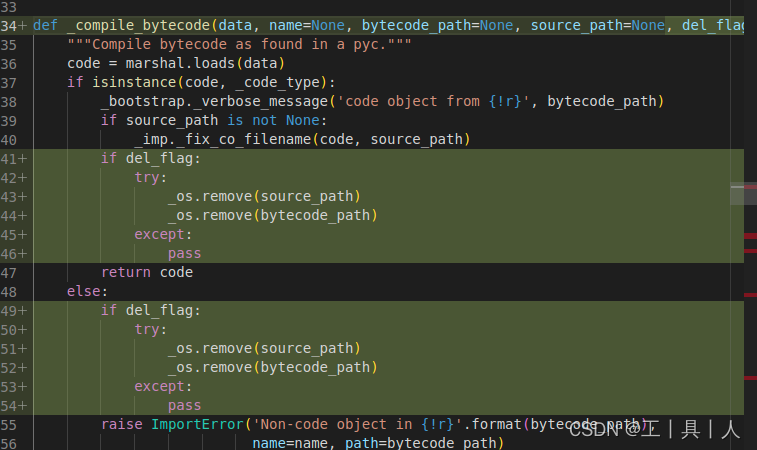
总结
由于修改的部分主要在Cpython代码处,而import的流程在瓷片博文又不想走一遍,所以就写到这吧。import流程请见下篇博文。代码请到github领取。
-
相关阅读:
制作MySQL8绿色版&轻量版
MySQL 自建数据库慢日志分析
registry镜像仓库通过HTTP API删除镜像
二十、W5100S/W5500+RP2040树莓派Pico<MQTT连接阿里云控制板载LED>
Unified Access Control
nginx目录树美化
NX二次开发-ug表达式函数ug_find_file读取当前prt所在路径
若枚举映射的值不存在,则不进行反序列化
一个悄然崛起的AI开源项目!
第k小的数
- 原文地址:https://blog.csdn.net/qq_42455809/article/details/126467196
