-
bean的生命周期
目录
一、bean的初始化过程
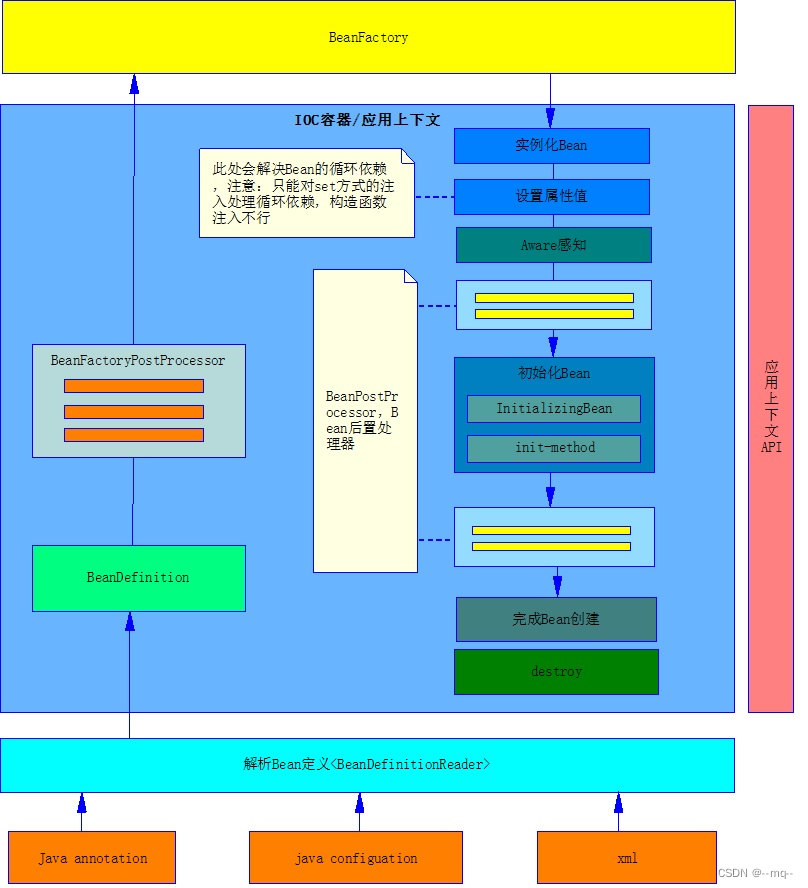
初始spring上下文
ApplicationContext ac = new ClassXmlPathApplicationContext("spring.xml");1)通过XML、Java annotation(注解)以及Java Configuration(配置类)
等方式加载Spring Bean
2)BeanDefinitionReader:解析Bean的定义。在Spring容器启动过程中,
会将Bean解析成Spring内部的BeanDefinition结构;
理解为:将spring.xml中的
标签转换成BeanDefinition结构 有点类似于XML解析
3)BeanDefinition:包含了很多属性和方法。例如:id、class(类名)、
scope、ref(依赖的bean)等等。其实就是将bean(例如
)的定义信息 存储到这个对应BeanDefinition相应的属性中
例如:
<bean id="" class="" scope=""> -----> BeanDefinition(id/class/scope)4)BeanFactoryPostProcessor:是Spring容器功能的扩展接口。
注意:
BeanFactoryPostProcessor在spring容器加载完BeanDefinition之后,
在bean实例化之前执行的
对bean元数据(BeanDefinition)进行加工处理,也就是BeanDefinition
属性填充、修改等操作
5)BeanFactory:bean工厂。它按照我们的要求生产我们需要的各种各样的bean。
例如:
- BeanFactory -> List<BeanDefinition>
- BeanDefinition(id/class/scope/init-method)
- <bean class="com.zking.spring02.biz.BookBizImpl"/>
- foreach(BeanDefinition bean : List<BeanDefinition>){
- //根据class属性反射机制实例化对象
- //反射赋值设置属性
- }
6)Aware感知接口:在实际开发中,经常需要用到Spring容器本身的功能资源
例如:BeanNameAware、ApplicationContextAware等等
BeanDefinition 实现了 BeanNameAware、ApplicationContextAware
7)BeanPostProcessor:后置处理器。在Bean对象实例化和引入注入完毕后,
在显示调用初始化方法的前后添加自定义的逻辑。(类似于AOP的绕环通知)
前提条件:如果检测到Bean对象实现了BeanPostProcessor后置处理器才会执行
Before和After方法
BeanPostProcessor
1)Before
2)调用初始化Bean(InitializingBean和init-method,Bean的初始化才算完成)
3)After
完成了Bean的创建工作
8)destory:销毁
二、bean的单例与多例模式
spring框架默认是单例模式
单例:容器销毁instanceFactory对象也销毁;
单例模式下Javabean的生命周期:容器生对象生,容器死对象死
补充:当配置文件中没有scope=“”时默认就是单例,当scope=“prototype”中填写的是
prototype就是原型的模式(多例模式)但是Spring容器中默认的是单例singleton
多例时,容器销毁对象不一定销毁;
多例模式下Javabean的生命周期:使用时对象生,死亡跟着JVM垃圾回收站机制走
bean的初始化时间点,除了与bean管理模式(单例/多例)有关,还跟beanfactor的子类有关
单例多例的代码论证
InstanceFactory.java
印证BeanPostProcessor 初始化Javabean
- package com.maomao.beanLife;
- public class InstanceFactory {
- public void init() {
- System.out.println("初始化方法");
- }
- public void destroy() {
- System.out.println("销毁方法");
- }
- public void service() {
- System.out.println("业务方法");
- }
- }
ParamAction.java
印证单例、多例模式的区别
- package com.maomao.beanLife;
- import java.util.List;
- public class ParamAction {
- private int age;
- private String name;
- private List
hobby; - private int num = 1;
- // private UserBiz userBiz = new UserBizImpl1();
- public ParamAction() {
- super();
- }
- public ParamAction(int age, String name, List
hobby) { - super();
- this.age = age;
- this.name = name;
- this.hobby = hobby;
- }
- public void execute() {
- // userBiz.upload();
- // userBiz = new UserBizImpl2();
- System.out.println("this.num=" + this.num++);
- System.out.println(this.name);
- System.out.println(this.age);
- System.out.println(this.hobby);
- }
- }
Demo2.java
测试方法
- package com.maomao.beanLife;
- import org.junit.Test;
- import org.springframework.beans.factory.BeanFactory;
- import org.springframework.beans.factory.xml.XmlBeanFactory;
- import org.springframework.context.ApplicationContext;
- import org.springframework.context.support.ClassPathXmlApplicationContext;
- import org.springframework.core.io.ClassPathResource;
- import org.springframework.core.io.Resource;
- /*
- * spring bean的生命週期
- * spring bean的單例多例
- */
- public class Demo2 {
- // 体现单例与多例的区别
- @Test
- public void test1() {
- ClassPathXmlApplicationContext applicationContext = new ClassPathXmlApplicationContext("/spring-context.xml");
- // ApplicationContext applicationContext = new ClassPathXmlApplicationContext("/spring-context.xml");
- ParamAction p1 = (ParamAction) applicationContext.getBean("paramAction");
- ParamAction p2 = (ParamAction) applicationContext.getBean("paramAction");
- // System.out.println(p1==p2);
- p1.execute();
- p2.execute();
- // 单例时,容器销毁instanceFactory对象也销毁;多例时,容器销毁对象不一定销毁;
- applicationContext.close();
- }
- // 体现单例与多例的初始化的时间点 instanceFactory
- @Test
- public void test2() {
- ApplicationContext applicationContext = new ClassPathXmlApplicationContext("/spring-context.xml");
- }
- // BeanFactory会初始化bean对象,但会根据不同的实现子类采取不同的初始化方式
- // 默认情况下bean的初始化,单例模式立马会执行,但是此时XmlBeanFactory作为子类,单例模式下容器创建,bean依赖没有初始化,只有要获取使用bean对象才进行初始化
- @Test
- public void test3() {
- // ClassPathXmlApplicationContext applicationContext = new
- // ClassPathXmlApplicationContext("/spring-context.xml");
- Resource resource = new ClassPathResource("/spring-context.xml");
- BeanFactory beanFactory = new XmlBeanFactory(resource);
- // InstanceFactory i1 = (InstanceFactory) beanFactory.getBean("instanceFactory");
- }
- }
spring-context.xml
- <bean id="paramAction" class="com.maomao.beanLife.ParamAction">
- <constructor-arg name="name" value="aa">constructor-arg>
- <constructor-arg name="age" value="21">constructor-arg>
- <constructor-arg name="hobby">
- <list>
- <value>追剧value>
- <value>睡觉value>
- <value>吃value>
- list>
- constructor-arg>
- bean>
- <bean id="instanceFactory" class="com.maomao.beanLife.InstanceFactory"
- scope="prototype" init-method="init" destroy-method="destroy">bean>
单例(默认)

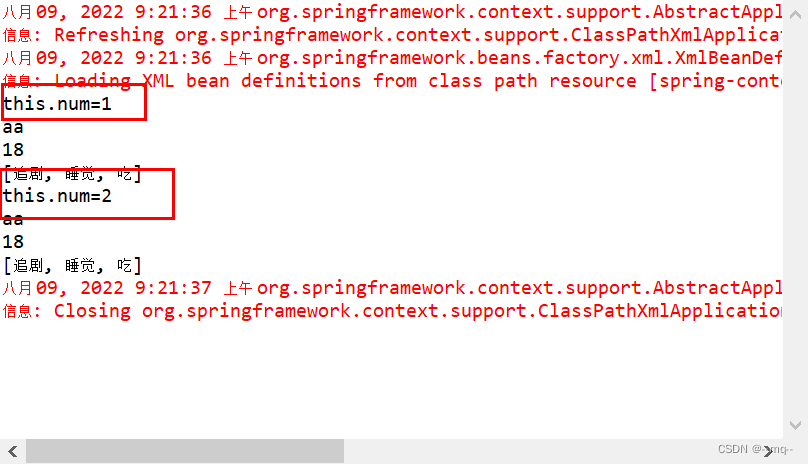
多例


三、总结
bean的生命周期
1.通过三种方式(配置文件、注解、配置类)将bean标签转成beandefinition对象
2.通过BeanFactoryPostProcessor可以在初始化之前修改属性值
3.BeanFactory进行bean实例化,说白了就是生产Javabean
4.Aware感知接口,能够在拿到spring上下文中内部的资源对象
5.BeanPostProcessor后置处理器,相当于环绕通知单例多例模式
单例模式下,Javabean的生命周期
容器生对象生,容器死对象死多例模式下Javabean的生命周期
使用时对象生,死亡跟着jvm回收机制走bean的初始化时间点,处理与bean管理模式(单例/多例)有关
还与BeanFactory的子类有关 -
相关阅读:
智能驾驶加速“进阶”,这家Tier1巨头如何打造“全栈能力”?
NLP - truecase
MobaXterm使sftp目录与cmd目录同步
ruby对比python,30分钟教程
【雷达成像】雷达SAR成像仿真的应用(Matlab代码实现)
(一)NanoPi m4v2 安装 Home Assistant(含 supervisor)
【论文阅读】Extract Free Dense Labels from CLIP
谈谈VPN是什么、类型、使用场景、工作原理
产品经理如何做项目管理?
第 45 届国际大学生程序设计竞赛(ICPC)亚洲区域赛(银川),签到题5题
- 原文地址:https://blog.csdn.net/m12120426/article/details/126233126
