-
引语练习题
1.直接引语与间接引语

8.We’re leaving : 现在进行时表将来,我们要离开了
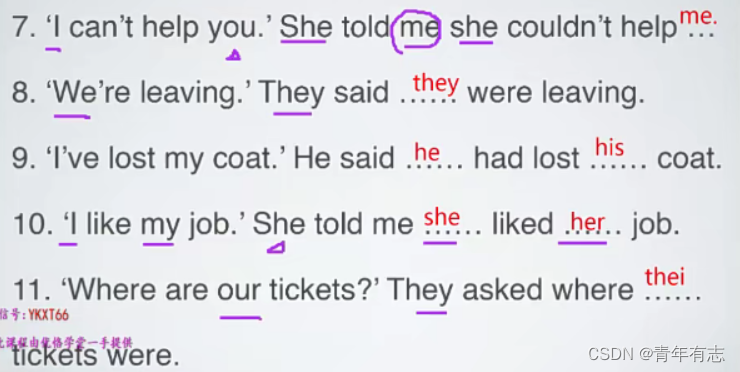
2. tell 与 say


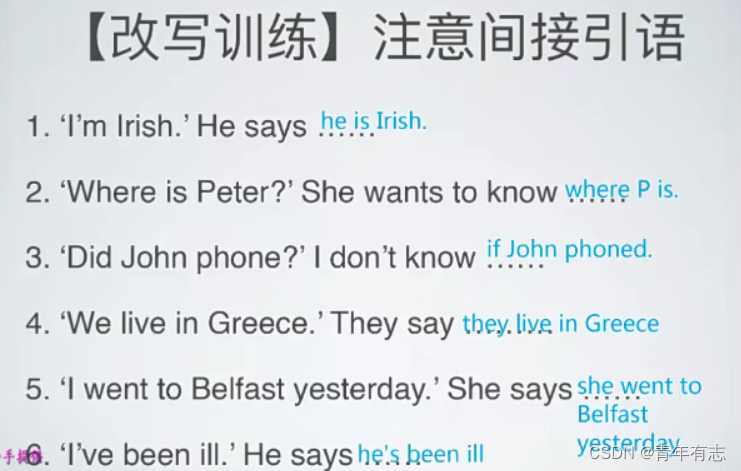
3. 直接引语 转化为 间接宾语
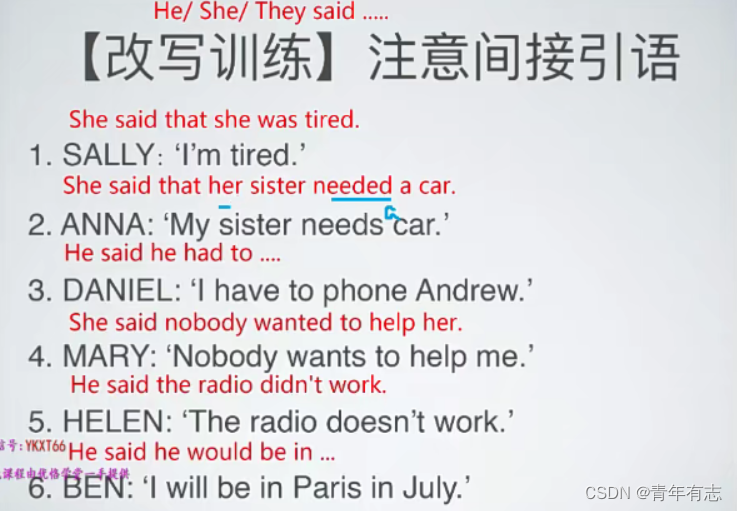

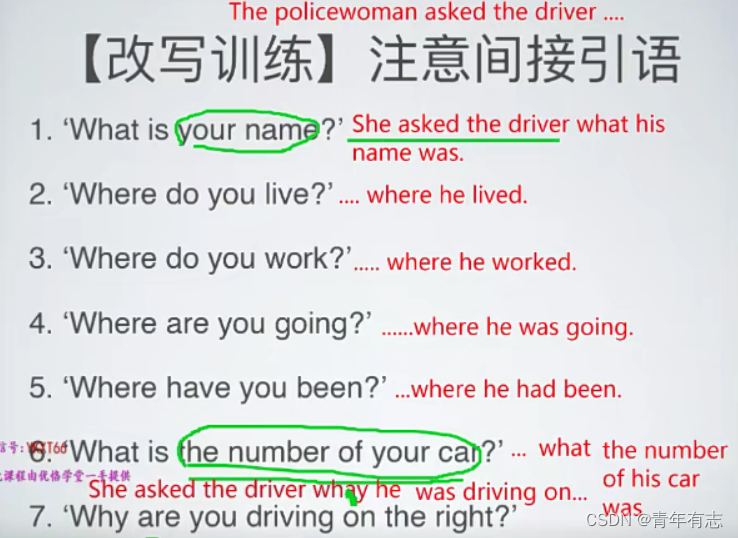
4. 直接引语为疑问句转为间接引语时注意
1.She asked the driver what his name was.
2.She asked the driver where he lived.
3.She asked the driver where he worked.
4.She asked the driver where he was going.
5.She asked the driver where he had been.
6.She asked the driver what the number of his car was.
7.She asked the driver why he was driving on the right.
后面均是变为陈述句
用 I asked
1.I asked where my gloves were.
2.I asked what Peter’s address was.
3.I asked when the new maneger was coming.
4.I asked how she konw my name 疑问句有 does,但是变为原句就没有了
5.I asked why all the windows were open.
6.I asked how many books he wanted.
7.I asked where they kept the money.
8.I asked what time the meeting was.
9.I asked when the last train left.
10.I asked how the photocopier worked.
11.I asked how often Ann went shopping.

5. 一般疑问句转化为间接引语
假设有个女警察在问一个人
1.The policewoman asked me if / whether I was British.
2.She asked him whether it was his car.
3.She asked him If he had a driving licence
4.She asked him whether he had it with him
5.She asked him whether he always drove with the open
6.She asked him whether he was listening to her.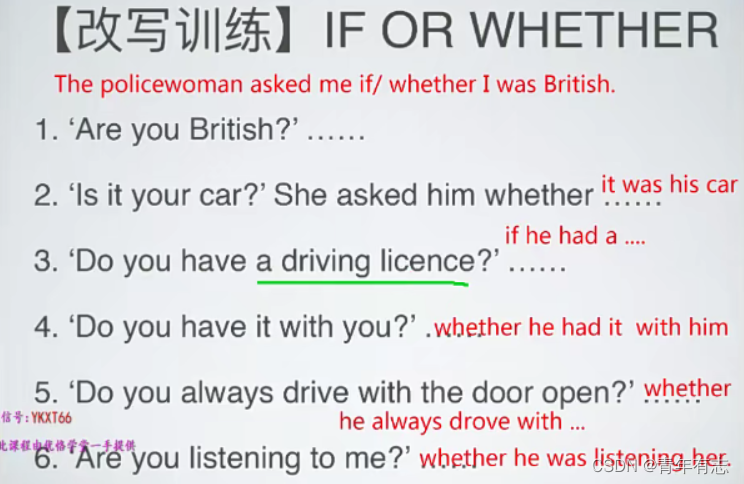
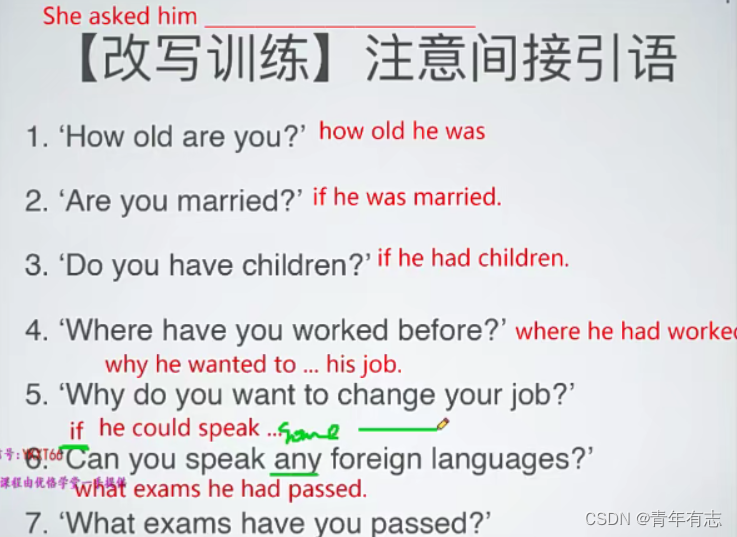
练习 2
在一个采访中进行的,一个女生问男生
1.She asked him how old he was.
2.She asked him if / whether he was married.
3.She asked him if / whether he had children.
4.She asked him where he had worked before.
5.She asked him why he wanted to change his job.
6.She asked him if he could speak some foreign languages.
7.She asked him what exams he had passed.
练习 3
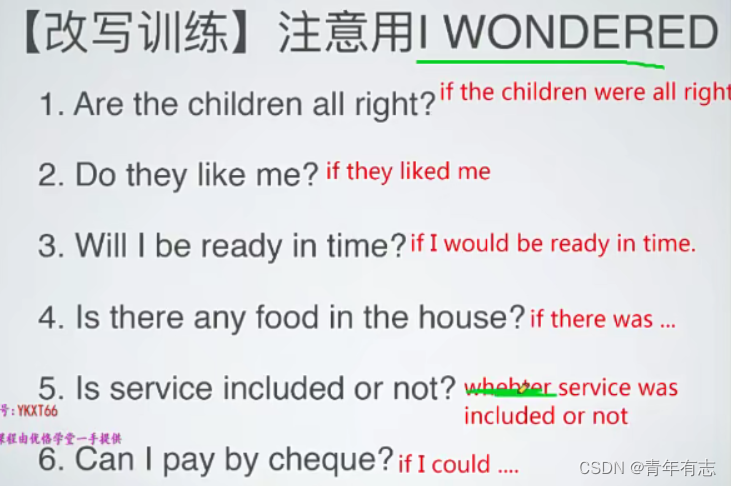
用 I wondered
1.I wondered if the children were all right.
2.I wondered if they liked me
3.I wondered if I would be ready in time.
4.I wondered if there was some food in the house
5.I wondered whether service was included or not.这里只能用 whether ,因为有 not
6.I wondered if I could pay cheque.
7.I wondered if my hair looked funny.
8.I wondered if the post man had been.
9.I wondered if they spoke English.
10.I wondered if I was doing the right thing.
11.I wondered whether the meeting was on Tuesday or Wednesday.6. Present reporting verbs

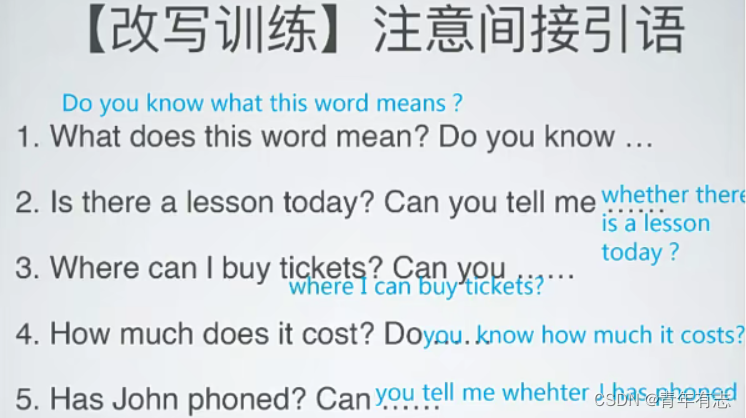
7. Ask questions politely
1.Do you know what this word means ? what 后面是陈述句了,所以要去掉助动词
2.Can you tell me whether there is a lesson today?
3.Can you tell me where I can buy ticket?
4.Do you know how much it costs?
5.Can you tell me whether John has phoned?
6.Can you tell me whether I must pay now?
7.Can you tell me whether Maria likes steak?
8.Can you know where I parked the car?
well-done : 全熟、memium:半熟、medium-well:七分熟、raw:全生、medium-rare:三分熟

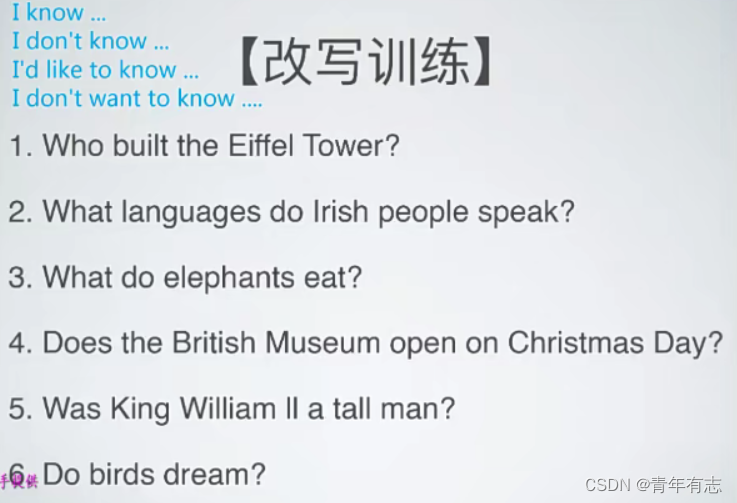
改写训练
I know:我知道
I don’t know:我不知道
I’d like to know:我想知道
I don’t want to konw:我不想知道1.I don’t know who built the Eiffel Tower.
2.I’d like to konw what languages Irish people speak.
3.I’d like to konw what elephants eat.
4.I don’t want to konw whether the British Museum opens on Christmas Day?
5.I’d like to know whether King William II was a tall man.
6.I’d like to know whether birds dream.
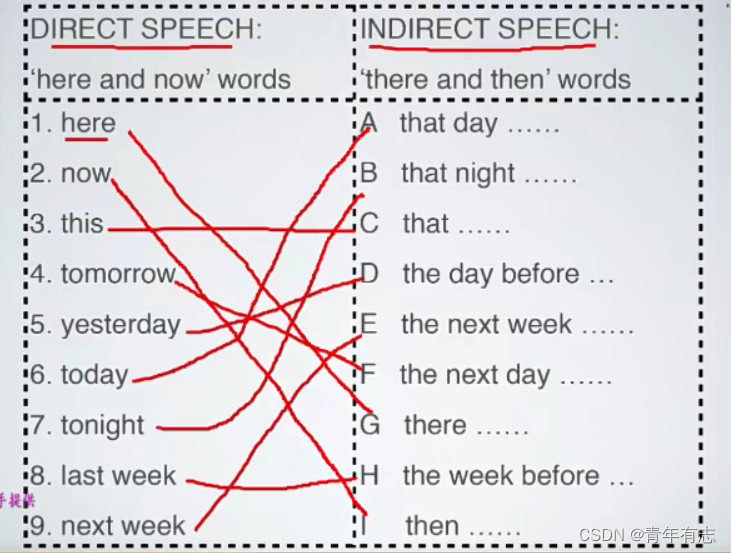
8. 关键词替换
here - there
now - then
this - that
tomorrow - the next day
yesterday - the day before
today - that day
tonight - that night
last week - the week before
next week - the next week
填空训练
背景:你一个朋友上个月在另一个国家将的话,你来告诉别人她当时说的话
1.there
2.that place
3.the week before
4.the day before
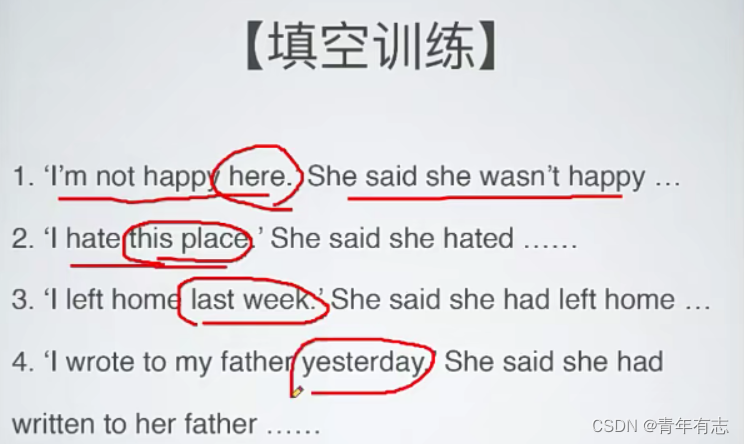
5.that day
6.that night
7.the next day.

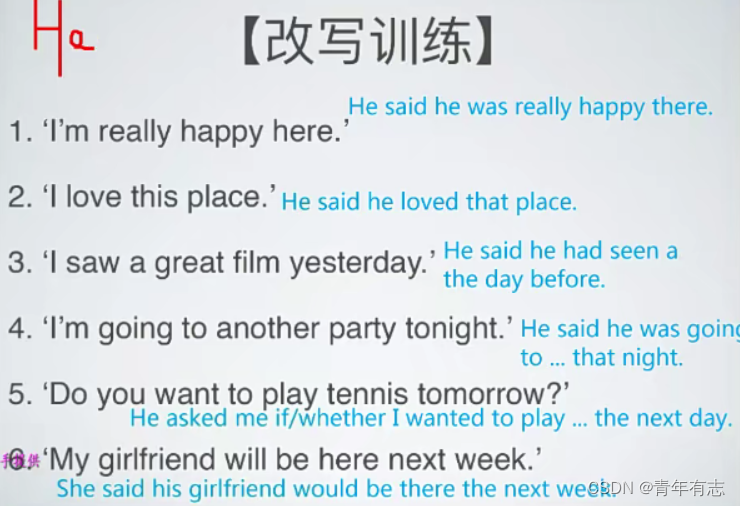
改写训练
背景:你还要一个朋友,在另一个城市两周之前讲得话,你需要转述一下
1.He said he was really happy there.
2.He said he loved that place.
3.He said he had seen a great film the day before.
3.He said he was going to another party that night.
4.He asked me if / whether I wanted to play tennis the next day.
5.She said his girfriend would be there the next week.
选词填空
1.the day after
2.there that day.
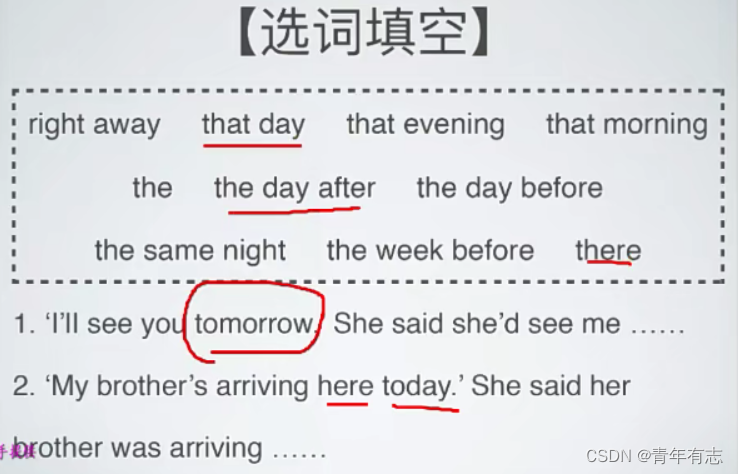
3.me that evening.
4.there
5.the week before.

6.the / that
7.right away / next
8.that morning.

9.that night
10.the day before.

9. 间接引语 + 不定式
1.Mark asked Peter to close the window.
2.The teacher told Andrew not talk so loud.
3.Dave asked Sandra to give hin her phone number.
4.The boss told James to work late.
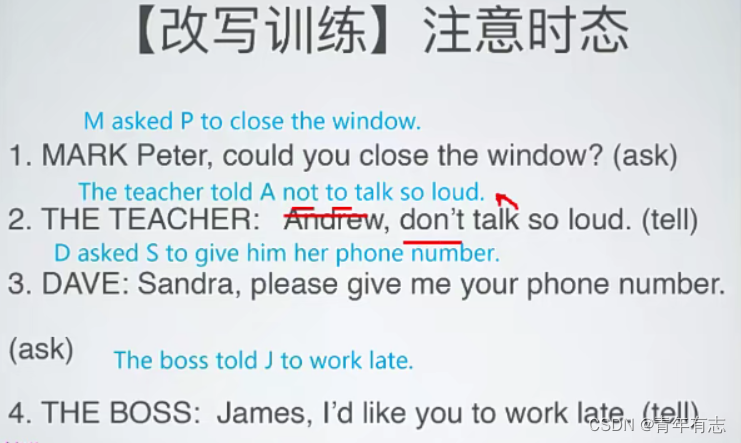
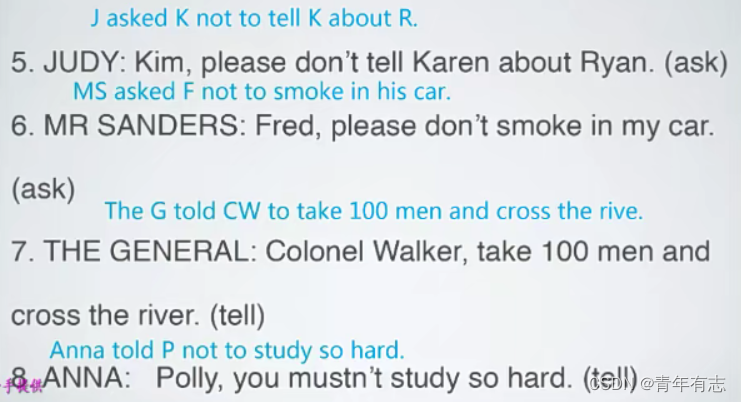
5.Judy asked Kim not to tell Karen about Ryan.
6.Mr Sanders asked Fred not to smoke in his car.
7.The General told Colonel Walker to take 100 men and cross the rive.
8.Anna told Polly not to study so hard.
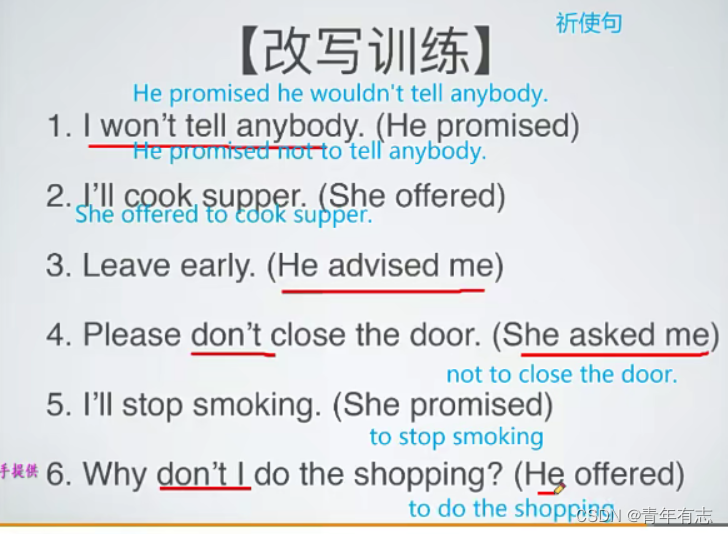
改写训练
1.He promised he wouldn’t tell anybody. / He promised not to tell anybody.
2.She offered to cook supper.
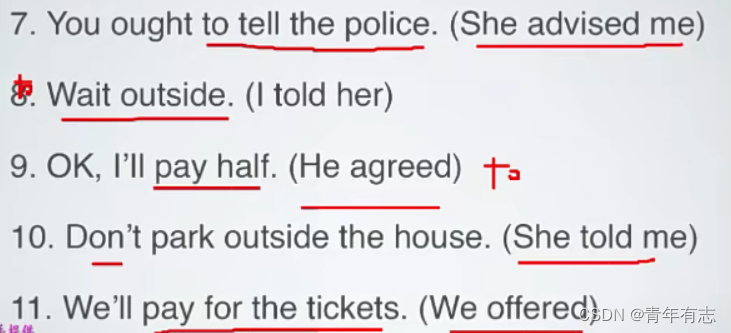
3.He advised me to leave early. 祈使句转化为间接引语直接转化
4.She asked me not to close the door.
5.She promised to stop smoking
6.He offered to do the shopping.
7.She advised me to tell the police.
8.I told her wait outside.
9.He agreed to pay half.
10.She told me not to park outside the house.
11.We offered to pay for the tickets.
10.特殊情况补充一
1.强调事物本身,没有强调事物的过去现在
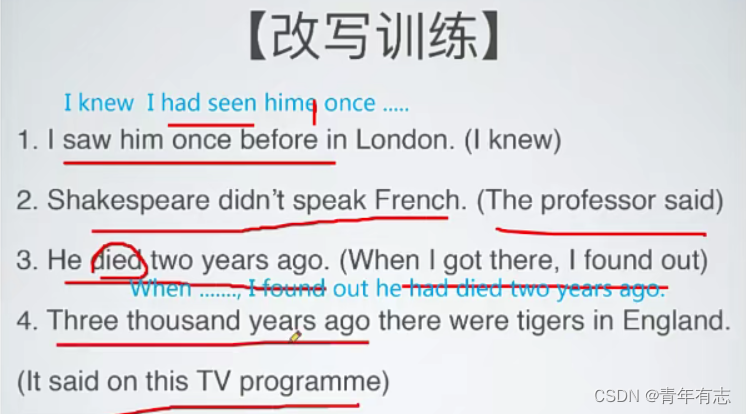
1.I knew I had seen him once before in London. 描述普通的动作
2.The professor said Shakespeare didn’t French.描述客观事实
3.When I got there, I found out he had died two years ago.普通的事件,动作
4.It said on this TV programme three thousand years ago there were tigers in England.描述客观事实
6.It said on this morning’s news somebody had thrown a bomb at the Prime Minister.一个普通的动作
7.I read in a magazine the ancient Romans suffered from lead poisoning.

11. 特殊情况补充二
后面的情况无法再变了,直接使用这种形式即可。
1.She asked me whether I would like a drink.
2.I said I couldn’t help it.
3.They thought they should be home about six.
4.The forecast said it might rain.
5.Everybody said she must be joking.
6.I explained I hadn’t seen the notice.

-
相关阅读:
Revit工作时处理CAD图层的5种方法,快get起来
2024022701-信息安全(二)——密码学
拓扑排序基础详解,附有练习题
Rethinking Minimal Sufficient Representation in Contrastive Learning 论文解读和感想
哈希表的概念
开源校园服务小程序源码 校园综合服务小程序源码 包含快递代取 打印服务 校园跑腿【带详细部署教程】
Redis面试题三(集群)
nodejs+vue+elementui共享充电宝管理系统express
华清 c++ day3 9月10
烽火服务器下修改远程管理IP的步骤(完整版)
- 原文地址:https://blog.csdn.net/qq_46450354/article/details/126161273
- 最新文章
-
沪漂五周年了:我越来越迷茫了
Agentic Skill Routing 实战:别再把所有 Skill 塞进 AI Agent 上下文
MySQL-Seconds_behind_master的精度误差
[MAF预定义ChatClient中间件-03]CachingChatClient——利用缓存省钱省时间
AI的至暗历史:从万众期待到被政府撤资,AI的两次死亡徘徊
Agent OS :五种驯服不确定性的范式
PortSwigger SQL注入LAB11
数据库即时编译JIT
[Begin]AI Learn Data Day 0
深度学习进阶(二十七)现代 LLM 的核心架构设计其二:SwiGLU