-
解析java中的clone方法
解析java中的clone方法
1 是什么
clone方法是Object类中的一个被protected和native修饰的方法,被native就代表它的实现源码是用c++实现的,只不过是我们无法去修改它的代码罢了。
2 作用
为子类提供可以重写的clone()方法,目的是实现对象的浅克隆和深克隆
3 如何用
3.1 前提
3.1.1 克隆的原理
在堆内存中新开辟一段空间,然后把被克隆对象的属性和方法赋值一份到新开辟的空间里面(副本)。
3.2 浅克隆
3.2.1 原理
对于基本数据类型而言,是复制其的副本到新开辟的空间里面
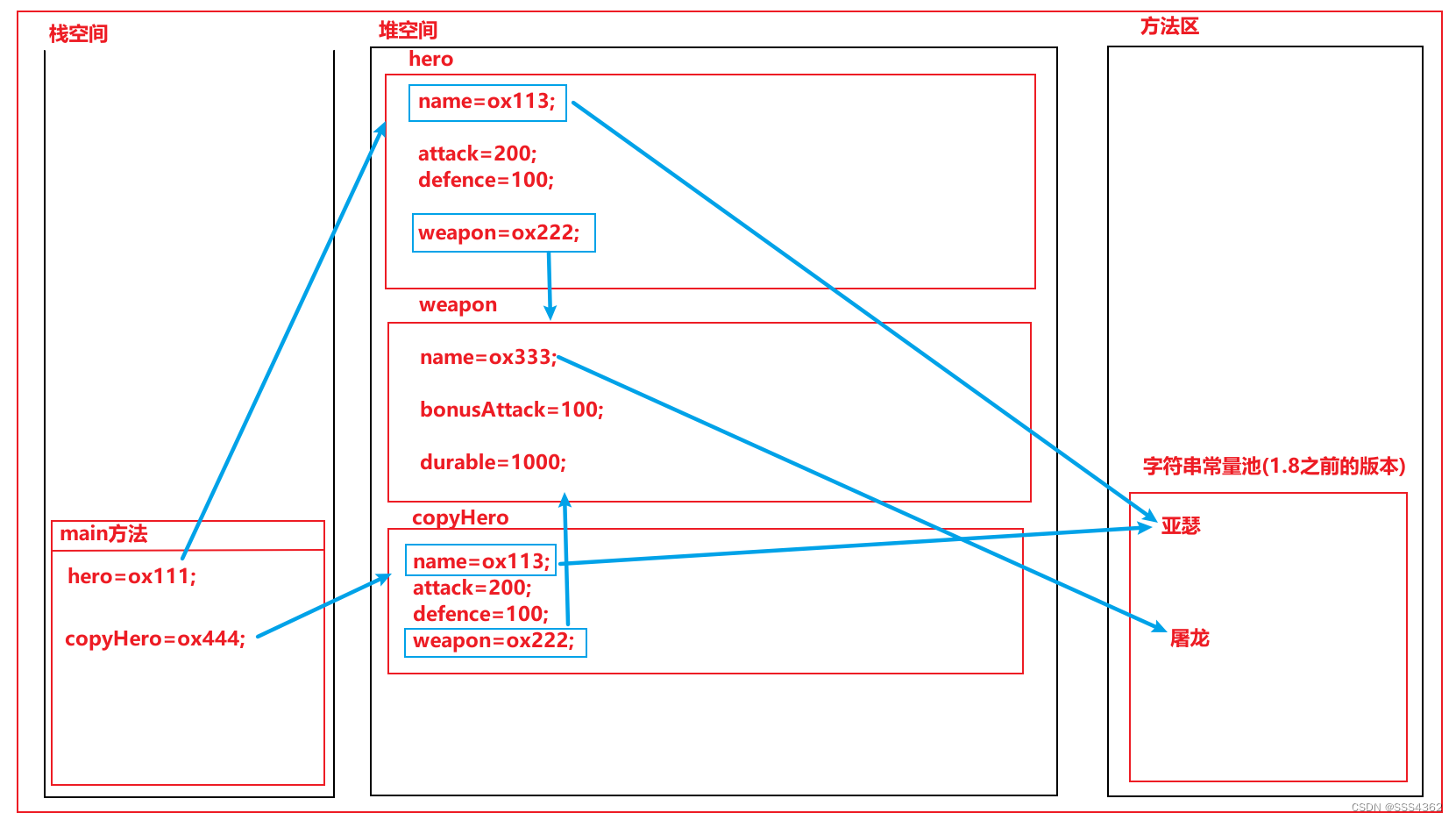
对于引用数据类型而言,只是复制了引用的地址,并没有开辟新的空间,新的空间里面的引用和被克隆的里面的引用都指向于同一个空间
3.2.2 浅克隆的实现步骤
a 实现cloneable接口,这个是判断能否克隆的条件
b 重写Clone方法,建议采用如下所示的写法
public 被克隆对象的类型 clone(){ //不要上抛异常,在方法体里面处理异常以及进行向下转型 被克隆对象的类型 对象名=null; try { 对象名=(被克隆对象的类型)super.clone(); } catch (CloneNotSupportedException e) { e.printStackTrace(); } return 对象名; }- 1
- 2
- 3
- 4
- 5
- 6
- 7
- 8
- 9
- 10
3.2.3 示例代码
Hero
package Work; //英雄类,因为需要用克隆,需要实现Cloneable接口 public class Hero implements Cloneable { private String name; //名字 private int attack; //攻击力 private int defence; //防御力 private Weapon weapon; //武器 public Hero() { } public Hero(String name, int attack, int defence, Weapon weapon) { this.name = name; this.attack = attack; this.defence = defence; this.weapon = weapon; } public String getName() { return name; } public void setName(String name) { this.name = name; } public int getAttack() { return attack; } public void setAttack(int attack) { this.attack = attack; } public int getDefence() { return defence; } public void setDefence(int defence) { this.defence = defence; } public Weapon getWeapon() { return weapon; } public void setWeapon(Weapon weapon) { this.weapon = weapon; } @Override public String toString() { return "Hero{" + "name='" + name + '\'' + ", attack=" + attack + ", defence=" + defence + ", weapon=" + weapon + '}'; } @Override public Hero clone(){ Hero hero=null; try { hero=(Hero)super.clone(); } catch (CloneNotSupportedException e) { e.printStackTrace(); } return hero; } }- 1
- 2
- 3
- 4
- 5
- 6
- 7
- 8
- 9
- 10
- 11
- 12
- 13
- 14
- 15
- 16
- 17
- 18
- 19
- 20
- 21
- 22
- 23
- 24
- 25
- 26
- 27
- 28
- 29
- 30
- 31
- 32
- 33
- 34
- 35
- 36
- 37
- 38
- 39
- 40
- 41
- 42
- 43
- 44
- 45
- 46
- 47
- 48
- 49
- 50
- 51
- 52
- 53
- 54
- 55
- 56
- 57
- 58
- 59
- 60
- 61
- 62
- 63
- 64
- 65
- 66
- 67
- 68
- 69
- 70
- 71
- 72
- 73
- 74
- 75
- 76
Weapon
package Work; public class Weapon implements Cloneable{ private String name; //名字 private int bonusAttack; //攻击力加成 private int durable; //耐久值 public Weapon() { } public Weapon(String name, int bonusAttack, int durable) { this.name = name; this.bonusAttack = bonusAttack; this.durable = durable; } public String getName() { return name; } public void setName(String name) { this.name = name; } public int getBonusAttack() { return bonusAttack; } public void setBonusAttack(int bonusAttack) { this.bonusAttack = bonusAttack; } public int getDurable() { return durable; } public void setDurable(int durable) { this.durable = durable; } @Override public String toString() { return "Weapon{" + "name='" + name + '\'' + ", bonusAttack=" + bonusAttack + ", durable=" + durable + '}'; } @Override public Weapon clone() { Weapon weapon=null; try { weapon=(Weapon)super.clone(); } catch (CloneNotSupportedException e) { e.printStackTrace(); } return weapon; } }- 1
- 2
- 3
- 4
- 5
- 6
- 7
- 8
- 9
- 10
- 11
- 12
- 13
- 14
- 15
- 16
- 17
- 18
- 19
- 20
- 21
- 22
- 23
- 24
- 25
- 26
- 27
- 28
- 29
- 30
- 31
- 32
- 33
- 34
- 35
- 36
- 37
- 38
- 39
- 40
- 41
- 42
- 43
- 44
- 45
- 46
- 47
- 48
- 49
- 50
- 51
- 52
- 53
- 54
- 55
- 56
- 57
- 58
- 59
- 60
- 61
- 62
- 63
- 64
TestHero
package Work; public class TestHero { public static void main(String[] args) { Hero hero=new Hero("亚瑟",200,100,new Weapon("屠龙",100,1000)); Hero copyHero=hero.clone(); copyHero.getWeapon().setDurable(467); copyHero.setName("阿古多"); System.out.println(hero); System.out.println(copyHero); } }- 1
- 2
- 3
- 4
- 5
- 6
- 7
- 8
- 9
- 10
- 11
3.2.4 示例代码的内存原理图
a 克隆后
b 更改String属性和引用数据类型属性后

3.2.5 示例代码运行截图

3.3 深克隆
3.3.1 原理
对于基本数据类型而言,是复制其的副本到新开辟的空间里面
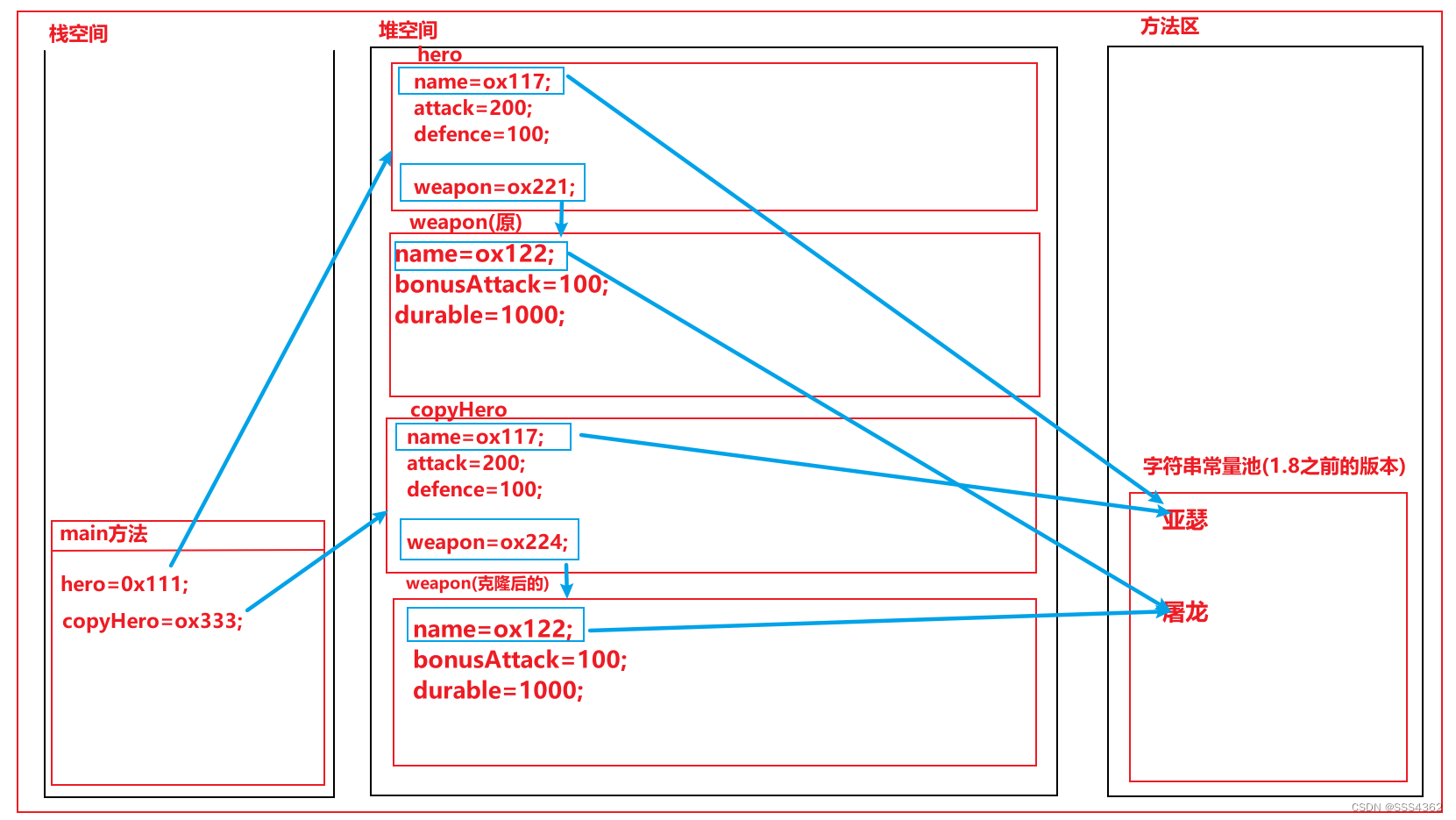
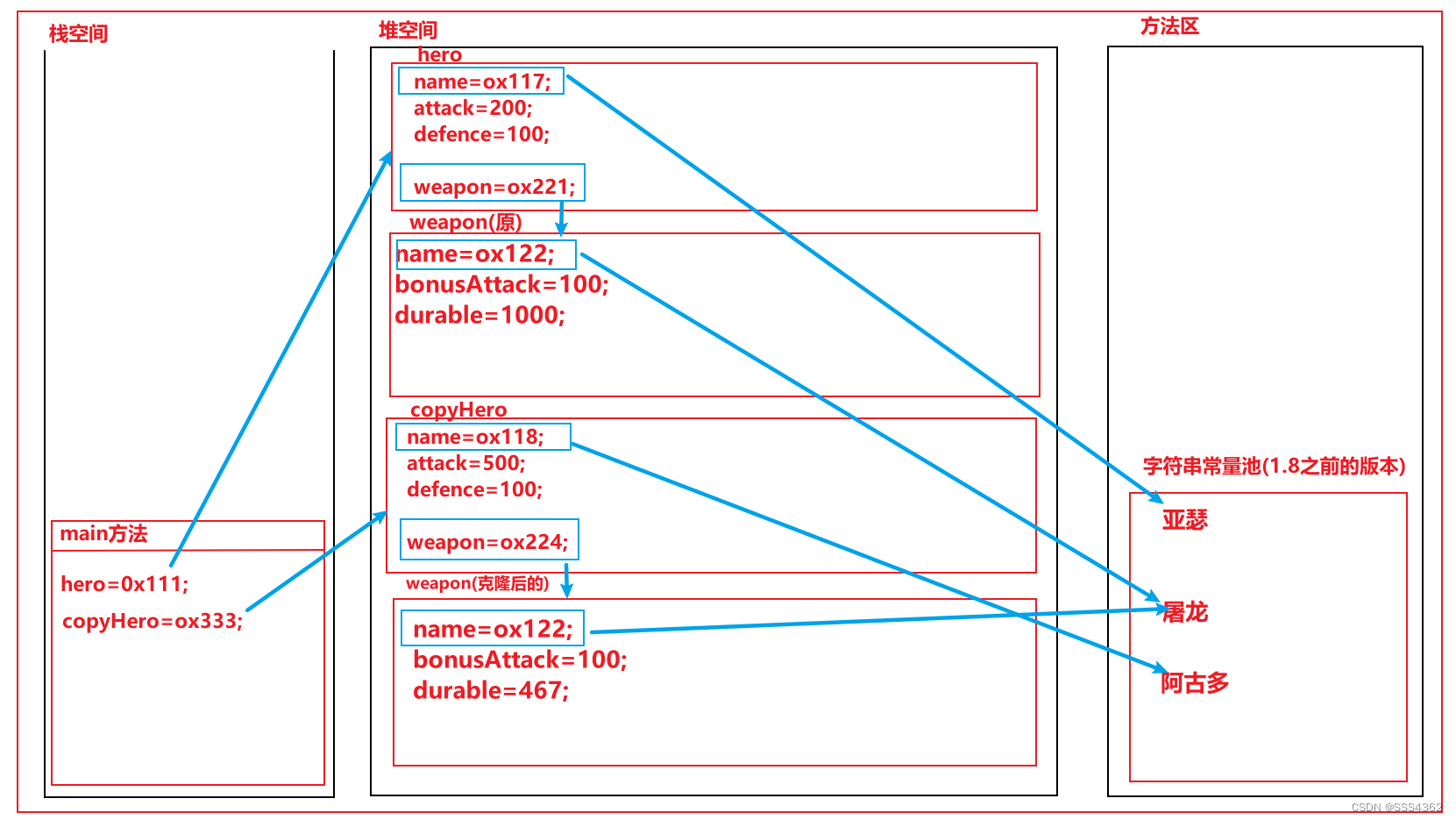
对于引用数据类型而言,并不是复制了引用的地址,而是开辟了一个新的引用对象的空间,并把引用地址里面的属性和方法拷贝一份到新的引用对象的空间中,此时克隆对象里面的引用就指向于这个新的空间
3.3.2 示例代码
Hero类
package Work; //英雄类,因为需要用克隆,需要实现Cloneable接口 public class Hero implements Cloneable { private String name; //名字 private int attack; //攻击力 private int defence; //防御力 private Weapon weapon; //武器 public Hero() { } public Hero(String name, int attack, int defence, Weapon weapon) { this.name = name; this.attack = attack; this.defence = defence; this.weapon = weapon; } public String getName() { return name; } public void setName(String name) { this.name = name; } public int getAttack() { return attack; } public void setAttack(int attack) { this.attack = attack; } public int getDefence() { return defence; } public void setDefence(int defence) { this.defence = defence; } public Weapon getWeapon() { return weapon; } public void setWeapon(Weapon weapon) { this.weapon = weapon; } @Override public String toString() { return "Hero{" + "name='" + name + '\'' + ", attack=" + attack + ", defence=" + defence + ", weapon=" + weapon + '}'; } @Override public Hero clone(){ Hero hero=null; try { hero=(Hero)super.clone(); //给weapon属性也给克隆一下 setWeapon(getWeapon().clone()); } catch (CloneNotSupportedException e) { e.printStackTrace(); } return hero; } }- 1
- 2
- 3
- 4
- 5
- 6
- 7
- 8
- 9
- 10
- 11
- 12
- 13
- 14
- 15
- 16
- 17
- 18
- 19
- 20
- 21
- 22
- 23
- 24
- 25
- 26
- 27
- 28
- 29
- 30
- 31
- 32
- 33
- 34
- 35
- 36
- 37
- 38
- 39
- 40
- 41
- 42
- 43
- 44
- 45
- 46
- 47
- 48
- 49
- 50
- 51
- 52
- 53
- 54
- 55
- 56
- 57
- 58
- 59
- 60
- 61
- 62
- 63
- 64
- 65
- 66
- 67
- 68
- 69
- 70
- 71
- 72
- 73
- 74
- 75
- 76
- 77
- 78
Weapon类
package Work; public class Weapon implements Cloneable{ private String name; //名字 private int bonusAttack; //攻击力加成 private int durable; //耐久值 public Weapon() { } public Weapon(String name, int bonusAttack, int durable) { this.name = name; this.bonusAttack = bonusAttack; this.durable = durable; } public String getName() { return name; } public void setName(String name) { this.name = name; } public int getBonusAttack() { return bonusAttack; } public void setBonusAttack(int bonusAttack) { this.bonusAttack = bonusAttack; } public int getDurable() { return durable; } public void setDurable(int durable) { this.durable = durable; } @Override public String toString() { return "Weapon{" + "name='" + name + '\'' + ", bonusAttack=" + bonusAttack + ", durable=" + durable + '}'; } @Override public Weapon clone() { Weapon weapon=null; try { weapon=(Weapon)super.clone(); } catch (CloneNotSupportedException e) { e.printStackTrace(); } return weapon; } }- 1
- 2
- 3
- 4
- 5
- 6
- 7
- 8
- 9
- 10
- 11
- 12
- 13
- 14
- 15
- 16
- 17
- 18
- 19
- 20
- 21
- 22
- 23
- 24
- 25
- 26
- 27
- 28
- 29
- 30
- 31
- 32
- 33
- 34
- 35
- 36
- 37
- 38
- 39
- 40
- 41
- 42
- 43
- 44
- 45
- 46
- 47
- 48
- 49
- 50
- 51
- 52
- 53
- 54
- 55
- 56
- 57
- 58
- 59
- 60
- 61
- 62
- 63
- 64
TestHero类
package Work; public class TestHero { public static void main(String[] args) { Hero hero=new Hero("亚瑟",200,100,new Weapon("屠龙",100,1000)); Hero copyHero=hero.clone(); copyHero.getWeapon().setDurable(467); copyHero.setAttack(500); copyHero.setName("阿古多"); System.out.println(hero); System.out.println(copyHero); } }- 1
- 2
- 3
- 4
- 5
- 6
- 7
- 8
- 9
- 10
- 11
- 12
3.3.3 示例代码的内存原理图
a 克隆后
b 修改克隆对象的属性和方法
3.3.4 示例代码运行截图

-
相关阅读:
ThreadLocal
Apache HBase MTTR 优化实践
【零基础学QT】第十章 项目打包,利用Inno Setup制作软件安装包
Linux基本指令(一)
9.20 QT作业
iOS开发Swift-5-自动布局AutoLayout-摇骰子App
STM32驱动MPU6050基于IIC协议
Nginx笔记-vue项目刷新出现404(try_files和index)
Vue开发实战02-vue项目添加状态管理Vuex,路由router,以及http请求axios
优雅而高效的JavaScript——防抖和节流
- 原文地址:https://blog.csdn.net/SSS4362/article/details/125977265
