概述
https://seata.io/zh-cn/docs/dev/mode/tcc-mode
https://seata.io/zh-cn/docs/user/mode/tcc
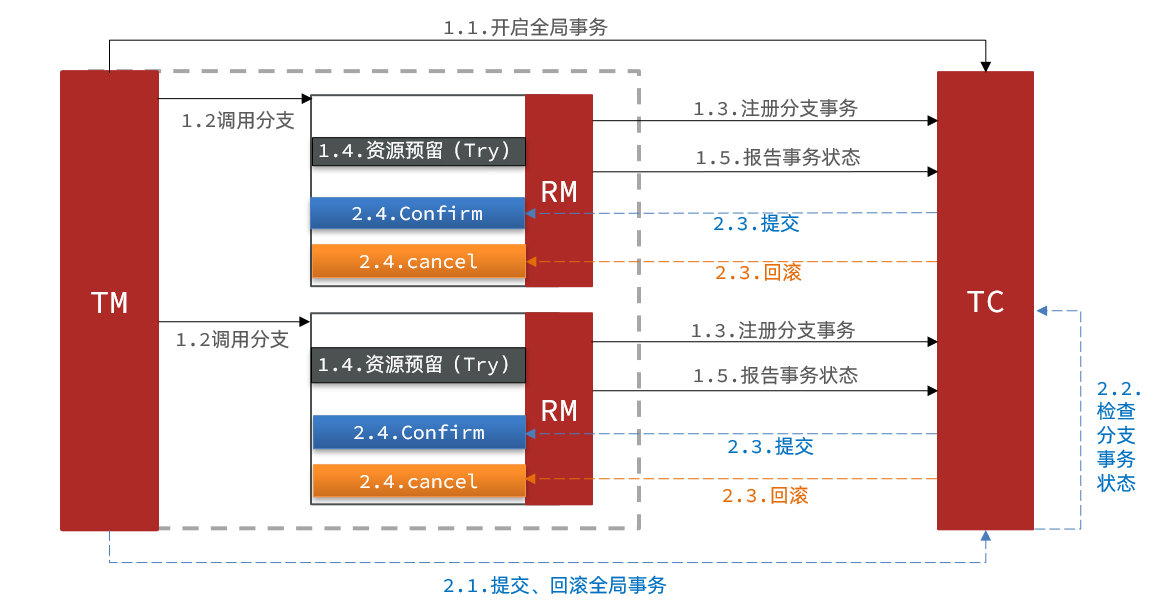
TCC模式与AT模式非常相似,每阶段都是独立事务,不同的是TCC通过人工编码来实现数据恢复。需要实现三个方法:
- Try:资源的检测和预留;
- Confirm:完成资源操作业务;要求 Try 成功 Confirm 一定要能成功。
- Cancel:预留资源释放,可以理解为try的反向操作。
Seata的TCC模型
Seata中的TCC模型依然延续之前的事务架构,如图:
优缺点
TCC模式的每个阶段是做什么的?
- Try:资源检查和预留
- Confirm:业务执行和提交
- Cancel:预留资源的释放
TCC的优点是什么?
- 一阶段完成直接提交事务,释放数据库资源,性能好
- 相比AT模型,无需生成快照,无需使用全局锁,性能最强
- 不依赖数据库事务,而是依赖补偿操作,可以用于非事务型数据库
TCC的缺点是什么?
- 有代码侵入,需要人为编写try、Confirm和Cancel接口,太麻烦
- 软状态,事务是最终一致
- 需要考虑Confirm和Cancel的失败情况,做好幂等处理
事务悬挂和空回滚
1)空回滚
当某分支事务的try阶段阻塞时,可能导致全局事务超时而触发二阶段的cancel操作。在未执行try操作时先执行了cancel操作,这时cancel不能做回滚,就是空回滚。
如图:
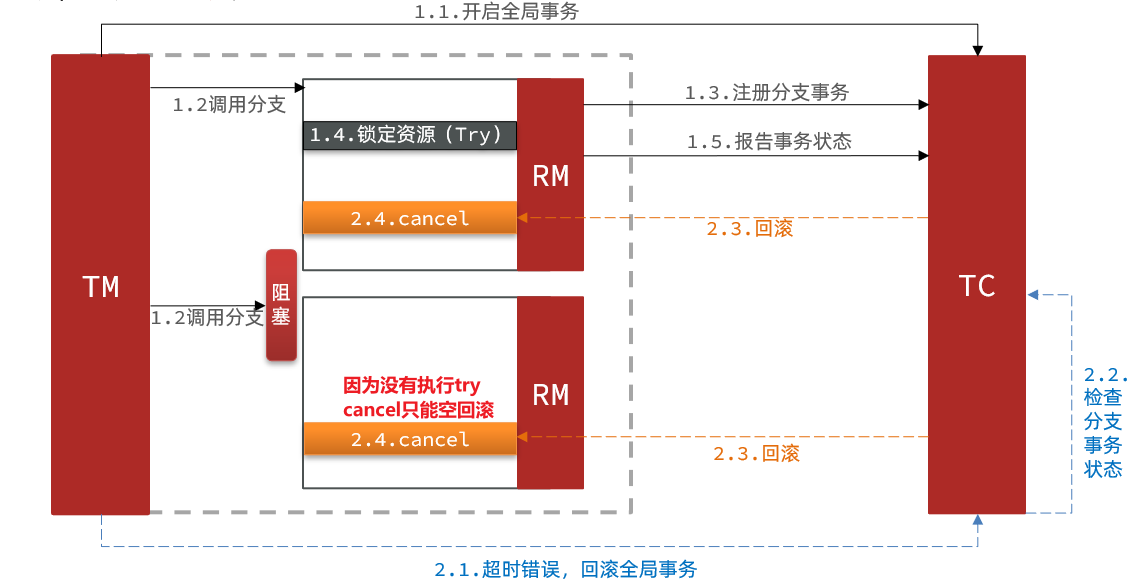
执行cancel操作时,应当判断try是否已经执行,如果尚未执行,则应该空回滚。
2)业务悬挂
对于已经空回滚的业务,之前被阻塞的try操作恢复,继续执行try,就永远不可能confirm或cancel ,事务一直处于中间状态,这就是业务悬挂。
执行try操作时,应当判断cancel是否已经执行过了,如果已经执行,应当阻止空回滚后的try操作,避免悬挂
实现TCC模式
决空回滚和业务悬挂问题,必须要记录当前事务状态,是在try、还是cancel?
1)思路分析
这里我们定义一张表:
CREATE TABLE `account_freeze_tbl` (
  `xid` varchar(128) NOT NULL,
  `user_id` varchar(255) DEFAULT NULL COMMENT '用户id',
  `freeze_money` int(11) unsigned DEFAULT '0' COMMENT '冻结金额',
  `state` int(1) DEFAULT NULL COMMENT '事务状态,0:try,1:confirm,2:cancel',
  PRIMARY KEY (`xid`) USING BTREE
) ENGINE=InnoDB DEFAULT CHARSET=utf8 ROW_FORMAT=COMPACT;
其中:
- xid:是全局事务id
- freeze_money:用来记录用户冻结金额
- state:用来记录事务状态
那此时,我们的业务开怎么做呢?
- Try业务:
- 记录冻结金额和事务状态到account_freeze表
- 扣减account表可用金额
- Confirm业务
- 根据xid删除account_freeze表的冻结记录
- Cancel业务
- 修改account_freeze表,冻结金额为0,state为2
- 修改account表,恢复可用金额
- 如何判断是否空回滚?
- cancel业务中,根据xid查询account_freeze,如果为null则说明try还没做,需要空回滚
- 如何避免业务悬挂?
- try业务中,根据xid查询account_freeze ,如果已经存在则证明Cancel已经执行,拒绝执行try业务
接下来,我们改造account-service,利用TCC实现余额扣减功能。
2)声明TCC接口
TCC的Try、Confirm、Cancel方法都需要在接口中基于注解来声明,
我们在account-service项目中的com.mcode.account.service包中新建一个接口,声明TCC三个接口:
package com.mcode.account.service;

import io.seata.rm.tcc.api.BusinessActionContext;
import io.seata.rm.tcc.api.BusinessActionContextParameter;
import io.seata.rm.tcc.api.LocalTCC;
import io.seata.rm.tcc.api.TwoPhaseBusinessAction;

@LocalTCC
public interface AccountTCCService {

    @TwoPhaseBusinessAction(name = "deduct", commitMethod = "confirm", rollbackMethod = "cancel")
    void deduct(@BusinessActionContextParameter(paramName = "userId") String userId,
                @BusinessActionContextParameter(paramName = "money")int money);

    boolean confirm(BusinessActionContext ctx);

    boolean cancel(BusinessActionContext ctx);
}
3)编写实现类
在account-service服务中的com.mcode.account.service.impl包下新建一个类,实现TCC业务:
package com.mcode.account.service.impl;

import com.mcode.account.entity.AccountFreeze;
import com.mcode.account.mapper.AccountFreezeMapper;
import com.mcode.account.mapper.AccountMapper;
import com.mcode.account.service.AccountTCCService;
import io.seata.core.context.RootContext;
import io.seata.rm.tcc.api.BusinessActionContext;
import lombok.extern.slf4j.Slf4j;
import org.springframework.beans.factory.annotation.Autowired;
import org.springframework.stereotype.Service;
import org.springframework.transaction.annotation.Transactional;

@Service
@Slf4j
public class AccountTCCServiceImpl implements AccountTCCService {

    @Autowired
    private AccountMapper accountMapper;
    @Autowired
    private AccountFreezeMapper freezeMapper;

    @Override
    @Transactional
    public void deduct(String userId, int money) {
        // 0.获取事务id
        String xid = RootContext.getXID();
        // 1.扣减可用余额
        accountMapper.deduct(userId, money);
        // 2.记录冻结金额,事务状态
        AccountFreeze freeze = new AccountFreeze();
        freeze.setUserId(userId);
        freeze.setFreezeMoney(money);
        freeze.setState(AccountFreeze.State.TRY);
        freeze.setXid(xid);
        freezeMapper.insert(freeze);
    }

    @Override
    public boolean confirm(BusinessActionContext ctx) {
        // 1.获取事务id
        String xid = ctx.getXid();
        // 2.根据id删除冻结记录
        int count = freezeMapper.deleteById(xid);
        return count == 1;
    }

    @Override
    public boolean cancel(BusinessActionContext ctx) {
        // 0.查询冻结记录
        String xid = ctx.getXid();
        AccountFreeze freeze = freezeMapper.selectById(xid);

        // 1.恢复可用余额
        accountMapper.refund(freeze.getUserId(), freeze.getFreezeMoney());
        // 2.将冻结金额清零,状态改为CANCEL
        freeze.setFreezeMoney(0);
        freeze.setState(AccountFreeze.State.CANCEL);
        int count = freezeMapper.updateById(freeze);
        return count == 1;
    }
}
四种模式对比
我们从以下几个方面来对比四种实现:
- 一致性:能否保证事务的一致性?强一致还是最终一致?
- 隔离性:事务之间的隔离性如何?
- 代码侵入:是否需要对业务代码改造?
- 性能:有无性能损耗?
- 场景:常见的业务场景
如图:
