-
【c++智能指针】
一、智能指针的使用及原理
RAII(Resource Acquisition Is Initialization)是一种利用对象生命周期来控制程序资源(如内存、文件句柄、网络连接、互斥量等等)的简单技术。在对象构造时获取资源,接着控制对资源的访问使之在对象的生命周期内始终保持有效,最后在对象析构的时候释放资源。借此,我们实际上把管理一份资源的责任托管给了一个对象。这种做法有两大好处:
不需要显式地释放资源。
采用这种方式,对象所需的资源在其生命期内始终保持有效。
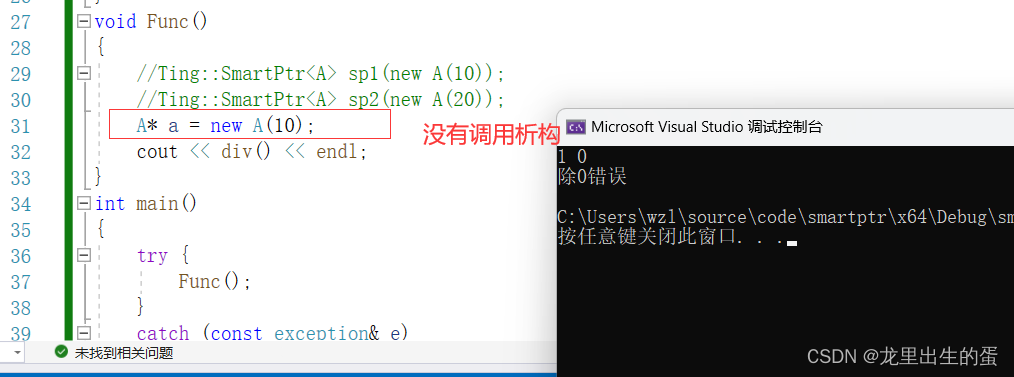
比如:为什么智能指针前:#include"smartptr.h" class A { public: A(int a) :_a(a) { //cout << "A(int a)" << endl; } ~A() { cout << "~A()" << endl; } private: int _a; }; int div() { int a, b; cin >> a >> b; if (b == 0) throw invalid_argument("除0错误"); return a / b; } void Func() { //Ting::SmartPtr sp1(new A(10)); //Ting::SmartPtr sp2(new A(20)); A* a = new A(10); cout << div() << endl; } int main() { try { Func(); } catch (const exception& e) { cout << e.what() << endl; } return 0; }- 1
- 2
- 3
- 4
- 5
- 6
- 7
- 8
- 9
- 10
- 11
- 12
- 13
- 14
- 15
- 16
- 17
- 18
- 19
- 20
- 21
- 22
- 23
- 24
- 25
- 26
- 27
- 28
- 29
- 30
- 31
- 32
- 33
- 34
- 35
- 36
- 37
- 38
- 39
- 40
- 41
- 42
- 43
- 44
使用后:#includeusing namespace std; namespace Ting { template<class T> class SmartPtr { public: SmartPtr(const T* ptr) :_ptr(ptr) {} T& operator*() { return *_ptr; } T* operator->() { return _ptr; } ~SmartPtr() { if (_ptr) { delete _ptr; } } private: const T* _ptr; }; } - 1
- 2
- 3
- 4
- 5
- 6
- 7
- 8
- 9
- 10
- 11
- 12
- 13
- 14
- 15
- 16
- 17
- 18
- 19
- 20
- 21
- 22
- 23
- 24
- 25
- 26
- 27
- 28
- 29
- 30
- 31
- 32
- 33
- 34
- 35
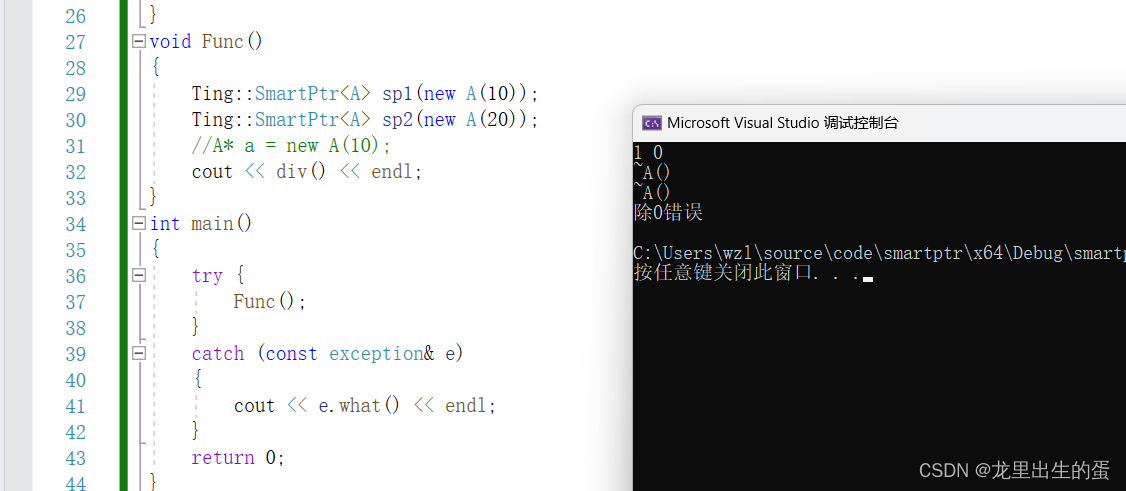
#include"smartptr.h" class A { public: A(int a) :_a(a) { //cout << "A(int a)" << endl; } ~A() { cout << "~A()" << endl; } private: int _a; }; int div() { int a, b; cin >> a >> b; if (b == 0) throw invalid_argument("除0错误"); return a / b; } void Func() { Ting::SmartPtr<A> sp1(new A(10)); Ting::SmartPtr<A> sp2(new A(20)); //A* a = new A(10); cout << div() << endl; } int main() { try { Func(); } catch (const exception& e) { cout << e.what() << endl; } return 0; }- 1
- 2
- 3
- 4
- 5
- 6
- 7
- 8
- 9
- 10
- 11
- 12
- 13
- 14
- 15
- 16
- 17
- 18
- 19
- 20
- 21
- 22
- 23
- 24
- 25
- 26
- 27
- 28
- 29
- 30
- 31
- 32
- 33
- 34
- 35
- 36
- 37
- 38
- 39
- 40
- 41
- 42
- 43
- 44
二、auto_ptr
C++98版本的库中就提供了auto_ptr的智能指针。下面演示的auto_ptr的使用及问题。
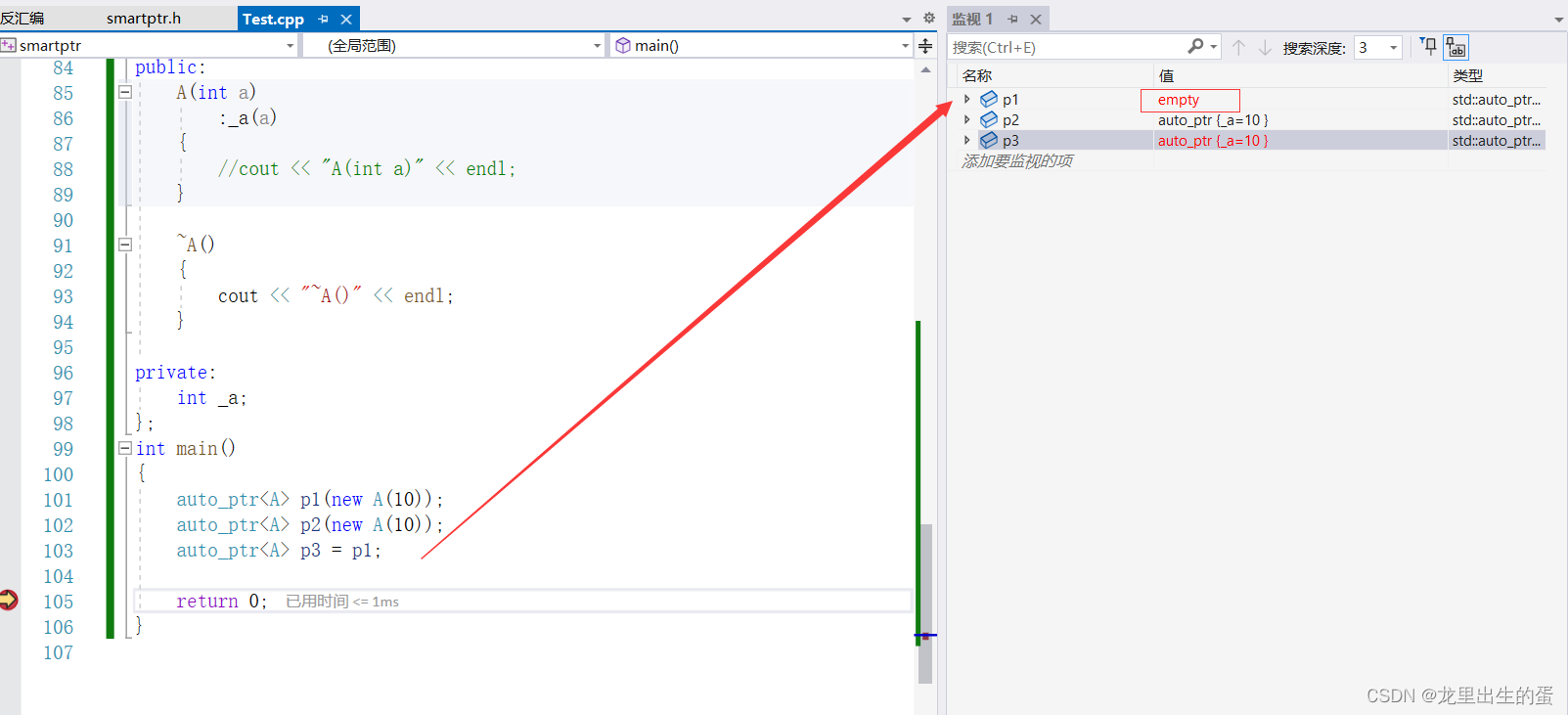
模拟实现auto_ptr:template<class T> class auto_ptr { public: auto_ptr (T* ptr) :_ptr(ptr) {} auto_ptr(auto_ptr<T>& ap) { _ptr = ap._ptr; //悬空 ap._ptr = nullptr; } auto_ptr<T>& operator=(auto_ptr<T>& ap) { if (_ptr != ap._ptr) { if (_ptr) { delete _ptr; } _ptr = ap._ptr; //悬空 ap._ptr = nullptr; } return *this; } T& operator*() { return *_ptr; } T* operator->() { return _ptr; } ~auto_ptr() { if (_ptr) { delete _ptr; } } private: T* _ptr; }; // 结论:auto_ptr是一个失败设计,很多公司明确要求不能使用auto_ptr //int main() //{ // std::auto_ptrsp1(new int); // std::auto_ptrsp2(sp1); // 管理权转移 // // // sp1悬空 // *sp2 = 10; // cout << *sp2 << endl; // cout << *sp1 << endl; // return 0; //}- 1
- 2
- 3
- 4
- 5
- 6
- 7
- 8
- 9
- 10
- 11
- 12
- 13
- 14
- 15
- 16
- 17
- 18
- 19
- 20
- 21
- 22
- 23
- 24
- 25
- 26
- 27
- 28
- 29
- 30
- 31
- 32
- 33
- 34
- 35
- 36
- 37
- 38
- 39
- 40
- 41
- 42
- 43
- 44
- 45
- 46
- 47
- 48
- 49
- 50
- 51
- 52
- 53
- 54
- 55
- 56
- 57
- 58
- 59
- 60
- 61
- 62
- 63
- 64
- 65
三、unique_ptr
为了解决上面auto_ptr拷贝赋值后因为管理权限转移而造成悬空问题,C++11引入了unique_ptr
unique_ptr的实现原理:简单粗暴的防拷贝,下面简化模拟实现了一份UniquePtr来了解它的原理template<class T> class unique_ptr { public: unique_ptr(T* ptr) :_ptr(ptr) {} unique_ptr(const unique_ptr<T>& ap) = delete; unique_ptr<T>& operator=(const unique_ptr<T>& ap) = delete; T& operator*() { return *_ptr; } T* operator->() { return _ptr; } ~unique_ptr() { if (_ptr) { delete _ptr; } } private: T* _ptr; };- 1
- 2
- 3
- 4
- 5
- 6
- 7
- 8
- 9
- 10
- 11
- 12
- 13
- 14
- 15
- 16
- 17
- 18
- 19
- 20
- 21
- 22
- 23
- 24
- 25
- 26
- 27
- 28
- 29
- 30
- 31
- 32
- 33
三、shared_ptr
C++11中开始提供更靠谱的并且支持拷贝的shared_ptr
shared_ptr的原理:是通过引用计数的方式来实现多个shared_ptr对象之间共享资源。- shared_ptr在其内部,给每个资源都维护了着一份计数,用来记录该份资源被几个对象共享。
- 在对象被销毁时(也就是析构函数调用),就说明自己不使用该资源了,对象的引用计数减一。
- 如果引用计数是0,就说明自己是最后一个使用该资源的对象,必须释放该资源;
- 如果不是0,就说明除了自己还有其他对象在使用该份资源,不能释放该资源,否则其他对象就成野指针了。
下面简化模拟实现了一份shared_ptr来了解它的原理
template<class T> class shared_ptr { public: shared_ptr(T* ptr) :_ptr(ptr) ,_pcount(new int(1)) {} shared_ptr(shared_ptr<T>& sp) :_ptr(sp._ptr) ,_pcount(sp._pcount) { ++(*_pcount); } shared_ptr<T>& operator=(shared_ptr<T>& sp) { //防止自己给自己赋值 if (_ptr != sp._ptr) { if (_ptr) { delete _ptr; } _ptr = sp._ptr; _pcount = sp._pcount; ++(*_pcount); } return *this; } ~shared_ptr() { if (--(*_pcount) == 0) { delete _ptr; delete _pcount; } } T* operator->() { return _ptr; } T& operator*() { return *_ptr; } private: T* _ptr; int* _pcount; };- 1
- 2
- 3
- 4
- 5
- 6
- 7
- 8
- 9
- 10
- 11
- 12
- 13
- 14
- 15
- 16
- 17
- 18
- 19
- 20
- 21
- 22
- 23
- 24
- 25
- 26
- 27
- 28
- 29
- 30
- 31
- 32
- 33
- 34
- 35
- 36
- 37
- 38
- 39
- 40
- 41
- 42
- 43
- 44
- 45
- 46
- 47
- 48
- 49
- 50
- 51
- 52
- 53
- 54
- 55
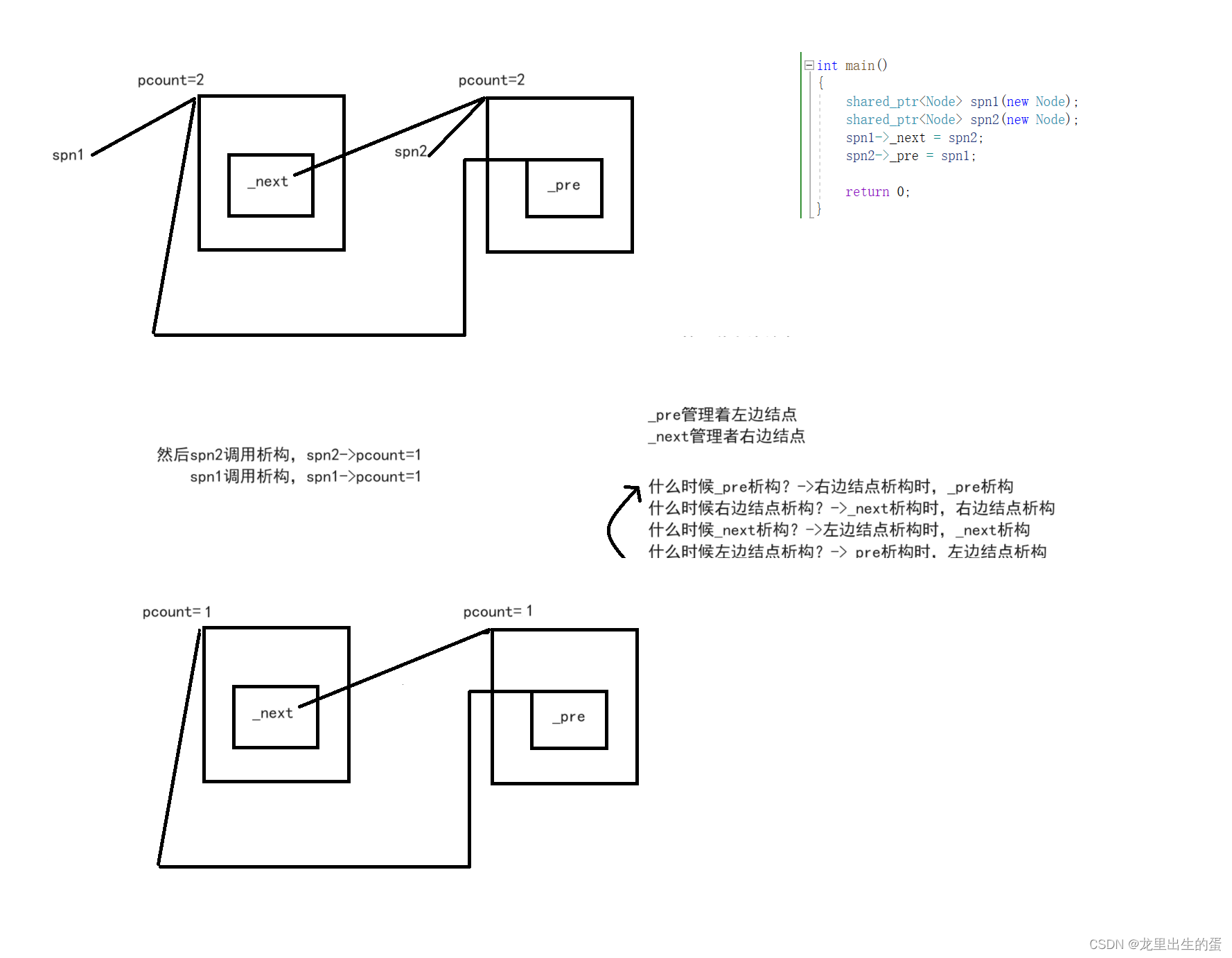
但是shared_ptr再有些场景下会出现循环引用问题。如:
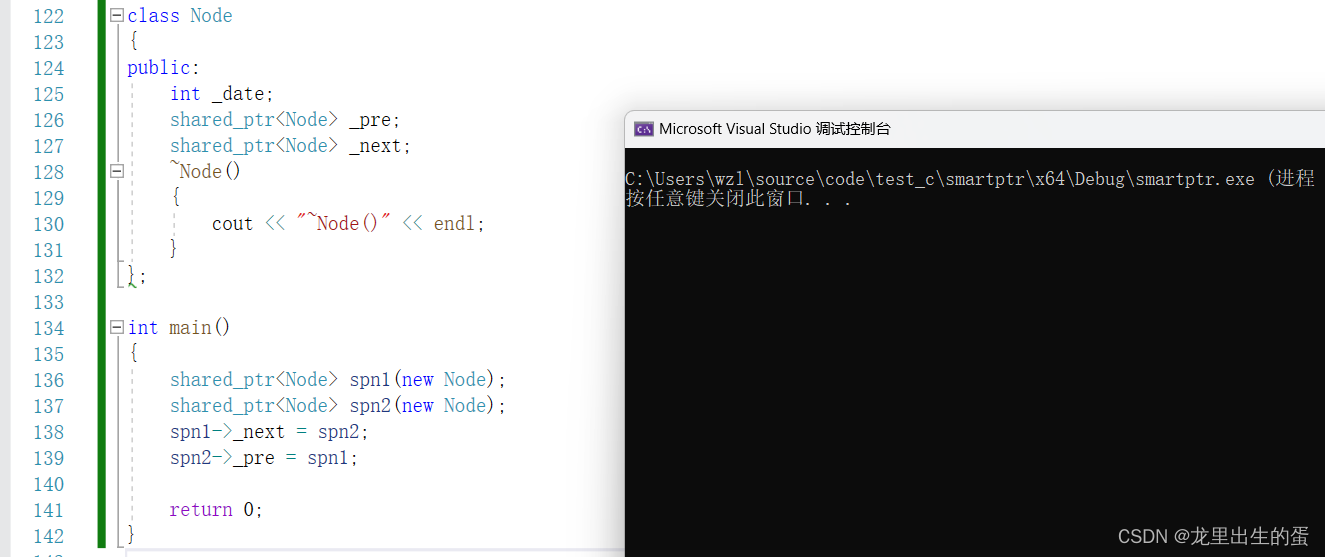
没有调用Node的析构函数。为什么呢?如图:
四、weak_ptr
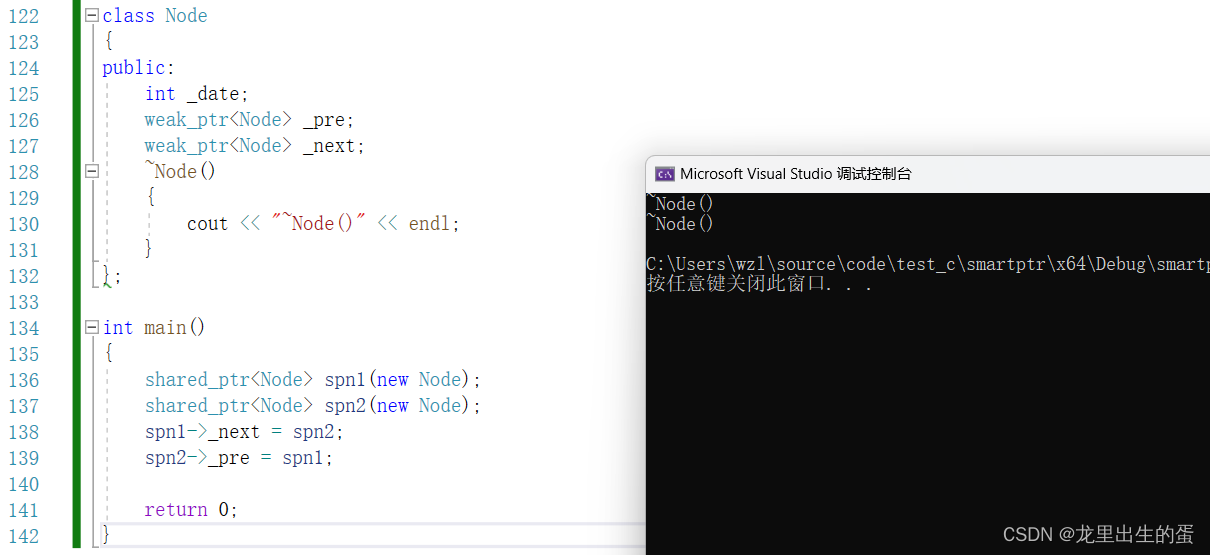
为了解决shared_ptr循环引用场景,所以又引入了weak_ptr。
下面简化模拟实现了一份weak_ptr来了解它的原理template<class T> class weak_ptr { public: weak_ptr() :_ptr(nullptr) {} weak_ptr(Ting::shared_ptr<T>& sp) :_ptr(sp.get()) {} weak_ptr<T>& operator=(Ting::SmartPtr<T>& sp) { _ptr = sp.get(); return *this; } T* operator->() { return _ptr; } T& operator*() { return *_ptr; } private: T* _ptr; };- 1
- 2
- 3
- 4
- 5
- 6
- 7
- 8
- 9
- 10
- 11
- 12
- 13
- 14
- 15
- 16
- 17
- 18
- 19
- 20
- 21
- 22
- 23
- 24
- 25
- 26
- 27
- 28
- 29
- 30
- 31
五、定制删除器
上面模拟的shared_ptr只能在少部分场景下使用,在这个场景下使用不了。如:
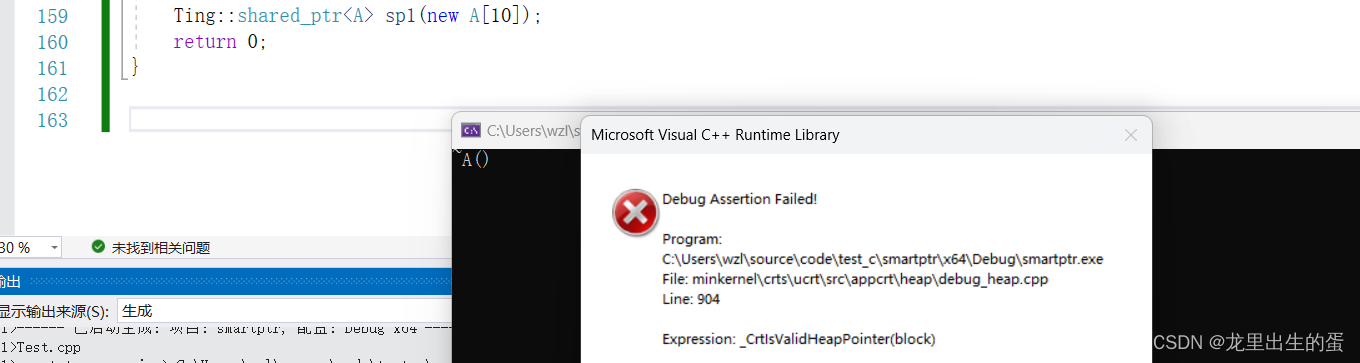
所以我们可以模拟库里在构造时加个仿函数过去。
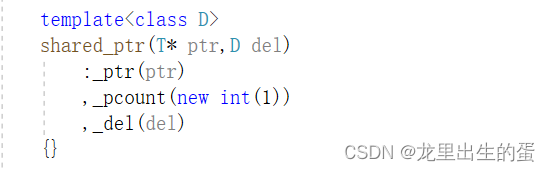
属性里也加个,用包装器来申明。

析构函数改成调用仿函数。
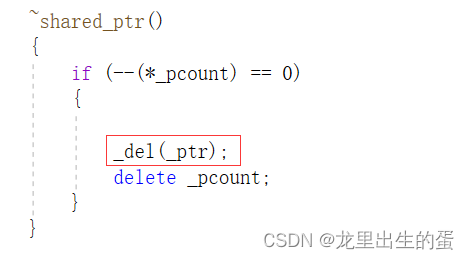
完整代码:template<class T> class shared_ptr { public: shared_ptr(T* ptr) :_ptr(ptr) , _pcount(new int(1)) {} template<class D> shared_ptr(T* ptr,D del) :_ptr(ptr) ,_pcount(new int(1)) ,_del(del) {} shared_ptr(shared_ptr<T>& sp) :_ptr(sp._ptr) ,_pcount(sp._pcount) { ++(*_pcount); } shared_ptr<T>& operator=(shared_ptr<T>& sp) { //防止自己给自己赋值 if (_ptr != sp._ptr) { if (_ptr) { delete _ptr; } _ptr = sp._ptr; _pcount = sp._pcount; ++(*_pcount); } return *this; } ~shared_ptr() { if (--(*_pcount) == 0) { _del(_ptr); delete _pcount; } } T* get() { return _ptr; } T* operator->() { return _ptr; } T& operator*() { return *_ptr; } private: T* _ptr; int* _pcount; function<void(T*)> _del = [](T* ptr) {delete ptr; }; };- 1
- 2
- 3
- 4
- 5
- 6
- 7
- 8
- 9
- 10
- 11
- 12
- 13
- 14
- 15
- 16
- 17
- 18
- 19
- 20
- 21
- 22
- 23
- 24
- 25
- 26
- 27
- 28
- 29
- 30
- 31
- 32
- 33
- 34
- 35
- 36
- 37
- 38
- 39
- 40
- 41
- 42
- 43
- 44
- 45
- 46
- 47
- 48
- 49
- 50
- 51
- 52
- 53
- 54
- 55
- 56
- 57
- 58
- 59
- 60
- 61
- 62
- 63
- 64
- 65
- 66
- 67
- 68
- 69
-
相关阅读:
FFmpeg修复受损视频
推荐算法---矩阵分解
FFplay文档解读-47-多媒体过滤器一
Java中 “% “与 “/“有什么不同之处呢?
为什么学了模数电还是看不懂较复杂的电路图?
fastadmin 后台列表数据多表查询筛选
【gitlab】我的gitlab经历--20220901
【Python系列】数字的bool值
pandas 统计函数
【Python】对MySQL数据库的操作(SQLAlchemy)
- 原文地址:https://blog.csdn.net/qq_69544758/article/details/133856861

- 最新文章
-
【FHE】我们如何实现同态加密推理(八):SiLU 的密文化——两条路径,和一个 8 字节的开关
SQLcl 中 c/old/new 替换变量为何失效?先定位再替换
不让模型写作文,直接从它脑子里读答案:Jev 决策在 .NET 的两条路线
Halo插件:支持GitHub的图床附件策略
电视投屏界的“一股清流”!SimpleTVCast 6.0.0-beta 抢先体验:无需TV端App,界面大换血!✨
华三VXLAN集中式网关实战指南:Spine多活网关 + 双活接入(M-LAG)
软件更好写之后口碑会更重要
大 O、大 Omega、大 Theta 的区别,O(n) 复杂度是什么意思
Java标签跳转:一个鲜为人知但却很实用的小技巧
多智能体系统论文速读