-
Linux下platform驱动框架描述
如果要写复杂的外设驱动,Linux系统就要考虑到驱动的可重用性,因此提出了驱动的分离与分层这样的软件思路,platform设备驱动就是在这种思路下诞生的,其也称为平台设备驱动。
对于Linux这样一个成熟、庞大、复杂的操作系统,代码的重用性非常重要,否则就会在Linux内核中存在大量无意义的重复代码。驱动的分离与分层
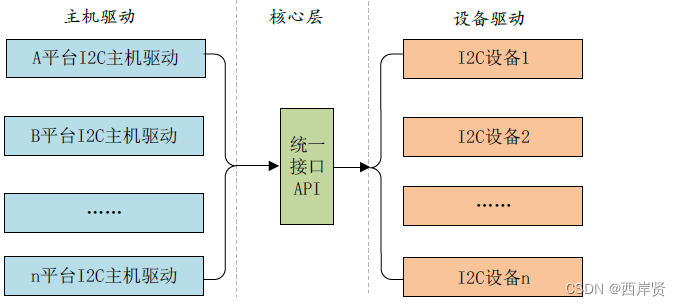
最简单的思路写出来的驱动应该如下图所示。

但是设备驱动都是一样的,因此没必要每个平台都写一个,所以通过提供一个统一的接口,让每个设备通过这个接口来访问。

实际中的设备驱动类型很多,总体的架构应该如下图所示。
这就是Linux中总线、驱动和设备模型,即驱动分离,总线负责给驱动和设备牵线搭桥。当我们向系统注册一个驱动的时候,总线就会在右侧的设备中查找,看看有没有与之匹配的设备,如果有的话就将两者联系起来。同样的,当向系统中注册一个设备的时候,总线就会在左侧的驱动中查找看有没有与之匹配的设备,有的话也联系起来。Linux内核中大量的驱动程序都采用总线、驱动和设备模式。
简单介绍一下驱动的分层,input子系统负责管理所有跟输入有关的驱动,包括键盘、鼠标、触摸等,最底层的就是设备原始驱动,负责获取输入设备的原始值,获取到的输入事件上报给input核心层。input核心层会处理各种IO模型,并且提供file_operations操作集合,在编写输入设备驱动的时候只需要处理好输入事件的上报即可,至于如何处理这些上报的输入事件那是上层去考虑的。
platform模型简介
上面提到总线、驱动和设备这种模式,但是在SOC中有些外设是没有总线这个概念的,Linux提出了platform这个虚拟总线,相应
的就有platform_driver和platform_device。
Linux系统内核使用bus_type结构体表示总线,此结构体定义在文件include/linux/device.h文件中。int (*match)(struct device *dev,struct device_driver *drv);- 1
结构体中的match函数就是完成设备和驱动之间匹配的,总线使用match函数来根据注册的设备查找对应的驱动,或者根据注册的驱动来查找相应的设备,所以每一条总线都必须要实现此函数。
platform总线是bus_type的一个具体实例,定义在文件drivers/base/platform.c,platform总线定义如下。struct bus_type platform_bus_type = { .name = "platform", .dev_groups = platform_dev_groups, .match = platform_match, .uevent = platform_uevent, .pm = &platform_dev_pm_ops, };- 1
- 2
- 3
- 4
- 5
- 6
- 7
platform_bus_type就是platform 平台总线,其中platform_match 就是匹配函数,该函数也定义在文件platform.c中,函数内容如下。
static int platform_match(struct device *dev, struct device_driver *drv) { struct platform_device *pdev = to_platform_device(dev); struct platform_driver *pdrv = to_platform_driver(drv); /* When driver_override is set, only bind to the matching driver */ if (pdev->driver_override) return !strcmp(pdev->driver_override, drv->name); /* Attempt an OF style match first */ if (of_driver_match_device(dev, drv)) return 1; /* Then try ACPI style match */ if (acpi_driver_match_device(dev, drv)) return 1; /* Then try to match against the id table */ if (pdrv->id_table) return platform_match_id(pdrv->id_table, pdev) != NULL; /* fall-back to driver name match */ return (strcmp(pdev->name, drv->name) == 0); }- 1
- 2
- 3
- 4
- 5
- 6
- 7
- 8
- 9
- 10
- 11
- 12
- 13
- 14
- 15
- 16
- 17
- 18
- 19
- 20
- 21
- 22
- 23
- 24
该函数中定义了四种驱动和设备匹配的方式,第一种是of类型的匹配,也就是设备树采用的匹配方式,of_driver_match_device函数定义在文件include/linux/of_device.h中。device_driver结构体中有个名为of_match_table的成员变量,此成员变量保存着驱动的compatible匹配表,设备树中的每个设备节点的compatible 属性会和of_match_table表中的所有成员比较,查看是否有相同的条目,如果有的话就表示设备和此驱动匹配,设备和驱动匹配成功以后probe函数就会执行。第二种是ACPI匹配方式。第三种是id_table匹配,每个platform_driver结构体有一个id_table成员变量,里面保存了很多id信息,这些id信息存放着这个platform驱动所支持的驱动类型。第四种是直接比较驱动和设备的name字段,如果相等的话就匹配成功。
platform_driver结构体表示platform驱动, 此结构体定义在文件include/linux/platform_device.h中,如下所示。struct platform_driver { int (*probe)(struct platform_device *); int (*remove)(struct platform_device *); void (*shutdown)(struct platform_device *); int (*suspend)(struct platform_device *, pm_message_t state); int (*resume)(struct platform_device *); struct device_driver driver; const struct platform_device_id *id_table; bool prevent_deferred_probe; };- 1
- 2
- 3
- 4
- 5
- 6
- 7
- 8
- 9
- 10
当驱动与设备匹配成功以后probe函数就会执行,一般驱动的提供者会编写,如果自己要编写一个全新的驱动,那么probe就需要自行实现。
driver成员为device_driver结构体变量,Linux内核里面大量使用到了面向对象的思维,device_driver相当于基类,提供了最基础的驱动框架。plaform_driver继承了这个基类,然后在此基础上又添加了一些特有的成员变量。
device_driver结构体定义在include/linux/device.h中,其原型如下。struct device_driver { const char *name; struct bus_type *bus; struct module *owner; const char *mod_name; /* used for built-in modules */ bool suppress_bind_attrs; /* disables bind/unbind via sysfs */ const struct of_device_id *of_match_table; const struct acpi_device_id *acpi_match_table; int (*probe) (struct device *dev); int (*remove) (struct device *dev); void (*shutdown) (struct device *dev); int (*suspend) (struct device *dev, pm_message_t state); int (*resume) (struct device *dev); const struct attribute_group **groups; const struct dev_pm_ops *pm; struct driver_private *p; };- 1
- 2
- 3
- 4
- 5
- 6
- 7
- 8
- 9
- 10
- 11
- 12
- 13
- 14
- 15
- 16
- 17
- 18
- 19
- 20
- 21
- 22
- 23
其中of_match_table就是采用设备树的时候驱动使用的匹配表,每个匹配项都为of_device_id结构体类型,此结构体定义在文件include/linux/mod_devicetable.h中,如下所示。
struct of_device_id { char name[32]; char type[32]; char compatible[128]; const void *data; };- 1
- 2
- 3
- 4
- 5
- 6
对于设备树而言,就是通过设备节点的compatible属性值和of_match_table中每个项目的compatible成员变量进行比较,如果有相等的就表示设备和此驱动匹配成功。
在编写platform驱动的时候,首先定义一个platform_driver结构体变量,然后实现结构体中的各个成员变量,重点是实现匹配方法以及probe函数。当驱动和设备匹配成功以后probe函数就会执行,具体的驱动程序在probe函数里面编写。
定义并初始化好platform_driver结构体变量以后,需要在驱动入口函数里面调用platform_driver_register函数向Linux内核注册一个platform驱动,platform_driver_register函数原型如下。int platform_driver_register (struct platform_driver *driver)- 1
退出时卸载platform驱动,platform_driver_unregister函数原型如下。
void platform_driver_unregister(struct platform_driver *drv)- 1
经过上面的介绍,platform驱动框架大致如下。
struct cdev cdev; static int xxx_open(struct inode *inode, struct file *filp) { ... return 0; } static ssize_t xxx_write(struct file *filp, const char __user *buf,size_t cnt, loff_t *offt) { ... return 0; } static struct file_operations xxx_fops = { .owner = THIS_MODULE, .open = xxx_open, .write = xxx_write, }; static int xxx_probe(struct platform_device *dev) //驱动和设备匹配成功之后此函数执行,原来init函数的内容放到这里 { ... cdev_init(&xxxdev.cdev, &xxx_fops); /* 注册字符设备驱动 */ return 0; } static int xxx_remove(struct platform_device *dev) //关闭platform设备驱动的时候执行,原来exit函数的内容放到这里 { ... cdev_del(&xxxdev.cdev); /* 删除cdev */ return 0; } static const struct of_device_id xxx_of_match[] = { {.compatible = "xxx-gpio" }, { /* Sentinel */ } }; static struct platform_driver xxx_driver = { .driver = { .name = "xxx", .of_match_table = xxx_of_match, }, .probe = xxx_probe, .remove = xxx_remove, }; static int __init xxxdriver_init(void) { platform_driver_register(&xxx_driver); return 0; } static int __exit xxxdriver_exit(void) { platform_driver_unregister(&xxx_driver); return 0; } module_init(xxxdriver_init); module_exit(xxxdriver_exit); MODULE_LICENSE("GPL");- 1
- 2
- 3
- 4
- 5
- 6
- 7
- 8
- 9
- 10
- 11
- 12
- 13
- 14
- 15
- 16
- 17
- 18
- 19
- 20
- 21
- 22
- 23
- 24
- 25
- 26
- 27
- 28
- 29
- 30
- 31
- 32
- 33
- 34
- 35
- 36
- 37
- 38
- 39
- 40
- 41
- 42
- 43
- 44
- 45
- 46
- 47
- 48
- 49
- 50
- 51
- 52
- 53
- 54
- 55
- 56
- 57
- 58
- 59
- 60
- 61
- 62
- 63
platform_device结构体定义在文件/include/linux/platform_device.h中,如果内核支持设备树的话就不用再使用platform_device来描述设备了,因为改用设备树去描述了。
参考资料:
I.MX6U嵌入式Linux驱动开发指南V1.5——正点原子 -
相关阅读:
【Homeassistant 与Passive Infrared Sensor被动红外传感器握手】
网工内推 | 国企、上市公司,IA/IP认证即可,有年终、绩效
【Node】核心模块
Vue3中组件数据的传递以及更改
LDO investigation
【C++】“334. 队列检查”题目解析及所用vector相关用法总结
ubuntu22.04 配置共享文件夹 找不到/mnt/hgfs
vue---十分钟搞懂vue计算属性
Linux 中简单的文件系统
【PowerShell】PowerShell 7.1 之后版本的安装
- 原文地址:https://blog.csdn.net/weixin_42570192/article/details/133577975
