-
SpringSecurity源码学习一:过滤器执行原理
在Spring Security源代码中,过滤器是用于处理安全相关任务的关键组件之一。它们用于在请求到达应用程序之前或之后执行特定的安全操作。Spring Security中的过滤器链是一个由多个过滤器组成的链式结构。每个过滤器都负责执行特定的安全任务,并将请求传递给下一个过滤器。这些过滤器一起协同工作,以实现身份验证、授权、会话管理等安全功能。
在Spring Security源码中,有一个关键的过滤器叫做 FilterChainProxy ,它是整个过滤器链的入口点。 FilterChainProxy 负责协调和执行所有其他过滤器,并确保请求按照正确的顺序通过它们。 也就是我们自定义的过滤器是通过 FilterChainProxy插入到web过滤器链中的
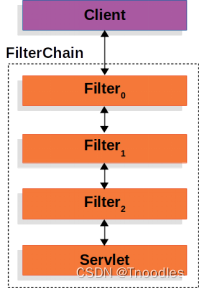
一般过滤器链路
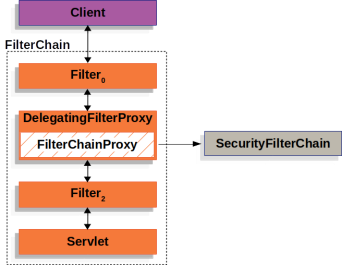
使用Spring Security的过滤器链路
1. web过滤器Filter
Filter就是过滤器,在JavaWeb体系中,他位于服务端,卡在请求/响应与Servlet之间做一些操作。通过过滤器我们可以做很多操作,例如:
-
认证和授权:Spring Security框架中的过滤器可以用于对用户进行身份验证和授权,以保护Web应用程序的安全性。
-
日志记录:可以使用过滤器记录HTTP请求和响应的详细信息,以便进行故障排除和性能优化。
-
缓存:可以使用过滤器实现缓存机制,以提高Web应用程序的性能和响应速度。
-
压缩:可以使用过滤器对响应进行压缩,以减少数据传输量,提高Web应用程序的性能。
-
字符编码:可以使用过滤器对请求和响应进行字符编码,以确保正确的数据传输和显示。
1.1 filter核心类
在Spring Web中,实现过滤器的核心类是 javax.servlet.Filter 。这是Java Servlet API中定义的标准接口。要在Spring Web中创建过滤器,通常需要创建一个实现 Filter 接口的类,并重写其方法,例如 doFilter() 。
以下是与Spring Web过滤器相关的一些核心类:- OncePerRequestFilter :这是Spring提供的一个抽象类,扩展了 GenericFilterBean 。它确保每个请求只调用一次过滤器的 doFilter() 方法。
- GenericFilterBean :这是一个方便的基类,用于创建过滤器。它实现了 Filter 接口,并提供了额外的功能,如bean生命周期管理。
- DelegatingFilterProxy :这是一个Spring特定的类,它将过滤器功能委托给Spring应用程序上下文中定义的目标bean。通常在想要将过滤器应用于特定URL或向过滤器注入依赖项时使用。
这些核心类有助于在Spring Web应用程序中创建和配置过滤器,允许您根据需求拦截和处理HTTP请求和响应。
1.2 GenericFilterBean
GenericFilterBean 是Spring Web框架提供的一个方便的基类,用于创建过滤器。它实现了 Filter 接口,并提供了一些额外的功能,例如bean生命周期管理和依赖注入。 GenericFilterBean 是自带init方法的,我们继承后只需要重写doFilter方法。
直接继承 GenericFilterBean 可以带来以下好处:-
简化过滤器的创建:继承 GenericFilterBean 可以减少编写过滤器所需的代码量。它提供了一些默认的实现和方法,使得创建过滤器变得简单和方便。
-
生命周期管理: GenericFilterBean 实现了 Filter 接口,并提供了生命周期管理的功能。它可以在过滤器的初始化和销毁过程中执行相应的操作,例如资源的初始化和释放。
-
依赖注入: GenericFilterBean 支持依赖注入,您可以使用 @Autowired 注解将其他Spring bean注入到过滤器中。这使得在过滤器中使用其他组件、服务或依赖变得更加容易。
-
配置灵活性:通过继承 GenericFilterBean ,您可以根据需要自定义和配置过滤器的行为。您可以重写 doFilter() 方法以实现自定义的请求和响应处理逻辑,并使用其他提供的方法来访问过滤器的配置和上下文信息。
1.3 DelegatingFilterProxy
上边我们讲了GenericFilterBean,我们可以通过继承GenericFilterBean编写过滤器。此时的自定义的过滤器是交由Spring容器管理的,并不属于web的Servlet 容器管理。因此可以将过滤器分类两类,第一类是由 Web 容器进行管理,第二类是由 Spring 进行管理的,DelegatingFilterProxy 就是连接二者的桥梁。
1.3.1 原理
DelegatingFilterProxy是Spring框架提供的一个过滤器代理类,它可以将请求转发到一个或多个过滤器。它的原理是将一个实现了javax.servlet.Filter接口的Bean转换为Servlet过滤器,并将这些过滤器应用到Web应用程序中。
在Spring中,DelegatingFilterProxy通常与Spring的IoC容器结合使用。当一个请求到达Web应用程序时,Servlet容器会将请求传递给DelegatingFilterProxy。DelegatingFilterProxy会从Spring的IoC容器中获取目标过滤器的实例,并调用它的doFilter方法来处理请求。1.3.2 DelegatingFilterProxy源码
@Override public void doFilter(ServletRequest request, ServletResponse response, FilterChain filterChain) throws ServletException, IOException { // Lazily initialize the delegate if necessary. //这个时候经过初始化,filter已经是spring容器中的bean,在spring-Security中,此时delegateToUse就是spring-Security的FilterChainProxy Filter delegateToUse = this.delegate; if (delegateToUse == null) { synchronized (this.delegateMonitor) { delegateToUse = this.delegate; if (delegateToUse == null) { WebApplicationContext wac = findWebApplicationContext(); if (wac == null) { throw new IllegalStateException("No WebApplicationContext found: " + "no ContextLoaderListener or DispatcherServlet registered?"); } delegateToUse = initDelegate(wac); } this.delegate = delegateToUse; } } // Let the delegate perform the actual doFilter operation. //代理模式 让代理Filter执行实际的doFilter方法,在spring-Security中,此时就是执行spring-Security的FilterChainProxy invokeDelegate(delegateToUse, request, response, filterChain); }- 1
- 2
- 3
- 4
- 5
- 6
- 7
- 8
- 9
- 10
- 11
- 12
- 13
- 14
- 15
- 16
- 17
- 18
- 19
- 20
- 21
- 22
- 23
- 24
- 25
- 26
在源码中我们可以看到,使用了代理模式执行了被代理的过滤器的过滤方法。
2. FilterChainProxy源码学习
在Spring Security中,FilterChainProxy是一个核心的过滤器,它负责处理Web请求的安全过滤链。它的作用是将请求传递给一系列的安全过滤器,以便进行身份验证、授权、会话管理等安全相关的操作。
FilterChainProxy的主要功能是根据配置的安全过滤器链来处理请求。在Spring Security的配置中,可以定义多个过滤器,并指定它们的顺序和应用于特定URL模式的条件。当一个请求到达应用程序时,FilterChainProxy会按照配置的顺序依次调用这些过滤器,直到找到适用于请求的过滤器链。
每个过滤器链都包含一系列的过滤器,它们按照特定的顺序执行。这些过滤器可以执行不同的安全操作,例如身份验证过滤器用于验证用户的身份,授权过滤器用于检查用户是否具有访问权限,会话管理过滤器用于管理用户的会话等。
通过FilterChainProxy,Spring Security提供了一种灵活的方式来定义和管理安全过滤器链。它可以根据应用程序的需求进行配置,并提供了强大的安全功能,以保护Web应用程序免受各种安全威胁。
2.1 源码
public class FilterChainProxy extends GenericFilterBean {- 1
可以看到,FilterChainProxy是继承了GenericFilterBean,FilterChainProxy 也是一个过滤器。
@Override public void doFilter(ServletRequest request, ServletResponse response, FilterChain chain) throws IOException, ServletException { //此处是对请求是否第一次经过这个过滤器的判断,在spring security中的过滤器中这种用法是相当常见的 boolean clearContext = request.getAttribute(FILTER_APPLIED) == null; if (!clearContext) { doFilterInternal(request, response, chain); return; } try { request.setAttribute(FILTER_APPLIED, Boolean.TRUE); doFilterInternal(request, response, chain); } catch (RequestRejectedException ex) { this.requestRejectedHandler.handle((HttpServletRequest) request, (HttpServletResponse) response, ex); } finally { //清除security上下文中的保存的Authentication对象 SecurityContextHolder.clearContext(); request.removeAttribute(FILTER_APPLIED); } }- 1
- 2
- 3
- 4
- 5
- 6
- 7
- 8
- 9
- 10
- 11
- 12
- 13
- 14
- 15
- 16
- 17
- 18
- 19
- 20
- 21
- 22
这是FilterChainProxy的大概逻辑,细节点在doFilterInternal方法中。
2.1.1 doFilterInternal方法源码
private void doFilterInternal(ServletRequest request, ServletResponse response, FilterChain chain) throws IOException, ServletException { //初始化request,对request进行一层包装,同时校验了一下请求的方式是否允许,以及请求地址中是否有非法字符 FirewalledRequest firewallRequest = this.firewall.getFirewalledRequest((HttpServletRequest) request); //初始化response,对response进行了一层包装,若在response中添加header或cookie时,会对header和cookie的一些属性进行校验 HttpServletResponse firewallResponse = this.firewall.getFirewalledResponse((HttpServletResponse) response); //SpringSecurity一般都会注册很多默认Filter, //注意这些Filter在容器启动时就初始化好了 //获取spring security中第一个匹配请求地址的过滤器列表 List<Filter> filters = getFilters(firewallRequest); if (filters == null || filters.size() == 0) { if (logger.isTraceEnabled()) { logger.trace(LogMessage.of(() -> "No security for " + requestLine(firewallRequest))); } firewallRequest.reset(); chain.doFilter(firewallRequest, firewallResponse); return; } if (logger.isDebugEnabled()) { logger.debug(LogMessage.of(() -> "Securing " + requestLine(firewallRequest))); } //VirtualFilterChain是一个过滤器链FilterChain //将过滤器列表和servlet过滤器链包装成一个新的过滤器链 VirtualFilterChain 是FilterChainProxy的内部类 VirtualFilterChain virtualFilterChain = new VirtualFilterChain(firewallRequest, chain, filters); virtualFilterChain.doFilter(firewallRequest, firewallResponse); }- 1
- 2
- 3
- 4
- 5
- 6
- 7
- 8
- 9
- 10
- 11
- 12
- 13
- 14
- 15
- 16
- 17
- 18
- 19
- 20
- 21
- 22
- 23
- 24
- 25
- 26
这段主要功能是:
- getFilters()方法,获取spring security中第一个匹配请求地址的过滤器列表
- 创建VirtualFilterChain过滤器链,执行所有过滤器。
2.1.1.1 getFilters()方法源码
/** * Returns the first filter chain matching the supplied URL. * @param request the request to match * @return an ordered array of Filters defining the filter chain */ private List<Filter> getFilters(HttpServletRequest request) { int count = 0; for (org.springframework.security.web.SecurityFilterChain chain : this.filterChains) { if (logger.isTraceEnabled()) { logger.trace(LogMessage.format("Trying to match request against %s (%d/%d)", chain, ++count, this.filterChains.size())); } if (chain.matches(request)) { return chain.getFilters(); } } return null; }- 1
- 2
- 3
- 4
- 5
- 6
- 7
- 8
- 9
- 10
- 11
- 12
- 13
- 14
- 15
- 16
- 17
- 18
根据请求地址匹配过滤器列表
2.1.1.2 VirtualFilterChain方法源码
//VirtualFilterChain是一个过滤器链FilterChain //将过滤器列表和servlet过滤器链包装成一个新的过滤器链 VirtualFilterChain 是FilterChainProxy的内部类 VirtualFilterChain virtualFilterChain = new VirtualFilterChain(firewallRequest, chain, filters); virtualFilterChain.doFilter(firewallRequest, firewallResponse);- 1
- 2
- 3
- 4
/** * Internal {@code FilterChain} implementation that is used to pass a request through * the additional internal list of filters which match the request. */ private static final class VirtualFilterChain implements FilterChain { private final FilterChain originalChain; private final List<Filter> additionalFilters; private final FirewalledRequest firewalledRequest; private final int size; private int currentPosition = 0; private VirtualFilterChain(FirewalledRequest firewalledRequest, FilterChain chain, List<Filter> additionalFilters) { this.originalChain = chain; this.additionalFilters = additionalFilters; this.size = additionalFilters.size(); this.firewalledRequest = firewalledRequest; } @Override public void doFilter(ServletRequest request, ServletResponse response) throws IOException, ServletException { //如果没有下一个过滤器,则回到servlet过滤器链 if (this.currentPosition == this.size) { if (logger.isDebugEnabled()) { logger.debug(LogMessage.of(() -> "Secured " + requestLine(this.firewalledRequest))); } // Deactivate path stripping as we exit the security filter chain this.firewalledRequest.reset(); this.originalChain.doFilter(request, response); return; } this.currentPosition++; Filter nextFilter = this.additionalFilters.get(this.currentPosition - 1); if (logger.isTraceEnabled()) { logger.trace(LogMessage.format("Invoking %s (%d/%d)", nextFilter.getClass().getSimpleName(), this.currentPosition, this.size)); } //传入this,nextFilter中的会继续调用VirtualFilterChain.doFilter()直至所有过滤器执行结束或抛出异常 nextFilter.doFilter(request, response, this); } }- 1
- 2
- 3
- 4
- 5
- 6
- 7
- 8
- 9
- 10
- 11
- 12
- 13
- 14
- 15
- 16
- 17
- 18
- 19
- 20
- 21
- 22
- 23
- 24
- 25
- 26
- 27
- 28
- 29
- 30
- 31
- 32
- 33
- 34
- 35
- 36
- 37
- 38
- 39
- 40
- 41
- 42
- 43
- 44
- 45
- 46
- 47
VirtualFilterChain一个过滤器链,执行additionalFilters集合中的所有过滤器。 也可以把VirtualFilterChain当作SecurityFilterChain,additionalFilters集合中的元素就是 Security Filter,也就是我们自己写的过滤器。
3. 总结
在 上图中,一个请求进来会进入web容器中,从上到下按顺序执行过滤器。当执行到DelegatingFilterProxy过滤器中,会代理到FilterChainProxy类中。FilterChainProxy 决定应该使用哪个 SecurityFilterChain。只有第一个匹配的 SecurityFilterChain 被调用。
- 如果请求的URL是 /api/messages/,它首先与 /api/** 的 SecurityFilterChain0 模式匹配,所以只有 SecurityFilterChain0 被调用,尽管它也与 SecurityFilterChainn 匹配。
- 如果请求的URL是 /messages/,它与 /api/** 的 SecurityFilterChain0 模式不匹配,所以 FilterChainProxy 继续尝试每个 SecurityFilterChain。假设没有其他 SecurityFilterChain 实例相匹配,则调用 SecurityFilterChainn。
-
-
相关阅读:
mybatis-plus排坑,心得
CustomTabBar 自定义选项卡视图
桌面应用开发有哪些主流框架?
基于springboot+vue的重庆旅游网(前后端分离)
云小课|云小课教您如何选择Redis实例类型
node实现basic认证 及fs模块读取html,进行路由跳转
软考-网络安全体系与网络安全模型
C++ Reference: Standard C++ Library reference: Containers: deque: deque: clear
80. 删除有序数组中的重复项 II
dubbo异步调用三种方式
- 原文地址:https://blog.csdn.net/qq_27586963/article/details/133658870
