-
类和对象下
目录
日期类的前置--和后置--
前置--
- Date& Date::operator--()
- {
- *this -= 1;
- return *this;
- }
后置--:
- Date Date::operator--(int)
- {
- Date ret = *this;
- *this -= 1;
- return ret;
- }
- #include"Date.h"
- void TestDate1()
- {
- //Date d1(2022, 10, 19);
- ///*
- //(d1 + (-10)).Print();*/
- //(++d1).Print();
- //(d1++).Print();
- Date d1(2022, 10, 19);
- (--d1).Print();
- (d1--).Print();
- }
- int main()
- {
- TestDate1();
- return 0;
- }

对于自定义对象,最好用前置:
1:前置是返回--之后的值
2:前置的传引用返回。
日期类相减:
- int Date::operator-(const Date&d)
- {
- Date max = *this;
- Date min = d;
- int flag = 1;
- if (*this < d)
- {
- max = d;
- min = *this;
- flag = -1;
- }
- int n = 0;
- while (min != max)
- {
- ++n;
- ++min;
- }
- return n*flag;
- }
- #include"Date.h"
- void TestDate1()
- {
- //Date d1(2022, 10, 19);
- ///*
- //(d1 + (-10)).Print();*/
- //(++d1).Print();
- //(d1++).Print();
- Date d1(2022, 10, 19);
- /*(--d1).Print();
- (d1--).Print();*/
- Date d2(2023, 11, 23);
- cout << d1 - d2 << endl;
- }
- int main()
- {
- TestDate1();
- return 0;
- }

cin和cout

cin是istream类型的对象 ,cout是ostream类型的对象。

istream是一个类,ostream也是一个类。
为什么cin和cout可以自动识别参数的类型:


cout是流插入,表示把d1的数据插入到cout对象里去。
cin是流提取,表示把输入的数据提取到d1里去。

因为库中有这些内置类型的函数重载。
cout是ostream类型的对象,相当于cout符号重载<<。
流插入:
假如我们要在类里面定义流插入函数:

这种写法是错误的:首先在类内定义的函数,this指针会默认抢占第一个参数的位置,并且对于<<,有两个操作数,也就是有两个函数参数,一个是Date类型的对象,一个是ostream类型的对象。
我们需要这样写:
- void operator<<(ostream&out)
- {
- out << _year << " " << _month << " " << _day;
- }
- void TestDate1()
- {
- Date d1, d2;
- /*cin >> d1;
- cout << d2;*/
- d1 << cout;
- }
- int main()
- {
- TestDate1();
- return 0;
- }
但是我们发现只能这样写:

这样就没有可读性了,原因在哪里?
对于双操作数的符号,第一个参数参数就是左操作数,而对于成员函数,第一个位置被this指针抢占,所以我们在类内无法实现cout。

我们只好写成全局函数:
- void operator<<(ostream&out, const Date&d)
- {
- out << d._year << " " << d._month << " " << d._day;
- }
但是在全局的函数无法访问类内私有的成员变量。
我们可以先把成员变量设置为共有的。

报错的原因是:我们在头文件中定义了全局函数,头文件在两个源文件变为目标文件时进行展开
两个目标文件分别有两个同名函数,两个符号表也有两个同名函数,所以重定义问题。
不仅仅是我们运算符重载出现的问题,我们在头文件中定义全局函数就容易产生问题:
- void Print(const Date&d)
- {
- cout << d._year << "/" <
"/" << d._day << endl; - }

注意:在头文件中尽量不要定义全局变量和全局函数,否则会导致重定义的问题。
我们如何解决这个问题:
静态函数:
static修饰全局变量和全局函数时会改变其链接属性,使其只在当前文件中可见,其他文件不可见,也无法使用。
声明和定义分离:
我们在cpp文件中进行定义,在.h文件中进行声明。
头文件Date.h会在两个cpp文件中展开,但是Date.h的文件中只有声明没有定义,所以无法进入符号表。
- void TestDate1()
- {
- Date d1, d2;
- /*cin >> d1;
- cout << d2;*/
- cout << d1;
- }
- int main()
- {
- TestDate1();
- return 0;
- }

需要优化的问题:

无法像cout调用内置类型一样连续调用。
从左往右进行调用,cout<
- ostream& operator<<(ostream&out, const Date&d)
- {
- out << d._year << " " << d._month << " " << d._day;
- return out;
- }
- void TestDate1()
- {
- Date d1, d2;
- /*cin >> d1;
- cout << d2;*/
- cout << d1 << d2 << endl;
- }
- int main()
- {
- TestDate1();
- return 0;
- }

我们还可以用内联函数解决:
注意:内联函数直接定义在头文件中即可,不能声明和定义分离:
- inline ostream& operator<<(ostream&out, const Date&d)
- {
- out << d._year << " " << d._month << " " << d._day;
- return out;
- }
内联的原理:内联会在调用时直接展开,不会进入符号表。
但是以上的方法都是在我们的成员变量为公有的前提下,假如成员变量为私有呢?
第一种方法:创建函数取成员变量。
- int GetYear() const
- {
- return _year;
- }
- int GetMonth() const
- {
- return _year;
- }
- int GetDay() const
- {
- return _year;
- }
- inline ostream& operator<<(ostream&out, const Date&d)
- {
- out <
- return out;
- }

友元声明:
friend ostream& operator<<(ostream&out, const Date&d);我们在类中进行声明,表示我们这个运算符重载函数是一个友元函数,友元函数可以直接访问成员变量。

流提取:
- inline istream& operator>>(istream& in, Date&d)
- {
- in >> d._year >> d._month >> d._day;
- return in;
- }

对于流提取函数,我们也要进行友元声明。
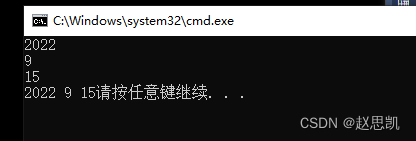
const成员
- void TestDate2()
- {
- const Date d1(2022, 9, 10);
- d1.Print();
- }
- int main()
- {
- TestDate2();
- return 0;
- }
我们发现,用const修饰的对象无法调用Print函数:
- void Print()
- {
- cout << _year << "/" << _month << "/" << _day << endl;
- }
原因如下:

在我们的Print函数中,有一个隐藏的this指针,该指针的类型是Date*,const用来修饰this,防止对this本身进行修改。
而const修饰的是d2,我们传参的时候传递的也是d2,d2用const修饰是只读的,而对于this,我们却可以访问this指向的数据。
更简单的理解:

把d2的地址传递给this,发生了权限的扩大。
我们如何避免这种问题呢?
我们可以后置const

后置const表示把this的类型由Date*this修改为const Date*this的形式。
- void TestDate2()
- {
- const Date d1(2022, 9, 10);
- d1.Print();
- Date d2(2022, 9, 11);
- d2.Print();
- }
- int main()
- {
- TestDate2();
- return 0;
- }
并且对于普通的对象也可以调用print函数,因为权限的缩小是不受限制的。
我们再举一个例子:

同样属于权限的放大,我们后置const。
凡是函数内部没有改变成员变量的,这些成员函数的声明和定义都要加上const修饰。
取地址重载:
- Date*operator&()
- {
- return this;
- }
- void TestDate2()
- {
- const Date d1(2022, 9, 10);
- d1.Print();
- Date d2(2022, 9, 11);
- d2.Print();
- cout << &d2 << endl;
- }
- int main()
- {
- TestDate2();
- return 0;
- }
这里的取地址相当于调用取地址重载函数:

const修饰的取地址重载:
- const Date*operator&() const
- {
- return this;
- }
对于const类型的对象,我们调用该函数。
- void TestDate2()
- {
- const Date d1(2022, 9, 10);
- d1.Print();
- Date d2(2022, 9, 11);
- d2.Print();
- cout << &d2 << endl;
- cout << &d1 << endl;
- }
- int main()
- {
- TestDate2();
- return 0;
- }
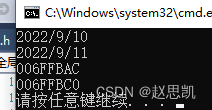
这两个函数,我们即使不写,编译器也会自动生成:
- void TestDate2()
- {
- const Date d1(2022, 9, 10);
- d1.Print();
- Date d2(2022, 9, 11);
- d2.Print();
- cout << &d2 << endl;
- cout << &d1 << endl;
- }
- int main()
- {
- TestDate2();
- return 0;
- }
我们注释掉取地址重载函数进行运行:

我们如何使用取地址重载呢?
假如我们规定,在日期类中不能使用取地址,我们可以这样写:
- Date*operator&()
- {
- return nullptr;
- }
- const Date*operator&() const
- {
- return nullptr;
- }
初始化列表

我们可以在构造函数中使用初始化列表,构造函数可以什么都不用写(针对的是日期类)
写一个栈类的初始化列表:
- Stack(int capacity=4)
- :_a(((int*)malloc(sizeof(int)*_capacity)))
- , _capacity(capacity)
- , _top(0)
- {
- if (_a == nullptr)
- {
- perror("malloc fail");
- exit(-1);
- }
- memset(_a, 0, sizeof(int)*capacity);
- }
也可以这样写:
- Stack(int capacity=4)
- : _capacity(capacity)
- , _top(0)
- {
- _a = ((int*)malloc(sizeof(int)*_capacity));
- if (_a == nullptr)
- {
- perror("malloc fail");
- exit(-1);
- }
- memset(_a, 0, sizeof(int)*capacity);
- }
所以初始化列表和函数体内初始化可以混着一起使用。
为什么要使用初始化列表:
- class B
- {
- public:
- B()
- {
- _n = 10;
- }
- private:
- const int _n;
- };
- int main()
- {
- B b;
- return 0;
- }
_n是cons类型的对象,我们知道const类型的对象只能在定义的时候初始化,我们的构造函数是无法对_n进行修改的。
const修饰的对象定义的时候必须初始化。

在这里是_n的声明,创建对象时才会定义。

这里是定义,是整体定义,我们无法对类内的一些const修饰的对象定义。
对象的每一个成员变量是在初始化列表时定义的。
我们可以用初始化列表来定义const修饰的成员变量:
- B()
- :_n(10)
- {
- ;
- }
每一个成员变量都会走初始化列表,就算没有显示,也会走。
- class B
- {
- public:
- B()
- :_n(10)
- {
- ;
- }
- private:
- const int _n;
- int _m;
- };
这里的_m也会走初始化列表:
如果我们没有在初始化列表中显示的写,对于内置类型,默认是随机值,对于自定义类型调用其默认构造。
对于这个随机值,c++打了一个补丁:

我们可以在成员变量的声明位置给缺省值。
这个缺省值是在初始化列表中使用的,假如我们的初始化列表没有显示写成员变量,就用缺省值。

总结:

- class A
- {
- public:
- A(int a)
- {
- ;
- }
- private:
- int _aa;
- };
- class B
- {
- public:
- B()
- :_n(10)
- , _m(2)
- {
- ;
- }
- private:
- const int _n;
- int _m=1;
- A _a;
- };
- int main()
- {
- B b;
- return 0;
- }
_a走初始化列表时,_a是自定义类型,对于自定义类型调用默认构造,因为A类没有默认构造,所以报错。
有两种方法解决:
1:注释掉A的构造函数,使用系统给的默认构造:

这时候的_aa是随机值。
方法2:
- class A
- {
- public:
- A(int a)
- {
- ;
- }
- private:
- int _aa;
- };
- class B
- {
- public:
- B()
- :_n(10)
- , _m(2)
- , _a(11)
- {
- ;
- }
- private:
- const int _n;
- int _m=1;
- A _a;
- };
- int main()
- {
- B b;
- return 0;
- }
我们可以在初始化列表给_a一个值,相当于调用_a的构造函数。
再举一个例子:
- class MyQueue
- {
- public:
- MyQueue()
- {
- }
- void push(int x)
- {
- _pushST.Push(x);
- }
- private:
- Stack _pushST;
- Stack _popST;
- size_t _size = 0;
- };
- int main()
- {
- MyQueue m1;
- return 0;
- }
这样写不会报错:对于自定义类型Stack,调用其默认构造,对于内置类型我们有缺省值,就给缺省值0.
当我们把栈的函数写成是非默认构造就会报错。

引用也必须在初始化列表初始化
- class B
- {
- public:
- B()
- :_n(10)
- , _m(2)
- , b(_m)
- {
- ;
- }
- private:
- const int _n;
- int _m=1;
- int&b;
- };
- //class MyQueue
- //{
- //public:
- // MyQueue()
- // {
- // }
- // void push(int x)
- // {
- // _pushST.Push(x);
- // }
- //private:
- // Stack _pushST;
- // Stack _popST;
- // size_t _size = 0;
- //};
- int main()
- {
- //MyQueue m1;
- B b;
- return 0;
- }
初始化顺序

- class A
- {
- public:
- A(int a)
- :_a1(a)
- , _a2(_a1)
- {
- }
- void Print()
- {
- cout << a1 << "" << a2 << endl;
- }
- private:
- int _a2;
- int _a1;
- };
- int main()
- {
- A aa(1);
- aa.Print();
- }
初始化顺序是按照成员变量的声明顺序的:
先对_a2进行定义,_a1还不存在,所以报错原因是编译不通过。
-
相关阅读:
USACO 2020 December Contest, Silver
手写RPC框架(六)整合Netty
kubernetes Service详解
23年下半年软考中级软件设计师备考攻略(含报名时间)
分布式系统中的相关概念
华为云云耀云服务器L实例评测|企业项目最佳实践之压测 (十一)
动手学深度学习——Windows下的环境安装流程(一步一步安装,图文并配)
maven环境变量,安装源,本地仓库配置
生物通路数据库收录1600+整合的经典通路
喜报|百华鞋业成功入选2022 年临沂市内外贸产品“三同”企业名单
- 原文地址:https://blog.csdn.net/qq_66581313/article/details/132897061
