1 环境准备
demo 地址:learn-mybatis · Sean/spring-cloud-alibaba - 码云(gitee.com)
1.1 搭建 MyBatis-Plus 环境
- 创建 maven springboot 工程
- 导入依赖:web 启动器、jdbc、、java 连接 mysql、Lombok、druid 连接池启动器、mybatis-plus 启动器
- 编写 yaml 配置文件,配置 druid 数据源、mybatis-plus
注意要点:
- mapper 接口继承 BaseMapper<实体类>
- service 接口继承 IService<实体类>
- service 接口实现类继承 ServiceImpl
实现 service 接口
1.2 批量插入测试接口
- MyBatis 批量插入接口
@GetMapping("/mybatis-batch-insert") public String mybatisBatchInsert(){ // 开始时间 long stime = System.currentTimeMillis(); // 批量插入 orderService.mySaveBatch(list); // 结束时间 long etime = System.currentTimeMillis(); return "mybatis 批量插入 1w 条数据的时间: " + (etime - stime) / 1000.0 + "秒"; }标签拼接 sql 进行插入 - Mybatis-Plus 批量插入接口
@GetMapping("/mybatis-batch-insert")
public String mybatisBatchInsert(){
    // 开始时间
    long stime = System.currentTimeMillis();
    // 批量插入
    orderService.mySaveBatch(list);
    // 结束时间
    long etime = System.currentTimeMillis();
    return "mybatis 批量插入 1w 条数据的时间: " + (etime - stime) / 1000.0 + "秒";
}
1.3 批量更新测试接口
-
MyBatis 批量更新接口
@GetMapping("/mybatis-batch-update")
public String mybatisBatchUpdate(){
    long stime = System.currentTimeMillis();
    orderService.myUpdateBatchById(updateList);
    long etime = System.currentTimeMillis();
    return "mybatis 批量更新 1w 条数据的时间: " + (etime - stime) / 1000.0 + "秒";
}
MyBatis 的批量插入是调用 mapper 的批量更新接口,使用
标签拼接 sql 进行更新,是将多个更新语句拼接在同一个 mapper 接口中,需要在数据库连接 url 添加 allowMultiQueries=true 开启多查询 -
MyBatis-Plus 批量更新接口
@GetMapping("/mybatis-plus-batch-update")
public String mybatisPlusBatchUpdate(){
    long stime = System.currentTimeMillis();
    orderService.updateBatchById(updateList);
    long etime = System.currentTimeMillis();
    return "mybatis plus 批量更新 1w 条数据的时间: " + (etime - stime) / 1000.0 + "秒";
}
MyBatis -Plus 的批量更新是调用 mybatis-plus 的 IService 接口的 updateBatchById 进行批量更新
2. 性能对比
经过预热,尽量避免了缓存的影响。
2.1 批量插入性能对比

数据量:1w 条数据,每条数据 4 个字段
测试结果:
- MyBatis:5 次运行平均耗时:0.3212 秒
- MyBatis-Plus:5次运行平均耗时:1.35 秒
- MyBatis-Plus(开启批处理):5次运行平均耗时:0.2424 秒
2.2 批量更新性能对比
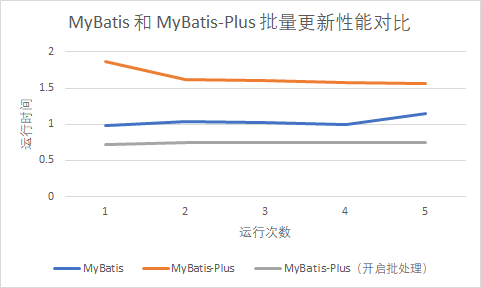
数据量:1w 条数据,每条数据更新 4 个字段
测试结果:
- MyBatis:5 次运行平均耗时:1.0378 秒
- MyBatis-Plus:5次运行平均耗时:1.6448 秒
- MyBatis-Plus(开启批处理):5次运行平均耗时:0.743 秒
3. 原理探究
3.1 批量插入
3.1.1 MyBatis
MyBatis 的批量插入 xml
<insert id="mySaveBatch">
    insert into order_table(id, product_id, total_amount, status) values
    <foreach collection="list" separator="," item="item">
        (#{item.id}, #{item.productId}, #{item.totalAmount}, #{item.status})
    foreach>
insert>
通过
insert into order_table(id, product_id, total_amount, status) values(1, 2. 2.0, 1),(2, 2, 2.0, 1);
3.1.2 MyBatis-Plus
MyBatis-Plus 的批量插入本质采用 for 遍历每条数据依次插入,但使用了批处理优化,默认是每 1000 条数据,刷新一次 statement 提交到数据库,执行插入操作。
注意:批处理需要在数据库连接中添加 rewriteBatchedStatements=true 否则 jdbc 驱动在默认情况下会无视executeBatch() 语句
源码如下:
@Transactional(rollbackFor = Exception.class)   // 开启事务
@Override
public boolean saveBatch(Collection entityList, int batchSize) {
    String sqlStatement = getSqlStatement(SqlMethod.INSERT_ONE);    // 获得插入 statement
    // 执行批处理操作
    // 参数是:待插入集合,批次大小(默认1000),函数式接口 accept
    return executeBatch(entityList, batchSize, (sqlSession, entity) ->  sqlSession.insert(sqlStatement, entity));
}
public static  boolean executeBatch(Class entityClass, Log log, Collection list, int batchSize, BiConsumer consumer) {
    Assert.isFalse(batchSize < 1, "batchSize must not be less than one");
    return !CollectionUtils.isEmpty(list) && executeBatch(entityClass, log, sqlSession -> {
        int size = list.size();
        int idxLimit = Math.min(batchSize, size);
        int i = 1;
        // 遍历插入
        for (E element : list) {
            // 调用 sqlSession.insert(sqlStatement, entity));
            // 对元素执行插入操作,但此时数据库还没真正执行插入语句
            consumer.accept(sqlSession, element);
            // 计数达到 1000 或者 集合结束
            if (i == idxLimit) {
                 // 刷新 statement 提交批处理语句,数据库真正执行 SQL
                sqlSession.flushStatements();
                idxLimit = Math.min(idxLimit + batchSize, size);
            }
            i++;
        }
    });
}
3.2 批量更新
3.2.1 MyBatis
MyBatis 的批量更新 xml
<update id="myUpdateBatchById">
    <foreach collection="list" item="item" index="index" open="" close="" separator=";">
        update order_table
        <set>
            product_id = #{item.productId},
            total_amount = #{item.totalAmount},
            status = #{item.status}
        set>
        where id = #{item.id}
    foreach>
update>
通过
update order_table set product_id = 1, total_amount = 2, status = 1 where id = 1;
update order_table set product_id = 1, total_amount = 2, status = 1 where id = 2;
3.1.2 MyBatis-Plus
MyBatis-Plus 批量更新的原理基本和其批量插入的原理一致,都是调用 executeBatch 执行批处理操作。
4. 优缺点分析
4.1 批量插入
对于批量插入,MyBatis 拼接 SQL 的写法比 MyBatis-Plus 的批量插入方法有明显更高的性能。
但在开启批处理优化之后,MyBatis-Plus 的方法性能更高了。
MyBatis:
- 优点:性能较高
- 缺点:在处理大数据量(SQL 语句大于 64MB 时)会报错,MySQL 8.0.33 默认最大 SQL 大小为 64MB
也要考虑内存异常等问题。
MyBatisPlus:
- 优点:分组提交,适用于大数据量的处理
- 缺点:单条插入语句执行,性能较低
总结:
- 没开启批处理时:10w 数据量以下建议使用 MyBatis、10w 数据量以上建议使用 MyBatis-Plus
- 开启批处理时:建议使用 MyBatis-Plus
4.2 批量更新
对于批量更新,MyBatis 拼接 SQL 的写法与 MyBatis-Plus 的批量更新方法无明显的性能差别.
大于大数据量,拼接写法甚至容易出现内存耗尽等问题,相比之下 MyBatis-Plus 的方法更优。
总结:建议使用 MyBatis-Plus