-
Java学习路线(13)——Collection集合类:List集合与Set集合
一、集合类体系结构
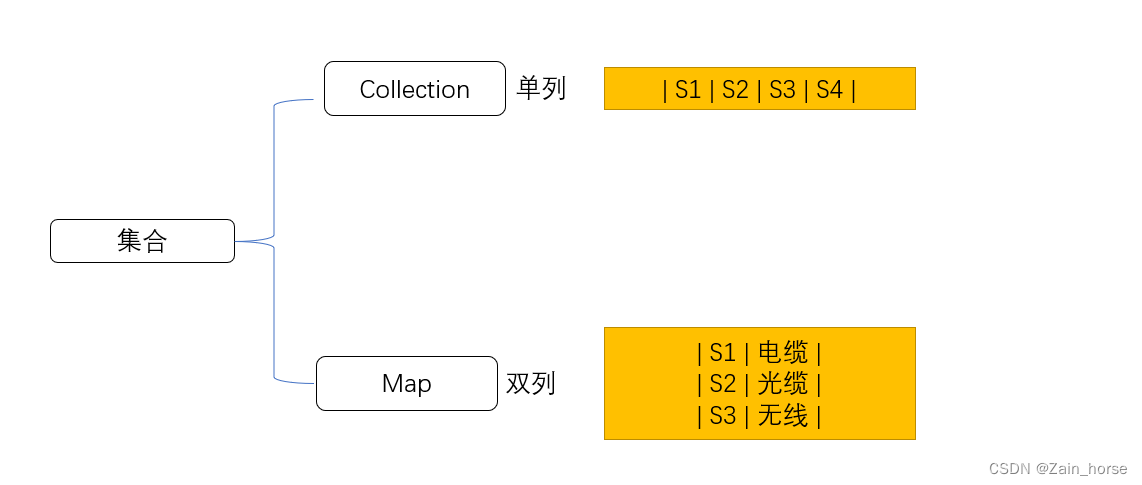
二、部分Collection类型对象
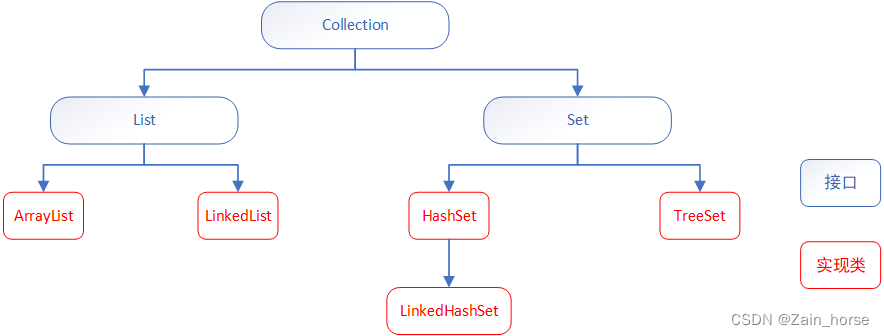
Collection集合特点-
List系列集合是有序、可重复、有索引。
- ArrayList:有序、可重复、有索引
- LinkedList:有序、可重复、有索引
-
Set系列集合是无序、不重复、无索引。
- HashSet:无序、不重复、无索引
- LinkedHashSet:有序、不重复、无索引
- TreeSet:按照大小默认升序、不重复、无索引
约束存储数据
- 泛型约束: 集合是支持任意类型进行存储的。
- 引用类型约束: 集合不支持基本类型,但支持引用数据类型。
三、Collection常用API
方法 说明 boolean add(E e) 添加指定数据并返回添加结果 void clear() 清空数据 boolean isEmpty() 判断数据为空 int size() 获取集合大小 boolean contains(Object o) 判断集合是否包含某个元素 boolean remove(E e) 删除集合中某个元素默认删除第一个 Object[] toArray() 集合转对象数组 拓展API
方法 说明 Collection addAll(Collection c) 合并
四、Collection遍历方式
1、迭代器(Iterator)
获取迭代器
方法 说明 Iterator iterator() 返回迭代器对象,默认指向0索引 Iterator中常用方法
方法 说明 boolean hasNext() 询问当前位置是否有元素 E next() 获取当前元素,并向下移动,注意越界(NoSuchElementException) 示例
/*1、创建集合对象*/ Collection<String> collection = new ArrayList<>(); collection.add("我"); collection.add("爱"); collection.add("中"); collection.add("国"); collection.add("!"); /*2、获取迭代器*/ Iterator<String> integer = collection.iterator(); /*循环遍历迭代器*/ while(integer.hasNext()){ //判断有没有值 System.out.print(integer.next()); //获取值并下移 } /*打印结果*/ 我爱中国!- 1
- 2
- 3
- 4
- 5
- 6
- 7
- 8
- 9
- 10
- 11
- 12
- 13
- 14
- 15
- 16
- 17
- 18
2、foreach
foreach实际上是重写了迭代器进行遍历。格式:
for(数据类型 element : 数组/集合){ 循环体 }- 1
- 2
- 3
示例
/*1、创建集合对象*/ Collection<String> collection = new ArrayList<>(); collection.add("我"); collection.add("爱"); collection.add("中"); collection.add("国"); collection.add("!"); /*2、foreach遍历*/ for (String str : collection) { System.out.print(str); } /*打印结果*/ 我爱中国!- 1
- 2
- 3
- 4
- 5
- 6
- 7
- 8
- 9
- 10
- 11
- 12
- 13
- 14
- 15
3、lambda
Collection类提供了一个叫做 forEach() 的方法进行遍历,该方法采用的是匿名类进行重写。/*1、创建集合对象*/ Collection<String> collection = new ArrayList<>(); collection.add("我"); collection.add("爱"); collection.add("中"); collection.add("国"); collection.add("!"); /*2、forEach()遍历*/ //System.out::print 是将当前元素进行引用打印 collection.forEach(System.out::print); /*打印结果*/ 我爱中国!- 1
- 2
- 3
- 4
- 5
- 6
- 7
- 8
- 9
- 10
- 11
- 12
- 13
- 14
五、常见数据结构
概念: 数据结构是计算机底层存储、组织数据的方式,合适的数据结构能提高运行效率和存储效率。
常见结构
1、栈
特点: 后进先出,先进后出。2、队列
特点: 先进先出,后进后出
三种队列: 单进单出队列,双进单出队列,双进双出队列3、数组
存储特点: 一块内存连续的空间。
操作特点:- 查询速度快: 通过地址值和索引定位。
- 删除速率低: 需要移动大量元素。
- 添加速率低: 需要移动大量元素。
4、链表
存储特点: 内存中不连续,每个节点包含数据和下一个元素地址。
操作特点:- 查询速度慢: 因为内存不连续,所以需要遍历每一个元素。
- 删除速率高: 通过指针指向更变即可完成删除。
- 添加相对速率高: 因为查询慢,所以速率较低,高效添加是通过指针指向更变即可完成删除。
两种链表: 单向链表(数据+下一地址),双向链表(上一地址+数据+下一地址)
5、二叉树
存储特点: 内存不连续,每个节点包含父节点地址,左右节点地址,数据值。
结构特点:- 只能有一个根节点,每个节点最多支持2个直接子节点。
- 节点的度: 节点拥有的子树个数,二叉树的度不大于2。
- 叶子结点: 度为0的节点,也称为终端节点。
- 高度: 叶子结点高度为1,叶子结点的父节点高度为2,…,根节点高度最高。
- 层: 根节点在第1层,以此类推。
- 兄弟节点: 拥有共同父节点的节点互称兄弟节点。
特殊的二叉树: 二叉排序树。
6、平衡二叉树
原则: 任意节点的左右两个子树高度差不超过1,任意节点的左右两个子树都是平衡二叉树。7、红黑树
概念: 一种自平衡的二叉排序树,1972年被称为平衡二叉B树,1978年更名为**“红黑树”**。
特点: 每一个节点可以是红或者黑,通过 “红黑规则” 进行平衡。
红黑规则- 每个节点是红色或黑色,根节点必须是黑色。
- 如果节点没有子节点或父节点,则节点对应指针属性为Nil,这些Nil视为叶节点,叶节点是黑色。
- 如果一个节点是红色,则子节点必须是黑色。
- 每个节点,从该节点到其所有后代叶节点的简单路径上,均包含相同数目的黑色节点。
六、List集合
特有方法:方法 说明 void add(int index,E element 指定位置插入元素 E remove(int index 指定位置的元素,并返回删除元素 E set(int index,E element 修改指定位置的元素,并返回修改元素 E get(int index 获取指定位置的元素 List实现类的底层原理
1、ArrayList底层原理:
- 底层基于数组实现,根据索引定位元素,增删需要做大量元素的移位操作。
- 第一次创建集合并添加元素时,默认创建长度为10的数组。
- 当数组满元素时,自动扩容二分之一。
2、LinkedList底层原理
- 基于双链表实现,查询速度慢,增删首尾元素快(最适合实现栈与队列结构)。
- 独有方法
方法 说明 void addFirst(E e) 首位插入指定元素 void addLast(E e) 末位插入指定元素 E getFirst() 获取首位元素 E getLast() 获取末位元素 E removeFirst() 删除首位元素 E removeLast() 删除末位元素 E push() 压栈/入栈 E pop() 弹栈/出栈 E offerLast() 入队 E offerFrist() 出队
补充知识
1、集合的并发修改异常
问题的出现: 当我们从集合中查找某个元素并删除时,可能会出现并发修改异常。
问题出现的原因: 当我们在循环遍历时,因为索引改变而产生跳跃查询的情况。
解决方案:- 使用迭代器遍历,删除方法使用迭代器删除方法 iterator.remove(); 删除当前元素并不下移。(推荐使用)
- 使用倒着for循环。
2、深入泛型
(1)泛型定义的位置
- 类的后面。【class ArrayList】
- 方法声明。【public void get(T t)】
- 接口声明。【interface Collection】
(2)自定义泛型类
- 格式: 【修饰符 class 类名<泛型变量> { … }】
public class MyArrayList<T>{ }- 1
- 泛型变量标识
常见标识:T、E、T、K、V
-
作用: 编译阶段指定数据类型。
-
原理: 出现泛型变量的地方全部替换成传输的真实数据类型。
-
示例
class Main{ public static void main(String[] args) { MyArrayList<String> mal = new MyArrayList<>(); mal.add("String"); } } public class MyArrayList<E> { public void add(E element){ } public void remove(E element){ } }- 1
- 2
- 3
- 4
- 5
- 6
- 7
- 8
- 9
- 10
- 11
- 12
- 13
- 14
- 15
(3)自定义泛型方法
- 概念: 定义方法时同时定义泛型的方法。
- 格式:
修饰符 <泛型变量> 返回值 方法名称(参数列表){ ... }- 1
- 作用: 方法中可以使用泛型接收一切实际类型的参数,方法更具备通用性。
- 示例:
class Main{ public static void main(String[] args) { String[] names = {"x1","x2","x3"}; printArray(names); System.out.println("——————————"); Integer[] ages = {10,11,12}; printArray(ages); } public static <T> void printArray(T[] arr){ StringBuilder builder = new StringBuilder("["); Iterator<T> iterator = Arrays.stream(arr).iterator(); while(iterator.hasNext()){ builder.append(iterator.next()); builder.append(iterator.hasNext()?", ":""); } builder.append("]"); System.out.println(builder.toString()); } } /*输出结果*/ [x1, x2, x3] —————————— [10, 11, 12]- 1
- 2
- 3
- 4
- 5
- 6
- 7
- 8
- 9
- 10
- 11
- 12
- 13
- 14
- 15
- 16
- 17
- 18
- 19
- 20
- 21
- 22
- 23
- 24
- 25
- 26
(4)自定义泛型接口
- 概念: 使用泛型定义的接口。
- 格式:
修饰符 interface 接口名称<泛型变量>{ }- 1
- 作用: 泛型接口让实现类选择当前功能需要操作的数据类型。
- 示例:
interface Info<E>{ void add(E element); void removeByID(int id); E queryByID(int id); void update(int id,E element); } class Student implements Info<Student>{ @Override public void add(Student element) { } @Override public void removeByID(int id) { } @Override public Student queryByID(int id) { return null; } @Override public void update(int id, Student element) { } }- 1
- 2
- 3
- 4
- 5
- 6
- 7
- 8
- 9
- 10
- 11
- 12
- 13
- 14
- 15
- 16
- 17
- 18
- 19
- 20
- 21
- 22
- 23
- 24
- 25
- 26
- 27
- 28
- 29
- 30
- 31
(5)通配符:?
- 概念: ?可以在“使用泛型”时代表一切类型,而E,T,K,V在定义泛型时使用。
- 泛型的上下限:
【? extends Car】?必须是Car或者其子类,表示泛型上限
【? super Car】?必须是Car或者其父类,表示泛型下限 - 示例
/** *使用场景:当我们需要传入多类型的引用集合时使用 */ /*? extends Car使用*/ /*1、创建Car类以及子类*/ class Car{} class BMW extends Car{} class BENZ extends Car{} /*2、运行方法,这里的表示引用类型是Car或是其子类*/ public static void go(ArrayList<? extends Car> cars){} /*3、使用方法*/ public static void main(String[] args){ ArrayList<BMW> bmw = new ArrayList<>(); bmw.add(new BMW()); bmw.add(new BMW()); bmw.add(new BMW()); ArrayList<BENZ> benzs= new ArrayList<>(); benzs.add(new BENZ()); benzs.add(new BENZ()); benzs.add(new BENZ()); go(bmw); go(benzs); }- 1
- 2
- 3
- 4
- 5
- 6
- 7
- 8
- 9
- 10
- 11
- 12
- 13
- 14
- 15
- 16
- 17
- 18
- 19
- 20
- 21
- 22
- 23
- 24
- 25
- 26
- 27
七、Set集合体系
体系特点
- 无序: 存取顺序不一致
- 不重复: 可以去重
- 无索引: 没有带索引的方法
实现类特点
- HashSet: 无序、不重复、无索引
- LinkedHashSet: 有序、不重复、无索引
- TreeSet: 排序、不重复、无索引
实现类详情
1、HashSet(1)元素无序的底层原理:哈希表
hash表的概念: 是一种对于增删改查数据性能较好的结构。
hash表的组成: JDK8之前使用数组+链表组成;JDK8之后使用数组+链表+红黑树
JDK7版本的HashSet的底层原理解析:数组+链表+Hash算法
- 1、优先创建一个默认长度为16,默认加载扩容因子为0.75的数组的数组,数组名table。
- 2、根据hash值跟数组长度求余计算存入位置(Hash算法)。
- 3、当发生冲突时调用equals()比较。若已知则不存;若不一致则存储数组。
- JDK7新元素占据老元素的位置,再将老元素挂载到新元素节点上。
- JDK8新元素直接挂载到老元素节点上。
- 4、当数组存满到16*0.75=12时,就自动扩容,每次扩容原先的两倍。
JDK8版本的HashSet原理解析:数组+链表+红黑树
两者区别在于由于当挂载链表长度超过8时,自动转换成红黑树。(2)要理解hash表,必须先理解hash值。
hash值的概念: 是JDK根据对象的地址,按照某种自定义或预设规则计算的int类型数值。
获取hash值的方法: Object类API【int hashCode();】-> 返回对象的hash值
对象hash值特点
- 同一个对象多次调用hashCode()返回相同的hash值。
- 默认情况下,不同对象的hash值不同。
示例
/*1、创建对象获取hash值*/ String str = "石头人"; System.out.println(str.hashCode()); String integerV = "李雷"; System.out.println(integerV.hashCode()); /*打印结果*/ 30237497 858473- 1
- 2
- 3
- 4
- 5
- 6
- 7
- 8
- 9
(3)HashSet去重底层原理: Hash算法一致节点挂载。
注意: 当我们需要去重对象集合时,需要在对象中重写hashCode()以及equals()
重写的hashCode()和equals
@Override public boolean equals(Object o){ if(this == o) return true; //判断是否为当前对象 if(o == null || getClass() != o.getClass()) return true; //判断空值以及对象类型是否相同。 类型 变量名 = (类型)o; return 属性比较 && Objects.equals(xx,o.xx)。 } @Override public int hashCode(){ return Objects.hash(你比较的参数列表); }- 1
- 2
- 3
- 4
- 5
- 6
- 7
- 8
- 9
- 10
- 11
- 12
- 13
2、LinkedHashSet
(1)特点:有序、不重复、无索引
(2)有序特性:保证存储和取出的元素顺序一致。
(3)存储结构:Hash表
(4)有序原理:数据依次进入,每一个数据都会与前一个数据建立双向链表机制记录顺序。3、TreeSet集合
(1)特点:可排序、不重复、无索引
(2)可排序特性:按照元素大小默认升序排列。
(3)存储结构:红黑树
(4)默认排序规则:- 数值类型: Integer,Double,官方默认按照大小升序排序。
- 字符串类型: 默认按照首字符的ASCII码升序排序。
- 自定义类型: 采用自定义排序规则。
(5)示例
/*数值类型排序*/ Set<Integer> integerSet = new TreeSet<>(); integerSet.add(3); integerSet.add(1); integerSet.add(6); integerSet.add(8); integerSet.add(0); integerSet.add(2); System.out.println(integerSet); /*字符串类型排序*/ Set<String> stringSet = new TreeSet<>(); stringSet.add("Java"); stringSet.add("MySQL"); stringSet.add("PHP"); stringSet.add("C++"); stringSet.add("Golang"); stringSet.add("JavaScript"); System.out.println(stringSet); /*打印结果*/ [0, 1, 2, 3, 6, 8] [C++, Golang, Java, JavaScript, MySQL, PHP] /*自定义类型排序*/ //方法一:Comparable接口重写compareTo() public class AppleTemp { public static void main(String[] args) { Set<Apple> set = new TreeSet<>(); set.add(new Apple("绿苹果",82.2,50)); set.add(new Apple("黄苹果",54.1,20)); set.add(new Apple("金苹果",10.2,11)); set.add(new Apple("青苹果",100.0,1)); System.out.println(set); } } class Apple implements Comparable<Apple>{ private String name; private double weight; private int count; public Apple() { } public Apple(String name, double weight, int count) { this.name = name; this.weight = weight; this.count = count; } public String getName() { return name; } public void setName(String name) { this.name = name; } public double getWeight() { return weight; } public void setWeight(double weight) { this.weight = weight; } public int getCount() { return count; } public void setCount(int count) { this.count = count; } @Override public int compareTo(Apple o) { return this.getName().compareTo(o.getName()); } @Override public String toString() { return "Apple{" + "name='" + name + '\'' + ", weight=" + weight + ", count=" + count + '}'; } } //方法二:TreeSet集合有参构造器,设置Comparator接口对应的比较器对象。(优先使用) public class AppleTemp { public static void main(String[] args) { Set<Apple> set = new TreeSet<>(Comparator.comparing(Apple::getName)); set.add(new Apple("绿苹果",82.2,50)); set.add(new Apple("黄苹果",54.1,20)); set.add(new Apple("金苹果",10.2,11)); set.add(new Apple("青苹果",100.0,1)); System.out.println(set); } } class Apple{ private String name; private double weight; private int count; public Apple() { } public Apple(String name, double weight, int count) { this.name = name; this.weight = weight; this.count = count; } public String getName() { return name; } public void setName(String name) { this.name = name; } public double getWeight() { return weight; } public void setWeight(double weight) { this.weight = weight; } public int getCount() { return count; } public void setCount(int count) { this.count = count; } @Override public String toString() { return "Apple{" + "name='" + name + '\'' + ", weight=" + weight + ", count=" + count + '}'; } } /*打印结果*/ [Apple{name='绿苹果', weight=82.2, count=50}, Apple{name='金苹果', weight=10.2, count=11}, Apple{name='青苹果', weight=100.0, count=1}, Apple{name='黄苹果', weight=54.1, count=20}]- 1
- 2
- 3
- 4
- 5
- 6
- 7
- 8
- 9
- 10
- 11
- 12
- 13
- 14
- 15
- 16
- 17
- 18
- 19
- 20
- 21
- 22
- 23
- 24
- 25
- 26
- 27
- 28
- 29
- 30
- 31
- 32
- 33
- 34
- 35
- 36
- 37
- 38
- 39
- 40
- 41
- 42
- 43
- 44
- 45
- 46
- 47
- 48
- 49
- 50
- 51
- 52
- 53
- 54
- 55
- 56
- 57
- 58
- 59
- 60
- 61
- 62
- 63
- 64
- 65
- 66
- 67
- 68
- 69
- 70
- 71
- 72
- 73
- 74
- 75
- 76
- 77
- 78
- 79
- 80
- 81
- 82
- 83
- 84
- 85
- 86
- 87
- 88
- 89
- 90
- 91
- 92
- 93
- 94
- 95
- 96
- 97
- 98
- 99
- 100
- 101
- 102
- 103
- 104
- 105
- 106
- 107
- 108
- 109
- 110
- 111
- 112
- 113
- 114
- 115
- 116
- 117
- 118
- 119
- 120
- 121
- 122
- 123
- 124
- 125
- 126
- 127
- 128
- 129
- 130
- 131
- 132
- 133
- 134
- 135
- 136
- 137
- 138
- 139
- 140
- 141
- 142
- 143
- 144
- 145
- 146
- 147
- 148
- 149
- 150
- 151
- 152
- 153
- 154
- 155
补充知识
1、可变参数概念: 可变参数用在形参中接收多个数据。
格式:
/*数据类型... 参数名称*/ public static void sum(int... num);- 1
- 2
作用:
- 1、传输参数灵活方便。可以不传参,也可以传输1个或者多个,也可以传输一个数组。
- 2、可变参数在方法内部按照数组进行使用。
注意事项
- 1、 一个形参列表中可变参数只能有一个。
- 2、可变参数必须放在形参列表的最后。
2、Collections操作类
概念: java.utils.Collections是集合工具类
常用API
方法 说明 static boolean addAll(Collection c,T… elements) 批量添加元素 static void shuffle(List list) 打乱集合顺序 static void sort(List list) 集合排序 static void sort(List list,Comparator c) 按指定规则排序 -
-
相关阅读:
高德地图根据标记点显示合适的地图级别
火山引擎、腾讯们,看透了大模型这场“猫鼠游戏”
奇思妙想-可以通过图片闻见味道的设计
HiveServer2负载均衡
static关键字和final关键字
spark相关网站
ArcGIS笔记9_数据源缺少空间参考信息?如何定义坐标系?
c语言小课设--通讯录(动态内存管理)
配置CLion进行嵌入式STM32的HAL库开发
MybatisPlus 快速开发
- 原文地址:https://blog.csdn.net/Zain_horse/article/details/130895432

- 最新文章
-
【FHE】我们如何实现同态加密推理(八):SiLU 的密文化——两条路径,和一个 8 字节的开关
SQLcl 中 c/old/new 替换变量为何失效?先定位再替换
不让模型写作文,直接从它脑子里读答案:Jev 决策在 .NET 的两条路线
Halo插件:支持GitHub的图床附件策略
电视投屏界的“一股清流”!SimpleTVCast 6.0.0-beta 抢先体验:无需TV端App,界面大换血!✨
华三VXLAN集中式网关实战指南:Spine多活网关 + 双活接入(M-LAG)
软件更好写之后口碑会更重要
大 O、大 Omega、大 Theta 的区别,O(n) 复杂度是什么意思
Java标签跳转:一个鲜为人知但却很实用的小技巧
多智能体系统论文速读