-
Java多线程之常用的相关方法总结(线程停止、线程休眠、线程礼让、线程优先级、守护线程等等)
一、线程方法
setPriority(int newPriority) 更改线程的优先级 static void sleep(long millis) 在指定的毫秒数内让当前正在执行的线程休眠 void join() 等待该线程终止 static void yield() 暂停当前正在执行的线程对象,并执行其他线程 void interrupt() 中断线程,别用这个方式 boolean isAlive() 测试线程是否处于活动状态- 1
- 2
- 3
- 4
- 5
- 6
二、线程停止
1、思路
不推荐使用JDK提供的stop( )、destroy( )方法
推荐线程自己停止,使用一个标志位进行终止变量,当flag = false,则终止线程运行。2、样例
package com.example.multithreading.demo5; //1、建议线程正常停止 ----> 利用次数,不建议死循环 //2、建议使用标志位 ----> 设置一个标志位 //3、不要使用stop或者destroy等过时,或者JDK不建议使用的方法 public class StopTest implements Runnable { // 1、设置一个标识位 private boolean flag = true; @Override public void run() { int i = 0; while (flag) { System.out.println("run Thread " + i++); } } // 2、设置一个公开的方法停止线程,转换标志位 public void stop() { this.flag = false; } public static void main(String[] args) { StopTest stopTest = new StopTest(); new Thread(stopTest).start(); for (int i = 0; i < 100; i++){ System.out.println("i: " + i); if (i == 90){ // 调用stop方法切换标志位,让线程停止 stopTest.stop(); System.out.println("线程该停止了"); } } } }- 1
- 2
- 3
- 4
- 5
- 6
- 7
- 8
- 9
- 10
- 11
- 12
- 13
- 14
- 15
- 16
- 17
- 18
- 19
- 20
- 21
- 22
- 23
- 24
- 25
- 26
- 27
- 28
- 29
- 30
- 31
- 32
- 33
- 34
- 35
- 36
- 37
- 38
- 39
结果

三、线程休眠(sleep)
1、思路
sleep (时间)指定当前线程阻塞的毫秒数
sleep存在异常InterruptedException
sleep时间达到后线程进入就绪状态
sleep可以模拟网络延时,倒计时等
每一个对象都有一个锁,sleep不会释放锁2、样例
package com.example.multithreading.demo6; import java.text.SimpleDateFormat; import java.util.Date; // 模拟倒计时 public class SleepTest { public static void main(String[] args) { // 打印当前系统时间 // 获取系统当前时间 Date startTime = new Date(System.currentTimeMillis()); while(true) { try { // tenDown(); Thread.sleep(1000); System.out.println(new SimpleDateFormat("HH:mm:ss").format(startTime)); // 更新当前时间 startTime = new Date(System.currentTimeMillis()); } catch (Exception e) { e.printStackTrace(); } } } // 模拟倒计时 public static void tenDown() throws InterruptedException{ int num = 10; while(true){ Thread.sleep(1000); System.out.println(num--); if(num<=0){ break; } } } }- 1
- 2
- 3
- 4
- 5
- 6
- 7
- 8
- 9
- 10
- 11
- 12
- 13
- 14
- 15
- 16
- 17
- 18
- 19
- 20
- 21
- 22
- 23
- 24
- 25
- 26
- 27
- 28
- 29
- 30
- 31
- 32
- 33
- 34
- 35
- 36
- 37
- 38
- 39
- 40
- 41
结果

四、线程礼让(yield)
1、思路
礼让线程,让当前正在执行的线程暂停,但不阻塞
将线程从运行状态转为就绪状态
礼让使cpu重新调度,但不一定成功。2、样例
package com.example.multithreading.demo7; // 测试礼让线程 // 礼让不一定成功 public class YieldTest { public static void main(String[] args) { MyYield myYield = new MyYield(); new Thread(myYield, "a").start(); new Thread(myYield, "b").start(); } } class MyYield implements Runnable{ @Override public void run() { System.out.println(Thread.currentThread().getName() + "线程开始执行"); // 礼让 Thread.yield(); System.out.println(Thread.currentThread().getName() + "线程停止执行"); } }- 1
- 2
- 3
- 4
- 5
- 6
- 7
- 8
- 9
- 10
- 11
- 12
- 13
- 14
- 15
- 16
- 17
- 18
- 19
- 20
- 21
- 22
- 23
- 24
结果

五、线程强制执行(join)
1、思路
join合并线程,待此线程执行完后,再执行其他线程,其他线程阻塞。
2、样例
package com.example.multithreading.demo8; public class JoinTest implements Runnable { @Override public void run() { for (int i = 0; i < 5; i++) { System.out.println("线程join进来:" + i); } } public static void main(String[] args) throws InterruptedException { JoinTest joinTest = new JoinTest(); Thread thread = new Thread(joinTest); thread.start(); // 主线程 for (int i = 0; i < 15; i++) { if(i==5){ // 插队 thread.join(); } System.out.println("主线程:" + i); } } }- 1
- 2
- 3
- 4
- 5
- 6
- 7
- 8
- 9
- 10
- 11
- 12
- 13
- 14
- 15
- 16
- 17
- 18
- 19
- 20
- 21
- 22
- 23
- 24
- 25
- 26
结果

六、观测线程状态
1、相关概念
一个线程可以在给定的时间点处于一个状态。这些状态是不反映任何操作系统状态的虚拟机状态。
// 线程状态 NEW 尚未启动的线程处于此状态 RUNNABLE 在Java虚拟机中执行的线程处于此状态 BLOCKED 被阻塞等待监视器锁定的线程处于此状态 WAITING 正在等待另一个线程执行特定动作的线程处于此状态 TIMED_WAITING 正在等待另一个线程执行动作达到指定等待时间的线程处于此状态 TERMINATED 已退出的线程处于此状态- 1
- 2
- 3
- 4
- 5
- 6
- 7
- 8
- 9
- 10
- 11
- 12
- 13
2、样例
package com.example.multithreading.demo9; // 观察测试线程的状态 public class StateTest { public static void main(String[] args) throws InterruptedException { Thread thread = new Thread(() -> { for (int i = 0; i < 2; i++){ try{ Thread.sleep(1000); } catch (InterruptedException e) { e.printStackTrace(); } } System.out.println("/"); }); // 观察状态 Thread.State state = thread.getState(); System.out.println(state); // 观察启动后 thread.start(); // 启动线程 state = thread.getState(); System.out.println(state); // 只要线程不终止,就一直输出状态 while (state != Thread.State.TERMINATED){ Thread.sleep(100); // 更新线程状态 state = thread.getState(); // 输出状态 System.out.println(state); } } }- 1
- 2
- 3
- 4
- 5
- 6
- 7
- 8
- 9
- 10
- 11
- 12
- 13
- 14
- 15
- 16
- 17
- 18
- 19
- 20
- 21
- 22
- 23
- 24
- 25
- 26
- 27
- 28
- 29
- 30
- 31
- 32
- 33
- 34
- 35
- 36
- 37
- 38
结果

七、线程的优先级
1、流程
Java提供一个线程调度器来监控程序中启动后进入就绪状态的所有线程,线程调度器按照优先级决定应该调度哪个线程来执行。
线程的优先级用数字表示,范围从1~10
Thread.MIN_PRIORITY = 1;
Thread.MAX_PRIORITY = 10;
Thread.NORM_PRIORITY = 5;
使用以下方式改变或获取优先级
getPriority() .setPriority(int xxx)
优先级低只是意味着获得调度的概率低,并不是优先级低就不会被调用了(得看cpu的调度)2、样例
package com.example.multithreading.demo10; // 测试线程的优先级 public class PriorityTest { public static void main(String[] args) { // 主线程默认优先级 System.out.println(Thread.currentThread().getName() + "-->" + Thread.currentThread().getPriority()); Priority priority = new Priority(); Thread t1 = new Thread(priority); Thread t2 = new Thread(priority); Thread t3 = new Thread(priority); Thread t4 = new Thread(priority); Thread t5 = new Thread(priority); Thread t6 = new Thread(priority); // 先设置优先级,再启动 t1.start(); t2.setPriority(1); t2.start(); t3.setPriority(4); t3.start(); t4.setPriority(Thread.MAX_PRIORITY); t4.start(); t5.setPriority(8); t5.start(); t6.setPriority(7); t6.start(); } } class Priority implements Runnable{ @Override public void run() { System.out.println(Thread.currentThread().getName() + "-->" + Thread.currentThread().getPriority()); } }- 1
- 2
- 3
- 4
- 5
- 6
- 7
- 8
- 9
- 10
- 11
- 12
- 13
- 14
- 15
- 16
- 17
- 18
- 19
- 20
- 21
- 22
- 23
- 24
- 25
- 26
- 27
- 28
- 29
- 30
- 31
- 32
- 33
- 34
- 35
- 36
- 37
- 38
- 39
- 40
- 41
- 42
- 43
- 44
- 45
- 46
结果

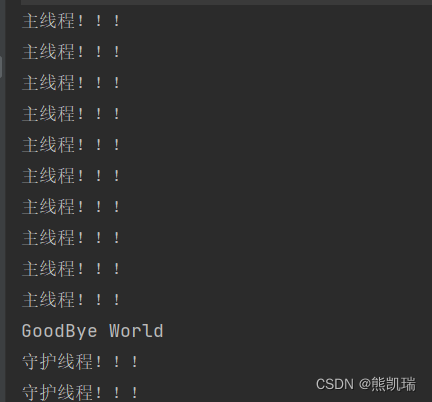
八、守护线程
1、概念
线程分为用户线程和守护线程
虚拟机必须确保用户线程执行完毕
虚拟机不用等待守护线程执行完毕2、样例
package com.example.multithreading.demo11_Daemon; public class DaemonTest { public static void main(String[] args) { God god = new God(); People people = new People(); Thread thread = new Thread(god); // 默认是false表示是用户线程,现在为true,表示是守护线程 thread.setDaemon(true); // 守护线程启动 thread.start(); // 用户线程启动 new Thread(people).start(); } } class God implements Runnable{ @Override public void run() { while (true) { System.out.println("守护线程!!!"); } } } class People implements Runnable{ @Override public void run() { for (int i = 0; i < 10; i++){ System.out.println("主线程!!!"); } System.out.println("GoodBye World"); } }- 1
- 2
- 3
- 4
- 5
- 6
- 7
- 8
- 9
- 10
- 11
- 12
- 13
- 14
- 15
- 16
- 17
- 18
- 19
- 20
- 21
- 22
- 23
- 24
- 25
- 26
- 27
- 28
- 29
- 30
- 31
- 32
- 33
- 34
- 35
- 36
- 37
- 38
- 39
- 40
- 41
- 42
结果
-
相关阅读:
C语言for循环高手小技巧
排序进阶----快速排序
文件上传基础详解
线性代数学习笔记10-3:奇异值分解SVD(从四个子空间角度理解)
Day43——约束条件之主键与外键
vue3学习之路-准备工作
docker-本地部署-后端
JDBC学习笔记
rust的排序
Hadoop-sqoop
- 原文地址:https://blog.csdn.net/qq_46106857/article/details/128181887