-
【深入理解C++】可调用对象、std::function、std::bind()
1.可调用对象
1.1 函数指针
#includeusing namespace std; void fun(int v) { cout << "fun()函数执行了,v = " << v << endl; } int main() { void(*pfun)(int) = fun; pfun(15); return 0; } - 1
- 2
- 3
- 4
- 5
- 6
- 7
- 8
- 9
- 10
- 11
- 12
- 13
- 14
- 15
1.2 函数对象
仿函数是一个重载了 operator() 运算符、能行使函数功能的类,这个类也称为函数对象类,这个类的对象就是函数对象。
函数对象本质上是一个对象,但其使用形式看起来和函数调用一样,因而得名。
#includeusing namespace std; class TC { public: void operator()(int tv) // 函数调用运算符 { cout << "TC::operator()执行了,tv = " << tv << endl; } }; int main() { TC tc; tc(20); // 等价于tc.operator()(20); return 0; } - 1
- 2
- 3
- 4
- 5
- 6
- 7
- 8
- 9
- 10
- 11
- 12
- 13
- 14
- 15
- 16
- 17
- 18
- 19
1.3 可被转换为函数指针的类对象
#includeusing namespace std; class TC { public: using pfun = void(*)(int); // 使用using指定别名 static void fun(int tv) // 静态成员函数 { cout << "TC::fun()静态成员函数执行了,tv = " << tv << endl; } operator pfun() // 类型转换运算符,能把本类类型对象转换成一个函数指针 { return fun; } }; int main() { TC tc; tc(50); // 等价于tc.operator TC::pfun()(50); return 0; } - 1
- 2
- 3
- 4
- 5
- 6
- 7
- 8
- 9
- 10
- 11
- 12
- 13
- 14
- 15
- 16
- 17
- 18
- 19
- 20
- 21
- 22
- 23
- 24
- 25
- 26
1.4 类成员函数指针
#includeusing namespace std; class TC { public: void fun(int tv) { cout << "TC::fun()非静态成员函数执行了,tv = " << tv << endl; } }; int main() { TC tc; void(TC::*pfun)(int) = &TC::fun; // 类成员函数指针变量pfun的定义与初始化 (tc.*pfun)(50); // 对象tc通过类成员函数指针pfun调用成员函数fun() return 0; } - 1
- 2
- 3
- 4
- 5
- 6
- 7
- 8
- 9
- 10
- 11
- 12
- 13
- 14
- 15
- 16
- 17
- 18
- 19
- 20
2.std::function
头文件为
#include从上面的讲解中,我们可以发现:可调用对象的定义方法五花八门,保存和传递的过程很繁琐。为此,C++11 提供了解决方案,即可调用对象包装器 std::function。
std::function 是一个类模板,通过给它指定模板参数,它就能够用统一的方式来处理各种可调用对象,方便统一的保存和调用。
std::function 的应用场景:回调函数和作为函数参数。
2.1 包装普通函数
#include#include using namespace std; void fun(int v) { cout << "fun()函数执行了,v = " << v << endl; } int main() { std::function<void(int)> myf = fun; myf(100); return 0; } - 1
- 2
- 3
- 4
- 5
- 6
- 7
- 8
- 9
- 10
- 11
- 12
- 13
- 14
- 15
- 16
2.2 包装函数指针
#include#include using namespace std; void fun(int v) { cout << "fun()函数执行了,v = " << v << endl; } int main() { void(*pfun)(int) = fun; std::function<void(int)> myf = pfun; myf(15); return 0; } - 1
- 2
- 3
- 4
- 5
- 6
- 7
- 8
- 9
- 10
- 11
- 12
- 13
- 14
- 15
- 16
- 17
- 18
2.3 包装函数对象
#include#include using namespace std; class TC { public: void operator()(int tv) // 函数调用运算符 { cout << "TC::operator()执行了,tv = " << tv << endl; } }; int main() { TC tc; std::function<void(int)> myf = tc; myf(100); return 0; } - 1
- 2
- 3
- 4
- 5
- 6
- 7
- 8
- 9
- 10
- 11
- 12
- 13
- 14
- 15
- 16
- 17
- 18
- 19
- 20
- 21
2.4 包装可被转换为函数指针的类对象
#include#include using namespace std; class TC { public: using pfun = void(*)(int); // 使用using指定别名 static void fun(int tv) // 静态成员函数 { cout << "TC::fun()静态成员函数执行了,tv = " << tv << endl; } operator pfun() // 类型转换运算符,能把本类类型对象转换成一个函数指针 { return fun; } }; int main() { TC tc; std::function<void(int)> myf = tc; myf(100); return 0; } - 1
- 2
- 3
- 4
- 5
- 6
- 7
- 8
- 9
- 10
- 11
- 12
- 13
- 14
- 15
- 16
- 17
- 18
- 19
- 20
- 21
- 22
- 23
- 24
- 25
- 26
- 27
- 28
2.5 包装类的静态成员函数
#include#include using namespace std; class TC { public: static int fun(int tv) // 静态成员函数 { cout << "TC::fun()静态成员函数执行了,tv = " << tv << endl; return tv; } }; int main() { // 静态成员函数不包含隐藏的this指针 std::function<int(int)> myf = TC::fun; cout << myf(100) << endl; return 0; } - 1
- 2
- 3
- 4
- 5
- 6
- 7
- 8
- 9
- 10
- 11
- 12
- 13
- 14
- 15
- 16
- 17
- 18
- 19
- 20
- 21
- 22
2.6 包装类的非静态成员函数
#include#include using namespace std; class TC { public: int fun(int tv) // 非静态成员函数 { cout << "TC::fun()非静态成员函数执行了,tv = " << tv << endl; return tv; } }; int main() { // 非静态成员函数包含一个隐藏的this指针,所以形参需要多定义一个类型 std::function<int(TC, int)> myf = &TC::fun; cout << myf(TC(), 100) << endl; return 0; } - 1
- 2
- 3
- 4
- 5
- 6
- 7
- 8
- 9
- 10
- 11
- 12
- 13
- 14
- 15
- 16
- 17
- 18
- 19
- 20
- 21
- 22
3.std::bind()
头文件:
#includestd::bind() 是一个函数模板,它接受一个可调用对象,生成一个新的可调用对象来“适应”原对象的参数列表。具体说来,std::bind() 用于将可调用对象及其参数绑定到一起,返回一个仿函数,因此可以直接调用,也可以使用 std::function 进行保存。
std::bind() 的思想实际上是一种延迟计算的思想,将可调用对象保存起来,然后在需要的时候再调用,而且这种绑定是非常灵活的,不论是普通函数、函数对象、还是成员函数都可以绑定,而且其参数可以支持占位符。
3.1 绑定普通函数
#include#include using namespace std; void fun(int x, int y, int z) { cout << "x = " << x << ", y = " << y << ", z = " << z << endl; } int main() { auto bf = std::bind(fun, 10, 20, 30); bf(); return 0; } - 1
- 2
- 3
- 4
- 5
- 6
- 7
- 8
- 9
- 10
- 11
- 12
- 13
- 14
- 15
- 16
3.2 placeholders占位符
如果函数有多个参数,可以绑定部分参数,其他的参数在调用的时候指定。
#include#include using namespace std; void fun(int x, int y, int z) { cout << "x = " << x << ", y = " << y << ", z = " << z << endl; } int main() { auto bf = std::bind(fun, placeholders::_1, 20, placeholders::_2); bf(10, 30); return 0; } - 1
- 2
- 3
- 4
- 5
- 6
- 7
- 8
- 9
- 10
- 11
- 12
- 13
- 14
- 15
- 16

#include#include using namespace std; void fun(int x, int y, int z) { cout << "x = " << x << ", y = " << y << ", z = " << z << endl; } int main() { std::bind(fun, placeholders::_1, 20, placeholders::_1)(10, 30); return 0; } - 1
- 2
- 3
- 4
- 5
- 6
- 7
- 8
- 9
- 10
- 11
- 12
- 13
- 14
- 15

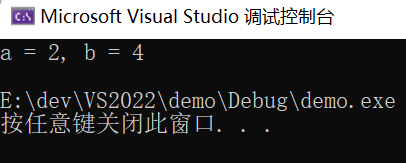
需要注意的是,std::bind() 对于预先绑定的函数参数是通过值传递的,对于通过 placeholders 占位的参数是通过引用传递的。
#include#include using namespace std; void fun(int& x, int& y) { x++; y++; } int main() { int a = 2; int b = 3; auto bf = std::bind(fun, a, placeholders::_1); bf(b); cout << "a = " << a << ", b = " << b << endl; return 0; } - 1
- 2
- 3
- 4
- 5
- 6
- 7
- 8
- 9
- 10
- 11
- 12
- 13
- 14
- 15
- 16
- 17
- 18
- 19
- 20
- 21
- 22
3.3 绑定函数对象
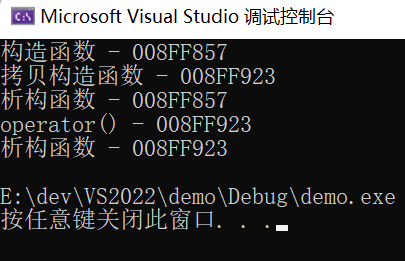
#include#include using namespace std; class CQ { public: CQ() { cout << "构造函数 - " << this << endl; } CQ(const CQ&) { cout << "拷贝构造函数 - " << this << endl; } ~CQ() { cout << "析构函数 - " << this << endl; } void operator()() // 函数调用运算符 { cout << "operator() - " << this << endl; } }; int main() { auto bf = std::bind(CQ()); bf(); return 0; } - 1
- 2
- 3
- 4
- 5
- 6
- 7
- 8
- 9
- 10
- 11
- 12
- 13
- 14
- 15
- 16
- 17
- 18
- 19
- 20
- 21
- 22
- 23
- 24
- 25
- 26
- 27
- 28
- 29
- 30
- 31
- 32
3.4 绑定类的成员函数
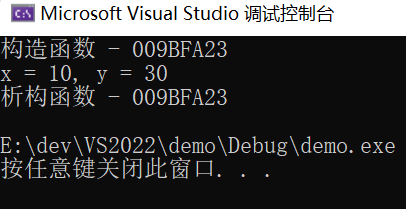
在下面代码中,第二个参数为
cq,这会导致调用 CQ 类的拷贝构造函数生成一个 CQ 类型的临时对象作为 std::bind() 的返回值。#include#include using namespace std; class CQ { public: CQ() { cout << "构造函数 - " << this << endl; } CQ(const CQ&) { cout << "拷贝构造函数 - " << this << endl; } ~CQ() { cout << "析构函数 - " << this << endl; } void fun(int x, int y) { cout << "x = " << x << ", y = " << y << endl; } }; int main() { CQ cq; auto bf = std::bind(&CQ::fun, cq, std::placeholders::_1, std::placeholders::_2); bf(10, 30); return 0; } - 1
- 2
- 3
- 4
- 5
- 6
- 7
- 8
- 9
- 10
- 11
- 12
- 13
- 14
- 15
- 16
- 17
- 18
- 19
- 20
- 21
- 22
- 23
- 24
- 25
- 26
- 27
- 28
- 29
- 30
- 31
- 32
- 33

在下面代码中,第二个参数为
&cq,这样就不生成 CQ 类型的临时对象了,此时 std::bind() 返回的就是cq对象本身。#include#include using namespace std; class CQ { public: CQ() { cout << "构造函数 - " << this << endl; } CQ(const CQ&) { cout << "拷贝构造函数 - " << this << endl; } ~CQ() { cout << "析构函数 - " << this << endl; } void fun(int x, int y) { cout << "x = " << x << ", y = " << y << endl; } }; int main() { CQ cq; auto bf = std::bind(&CQ::fun, &cq, std::placeholders::_1, std::placeholders::_2); bf(10, 30); return 0; } - 1
- 2
- 3
- 4
- 5
- 6
- 7
- 8
- 9
- 10
- 11
- 12
- 13
- 14
- 15
- 16
- 17
- 18
- 19
- 20
- 21
- 22
- 23
- 24
- 25
- 26
- 27
- 28
- 29
- 30
- 31
- 32
- 33
4.std::bind()和std::function配合使用
#include#include using namespace std; class CQ { public: CQ() { cout << "构造函数 - " << this << endl; } CQ(const CQ&) { cout << "拷贝构造函数 - " << this << endl; } ~CQ() { cout << "析构函数 - " << this << endl; } void fun(int x, int y) { cout << "x = " << x << ", y = " << y << endl; } }; int main() { CQ cq; std::function<void(int, int)> bf = std::bind(&CQ::fun, cq, std::placeholders::_1, std::placeholders::_2); bf(10, 30); return 0; } - 1
- 2
- 3
- 4
- 5
- 6
- 7
- 8
- 9
- 10
- 11
- 12
- 13
- 14
- 15
- 16
- 17
- 18
- 19
- 20
- 21
- 22
- 23
- 24
- 25
- 26
- 27
- 28
- 29
- 30
- 31
- 32
- 33

-
相关阅读:
Locust如何实现逐步负载?
人工智能热潮推动光芯片与光器件需求飙升
C语言:贪吃蛇游戏(万字解读超详细)
【考研】数据结构考点——直接选择排序
网络安全的基本概念
LeetCode(1)合并两个有序数组【数组/字符串】【简单】
从0到1搭建Halo博客系统教程
基于GAN的时序缺失数据填补前言(1)——RNN介绍及pytorch代码实现
基于PLC控制的门禁系统设计【附源码】
中介子方程二十二
- 原文地址:https://blog.csdn.net/qq_42815188/article/details/128056305
