-
【日常系列】LeetCode《19·BFS 和 DFS》
数据规模->时间复杂度
<=10^4 😮(n^2)
<=10^7:o(nlogn)
<=10^8:o(n)
10^8<=:o(logn),o(1)内容

lc 589 :N 叉树的前序遍历
https://leetcode.cn/problems/n-ary-tree-preorder-traversal/
提示:
节点总数在范围 [0, 104]内
0 <= Node.val <= 104
n 叉树的高度小于或等于 1000
进阶:
递归法很简单,你可以使用迭代法完成此题吗?#方案一:迭代 """ # Definition for a Node. class Node: def __init__(self, val=None, children=None): self.val = val self.children = children """ class Solution: def preorder(self, root: 'Node') -> List[int]: if not root:return [] # res=[] stack=list() stack.append(root) while stack: curr=stack.pop() res.append(curr.val) #key for i in range(len(curr.children)-1,-1,-1): stack.append(curr.children[i]) # return res #方案二:递归 """ # Definition for a Node. class Node: def __init__(self, val=None, children=None): self.val = val self.children = children """ class Solution: def preorder(self, root: 'Node') -> List[int]: if not root:return [] # res=[] self.dfs(root,res) return res def dfs(self,node,res): if not node:return res.append(node.val) #key for children in node.children: self.dfs(children,res) # for i in range(len(node.children)): # self.dfs(node.children[i],res)- 1
- 2
- 3
- 4
- 5
- 6
- 7
- 8
- 9
- 10
- 11
- 12
- 13
- 14
- 15
- 16
- 17
- 18
- 19
- 20
- 21
- 22
- 23
- 24
- 25
- 26
- 27
- 28
- 29
- 30
- 31
- 32
- 33
- 34
- 35
- 36
- 37
- 38
- 39
- 40
- 41
- 42
- 43
- 44
- 45
- 46
- 47
- 48
- 49
lc 590 :N 叉树的后序遍历
https://leetcode.cn/problems/n-ary-tree-postorder-traversal/
提示:
节点总数在范围 [0, 104] 内
0 <= Node.val <= 104
n 叉树的高度小于或等于 1000
进阶:
递归法很简单,你可以使用迭代法完成此题吗?#方案一:迭代 """ # Definition for a Node. class Node: def __init__(self, val=None, children=None): self.val = val self.children = children """ class Solution: def postorder(self, root: 'Node') -> List[int]: if not root:return [] res=list() stack=[] #list() stack.append(root) while stack: curr=stack.pop() res.append(curr.val) # for childnode in curr.children: stack.append(childnode) #key res.reverse() return res #方案二:递归 """ # Definition for a Node. class Node: def __init__(self, val=None, children=None): self.val = val self.children = children """ class Solution: def postorder(self, root: 'Node') -> List[int]: res=[] self.dfs(root,res) return res def dfs(self,node,res): if not node:return # for child in node.children: self.dfs(child,res) res.append(node.val)- 1
- 2
- 3
- 4
- 5
- 6
- 7
- 8
- 9
- 10
- 11
- 12
- 13
- 14
- 15
- 16
- 17
- 18
- 19
- 20
- 21
- 22
- 23
- 24
- 25
- 26
- 27
- 28
- 29
- 30
- 31
- 32
- 33
- 34
- 35
- 36
- 37
- 38
- 39
- 40
- 41
- 42
- 43
- 44
- 45
- 46
lc 429 :N 叉树的层序遍历
https://leetcode.cn/problems/n-ary-tree-level-order-traversal/
提示:
树的高度不会超过 1000
树的节点总数在 [0, 10^4] 之间#方案一:BFS """ # Definition for a Node. class Node: def __init__(self, val=None, children=None): self.val = val self.children = children """ class Solution: def levelOrder(self, root: 'Node') -> List[List[int]]: if not root:return [] res=[] queue=deque() queue.append(root) while queue: level_nodes_val=[] for i in range(len(queue)): curr=queue.popleft() level_nodes_val.append(curr.val) #key for child in curr.children: queue.append(child) res.append(level_nodes_val) return res #方案二:DFS """ # Definition for a Node. class Node: def __init__(self, val=None, children=None): self.val = val self.children = children """ class Solution: def levelOrder(self, root: 'Node') -> List[List[int]]: res=[] self.dfs(root,0,res) return res def dfs(self,node,currlevel,res): if not node:return [] #key if len(res)-1 <currlevel: res.append([node.val]) else: res[currlevel].append(node.val) # for child in node.children: self.dfs(child,currlevel+1,res)- 1
- 2
- 3
- 4
- 5
- 6
- 7
- 8
- 9
- 10
- 11
- 12
- 13
- 14
- 15
- 16
- 17
- 18
- 19
- 20
- 21
- 22
- 23
- 24
- 25
- 26
- 27
- 28
- 29
- 30
- 31
- 32
- 33
- 34
- 35
- 36
- 37
- 38
- 39
- 40
- 41
- 42
- 43
- 44
- 45
- 46
- 47
- 48
- 49
- 50
lc 690 :员工的重要性
https://leetcode.cn/problems/employee-importance/
提示:
一个员工最多有一个 直系 领导,但是可以有多个 直系 下属
员工数量不超过 2000 。

#方案一:DFS-前序 """ # Definition for Employee. class Employee: def __init__(self, id: int, importance: int, subordinates: List[int]): self.id = id self.importance = importance self.subordinates = subordinates """ class Solution: def getImportance(self, employees: List['Employee'], id: int) -> int: self.id_map={emp.id:emp for emp in employees} #key:id-emp self.total=0 #key self.dfs(id) return self.total def dfs(self,id): emp=self.id_map[id] if not emp:return # self.total+=emp.importance # for sub_emp_id in emp.subordinates: self.dfs(sub_emp_id) #方案二:DFS-后序 """ # Definition for Employee. class Employee: def __init__(self, id: int, importance: int, subordinates: List[int]): self.id = id self.importance = importance self.subordinates = subordinates """ class Solution: def getImportance(self, employees: List['Employee'], id: int) -> int: self.id_map={emp.id:emp for emp in employees} #key:id-emp return self.dfs(id) def dfs(self,id): emp=self.id_map[id] if not emp:return 0 #dfs的时候(self.total=0)先累加子节点值,最后在加根节点(root.importance) self.total=0 #key:注意位置, for sub_emp_id in emp.subordinates: self.total+=self.dfs(sub_emp_id) return emp.importance+self.total #方案三:BFS """ # Definition for Employee. class Employee: def __init__(self, id: int, importance: int, subordinates: List[int]): self.id = id self.importance = importance self.subordinates = subordinates """ class Solution: def getImportance(self, employees: List['Employee'], id: int) -> int: self.id_map={emp.id:emp for emp in employees} #key:id-emp return self.bfs(id) def bfs(self,id): emp=self.id_map[id] if not emp:return 0 # res=0 queue=deque() queue.append(emp) while queue: levelres=0 for i in range(len(queue)): curr=queue.popleft() levelres+=curr.importance for sub_id in curr.subordinates: queue.append(self.id_map[sub_id]) #key res+=levelres return res- 1
- 2
- 3
- 4
- 5
- 6
- 7
- 8
- 9
- 10
- 11
- 12
- 13
- 14
- 15
- 16
- 17
- 18
- 19
- 20
- 21
- 22
- 23
- 24
- 25
- 26
- 27
- 28
- 29
- 30
- 31
- 32
- 33
- 34
- 35
- 36
- 37
- 38
- 39
- 40
- 41
- 42
- 43
- 44
- 45
- 46
- 47
- 48
- 49
- 50
- 51
- 52
- 53
- 54
- 55
- 56
- 57
- 58
- 59
- 60
- 61
- 62
- 63
- 64
- 65
- 66
- 67
- 68
- 69
- 70
- 71
- 72
- 73
- 74
- 75
- 76
- 77
- 78
- 79
- 80
- 81
- 82
- 83
图的 DFS 和 BFS:key-遍历过程中,设置节点访问


floodfill 算法基础


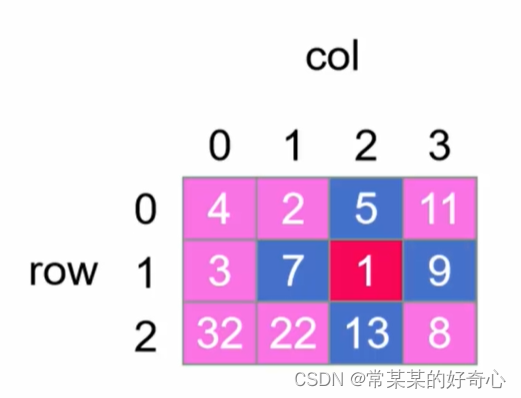

#数组二维转一维 #数组一维转二维度 #二维数组的四联通 #二维数组的八联通 #保证索引访问合法- 1
- 2
- 3
- 4
- 5
lc 733 :图像渲染
https://leetcode.cn/problems/flood-fill/
提示:
m == image.length
n == image[i].length
1 <= m, n <= 50
0 <= image[i][j], newColor < 216
0 <= sr < m
0 <= sc < n

#方案一:DFS class Solution: def floodFill(self, image: List[List[int]], sr: int, sc: int, color: int) -> List[List[int]]: self.dirs=[[-1,0],[1,0],[0,-1],[0,1]] self.image=image self.visited=[[False]*len(self.image[0]) for _ in range(len(self.image))] self.oldcolor=self.image[sr][sc] self.dfs(sr,sc,color) return image def inarea(self,row,col): return row>=0 and row<len(self.image) and col>=0 and col<len(self.image[0]) def dfs(self,row,col,newcolor): #终止条件 if not self.inarea(row,col) or self.image[row][col]!=self.oldcolor: return # self.image[row][col]=newcolor self.visited[row][col]=True for dir in self.dirs: next_row=row+dir[0] next_col=col+dir[1] if self.inarea(next_row,next_col): if not self.visited[next_row][next_col]: self.dfs(next_row,next_col,newcolor) #方案二:BFS class Solution: def floodFill(self, image: List[List[int]], sr: int, sc: int, color: int) -> List[List[int]]: self.image=image self.old_color=image[sr][sc] if self.old_color == color: #key return image self.dirs=[[0,1],[0,-1],[1,0],[-1,0]] self.bfs(sr,sc,color) return self.image def inarea(self,row,col): return row>=0 and row<len(self.image) and col>=0 and col<len(self.image[0]) def bfs(self,row,col,newcolor): queue=deque() queue.append([row,col]) self.image[row][col]=newcolor while queue: curr=queue.popleft() # for dir in self.dirs: #key1 nextrow=dir[0]+curr[0] nextcol=dir[1]+curr[1] if self.inarea(nextrow,nextcol) and self.image[nextrow][nextcol]==self.old_color: queue.append([nextrow,nextcol]) #key1 self.image[nextrow][nextcol]=newcolor- 1
- 2
- 3
- 4
- 5
- 6
- 7
- 8
- 9
- 10
- 11
- 12
- 13
- 14
- 15
- 16
- 17
- 18
- 19
- 20
- 21
- 22
- 23
- 24
- 25
- 26
- 27
- 28
- 29
- 30
- 31
- 32
- 33
- 34
- 35
- 36
- 37
- 38
- 39
- 40
- 41
- 42
- 43
- 44
- 45
- 46
- 47
- 48
- 49
- 50
- 51
- 52
- 53
- 54
- 55
lc 463 :岛屿的周长
https://leetcode.cn/problems/island-perimeter/
提示:
row == grid.length
col == grid[i].length
1 <= row, col <= 100
grid[i][j] 为 0 或 1
岛屿中没有“湖”(“湖” 指水域在岛屿内部且不和岛屿周围的水相连(只有一个岛)


#方案一:DFS-前序 class Solution: def islandPerimeter(self, grid: List[List[int]]) -> int: self.grid=grid self.dirs=[[-1,0],[1,0],[0,-1],[0,1]] self.visited=[[False]*len(grid[0]) for _ in range(len(grid))] # self.ans=0 for i in range(len(self.grid)): for j in range(len(self.grid[0])): if self.grid[i][j]==1: self.dfs(i,j) return self.ans def inarea(self,row,col): return row>=0 and row<len(self.grid) and col>=0 and col<len(self.grid[0]) def dfs(self,row,col): if not self.inarea(row,col) or self.grid[row][col]==0 or self.visited[row][col]: return # self.visited[row][col]=True for dir in self.dirs: nextrow=dir[0]+row nextcol=dir[1]+col #key:计边长 if not self.inarea(nextrow,nextcol) or self.grid[nextrow][nextcol]==0: self.ans+=1 elif not self.visited[nextrow][nextcol]: self.dfs(nextrow,nextcol) #方案二:DFS-后序 class Solution: def islandPerimeter(self, grid: List[List[int]]) -> int: self.grid=grid self.dirs=[[-1,0],[1,0],[0,-1],[0,1]] self.visited=[[False]*len(grid[0]) for _ in range(len(grid))] # for i in range(len(self.grid)): for j in range(len(self.grid[0])): if self.grid[i][j]==1: return self.dfs(i,j) def inarea(self,row,col): return row>=0 and row<len(self.grid) and col>=0 and col<len(self.grid[0]) def dfs(self,row,col): if not self.inarea(row,col) or self.grid[row][col]==0: return 1 if self.visited[row][col]: return 0 #说明接壤 # ans=0 self.visited[row][col]=True for dir in self.dirs: nextrow=dir[0]+row nextcol=dir[1]+col ans+=self.dfs(nextrow,nextcol) #key:基于'四边'情况统计 return ans #对比lc690 #方案三:BFS class Solution: def islandPerimeter(self, grid: List[List[int]]) -> int: self.grid=grid self.dirs=[[-1,0],[1,0],[0,-1],[0,1]] self.visited=[[False]*len(grid[0]) for _ in range(len(grid))] # for i in range(len(self.grid)): for j in range(len(self.grid[0])): if self.grid[i][j]==1: return self.bfs(i,j) def inarea(self,row,col): return row>=0 and row<len(self.grid) and col>=0 and col<len(self.grid[0]) def bfs(self,row,col): queue=deque() queue.append([row,col]) self.visited[row][col]=True # ans=0 while queue: curr=queue.popleft() for dir in self.dirs: nextrow=curr[0]+dir[0] nextcol=curr[1]+dir[1] if not self.inarea(nextrow,nextcol) or self.grid[nextrow][nextcol]==0: ans+=1 elif not self.visited[nextrow][nextcol]: #key queue.append([nextrow,nextcol]) self.visited[nextrow][nextcol]=True return ans- 1
- 2
- 3
- 4
- 5
- 6
- 7
- 8
- 9
- 10
- 11
- 12
- 13
- 14
- 15
- 16
- 17
- 18
- 19
- 20
- 21
- 22
- 23
- 24
- 25
- 26
- 27
- 28
- 29
- 30
- 31
- 32
- 33
- 34
- 35
- 36
- 37
- 38
- 39
- 40
- 41
- 42
- 43
- 44
- 45
- 46
- 47
- 48
- 49
- 50
- 51
- 52
- 53
- 54
- 55
- 56
- 57
- 58
- 59
- 60
- 61
- 62
- 63
- 64
- 65
- 66
- 67
- 68
- 69
- 70
- 71
- 72
- 73
- 74
- 75
- 76
- 77
- 78
- 79
- 80
- 81
- 82
- 83
- 84
- 85
- 86
- 87
- 88
- 89
- 90
- 91
- 92
lc 200 :岛屿数量【top100】
https://leetcode.cn/problems/number-of-islands/
提示:
m == grid.length
n == grid[i].length
1 <= m, n <= 300
grid[i][j] 的值为 ‘0’ 或 ‘1’#DFS: class Solution: def numIslands(self, grid: List[List[str]]) -> int: self.grid=grid self.rows=len(grid) self.cols=len(grid[0]) self.dirs=[[-1,0],[1,0],[0,-1],[0,1]] self.visited=[[False]*self.cols for _ in range(self.rows)] # ans=0 for i in range(self.rows): for j in range(self.cols): if self.grid[i][j]=="1" and not self.visited[i][j]: self.dfs(i,j) ans+=1 # return ans def inarea(self,row,col): return self.rows>row>=0 and self.cols>col>=0 def dfs(self,row,col): if not self.inarea(row,col) or self.grid[row][col]=='0' or self.visited[row][col]: return self.visited[row][col]=True for dir in self.dirs: nextrow=row+dir[0] nextcol=col+dir[1] self.dfs(row,col)- 1
- 2
- 3
- 4
- 5
- 6
- 7
- 8
- 9
- 10
- 11
- 12
- 13
- 14
- 15
- 16
- 17
- 18
- 19
- 20
- 21
- 22
- 23
- 24
- 25
- 26
- 27
- 28
- 29
- 30
lc 695 :岛屿的最大面积
https://leetcode.cn/problems/max-area-of-island/
提示:
m == grid.length
n == grid[i].length
1 <= m, n <= 50
grid[i][j] 为 0 或 1

#DFS-后序: class Solution: def maxAreaOfIsland(self, grid: List[List[int]]) -> int: self.grid=grid self.rows=len(grid) self.cols=len(grid[0]) self.dirs=[[-1,0],[1,0],[0,-1],[0,1]] self.visited=[[False]*self.cols for _ in range(self.rows)] # maxans=0 for i in range(self.rows): for j in range(self.cols): if self.grid[i][j]==1 and not self.visited[i][j]: maxans=max(self.dfs(i,j),maxans) # return maxans def inarea(self,row,col): return self.rows>row>=0 and self.cols>col>=0 def dfs(self,row,col): if not self.inarea(row,col) or self.grid[row][col]==0 or self.visited[row][col]:#key:递归中接壤也是0 return 0 # self.visited[row][col]=True ans=0 for dir in self.dirs: nextrow=row+dir[0] nextcol=col+dir[1] ans+=self.dfs(nextrow,nextcol) return 1+ans- 1
- 2
- 3
- 4
- 5
- 6
- 7
- 8
- 9
- 10
- 11
- 12
- 13
- 14
- 15
- 16
- 17
- 18
- 19
- 20
- 21
- 22
- 23
- 24
- 25
- 26
- 27
- 28
- 29
- 30
- 31
lc 130 :被围绕的区域
https://leetcode.cn/problems/surrounded-regions/
提示:
m == board.length
n == board[i].length
1 <= m, n <= 200
board[i][j] 为 ‘X’ 或 ‘O’

class Solution: def solve(self, board: List[List[str]]) -> None: """ Do not return anything, modify board in-place instead. """ self.rows=len(board) self.cols=len(board[0]) self.board=board self.visited=[[False]*self.cols for _ in range(self.rows)] self.dirs=[[-1,0],[1,0],[0,-1],[0,1]] #边界 for j in range(self.cols): if self.board[0][j]=='O' and not self.visited[0][j]:self.dfs(0,j) if self.board[self.rows-1][j]=='O' and not self.visited[self.rows-1][j]:self.dfs(self.rows-1,j) for i in range(1,self.rows-1): if self.board[i][0]=='O' and not self.visited[i][0]:self.dfs(i,0) if self.board[i][self.cols-1]=='O' and not self.visited[i][self.cols-1]:self.dfs(i,self.cols-1) #替换 for i in range(self.rows): for j in range(self.cols): if self.board[i][j]=='O' and not self.visited[i][j]: self.board[i][j]='X' def area(self,row,col): return 0<=row<self.rows and 0<=col<self.cols def dfs(self,row,col): if not self.area(row,col) or self.board[row][col]=='X' or self.visited[row][col]: return # self.visited[row][col]=True for dir in self.dirs: nextrow=row+dir[0] nextcol=col+dir[1] self.dfs(nextrow,nextcol)- 1
- 2
- 3
- 4
- 5
- 6
- 7
- 8
- 9
- 10
- 11
- 12
- 13
- 14
- 15
- 16
- 17
- 18
- 19
- 20
- 21
- 22
- 23
- 24
- 25
- 26
- 27
- 28
- 29
- 30
- 31
- 32
- 33
- 34
lc 1034 :边框着色
https://leetcode.cn/problems/coloring-a-border/
提示:
m == grid.length
n == grid[i].length
1 <= m, n <= 50
1 <= grid[i][j], color <= 1000
0 <= row < m
0 <= col < n


class Solution: def colorBorder(self, grid: List[List[int]], row: int, col: int, color: int) -> List[List[int]]: # self.color=color self.currcolor=grid[row][col] if grid[row][col]==color:return grid # self.rows=len(grid) self.cols=len(grid[0]) self.grid=grid self.visited=[[False]*self.cols for _ in range(self.rows)] self.dirs=[[-1,0],[1,0],[0,-1],[0,1]] self.dfs(row,col) return self.grid def area(self,row,col): return 0<=row<self.rows and 0<=col<self.cols def dfs(self,row,col): if not self.area(row,col) or self.grid[row][col]!=self.currcolor or self.visited[row][col]: return #通过(nextrow,nextcol)对当前顶点判定及递归 self.visited[row][col]=True for dir in self.dirs: nextrow=row+dir[0] nextcol=col+dir[1] #key条件 if not self.area(nextrow,nextcol) or (self.grid[nextrow][nextcol]!=self.currcolor and not self.visited[nextrow][nextcol]): self.grid[row][col]=self.color #key-not [nextrow][nextcol] # self.dfs(nextrow,nextcol)- 1
- 2
- 3
- 4
- 5
- 6
- 7
- 8
- 9
- 10
- 11
- 12
- 13
- 14
- 15
- 16
- 17
- 18
- 19
- 20
- 21
- 22
- 23
- 24
- 25
- 26
- 27
- 28
- 29
- 30
- 31
lc 529 :扫雷游戏
https://leetcode.cn/problems/minesweeper/
提示:
m == board.length
n == board[i].length
1 <= m, n <= 50
board[i][j] 为 ‘M’、‘E’、‘B’ 或数字 ‘1’ 到 ‘8’ 中的一个
click.length == 2
0 <= clickr < m
0 <= clickc < n
board[clickr][clickc] 为 ‘M’ 或 ‘E’
注:E:未挖空 B:已挖空 M:未挖雷 X:已挖雷

class Solution: def updateBoard(self, board: List[List[str]], click: List[int]) -> List[List[str]]: self.rows=len(board) self.cols=len(board[0]) self.board=board self.visited=[[False]*self.cols for _ in range(self.rows)] self.dirs=[[-1,0],[1,0],[0,-1],[0,1],[-1,-1],[-1,1],[1,-1],[1,1]] # if board[click[0]][click[1]]=='M':#如果一个地雷('M')被挖出,游戏就结束了- 把它改为 'X' board[click[0]][click[1]]='X' else: self.dfs(click[0],click[1]) return board def area(self,row,col): return 0<=row<self.rows and 0<=col<self.cols def dfs(self,row,col): if not self.area(row,col) or self.board[row][col]!='E' or self.visited[row][col]: return #统计雷数 m_s=0 for dir in self.dirs: nextrow=row+dir[0] nextcol=col+dir[1] if self.area(nextrow,nextcol) and self.board[nextrow][nextcol]=='M': m_s+=1 #更新board #key:雷区是没有必要再递归的 if m_s>0: self.board[row][col]=str(m_s)#如果一个 至少与一个地雷相邻 的空方块('E')被挖出,修改它为数字('1' 到 '8' ),表示相邻地雷的数量。 else: self.board[row][col]='B' #key位置:如果一个 没有相邻地雷 的空方块('E')被挖出,修改它为('B'),并且所有和其相邻的 未挖出 方块都应该被递归地揭露。 for dir in self.dirs: nextrow=row+dir[0] nextcol=col+dir[1] self.dfs(nextrow,nextcol)- 1
- 2
- 3
- 4
- 5
- 6
- 7
- 8
- 9
- 10
- 11
- 12
- 13
- 14
- 15
- 16
- 17
- 18
- 19
- 20
- 21
- 22
- 23
- 24
- 25
- 26
- 27
- 28
- 29
- 30
- 31
- 32
- 33
- 34
- 35
- 36
- 37
- 38
lc 994 :腐烂的橘子
https://leetcode.cn/problems/rotting-oranges/
提示:
m == grid.length
n == grid[i].length
1 <= m, n <= 10
grid[i][j] 仅为 0、1 或 2
每分钟,腐烂的橘子 周围 4 个方向上相邻 的新鲜橘子都会腐烂。

#多源BFS class Solution: def orangesRotting(self, grid: List[List[int]]) -> int: self.dirs = [[-1, 0], [1, 0], [0, -1], [0, 1]] self.rows, self.cols = len(grid), len(grid[0]) self.grid=grid #多源 queue=deque() for i in range(self.rows): for j in range(self.cols): if grid[i][j]==2: queue.append([i,j]) # ans=-1 while queue: for i in range(len(queue)): curr=queue.popleft() # for dir in self.dirs: nextrow,nextcol=curr[0]+dir[0],curr[1]+dir[1] #key if self.area(nextrow,nextcol) and self.grid[nextrow][nextcol]==1: self.grid[nextrow][nextcol]=2 queue.append([nextrow,nextcol]) ans+=1 # for i in range(self.rows): for j in range(self.cols): if self.grid[i][j]==1: return -1 return max(ans,0) #[[0]] def area(self,row,col): return 0<=row<self.rows and 0<=col<self.cols- 1
- 2
- 3
- 4
- 5
- 6
- 7
- 8
- 9
- 10
- 11
- 12
- 13
- 14
- 15
- 16
- 17
- 18
- 19
- 20
- 21
- 22
- 23
- 24
- 25
- 26
- 27
- 28
- 29
- 30
- 31
- 32
- 33
- 34
- 35
-
相关阅读:
Consul(注册中心)部署
uni-app 高度自适应
LeetCode·每日一题·655.输出二叉树·DFS
Mybatis Plus如何使用自定义方法实现分页呢?
2024年绍兴市各区县高新技术企业认定奖励补助政策及绍兴高新企业申报奖励条件
报表工具使用之FineReport大数据集导出插件
Java实验六
数据分析 - 分散性与变异的量度
RabbitMQ消息可靠性(二)-- 消费者消息确认
凡尔赛天花板:“毕业两年月薪才35K,真是没出息啊~~”
- 原文地址:https://blog.csdn.net/qq_42889517/article/details/127467462
