-
【区块链技术与应用】(八)
https://blog.csdn.net/lakersssss24/article/details/125762826?spm=1001.2014.3001.5501
https://blog.csdn.net/lakersssss24/article/details/126434147
https://blog.csdn.net/lakersssss24/article/details/126671408?spm=1001.2101.3001.6650.3&utm_medium=distribute.pc_relevant.none-task-blog-2%7Edefault%7EBlogCommendFromBaidu%7ERate-3-126671408-blog-126434147.pc_relevant_3mothn_strategy_and_data_recovery&depth_1-utm_source=distribute.pc_relevant.none-task-blog-2%7Edefault%7EBlogCommendFromBaidu%7ERate-3-126671408-blog-126434147.pc_relevant_3mothn_strategy_and_data_recovery&utm_relevant_index=4提前准备

sudo apt-get update 更新源 sudo apt-get install ssh 安装远程客户端 sudo apt-get install curl 安装命令行工具 sudo apt-get install git 安装git sudo apt-get install gcc 安装gcc sudo apt-get install vim 安装vim文件编辑器 sudo apt-get install make 安装make sudo apt-get install net-tools 安装网络工具 sudo apt-get install net-tools 安装mousepad 类似于windows的记事本- 1
- 2
- 3
- 4
- 5
- 6
- 7
- 8
- 9
./bootstrap.sh- 1
https://teach.imcn.me/y2020/1146.html
couchDB安装 https://blog.csdn.net/TU_Dresden/article/details/126864418

实验一
network
./network.sh up- 1


./network.sh up createChannel -s couchdb- 1

./network.sh deployCC -ccn basic -ccp ../asset-transfer-basic/chaincode-go -ccl go- 1


export PATH=${PWD}/../bin:$PATH export FABRIC_CFG_PATH=$PWD/../config/ export CORE_PEER_TLS_ENABLED=true export CORE_PEER_LOCALMSPID="Org1MSP" export CORE_PEER_TLS_ROOTCERT_FILE=${PWD}/organizations/peerOrganizations/org1.example.com/peers/peer0.org1.example.com/tls/ca.crt export CORE_PEER_MSPCONFIGPATH=${PWD}/organizations/peerOrganizations/org1.example.com/users/Admin@org1.example.com/msp export CORE_PEER_ADDRESS=localhost:7051- 1
- 2
- 3
- 4
- 5
- 6
- 7
peer chaincode invoke -o localhost:7050 --ordererTLSHostnameOverride orderer.example.com --tls --cafile "${PWD}/organizations/ordererOrganizations/example.com/orderers/orderer.example.com/msp/tlscacerts/tlsca.example.com-cert.pem" -C mychannel -n basic --peerAddresses localhost:7051 --tlsRootCertFiles "${PWD}/organizations/peerOrganizations/org1.example.com/peers/peer0.org1.example.com/tls/ca.crt" --peerAddresses localhost:9051 --tlsRootCertFiles "${PWD}/organizations/peerOrganizations/org2.example.com/peers/peer0.org2.example.com/tls/ca.crt" -c '{"function":"InitLedger","Args":[""]}'- 1

restart./network.sh up createChannel -ca -s couchdb- 1
- 2
- 3
gin模板
package main import ( "fmt" "github.com/gin-gonic/gin" ) type Stu struct { Name string `form:"name"` Id string `form:"id"` Age string `form:"age"` } func main() { r := gin.Default() var stu Stu r1 := r.Group("/fabric2.4") r1.POST("/setstu", func(c *gin.Context) { //var stu Stu c.ShouldBind(&stu) c.JSON(200, stu) fmt.Println("stu:", stu) }) r1.POST("/ok1", func(c *gin.Context) { c.JSON(200, "ok1") }) r.Run(":8080") // 监听并在 0.0.0.0:8080 上启动服务 }- 1
- 2
- 3
- 4
- 5
- 6
- 7
- 8
- 9
- 10
- 11
- 12
- 13
- 14
- 15
- 16
- 17
- 18
- 19
- 20
- 21
- 22
- 23
- 24
- 25
- 26
- 27
- 28
- 29
链码的只要功能部分:
package chaincode import ( "encoding/json" "fmt" "github.com/hyperledger/fabric-contract-api-go/contractapi" ) // SmartContract provides functions for managing an Asset type SmartContract struct { contractapi.Contract } // Asset describes basic details of what makes up a simple asset //Insert struct field in alphabetic order => to achieve determinism across languages // golang keeps the order when marshal to json but doesn't order automatically type Asset struct { AppraisedValue int `json:"AppraisedValue"` Color string `json:"Color"` ID string `json:"ID"` Owner string `json:"Owner"` Size int `json:"Size"` } // InitLedger adds a base set of assets to the ledger func (s *SmartContract) InitLedger(ctx contractapi.TransactionContextInterface) error { assets := []Asset{ {ID: "asset1", Color: "blue", Size: 5, Owner: "Tomoko", AppraisedValue: 300}, {ID: "asset2", Color: "red", Size: 5, Owner: "Brad", AppraisedValue: 400}, {ID: "asset3", Color: "green", Size: 10, Owner: "Jin Soo", AppraisedValue: 500}, {ID: "asset4", Color: "yellow", Size: 10, Owner: "Max", AppraisedValue: 600}, {ID: "asset5", Color: "black", Size: 15, Owner: "Adriana", AppraisedValue: 700}, {ID: "asset6", Color: "white", Size: 15, Owner: "Michel", AppraisedValue: 800}, } for _, asset := range assets { assetJSON, err := json.Marshal(asset) if err != nil { return err } err = ctx.GetStub().PutState(asset.ID, assetJSON) if err != nil { return fmt.Errorf("failed to put to world state. %v", err) } } return nil } // CreateAsset issues a new asset to the world state with given details. func (s *SmartContract) CreateAsset(ctx contractapi.TransactionContextInterface, id string, color string, size int, owner string, appraisedValue int) error { exists, err := s.AssetExists(ctx, id) if err != nil { return err } if exists { return fmt.Errorf("the asset %s already exists", id) } asset := Asset{ ID: id, Color: color, Size: size, Owner: owner, AppraisedValue: appraisedValue, } assetJSON, err := json.Marshal(asset) if err != nil { return err } return ctx.GetStub().PutState(id, assetJSON) } // ReadAsset returns the asset stored in the world state with given id. func (s *SmartContract) ReadAsset(ctx contractapi.TransactionContextInterface, id string) (*Asset, error) { assetJSON, err := ctx.GetStub().GetState(id) if err != nil { return nil, fmt.Errorf("failed to read from world state: %v", err) } if assetJSON == nil { return nil, fmt.Errorf("the asset %s does not exist", id) } var asset Asset err = json.Unmarshal(assetJSON, &asset) if err != nil { return nil, err } return &asset, nil } // UpdateAsset updates an existing asset in the world state with provided parameters. func (s *SmartContract) UpdateAsset(ctx contractapi.TransactionContextInterface, id string, color string, size int, owner string, appraisedValue int) error { exists, err := s.AssetExists(ctx, id) if err != nil { return err } if !exists { return fmt.Errorf("the asset %s does not exist", id) } // overwriting original asset with new asset asset := Asset{ ID: id, Color: color, Size: size, Owner: owner, AppraisedValue: appraisedValue, } assetJSON, err := json.Marshal(asset) if err != nil { return err } return ctx.GetStub().PutState(id, assetJSON) } // DeleteAsset deletes an given asset from the world state. func (s *SmartContract) DeleteAsset(ctx contractapi.TransactionContextInterface, id string) error { exists, err := s.AssetExists(ctx, id) if err != nil { return err } if !exists { return fmt.Errorf("the asset %s does not exist", id) } return ctx.GetStub().DelState(id) } // AssetExists returns true when asset with given ID exists in world state func (s *SmartContract) AssetExists(ctx contractapi.TransactionContextInterface, id string) (bool, error) { assetJSON, err := ctx.GetStub().GetState(id) if err != nil { return false, fmt.Errorf("failed to read from world state: %v", err) } return assetJSON != nil, nil } // TransferAsset updates the owner field of asset with given id in world state, and returns the old owner. func (s *SmartContract) TransferAsset(ctx contractapi.TransactionContextInterface, id string, newOwner string) (string, error) { asset, err := s.ReadAsset(ctx, id) if err != nil { return "", err } oldOwner := asset.Owner asset.Owner = newOwner assetJSON, err := json.Marshal(asset) if err != nil { return "", err } err = ctx.GetStub().PutState(id, assetJSON) if err != nil { return "", err } return oldOwner, nil } // GetAllAssets returns all assets found in world state func (s *SmartContract) GetAllAssets(ctx contractapi.TransactionContextInterface) ([]*Asset, error) { // range query with empty string for startKey and endKey does an // open-ended query of all assets in the chaincode namespace. resultsIterator, err := ctx.GetStub().GetStateByRange("", "") if err != nil { return nil, err } defer resultsIterator.Close() var assets []*Asset for resultsIterator.HasNext() { queryResponse, err := resultsIterator.Next() if err != nil { return nil, err } var asset Asset err = json.Unmarshal(queryResponse.Value, &asset) if err != nil { return nil, err } assets = append(assets, &asset) } return assets, nil }- 1
- 2
- 3
- 4
- 5
- 6
- 7
- 8
- 9
- 10
- 11
- 12
- 13
- 14
- 15
- 16
- 17
- 18
- 19
- 20
- 21
- 22
- 23
- 24
- 25
- 26
- 27
- 28
- 29
- 30
- 31
- 32
- 33
- 34
- 35
- 36
- 37
- 38
- 39
- 40
- 41
- 42
- 43
- 44
- 45
- 46
- 47
- 48
- 49
- 50
- 51
- 52
- 53
- 54
- 55
- 56
- 57
- 58
- 59
- 60
- 61
- 62
- 63
- 64
- 65
- 66
- 67
- 68
- 69
- 70
- 71
- 72
- 73
- 74
- 75
- 76
- 77
- 78
- 79
- 80
- 81
- 82
- 83
- 84
- 85
- 86
- 87
- 88
- 89
- 90
- 91
- 92
- 93
- 94
- 95
- 96
- 97
- 98
- 99
- 100
- 101
- 102
- 103
- 104
- 105
- 106
- 107
- 108
- 109
- 110
- 111
- 112
- 113
- 114
- 115
- 116
- 117
- 118
- 119
- 120
- 121
- 122
- 123
- 124
- 125
- 126
- 127
- 128
- 129
- 130
- 131
- 132
- 133
- 134
- 135
- 136
- 137
- 138
- 139
- 140
- 141
- 142
- 143
- 144
- 145
- 146
- 147
- 148
- 149
- 150
- 151
- 152
- 153
- 154
- 155
- 156
- 157
- 158
- 159
- 160
- 161
- 162
- 163
- 164
- 165
- 166
- 167
- 168
- 169
- 170
- 171
- 172
- 173
- 174
- 175
- 176
- 177
- 178
- 179
- 180
- 181
- 182
- 183
- 184
- 185
- 186
- 187
- 188
- 189
- 190
- 191
- 192
- 193
- 194
查看虚拟机的IP和地址:
ifconfig- 1
gin框架
package main import ( "bytes" "crypto/x509" "encoding/json" "fmt" "github.com/gin-gonic/gin" "github.com/hyperledger/fabric-gateway/pkg/client" "github.com/hyperledger/fabric-gateway/pkg/identity" "google.golang.org/grpc" "google.golang.org/grpc/credentials" "io/ioutil" "path" "time" ) const ( mspID = "Org1MSP" cryptoPath = "./peerOrganizations/org1.example.com" certPath = cryptoPath + "/users/User1@org1.example.com/msp/signcerts/cert.pem" keyPath = cryptoPath + "/users/User1@org1.example.com/msp/keystore/" tlsCertPath = cryptoPath + "/peers/peer0.org1.example.com/tls/ca.crt" peerEndpoint = "192.168.136.130:7051" gatewayPeer = "peer0.org1.example.com" channelName = "mychannel" chaincodeName = "basic" ) type Asset struct { AppraisedValue int `form:"appraisedValue" json:"appraisedValue" ` Color string `form:"color" json:"color"` ID string `form:"id" json:"id"` Owner string `form:"owner" json:"owner"` Size int `form:"size" json:"size"` } func main() { // The gRPC client connection should be shared by all Gateway connections to this endpoint clientConnection := newGrpcConnection() defer clientConnection.Close() id := newIdentity() sign := newSign() // Create a Gateway connection for a specific client identity gateway, err := client.Connect( id, client.WithSign(sign), client.WithClientConnection(clientConnection), // Default timeouts for different gRPC calls client.WithEvaluateTimeout(5*time.Second), client.WithEndorseTimeout(15*time.Second), client.WithSubmitTimeout(5*time.Second), client.WithCommitStatusTimeout(1*time.Minute), ) if err != nil { panic(err) } defer gateway.Close() network := gateway.GetNetwork(channelName) contract := network.GetContract(chaincodeName) r := gin.Default() r1 := r.Group("/fabric2.4") r1.POST("/CreateAsset", func(c *gin.Context) { var asset Asset c.ShouldBind(&asset) c.JSON(200, asset) marshal, _ := json.Marshal(asset) fmt.Println(string(marshal)) fmt.Println("asset:", asset) }) r1.POST("/GetAllAssets", func(c *gin.Context) { result := getAllAssets(contract) c.JSON(200, result) }) r.Run(":8080") // 监听并在 0.0.0.0:8080 上启动服务 } // Evaluate a transaction to query ledger state. func getAllAssets(contract *client.Contract) string { fmt.Println("Evaluate Transaction: GetAllAssets, function returns all the current assets on the ledger") evaluateResult, err := contract.EvaluateTransaction("GetAllAssets") if err != nil { panic(fmt.Errorf("failed to evaluate transaction: %w", err)) } result := formatJSON(evaluateResult) fmt.Printf("*** Result:%s\n", result) return string(evaluateResult) } // newGrpcConnection creates a gRPC connection to the Gateway server. func newGrpcConnection() *grpc.ClientConn { certificate, err := loadCertificate(tlsCertPath) if err != nil { panic(err) } certPool := x509.NewCertPool() certPool.AddCert(certificate) transportCredentials := credentials.NewClientTLSFromCert(certPool, gatewayPeer) connection, err := grpc.Dial(peerEndpoint, grpc.WithTransportCredentials(transportCredentials)) if err != nil { panic(fmt.Errorf("failed to create gRPC connection: %w", err)) } return connection } // newIdentity creates a client identity for this Gateway connection using an X.509 certificate. func newIdentity() *identity.X509Identity { certificate, err := loadCertificate(certPath) if err != nil { panic(err) } id, err := identity.NewX509Identity(mspID, certificate) if err != nil { panic(err) } return id } func loadCertificate(filename string) (*x509.Certificate, error) { certificatePEM, err := ioutil.ReadFile(filename) if err != nil { return nil, fmt.Errorf("failed to read certificate file: %w", err) } return identity.CertificateFromPEM(certificatePEM) } // newSign creates a function that generates a digital signature from a message digest using a private key. func newSign() identity.Sign { files, err := ioutil.ReadDir(keyPath) if err != nil { panic(fmt.Errorf("failed to read private key directory: %w", err)) } privateKeyPEM, err := ioutil.ReadFile(path.Join(keyPath, files[0].Name())) if err != nil { panic(fmt.Errorf("failed to read private key file: %w", err)) } privateKey, err := identity.PrivateKeyFromPEM(privateKeyPEM) if err != nil { panic(err) } sign, err := identity.NewPrivateKeySign(privateKey) if err != nil { panic(err) } return sign } // Format JSON data func formatJSON(data []byte) string { var prettyJSON bytes.Buffer if err := json.Indent(&prettyJSON, data, " ", ""); err != nil { panic(fmt.Errorf("failed to parse JSON: %w", err)) } return prettyJSON.String() }- 1
- 2
- 3
- 4
- 5
- 6
- 7
- 8
- 9
- 10
- 11
- 12
- 13
- 14
- 15
- 16
- 17
- 18
- 19
- 20
- 21
- 22
- 23
- 24
- 25
- 26
- 27
- 28
- 29
- 30
- 31
- 32
- 33
- 34
- 35
- 36
- 37
- 38
- 39
- 40
- 41
- 42
- 43
- 44
- 45
- 46
- 47
- 48
- 49
- 50
- 51
- 52
- 53
- 54
- 55
- 56
- 57
- 58
- 59
- 60
- 61
- 62
- 63
- 64
- 65
- 66
- 67
- 68
- 69
- 70
- 71
- 72
- 73
- 74
- 75
- 76
- 77
- 78
- 79
- 80
- 81
- 82
- 83
- 84
- 85
- 86
- 87
- 88
- 89
- 90
- 91
- 92
- 93
- 94
- 95
- 96
- 97
- 98
- 99
- 100
- 101
- 102
- 103
- 104
- 105
- 106
- 107
- 108
- 109
- 110
- 111
- 112
- 113
- 114
- 115
- 116
- 117
- 118
- 119
- 120
- 121
- 122
- 123
- 124
- 125
- 126
- 127
- 128
- 129
- 130
- 131
- 132
- 133
- 134
- 135
- 136
- 137
- 138
- 139
- 140
- 141
- 142
- 143
- 144
- 145
- 146
- 147
- 148
- 149
- 150
- 151
- 152
- 153
- 154
- 155
- 156
- 157
- 158
- 159
- 160
- 161
- 162
- 163
- 164
- 165
- 166
- 167
- 168
- 169
- 170
- 171
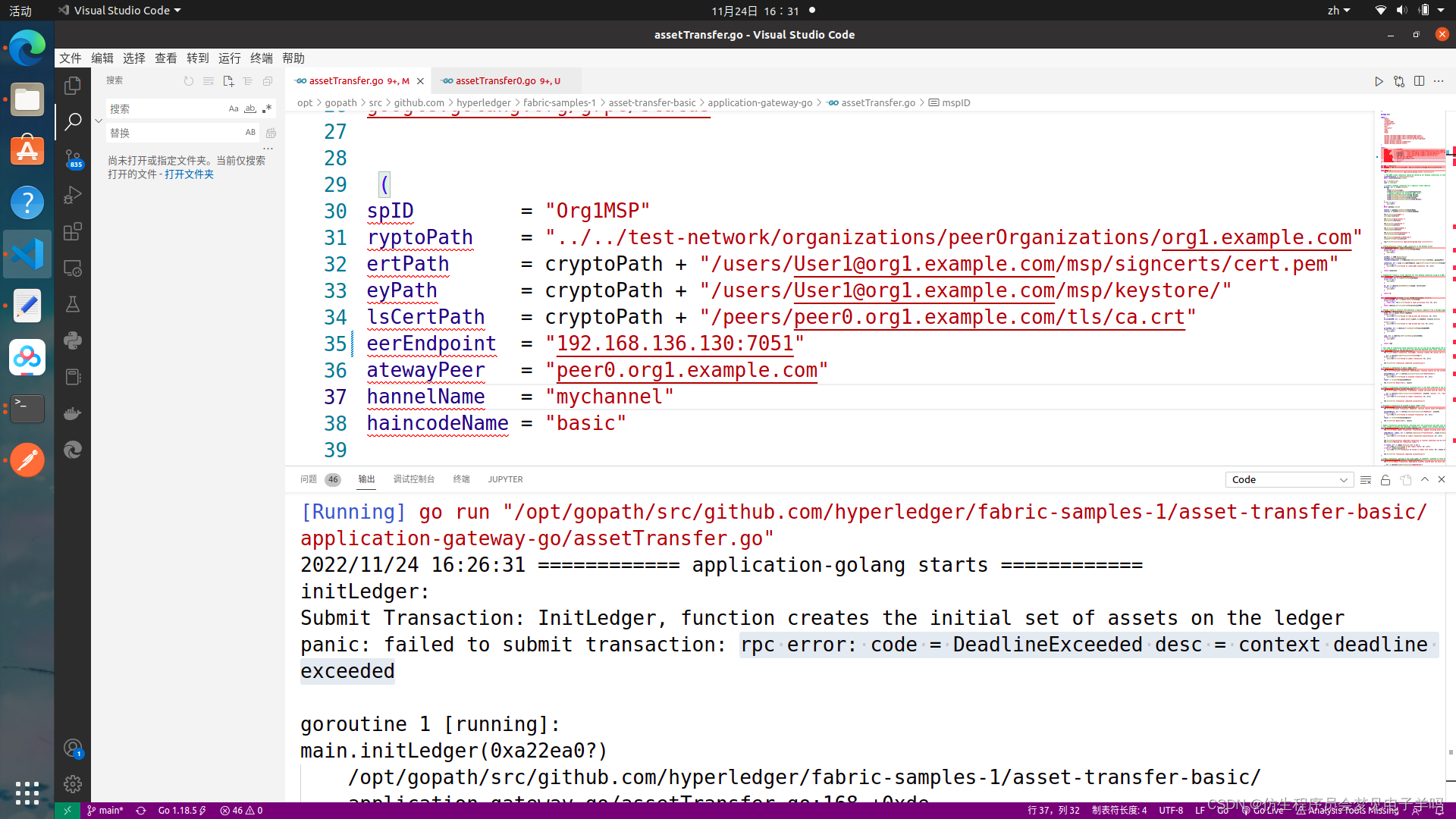
链码
package chaincode import ( "encoding/json" "fmt" "github.com/hyperledger/fabric-contract-api-go/contractapi" ) // SmartContract provides functions for managing an Asset type SmartContract struct { contractapi.Contract } // Asset describes basic details of what makes up a simple asset //Insert struct field in alphabetic order => to achieve determinism across languages // golang keeps the order when marshal to json but doesn't order automatically type Asset struct { AppraisedValue int `json:"AppraisedValue"` Color string `json:"Color"` ID string `json:"ID"` Owner string `json:"Owner"` Size int `json:"Size"` } // InitLedger adds a base set of assets to the ledger func (s *SmartContract) InitLedger(ctx contractapi.TransactionContextInterface) error { assets := []Asset{ {ID: "asset1", Color: "blue", Size: 5, Owner: "Tomoko", AppraisedValue: 300}, {ID: "asset2", Color: "red", Size: 5, Owner: "Brad", AppraisedValue: 400}, {ID: "asset3", Color: "green", Size: 10, Owner: "Jin Soo", AppraisedValue: 500}, {ID: "asset4", Color: "yellow", Size: 10, Owner: "Max", AppraisedValue: 600}, {ID: "asset5", Color: "black", Size: 15, Owner: "Adriana", AppraisedValue: 700}, {ID: "asset6", Color: "white", Size: 15, Owner: "Michel", AppraisedValue: 800}, } for _, asset := range assets { assetJSON, err := json.Marshal(asset) if err != nil { return err } err = ctx.GetStub().PutState(asset.ID, assetJSON) if err != nil { return fmt.Errorf("failed to put to world state. %v", err) } } return nil } // CreateAsset issues a new asset to the world state with given details. func (s *SmartContract) CreateAsset(ctx contractapi.TransactionContextInterface, id string, color string, size int, owner string, appraisedValue int) error { exists, err := s.AssetExists(ctx, id) if err != nil { return err } if exists { return fmt.Errorf("the asset %s already exists", id) } asset := Asset{ ID: id, Color: color, Size: size, Owner: owner, AppraisedValue: appraisedValue, } assetJSON, err := json.Marshal(asset) if err != nil { return err } return ctx.GetStub().PutState(id, assetJSON) } // ReadAsset returns the asset stored in the world state with given id. func (s *SmartContract) ReadAsset(ctx contractapi.TransactionContextInterface, id string) (*Asset, error) { assetJSON, err := ctx.GetStub().GetState(id) if err != nil { return nil, fmt.Errorf("failed to read from world state: %v", err) } if assetJSON == nil { return nil, fmt.Errorf("the asset %s does not exist", id) } var asset Asset err = json.Unmarshal(assetJSON, &asset) if err != nil { return nil, err } return &asset, nil } // UpdateAsset updates an existing asset in the world state with provided parameters. func (s *SmartContract) UpdateAsset(ctx contractapi.TransactionContextInterface, id string, color string, size int, owner string, appraisedValue int) error { exists, err := s.AssetExists(ctx, id) if err != nil { return err } if !exists { return fmt.Errorf("the asset %s does not exist", id) } // overwriting original asset with new asset asset := Asset{ ID: id, Color: color, Size: size, Owner: owner, AppraisedValue: appraisedValue, } assetJSON, err := json.Marshal(asset) if err != nil { return err } return ctx.GetStub().PutState(id, assetJSON) } // DeleteAsset deletes an given asset from the world state. func (s *SmartContract) DeleteAsset(ctx contractapi.TransactionContextInterface, id string) error { exists, err := s.AssetExists(ctx, id) if err != nil { return err } if !exists { return fmt.Errorf("the asset %s does not exist", id) } return ctx.GetStub().DelState(id) } // AssetExists returns true when asset with given ID exists in world state func (s *SmartContract) AssetExists(ctx contractapi.TransactionContextInterface, id string) (bool, error) { assetJSON, err := ctx.GetStub().GetState(id) if err != nil { return false, fmt.Errorf("failed to read from world state: %v", err) } return assetJSON != nil, nil } // TransferAsset updates the owner field of asset with given id in world state, and returns the old owner. func (s *SmartContract) TransferAsset(ctx contractapi.TransactionContextInterface, id string, newOwner string) (string, error) { asset, err := s.ReadAsset(ctx, id) if err != nil { return "", err } oldOwner := asset.Owner asset.Owner = newOwner assetJSON, err := json.Marshal(asset) if err != nil { return "", err } err = ctx.GetStub().PutState(id, assetJSON) if err != nil { return "", err } return oldOwner, nil } // GetAllAssets returns all assets found in world state func (s *SmartContract) GetAllAssets(ctx contractapi.TransactionContextInterface) ([]*Asset, error) { // range query with empty string for startKey and endKey does an // open-ended query of all assets in the chaincode namespace. resultsIterator, err := ctx.GetStub().GetStateByRange("", "") if err != nil { return nil, err } defer resultsIterator.Close() var assets []*Asset for resultsIterator.HasNext() { queryResponse, err := resultsIterator.Next() if err != nil { return nil, err } var asset Asset err = json.Unmarshal(queryResponse.Value, &asset) if err != nil { return nil, err } assets = append(assets, &asset) } return assets, nil }- 1
- 2
- 3
- 4
- 5
- 6
- 7
- 8
- 9
- 10
- 11
- 12
- 13
- 14
- 15
- 16
- 17
- 18
- 19
- 20
- 21
- 22
- 23
- 24
- 25
- 26
- 27
- 28
- 29
- 30
- 31
- 32
- 33
- 34
- 35
- 36
- 37
- 38
- 39
- 40
- 41
- 42
- 43
- 44
- 45
- 46
- 47
- 48
- 49
- 50
- 51
- 52
- 53
- 54
- 55
- 56
- 57
- 58
- 59
- 60
- 61
- 62
- 63
- 64
- 65
- 66
- 67
- 68
- 69
- 70
- 71
- 72
- 73
- 74
- 75
- 76
- 77
- 78
- 79
- 80
- 81
- 82
- 83
- 84
- 85
- 86
- 87
- 88
- 89
- 90
- 91
- 92
- 93
- 94
- 95
- 96
- 97
- 98
- 99
- 100
- 101
- 102
- 103
- 104
- 105
- 106
- 107
- 108
- 109
- 110
- 111
- 112
- 113
- 114
- 115
- 116
- 117
- 118
- 119
- 120
- 121
- 122
- 123
- 124
- 125
- 126
- 127
- 128
- 129
- 130
- 131
- 132
- 133
- 134
- 135
- 136
- 137
- 138
- 139
- 140
- 141
- 142
- 143
- 144
- 145
- 146
- 147
- 148
- 149
- 150
- 151
- 152
- 153
- 154
- 155
- 156
- 157
- 158
- 159
- 160
- 161
- 162
- 163
- 164
- 165
- 166
- 167
- 168
- 169
- 170
- 171
- 172
- 173
- 174
- 175
- 176
- 177
- 178
- 179
- 180
- 181
- 182
- 183
- 184
- 185
- 186
- 187
- 188
- 189
- 190
- 191
- 192
- 193
- 194
postman

测试自家网站:


本地查询:


自己的github:


实验二
gin
package main import ( "bytes" "crypto/x509" "encoding/json" "fmt" "github.com/gin-gonic/gin" "github.com/hyperledger/fabric-gateway/pkg/client" "github.com/hyperledger/fabric-gateway/pkg/identity" "google.golang.org/grpc" "google.golang.org/grpc/credentials" "io/ioutil" "path" "time" ) const ( mspID = "Org1MSP" cryptoPath = "./peerOrganizations/org1.example.com" certPath = cryptoPath + "/users/User1@org1.example.com/msp/signcerts/cert.pem" keyPath = cryptoPath + "/users/User1@org1.example.com/msp/keystore/" tlsCertPath = cryptoPath + "/peers/peer0.org1.example.com/tls/ca.crt" peerEndpoint = "192.168.136.130:7051" gatewayPeer = "peer0.org1.example.com" channelName = "mychannel" chaincodeName = "basic" ) type Asset struct { AppraisedValue int `form:"appraisedValue" json:"appraisedValue" ` Color string `form:"color" json:"color"` ID string `form:"id" json:"id"` Owner string `form:"owner" json:"owner"` Size int `form:"size" json:"size"` } func main() { // The gRPC client connection should be shared by all Gateway connections to this endpoint clientConnection := newGrpcConnection() defer clientConnection.Close() id := newIdentity() sign := newSign() // Create a Gateway connection for a specific client identity gateway, err := client.Connect( id, client.WithSign(sign), client.WithClientConnection(clientConnection), // Default timeouts for different gRPC calls client.WithEvaluateTimeout(5*time.Second), client.WithEndorseTimeout(15*time.Second), client.WithSubmitTimeout(5*time.Second), client.WithCommitStatusTimeout(1*time.Minute), ) if err != nil { panic(err) } defer gateway.Close() network := gateway.GetNetwork(channelName) contract := network.GetContract(chaincodeName) r := gin.Default() r1 := r.Group("/fabric2.4.2") r1.POST("/Init", func(c *gin.Context) { initLedger(contract) c.JSON(200, "init ok!") }) r.Run(":8080") // 监听并在 0.0.0.0:8080 上启动服务 } // Evaluate a transaction to query ledger state. func getAllAssets(contract *client.Contract) string { fmt.Println("Evaluate Transaction: GetAllAssets, function returns all the current assets on the ledger") evaluateResult, err := contract.EvaluateTransaction("GetAllAssets") if err != nil { panic(fmt.Errorf("failed to evaluate transaction: %w", err)) } result := formatJSON(evaluateResult) fmt.Printf("*** Result:%s\n", result) return string(evaluateResult) } // newGrpcConnection creates a gRPC connection to the Gateway server. func newGrpcConnection() *grpc.ClientConn { certificate, err := loadCertificate(tlsCertPath) if err != nil { panic(err) } certPool := x509.NewCertPool() certPool.AddCert(certificate) transportCredentials := credentials.NewClientTLSFromCert(certPool, gatewayPeer) connection, err := grpc.Dial(peerEndpoint, grpc.WithTransportCredentials(transportCredentials)) if err != nil { panic(fmt.Errorf("failed to create gRPC connection: %w", err)) } return connection } // newIdentity creates a client identity for this Gateway connection using an X.509 certificate. func newIdentity() *identity.X509Identity { certificate, err := loadCertificate(certPath) if err != nil { panic(err) } id, err := identity.NewX509Identity(mspID, certificate) if err != nil { panic(err) } return id } func loadCertificate(filename string) (*x509.Certificate, error) { certificatePEM, err := ioutil.ReadFile(filename) if err != nil { return nil, fmt.Errorf("failed to read certificate file: %w", err) } return identity.CertificateFromPEM(certificatePEM) } // newSign creates a function that generates a digital signature from a message digest using a private key. func newSign() identity.Sign { files, err := ioutil.ReadDir(keyPath) if err != nil { panic(fmt.Errorf("failed to read private key directory: %w", err)) } privateKeyPEM, err := ioutil.ReadFile(path.Join(keyPath, files[0].Name())) if err != nil { panic(fmt.Errorf("failed to read private key file: %w", err)) } privateKey, err := identity.PrivateKeyFromPEM(privateKeyPEM) if err != nil { panic(err) } sign, err := identity.NewPrivateKeySign(privateKey) if err != nil { panic(err) } return sign } // Format JSON data func formatJSON(data []byte) string { var prettyJSON bytes.Buffer if err := json.Indent(&prettyJSON, data, " ", ""); err != nil { panic(fmt.Errorf("failed to parse JSON: %w", err)) } return prettyJSON.String() }- 1
- 2
- 3
- 4
- 5
- 6
- 7
- 8
- 9
- 10
- 11
- 12
- 13
- 14
- 15
- 16
- 17
- 18
- 19
- 20
- 21
- 22
- 23
- 24
- 25
- 26
- 27
- 28
- 29
- 30
- 31
- 32
- 33
- 34
- 35
- 36
- 37
- 38
- 39
- 40
- 41
- 42
- 43
- 44
- 45
- 46
- 47
- 48
- 49
- 50
- 51
- 52
- 53
- 54
- 55
- 56
- 57
- 58
- 59
- 60
- 61
- 62
- 63
- 64
- 65
- 66
- 67
- 68
- 69
- 70
- 71
- 72
- 73
- 74
- 75
- 76
- 77
- 78
- 79
- 80
- 81
- 82
- 83
- 84
- 85
- 86
- 87
- 88
- 89
- 90
- 91
- 92
- 93
- 94
- 95
- 96
- 97
- 98
- 99
- 100
- 101
- 102
- 103
- 104
- 105
- 106
- 107
- 108
- 109
- 110
- 111
- 112
- 113
- 114
- 115
- 116
- 117
- 118
- 119
- 120
- 121
- 122
- 123
- 124
- 125
- 126
- 127
- 128
- 129
- 130
- 131
- 132
- 133
- 134
- 135
- 136
- 137
- 138
- 139
- 140
- 141
- 142
- 143
- 144
- 145
- 146
- 147
- 148
- 149
- 150
- 151
- 152
- 153
- 154
- 155
- 156
- 157
- 158
- 159
- 160
- 161
- 162
- 163
New asset部分:
把下图代码:
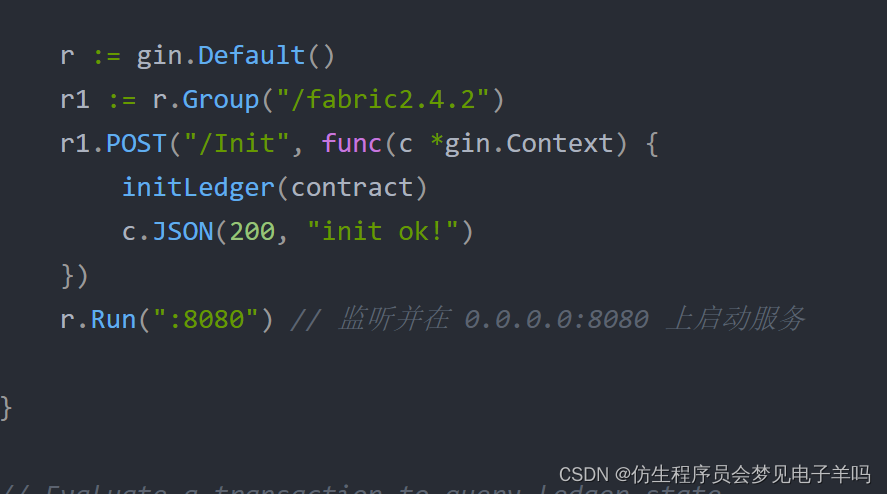
改为这个:r1.POST("/CreateAsset", func(c *gin.Context) { var asset Asset c.ShouldBind(&asset) c.JSON(200, asset) marshal, _ := json.Marshal(asset) CreateAsset(contract, asset) fmt.Println("存入成功!存入的数据是:", string(marshal)) //fmt.Println("asset:", asset) })- 1
- 2
- 3
- 4
- 5
- 6
- 7
- 8
- 9
函数:
func CreateAsset(contract *client.Contract, asset Asset) string { evaluateResult, err := contract.SubmitTransaction("CreateAsset", asset.ID, asset.Color, strconv.Itoa(asset.Size), asset.Owner, strconv.Itoa(asset.AppraisedValue)) if err != nil { panic(fmt.Errorf("failed to evaluate transaction: %w", err)) } result := formatJSON(evaluateResult) fmt.Printf("*** Result:%s\n", result) return string(evaluateResult) }- 1
- 2
- 3
- 4
- 5
- 6
- 7
- 8
- 9
- 10
- 11


总结
本次实验内容内容不多,难度颇大。
其一在于作者默认搭好框架,所以需要按照前文做出适配。
其二是网络搭好之后的查询,如果看了前文,可以知道作者是修改了https://github.com/hyperledger/fabric-samples/tree/main/asset-transfer-basic
部分的代码,也就是本文的gin框架部分。修改也很多,

然后就是代码,代码在我这里经常报错,然后为了解决一个bug往往会搞出更多的问题,尤其是网络接口的占用,就在写文档的现在,我的7051端口莫名被占用了,为了更好完成期末任务,决定找一个正确而清晰的文档从头开始配置。(很大的原因是这几次作业下来整个fabric文件夹臃肿不堪,fabric-samples就有好几个,隔着几周时间回去看,有能运行的,也有当初是坑,后来没删的,总之,归零重启更有效)在做两个实验之前,我先按照作者的思路配置了环境,主要是启动网络。
其次是一种很新的工具,postman,现在还没有完全摸清这个软件的用途,目前仅做查询网址用途。第二个查询部分没有把assets查出来,可能是某个方面出了bug,之后会重新启用虚拟机,然后从头开始做一遍。

-
相关阅读:
HCIP(第十四天)
APT 组织 Kimsuky 瞄准大学研究人员
企业架构LNMP学习笔记28
网络路由详解
中科柏诚获“专精特新”称号,把一件事做到极致就是价值
03 矩阵与线性变换
Find My技术|苹果Find My网络带来的好处
windows殺死端口
10-26 maven配置
Java反射--师承韩顺平
- 原文地址:https://blog.csdn.net/Algernon98/article/details/128009665