-
C++入门基础05:表达式(表达式基础、算术运算符与赋值运算符、逻辑关系运算符、成员访问运算符与条件运算符、位运算符、移位运算符与类型转换)
C++入门基础05:表达式(表达式基础、算术运算符与赋值运算符、逻辑关系运算符、成员访问运算符与条件运算符、位运算符、移位运算符与类型转换)
一、表达式基础
#include//系统定义头文件一般是尖括号 #include #include using namespace std; struct Demo { int num1 = 5; int num2 = 10; }; //表达式基础 int main() { //表达式 //3+2 a+b 3*4+2 //运算符求值顺序以及优先级 //3*4+2 (3+5)*4+2 = == ++ -- . Demo demo; cout << demo.num1 + 5 + demo.num2 * 4 << endl; // 取成员的优先级比 + 和 * 要高。 // 5+5+40 = 50 //不同类型对象参与运算的对象转换 float a = 10.8f; int b = 5; //先将int转为float,再参与计算 cout << a + b << endl; //括号无视优先级 //不知道优先级可以用括号来解决 if ((a == b) || (a > 0)) { cout << "if" << endl; } return 0; } - 1
- 2
- 3
- 4
- 5
- 6
- 7
- 8
- 9
- 10
- 11
- 12
- 13
- 14
- 15
- 16
- 17
- 18
- 19
- 20
- 21
- 22
- 23
- 24
- 25
- 26
- 27
- 28
- 29
- 30
- 31
- 32
- 33
- 34
- 35
- 36
- 37
- 38

运算符优先级:


二、算术运算符与赋值运算符
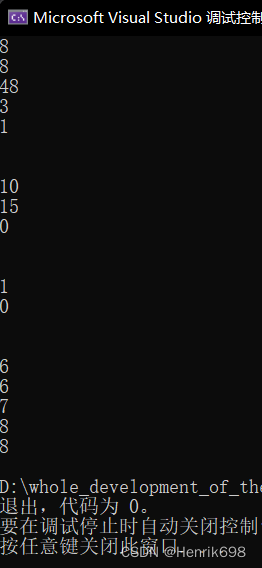
#include//系统定义头文件一般是尖括号 #include #include using namespace std; //表达式基础 int main() { //算术运算符 // + - * / % (求余/取模) cout<< 3+5 << endl; cout<< 10-2 << endl; cout<< 6*8 << endl; cout<< 9/3 << endl; cout<< 10%3<< endl; cout << "\n" << endl; //赋值运算符 // = += -= *= /= %= // 赋值 先加再赋值 先减再赋值 先乘再赋值 先除再赋值 求余再赋值(求余计算必须是整数) int a; a = 10; cout << a << endl; a += 5; // a = a + 5; cout << a << endl; //其他同理.... a %= 3; cout << a << endl; cout << "\n" << endl; //自增/自减运算符 //++ -- a++; //a = a +1 cout << a << endl; a--; //a = a -1 cout << a << endl; cout << "\n" << endl; int b = 6; cout << b << endl; cout << b++ << endl; //先将b赋给表达式后,再做自增运算。(输出的是表达式的结果) cout << b << endl; cout << ++b << endl; //先进行自增运算,再将结果赋给表达式。(输出的是表达式的结果) cout << b << endl; return 0; } - 1
- 2
- 3
- 4
- 5
- 6
- 7
- 8
- 9
- 10
- 11
- 12
- 13
- 14
- 15
- 16
- 17
- 18
- 19
- 20
- 21
- 22
- 23
- 24
- 25
- 26
- 27
- 28
- 29
- 30
- 31
- 32
- 33
- 34
- 35
- 36
- 37
- 38
- 39
- 40
- 41
- 42
- 43
- 44
- 45
- 46
- 47
- 48
- 49
- 50
三、逻辑关系运算符
#include//系统定义头文件一般是尖括号 #include #include using namespace std; //表达式基础 int main() { //逻辑运算符 //!逻辑非 //&& 逻辑与 //|| 逻辑或 int a = 9; int b = -2; if (a > 0 && b > 0) cout << "(a > 0 && b > 0):"<< (a > 0 && b > 0) << endl; if(a > 0 || b > 0) cout << "(a > 0 || b > 0):" << (a > 0 || b > 0) << endl; bool c = true; if (!c) cout << " c的值是假的,就是false" << endl; cout << "\n" << endl; //关系运算符 //>> = <<= == != cout << "a>b:" << (a > b) << endl; cout << "a>=b:" << (a >= b) << endl; cout << "a - 1
- 2
- 3
- 4
- 5
- 6
- 7
- 8
- 9
- 10
- 11
- 12
- 13
- 14
- 15
- 16
- 17
- 18
- 19
- 20
- 21
- 22
- 23
- 24
- 25
- 26
- 27
- 28
- 29
- 30
- 31
- 32
- 33
- 34
- 35
- 36
- 37
- 38
- 39
- 40
- 41

四、成员访问运算符与条件运算符
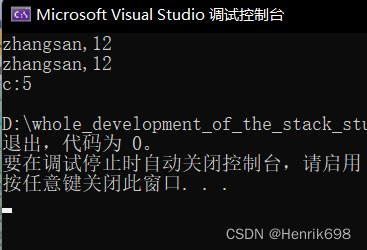
#include//系统定义头文件一般是尖括号 #include #include using namespace std; struct Student { string name = "zhangsan"; int age = 12; }; //表达式基础 int main() { //成员访问运算符 //. -> Student* stu = new Student(); //通过指针访问成员。 cout << stu->name << "," << stu->age << endl; //这里可以解引用,通过点的方式访问。 cout << (*stu).name << "," << (*stu).age << endl; //条件运算符 //?: //(条件表达式) ? (满足条件执行第一条) : (不满足执行第二条) int a = 10; int b = 5; int c; a > b ? (c = a) : (c = b);//求较大值 a < b ? (c = a) : (c = b);//求较小值 cout << "c:" << c << endl; //单目运算符: ++ -- //双目运算符: + - * / % //三目运算符: 条件运算符 return 0; } - 1
- 2
- 3
- 4
- 5
- 6
- 7
- 8
- 9
- 10
- 11
- 12
- 13
- 14
- 15
- 16
- 17
- 18
- 19
- 20
- 21
- 22
- 23
- 24
- 25
- 26
- 27
- 28
- 29
- 30
- 31
- 32
- 33
- 34
- 35
- 36
- 37
- 38
五、位运算符、移位运算符与类型转换
1、位运算符
为运算符:&(按位与); |(按位或); ^(按位异或);~(非/按位取反)。
&(按位与):只要有0,就是0。
|(按位或):只要有1,就是1。
^(按位异或):相同为0,相异为1。
~(非/按位取反):0取反为1,1取反为0。13的二进制是=>1101
数字在计算机中存储是按照二进制进行存储的,一个数按照8位进行存储的话,最高位是一个符号位,表示正数还是负数,那么对于13这个数,是一个整数,那么二进制存储就是00001101,数字在计算机中是以补码的形式进行存储的,对于正数来说,原码和补码是一样的,但是对于负数来说,原码等于补码取反再加1(比如11110010,该二进制数的原码是这个11110010先减1再取反,11110010减1为11110001,再取反(最高位不取反)10001110,原码结果为10001110,为-14)。
原码:00001101 =>13
补码:00001101
00001101 取反=> 11110010 负数补码求原码=> 补码减1再取反=> 10001110=> -14
补码:11110010
原码:10001110 => -14

#include//系统定义头文件一般是尖括号 #include #include using namespace std; //位运算符与类型转换 int main() { //位运算符(针对整数) //为运算符:&(按位与) |(按位或) ^(按位异或)~(非/按位取反); 关系运算符(对应的是表达式):&& || ! //整数的二进制表示 //二进制:十进制=>2:10;3:11;4:100... int a = 13; //13 = 8+4+1=> 1101 int b = 6; // 6 =4+2 =>0110 cout << "按位与:" << (a & b) << endl; cout << "按位或:" << (a | b) << endl; cout << "按位异或:" << (a ^ b) << endl; cout << "按位取反:" << ~a << endl; return 0; } - 1
- 2
- 3
- 4
- 5
- 6
- 7
- 8
- 9
- 10
- 11
- 12
- 13
- 14
- 15
- 16
- 17
- 18
- 19
- 20
- 21
- 22
- 23

2、移位运算符
移位运算很多时候在编程中是很有用的一个操作。
13 = 8+4+1=> 1101 左移2位,就是110100 = 52。
左移就是乘以2,左移几位就是乘以几次2。13 *2 *2 = 52。
6 =4+2 =>0110 右移2位,就是01 = 1。
右移就是除以2,右移几位就是除以几次2。6 /2 /2 = 1。

#include//系统定义头文件一般是尖括号 #include #include using namespace std; //位运算符与类型转换 int main() { //位运算符(针对整数) //为运算符:&(按位与) |(按位或) ^(按位异或)~(非/按位取反); 关系运算符(对应的是表达式):&& || ! //整数的二进制表示 //二进制:十进制=>2:10;3:11;4:100... int a = 13; //13 = 8+4+1=> 1101 int b = 6; // 6 =4+2 =>0110 //移位运算符 //<<(左移)>>(右移) cout << "a左移2位:"<< (a << 2) << endl; cout << "b右移2位:" << (b >> 2) << endl; return 0; } - 1
- 2
- 3
- 4
- 5
- 6
- 7
- 8
- 9
- 10
- 11
- 12
- 13
- 14
- 15
- 16
- 17
- 18
- 19
- 20
- 21
- 22
- 23
- 24

3、类型转换(显式转换与隐式转换)
显式转换 与 隐式转换
#include//系统定义头文件一般是尖括号 #include #include using namespace std; int main() { //类型转换 //显式转换 与 隐式转换 //隐式转换:(可能损失精度) //short->int //bool:0 1 (非0的数转为1) int c = 3.14; cout << "c:" << c << endl; //显式转换: //转换运算函数 //static_cast const_cast return 0; } - 1
- 2
- 3
- 4
- 5
- 6
- 7
- 8
- 9
- 10
- 11
- 12
- 13
- 14
- 15
- 16
- 17
- 18
- 19
- 20
- 21
- 22
- 23

六、代码经验分享
#include//系统定义头文件一般是尖括号 #include #include using namespace std; struct Student { string name = "zhangsan"; int age = 10; string address = "beijing"; }; int main() { //1、运算符的多重含义 & * << >> int i = 5; int& ri = i; //&出现在定义语句里,作为声明符,表示引用。 cout << "引用ri: " << ri << endl; int* p; //*出现在定义语句里,作为声明符,表示指针。 p = &i; //&出现在赋值语句里,作为取地址符。 cout << "i的地址:" << &i << endl; cout << "p:" << p << endl; cout << "*p解引用:" << *p << endl; *p = i; //*出现在赋值语句里,作为解引用。 int& r2 = *p; //&出现在定于语句里,作为声明符,表示引用,*出现在赋值语句里,作为解引用。 cout << "引用r2: " << r2 << endl; cout << "引用r2地址: " << &r2 << endl; cout << "i: " << i << endl; //<<输出 i = i << 5; //<<左移,移位运算 //2、优先级拿不准用括号 //3、sizeof(指针) cout << "\n" << endl; char str[] = "i love study C++! "; //数组名是可以转换为指针的。 //sizeof求数组大小时,并不会将数组转化为指针处理。 cout << "sizeof(str):" << sizeof(str) << endl; char* str1 = new char[16]; //定义一个指针,动态分配了16个char大小的存储。 str1 = str; //数组名是可以转换为指针的。 //这里取的是指针本身的大小,而不是指针所指向的内存的大小。 cout << "sizeof(str1):" << sizeof(str1) << endl; cout << "sizeof(p):" << sizeof(p) << endl; cout << "str中的字符个数:" << sizeof(str) / sizeof(char) << endl; // 求数组中元素的个数 int d[10] = {1, 2, 3, 4, 5, 6, 7, 8, 9, 10}; //大括号 { } 之间的值的数目不能大于我们在数组声明时在方括号 [ ] 中指定的元素数目。 cout << "sizeof(d):" << sizeof(d) << endl; cout << "d中的元素个数:" << sizeof(d) / sizeof(int) << endl; Student* stu = new Student(); cout << "sizeof(stu):" << sizeof(stu) << endl; cout << "sizeof(*stu):" << sizeof(*stu) << endl; //4、避免强制类型转换,会产生错误。 //static_cast, dynamic_cast, reinterrept_cast return 0; } - 1
- 2
- 3
- 4
- 5
- 6
- 7
- 8
- 9
- 10
- 11
- 12
- 13
- 14
- 15
- 16
- 17
- 18
- 19
- 20
- 21
- 22
- 23
- 24
- 25
- 26
- 27
- 28
- 29
- 30
- 31
- 32
- 33
- 34
- 35
- 36
- 37
- 38
- 39
- 40
- 41
- 42
- 43
- 44
- 45
- 46
- 47
- 48
- 49
- 50
- 51
- 52
- 53
- 54
- 55
- 56
- 57
- 58
- 59
- 60
- 61
- 62
- 63
- 64
- 65
- 66

-
相关阅读:
Android Jetpack组件简介
SpringBoot + openFeign实现远程接口调用
常用函数(睡眠函数、函数耗时)
内网渗透之Linux反弹shell(综合)
elasticsearch 深度分页查询 Search_after(图文教程)
Mangopi MQ-R:T113-s3编译Tina Linux系统
YOLOv5-6.1源码详解之损失函数loss.py
最近学习内容(2023-10-22)
代码随想录动态规划——编辑距离
什么是APS?APS+MES如何解决生产难题?
- 原文地址:https://blog.csdn.net/m0_37755995/article/details/127951087
