-
C++string—常用接口介绍+模拟实现+习题讲解
如果调试一个程序让你很苦恼,千万不要放弃,成功永远在拐角之后,除非你走到拐角,否则你永远不知道你离他多远,所以,请记住,坚持不懈,直到成功。

目录
前言
STL(standard template libaray-标准模板库):是C++标准库的重要组成部分,不仅是一个可复用的组件库,而且是一个包罗数据结构与算法的软件框架。学会使用STL,许多底层的数据结构以及算法都不需要自己重新造轮子,站在前人的肩膀上,健步如飞的快速开发。
本篇文章介绍string类,学习string类我们大致分两个方面进行,首先是学习如何使用库中string接口,然后再通过学习string底层源代码的进行模拟实现接口
在介绍string接口前,首先介绍一个网站可以用来查询C++中的库函数以及STL,后续的学习当中会经常在这个文档上查阅各种接口——https://legacy.cplusplus.com/
1.string类的常用接口
string类包含许多接口,在这里我们主要重点介绍string类的常用接口,对于常用的接口我们需要做到不用查阅文档就可以熟练的使用,对于其它接口,只需要做到知道有这种接口,查阅文档会使用即可
1.1string类对象的常见构造:
函数名称 功能说明 string() 构造空的string类对象,即空字符串 string(const char* s) 用C-string来构造string类对象 string(const string&s) 拷贝构造函数 string(size_t n, char c) string类对象中包含n个字符c 
1.2string类对象的访问及遍历操作
函数名称 功能说明 operator[] 返回pos位置的字符,const string类对象调用 范围for C++11支持的更简洁的范围for遍历方式 begin + end begin获取第一个字符的迭代器 , end获取最后一个字符下一个位置的迭
代器rebing + rend rbegin获取最后一个字符下一个位置的迭代器,rend获取第一个字符的迭代器
operator[]:

 范围for:
 上面是两种string类对象常规的遍历方式,下面介绍一种STL中通用的遍历方式就是迭代器
迭代器在行为上像指针一样的类型
正向遍历:begin + end


反向遍历:rebegin + rend

 以上是关于迭代器正向遍历和反向遍历的两种方式,除此之外,库中还有const修饰的函数
如:
 为什么会存在const修饰的函数呢?通过下面的代码来说明:
这段代码中我们只是想打印这个字符串,并不做任何的修改,因此可以使用引用,这样做就减少了一次拷贝构造,提高程序的效率,所以在库中也定义了const修饰的函数
下面来介绍一个在编写代码时的小技巧:

上面两行代码是等价的,在使用熟练之后,如果在编写代码的过程中如果觉得定义rit这个变量时类型过长,可以使用auto这个关键字,因为auto可以自动推导变量类型
1.3string类对象的容量操作
size和length函数是等价的:函数名称 功能说明 size 返回字符串有效长度 length 返回字符串有效长度 capacity 返回空间总大小 clear 清空有效字符 reserve 为字符串预留空间 resize 将有效字符的个数该成n个,多出的空间用字符c填充 
capacity函数:

clear函数:

reserve函数:

关于reserve这个函数的好处是什么呢?
string这个类在构造对象的时候,底层是使用动态增长的方式来按需申请和释放内存的,如果在构造之前就知道大概需要多大的空间,就不用频繁的申请内存,有效避免在堆上频繁申请内存,造成内存碎片的问题
resize函数:
功能:将有效字符改成n个,多出的空间用字符c来填充
因此会存在三种情况:
n < size :删除数据
size < n <= capacity :插入数据
n > capacity :扩容 + 插入数据
第一种情况:

第二种情况:

第三种情况:

1.4string类对象的修改操作:
函数名称 功能说明 push_back 在字符串后面尾插字符c append 在字符串后面追加一个字符串 operator+= 在字符串后面追加字符串 c_str 返回c格式字符串 find 从字符串pos位置开始往后找字符c,返回该字符在字符串中的位置 rfind 从字符串pos位置开始往前找字符c,返回该字符在字符串中的位置 substr 在str中从pos位置开始,截取n个字符,然后将其返回 insert 在pos位置插入字符 erase 删除pos位置处的n个字符 assign 将一个字符串拷贝到一个对象中去 replace 从pos位置开始,将n个字符改成n个字符 push_back函数:

append函数:

operator+=:

c_str函数:返回一个指向该字符串首字符的指针


find函数:
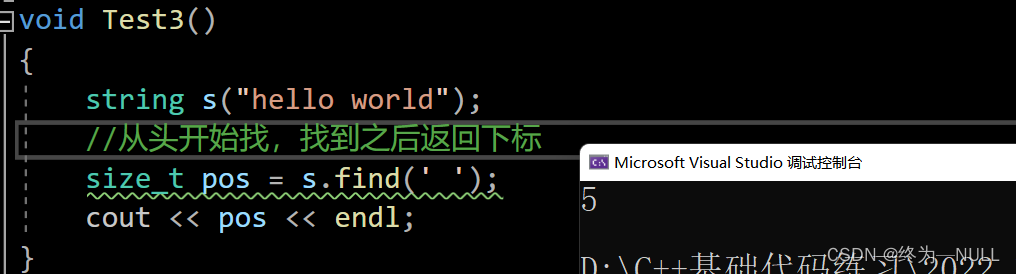
rfind函数:

注:find函数和rfind如果找不到就返回npos

-1是size_t类型转换后就是最大的整型:

substr函数:从pos位置开始,截取n个字符,返回截取字符第一个字符的地址


insert函数:

erase函数:

assign函数:

repalce函数:


2.string类的模拟实现
1.定义一个string类:为了和库里的区分将类名定义为String
- class String
- {
- public:
- //成员函数
- private:
- //成员变量
- };
接口1:
构造函数:
- //无参构造:
- String()
- {
- char* _str = new char[1];
- _str[0] = '\0';
- _capacity = _size = 0;
- }
- //带参构造:
- String(const char* str = "")
- {
- _size = strlen(str);
- _capacity = _size;
- _str = new char[_capacity + 1];
- strcpy(_str, str);
- }
接口2:
拷贝构造函数:
- //传统写法:
- String(const String& s)
- {
- _str = new char[s._capacity + 1];
- _capacity = s._capacity;
- _size = s._size;
- strcpy(_str, s._str);
- }
- //现代写法
- String(const String& s)
- :_str(nullptr)
- ,_size(0)
- ,_capacity(0)
- {
- String tmp(s._str);
- std::swap(_str, tmp._str);
- std::swap(_size, tmp._size);
- std::swap(_capacity, tmp._capacity);
- }
- //现代写法的优化:
- void swap(String& s)
- {
- std::swap(_str, s._str);//内置类型调用算法库里面的
- std::swap(_size, s._size);
- std::swap(_capacity, s._capacity);
- }
- String(const String& s)
- :_str(nullptr)
- , _size(0)
- , _capacity(0)
- {
- String tmp(s._str);
- //this->swap(tmp);
- swap(tmp);//自定义类型使用自己的swap,避免了使用算法库里面的产生三次深拷贝
- }
接口3
析构函数:
- ~String()
- {
- delete[] _str;
- _str = nullptr;
- _capacity = _size = 0;
- }
接口4
赋值重载函数:
- //传统写法
- String& operator=(const String& s)
- {
- if (this != &s)
- {
- char* tmp = new char[s._capacity + 1];
- strcpy(tmp, s._str);
- delete[] _str;
- _str = tmp;
- _size = s._size;
- _capacity = s._capacity;
- }
- return *this;
- }
- //现代写法:
- String& operator=(const String& s)
- {
- if (this != &s)
- {
- String tmp(s);
- swap(tmp);
- }
- return *this;
- }
- //现代写法的优化
- String& operator=(String s)
- {
- if (this != &s)
- {
- swap(s);
- }
- return *this;
- }
接口5
operator[]:
- char& operator[](size_t pos)
- {
- return _str[pos];
- }
接口6
size():
- size_t size()
- {
- return _size;
- }
接口7
capacity():
- size_t capacity()
- {
- return _capacity;
- }
接口8:
c_str():
- char* c_str()
- {
- return _str;
- }
接口9:
begin和end
- typedef char* iterator;
- iterator begin()
- {
- return _str;
- }
- iterator end()
- {
- return _str + _size;
- }
接口10
reserve():
- void reserve(int n)
- {
- if (n > _capacity)
- {
- char* tmp = new char[n + 1];
- strcpy(tmp, _str);
- delete[] _str;
- _str = tmp;
- _capacity = n;
- }
- }
接口11
push_back():
- void push_back(char ch)
- {
- if (_size == _capacity)
- {
- int newCapacity = _capacity == 0 ? 4 : _capacity * 2;
- reserve(newCapacity);
- }
- _str[_size] = ch;
- ++_size;
- _str[_size] = '\0';
- }
接口12
append():
- void append(const char* str)
- {
- size_t len = strlen(str);
- if (_size+len > _capacity)
- {
- reserve(_size + len);
- }
- strcat(_str, str);
- _size += len;
- }
接口13
operator+=():
- //+=字符
- String& operator+=(const char ch)
- {
- push_back(ch);
- return *this;
- }
- //+=字符串
- String& operator+=(const char* str)
- {
- append(str);
- return *this;
- }
接口14
insert():
- //插入字符
- String& insert(size_t pos, const char ch)
- {
- assert(pos < _size);
- if (_size == _capacity)
- {
- int newCapacity = _capacity == 0 ? 4 : _capacity * 2;
- reserve(newCapacity);
- }
- //写法1:
- /* int end = _size;
- while (end >= (int)pos)
- {
- _str[end + 1] = _str[end];
- --end;
- }*/
- //写法2:
- int end = _size + 1;
- while (end > pos)
- {
- _str[end] = _str[end - 1];
- --end;
- }
- _str[pos] = ch;
- _size++;
- return *this;
- }
- //插入字符串:
- String& insert(size_t pos, const char* str)
- {
- size_t len = strlen(str);
- if (_size + len > _capacity)
- {
- reserve(_size + len);
- }
- //写法1:
- /* int end = _size;
- while (end >= (int)pos)
- {
- _str[end + len] = _str[end];
- --end;
- }*/
- //写法2:
- int end = _size + len;
- while (end >= pos + len)
- {
- _str[end] = _str[end - len];
- --end;
- }
- strncpy(_str + pos, str, len);
- _size += len;
- return *this;
- }
接口15
erase():
- String& erase(size_t pos, size_t len = npos)
- {
- assert(pos < _size);
- if (len == npos || len >= _size - pos)
- {
- _str[pos] = '\0';
- _size = pos;
- }
- else
- {
- strcpy(_str + pos, _str + pos + len);
- _size -= len;
- }
- return *this;
- }
接口16
find():
- //查找字符
- size_t find(char ch, size_t pos = 0)
- {
- assert(pos < _size);
- int i = pos;
- while (_size--)
- {
- if (_str[i] == ch)
- {
- return i;
- }
- i++;
- }
- return npos;
- }
- //查找字符串:
- size_t find(const char* str, size_t pos = 0)
- {
- assert(pos < _size);
- char* ptr = strstr(_str + pos, str);
- if (ptr == nullptr)
- {
- return npos;
- }
- else
- {
- return ptr - _str;
- }
- }
接口17
clear():
- void clear()
- {
- _str[0] = '\0';
- _size = 0;
- }
接口18
resize():
- void resize(size_t n, char ch = '\0')
- {
- if (n > _capacity)
- {
- reserve(n);
- for (int i = _size; i < n; i++)
- {
- _str[i] = ch;
- }
- _size = n;
- _str[_size] = '\0';
- }
- else
- {
- _str[_size] = '\0';
- _size = n;
- }
- }
流提取:oparetor<<()
- ostream& operator<<(ostream& out, String& s)
- {
- for (int i = 0; i < s.size(); i++)
- {
- out << s[i];
- }
- return out;
- }
流插入:oparetor>>()
- istream& operator>>(istream& in, String& s)
- {
- s.clear();
- //第一种写法
- //char ch = in.get();
- 等于空格或者换行就就结束了!
- //while (ch != ' ' && ch != '\n')
- //{
- // s += ch;
- // ch = in.get();
- //}
- // 第一种写法的优化
- //减少频繁扩容
- char buf[128] = { 0 };
- int i = 0;
- char ch = in.get();
- while (ch != ' ' && ch != '\n')
- {
- if (i == 127)
- {
- s += buf;
- i = 0;
- }
- buf[i++] = ch;
- ch = in.get();
- }
- //不足128或者剩下的:
- if (i > 0)
- {
- buf[i] = '\0';
- s += buf;
- }
- return in;
- }

3.string类的习题
习题1:字符串转换成整数oj链接
- class Solution {
- public:
- int StrToInt(string str) {
- int sum = 0;
- int flag = 1;
- for(int i = 0; i
- {
- if(str[i] == '+' || str[i] == '-')
- {
- flag = str[i] == '+'? flag : -flag;
- continue;
- }
- else if(!(str[i] >= '0' && str[i] <= '9'))
- {
- return 0;
- }
- else
- {
- sum = sum*10 + str[i] - '0';
- }
- }
- return sum*flag;
- }
- };
习题2:字符串相加oj链接
- class Solution {
- public:
- string addStrings(string num1, string num2) {
- int end1 = num1.size()-1;
- int end2 = num2.size()-1;
- int carry = 0;
- string retStr;
- retStr.reserve(max(num1.size(),num2.size()+1));
- while(end1 >= 0 || end2 >= 0)
- {
- int val1 = end1 >= 0 ? num1[end1] - '0' : 0;
- int val2 = end2 >= 0 ? num2[end2] - '0' : 0;
- int ret = val1 + val2 + carry;
- carry = ret / 10;
- ret %= 10;
- retStr += '0' + ret;
- end1--;
- end2--;
- }
- if(carry == 1)
- retStr += '1';
- reverse(retStr.begin(),retStr.end());
- return retStr;
- }
- };
习题4:仅仅反转字母oj链接
- class Solution {
- public:
- string reverseOnlyLetters(string s) {
- int begin = 0;
- int end = s.size()- 1;
- while(begin < end)
- {
- while(begin < end && !isalpha(s[begin]))
- {
- ++begin;
- }
- while(begin < end && !isalpha(s[end]))
- {
- --end;
- }
- swap(s[begin],s[end]);
- ++begin;
- --end;
- }
- return s;
- }
- };
习题5:字符串中只出现一次的字符oj链接
- class Solution {
- public:
- int firstUniqChar(string s) {
- int str[26] = { 0 };
- for(auto& ch : s)
- {
- str[ch - 'a']++;
- }
- for(int i = 0; i < s.size(); i++)
- {
- if(str[s[i]-'a'] == 1)
- return i;
- }
- return -1;
- }
- };
习题6:字符串中最后一个单词的长度oj链接
- #include
- #include
- using namespace std;
- int main()
- {
- string s;
- getline(cin,s);
- size_t pos = s.rfind(' ');
- cout<return 0;}
习题7:验证字符串是否回文oj链接
- class Solution {
- public:
- bool isCharacter(char ch)
- {
- return ((ch >= '0' && ch <= '9')
- ||(ch >= 'a' && ch <= 'z')
- ||(ch >= 'A' && ch <= 'Z'));
- }
- bool isPalindrome(string s) {
- for(auto& ch : s)
- {
- if(ch >= 'A' && ch <= 'Z')
- {
- ch +=32;
- }
- }
- int begin = 0;
- int end = s.size()-1;
- while(begin < end)
- {
- while(begin < end && !isCharacter(s[begin]))
- {
- ++begin;
- }
- while(begin < end && !isCharacter(s[end]))
- {
- --end;
- }
- if(s[begin] != s[end])
- return false;
- else
- {
- ++begin;
- --end;
- }
- }
- return true;
- }
- };
习题8:反转字符串(区间部分反转)oj链接
- class Solution {
- public:
- string reverseStr(string s, int k) {
- int n = s.size();
- for(int i = 0; i
- {
- reverse(s.begin()+i,s.begin() + min(i+k,n));
- }
- return s;
- }
- };
习题9:反转字符串中的单词oj链接
- class Solution {
- public:
- string reverseWords(string s) {
- int len = s.size();
- int begin = 0;
- int end = 0;
- while(begin < len)
- {
- while(s[end] != ' ' && s[end] != '\0')
- {
- ++end;
- }
- int end1 = end+1;
- while(begin < end)
- {
- swap(s[begin],s[end-1]);
- ++begin;
- --end;
- }
- begin = end1;
- end = end1;
- }
- return s;
- }
- };
- 相关阅读:
2020美亚个人赛复盘
C语言:指针(二)
基于JavaSwing开发文件传输与聊天系统 课程设计 大作业 毕业设计
springcloud整合seata我踩过的坑
常见的软件测试面试题,千万别答错了
java-php-net-python-校园后勤计算机毕业设计程序
java计算机毕业设计校服征订系统源码+系统+数据库+lw文档+mybatis+运行部署
【并发】J.U.C线程池
第一章 初识python
每日一个设计模式之【工厂模式】
- 原文地址:https://blog.csdn.net/qq_65307907/article/details/127545492
- 最新文章
-
沪漂五周年了:我越来越迷茫了
Agentic Skill Routing 实战:别再把所有 Skill 塞进 AI Agent 上下文
MySQL-Seconds_behind_master的精度误差
[MAF预定义ChatClient中间件-03]CachingChatClient——利用缓存省钱省时间
AI的至暗历史:从万众期待到被政府撤资,AI的两次死亡徘徊
Agent OS :五种驯服不确定性的范式
PortSwigger SQL注入LAB11
数据库即时编译JIT
[Begin]AI Learn Data Day 0
深度学习进阶(二十七)现代 LLM 的核心架构设计其二:SwiGLU
