-
C++STL——string类与模拟实现
什么是STL
STL(standard template libaray-标准模板库):是C++标准库的重要组成部分,不仅是一个可复用的组件库,而且是一个包罗数据结构与算法的软件框架。
STL的六大组成:仿函数,算法,迭代器,空间配置器,容器,配接器。
注意:
这里我是按照功能归类讲string归类到了STL里面,如果按照发展史其实并不属于STL中的容器。
并且从现在开始我们会更频繁的开始使用这个网站了:
cpulspulsstring类
为什么要学习string呢?C语言中字符串是以‘\0’结尾的,C语言当中提供的str库函数是与字符串分开的,很可能越界访问,也不方便管理,C++主要是OOP思想(抽象”、“封装”、“继承”、“多态),所以出现了string,并且更方便增删查改。
字符串的标准
计算机是二进制,但是如果让我们去理解一堆0和1组成的是什么意思很难理解,所以就有了编码(计算机存值——文字符号,对应关系):

这些符号就可以组成很多东西了,比如数值,单词等等。
如果你想储存abc,那么在内存中储存的就是97 98 99
想让计算机流通全世界,那么就要支持各个国家的语言,这个时候就出现了统一码。
在UTF-8中将常用的汉字用两个字节去存储,256*256=65536。(但是这里要兼容ASCII码值所以没有这么多)
有些生僻字需要三个或者四个字节去储存。
UTF-16不兼容ASCII码值,起步用2个字节。
UTF-32不兼容ASCII码值,起步用4个字节。但是中华文化博大精深,国内又针对函数定义了新的标准,GBK。
什么是string
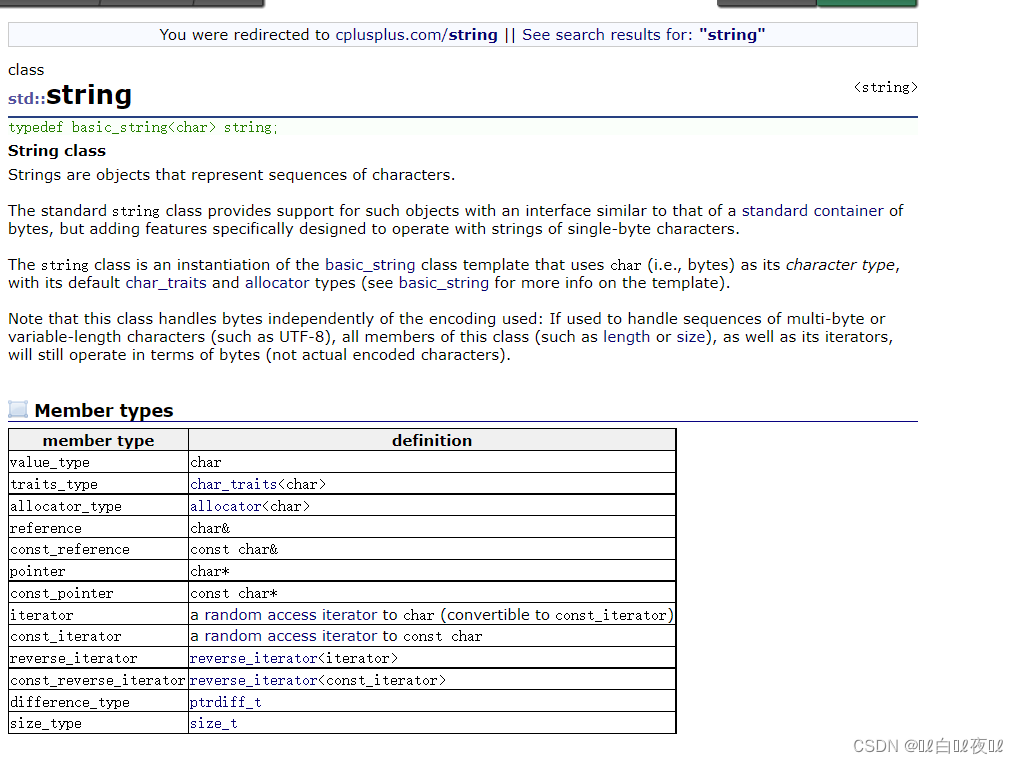
string是字符串的类,该类添加了很多接口便于操作string类。
string在底层实际是:basic_string模板类的别名,typedef basic_string
不能操作多字节和变长字节序列。
cplusplus中是这样描述的:
string常用接口介绍
string的初始化
string()构造空string类的对象
string(const char* s)用字符串初始化新构造string类的的对象
string(const string&s)用string类对象构造新的string类对象
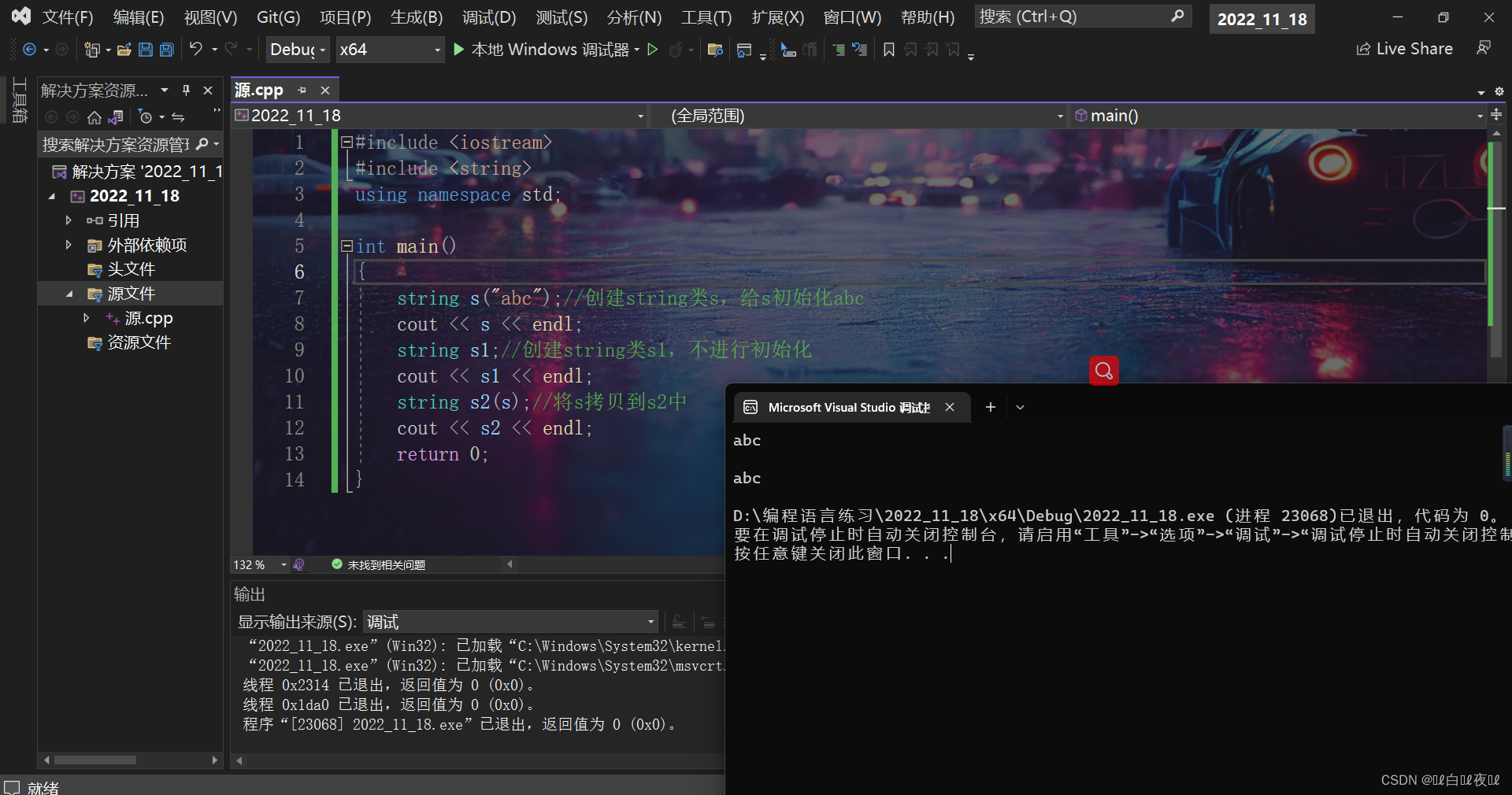
这类接口是调用构造函数。#include#include using namespace std; int main() { string s("abc");//创建string类s,给s初始化abc cout << s << endl; string s1;//创建string类s1,不进行初始化 cout << s1 << endl; string s2(s);//将s拷贝到s2中 cout << s2 << endl; return 0; } - 1
- 2
- 3
- 4
- 5
- 6
- 7
- 8
- 9
- 10
- 11
- 12
- 13
- 14
比较大小与赋值
比较的是字符串的ASCII码值。
这些接口都是对于运算符进行重载。
先来看赋值:string& operator= (const string& str);赋值string类的对象
string& operator= (const char* s);赋值字符串
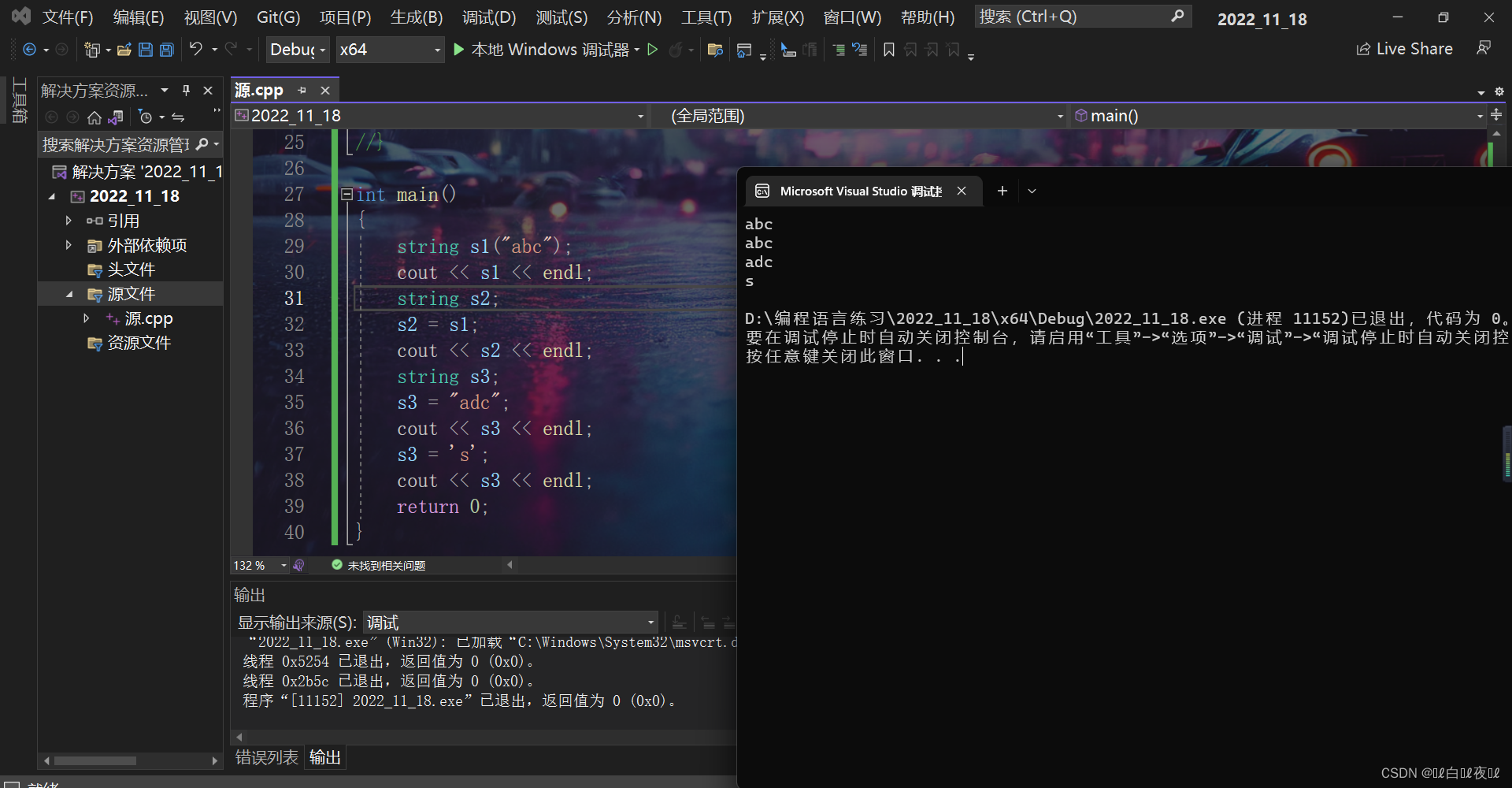
string& operator= (char c);赋值一个字符#include#include using namespace std; int main() { string s1("abc"); cout << s1 << endl; string s2; s2 = s1;//赋值string类的对象 cout << s2 << endl; string s3; s3 = "adc";//赋值字符串 cout << s3 << endl; s3 = 's';//赋值一个字符 cout << s3 << endl; return 0; } - 1
- 2
- 3
- 4
- 5
- 6
- 7
- 8
- 9
- 10
- 11
- 12
- 13
- 14
- 15
- 16
- 17
等于,大于,小于等:
返回值为bool,参数是引用类。
正确返回1,错误返回0.#include#include using namespace std; int main() { string s1("abc"); string s2("adc"); string s3("abc"); string s4("abb"); cout << "==:" << endl; cout << (s1 == s2) << endl; cout << (s1 == s3) << endl; cout << "< <=:" << endl; cout << (s1 < s2) << endl; cout << (s1 <= s2) << endl; cout << (s1 < s3) << endl; cout << (s1 <= s3) << endl; cout << (s1 <= s4) << endl; cout << "> >=:" << endl; cout << (s1 > s2) << endl; cout << (s1 >= s2) << endl; cout << (s1 >= s3) << endl; cout << (s1 > s4) << endl; cout << (s1 >= s4) << endl; return 0; } - 1
- 2
- 3
- 4
- 5
- 6
- 7
- 8
- 9
- 10
- 11
- 12
- 13
- 14
- 15
- 16
- 17
- 18
- 19
- 20
- 21
- 22
- 23
- 24
- 25
- 26

容量
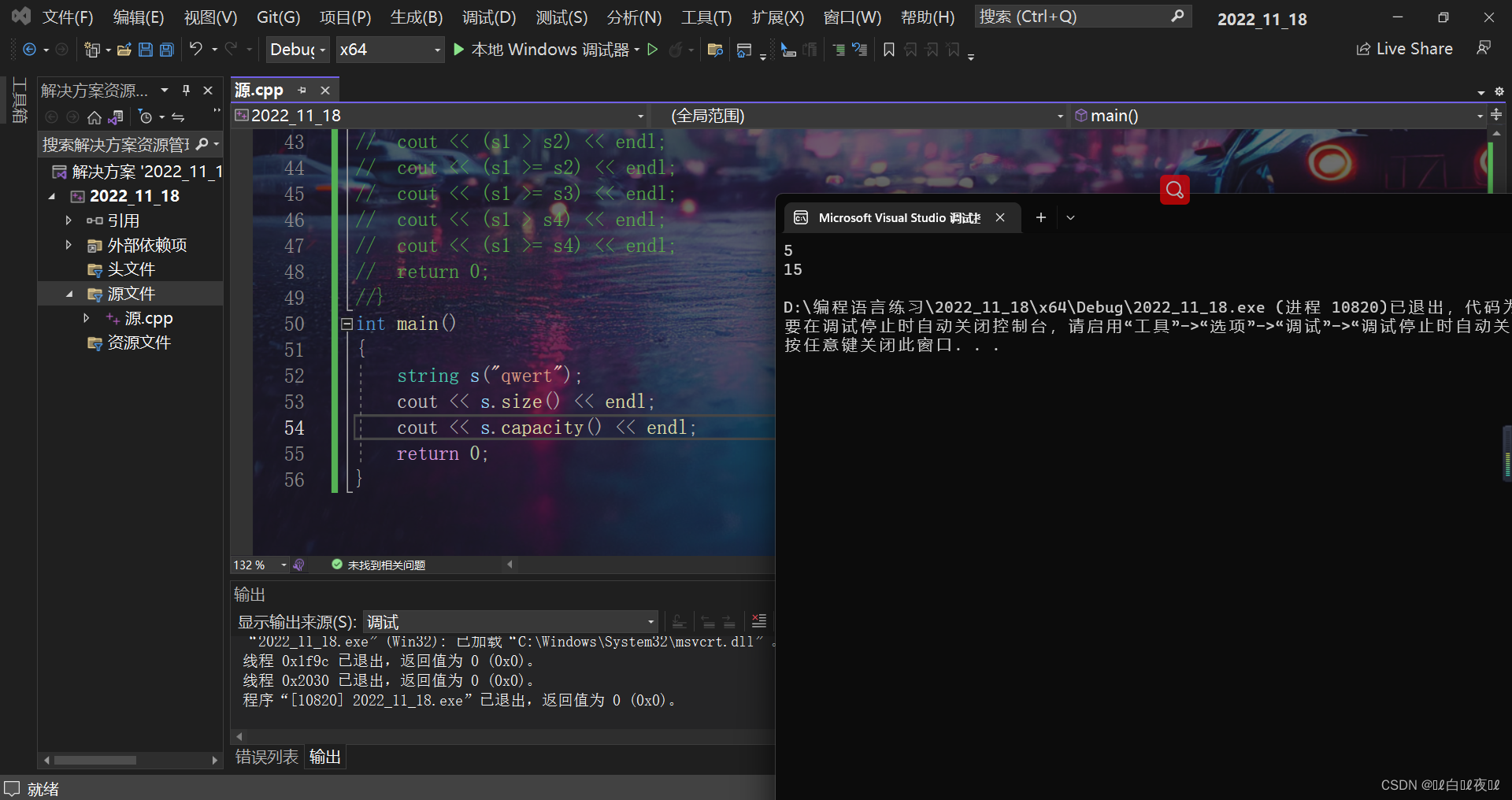
这里要注意容量和有效字符长度的区别。
size返回字符串有效长度
capacity返回有效容量长度size_t size() const;
size_t capacity() const;#include#include using namespace std; int main() { string s("qwert"); cout << s.size() << endl; cout << s.capacity() << endl; return 0; } - 1
- 2
- 3
- 4
- 5
- 6
- 7
- 8
- 9
- 10
这里有一个与size功能相同的接口length。(原因是因为命名的习惯)

empty检测对象是否为空字符串,空返回1,非空返回0
clear清空对象中的有效字符串bool empty() const;
void clear();#include#include using namespace std; int main() { string s("qwert"); cout << s.empty() << endl; s.clear();//这里并不改变容量大小 cout << s.empty() << endl; return 0; } - 1
- 2
- 3
- 4
- 5
- 6
- 7
- 8
- 9
- 10
- 11

reserve为字符串预留空间
resize将有效字符串变成指定长度,多出的长度用指定字符补上void reserve (size_t n = 0);
void resize (size_t n);
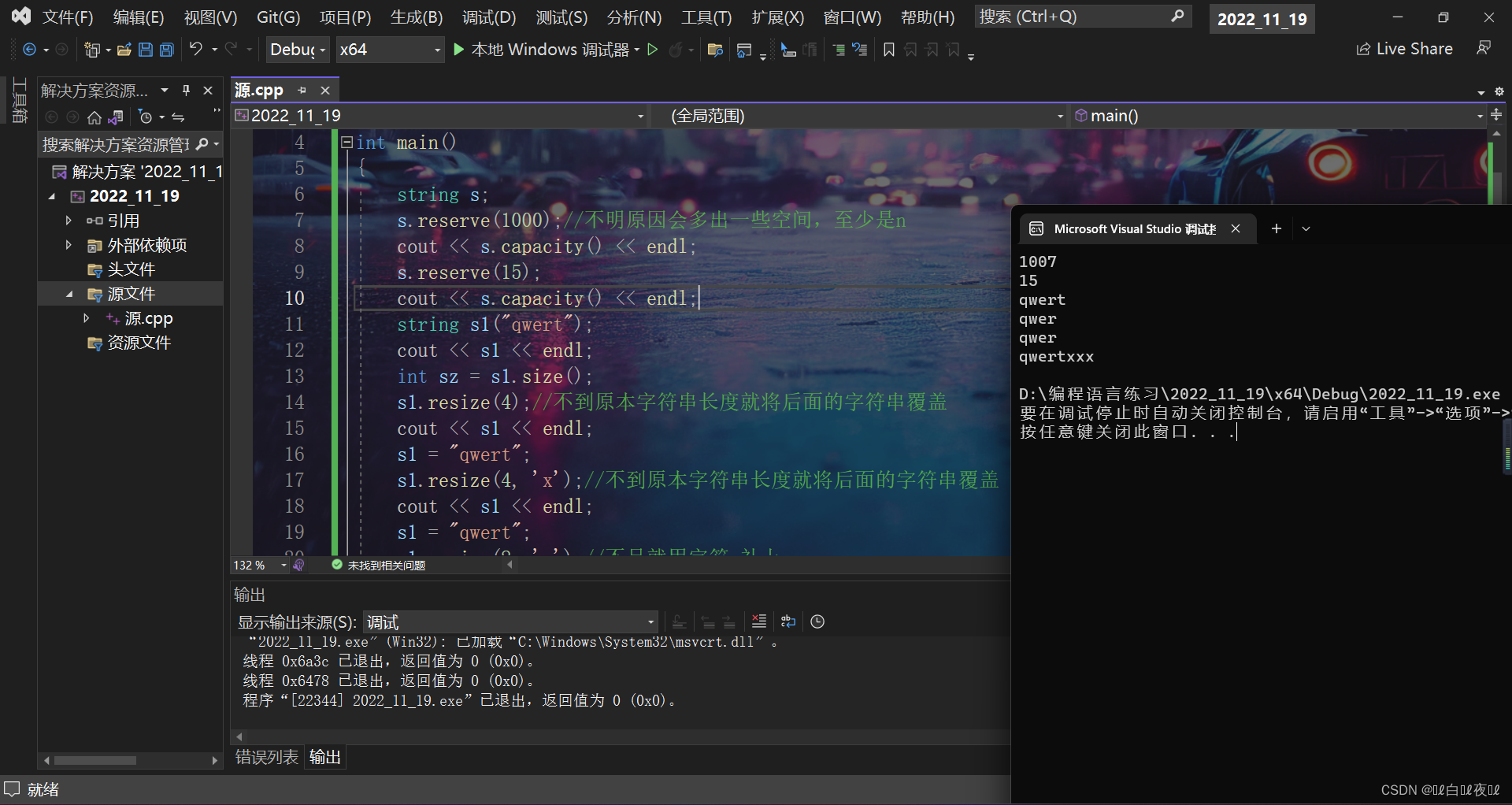
void resize (size_t n, char c);#include#include using namespace std; int main() { string s; s.reserve(1000);//内存对齐会多出一些空间,总大小至少是n cout << s.capacity() << endl; s.reserve(15);//VS编译器下15及以下才会缩容,前提是原来对象中字符串不能超过15个长度 cout << s.capacity() << endl; string s1("qwert"); cout << s1 << endl; int sz = s1.size(); s1.resize(4);//不到原本字符串长度就将后面的字符串覆盖 cout << s1 << endl; s1 = "qwert"; s1.resize(4, 'x');//不到原本字符串长度就将后面的字符串覆盖 cout << s1 << endl; s1 = "qwert"; s1.resize(8, 'x');//不足就用字符x补上 cout << s1 << endl; return 0; } - 1
- 2
- 3
- 4
- 5
- 6
- 7
- 8
- 9
- 10
- 11
- 12
- 13
- 14
- 15
- 16
- 17
- 18
- 19
- 20
- 21
- 22
- 23
对象的修改
push_back在后面追加一个字符
append在后面追加一个字符串
operator+=在后面追加一个字符串或字符还有对象void push_back (char c);
string& append (const char* s);
string& operator+= (const string& str);
string& operator+= (const char* s);
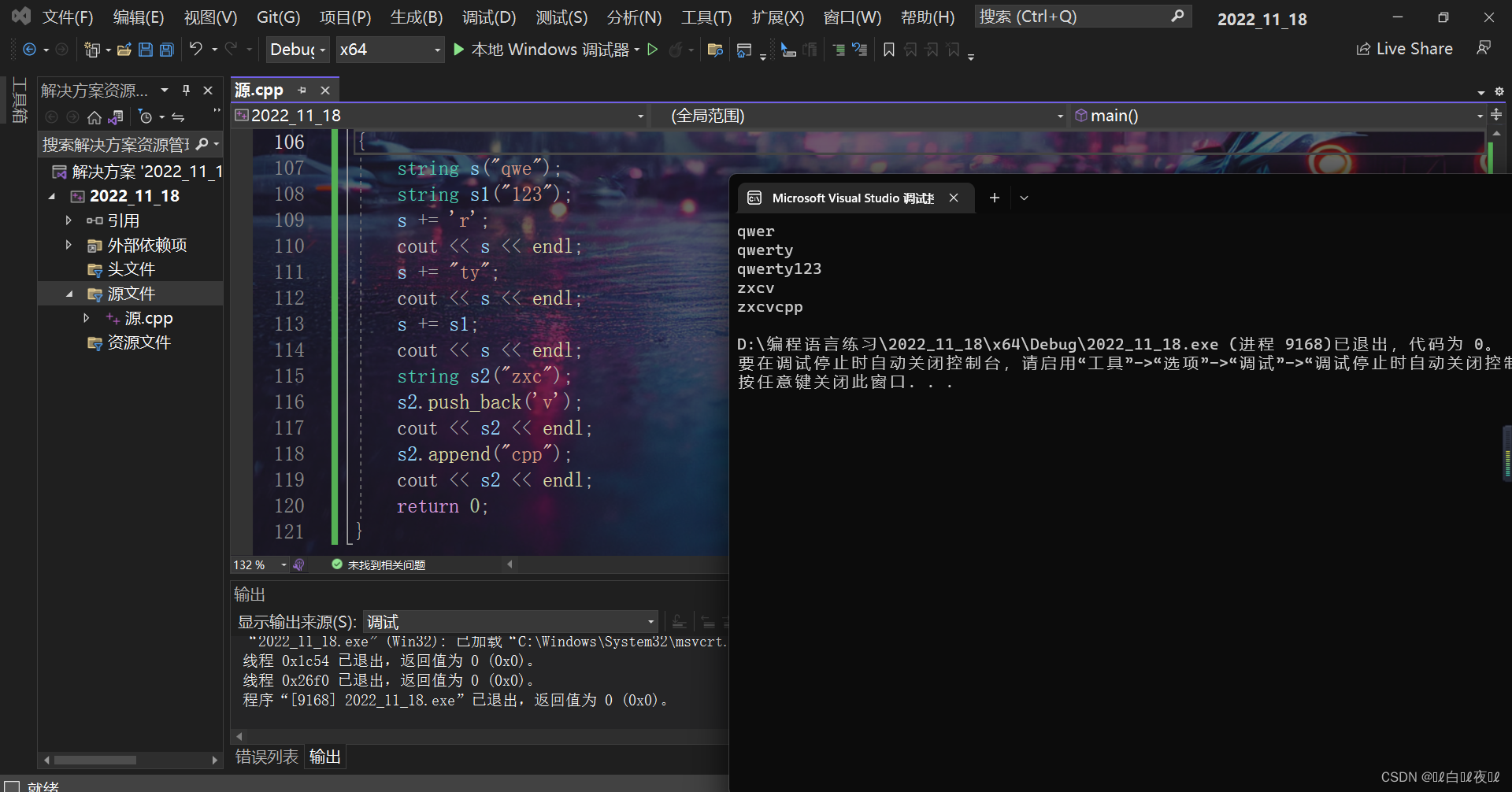
string& operator+= (char c);#include#include using namespace std; int main() { string s("qwe"); string s1("123"); s += 'r'; cout << s << endl; s += "ty"; cout << s << endl; s += s1; cout << s << endl; string s2("zxc"); s2.push_back('v'); cout << s2 << endl; s2.append("cpp"); cout << s2 << endl; return 0; } - 1
- 2
- 3
- 4
- 5
- 6
- 7
- 8
- 9
- 10
- 11
- 12
- 13
- 14
- 15
- 16
- 17
- 18
- 19
- 20
insert在指定位置插入指定内容(不推荐,时间复杂度高)
pop_back尾删
erase从指定位置删除指定长度的字符(不推荐,时间复杂度高)
c_str返回C语言的字符串string& insert (size_t pos, const string& str);
string& insert (size_t pos, const char* s);
void pop_back();
string& erase (size_t pos = 0, size_t len = npos);
const char* c_str() const;#include#include using namespace std; int main() { string s("qwert"); string s1("zxc"); s.insert(1, "ccc"); cout << s << endl; s.insert(0, s1); cout << s << endl; s.pop_back(); cout << s << endl; s.erase(2, 4); cout << s << endl; cout << s.c_str() << endl;//这里是为了方便做返回值 } - 1
- 2
- 3
- 4
- 5
- 6
- 7
- 8
- 9
- 10
- 11
- 12
- 13
- 14
- 15
- 16
- 17

find + npos从指定位置向后查找指定位置的字符(npos是string类中特殊的静态常量-1)
rfind从指定位置向前查找指定位置的字符
substr从指定位置截取n个字符返回size_t find (const string& str, size_t pos = 0) const;
size_t find (const char* s, size_t pos = 0) const;
size_t rfind (const string& str, size_t pos = npos) const;
size_t rfind (const char* s, size_t pos = npos) const;
string substr (size_t pos = 0, size_t len = npos) const;#include#include using namespace std; int main() { string s("test.cpp"); int num = s.find("st", 0); cout << num << endl; num = s.find("st", 5); cout << num << endl; num = s.rfind("cpp", 7); cout << num << endl; num = s.rfind("cpp", 4); cout << num << endl; string s1 = s.substr(0, 4); cout << s1 << endl; return 0; } - 1
- 2
- 3
- 4
- 5
- 6
- 7
- 8
- 9
- 10
- 11
- 12
- 13
- 14
- 15
- 16
- 17
- 18

访问及遍历操作
operator[]返回对象下标的元素
begin+ end迭代器,begin是字符串最开始的元素,end是字符串末尾的‘\0’
rbegin + rend反向迭代器char& operator[] (size_t pos);
const char& operator[] (size_t pos) const;
iterator begin();
const_iterator begin() const;
iterator end();
const_iterator end() const;
reverse_iterator rbegin();
const_reverse_iterator rbegin() const;
reverse_iterator rend();
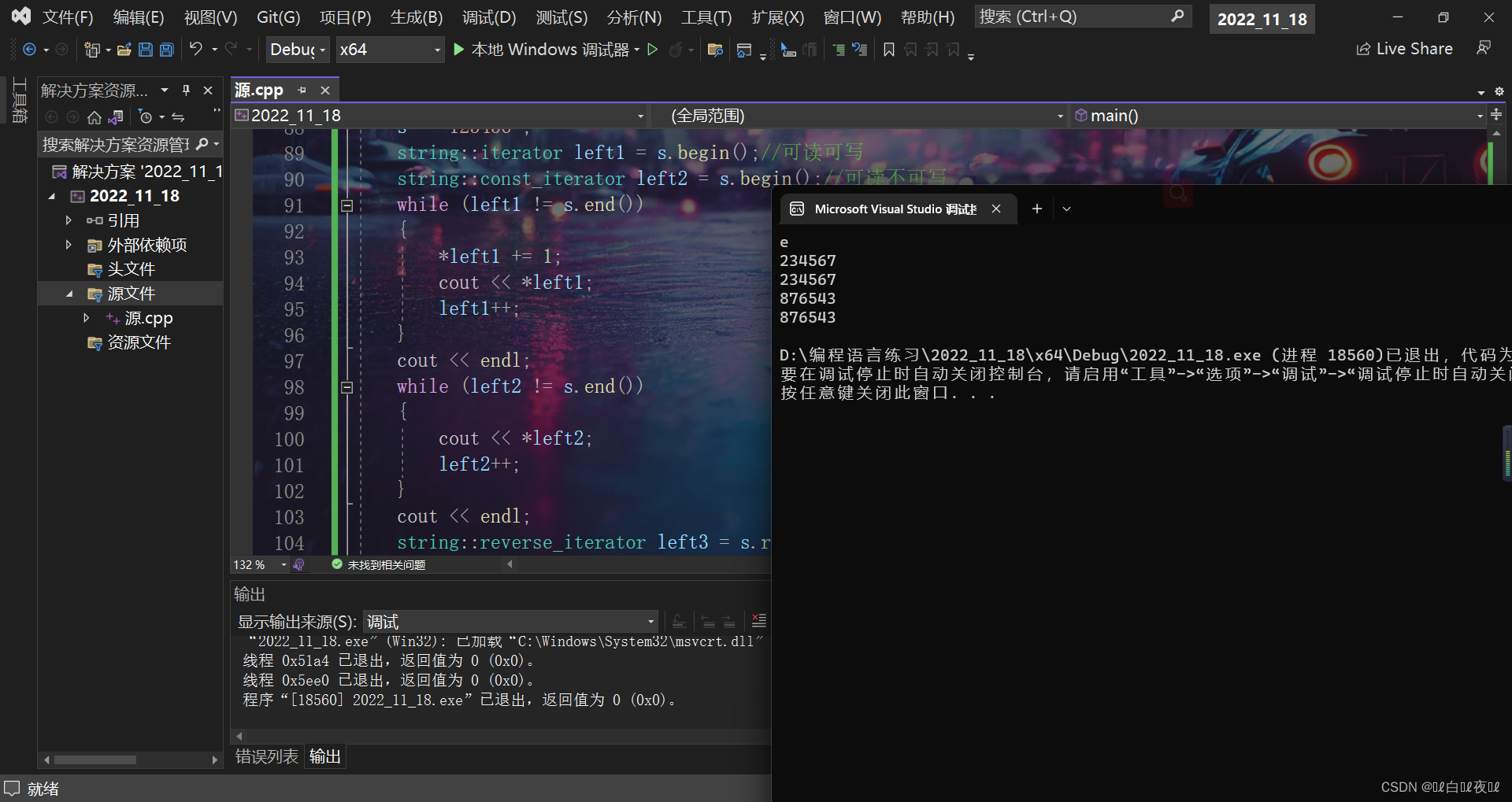
const_reverse_iterator rend() const;#include#include using namespace std; int main() { string s("qwert"); cout << s[2] << endl; s = "123456"; string::iterator left1 = s.begin();//可读可写 string::const_iterator left2 = s.begin();//可读不可写 while (left1 != s.end()) { *left1 += 1; cout << *left1; left1++; } cout << endl; while (left2 != s.end()) { cout << *left2; left2++; } cout << endl; string::reverse_iterator left3 = s.rbegin(); string::const_reverse_iterator left4 = s.rbegin(); while (left3 != s.rend()) { *left3 += 1; cout << *left3; left3++; } cout << endl; while (left4 != s.rend()) { cout << *left4; left4++; } cout << endl; return 0; } - 1
- 2
- 3
- 4
- 5
- 6
- 7
- 8
- 9
- 10
- 11
- 12
- 13
- 14
- 15
- 16
- 17
- 18
- 19
- 20
- 21
- 22
- 23
- 24
- 25
- 26
- 27
- 28
- 29
- 30
- 31
- 32
- 33
- 34
- 35
- 36
- 37
- 38
- 39
- 40
C++11语法中的for循环就是与迭代器有关。
这里还有一个类似于operator[]的接口是at,找到的就返回,找不到会抛异常。

string中的swap与C++库中的swap的区别
string::swap
void swap (string& x, string& y);
交换两个同类对象中的成员#include#include using namespace std; int main() { string s1("asdq7777777777777777777"); string s2("qwe"); s1.swap(s2); cout << s1 << endl; cout << s1.size() << endl; cout << s1.capacity() << endl; cout << s2 << endl; cout << s2.size() << endl; cout << s2.capacity() << endl; return 0; } - 1
- 2
- 3
- 4
- 5
- 6
- 7
- 8
- 9
- 10
- 11
- 12
- 13
- 14
- 15
- 16

C++库swap
这是一个模板template <class T> void swap ( T& a, T& b ) { T c(a); a=b; b=c;//这里其实就相当于调用了构造函数,因为T会有自定义类型 }- 1
- 2
- 3
- 4
平时我们的内置类型都是不需要进行析构和构造的,但是内置类型进入模板之后就需要了。
使用时要注意深浅拷贝问题,自定义类型要调用 = 。非成员函数
operator>>
operator<<流插入流提取istream& operator>> (istream& is, string& str);
ostream& operator<< (ostream& os, const string& str);这个就很熟悉了上面不知道用了多少。
string类的模拟实现
#include#include using namespace std; namespace baiye { class string { public: typedef char* iterator; string(const char* s = "")//对象初始化,缺省值有一个隐藏的\0 { _arr = new char[strlen(s) + 1]; strcpy(_arr, s); _size = strlen(_arr); _capacity = _size;//实际可以储存的大小,不算\0的位置 } ~string()//析构 { delete[] _arr; _arr = nullptr; _size = 0; _capacity = 0; } string(const string& s)//拷贝构造 :_arr(nullptr) ,_size(0) ,_capacity(0) { string tmp(s._arr); swap(tmp); } string& operator=(string s)//这里不用引用就是临时变量,我们可以让它成为打工人 { swap(s); return *this; } //iterator iterator begin()const { return _arr; } iterator end()const { return _arr + _size - 1; } // modify const char* c_str()const { return _arr; } void push_back(char c) { if (_size == _capacity) { size_t len = _size == 0 ? 4 : _capacity * 2;//防止空对象扩容失败 reserve(len); } _arr[_size] = c; _size++;//注意\0 _arr[_size] = '\0'; } void append(const char* str) { if (_size + strlen(str) > _capacity) { reserve(_size + strlen(str) + 1);//不能二倍扩容,万一新加的字符串更大就不行了 } strcpy(_arr + _size, str); _size = strlen(_arr); } string& operator+=(char c) { push_back(c); return *this; } string& operator+=(const char* str) { append(str); return *this; } void clear() { _arr[0] = '\0'; _size = 0; } void swap(string& s) { std::swap(_arr, s._arr); std::swap(_size, s._size); std::swap(_capacity, s._capacity); } //capacity size_t size()const//返回长度 { return _size; } size_t capacity()const//返回容量 { return _capacity; } bool empty()const { return _size; } void resize(size_t n, char c = '\0') { if (n <= _size) { _arr[n] = '\0'; _size = n; } else { reserve(n); while (_size < n) { _arr[_size] = c; _size++; } _arr[n] = '\0'; _size = n; } } void reserve(size_t n) { char* tmp = new char[n + 1];//+1是为了算\0 strcpy(tmp, _arr); delete[] _arr; _arr = tmp; _capacity = n; } // access char& operator[](size_t x)//可读可写 { assert(x < _size); return _arr[x]; } const char& operator[](size_t x)const//可读不可写 { assert(x < _size); return _arr[x]; } //relational operators int judge(const string& s) { return strcmp(_arr, s._arr);//1大于,0等于,-1小于 } bool operator<(const string& s) { int a = judge(s); if (a < 0) return 1; return 0; } bool operator<=(const string& s) { int a = judge(s); if (a > 0) return 0; return 1; } bool operator>(const string& s) { int a = judge(s); if (a > 0) return 1; return 0; } bool operator>=(const string& s) { int a = judge(s); if (a < 0) return 0; return 1; } bool operator==(const string& s) { return !judge(s); } bool operator!=(const string& s) { return judge(s); } // 返回c在string中第一次出现的位置 size_t find(char c, size_t pos = 0) const { assert(pos < _size); while (pos < _size) { if (_arr[pos] == c) return pos; pos++; } return npos; } // 返回子串s在string中第一次出现的位置 size_t find(const char* s, size_t pos = 0) const { assert(pos < _size); const char * p =strstr(_arr + pos, s); if (p == nullptr) { return npos; } else { return p - _arr; } } // 在pos位置上插入字符c/字符串str,并返回该字符的位置 string& insert(size_t pos, char c) { if (_size == _capacity) { size_t len = _size == 0 ? 4 : _capacity * 2;//防止空对象扩容失败 reserve(len); } int end = _size + 1; while (end > pos) { _arr[end] = _arr[end - 1]; end--; } _arr[pos] = c; _size++; return *this; } string& insert(size_t pos, const char* str) { int len = strlen(str); if (_size + len > _capacity) { reserve(_size + len + 1);//不能二倍扩容,万一新加的字符串更大就不行了 } int end1 = _size + 1; int end2 = _size + len; while (end1 > pos) { _arr[end2] = _arr[end1 - 1]; end1--; end2--; } strncpy(_arr + pos, str, len); _size = strlen(_arr); return *this; } // 删除pos位置上的元素,并返回该元素 string& erase(size_t pos, size_t len = npos)//nops是默认值 { if (len == npos || pos + len >= _size)//删除pos后面所有的数据 { _arr[pos] = '\0'; _size = pos; } else { strcpy(_arr + pos, _arr + pos + len); _size -= len; } return *this; } private: char* _arr;//字符串储存的地方 int _size;//大小 int _capacity;//容量 const static size_t npos = -1;//C++只允许整形的静态成员在类的内部进行初始化 }; ostream& operator<<(ostream& out, const string& s)//不一定非要是友元 { for (int i = 0; i < s.size(); i++) { out << s[i]; } return out; } istream& operator >> (istream& in, string& s) { s.clear();//清空原来s中的内容 char buff[128] = { '\0' };//创建一个容纳输入数据的数组 char c = in.get(); int i = 0; while (c != '\n') { if (i == 127) { i = 0; s += buff;//数组满了放入s中,防止s不断扩容 } buff[i++] = c; c = in.get(); } if (i > 0) { buff[i] = '\0'; s += buff; } return in; } } - 1
- 2
- 3
- 4
- 5
- 6
- 7
- 8
- 9
- 10
- 11
- 12
- 13
- 14
- 15
- 16
- 17
- 18
- 19
- 20
- 21
- 22
- 23
- 24
- 25
- 26
- 27
- 28
- 29
- 30
- 31
- 32
- 33
- 34
- 35
- 36
- 37
- 38
- 39
- 40
- 41
- 42
- 43
- 44
- 45
- 46
- 47
- 48
- 49
- 50
- 51
- 52
- 53
- 54
- 55
- 56
- 57
- 58
- 59
- 60
- 61
- 62
- 63
- 64
- 65
- 66
- 67
- 68
- 69
- 70
- 71
- 72
- 73
- 74
- 75
- 76
- 77
- 78
- 79
- 80
- 81
- 82
- 83
- 84
- 85
- 86
- 87
- 88
- 89
- 90
- 91
- 92
- 93
- 94
- 95
- 96
- 97
- 98
- 99
- 100
- 101
- 102
- 103
- 104
- 105
- 106
- 107
- 108
- 109
- 110
- 111
- 112
- 113
- 114
- 115
- 116
- 117
- 118
- 119
- 120
- 121
- 122
- 123
- 124
- 125
- 126
- 127
- 128
- 129
- 130
- 131
- 132
- 133
- 134
- 135
- 136
- 137
- 138
- 139
- 140
- 141
- 142
- 143
- 144
- 145
- 146
- 147
- 148
- 149
- 150
- 151
- 152
- 153
- 154
- 155
- 156
- 157
- 158
- 159
- 160
- 161
- 162
- 163
- 164
- 165
- 166
- 167
- 168
- 169
- 170
- 171
- 172
- 173
- 174
- 175
- 176
- 177
- 178
- 179
- 180
- 181
- 182
- 183
- 184
- 185
- 186
- 187
- 188
- 189
- 190
- 191
- 192
- 193
- 194
- 195
- 196
- 197
- 198
- 199
- 200
- 201
- 202
- 203
- 204
- 205
- 206
- 207
- 208
- 209
- 210
- 211
- 212
- 213
- 214
- 215
- 216
- 217
- 218
- 219
- 220
- 221
- 222
- 223
- 224
- 225
- 226
- 227
- 228
- 229
- 230
- 231
- 232
- 233
- 234
- 235
- 236
- 237
- 238
- 239
- 240
- 241
- 242
- 243
- 244
- 245
- 246
- 247
- 248
- 249
- 250
- 251
- 252
- 253
- 254
- 255
- 256
- 257
- 258
- 259
- 260
- 261
- 262
- 263
- 264
- 265
- 266
- 267
- 268
- 269
- 270
- 271
- 272
- 273
- 274
- 275
- 276
- 277
- 278
- 279
- 280
- 281
- 282
- 283
- 284
- 285
- 286
- 287
- 288
- 289
- 290
- 291
- 292
- 293
- 294
- 295
- 296
- 297
- 298
- 299
深浅拷贝与现代写法
这里最重要的是深浅拷贝的现代写法,之前说过类的默认拷贝函数只能实现浅拷贝无法实现深拷贝,需要自定义拷贝函数,类与对象二。
现代写法是让一个新创建的对象帮你拷贝,然后与你进行交换,相当于你有了一个打工人。string(const string& s)//拷贝构造 :_arr(nullptr)//将被拷贝的对象进行初始化 ,_size(0) ,_capacity(0) { string tmp(s._arr);//打工人tmp swap(tmp);//这里虽然只传参了一个tmp,但是还有一个隐藏的this指针 } string& operator=(string s)//这里不用引用就是临时变量,我们可以让它成为打工人 { swap(s); return *this; } void swap(string& s) { std::swap(_arr, s._arr); std::swap(_size, s._size); std::swap(_capacity, s._capacity); }- 1
- 2
- 3
- 4
- 5
- 6
- 7
- 8
- 9
- 10
- 11
- 12
- 13
- 14
- 15
- 16
- 17
- 18
- 19
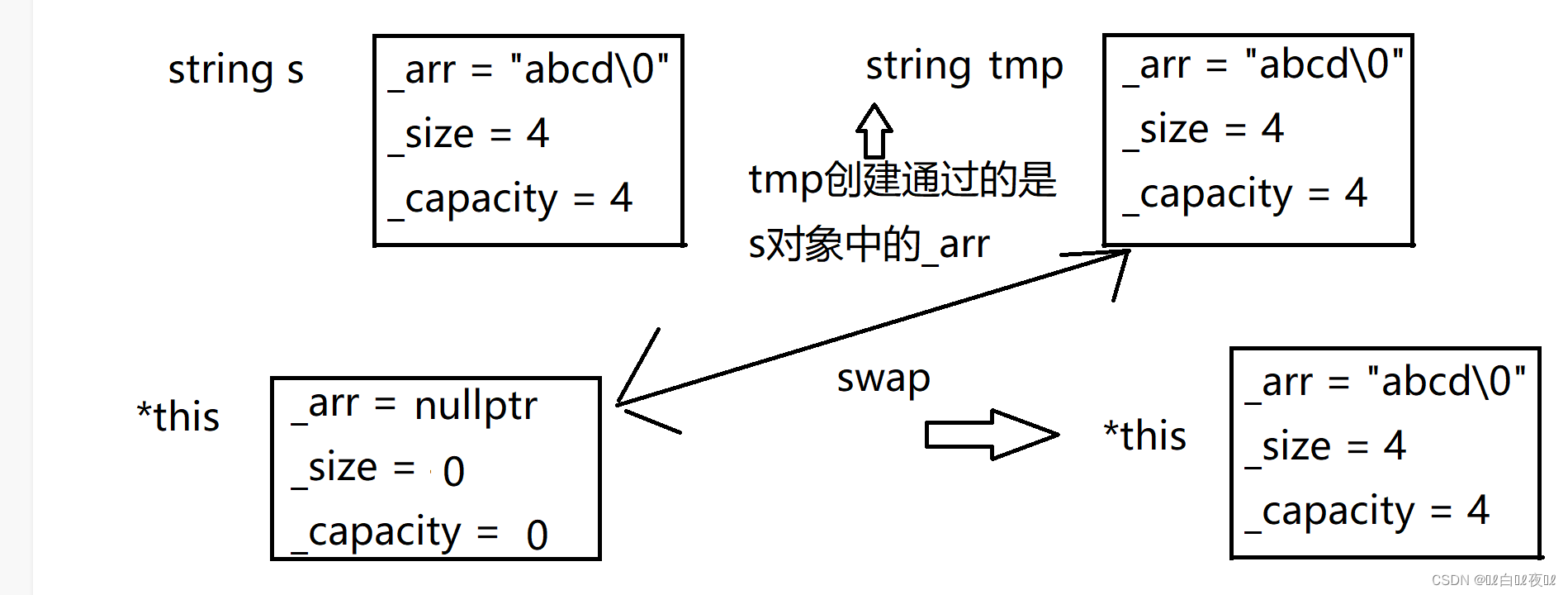
之后tmp的成员 _arr指向的就是空指针,进行析构也不会报错,其他成员全都变成0,而需要被拷贝的*this就成功的得到了想要的数据。 -
相关阅读:
kubernetes之kubectl与YAML详解1
无重复字符的最长子串(python3)
第八节:类和对象【二】【this引用和包】
正则表达式概念
后台运行python程序并查看运行的python 进程
MQ消费堆积问题解决思路
图像文件格式大全及代码检测方式
家具行业APS解决方案
再探格林公式、斯托克斯公式、高斯公式
uni-app--》基于小程序开发的电商平台项目实战(六)
- 原文地址:https://blog.csdn.net/qq_63580639/article/details/127470477
