-
【数据结构】栈和队列&&OJ练习
1. 栈
1.1 栈的概念及其结构
🐶 栈的定义:
一种特殊的线性表,其只允许在固定的一端进行插入和删除元素操作。进行数据插入和删除操作的一端称为栈顶,另一端称为栈底。栈中的数据元素遵守后进先出LIFO(Last In First Out)的原则。
🐱 压栈:栈的插入操作叫做进栈/压栈/入栈,入数据在栈顶。
🐭 出栈:栈的删除操作叫做出栈。出数据也在栈顶。

1.2 栈的实现
💖 栈的实现一般可以使用数组或者链表实现,相对而言数组的结构实现更优一些。因为数组在尾上插入数据的代价比较小


Stack.h
#pragma once #include#include #include #include typedef int STDataType; typedef struct Stak { STDataType* a; int top; int capacity; }ST; //初始化栈 void StackInit(ST* ps); //销毁栈 void StackDestroy(ST* ps); //元素入栈 void StackPush(ST* ps, STDataType x); //元素出栈 void StackPop(ST* ps); //取栈顶元素 STDataType StackTop(ST* ps); //栈的判空操作 bool StackEmpty(ST* ps); //返回栈中的元素个数 int StackSize(ST* ps); - 1
- 2
- 3
- 4
- 5
- 6
- 7
- 8
- 9
- 10
- 11
- 12
- 13
- 14
- 15
- 16
- 17
- 18
- 19
- 20
- 21
- 22
- 23
- 24
- 25
- 26
- 27
- 28
- 29
- 30
- 31
- 32
Stack.c
#define _CRT_SECURE_NO_WARNINGS 1 #include"Stack.h" //初始化栈 void StackInit(ST* ps) { assert(ps); ST* tmp = (STDataType*)malloc(sizeof(STDataType) * 4); if (!tmp){ perror("malloc fail::"); exit(-1); } else { ps->a = tmp; ps->capacity = 4; ps->top = 0; } } //销毁栈 void StackDestroy(ST* ps) { assert(ps); free(ps->a); ps->capacity = 0; ps->top = 0; } //元素入栈 void StackPush(ST* ps, STDataType x) { assert(ps); //考虑是否需要扩容 if (ps->capacity == ps->top) { int newcapacity = ps->capacity * 2; ST* tmp = realloc(ps->a, sizeof(STDataType) * ps->capacity * 2); if (!tmp){ perror("relloc fail::"); exit(-1); } ps->a = tmp; ps->capacity = newcapacity; } ps->a[ps->top++] = x; } //元素出栈 void StackPop(ST* ps) { assert(ps); assert(!StackEmpty(ps)); ps->top--; } //取栈顶元素 STDataType StackTop(ST* ps) { assert(ps); assert(!StackEmpty(ps)); return ps->a[ps->top - 1]; } //栈的判空操作 bool StackEmpty(ST* ps) { assert(ps); return ps->top == 0; } //返回栈中的元素个数 int StackSize(ST* ps) { assert(ps); return ps->top; }- 1
- 2
- 3
- 4
- 5
- 6
- 7
- 8
- 9
- 10
- 11
- 12
- 13
- 14
- 15
- 16
- 17
- 18
- 19
- 20
- 21
- 22
- 23
- 24
- 25
- 26
- 27
- 28
- 29
- 30
- 31
- 32
- 33
- 34
- 35
- 36
- 37
- 38
- 39
- 40
- 41
- 42
- 43
- 44
- 45
- 46
- 47
- 48
- 49
- 50
- 51
- 52
- 53
- 54
- 55
- 56
- 57
- 58
- 59
- 60
- 61
- 62
- 63
- 64
- 65
- 66
- 67
- 68
- 69
- 70
- 71
- 72
- 73
- 74
- 75
- 76
- 77
Test.c
#define _CRT_SECURE_NO_WARNINGS 1 #include"Stack.h" void StackTest1() { ST st; StackInit(&st); printf("入栈:1 2 3 4 5"); for (int i = 0; i < 5; i++) { StackPush(&st, i+1);//压栈 } printf("\n出栈:"); while (!StackEmpty(&st)) { printf("%d ", StackTop(&st));//取栈顶元素 StackPop(&st); } StackDestroy(&st); } int main() { StackTest1(); return 0; }- 1
- 2
- 3
- 4
- 5
- 6
- 7
- 8
- 9
- 10
- 11
- 12
- 13
- 14
- 15
- 16
- 17
- 18
- 19
- 20
- 21
- 22
- 23
2. 队列
2.1 队列的概念及其结构
🐶 队列的定义:
只允许在一端进行插入数据操作,在另一端进行删除数据操作的特殊线性表,队列具有 先进先出FIFO(First In First Out) 的性质。
🐱 性质:入队列:进行插入操作的一端称为队尾。出队列:进行删除操作的一端称为队头

2.2 队列的实现
💖 队列也可以数组和链表的结构实现,使用链表的结构实现更优一些,因为如果使用数组的结构,出队列在数组头上出数据,效率会比较低。

Queue.h
#pragma once #include#include #include #include typedef int QDataType; typedef struct QueueNode { QDataType data; struct QueueNode* next; }QNode; typedef struct Queue { QNode* head; QNode* tail; int size; }Queue; //初始化队列 void QueueInit(Queue* pq); //销毁队列 void QueueDestroy(Queue* pq); //入队 void QueuePush(Queue* pq, QDataType x); //出队 void QueuePop(Queue* pq); //返回队头元素 QDataType QueueFront(Queue* pq); //返回队尾元素 QDataType QueueBack(Queue* pq); //队列判空 bool QueueEmpty(Queue* pq); //队列中元素个数 int QueueSize(Queue* pq); - 1
- 2
- 3
- 4
- 5
- 6
- 7
- 8
- 9
- 10
- 11
- 12
- 13
- 14
- 15
- 16
- 17
- 18
- 19
- 20
- 21
- 22
- 23
- 24
- 25
- 26
- 27
- 28
- 29
- 30
- 31
- 32
- 33
- 34
- 35
- 36
- 37
- 38
- 39
Queue.c
#include"Queue.h" //初始化队列 void QueueInit(Queue* pq) { assert(pq); pq->head = pq->tail = NULL; pq->size = 0; } //销毁队列 void QueueDestroy(Queue* pq) { assert(pq); QNode* cur = pq->head; while (cur) { QNode* del = cur; cur = cur->next; free(del); } pq->head = pq->tail = NULL; } //入队 void QueuePush(Queue* pq, QDataType x) { assert(pq); QNode* newnode = (QNode*)malloc(sizeof(QNode)); if (NULL == newnode) { exit(-1); } else { newnode->data = x; newnode->next = NULL; } if (pq->tail == NULL) { pq->head = pq->tail = newnode; } else { pq->tail->next = newnode; pq->tail = newnode; } pq->size++; } //出队 void QueuePop(Queue* pq) { assert(pq); assert(!QueueEmpty(pq)); if (pq->head->next == NULL) { free(pq->head); pq->head = pq->tail = NULL; } else { QNode* del = pq->head; pq->head = pq->head->next; free(del); del = NULL; } pq->size--; } //返回队头元素 QDataType QueueFront(Queue* pq) { assert(pq); assert(!QueueEmpty(pq)); return pq->head->data; } //返回队尾元素 QDataType QueueBack(Queue* pq) { assert(pq); assert(!QueueEmpty(pq)); return pq->tail->data; } //判断队空 bool QueueEmpty(Queue* pq) { assert(pq); return pq->head == NULL && pq->tail == NULL; } //队列元素个数 int QueueSize(Queue* pq) { return pq->size; }- 1
- 2
- 3
- 4
- 5
- 6
- 7
- 8
- 9
- 10
- 11
- 12
- 13
- 14
- 15
- 16
- 17
- 18
- 19
- 20
- 21
- 22
- 23
- 24
- 25
- 26
- 27
- 28
- 29
- 30
- 31
- 32
- 33
- 34
- 35
- 36
- 37
- 38
- 39
- 40
- 41
- 42
- 43
- 44
- 45
- 46
- 47
- 48
- 49
- 50
- 51
- 52
- 53
- 54
- 55
- 56
- 57
- 58
- 59
- 60
- 61
- 62
- 63
- 64
- 65
- 66
- 67
- 68
- 69
- 70
- 71
- 72
- 73
- 74
- 75
- 76
- 77
- 78
- 79
- 80
- 81
- 82
- 83
- 84
- 85
- 86
- 87
- 88
- 89
- 90
- 91
- 92
- 93
- 94
- 95
- 96
- 97
- 98
Test.c
#define _CRT_SECURE_NO_WARNINGS 1 #include"Queue.h" void TestQueue() { Queue q; QueueInit(&q); QueuePush(&q, 1); QueuePush(&q, 2); QueuePush(&q, 3); QueuePush(&q, 4); QueuePush(&q, 5); QueuePush(&q, 6); QueuePop(&q); QueuePop(&q); QueuePop(&q); printf("队列中元素个数:%d\n", QueueSize(&q)); printf("队头元素:%d\n", QueueFront(&q)); printf("队尾元素:%d\n", QueueBack(&q)); //打印队列中的元素 while (!QueueEmpty(&q)) { printf("%d ", QueueFront(&q)); QueuePop(&q); } printf("\n队列是否为空:"); int ret = QueueEmpty(&q); printf("%d\n", ret); QueueDestroy(&q); } int main() { TestQueue(); return 0; }- 1
- 2
- 3
- 4
- 5
- 6
- 7
- 8
- 9
- 10
- 11
- 12
- 13
- 14
- 15
- 16
- 17
- 18
- 19
- 20
- 21
- 22
- 23
- 24
- 25
- 26
- 27
- 28
- 29
- 30
- 31
- 32
- 33
- 34
3. 栈和队列面试题
3.1 括号匹配问题
💖 思路:
这道题目是一个典型的用栈解决的问题,题目的意思是让我们实现左右括号匹配的问题,我们知道栈的特性是先进后出,大致思路是这样的:
(1)题目给了我们一个字符串,我们需要遍历这个字符串,当遇到的字符是左括号时,我们就将它入栈,当遇到右括号时,我们先看栈是否为空栈,若为空栈,说明没有与之匹配的左括号。直接销毁栈并且返回false。
(2)若栈不为空,在进行匹配,如果匹配成功,先s++,并弹出栈顶的元素,然后在进行下一次入栈或者匹配操作;如果匹配失败,则说明整个字符串的括号是不匹配的,直接返回false即可。
💕 代码实现
这里我们需要注意的是,由于C语言中没有栈相关的库函数,所以我们需要先把上面实现的栈先拷贝一份拿来用。
typedef char STDataType; typedef struct Stak { STDataType* a; int top; int capacity; }ST; //初始化栈 void StackInit(ST* ps); //销毁栈 void StackDestroy(ST* ps); //元素入栈 void StackPush(ST* ps, STDataType x); //元素出栈 void StackPop(ST* ps); //取栈顶元素 STDataType StackTop(ST* ps); //栈的判空操作 bool StackEmpty(ST* ps); //返回栈中的元素个数 int StackSize(ST* ps); //初始化栈 void StackInit(ST* ps) { assert(ps); ST* tmp = (STDataType*)malloc(sizeof(STDataType) * 4); if (!tmp){ perror("malloc fail::"); exit(-1); } else { ps->a = tmp; ps->capacity = 4; ps->top = 0; } } void StackDestroy(ST* ps) { assert(ps); free(ps->a); ps->capacity = 0; ps->top = 0; } void StackPush(ST* ps, STDataType x) { assert(ps); //考虑是否需要扩容 if (ps->capacity == ps->top) { int newcapacity = ps->capacity * 2; ST* tmp = realloc(ps->a, sizeof(STDataType) * ps->capacity * 2); if (!tmp){ perror("relloc fail::"); exit(-1); } ps->a = tmp; ps->capacity = newcapacity; } ps->a[ps->top++] = x; } void StackPop(ST* ps) { assert(ps); assert(!StackEmpty(ps)); ps->top--; } STDataType StackTop(ST* ps) { assert(ps); assert(!StackEmpty(ps)); return ps->a[ps->top - 1]; } bool StackEmpty(ST* ps) { assert(ps); return ps->top == 0; } int StackSize(ST* ps) { assert(ps); return ps->top; } bool isValid(char * s){ ST st; StackInit(&st); while(*s) { if(*s=='('||*s=='['||*s=='{'){ StackPush(&st,*s); ++s; } else { if(StackEmpty(&st)) { StackDestroy(&st); return false; } char tmp=StackTop(&st); if((*s==')'&&tmp=='(') ||(*s==']'&&tmp=='[') ||(*s=='}'&&tmp=='{')){ s++; StackPop(&st); } else { StackDestroy(&st); return false; } } } if(StackEmpty(&st)) return true; return false; }- 1
- 2
- 3
- 4
- 5
- 6
- 7
- 8
- 9
- 10
- 11
- 12
- 13
- 14
- 15
- 16
- 17
- 18
- 19
- 20
- 21
- 22
- 23
- 24
- 25
- 26
- 27
- 28
- 29
- 30
- 31
- 32
- 33
- 34
- 35
- 36
- 37
- 38
- 39
- 40
- 41
- 42
- 43
- 44
- 45
- 46
- 47
- 48
- 49
- 50
- 51
- 52
- 53
- 54
- 55
- 56
- 57
- 58
- 59
- 60
- 61
- 62
- 63
- 64
- 65
- 66
- 67
- 68
- 69
- 70
- 71
- 72
- 73
- 74
- 75
- 76
- 77
- 78
- 79
- 80
- 81
- 82
- 83
- 84
- 85
- 86
- 87
- 88
- 89
- 90
- 91
- 92
- 93
- 94
- 95
- 96
- 97
- 98
- 99
- 100
- 101
- 102
- 103
- 104
- 105
- 106
- 107
- 108
- 109
- 110
- 111
- 112
- 113
- 114
- 115
- 116

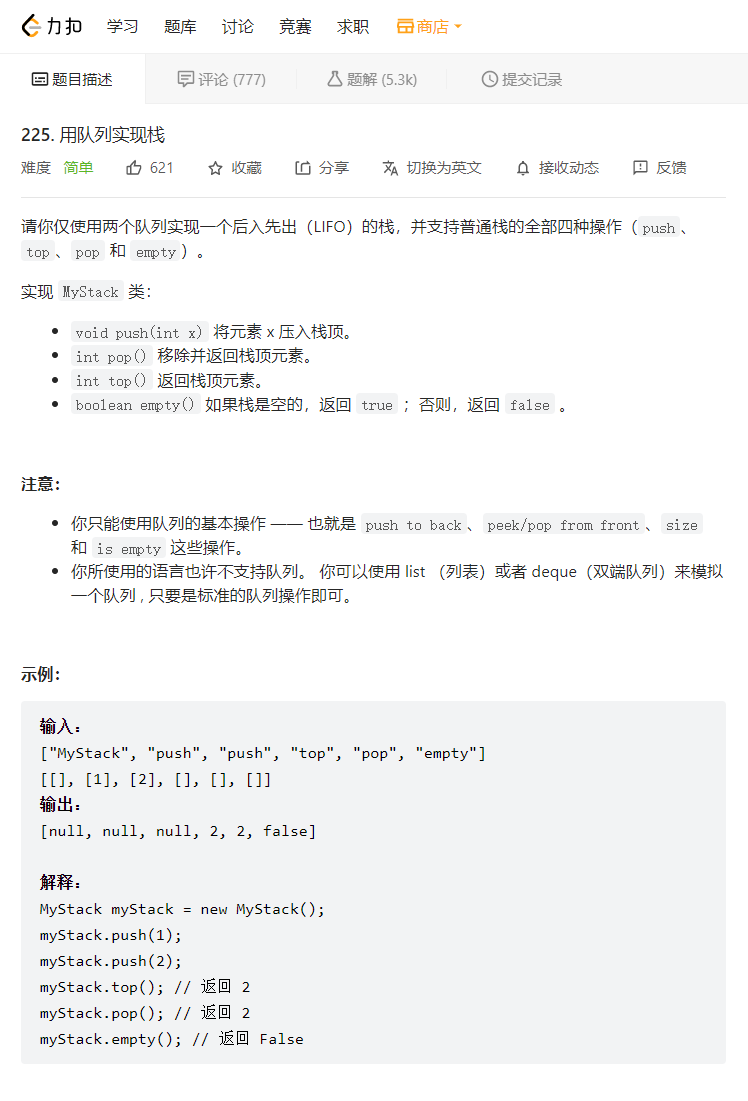
3.2 用队列实现栈
💖 思路:
我们知道队列的性质是先进先出,而栈的性质却是后进先出,那么如何用两个队列来实现栈后进先出的功能呢?这就需要我们利用两个队列来相互导数据了。具体思路如下:
(1)先定义两个队列并初始化为空队列,始终往一个空队列中入数据,第一次入数据时,由于两个队列都为空,随便选一个入数据即可。

(2)myStackPop——弹出栈顶元素,定义两个指针empty和nonEmpty分别指向空队列和非空队列,将非空队列中的数据一一导入空队列,直到非空队列中剩下一个数据为止。这时非空队列中的那一个元素就相当于栈顶元素,将其返回则可以实现取栈顶元素,将此队列出队则为出栈操作。

(3)由于出栈时,其中一个队列已经置为了空队列,所以下次入栈时直接往另一个不为空的队列中入数据即可;取栈顶的元素即为非空队列中队尾的元素,直接将其返回即可。栈的判空操作即判断两个队列是否全部为空即可。💕 代码实现:
typedef int QDataType; typedef struct QueueNode { QDataType data; struct QueueNode*next; }QNode; typedef struct Queue{ QNode*head; QNode*tail; int size; }Queue; void QueueInit(Queue*pq); void QueueDestroy(Queue*pq); void QueuePush(Queue*pq,QDataType x); void QueuePop(Queue*pq); QDataType QueueFront(Queue*pq); QDataType QueueBack(Queue*pq); bool QueueEmpty(Queue*pq); QDataType QueueSize(Queue*pq); void QueueInit(Queue*pq) { assert(pq); pq->head = pq->tail = NULL; pq->size = 0; } void QueueDestroy(Queue*pq) { assert(pq); QNode*cur = pq->head; while(cur) { QNode*del = cur; cur = cur->next; free(del); } pq->head = pq->tail = NULL; } void QueuePush(Queue*pq,QDataType x) { assert(pq); QNode*newnode = (QNode*)malloc(sizeof(QNode)); if(NULL == newnode) { exit(-1); } else { newnode->data = x; newnode->next = NULL; } if(pq->tail == NULL) { pq->head = pq->tail = newnode; } else { pq->tail->next = newnode; pq->tail = newnode; } pq->size++; } void QueuePop(Queue*pq) { assert(pq); assert(!QueueEmpty(pq)); if(pq->head->next == NULL) { free(pq->head); pq->head = pq->tail = NULL; } else { QNode*del = pq->head; pq->head = pq->head->next; free(del); del = NULL; } pq->size--; } QDataType QueueFront(Queue*pq) { assert(pq); assert(!QueueEmpty(pq)); return pq->head->data; } QDataType QueueBack(Queue*pq) { assert(pq); assert(!QueueEmpty(pq)); return pq->tail->data; } bool QueueEmpty(Queue*pq) { assert(pq); return pq->head == NULL&&pq->tail == NULL; } QDataType QueueSize(Queue*pq) { return pq->size; } //定义了两个队列,一个为q1和q2 typedef struct { Queue q1; Queue q2; } MyStack; MyStack* myStackCreate() { MyStack*obj = (MyStack*)malloc(sizeof(MyStack)); if(NULL == obj) { exit(-1); } QueueInit(&obj->q1); QueueInit(&obj->q2); return obj; } void myStackPush(MyStack* obj, int x) { //看哪个是否为空 if(!QueueEmpty(&obj->q1)) { //队列不为空就插入数据 QueuePush(&obj->q1,x); } //q2可能为空或不为空 else { QueuePush(&obj->q2,x); } } int myStackPop(MyStack* obj) { //删除栈顶的元素 Queue*empty = &obj->q1; Queue*nonEmpty = &obj->q2; if(!QueueEmpty(&obj->q1)) { empty = &obj->q2; nonEmpty = &obj->q1; } while(QueueSize(nonEmpty)>1) { //取队头数据存放到空的队列,最后剩下一个,这个就是栈顶的元素 QueuePush(empty,QueueFront(nonEmpty)); QueuePop(nonEmpty); } int top = QueueFront(nonEmpty); QueuePop(nonEmpty); return top; } int myStackTop(MyStack* obj) { //取栈的头相当于非空的队列的队尾 if(!QueueEmpty(&obj->q1)) { return QueueBack(&obj->q1); } else { return QueueBack(&obj->q2); } } bool myStackEmpty(MyStack* obj) { return QueueEmpty(&obj->q1)&&QueueEmpty(&obj->q2); } void myStackFree(MyStack* obj) { QueueDestroy(&obj->q1); QueueDestroy(&obj->q2); }- 1
- 2
- 3
- 4
- 5
- 6
- 7
- 8
- 9
- 10
- 11
- 12
- 13
- 14
- 15
- 16
- 17
- 18
- 19
- 20
- 21
- 22
- 23
- 24
- 25
- 26
- 27
- 28
- 29
- 30
- 31
- 32
- 33
- 34
- 35
- 36
- 37
- 38
- 39
- 40
- 41
- 42
- 43
- 44
- 45
- 46
- 47
- 48
- 49
- 50
- 51
- 52
- 53
- 54
- 55
- 56
- 57
- 58
- 59
- 60
- 61
- 62
- 63
- 64
- 65
- 66
- 67
- 68
- 69
- 70
- 71
- 72
- 73
- 74
- 75
- 76
- 77
- 78
- 79
- 80
- 81
- 82
- 83
- 84
- 85
- 86
- 87
- 88
- 89
- 90
- 91
- 92
- 93
- 94
- 95
- 96
- 97
- 98
- 99
- 100
- 101
- 102
- 103
- 104
- 105
- 106
- 107
- 108
- 109
- 110
- 111
- 112
- 113
- 114
- 115
- 116
- 117
- 118
- 119
- 120
- 121
- 122
- 123
- 124
- 125
- 126
- 127
- 128
- 129
- 130
- 131
- 132
- 133
- 134
- 135
- 136
- 137
- 138
- 139
- 140
- 141
- 142
- 143
- 144
- 145
- 146
- 147
- 148
- 149
- 150
- 151
- 152
- 153
- 154
- 155
- 156
- 157
- 158
- 159
- 160
- 161
- 162
- 163
- 164
- 165
- 166
- 167
- 168
- 169
- 170
- 171
- 172
- 173
- 174
- 175
- 176

3.3 用栈实现队列
💖 思路:
栈的性质是后进先出,队列的性质是先进先出,我们要使用两个栈来实现队列先进先出的性质,如果将一个栈中的元素导入另一个栈中,是不是另一个栈中的元素出栈时是不是就变成了队列的出队顺序呢?好了,具体思路如下:
(1)先定义两个空栈,一个栈用来入数据为push栈,另一个栈用来出数据为pop栈。第一次入数据时,将数据全部往push栈中入。
(2)myQueuePop——返回并移除队头元素,先判断pop栈是否为空,如果不为空,先将pop栈中的栈顶元素保存,然后在移除栈顶元素,最后返回此元素即可;如果pop栈为空,我们需要先将push栈中的元素导入pop栈中,然后在进行刚刚的操作即可。

(3)myQueuePeek——返回队头元素,要返回队头元素,如果pop栈为空,就必须先将push栈中的元素导入pop栈中,然后直接返回pop栈中的栈顶元素即可。否则只需要直接返回栈顶元素即可。
💖 代码实现:
typedef int STDataType; typedef struct Stak { STDataType* a; int top; int capacity; }ST; //初始化栈 void StackInit(ST* ps); //销毁栈 void StackDestroy(ST* ps); //元素入栈 void StackPush(ST* ps, STDataType x); //元素出栈 void StackPop(ST* ps); //取栈顶元素 STDataType StackTop(ST* ps); //栈的判空操作 bool StackEmpty(ST* ps); //返回栈中的元素个数 int StackSize(ST* ps); void StackInit(ST* ps) { assert(ps); ST* tmp = (STDataType*)malloc(sizeof(STDataType) * 4); if (!tmp){ perror("malloc fail::"); exit(-1); } else { ps->a = tmp; ps->capacity = 4; ps->top = 0; } } void StackDestroy(ST* ps) { assert(ps); free(ps->a); ps->capacity = 0; ps->top = 0; } void StackPush(ST* ps, STDataType x) { assert(ps); //考虑是否需要扩容 if (ps->capacity == ps->top) { int newcapacity = ps->capacity * 2; ST* tmp = realloc(ps->a, sizeof(STDataType) * ps->capacity * 2); if (!tmp){ perror("relloc fail::"); exit(-1); } ps->a = tmp; ps->capacity = newcapacity; } ps->a[ps->top++] = x; } void StackPop(ST* ps) { assert(ps); assert(!StackEmpty(ps)); ps->top--; } STDataType StackTop(ST* ps) { assert(ps); assert(!StackEmpty(ps)); return ps->a[ps->top - 1]; } bool StackEmpty(ST* ps) { assert(ps); return ps->top == 0; } int StackSize(ST* ps) { assert(ps); return ps->top; } typedef struct { ST pushST; ST popST; } MyQueue; MyQueue* myQueueCreate() { MyQueue*obj=(MyQueue*)malloc(sizeof(MyQueue)); StackInit(&obj->pushST); StackInit(&obj->popST); return obj; } void myQueuePush(MyQueue* obj, int x) { assert(obj); StackPush(&obj->pushST,x); } int myQueuePop(MyQueue* obj) { if(StackEmpty(&obj->popST)){ while(!StackEmpty(&obj->pushST)) { StackPush(&obj->popST,StackTop(&obj->pushST)); StackPop(&obj->pushST); } } int tmp=StackTop(&obj->popST); StackPop(&obj->popST); return tmp; } int myQueuePeek(MyQueue* obj) { if(StackEmpty(&obj->popST)){ while(!StackEmpty(&obj->pushST)) { StackPush(&obj->popST,StackTop(&obj->pushST)); StackPop(&obj->pushST); } } return StackTop(&obj->popST); } bool myQueueEmpty(MyQueue* obj) { return StackEmpty(&obj->popST)&&StackEmpty(&obj->pushST); } void myQueueFree(MyQueue* obj) { StackDestroy(&obj->popST); StackDestroy(&obj->pushST); free(obj); }- 1
- 2
- 3
- 4
- 5
- 6
- 7
- 8
- 9
- 10
- 11
- 12
- 13
- 14
- 15
- 16
- 17
- 18
- 19
- 20
- 21
- 22
- 23
- 24
- 25
- 26
- 27
- 28
- 29
- 30
- 31
- 32
- 33
- 34
- 35
- 36
- 37
- 38
- 39
- 40
- 41
- 42
- 43
- 44
- 45
- 46
- 47
- 48
- 49
- 50
- 51
- 52
- 53
- 54
- 55
- 56
- 57
- 58
- 59
- 60
- 61
- 62
- 63
- 64
- 65
- 66
- 67
- 68
- 69
- 70
- 71
- 72
- 73
- 74
- 75
- 76
- 77
- 78
- 79
- 80
- 81
- 82
- 83
- 84
- 85
- 86
- 87
- 88
- 89
- 90
- 91
- 92
- 93
- 94
- 95
- 96
- 97
- 98
- 99
- 100
- 101
- 102
- 103
- 104
- 105
- 106
- 107
- 108
- 109
- 110
- 111
- 112
- 113
- 114
- 115
- 116
- 117
- 118
- 119
- 120
- 121
- 122
- 123
- 124
- 125
- 126
- 127
- 128
- 129
- 130
- 131
- 132
- 133
- 134
- 135
- 136
- 137
- 138

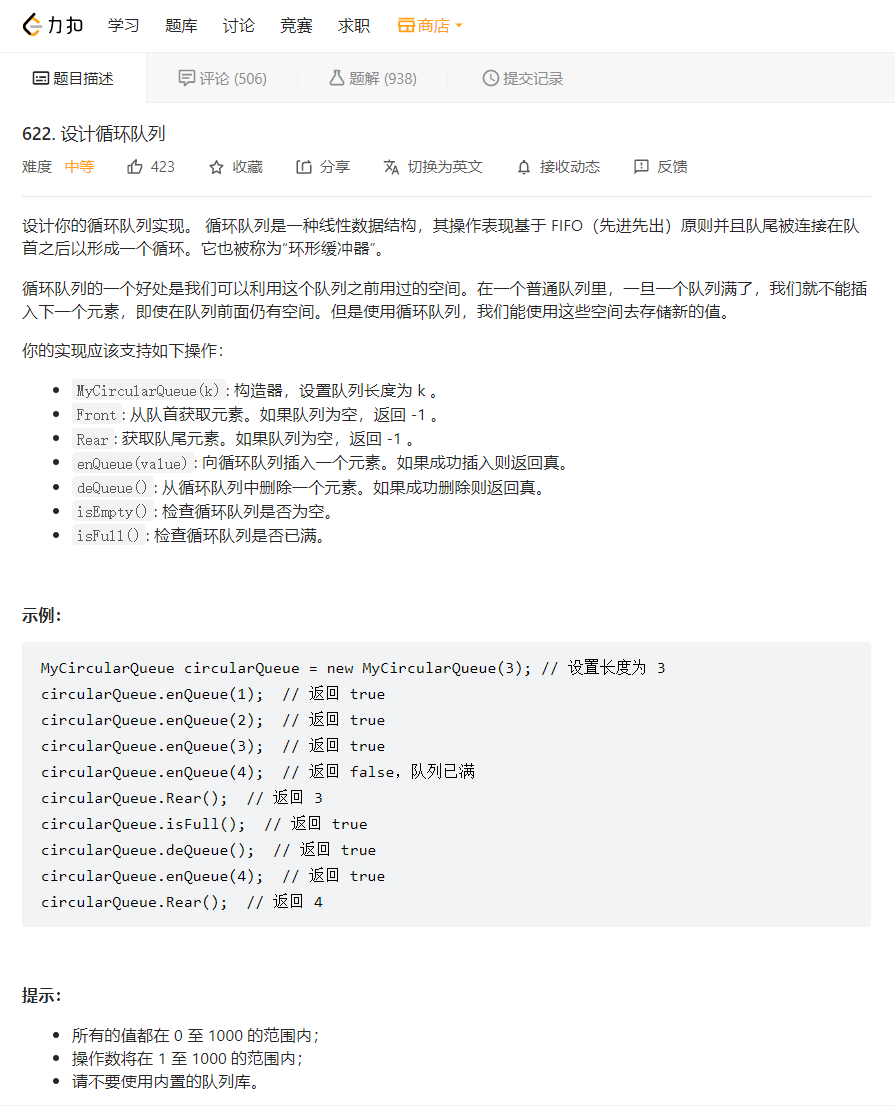
3.4 设计循环队列
这里我们先来介绍一下循环队列:循环队列是把顺序队列首尾相连,把存储队列元素的表从逻辑上看成一个环,成为循环队列。

💖 思路:
循环队列相对普通队列新增了一个队首的指针front,队尾的指针为tail,即初始化时队列的队首和队尾指向同一个位置。在入队时,队尾的指针不再是向后加一位,而是在向后加一位的基础上还要对队列的长度取余运算。因为当队尾的指针在最后一位时,如果此时队列未满,即表明队列前方还有空余的空间,所以此时队尾需要对队列长度取余回到队列头部空余的位置。
💕 代码实现:
typedef struct { int *a; int front; int rear; int k; } MyCircularQueue; //初始化循环队列 MyCircularQueue* myCircularQueueCreate(int k) { MyCircularQueue* obj=(MyCircularQueue*)malloc(sizeof(MyCircularQueue)); obj->a=(int*)malloc(sizeof(int)*(k+1)); obj->front=obj->rear=0; obj->k=k; return obj; } //判断队列是否为空 bool myCircularQueueIsEmpty(MyCircularQueue* obj) { assert(obj); return obj->front==obj->rear; } //判断队列是否已满 bool myCircularQueueIsFull(MyCircularQueue* obj) { assert(obj); return (obj->rear+1)%(obj->k+1)==obj->front; } //循环队列入数据 bool myCircularQueueEnQueue(MyCircularQueue* obj, int value) { assert(obj); if(myCircularQueueIsFull(obj)) return false; obj->a[obj->rear++]=value; obj->rear=(obj->rear)%(obj->k+1); return true; } //循环队列出数据 bool myCircularQueueDeQueue(MyCircularQueue* obj) { assert(obj); if(myCircularQueueIsEmpty(obj)) return false; obj->front++; obj->front=obj->front%(obj->k+1); return true; } //返回队头数据 int myCircularQueueFront(MyCircularQueue* obj) { if(myCircularQueueIsEmpty(obj)) return -1; return obj->a[obj->front]; } //返回队尾数据 int myCircularQueueRear(MyCircularQueue* obj) { if(myCircularQueueIsEmpty(obj)) return -1; return obj->rear==0?obj->a[obj->k]:obj->a[obj->rear-1]; } //释放队列 void myCircularQueueFree(MyCircularQueue* obj) { free(obj->a); free(obj); }- 1
- 2
- 3
- 4
- 5
- 6
- 7
- 8
- 9
- 10
- 11
- 12
- 13
- 14
- 15
- 16
- 17
- 18
- 19
- 20
- 21
- 22
- 23
- 24
- 25
- 26
- 27
- 28
- 29
- 30
- 31
- 32
- 33
- 34
- 35
- 36
- 37
- 38
- 39
- 40
- 41
- 42
- 43
- 44
- 45
- 46
- 47
- 48
- 49
- 50
- 51
- 52
- 53
- 54
- 55
- 56
- 57
- 58
- 59
- 60

-
相关阅读:
MicroSIP-3.21.3+pjproject-2.13.1+ opus-1.3.1+VS2019
刷近两年新低 人民币汇率破7 意味着什么
C++ —— Tinyxml2在Vs2017下相关使用2(较文1更复杂,附源码)
ChatGPT 从零到一打造私人智能英语学习助手
《如何使用C语言去下三子棋?》
SpringIoC之Bean生命周期源码主要流程解析
轻量封装WebGPU渲染系统示例<12>- 基础3D对象实体(源码)
【微信小程序开发(四)】小程序快速实战经典问题导航
java计算机毕业设计WEB儿童运动馆业务信息系统MyBatis+系统+LW文档+源码+调试部署
bugku 黄道十二官
- 原文地址:https://blog.csdn.net/m0_67595314/article/details/127905185



- 最新文章
-
沪漂五周年了:我越来越迷茫了
Agentic Skill Routing 实战:别再把所有 Skill 塞进 AI Agent 上下文
MySQL-Seconds_behind_master的精度误差
[MAF预定义ChatClient中间件-03]CachingChatClient——利用缓存省钱省时间
AI的至暗历史:从万众期待到被政府撤资,AI的两次死亡徘徊
Agent OS :五种驯服不确定性的范式
PortSwigger SQL注入LAB11
数据库即时编译JIT
[Begin]AI Learn Data Day 0
深度学习进阶(二十七)现代 LLM 的核心架构设计其二:SwiGLU