-
python 性能优化实例练习
以下内容是根据Fernando Doglio写的《Python性能分析与优化》第8章 付诸实践中的内容手动尝试的实际练习记录。在这本书中对Python方面性能优化进行了比较全面的介绍,包括优化方法、优化策略、优化脚本等,个人感觉比较适合对Python有一定熟练度,但不太了解怎么优化的人入门。
在这里强烈推荐需要对Python代码进行优化的小伙伴们学习原书,在我的资源中也有代码等的相关整理。0. 前言
-
第一部分——代码撰写
这部分的主要任务是抓取科幻与灵异网(Science Fiction & Fantasy, http://scifi.stackexchange.com/)上的数据,主要抓取的是问题的标题,问题的正文,作者(原书中答案列表信息,我这里进行了省略)信息最后生成json文件。另外我也没有用性能分析工具分析性能,而是直接根据书中的内容进行优化。
关键词:爬虫、获取网页信息(gets)、html、json -
第二部分——多线程优化IO操作
对第一部分进行速度上的优化。
关键词:多线程、threading -
第三部分——使用Cython优化数据分析
这部分是对于第一部分生成的json文件进行数据分析,分析的问题有返回提问问题数量最多的作者排名、返回使用最常用词组数量最多的问题排名、返回问题标题中最常见的主题排名。Cython, 一种优化过的静态编译器, 可以让我们写静态代码, 并轻松借助C和C++的力量
关键词:Cython
原书中是提供代码的,但在实际使用过程中不太理想,所以对代码进行了一部分修改。
1. 第一部分——代码撰写
1. 1 主要应用到的库
-
它是一个工具箱,通过解析文档为用户提供需要抓取的数据。
对格式进行转换,方便抓取?代码中涉及很多对html中信息的抓取,由于个人不太会html和CSS,所以参考了文章soup.select()函数的使用用法,另外转换后的数据一定要是Python支持的数据格式不然会出错(如果还是HTML格式的数据,在转换成JSON过程中就会报错,但是string格式就不会)。
具体实现方式我是通过单步调试,查看每个数据的结果,再结合“soup.select()函数的使用用”这篇文章选择出我所需要的数据。 -
requests
-
json
今年差不多已经遇到了五六次json格式了,python中json库的使用可以参考Python JSON。
1. 2 代码和运行结果
from bs4 import BeautifulSoup import requests import json SO_URL = "http://scifi.stackexchange.com" QUESTION_LIST_URL = SO_URL + "/questions" # http://scifi.stackexchange.com/questions MAX_PAGE_COUNT = 1 global_results = [] # 用于存储从网站上提取到的数据 initial_page = 1 # 首页就是第一页 # 问题的作者 def get_author_name(body): # link_name = body.select(".user-details a") # if len(link_name) == 0: # text_name = body.select(".user-details") # return text_name[0].text if len(text_name) > 0 else 'N/A' # else: # return link_name[0].text link_name = body['href'] link_name = link_name.split('/')[-1] return link_name # 问题的内容 def get_question_answers(body): answers = body.select(".answer") a_data = [] if len(answers) == 0: return a_data for a in answers: data = { 'body': a.select(".post-text")[0].get_text(), 'author': get_author_name(a) } a_data.append(data) return a_data def get_question_data(url): print("Getting data from question page: %s " % url) resp = requests.get(url) if resp.status_code != 200: print("Error while trying to scrape url: %s" % url) return body_soup = BeautifulSoup(resp.text) # 定义一个将被转换成JSON格式的输出词典 q_data = { # 问题的标题 # 'title': body_soup.select('title')[0].text, 'title': body_soup.select('title')[0].text, # 问题的正文 这个有bug的,就是如果问题正文有两段,那么只能取第一段 'body': body_soup.select('.s-prose p')[0].text, # 作者 'author': get_author_name(body_soup.select(".user-gravatar32 a")[0]), # 答案列表 # 'answers': get_question_answers(body_soup) } return q_data def get_questions_page(page_num, partial_results): print("=====================================================") print(" Getting list of questions for page %s" % page_num) print("=====================================================") url = QUESTION_LIST_URL + "?sort=newest&page=" + str(page_num) # url = http://scifi.stackexchange.com/questions?sort=newest&page=1 resp = requests.get(url) if resp.status_code != 200: print("Error while trying to scrape url: %s" % url) return body = resp.text main_soup = BeautifulSoup(body) # 获取每个问题的网络链接 # questions = main_soup.select('.question-summary .question-hyperlink') questions = main_soup.select('.s-post-summary--content .s-link') urls = [SO_URL + x['href'] for x in questions] # urls = http://scifi.stackexchange.com/questions/269140/manwha-manga-where-the-main-female-character-can-see-the-future for url in urls: q_data = get_question_data(url) partial_results.append(q_data) # 递归进行下一页搜索 if page_num < MAX_PAGE_COUNT: get_questions_page(page_num + 1, partial_results) get_questions_page(initial_page, global_results) with open('scrapping-results.json', 'w') as outfile: json.dump(global_results, outfile, indent=4) print('----------------------------------------------------') print('Results saved') # 正常情况下会把爬取到的数据放入scrapping-results.json- 1
- 2
- 3
- 4
- 5
- 6
- 7
- 8
- 9
- 10
- 11
- 12
- 13
- 14
- 15
- 16
- 17
- 18
- 19
- 20
- 21
- 22
- 23
- 24
- 25
- 26
- 27
- 28
- 29
- 30
- 31
- 32
- 33
- 34
- 35
- 36
- 37
- 38
- 39
- 40
- 41
- 42
- 43
- 44
- 45
- 46
- 47
- 48
- 49
- 50
- 51
- 52
- 53
- 54
- 55
- 56
- 57
- 58
- 59
- 60
- 61
- 62
- 63
- 64
- 65
- 66
- 67
- 68
- 69
- 70
- 71
- 72
- 73
- 74
- 75
- 76
- 77
- 78
- 79
- 80
- 81
- 82
- 83
- 84
- 85
- 86
- 87
- 88
- 89
- 90
- 91
- 92
- 93
- 94
- 95
- 96
代码运行成功后,会出现一个json文件:

文件里的内容:
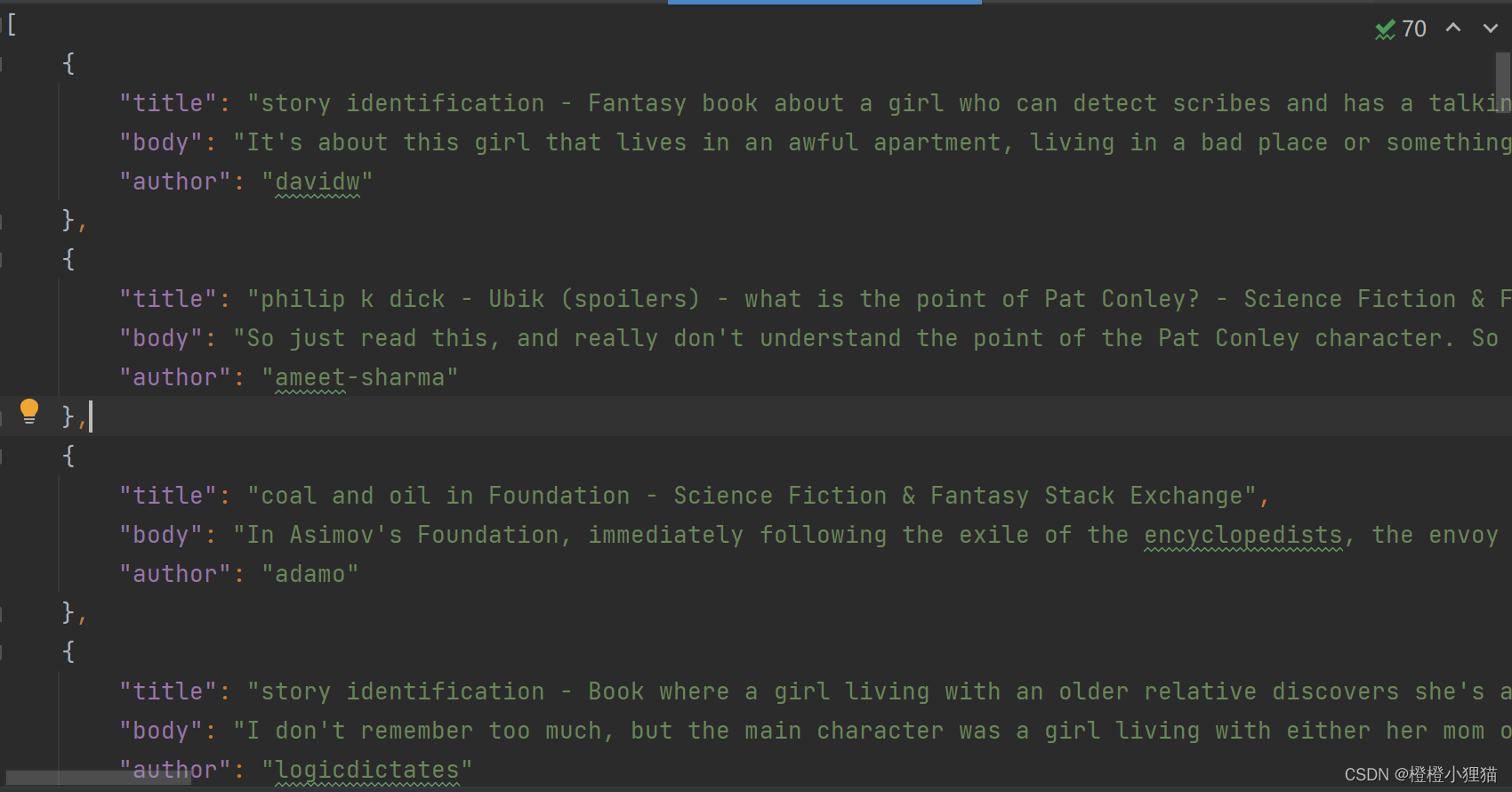
🚨 注意:代码可能存在一些时效性的,网站内容更新后json文件里的内容会与我的不同,另外如果原网站的html修改,可能会导致运行错误。2. 第二部分——多线程优化IO操作
网络爬虫脚本基本算是一个IO密集型的循环任务, 通过最少的处理步骤从互联网上获取数据。 因此, 我们可以找到的第一条也是最符合逻辑的一条优化需求, 就是网络爬虫没有并行地处理请求。 由于我们的代码不是CPU密集型, 所以我们可以安全地使用多线程模块。
关于Python中线程的基本使用以前写过一篇:python 多线程编程
以下代码是对每一页创建一个单独的线程,每个线程负责爬取网站内容、转换格式等。2.1 代码和运行结果
from bs4 import BeautifulSoup import requests import json import threading SO_URL = "http://scifi.stackexchange.com" QUESTION_LIST_URL = SO_URL + "/questions" # http://scifi.stackexchange.com/questions MAX_PAGE_COUNT = 1 class ThreadManager: instance = None final_results = [] threads_done = 0 # 并行线程的数量, # 将决定每个线程获取的页面总数量 totalConnections = 1 @staticmethod def notify_connection_end(partial_results): print("==== Thread is done! =====") ThreadManager.threads_done += 1 ThreadManager.final_results += partial_results # 本例中会创建4个线程,当4个线程全部完成后才会执行if后面的内容 if ThreadManager.threads_done == ThreadManager.totalConnections: print("==== Saving data to file! ====") with open('scrapping-results-optimized.json', 'w') as outfile: json.dump(ThreadManager.final_results, outfile, indent=4) # 问题的作者 def get_author_name(body): # link_name = body.select(".user-details a") # if len(link_name) == 0: # text_name = body.select(".user-details") # return text_name[0].text if len(text_name) > 0 else 'N/A' # else: # return link_name[0].text link_name = body['href'] link_name = link_name.split('/')[-1] return link_name # 问题的内容 def get_question_answers(body): answers = body.select(".answer") a_data = [] if len(answers) == 0: return a_data for a in answers: data = { 'body': a.select(".post-text")[0].get_text(), 'author': get_author_name(a) } a_data.append(data) return a_data def get_question_data(url): print("Getting data from question page: %s " % url) resp = requests.get(url) if resp.status_code != 200: print("Error while trying to scrape url: %s" % url) return body_soup = BeautifulSoup(resp.text) # 定义一个将被转换成JSON格式的输出词典 q_data = { # 问题的标题 # 'title': body_soup.select('title')[0].text, 'title': body_soup.select('title')[0].text, # 问题的正文 这个有bug的,就是如果问题正文有两段,那么只能取第一段 'body': body_soup.select('.s-prose p')[0].text, # 作者 'author': get_author_name(body_soup.select(".user-gravatar32 a")[0]), # 答案列表 # 'answers': get_question_answers(body_soup) } return q_data def get_questions_page(page_num, end_page, partial_results): print("=====================================================") print(" Getting list of questions for page %s" % page_num) print("=====================================================") url = QUESTION_LIST_URL + "?sort=newest&page=" + str(page_num) resp = requests.get(url) if resp.status_code != 200: print("Error while trying to scrape url: %s" % url) else: body = resp.text main_soup = BeautifulSoup(body) # 获取每个问题的网络链接 questions = main_soup.select('.s-post-summary--content .s-link') urls = [SO_URL + x['href'] for x in questions] for url in urls: q_data = get_question_data(url) partial_results.append(q_data) if page_num + 1 < end_page: get_questions_page(page_num + 1, end_page, partial_results) else: # 当该线程负责的页数调用完时,调用ThreadManager的静态方法 ThreadManager.notify_connection_end(partial_results) pages_per_connection = MAX_PAGE_COUNT / ThreadManager.totalConnections # 1 = 1 / 1 # 即创建1个线程,每个线程负责采集1页的内容, 第一个线程第1页,哪怕两页都被被那个网址反爬虫 for i in range(ThreadManager.totalConnections): init_page = i * pages_per_connection end_page = init_page + pages_per_connection t = threading.Thread(target=get_questions_page, args=(int(init_page), int(end_page), [],), name='connection-%s' % (i)) t.start()- 1
- 2
- 3
- 4
- 5
- 6
- 7
- 8
- 9
- 10
- 11
- 12
- 13
- 14
- 15
- 16
- 17
- 18
- 19
- 20
- 21
- 22
- 23
- 24
- 25
- 26
- 27
- 28
- 29
- 30
- 31
- 32
- 33
- 34
- 35
- 36
- 37
- 38
- 39
- 40
- 41
- 42
- 43
- 44
- 45
- 46
- 47
- 48
- 49
- 50
- 51
- 52
- 53
- 54
- 55
- 56
- 57
- 58
- 59
- 60
- 61
- 62
- 63
- 64
- 65
- 66
- 67
- 68
- 69
- 70
- 71
- 72
- 73
- 74
- 75
- 76
- 77
- 78
- 79
- 80
- 81
- 82
- 83
- 84
- 85
- 86
- 87
- 88
- 89
- 90
- 91
- 92
- 93
- 94
- 95
- 96
- 97
- 98
- 99
- 100
- 101
- 102
- 103
- 104
- 105
- 106
- 107
- 108
- 109
- 110
- 111
- 112
- 113
- 114
- 115
在本例中只爬了一页的内容,因为即使两页也会被网页反爬虫,运行结果与上一篇相同,由于只生成了单线程,运行时间也与上一段代码类似,如果爬的页数多,这个多线程的优势体现出来,但应该需要一定的爬虫知识来避免网址的反爬虫。
3. 第三部分——使用Cython优化数据分析
数据分析脚本与网络爬虫脚本不同。 它不是一个I/O密集型的脚本, 而是CPU密集型脚本。 它需要的I/O操作极少, 主要是读取文件, 输出结果。
3.1 Cython是什么
从技术角度看, Cython(http://cython.org/) 并没有使用另一种与CPython不同的解释器, 但是它可以让我们直接将Python代码编译成C语言(CPython不会这么做) 。
你会看到Cython其实是一个转换器, 可以简单看成一个软件, 它可以把源代码从一种语言翻译成另一种语言。 类似的软件还有CoffeeScript和Dart。 这两个是不同的软件, 使用不同的语言, 但是都翻译成JavaScript。3.2 如何安装Cython
环境 版本 操作系统 win11 IDE PyCharm 2022.2.3 (Professional Edition) 解释器 anaconda python3.8 步骤一:
我先安装了windows11安装C++编译器mingw-w64步骤二:
在终端中输入python analyzer-setup.py build_ext --inplace,出现了以下错误。
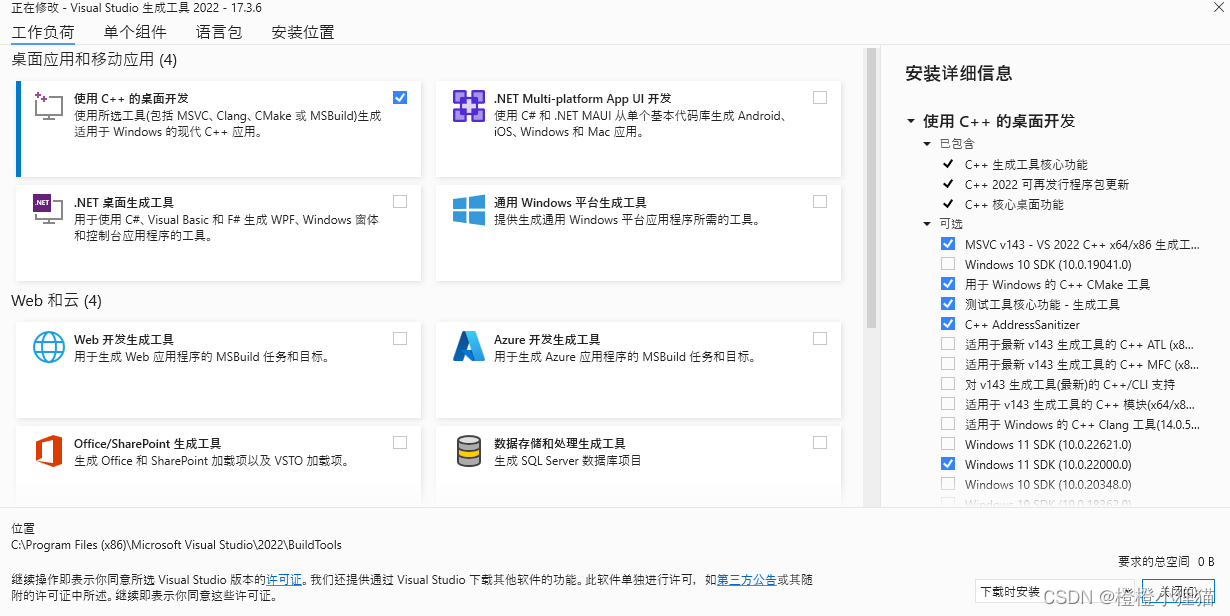
报错1:我按链接中的步骤完成下载:error: Microsoft Visual C++ 14.0 or greater is required. Get it with "Microsoft C++ Build Tools": https://visualstudio.microsoft.com/visual-cpp-build-tools/- 1
按网站上的提示下载Visual Studio Installer,并安装了以下组件,并且将win10 SDK添加到了系统变量。
报错2:
完成以下步骤之后,出现了下面的错误提示。(venv) PS D:\Python_workspace\test> python analyzer-setup.py build_ext --inplace running build_ext "C:\Program Files (x86)\Microsoft Visual Studio\2022\BuildTools\VC\Tools\MSVC\14.33.31629\bin\HostX86\x64\cl.exe" /c /nologo /O2 /W3 /GL /DNDEBUG /MD -ID :\Python_workspace\test\venv\include -IC:\Users\Yaoyao\AppData\Local\Programs\Python\Python39\include -IC:\Users\Yaoyao\AppData\Local\Programs\Python\Pyt hon39\Include "-IC:\Program Files (x86)\Microsoft Visual Studio\2022\BuildTools\VC\Tools\MSVC\14.33.31629\include" "-IC:\Program Files (x86)\Microsoft Visual Studio\2022\BuildTools\VC\Auxiliary\VS\include" /Tcanalyzer_cython.c /Fobuild\temp.win-amd64-3.9\Release\analyzer_cython.obj analyzer_cython.c C:\Users\Yaoyao\AppData\Local\Programs\Python\Python39\include\pyconfig.h(59): fatal error C1083: 无法打开包括文件: “io.h”: No such file or directory error: command 'C:\\Program Files (x86)\\Microsoft Visual Studio\\2022\\BuildTools\\VC\\Tools\\MSVC\\14.33.31629\\bin\\HostX86\\x64\\cl.exe' failed with exit code 2- 1
- 2
- 3
- 4
- 5
- 6
- 7
- 8
我根据Cannot open include file: ‘io.h’: No such file or directory中的一个答案,以管理员身份运行Developer Command Prompt for VS 2022,切换到相应目录
报错3:analyzer_cython.obj : error LNK2001: 无法解析的外部符号 __imp__PyBaseObject_Type analyzer_cython.obj : error LNK2001: 无法解析的外部符号 __imp__PyObject_SetAttr analyzer_cython.obj : error LNK2001: 无法解析的外部符号 __imp__PyUnicode_InternFromString analyzer_cython.obj : error LNK2001: 无法解析的外部符号 __imp__PyCFunction_Type analyzer_cython.obj : error LNK2001: 无法解析的外部符号 __imp__PyOS_snprintf analyzer_cython.obj : error LNK2001: 无法解析的外部符号 __imp__PyThreadState_Get analyzer_cython.obj : error LNK2001: 无法解析的外部符号 __imp__PyErr_SetObject analyzer_cython.obj : error LNK2001: 无法解析的外部符号 __imp__PyCode_NewEmpty analyzer_cython.obj : error LNK2001: 无法解析的外部符号 __imp__PyErr_GivenExceptionMatches analyzer_cython.obj : error LNK2001: 无法解析的外部符号 __imp___PyObject_CallFunction_SizeT analyzer_cython.obj : error LNK2001: 无法解析的外部符号 __imp__PyLong_AsUnsignedLong analyzer_cython.obj : error LNK2001: 无法解析的外部符号 __imp__PyErr_WarnEx analyzer_cython.obj : error LNK2001: 无法解析的外部符号 __imp__PyExc_RuntimeWarning analyzer_cython.obj : error LNK2001: 无法解析的外部符号 __imp__PyFunction_Type analyzer_cython.obj : error LNK2001: 无法解析的外部符号 __imp__PyFrame_New analyzer_cython.obj : error LNK2001: 无法解析的外部符号 __imp__PyExc_DeprecationWarning analyzer_cython.obj : error LNK2001: 无法解析的外部符号 __imp__PyExc_KeyError analyzer_cython.obj : error LNK2001: 无法解析的外部符号 __imp__Py_LeaveRecursiveCall analyzer_cython.obj : error LNK2001: 无法解析的外部符号 __imp__PyImport_ImportModule analyzer_cython.obj : error LNK2001: 无法解析的外部符号 __imp___PyLong_AsByteArray analyzer_cython.obj : error LNK2001: 无法解析的外部符号 __imp__PyImport_ImportModuleLevelObject analyzer_cython.obj : error LNK2001: 无法解析的外部符号 __imp__PyErr_NormalizeException analyzer_cython.obj : error LNK2001: 无法解析的外部符号 __imp__PyObject_SelfIter analyzer_cython.obj : error LNK2001: 无法解析的外部符号 __imp__PyErr_Occurred analyzer_cython.obj : error LNK2001: 无法解析的外部符号 __imp__PyLong_FromSsize_t analyzer_cython.obj : error LNK2001: 无法解析的外部符号 __imp__PyObject_GenericGetAttr analyzer_cython.obj : error LNK2001: 无法解析的外部符号 __imp__PyTraceBack_Here analyzer_cython.obj : error LNK2001: 无法解析的外部符号 __imp___PyThreadState_UncheckedGet analyzer_cython.obj : error LNK2001: 无法解析的外部符号 __imp__PyExc_RuntimeError analyzer_cython.obj : error LNK2001: 无法解析的外部符号 __imp__PyMethod_New analyzer_cython.obj : error LNK2001: 无法解析的外部符号 __imp__PyObject_SetAttrString analyzer_cython.obj : error LNK2001: 无法解析的外部符号 __imp__PyLong_FromLong analyzer_cython.obj : error LNK2001: 无法解析的外部符号 __imp__PyObject_GC_UnTrack analyzer_cython.obj : error LNK2001: 无法解析的外部符号 __imp__PyObject_Hash analyzer_cython.obj : error LNK2001: 无法解析的外部符号 __imp__PyExc_UnboundLocalError analyzer_cython.obj : error LNK2001: 无法解析的外部符号 __imp__PyErr_SetNone analyzer_cython.obj : error LNK2001: 无法解析的外部符号 __imp__PyDict_GetItemWithError analyzer_cython.obj : error LNK2001: 无法解析的外部符号 __imp__PyInterpreterState_GetID analyzer_cython.obj : error LNK2001: 无法解析的外部符号 __imp__PyLong_FromUnsignedLongLong analyzer_cython.obj : error LNK2001: 无法解析的外部符号 __imp__Py_GetVersion analyzer_cython.obj : error LNK2001: 无法解析的外部符号 __imp__PyObject_GetAttr analyzer_cython.obj : error LNK2001: 无法解析的外部符号 __imp__PyDict_Contains analyzer_cython.obj : error LNK2001: 无法解析的外部符号 __imp__PyLong_AsUnsignedLongLong analyzer_cython.obj : error LNK2001: 无法解析的外部符号 __imp__PyRun_StringFlags analyzer_cython.obj : error LNK2001: 无法解析的外部符号 __imp___Py_NoneStruct analyzer_cython.obj : error LNK2001: 无法解析的外部符号 __imp__PyLong_AsLongLong analyzer_cython.obj : error LNK2001: 无法解析的外部符号 __imp__PyTuple_New analyzer_cython.obj : error LNK2001: 无法解析的外部符号 __imp__PySequence_Contains analyzer_cython.obj : error LNK2001: 无法解析的外部符号 __imp__PyDict_SetItemString analyzer_cython.obj : error LNK2001: 无法解析的外部符号 __imp__PyDict_Size analyzer_cython.obj : error LNK2001: 无法解析的外部符号 __imp__PyLong_FromLongLong analyzer_cython.obj : error LNK2001: 无法解析的外部符号 __imp__PyFloat_FromDouble analyzer_cython.obj : error LNK2001: 无法解析的外部符号 __imp__PyDict_Items analyzer_cython.obj : error LNK2001: 无法解析的外部符号 __imp__PyExc_AttributeError analyzer_cython.obj : error LNK2001: 无法解析的外部符号 __imp__PyTuple_GetSlice analyzer_cython.obj : error LNK2001: 无法解析的外部符号 __imp__PyErr_SetString analyzer_cython.obj : error LNK2001: 无法解析的外部符号 __imp__PyErr_WriteUnraisable analyzer_cython.obj : error LNK2001: 无法解析的外部符号 __imp__PyObject_GetIter analyzer_cython.obj : error LNK2001: 无法解析的外部符号 __imp__PyNumber_Add analyzer_cython.obj : error LNK2001: 无法解析的外部符号 __imp__PyErr_WarnFormat analyzer_cython.obj : error LNK2001: 无法解析的外部符号 __imp__PyIter_Send analyzer_cython.obj : error LNK2001: 无法解析的外部符号 __imp__PyExc_ValueError analyzer_cython.obj : error LNK2001: 无法解析的外部符号 __imp__PyLong_FromUnsignedLong analyzer_cython.obj : error LNK2001: 无法解析的外部符号 __imp__PyDict_Next analyzer_cython.obj : error LNK2001: 无法解析的外部符号 __imp__PyErr_Format analyzer_cython.obj : error LNK2001: 无法解析的外部符号 __imp__PyDict_Type analyzer_cython.obj : error LNK2001: 无法解析的外部符号 __imp__PyObject_RichCompare analyzer_cython.obj : error LNK2001: 无法解析的外部符号 __imp__PyTuple_Type analyzer_cython.obj : error LNK2001: 无法解析的外部符号 __imp___Py_FalseStruct analyzer_cython.obj : error LNK2001: 无法解析的外部符号 __imp__PyCoro_Type analyzer_cython.obj : error LNK2001: 无法解析的外部符号 __imp__PyNumber_InPlaceAdd analyzer_cython.obj : error LNK2001: 无法解析的外部符号 __imp__PyFloat_Type analyzer_cython.obj : error LNK2001: 无法解析的外部符号 __imp___PyLong_FromByteArray analyzer_cython.obj : error LNK2001: 无法解析的外部符号 __imp__PyModule_NewObject analyzer_cython.obj : error LNK2001: 无法解析的外部符号 __imp__PyMethod_Type analyzer_cython.obj : error LNK2001: 无法解析的外部符号 __imp__PyLong_Type analyzer_cython.obj : error LNK2001: 无法解析的外部符号 __imp__PyType_IsSubtype analyzer_cython.obj : error LNK2001: 无法解析的外部符号 __imp__PyUnicode_Join analyzer_cython.obj : error LNK2001: 无法解析的外部符号 __imp__PyExc_OverflowError analyzer_cython.obj : error LNK2001: 无法解析的外部符号 __imp___Py_Dealloc analyzer_cython.obj : error LNK2001: 无法解析的外部符号 __imp__PyTuple_GetItem analyzer_cython.obj : error LNK2001: 无法解析的外部符号 __imp__PyImport_GetModuleDict analyzer_cython.obj : error LNK2001: 无法解析的外部符号 __imp__PyModule_GetDict analyzer_cython.obj : error LNK2001: 无法解析的外部符号 __imp__PyObject_Free analyzer_cython.obj : error LNK2001: 无法解析的外部符号 __imp__PyErr_ExceptionMatches analyzer_cython.obj : error LNK2001: 无法解析的外部符号 __imp__PyObject_GC_Del analyzer_cython.obj : error LNK2001: 无法解析的外部符号 __imp__PyObject_CallFunctionObjArgs analyzer_cython.obj : error LNK2001: 无法解析的外部符号 __imp__PyLong_AsLong analyzer_cython.obj : error LNK2001: 无法解析的外部符号 __imp__PyDescr_IsData analyzer_cython.obj : error LNK2001: 无法解析的外部符号 __imp__PyObject_ClearWeakRefs analyzer_cython.obj : error LNK2001: 无法解析的外部符号 __imp__PyObject_Init analyzer_cython.obj : error LNK2001: 无法解析的外部符号 __imp__PyObject_Not analyzer_cython.obj : error LNK2001: 无法解析的外部符号 __imp__PyUnicode_AsUTF8 analyzer_cython.obj : error LNK2001: 无法解析的外部符号 __imp__PyUnicode_FromFormat analyzer_cython.obj : error LNK2001: 无法解析的外部符号 __imp__PyList_New analyzer_cython.obj : error LNK2001: 无法解析的外部符号 __imp__PySlice_New analyzer_cython.obj : error LNK2001: 无法解析的外部符号 __imp__PyImport_AddModule analyzer_cython.obj : error LNK2001: 无法解析的外部符号 __imp__PyType_Ready analyzer_cython.obj : error LNK2001: 无法解析的外部符号 __imp__PyObject_GetAttrString analyzer_cython.obj : error LNK2001: 无法解析的外部符号 __imp__PyErr_Clear analyzer_cython.obj : error LNK2001: 无法解析的外部符号 __imp__PyList_Append analyzer_cython.obj : error LNK2001: 无法解析的外部符号 __imp__PyUnicode_Decode analyzer_cython.obj : error LNK2001: 无法解析的外部符号 __imp__PyCode_New analyzer_cython.obj : error LNK2001: 无法解析的外部符号 __imp__PyException_SetTraceback analyzer_cython.obj : error LNK2001: 无法解析的外部符号 __imp__PyDict_SetItem analyzer_cython.obj : error LNK2001: 无法解析的外部符号 __imp__PyDict_New analyzer_cython.obj : error LNK2001: 无法解析的外部符号 __imp__PyObject_CallFinalizerFromDealloc analyzer_cython.obj : error LNK2001: 无法解析的外部符号 __imp___PyDict_GetItem_KnownHash analyzer_cython.obj : error LNK2001: 无法解析的外部符号 __imp__PyExc_StopIteration analyzer_cython.obj : error LNK2001: 无法解析的外部符号 __imp__PyCMethod_New analyzer_cython.obj : error LNK2001: 无法解析的外部符号 __imp___PyGen_SetStopIterationValue analyzer_cython.obj : error LNK2001: 无法解析的外部符号 __imp__PyList_Type analyzer_cython.obj : error LNK2001: 无法解析的外部符号 __imp__PyDict_GetItemString analyzer_cython.obj : error LNK2001: 无法解析的外部符号 __imp__PyObject_GetItem analyzer_cython.obj : error LNK2001: 无法解析的外部符号 __imp__PyObject_CallObject analyzer_cython.obj : error LNK2001: 无法解析的外部符号 __imp__PyModuleDef_Init analyzer_cython.obj : error LNK2001: 无法解析的外部符号 __imp__PyObject_GC_Track analyzer_cython.obj : error LNK2001: 无法解析的外部符号 __imp__PyBytes_FromStringAndSize analyzer_cython.obj : error LNK2001: 无法解析的外部符号 __imp__PyUnicode_Compare analyzer_cython.obj : error LNK2001: 无法解析的外部符号 __imp__PyExc_StopAsyncIteration analyzer_cython.obj : error LNK2001: 无法解析的外部符号 __imp__PyObject_IsSubclass analyzer_cython.obj : error LNK2001: 无法解析的外部符号 __imp__PyExc_TypeError analyzer_cython.obj : error LNK2001: 无法解析的外部符号 __imp__PyMem_Realloc analyzer_cython.obj : error LNK2001: 无法解析的外部符号 __imp__PyObject_IsTrue analyzer_cython.obj : error LNK2001: 无法解析的外部符号 __imp__PyExc_NameError analyzer_cython.obj : error LNK2001: 无法解析的外部符号 __imp__PyTuple_Pack analyzer_cython.obj : error LNK2001: 无法解析的外部符号 __imp__PyMem_Malloc analyzer_cython.obj : error LNK2001: 无法解析的外部符号 __imp__Py_EnterRecursiveCall analyzer_cython.obj : error LNK2001: 无法解析的外部符号 __imp__PyExc_ImportError analyzer_cython.obj : error LNK2001: 无法解析的外部符号 __imp__PyGen_Type analyzer_cython.obj : error LNK2001: 无法解析的外部符号 __imp___Py_TrueStruct analyzer_cython.obj : error LNK2001: 无法解析的外部符号 __imp__PyArg_UnpackTuple analyzer_cython.obj : error LNK2001: 无法解析的外部符号 __imp__PyExc_SystemError analyzer_cython.obj : error LNK2001: 无法解析的外部符号 __imp___PyObject_GC_New analyzer_cython.obj : error LNK2001: 无法解析的外部符号 __imp__PyException_SetCause analyzer_cython.obj : error LNK2001: 无法解析的外部符号 __imp__PyAsyncGen_Type analyzer_cython.obj : error LNK2001: 无法解析的外部符号 __imp__PyTraceBack_Type analyzer_cython.obj : error LNK2001: 无法解析的外部符号 __imp__PyMethodDescr_Type analyzer_cython.obj : error LNK2001: 无法解析的外部符号 __imp__PyExc_GeneratorExit analyzer_cython.obj : error LNK2001: 无法解析的外部符号 __imp__PyUnicode_FromString analyzer_cython.obj : error LNK2001: 无法解析的外部符号 __imp___PyType_Lookup analyzer_cython.obj : error LNK2001: 无法解析的外部符号 __imp__PyObject_Call analyzer_cython.obj : error LNK2001: 无法解析的外部符号 __imp__PyUnicode_FromStringAndSize analyzer_cython.obj : error LNK2001: 无法解析的外部符号 __imp___PyObject_GetDictPtr build\lib.win32-cpython-310\analyzer_cython.cp310-win_amd64.pyd : fatal error LNK1120: 144 个无法解析的外部命令 error: command 'C:\\Program Files (x86)\\Microsoft Visual Studio\\2022\\BuildTools\\VC\\Tools\\MSVC\\14.33.31629\\bin\\HostX86\\x86\\link.exe' failed with exit code 1120- 1
- 2
- 3
- 4
- 5
- 6
- 7
- 8
- 9
- 10
- 11
- 12
- 13
- 14
- 15
- 16
- 17
- 18
- 19
- 20
- 21
- 22
- 23
- 24
- 25
- 26
- 27
- 28
- 29
- 30
- 31
- 32
- 33
- 34
- 35
- 36
- 37
- 38
- 39
- 40
- 41
- 42
- 43
- 44
- 45
- 46
- 47
- 48
- 49
- 50
- 51
- 52
- 53
- 54
- 55
- 56
- 57
- 58
- 59
- 60
- 61
- 62
- 63
- 64
- 65
- 66
- 67
- 68
- 69
- 70
- 71
- 72
- 73
- 74
- 75
- 76
- 77
- 78
- 79
- 80
- 81
- 82
- 83
- 84
- 85
- 86
- 87
- 88
- 89
- 90
- 91
- 92
- 93
- 94
- 95
- 96
- 97
- 98
- 99
- 100
- 101
- 102
- 103
- 104
- 105
- 106
- 107
- 108
- 109
- 110
- 111
- 112
- 113
- 114
- 115
- 116
- 117
- 118
- 119
- 120
- 121
- 122
- 123
- 124
- 125
- 126
- 127
- 128
- 129
- 130
- 131
- 132
- 133
- 134
- 135
- 136
- 137
- 138
- 139
- 140
- 141
- 142
- 143
- 144
- 145
- 146
将python调整成了32位的python3.8
报错4:在python中无法导入生成的.pyd文件
摆烂了,知道的朋友提示一下3.3 Cython怎么用
主要的软件和流程如图所示:
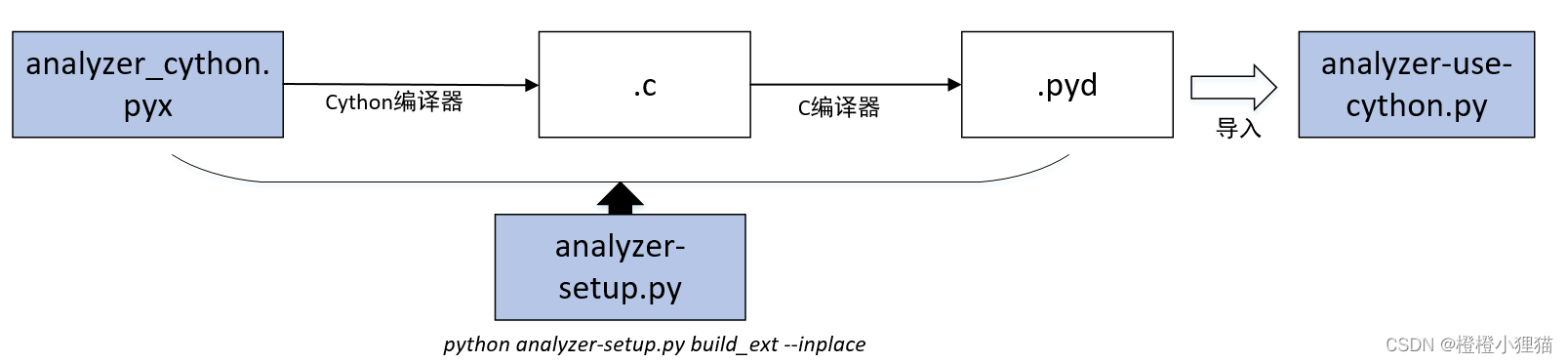
- 首先, 需要用Cython把.pyx文件编译(翻译) 成.c文件。 这些文件里的源代码, 基本都是纯Python代码加上一些Cython代码(写Cython代码也是小难点)。
- 然后, .c文件被C语言编译器编译成.so库, 这个库之后可以导入Python(.so是一个动态链接库,但与普通.so不同的是它可以导入python,这就与普通gcc编译出来的有点不一样)。
3. 编译代码有一些方法:
- 我们可以创建一个distutils配置文件。 bistutils是一个创建其他模块的工具, 我们可以用它生成自定义的C语言编译文件。
- 运行cython命令将.pyx文件编译成.c文件。
- 然后用C语言编译器把C代码手动编译成库文件。最后一种方法是用pyximport, 像导入.py文件一样导入.pyx直接使用。 - 为了有效地编译代码, 可以用下面的命令:
$ python analyzer-setup.py build_ext --inplace
3.3.1 代码和运行结果
全部代码中analyzer-use-cython.py代码还存在问题,因为我弄不明白在win11中pyd文件的导入。
analyzer_cython.pyximport operator import string import nltk from nltk.util import ngrams import json import re SOURCE_FILE = './scrapping-results.json' # 返回提问问题数量最多的作者排名 def get_most_active_users(data, int limit): names = {} for q in data: if q['author'] not in names: names[q['author']] = 1 else: names[q['author']] += 1 return sorted(names.items(), reverse=True, key=operator.itemgetter(1))[:limit] # 把问题的正文内容组合成一个列表 def flatten_questions_body(data): body = [] for q in data: body.append(q['body']) return '. '.join(body) # 返回使用最常用词组数量最多的问题排名 def get_most_common_phrases(d, int limit, int length): body = flatten_questions_body(d) phrases = {} for sentence in nltk.sent_tokenize(body): words = nltk.word_tokenize(sentence) for phrase in ngrams(words, length): if all(word not in string.punctuation for word in phrase): key = ' '.join(phrase) if key in phrases: phrases[key] += 1 else: phrases[key] = 1 return sorted(phrases.items(), reverse=True, key=operator.itemgetter(1))[:limit] def get_node_content(node): return ' '.join([x[0] for x in node]) # 把问题的标题内容组合成一个小写的列表 def flatten_questions_titles(data): body = [] pattern = re.compile('(\[|\])') for q in data: lowered = q['title'].lower() filtered = re.sub(pattern, ' ', lowered) body.append(filtered) return '. '.join(body) # 返回问题标题中最常见的主题排名 def get_most_active_topics(data, int limit): body = flatten_questions_titles(data) sentences = nltk.sent_tokenize(body) sentences = [nltk.word_tokenize(sent) for sent in sentences] sentences = [nltk.pos_tag(sent) for sent in sentences] grammar = "NP: {? cp = nltk.RegexpParser(grammar) results = {} for sent in sentences: parsed = cp.parse(sent) trees = parsed.subtrees(filter=lambda x: x.label() == 'NP') for t in trees: key = get_node_content(t) if key in results: results[key] += 1 else: results[key] = 1 return sorted(results.items(), reverse=True, key=operator.itemgetter(1))[:limit] # 返回答题最多的用户排名 # 加载JSON文件并返回输出结果的词典 def load_json_data(file): with open(file) as input_file: return json.load(input_file) def analyze_data(d): return { 'most_active_users': get_most_active_users(d, 10), 'most_active_topics': get_most_active_topics(d, 10), 'most_common_phrases': get_most_common_phrases(d, 10, 4), }- 1
- 2
- 3
- 4
- 5
- 6
- 7
- 8
- 9
- 10
- 11
- 12
- 13
- 14
- 15
- 16
- 17
- 18
- 19
- 20
- 21
- 22
- 23
- 24
- 25
- 26
- 27
- 28
- 29
- 30
- 31
- 32
- 33
- 34
- 35
- 36
- 37
- 38
- 39
- 40
- 41
- 42
- 43
- 44
- 45
- 46
- 47
- 48
- 49
- 50
- 51
- 52
- 53
- 54
- 55
- 56
- 57
- 58
- 59
- 60
- 61
- 62
- 63
- 64
- 65
- 66
- 67
- 68
- 69
- 70
- 71
- 72
- 73
- 74
- 75
- 76
- 77
- 78
- 79
- 80
- 81
- 82
- 83
- 84
- 85
- 86
- 87
- 88
- 89
- 90
analyzer-setup.py
from distutils.core import setup from Cython.Build import cythonize setup( name='Analyzer app', ext_modules=cythonize("analyzer_cython.pyx"), )- 1
- 2
- 3
- 4
- 5
- 6
- 7
- 8
analyzer-use-cython.py
import xxx.pyd as analyzer import visualizer data_dict = analyzer.load_json_data(analyzer.SOURCE_FILE) results = analyzer.analyze_data(data_dict) print("=== ( Most Active Users ) === ") visualizer.displayMostActiveUsers(results['most_active_users']) print("=== ( Most Active Topics ) === ") visualizer.displayMostActiveTopics(results['most_active_topics']) print("=== ( Most Common Phrases ) === ") visualizer.displayMostCommonPhrases(results['most_common_phrases'])- 1
- 2
- 3
- 4
- 5
- 6
- 7
- 8
- 9
- 10
- 11
- 12
- 13
- 14
- 15
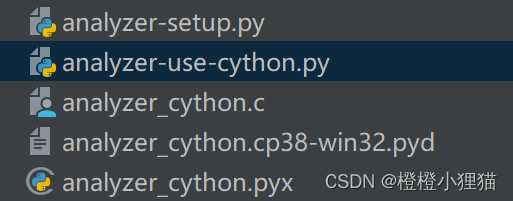
结果
以下是运行文件和生成的文件。
3.4 Cython参考链接
-
-
相关阅读:
Kotlin 协程再探之为什么使用协程反而更慢了?
大数据Hadoop之——Hadoop 3.3.4 HA(高可用)原理与实现(QJM)
【C语言学习笔记---指针进阶02】
CUDA编程- 瓦片(Tiling)技术
【ArcGIS Pro二次开发】(75):ArcGIS Pro SDK二次开发中的常见问题及解决方法
ORB-SLAM2 ---- Tracking::TrackWithMotionModel函数
2022河南萌新联赛第(二)场:河南理工大学 D - 数对
什么人不适合当项目经理?
CSP-S2022 一轮游
化工行业升级进行时,数商云B2B商城系统询报价功能助力企业精确对接供求
- 原文地址:https://blog.csdn.net/weixin_42442319/article/details/127683610
