-
【JUC】7.原子类
1. 什么是原子类
原子类是指java.util.concurrent.atomic下的类

其中这十六个类可以分为以下
- 基本类型原子类
- 数据类型原子类
- 引用类型原子类
- 对象的属性修改原子类
- 原子操作增强类
1.1 基本类型原子类
基本类型原子类包括
- AtomicInteger
- AtomicBoolean
- AtomicLong
相关API
- public final int get()//获取当前的值
- public final int getAndSet(int newValue)//获取当前的值,并设置新的值
- public final int getAndIncrement()//获取当前的值,并自增
- public final int getAndDecrement)//获取当前的值,并自减
- public final int getAndAdd(int delta)//获取当前的值,并加上预期的值
- boolean compareAndSet(int expect, int update)//如果输入的数值等于预期值,则以原子方式将该值设置为输入值(update)
class MyNumber{ AtomicInteger atomicInteger = new AtomicInteger(); public void addPlusPlus(){ atomicInteger.getAndIncrement(); } } public class AtomicIntegerDemo { public static final int SIZE = 50; @SneakyThrows public static void main(String[] args) { MyNumber myNumber = new MyNumber(); CountDownLatch countDownLatch = new CountDownLatch(SIZE); for (int i = 0; i < SIZE; i++) { new Thread(() -> { try { for (int j = 0; j < 1000; j++) { myNumber.addPlusPlus(); } } finally { countDownLatch.countDown(); } }, String.valueOf(i)).start(); } countDownLatch.await(); System.out.println(Thread.currentThread().getName() + "\t" + "result:" + myNumber.atomicInteger.get()); } }- 1
- 2
- 3
- 4
- 5
- 6
- 7
- 8
- 9
- 10
- 11
- 12
- 13
- 14
- 15
- 16
- 17
- 18
- 19
- 20
- 21
- 22
- 23
- 24
- 25
- 26
- 27
- 28
- 29
- 30
- 31
- 32
- 33

这里CountDownLatch是用来计算线程是否完成的
1.2 数组类型原子类
数组类型原子类包括以下
- AtomicIntegerArray
- AtomicLongArray
- AtomicReferenceArray
这种类型比较简单,上当与将基本类型原子类进一步变成数组
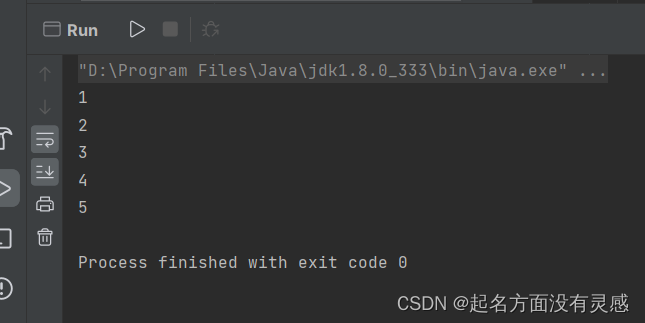
public class AtomicIntegerArrayDemo { public static void main(String[] args) { AtomicIntegerArray atomicIntegerArray = new AtomicIntegerArray(new int[]{1, 2, 3, 4, 5}); for (int i = 0; i < atomicIntegerArray.length(); i++) { System.out.println(atomicIntegerArray.get(i)); } } }- 1
- 2
- 3
- 4
- 5
- 6
- 7
- 8
1.3 引用类型原子类
引用类型原子类包括以下
- AtomicReference
- AtomicStampedReference
- 携带版本号的引用类型原子类,可以解决ABA问题
- 解决修改过几次
- 状态戳原子引用
- AtomicMarkableReference
- 原子更新带有标记位的引用类型对象
- 解决是否修改过
- 它的定义是将状态戳简化为true|false
- 状态戳原子引用
1.4 对象的属性修改原子类
- AtomicIntegerFieldUpdater:原子更新对象中的int类型字段的值
- AtomicLongFieldUpdater:原子更新对象中Long类型字段的值
- AtomicReferenceFieldUpdater:原子更新引用类型字段的值
class BankAccount { String bandName = "CCB"; public volatile int money = 0; AtomicIntegerFieldUpdater<BankAccount> fieldUpdater = AtomicIntegerFieldUpdater.newUpdater(BankAccount.class, "money"); public void transMoney(BankAccount bankAccount) { fieldUpdater.getAndIncrement(bankAccount); } } public class AtomicReferenceFieldUpdaterDemo { public static void main(String[] args) throws InterruptedException { BankAccount bankAccount = new BankAccount(); CountDownLatch countDownLatch = new CountDownLatch(10); for (int i = 1; i <= 10; i++) { new Thread(() -> { try { for (int j = 0; j < 1000; j++) { bankAccount.transMoney(bankAccount); } }finally { countDownLatch.countDown(); } }).start(); } countDownLatch.await(); System.out.println(Thread.currentThread().getName() + "\t" + "result:" + bankAccount.money); } }- 1
- 2
- 3
- 4
- 5
- 6
- 7
- 8
- 9
- 10
- 11
- 12
- 13
- 14
- 15
- 16
- 17
- 18
- 19
- 20
- 21
- 22
- 23
- 24
- 25
- 26
- 27
- 28
- 29
- 30
- 31
- 32
- 33
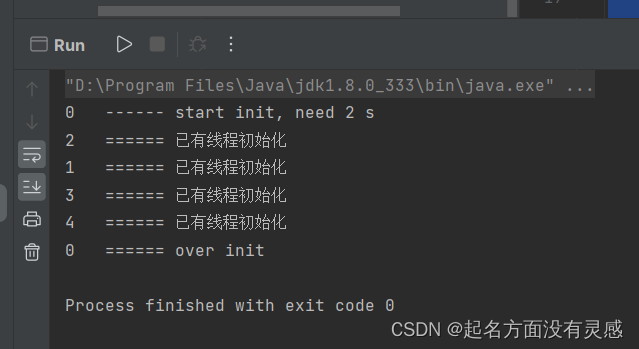
class MyVar{ public volatile Boolean isInit = Boolean.FALSE; AtomicReferenceFieldUpdater<MyVar, Boolean> referenceFieldUpdater = AtomicReferenceFieldUpdater.newUpdater(MyVar.class, Boolean.class, "isInit"); @SneakyThrows public void init(MyVar myVar){ if (referenceFieldUpdater.compareAndSet(myVar, Boolean.FALSE, Boolean.TRUE)){ System.out.println(Thread.currentThread().getName() + "\t" + "------ start init, need 2 s"); TimeUnit.SECONDS.sleep(3); System.out.println(Thread.currentThread().getName() + "\t" + "====== over init"); }else { System.out.println(Thread.currentThread().getName() + "\t" + "====== 已有线程初始化"); } } } public class AtomicReferenceFieldUpdaterDemo { public static void main(String[] args) { MyVar myVar = new MyVar(); for (int i = 0; i < 5; i++) { new Thread(() -> { myVar.init(myVar); }, String.valueOf(i)).start(); } } }- 1
- 2
- 3
- 4
- 5
- 6
- 7
- 8
- 9
- 10
- 11
- 12
- 13
- 14
- 15
- 16
- 17
- 18
- 19
- 20
- 21
- 22
- 23
- 24
- 25
- 26
1.5 原子操作增强类
原子操作增强类是指:
- DoubleAccumulator
- DoubleAdder
- LongAccumulator
- LongAdder

原子操作类是JDK1.8出现的
在阿里巴巴Java开发手册中提到:如果是count++操作,使用如下类实现AtomicInteger count = new AtomicInteger();
count.addAndGet(1);如果是JDK8,推荐使用LongAdder对象,这比AtomicLong性能更好(减少乐观锁)
这类通常是最好的
AtomicLong当多个线程共同更新和用于用途,如收集统计,不为细粒度的同步控制。在低更新争用下,两个类具有相似的特征。但在高争用,预计这一类的吞吐量显着更高,在更高的空间消耗的费用。就以LongAdder而言,常用API如下
方法名 说明 void add(long x) 将当前的value加x void increment() 将当前的value加1 void decrement() 将当前的value减1 long sum() 返回当前值,特别注意,在没有并发更新value的情况下,sum会返回一个精确值,存在并发情况下,sum不保证返回精确值 void reset() 将value重置为0,可用于替代重新new一个LongAdder,但此方法只可以在没有并发更新的情况下 long sumThenReset() 获取当前value,并将value重置为0 public class LongAdderAPIDemo { public static void main(String[] args) { LongAdder longAdder = new LongAdder(); //1+1 longAdder.increment(); //1+1+1 longAdder.increment(); //1+1+1+1 longAdder.increment(); //1+1+1+1+1 longAdder.increment(); System.out.println(longAdder.sum()); //5代表初始值,第一个参数代表模式 LongAccumulator longAccumulator = new LongAccumulator((x, y) -> x + y, 5); //1 + 5 longAccumulator.accumulate(1); //1 + 5 + 4 longAccumulator.accumulate(4); System.out.println(longAccumulator.get()); } }- 1
- 2
- 3
- 4
- 5
- 6
- 7
- 8
- 9
- 10
- 11
- 12
- 13
- 14
- 15
- 16
- 17
- 18
- 19
- 20
- 21
- 22
- 23
模拟高并发点赞
class ClickNumber { /** * 使用重量级锁synchronized */ int number = 0; public synchronized void clickBySynchronized() { number++; } /** * 使用atomicLong */ AtomicLong atomicLong = new AtomicLong(0); public void clickByAtomicLong() { atomicLong.getAndIncrement(); } /** * longAdder默认从0开始 */ LongAdder longAdder = new LongAdder(); public void clickByLongAdder() { // + 1 longAdder.increment(); } /** * 规定为x + y * 从0开始 */ LongAccumulator longAccumulator = new LongAccumulator((x, y) -> x + y, 0); public void clickByLongAccumulator() { longAccumulator.accumulate(1); } } /** * 50个线程,每个线程100w次,总点赞数出来 */ public class AccumulatorCompareDemo { public static final int _1W = 10000; public static final int threadNumber = 50; public static void main(String[] args) throws InterruptedException { ClickNumber clickNumber = new ClickNumber(); CountDownLatch countDownLatch1 = new CountDownLatch(threadNumber); CountDownLatch countDownLatch2 = new CountDownLatch(threadNumber); CountDownLatch countDownLatch3 = new CountDownLatch(threadNumber); CountDownLatch countDownLatch4 = new CountDownLatch(threadNumber); long starTime, endTime; starTime = System.currentTimeMillis(); for (int i = 0; i < threadNumber; i++) { new Thread(() -> { try { for (int j = 0; j < 100 * _1W; j++) { clickNumber.clickBySynchronized(); } } finally { countDownLatch1.countDown(); } }, String.valueOf(i)).start(); } countDownLatch1.await(); endTime = System.currentTimeMillis(); System.out.println("-----costTime:" + (endTime - starTime) + "毫秒\tclickBySynchronized: " + clickNumber.number); starTime = System.currentTimeMillis(); for (int i = 0; i < threadNumber; i++) { new Thread(() -> { try { for (int j = 0; j < 100 * _1W; j++) { clickNumber.clickByAtomicLong(); } } finally { countDownLatch2.countDown(); } }, String.valueOf(i)).start(); } countDownLatch2.await(); endTime = System.currentTimeMillis(); System.out.println("-----costTime:" + (endTime - starTime) + "毫秒\tclickByAtomicLong: " + clickNumber.atomicLong.get()); starTime = System.currentTimeMillis(); for (int i = 0; i < threadNumber; i++) { new Thread(() -> { try { for (int j = 0; j < 100 * _1W; j++) { clickNumber.clickByLongAdder(); } } finally { countDownLatch3.countDown(); } }, String.valueOf(i)).start(); } countDownLatch3.await(); endTime = System.currentTimeMillis(); System.out.println("-----costTime:" + (endTime - starTime) + "毫秒\tclickByLongAdder: " + clickNumber.longAdder.sum()); starTime = System.currentTimeMillis(); for (int i = 0; i < threadNumber; i++) { new Thread(() -> { try { for (int j = 0; j < 100 * _1W; j++) { clickNumber.clickByLongAccumulator(); } } finally { countDownLatch4.countDown(); } }, String.valueOf(i)).start(); } countDownLatch4.await(); endTime = System.currentTimeMillis(); System.out.println("-----costTime:" + (endTime - starTime) + "毫秒\tclickBySynchronized: " + clickNumber.longAccumulator.get()); } }- 1
- 2
- 3
- 4
- 5
- 6
- 7
- 8
- 9
- 10
- 11
- 12
- 13
- 14
- 15
- 16
- 17
- 18
- 19
- 20
- 21
- 22
- 23
- 24
- 25
- 26
- 27
- 28
- 29
- 30
- 31
- 32
- 33
- 34
- 35
- 36
- 37
- 38
- 39
- 40
- 41
- 42
- 43
- 44
- 45
- 46
- 47
- 48
- 49
- 50
- 51
- 52
- 53
- 54
- 55
- 56
- 57
- 58
- 59
- 60
- 61
- 62
- 63
- 64
- 65
- 66
- 67
- 68
- 69
- 70
- 71
- 72
- 73
- 74
- 75
- 76
- 77
- 78
- 79
- 80
- 81
- 82
- 83
- 84
- 85
- 86
- 87
- 88
- 89
- 90
- 91
- 92
- 93
- 94
- 95
- 96
- 97
- 98
- 99
- 100
- 101
- 102
- 103
- 104
- 105
- 106
- 107
- 108
- 109
- 110
- 111
- 112
- 113
- 114
- 115
- 116
- 117
- 118
- 119
- 120
- 121
- 122
- 123
- 124

通过这个案例可以发现,LongAdder的性能更快
2. LongAdder底层原理
为什么LongAdder更快呢?
前面说到AtomicLong是通过CAS实现的,当线程数少的的话,通过自旋锁等待解决
LongAdder的基本思路就是分散热点,将value值分散到一个Cell数组中,不同线程会命中到数组的不同槽中,各个线程只对自己槽中的那个值进行CAS操作,这样热点就被分散了,冲突的概率就小很多。如果要获取真正的long值,只要将各个槽中的变量值累加返回。
sum()会将所有Cell数组中的value和base累加作为返回值,核心的思想就是将之前Atomicl.ong一个value的更新压力分散到多个value中去,从而降级更新热点。
LongAdder的base变量:低并发,直接累加到该变量上
Cell[]数组:高并发,累加进各个线程自己的槽
-
相关阅读:
ADO.NET组件学习笔记
可编程计数器/定时器8253
Oracle 平均数详解(avg)
Kubernetes——部署应用到集群中
【LeetCode-简答题】242. 有效的字母异位词
Golang 依赖注入设计哲学|12.6K 的依赖注入库 wire
百度paddleocr检测训练
通过电商API接口,代购系统可以获取到商品、订单、物流等多种信息
Antdv+Asp.net WebApi开发学生信息管理系统(一)
【数字IC验证快速入门】3、数字IC设计全流程介绍
- 原文地址:https://blog.csdn.net/weixin_51146329/article/details/127405896
