-
【高性能计算】C++多线程计算与线程池
线程
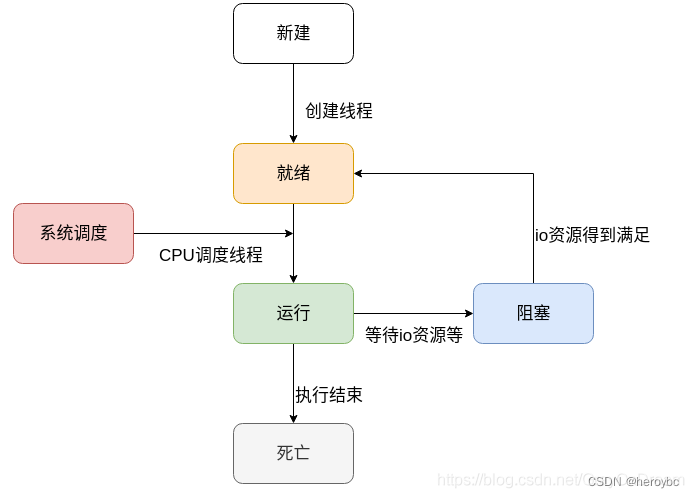
- 一个进程中可以并发多个线程,每条线程并行执行不同的任务。
- 因为虚拟内存的关系不同的进程互相不知道对方的存在,相对独立,互相有独立的内存空间,地址空间;
- 相同进程内的线程之间共享进程的内存空间,文件描述符表,部分寄存器等资源,但是每个线程都有自己独立的线程栈和部分寄存器,线程间访问资源需要考虑互斥问题。
- 进程创建,销毁,切换代价大;
- 线程创建,销毁,切换小。
- 进程有利于资源管理和保护,开销大;
- 线程不利于资源管理和保护,需要使用锁保证线程的安全运行,开销小
- 不同进程间的线程通信等同于进程通信,一般是五种通信方式:
消息队列;
共享内存;
有名管道/无名管道;
信号;
scoket。 - 相同进程中的不同线程因为资源共享不存在通信问题,主要是资源的互斥访问,一般需要资源加锁以防死锁。
线程池
- 线程池采用预创建的技术,在应用程序启动之后,将立即创建一定数量的线程(N1),放入空闲队列中。这些线程都是处于阻塞(Suspended)状态,不消耗CPU,但占用较小的内存空间。
- 当任务到来后,缓冲池选择一个空闲线程,把任务传入此线程中运行。当N1个线程都在处理任务后,缓冲池自动创建一定数量的新线程,用于处理更多的任务。
- 在任务执行完毕后线程也不退出,而是继续保持在池中等待下一次的任务。
- 当系统比较空闲时,大部分线程都一直处于暂停状态,线程池自动销毁一部分线程,回收系统资源。
- 线程池的主要组成部分有二:
(1)任务队列(Task Queue)
(2)线程池(Thread Pool) - 线程池通常适合下面的几个场合:
(1)单位时间内处理任务频繁而且任务处理时间短
(2)对实时性要求较高。如果接受到任务后在创建线程,可能满足不了实时要求,因此必须采用线程池进行预创建。
一个分享,这里,代码非常的简洁,只有一个头文件ThreadPool.h,这里贴出来作为备份。
#ifndef THREAD_POOL_H #define THREAD_POOL_H #include#include #include #include #include #include #include #include #include class ThreadPool { public: ThreadPool(size_t); template auto enqueue(F&& f, Args&&... args) -> std::future ::type>; ~ThreadPool(); private: // need to keep track of threads so we can join them std::vector< std::thread > workers; // the task queue std::queue< std::function auto ThreadPool::enqueue(F&& f, Args&&... args) -> std::future ::type> { using return_type = typename std::result_of (f), std::forward (args)...) ); std::future res = task->get_future(); { std::unique_lock - 1
- 2
- 3
- 4
- 5
- 6
- 7
- 8
- 9
- 10
- 11
- 12
- 13
- 14
- 15
- 16
- 17
- 18
- 19
- 20
- 21
- 22
- 23
- 24
- 25
- 26
- 27
- 28
- 29
- 30
- 31
- 32
- 33
- 34
- 35
- 36
- 37
- 38
- 39
- 40
- 41
- 42
- 43
- 44
- 45
- 46
- 47
- 48
- 49
- 50
- 51
- 52
- 53
- 54
- 55
- 56
- 57
- 58
- 59
- 60
- 61
- 62
- 63
- 64
- 65
- 66
- 67
- 68
- 69
- 70
- 71
- 72
- 73
- 74
- 75
- 76
- 77
- 78
- 79
- 80
- 81
- 82
- 83
- 84
- 85
- 86
- 87
- 88
- 89
- 90
- 91
- 92
- 93
- 94
- 95
- 96
- 97
- 98
- 99
#include#include "ThreadPool.h" void func() { std::this_thread::sleep_for(std::chrono::milliseconds(100)); std::cout<<"worker thread ID:"< - 1
- 2
- 3
- 4
- 5
- 6
- 7
- 8
- 9
- 10
- 11
- 12
- 13
- 14
- 15
- 16
- 17
锁与线程
参考这个较为详细,这里
- 死锁:当两个以上的运算单元,双方都在等待对方停止运行,以获取系统资源,但是没有一方提前退出时,就称为死锁。
- 死锁的基本条件:
禁止抢占(no preemption):系统资源不能被强制从一个进程中退出;
持有和等待(hold and wait):一个进程可以在等待时持有系统资源;
互斥(mutual exclusion):资源只能同时分配给一个进程或者线程,无法多个进程或者线程共享;
循环等待(circular waiting):一系列进程互相持有其他进程所需要的资源。 - 死锁的四个条件缺一不可,一般如果需要解决死锁,破坏其中一个即可。

任务十一 BERT
SpringBoot高频面试题
2023年【A特种设备相关管理(锅炉压力容器压力管道)】考试内容及A特种设备相关管理(锅炉压力容器压力管道)考试技巧
mobileNet v2 paper笔记
AIGC-Animate Anyone阿里的图像到视频 角色合成的框架-论文解读
【JVM】垃圾回收机制中,对象进入老年代的触发条件
利用Python进行数据分析【送书第六期:文末送书】
LeetCode 第8题:字符串转换整数(Python3解法)
sqli-labs/Less-57