-
SpringBoot_15_shiro
1、Shiro简介
1.1、Shiro 是什么?
-
Apache Shiro 是 Java 的一个安全(权限)框架。
-
Shiro 可以非常容易的开发出足够好的应用,其不仅可以用在 JavaSE 环境,也可以用在 JavaEE 环境。
-
Shiro 可以完成:认证、授权、加密、会话管理、与Web 集成、缓存等。
-
下载地址
1.2、有哪些功能?

-
Authentication:身份认证/登录,验证用户是不是拥有相应的身份
-
Authorization:授权,即权限验证,验证某个已认证的用户是否拥有某个权限;即判断用户是否能进行什么操作,如:验证某个用户是否拥有某个角色。或者细粒度的验证某个用户对某个资源是否具有某个权限
-
Session Management:会话管理,即用户登录后就是一次会话,在没有退出之前,它的所有信息都在会话中;会话可以是普通JavaSE环境,也可以是Web 环境的
-
Cryptography:加密,保护数据的安全性,如密码加密存储到数据库,而不是明文存储
-
Web Support:Web 支持,可以非常容易的集成到Web 环境
-
Caching:缓存,比如用户登录后,其用户信息、拥有的角色/权限不必每次去查,这样可以提高效率
-
Concurrency:Shiro支持多线程应用的并发验证,即如在一个线程中开启另一个线程,能把权限自动传播过去
-
Testing:提供测试支持
-
“Run As”:允许一个用户假装为另一个用户(如果他们允许)的身份进行访问
-
Remember Me:记住我,这个是非常常见的功能,即一次登录后,下次再来的话不用登录了
1.3、Shiro架构(外部)
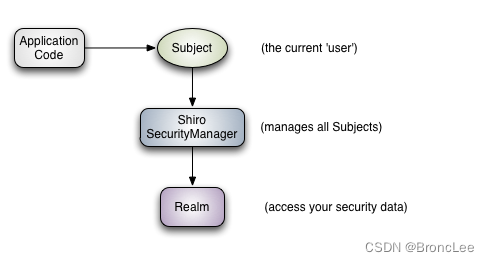
从外部来看Shiro,即从应用程序角度的来观察如何使用Shiro完成工作
-
Subject:应用代码直接交互的对象是Subject,也就是说Shiro的对外API 核心就是Subject。Subject 代表了当前“用户”,这个用户不一定是一个具体的人,与当前应用交互的任何东西都是Subject,如网络爬虫,机器人等;与Subject 的所有交互都会委托给SecurityManager;Subject 其实是一个门面,SecurityManager才是实际的执行者
-
SecurityManager:安全管理器;即所有与安全有关的操作都会与SecurityManager交互;且其管理着所有Subject;可以看出它是Shiro的核心,它负责与Shiro的其他组件进行交互,它相当于SpringMVC中DispatcherServlet的角色
-
Realm:Shiro从Realm 获取安全数据(如用户、角色、权限),就是说SecurityManager要验证用户身份,那么它需要从Realm 获取相应的用户进行比较以确定用户身份是否合法;也需要从Realm 得到用户相应的角色/权限进行验证用户是否能进行操作;可以把Realm 看成DataSource
1.4、Shiro架构(内部)

- Subject:任何可以与应用交互的“用户”;
- SecurityManager:相当于SpringMVC中的DispatcherServlet;是Shiro的心脏;所有具体的交互都通过SecurityManager进行控制;它管理着所有Subject、且负责进行认证、授权、会话及缓存的管理。
- Authenticator:负责Subject 认证,是一个扩展点,可以自定义实现;可以使用认证策略(Authentication Strategy),即什么情况下算用户认证通过了;
- Authorizer:授权器、即访问控制器,用来决定主体是否有权限进行相应的操作;即控制着用户能访问应用中的哪些功能;
- Realm:可以有1 个或多个Realm,可以认为是安全实体数据源,即用于获取安全实体的;可以是JDBC 实现,也可以是内存实现等等;由用户提供;所以一般在应用中都需要实现自己的Realm;
- SessionManager:管理Session 生命周期的组件;而Shiro并不仅仅可以用在Web 环境,也可以用在如普通的JavaSE环境
CacheManager:缓存控制器,来管理如用户、角色、权限等的缓存的;因为这些数据基本上很少改变,放到缓存中后可以提高访问的性能 - Cryptography:密码模块,Shiro提高了一些常见的加密组件用于如密码加密/解密。
2、Hello World
2.1、快速实践
-
查看官方文档:http://shiro.apache.org/tutorial.html
-
官方的quickstart : https://github.com/apache/shiro/tree/master/samples/quickstart/

-
创建一个maven父工程,用来学习Shiro,删掉不必要的部分
-
创建一个普通的Maven子工程:hell-shiro

-
根据官方文档,我们导入Shiro的依赖

<dependencies> <dependency> <groupId>org.apache.shirogroupId> <artifactId>shiro-coreartifactId> <version>1.5.3version> dependency> <dependency> <groupId>org.slf4jgroupId> <artifactId>jcl-over-slf4jartifactId> <version>1.7.26version> dependency> <dependency> <groupId>org.slf4jgroupId> <artifactId>slf4j-log4j12artifactId> <version>1.7.26version> dependency> <dependency> <groupId>log4jgroupId> <artifactId>log4jartifactId> <version>1.2.17version> dependency> dependencies>- 1
- 2
- 3
- 4
- 5
- 6
- 7
- 8
- 9
- 10
- 11
- 12
- 13
- 14
- 15
- 16
- 17
- 18
- 19
- 20
- 21
- 22
- 23
- 24
-
相关配置文件
-
log4j.properties——官网
log4j.rootLogger=INFO, stdout log4j.appender.stdout=org.apache.log4j.ConsoleAppender log4j.appender.stdout.layout=org.apache.log4j.PatternLayout log4j.appender.stdout.layout.ConversionPattern=%d %p [%c] - %m %n # General Apache libraries log4j.logger.org.apache=WARN # Spring log4j.logger.org.springframework=WARN # Default Shiro logging log4j.logger.org.apache.shiro=INFO # Disable verbose logging log4j.logger.org.apache.shiro.util.ThreadContext=WARN log4j.logger.org.apache.shiro.cache.ehcache.EhCache=WARN- 1
- 2
- 3
- 4
- 5
- 6
- 7
- 8
- 9
- 10
- 11
- 12
- 13
- 14
- 15
- 16
- 17
- 18
-
shiro.ini——官网
[users] # user 'root' with password 'secret' and the 'admin' role root = secret, admin # user 'guest' with the password 'guest' and the 'guest' role guest = guest, guest # user 'presidentskroob' with password '12345' ("That's the same combination on # my luggage!!!" ;)), and role 'president' presidentskroob = 12345, president # user 'darkhelmet' with password 'ludicrousspeed' and roles 'darklord' and 'schwartz' darkhelmet = ludicrousspeed, darklord, schwartz # user 'lonestarr' with password 'vespa' and roles 'goodguy' and 'schwartz' lonestarr = vespa, goodguy, schwartz # ----------------------------------------------------------------------------- # Roles with assigned permissions # # Each line conforms to the format defined in the # org.apache.shiro.realm.text.TextConfigurationRealm#setRoleDefinitions JavaDoc # ----------------------------------------------------------------------------- [roles] # 'admin' role has all permissions, indicated by the wildcard '*' admin = * # The 'schwartz' role can do anything (*) with any lightsaber: schwartz = lightsaber:* # The 'goodguy' role is allowed to 'drive' (action) the winnebago (type) with # license plate 'eagle5' (instance specific id) goodguy = winnebago:drive:eagle5- 1
- 2
- 3
- 4
- 5
- 6
- 7
- 8
- 9
- 10
- 11
- 12
- 13
- 14
- 15
- 16
- 17
- 18
- 19
- 20
- 21
- 22
- 23
- 24
- 25
- 26
- 27
-
启动类 Quickstart——官网
/* * Licensed to the Apache Software Foundation (ASF) under one * or more contributor license agreements. See the NOTICE file * distributed with this work for additional information * regarding copyright ownership. The ASF licenses this file * to you under the Apache License, Version 2.0 (the * "License"); you may not use this file except in compliance * with the License. You may obtain a copy of the License at * * http://www.apache.org/licenses/LICENSE-2.0 * * Unless required by applicable law or agreed to in writing, * software distributed under the License is distributed on an * "AS IS" BASIS, WITHOUT WARRANTIES OR CONDITIONS OF ANY * KIND, either express or implied. See the License for the * specific language governing permissions and limitations * under the License. */ import org.apache.shiro.SecurityUtils; import org.apache.shiro.authc.*; import org.apache.shiro.config.IniSecurityManagerFactory; import org.apache.shiro.mgt.SecurityManager; import org.apache.shiro.session.Session; import org.apache.shiro.subject.Subject; import org.apache.shiro.util.Factory; import org.slf4j.Logger; import org.slf4j.LoggerFactory; /** * Simple Quickstart application showing how to use Shiro's API. * 简单入门Shiro使用API * * @since 0.9 RC2 */ public class Quickstart { private static final transient Logger log = LoggerFactory.getLogger(Quickstart.class); public static void main(String[] args) { // The easiest way to create a Shiro SecurityManager with configured // realms, users, roles and permissions is to use the simple INI config. // We'll do that by using a factory that can ingest a .ini file and // return a SecurityManager instance: // Use the shiro.ini file at the root of the classpath // (file: and url: prefixes load from files and urls respectively): // 读取配置文件: Factory<SecurityManager> factory = new IniSecurityManagerFactory("classpath:shiro.ini"); SecurityManager securityManager = factory.getInstance(); // for this simple example quickstart, make the SecurityManager // accessible as a JVM singleton. Most applications wouldn't do this // and instead rely on their container configuration or web.xml for // webapps. That is outside the scope of this simple quickstart, so // we'll just do the bare minimum so you can continue to get a feel // for things. SecurityUtils.setSecurityManager(securityManager); // Now that a simple Shiro environment is set up, let's see what you can do: // get the currently executing user: // 获取当前的用户对象 Subject Subject currentUser = SecurityUtils.getSubject(); // Do some stuff with a Session (no need for a web or EJB container!!!) //通过当前用户拿到Shiro的Session 可以脱离web存值取值 Session session = currentUser.getSession(); session.setAttribute("someKey", "aValue"); String value = (String) session.getAttribute("someKey"); if (value.equals("aValue")) { log.info("Retrieved the correct value! [" + value + "]"); } // let's login the current user so we can check against roles and permissions: //判断当前的用户是否被认证 if (!currentUser.isAuthenticated()) { //Token 令牌 UsernamePasswordToken token = new UsernamePasswordToken("lonestarr", "vespa"); //设置记住我 token.setRememberMe(true); try { //执行登录操作 currentUser.login(token); } catch (UnknownAccountException uae) { log.info("There is no user with username of " + token.getPrincipal()); } catch (IncorrectCredentialsException ice) { log.info("Password for account " + token.getPrincipal() + " was incorrect!"); } catch (LockedAccountException lae) { log.info("The account for username " + token.getPrincipal() + " is locked. " + "Please contact your administrator to unlock it."); } // ... catch more exceptions here (maybe custom ones specific to your application? catch (AuthenticationException ae) { //unexpected condition? error? } } //say who they are: //print their identifying principal (in this case, a username): log.info("User [" + currentUser.getPrincipal() + "] logged in successfully."); //test a role: // 检查角色 if (currentUser.hasRole("schwartz")) { log.info("May the Schwartz be with you!"); } else { log.info("Hello, mere mortal."); } //test a typed permission (not instance-level) //粗粒度 if (currentUser.isPermitted("lightsaber:wield")) { log.info("You may use a lightsaber ring. Use it wisely."); } else { log.info("Sorry, lightsaber rings are for schwartz masters only."); } //a (very powerful) Instance Level permission: //细粒度 if (currentUser.isPermitted("winnebago:drive:eagle5")) { log.info("You are permitted to 'drive' the winnebago with license plate (id) 'eagle5'. " + "Here are the keys - have fun!"); } else { log.info("Sorry, you aren't allowed to drive the 'eagle5' winnebago!"); } //all done - log out! //注销 currentUser.logout(); //结束 System.exit(0); } }- 1
- 2
- 3
- 4
- 5
- 6
- 7
- 8
- 9
- 10
- 11
- 12
- 13
- 14
- 15
- 16
- 17
- 18
- 19
- 20
- 21
- 22
- 23
- 24
- 25
- 26
- 27
- 28
- 29
- 30
- 31
- 32
- 33
- 34
- 35
- 36
- 37
- 38
- 39
- 40
- 41
- 42
- 43
- 44
- 45
- 46
- 47
- 48
- 49
- 50
- 51
- 52
- 53
- 54
- 55
- 56
- 57
- 58
- 59
- 60
- 61
- 62
- 63
- 64
- 65
- 66
- 67
- 68
- 69
- 70
- 71
- 72
- 73
- 74
- 75
- 76
- 77
- 78
- 79
- 80
- 81
- 82
- 83
- 84
- 85
- 86
- 87
- 88
- 89
- 90
- 91
- 92
- 93
- 94
- 95
- 96
- 97
- 98
- 99
- 100
- 101
- 102
- 103
- 104
- 105
- 106
- 107
- 108
- 109
- 110
- 111
- 112
- 113
- 114
- 115
- 116
- 117
- 118
- 119
- 120
- 121
- 122
- 123
- 124
- 125
- 126
- 127
- 128
- 129
- 130
- 131
- 132
- 133
- 134
- 135
- 136
- 137
- 138

-
Spring Secutrry都有~(只是换了个名字)
// 获取当前的用户对象 Subject Subject currentUser = SecurityUtils.getSubject(); Session session = currentUser.getSession(); currentUser.isAuthenticated() currentUser.getPrincipal() currentUser.hasRole("schwartz") currentUser.isPermitted("lightsaber:wield") currentUser.logout();- 1
- 2
- 3
- 4
- 5
- 6
- 7
- 8
-
3、SpringBoot集成
3.1、SpringBoot整合Shiro环境搭建
-
新建一个项目或模块,勾选依赖

pom.xml
<dependencies> <dependency> <groupId>org.springframework.bootgroupId> <artifactId>spring-boot-starter-thymeleafartifactId> dependency> <dependency> <groupId>org.springframework.bootgroupId> <artifactId>spring-boot-starter-webartifactId> dependency> <dependency> <groupId>org.springframework.bootgroupId> <artifactId>spring-boot-starter-testartifactId> <scope>testscope> <exclusions> <exclusion> <groupId>org.junit.vintagegroupId> <artifactId>junit-vintage-engineartifactId> exclusion> exclusions> dependency> dependencies>- 1
- 2
- 3
- 4
- 5
- 6
- 7
- 8
- 9
- 10
- 11
- 12
- 13
- 14
- 15
- 16
- 17
- 18
- 19
- 20
- 21
- 22
- 23
- 24
-
测试环境是否正常
-
新建一个controller页面
@Controller public class MyController { @RequestMapping({"/","/index"}) public String toIndex(Model model) { model.addAttribute("msg","hello,Shiro"); return "index"; } @RequestMapping("/user/add") public String add() { return "user/add"; } @RequestMapping("/user/update") public String update() { return "user/update"; } }- 1
- 2
- 3
- 4
- 5
- 6
- 7
- 8
- 9
- 10
- 11
- 12
- 13
- 14
- 15
- 16
- 17
- 18
- 19
-
新建一个index.html页面
DOCTYPE html> <html lang="en" xmlns:th="http://www.thymeleaf.org"> <head> <meta charset="UTF-8"> <title>首页title> head> <body> <div> <h1>首页h1> <p th:text="${msg}">p> <hr> <a th:href="@{/user/add}">adda> | <a th:href="@{/user/update}">updatea> div> body> html>- 1
- 2
- 3
- 4
- 5
- 6
- 7
- 8
- 9
- 10
- 11
- 12
- 13
- 14
- 15
- 16
-
新建一个add.html页面
DOCTYPE html> <html lang="en"> <head> <meta charset="UTF-8"> <title>Titletitle> head> <body> <h1>addh1> body> html>- 1
- 2
- 3
- 4
- 5
- 6
- 7
- 8
- 9
- 10
-
新建一个update.html页面
DOCTYPE html> <html lang="en"> <head> <meta charset="UTF-8"> <title>Titletitle> head> <body> <h1>updateh1> body> html>- 1
- 2
- 3
- 4
- 5
- 6
- 7
- 8
- 9
- 10
-
项目结构
-

-
运行截图

-
导入shiro整合spring的包——官网,查看最新版本
<dependency> <groupId>org.apache.shirogroupId> <artifactId>shiro-springartifactId> <version>1.9.1version> dependency>- 1
- 2
- 3
- 4
- 5
- 6
- 7
- 8
- 9
- 10
- 11
- 12
-
编写导入配置类
-
编写一个自定义类UserRealm
//自定义的UserRealm public class UserRealm extends AuthorizingRealm { //授权 @Override protected AuthorizationInfo doGetAuthorizationInfo(PrincipalCollection principalCollection) { System.out.println("执行了=>授权doGetAuthorizationInfo"); return null; } //认证 @Override protected AuthenticationInfo doGetAuthenticationInfo(AuthenticationToken authenticationToken) throws AuthenticationException { System.out.println("执行了=>认证doGetAuthorizationInfo"); return null; } }- 1
- 2
- 3
- 4
- 5
- 6
- 7
- 8
- 9
- 10
- 11
- 12
- 13
- 14
- 15
- 16
-
编写配置ShiroConfig
- 创建realm对象,需要自定义类
- DefaultWebSecurityManager
- ShiroFilterFactoryBean
@Configuration public class ShiroConfig { //3. shiroFilterFactoryBean @Bean public ShiroFilterFactoryBean getShiroFilterFactoryBean(@Qualifier("getDefaultWebSecurityManager") DefaultWebSecurityManager defaultWebSecurityManager) { ShiroFilterFactoryBean bean = new ShiroFilterFactoryBean(); // 设置安全管理器 bean.setSecurityManager(defaultWebSecurityManager); return bean; } //2. DefaultWebSecurityManager @Bean public DefaultWebSecurityManager getDefaultWebSecurityManager(@Qualifier("userRealm") UserRealm userRealm) { DefaultWebSecurityManager securityManager = new DefaultWebSecurityManager(); // 关联userRealm securityManager.setRealm(userRealm); return securityManager; } //1. 创建realm对象,需要自定义类 @Bean public UserRealm userRealm() { return new UserRealm(); } }- 1
- 2
- 3
- 4
- 5
- 6
- 7
- 8
- 9
- 10
- 11
- 12
- 13
- 14
- 15
- 16
- 17
- 18
- 19
- 20
- 21
- 22
- 23
- 24
- 25
- 26
- 27
- 28
- 29
- 30
- 31
-
3.2、Shiro实现登录拦截
-
在
ShiroConfig中的getShiroFilterFactoryBean方法中添加如下配置- anon: 无需认证就可以访问
- authc: 必须认证了才能访问
- user: 必须拥有记住我功能才能用
- perms: 拥有对某个资源的权限才能访问
- role: 拥有某个角色权限
Map<String, String> filterMap = new LinkedHashMap<>(); filterMap.put("/user/add","authc"); filterMap.put("/user/update","authc"); bean.setFilterChainDefinitionMap(filterMap);- 1
- 2
- 3
- 4
-
点击首页的add或者update之后

-
添加拦截成功页面
-
登录页面login.html
DOCTYPE html> <html lang="en"> <head> <meta charset="UTF-8"> <title>登录页面title> head> <body> <h1>登录h1> <hr> <form action=""> <p>用户名:<input type="text" name="username">p> <p>密码:<input type="text" name="password">p> <p>密码:<input type="submit">p> form> body> html>- 1
- 2
- 3
- 4
- 5
- 6
- 7
- 8
- 9
- 10
- 11
- 12
- 13
- 14
- 15
- 16
- 17
-
在MyConfig中添加
@RequestMapping("/toLogin") public String toLogin() { return "login"; }- 1
- 2
- 3
- 4
-
在
ShiroConfig中的getShiroFilterFactoryBean方法中添加如下配置//设置登录的请求 bean.setLoginUrl("/toLogin");- 1
- 2
-
-
拦截成功页面

3.3、Shiro实现用户认证
-
在
MyController中编写用户提交表单之后处理@RequestMapping("/login") public String login(String username, String password, Model model) { //获取一个用户 Subject subject = SecurityUtils.getSubject(); // 封装用户的登录数据 UsernamePasswordToken token = new UsernamePasswordToken(username, password); try { subject.login(token);//执行登录的方法,如果没有异常就说明ok了 return "index"; } catch (UnknownAccountException e) {//用户名不存在 model.addAttribute("msg","用户名错误"); return "login"; } catch (IncorrectCredentialsException e) {//密码不存在 model.addAttribute("msg","密码错误"); return "login"; } }- 1
- 2
- 3
- 4
- 5
- 6
- 7
- 8
- 9
- 10
- 11
- 12
- 13
- 14
- 15
- 16
- 17
- 18
- 19
-
login.html的修改
DOCTYPE html> <html lang="en" xmlns:th="http://www.thymeleaf.org"> <head> <meta charset="UTF-8"> <title>登录页面title> head> <body> <h1>登录h1> <hr> <p th:text="${msg}" style="color: red;">p> <form th:action="@{/login}"> <p>用户名:<input type="text" name="username">p> <p>密码:<input type="text" name="password">p> <p>密码:<input type="submit">p> form> body> html>- 1
- 2
- 3
- 4
- 5
- 6
- 7
- 8
- 9
- 10
- 11
- 12
- 13
- 14
- 15
- 16
- 17
- 18
-
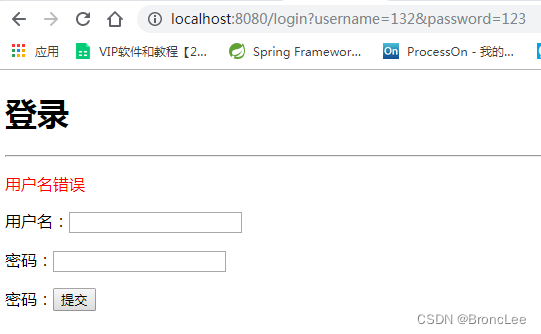
用户输入登录信息
-
页面
-
控制台

-
-
用户认证编写
UserRealm中的认证(doGetAuthenticationInfo)//认证 @Override protected AuthenticationInfo doGetAuthenticationInfo(AuthenticationToken token) throws AuthenticationException { System.out.println("执行了=>认证doGetAuthorizationInfo"); // 用户名、密码, 数据中取 String name = "root"; String password = "123456"; UsernamePasswordToken userToken = (UsernamePasswordToken) token; if (!userToken.getUsername().equals(name)) { return null;//抛出异常 UnknownAccountException } // 密码认证,shiro做 return new SimpleAuthenticationInfo("",password,""); }- 1
- 2
- 3
- 4
- 5
- 6
- 7
- 8
- 9
- 10
- 11
- 12
- 13
- 14
- 15
- 16
- 17
3.4、Shiro整合Mybatis
-
导入依赖
<dependency> <groupId>org.projectlombokgroupId> <artifactId>lombokartifactId> dependency> <dependency> <groupId>mysqlgroupId> <artifactId>mysql-connector-javaartifactId> dependency> <dependency> <groupId>log4jgroupId> <artifactId>log4jartifactId> <version>1.2.17version> dependency> <dependency> <groupId>com.alibabagroupId> <artifactId>druid-spring-boot-starterartifactId> <version>1.2.11version> dependency> <dependency> <groupId>org.mybatis.spring.bootgroupId> <artifactId>mybatis-spring-boot-starterartifactId> <version>2.1.3version> dependency>- 1
- 2
- 3
- 4
- 5
- 6
- 7
- 8
- 9
- 10
- 11
- 12
- 13
- 14
- 15
- 16
- 17
- 18
- 19
- 20
- 21
- 22
- 23
- 24
- 25
- 26
- 27
-
配置文件application.yml的编写
spring: datasource: username: root password: '0000' #?serverTimezone=UTC解决时区的报错 url: jdbc:mysql://localhost:3306/mybatis?serverTimezone=UTC&useUnicode=true&characterEncoding=utf-8 driver-class-name: com.mysql.cj.jdbc.Driver type: com.alibaba.druid.pool.DruidDataSource druid: # 数据库连接池最大值 max-active: 20 # 数据库连接池初始值 initial-size: 5 # 数据库连接池最小空闲值 min-idle: 5 # 池中空闲连接大于minIdle且连接空闲时间大于该值,则关闭该连接,单位毫秒(5分钟,默认30分钟) min-evictable-idle-time-millis: 300000 # 获取连接时最大等待时间,单位毫秒(1分钟) max-wait: 60000 # 检测连接是否有效时执行的sql命令 validation-query: select 1 # 借用连接时执行validationQuery检测连接是否有效,做了这个配置会降低性能 test-on-borrow: false # 归还连接时执行validationQuery检测连接是否有效,做了这个配置会降低性能 test-on-return: false # 连接空闲时检测,如果连接空闲时间大于timeBetweenEvictionRunsMillis指定的毫秒,执行validationQuery指定的SQL来检测连接是否有效 test-while-idle: true # 空闲连接检查、废弃连接清理、空闲连接池大小调整的操作时间间隔,单位是毫秒(1分钟) time-between-eviction-runs-millis: 60000 # 配置监控统计拦截的filters,去掉后监控界面sql无法统计,'wall'用于防火墙 filters: stat,wall # 通过connectProperties属性来打开mergeSql功能;慢SQL记录 connection-properties: druid.stat.mergeSql=true;druid.stat.slowSqlMillis=500 #是否启用StatFilter默认值false,用于采集 web-jdbc 关联监控的数据。 web-stat-filter: enabled: true #需要监控的 url url-pattern: /* #排除一些静态资源,以提高效率 exclusions: '*.js,*.gif,*.jpg,*.png,*.css,*.ico,/druid/*' #是否启用StatViewServlet(监控页面)默认值为false(考虑到安全问题默认并未启动,如需启用建议设置密码或白名单以保障安全) stat-view-servlet: enabled: true #内置的监控页面地址,例如 /druid/*,则内置监控页面的首页是 /druid/index.html url-pattern: /druid/* #是否允许清空统计数据 reset-enable: false login-username: admin login-password: admin- 1
- 2
- 3
- 4
- 5
- 6
- 7
- 8
- 9
- 10
- 11
- 12
- 13
- 14
- 15
- 16
- 17
- 18
- 19
- 20
- 21
- 22
- 23
- 24
- 25
- 26
- 27
- 28
- 29
- 30
- 31
- 32
- 33
- 34
- 35
- 36
- 37
- 38
- 39
- 40
- 41
- 42
- 43
- 44
- 45
- 46
- 47
- 48
- 49
-
User类的编写
@Data @AllArgsConstructor @NoArgsConstructor public class User { private int id; private String name; private String pwd; }- 1
- 2
- 3
- 4
- 5
- 6
- 7
- 8
-
UserMapper.xml映射
DOCTYPE mapper PUBLIC "-//mybatis.org//DTD Mapper 3.0//EN" "http://mybatis.org/dtd/mybatis-3-mapper.dtd"> <mapper namespace="com.lee.mapper.UserMapper"> <select id="queryUserList" resultType="User"> select * from mybatis.user; select> <select id="queryUserById" resultType="User"> select * from mybatis.user where id = #{id}; select> <insert id="addUser" parameterType="User"> insert into mybatis.user (id, name, pwd) values (#{id},#{name},#{pwd}); insert> <update id="updateUser" parameterType="User"> update mybatis.user set name=#{name},pwd = #{pwd} where id = #{id}; update> <delete id="deleteUser" parameterType="int"> delete from mybatis.user where id = #{id} delete> mapper>- 1
- 2
- 3
- 4
- 5
- 6
- 7
- 8
- 9
- 10
- 11
- 12
- 13
- 14
- 15
- 16
- 17
- 18
- 19
- 20
- 21
- 22
- 23
- 24
- 25
- 26
- 27
-
UserMapper
@Repository @Mapper public interface UserMapper { public User queryUserByName(String name); }- 1
- 2
- 3
- 4
- 5
-
UserService接口实现
public interface UserService { public User queryUserByName(String name); }- 1
- 2
- 3
- 4
-
UserServiceImpl业务逻辑
@Service public class UserServiceImpl implements UserService { @Autowired UserMapper userMapper; @Override public User queryUserByName(String name) { return userMapper.queryUserByName(name); } }- 1
- 2
- 3
- 4
- 5
- 6
- 7
- 8
- 9
- 10
-
测试环境
@SpringBootTest class ShiroSpringbootApplicationTests { @Autowired UserService userService; @Test void contextLoads() { System.out.println(userService.queryUserByName("小明")); } }- 1
- 2
- 3
- 4
- 5
- 6
- 7
- 8
- 9
- 10

-
UserRealm连接真实数据库//认证 @Override protected AuthenticationInfo doGetAuthenticationInfo(AuthenticationToken token) throws AuthenticationException { System.out.println("执行了=>认证doGetAuthorizationInfo"); UsernamePasswordToken userToken = (UsernamePasswordToken) token; // 真实数据库 用户名、密码, 数据中取 User user = userService.queryUserByName(userToken.getUsername()); if (user == null) {//没有这个人 return null; } // 密码认证,shiro做 return new SimpleAuthenticationInfo("",user.getPwd(),""); }- 1
- 2
- 3
- 4
- 5
- 6
- 7
- 8
- 9
- 10
- 11
- 12
- 13
- 14
- 15
- 16
- 17

-
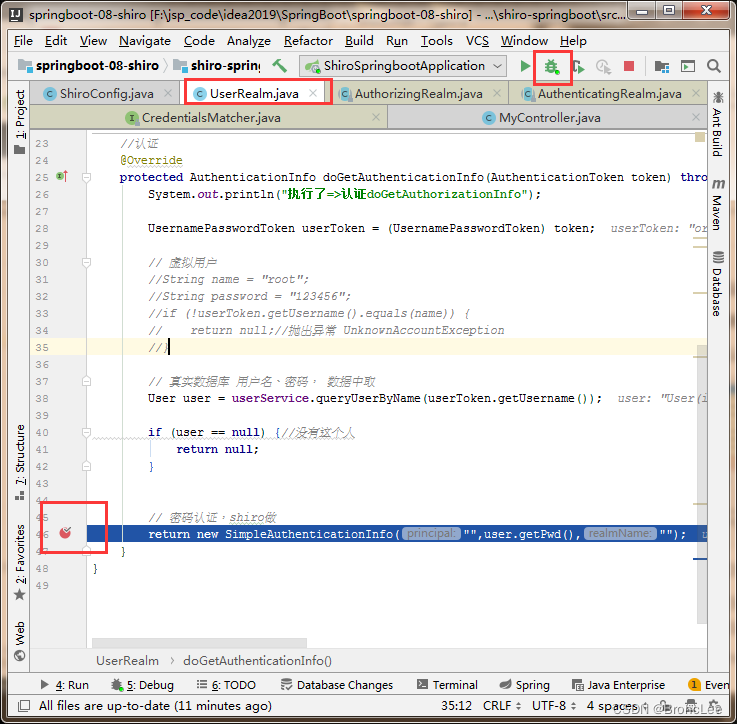
断点测试密码加密类型
-
打断点Debug
-
默认是
SimpleCredentialsMatcher加密
-
MD5加密——测试
123456——E10ADC3949BA59ABBE56E057F20F883E
-
MD5盐值加密
-
所有加密

3.5、Shiro实现用户授权
-
ShiroConfig中的getShiroFilterFactoryBean方法添加认证代码//授权,正常情况下,没有授权会跳转到为授权页面 filterMap.put("/user/add","perms[user:add]"); filterMap.put("/user/update","perms[user:update]");- 1
- 2
- 3
-
登录之后点击add按钮会弹出如下页面

-
添加为授权页面
-
MyController
@RequestMapping("/noauto") @ResponseBody public String unauthorized() { return "未经授权,无法访问此页面"; }- 1
- 2
- 3
- 4
- 5
-
ShiroConfig中的getShiroFilterFactoryBean方法中添加//为授权页面 bean.setUnauthorizedUrl("/noauto");- 1
- 2
-
-
再次测试


所以需要在UserRealm中为用户进行真正授权
-
UserRealm类的修改
//自定义的UserRealm public class UserRealm extends AuthorizingRealm { @Autowired UserService userService; //授权 @Override protected AuthorizationInfo doGetAuthorizationInfo(PrincipalCollection principalCollection) { System.out.println("执行了=>授权doGetAuthorizationInfo"); SimpleAuthorizationInfo info = new SimpleAuthorizationInfo(); //拿到当前登录的这个对象 Subject subject = SecurityUtils.getSubject(); User currentUser = (User)subject.getPrincipal();//拿到user对象 //设置当前用户的权限 info.addStringPermission(currentUser.getPerms()); return info; } //认证 @Override protected AuthenticationInfo doGetAuthenticationInfo(AuthenticationToken token) throws AuthenticationException { ...... // 密码认证,shiro做 return new SimpleAuthenticationInfo(user,user.getPwd(),""); } }- 1
- 2
- 3
- 4
- 5
- 6
- 7
- 8
- 9
- 10
- 11
- 12
- 13
- 14
- 15
- 16
- 17
- 18
- 19
- 20
- 21
- 22
- 23
- 24
- 25
- 26
- 27
- 28
- 29
- 30
- 31
-
再次测试

3.6、Shiro整合Thymeleaf
-
shiro-thymeleaf整合包导入——官网
<dependency> <groupId>com.github.theborakompanionigroupId> <artifactId>thymeleaf-extras-shiroartifactId> <version>2.0.0version> dependency>- 1
- 2
- 3
- 4
- 5
- 6
-
在ShiroConfig中整合ShiroDialect
// 整合ShiroDialect: 用来整合 Shiro thymeleaf @Bean public ShiroDialect getShiroDialect() { return new ShiroDialect(); }- 1
- 2
- 3
- 4
- 5
-
index.html页面
DOCTYPE html> <html lang="en" xmlns:th="http://www.thymeleaf.org" xmlns:shiro="http://www.thymeleaf.org/thymeleaf-extras-shiro"> <head> <meta charset="UTF-8"> <title>首页title> head> <body> <div> <h1>首页h1> <p th:text="${msg}">p> <div shiro:notAuthenticated> <a th:href="@{/toLogin}">登录a> div> <hr> <div shiro:hasPermission="user:add"> <a th:href="@{/user/add}">adda> div> <div shiro:hasPermission="user:update"> <a th:href="@{/user/update}">updatea> div> div> body> html>- 1
- 2
- 3
- 4
- 5
- 6
- 7
- 8
- 9
- 10
- 11
- 12
- 13
- 14
- 15
- 16
- 17
- 18
- 19
- 20
- 21
- 22
- 23
- 24
- 25
- 26
- 27
- 28
- 29
- 30
- 31
- 32
- 33
- 34
- 35
-
页面显示

3.7、所有代码
-
ShiroConfig
package com.lee.config; import at.pollux.thymeleaf.shiro.dialect.ShiroDialect; import org.apache.shiro.spring.web.ShiroFilterFactoryBean; import org.apache.shiro.web.mgt.DefaultWebSecurityManager; import org.springframework.beans.factory.annotation.Qualifier; import org.springframework.context.annotation.Bean; import org.springframework.context.annotation.Configuration; import java.util.LinkedHashMap; import java.util.Map; @Configuration public class ShiroConfig { //shiroFilterFactoryBean @Bean public ShiroFilterFactoryBean getShiroFilterFactoryBean(@Qualifier("getDefaultWebSecurityManager") DefaultWebSecurityManager defaultWebSecurityManager) { ShiroFilterFactoryBean bean = new ShiroFilterFactoryBean(); // 设置安全管理器 bean.setSecurityManager(defaultWebSecurityManager); // 添加shiro的内置过滤器 /* anon: 无需认证就可以访问 authc: 必须认证了才能访问 user: 必须拥有记住我功能才能用 perms: 拥有对某个资源的权限才能访问 role: 拥有某个角色权限 */ //拦截 Map<String, String> filterMap = new LinkedHashMap<>(); //filterMap.put("/user/add","authc"); //filterMap.put("/user/update","authc"); //授权,正常情况下,没有授权会跳转到为授权页面 filterMap.put("/user/add","perms[user:add]"); filterMap.put("/user/update","perms[user:update]"); filterMap.put("/user/*","authc"); bean.setFilterChainDefinitionMap(filterMap); //设置登录的请求 bean.setLoginUrl("/toLogin"); //为授权页面 bean.setUnauthorizedUrl("/noauto"); return bean; } //DefaultWebSecurityManager @Bean public DefaultWebSecurityManager getDefaultWebSecurityManager(@Qualifier("userRealm") UserRealm userRealm) { DefaultWebSecurityManager securityManager = new DefaultWebSecurityManager(); // 关联userRealm securityManager.setRealm(userRealm); return securityManager; } //创建realm对象,需要自定义类 @Bean public UserRealm userRealm() { return new UserRealm(); } // 整合ShiroDialect: 用来整合 Shiro thymeleaf @Bean public ShiroDialect getShiroDialect() { return new ShiroDialect(); } }- 1
- 2
- 3
- 4
- 5
- 6
- 7
- 8
- 9
- 10
- 11
- 12
- 13
- 14
- 15
- 16
- 17
- 18
- 19
- 20
- 21
- 22
- 23
- 24
- 25
- 26
- 27
- 28
- 29
- 30
- 31
- 32
- 33
- 34
- 35
- 36
- 37
- 38
- 39
- 40
- 41
- 42
- 43
- 44
- 45
- 46
- 47
- 48
- 49
- 50
- 51
- 52
- 53
- 54
- 55
- 56
- 57
- 58
- 59
- 60
- 61
- 62
- 63
- 64
- 65
- 66
- 67
- 68
- 69
- 70
- 71
- 72
- 73
- 74
- 75
- 76
- 77
- 78
-
UserRealm
package com.lee.config; import com.lee.pojo.User; import com.lee.service.UserService; import org.apache.shiro.SecurityUtils; import org.apache.shiro.authc.*; import org.apache.shiro.authz.AuthorizationInfo; import org.apache.shiro.authz.SimpleAuthorizationInfo; import org.apache.shiro.realm.AuthorizingRealm; import org.apache.shiro.session.Session; import org.apache.shiro.subject.PrincipalCollection; import org.apache.shiro.subject.Subject; import org.springframework.beans.factory.annotation.Autowired; //自定义的UserRealm public class UserRealm extends AuthorizingRealm { @Autowired UserService userService; //授权 @Override protected AuthorizationInfo doGetAuthorizationInfo(PrincipalCollection principalCollection) { System.out.println("执行了=>授权doGetAuthorizationInfo"); SimpleAuthorizationInfo info = new SimpleAuthorizationInfo(); //info.addStringPermission("user:add"); //拿到当前登录的这个对象 Subject subject = SecurityUtils.getSubject(); User currentUser = (User)subject.getPrincipal();//拿到user对象 //设置当前用户的权限 info.addStringPermission(currentUser.getPerms()); return info; } //认证 @Override protected AuthenticationInfo doGetAuthenticationInfo(AuthenticationToken token) throws AuthenticationException { System.out.println("执行了=>认证doGetAuthorizationInfo"); UsernamePasswordToken userToken = (UsernamePasswordToken) token; // 虚拟用户 //String name = "root"; //String password = "123456"; //if (!userToken.getUsername().equals(name)) { // return null;//抛出异常 UnknownAccountException //} // 真实数据库 用户名、密码, 数据中取 User user = userService.queryUserByName(userToken.getUsername()); if (user == null) {//没有这个人 return null; } //首页 //Subject currentSubject = SecurityUtils.getSubject(); //Session session = currentSubject.getSession(); //session.setAttribute("loginUser",user); // 密码认证,shiro做 return new SimpleAuthenticationInfo(user,user.getPwd(),""); } }- 1
- 2
- 3
- 4
- 5
- 6
- 7
- 8
- 9
- 10
- 11
- 12
- 13
- 14
- 15
- 16
- 17
- 18
- 19
- 20
- 21
- 22
- 23
- 24
- 25
- 26
- 27
- 28
- 29
- 30
- 31
- 32
- 33
- 34
- 35
- 36
- 37
- 38
- 39
- 40
- 41
- 42
- 43
- 44
- 45
- 46
- 47
- 48
- 49
- 50
- 51
- 52
- 53
- 54
- 55
- 56
- 57
- 58
- 59
- 60
- 61
- 62
- 63
- 64
- 65
- 66
- 67
- 68
- 69
-
MyController
package com.lee.controller; import org.apache.shiro.SecurityUtils; import org.apache.shiro.authc.IncorrectCredentialsException; import org.apache.shiro.authc.UnknownAccountException; import org.apache.shiro.authc.UsernamePasswordToken; import org.apache.shiro.subject.Subject; import org.springframework.stereotype.Controller; import org.springframework.ui.Model; import org.springframework.web.bind.annotation.RequestMapping; import org.springframework.web.bind.annotation.ResponseBody; @Controller public class MyController { @RequestMapping({"/","/index"}) public String toIndex(Model model) { model.addAttribute("msg","hello,Shiro"); return "index"; } @RequestMapping("/user/add") public String add() { return "user/add"; } @RequestMapping("/user/update") public String update() { return "user/update"; } @RequestMapping("/toLogin") public String toLogin() { return "login"; } @RequestMapping("/login") public String login(String username, String password, Model model) { //获取一个用户 Subject subject = SecurityUtils.getSubject(); // 封装用户的登录数据 UsernamePasswordToken token = new UsernamePasswordToken(username, password); try { subject.login(token);//执行登录的方法,如果没有异常就说明ok了 return "index"; } catch (UnknownAccountException e) {//用户名不存在 model.addAttribute("msg","用户名错误"); return "login"; } catch (IncorrectCredentialsException e) {//密码不存在 model.addAttribute("msg","密码错误"); return "login"; } } @RequestMapping("/noauto") @ResponseBody public String unauthorized() { return "未经授权,无法访问此页面"; } }- 1
- 2
- 3
- 4
- 5
- 6
- 7
- 8
- 9
- 10
- 11
- 12
- 13
- 14
- 15
- 16
- 17
- 18
- 19
- 20
- 21
- 22
- 23
- 24
- 25
- 26
- 27
- 28
- 29
- 30
- 31
- 32
- 33
- 34
- 35
- 36
- 37
- 38
- 39
- 40
- 41
- 42
- 43
- 44
- 45
- 46
- 47
- 48
- 49
- 50
- 51
- 52
- 53
- 54
- 55
- 56
- 57
- 58
- 59
- 60
- 61
- 62
-
pom依赖
<project xmlns="http://maven.apache.org/POM/4.0.0" xmlns:xsi="http://www.w3.org/2001/XMLSchema-instance" xsi:schemaLocation="http://maven.apache.org/POM/4.0.0 https://maven.apache.org/xsd/maven-4.0.0.xsd"> <modelVersion>4.0.0modelVersion> <groupId>nuc.ssgroupId> <artifactId>shiro-springbootartifactId> <version>0.0.1-SNAPSHOTversion> <name>shiro-springbootname> <description>Demo project for Spring Bootdescription> <properties> <java.version>1.8java.version> <project.build.sourceEncoding>UTF-8project.build.sourceEncoding> <project.reporting.outputEncoding>UTF-8project.reporting.outputEncoding> <spring-boot.version>2.3.0.RELEASEspring-boot.version> properties> <dependencies> <dependency> <groupId>com.github.theborakompanionigroupId> <artifactId>thymeleaf-extras-shiroartifactId> <version>2.0.0version> dependency> <dependency> <groupId>org.projectlombokgroupId> <artifactId>lombokartifactId> dependency> <dependency> <groupId>mysqlgroupId> <artifactId>mysql-connector-javaartifactId> dependency> <dependency> <groupId>log4jgroupId> <artifactId>log4jartifactId> <version>1.2.17version> dependency> <dependency> <groupId>com.alibabagroupId> <artifactId>druidartifactId> <version>1.1.23version> dependency> <dependency> <groupId>org.mybatis.spring.bootgroupId> <artifactId>mybatis-spring-boot-starterartifactId> <version>2.1.3version> dependency> <dependency> <groupId>org.apache.shirogroupId> <artifactId>shiro-springartifactId> <version>1.5.3version> dependency> <dependency> <groupId>org.springframework.bootgroupId> <artifactId>spring-boot-starter-thymeleafartifactId> dependency> <dependency> <groupId>org.springframework.bootgroupId> <artifactId>spring-boot-starter-webartifactId> dependency> <dependency> <groupId>org.springframework.bootgroupId> <artifactId>spring-boot-starter-testartifactId> <scope>testscope> <exclusions> <exclusion> <groupId>org.junit.vintagegroupId> <artifactId>junit-vintage-engineartifactId> exclusion> exclusions> dependency> dependencies> <dependencyManagement> <dependencies> <dependency> <groupId>org.springframework.bootgroupId> <artifactId>spring-boot-dependenciesartifactId> <version>${spring-boot.version}version> <type>pomtype> <scope>importscope> dependency> dependencies> dependencyManagement> <build> <plugins> <plugin> <groupId>org.apache.maven.pluginsgroupId> <artifactId>maven-compiler-pluginartifactId> <configuration> <source>1.8source> <target>1.8target> <encoding>UTF-8encoding> configuration> plugin> <plugin> <groupId>org.springframework.bootgroupId> <artifactId>spring-boot-maven-pluginartifactId> plugin> plugins> build> project>- 1
- 2
- 3
- 4
- 5
- 6
- 7
- 8
- 9
- 10
- 11
- 12
- 13
- 14
- 15
- 16
- 17
- 18
- 19
- 20
- 21
- 22
- 23
- 24
- 25
- 26
- 27
- 28
- 29
- 30
- 31
- 32
- 33
- 34
- 35
- 36
- 37
- 38
- 39
- 40
- 41
- 42
- 43
- 44
- 45
- 46
- 47
- 48
- 49
- 50
- 51
- 52
- 53
- 54
- 55
- 56
- 57
- 58
- 59
- 60
- 61
- 62
- 63
- 64
- 65
- 66
- 67
- 68
- 69
- 70
- 71
- 72
- 73
- 74
- 75
- 76
- 77
- 78
- 79
- 80
- 81
- 82
- 83
- 84
- 85
- 86
- 87
- 88
- 89
- 90
- 91
- 92
- 93
- 94
- 95
- 96
- 97
- 98
- 99
- 100
- 101
- 102
- 103
- 104
- 105
- 106
- 107
- 108
- 109
- 110
- 111
- 112
- 113
- 114
- 115
- 116
- 117
- 118
- 119
- 120
- 121
- 122
- 123
4、完美的解释
-
-
相关阅读:
Day40 网络编程(二) InetAddress类, Socket ,TCP编程,UDP编程
【Vue-Element】Vue下配置好看的滚动条
Java 面试题 —— 请你介绍一下 Java 的线程池
短视频解析接口分发系统
《Effective Java》知识点(9)--异常
Ajax学习:原生jsonp实践
Linux性能优化实战CPU篇之总结(四)
Linux系统切换用户后只显示$问题解决
记一次MySQL执行修改语句超时问题
go初识iris框架(六) - session使用和控制
- 原文地址:https://blog.csdn.net/ayoM_/article/details/126761720
