-
【困难】42. 接雨水-单调栈、动态规划、数学法、双指针
【题目】
n == height.length 1 <= n <= 2 * 104 0 <= height[i] <= 105- 1
- 2
- 3
【代码】数学法 图像填充切割
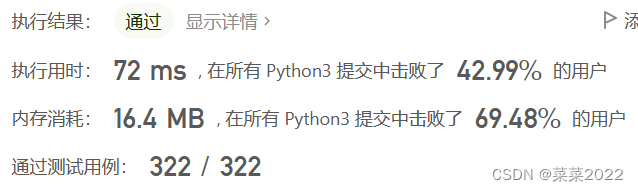
class Solution: def trap(self, height: List[int]) -> int: ans = 0 h1 = 0 h2 = 0 for i in range(len(height)): h1 = max(h1,height[i]) h2 = max(h2,height[-i-1]) ans = ans + h1 + h2 -height[i] return ans - len(height)*h1- 1
- 2
- 3
- 4
- 5
- 6
- 7
- 8
- 9
- 10
【方法2】
 按照列进行遍历,每列可以接的雨水数=max(min(该列左侧最高高度,该列右侧最高高度)-当前列的高度,0)
解释:- 当前列可以接的雨水数不会超过其左右两侧最高列的最低高度(短板效应)
- 当前列可以接的雨水数不会是负数,即:当前列超过左右两侧最高列的最低高度的情况
class Solution: def trap(self, height: List[int]) -> int: left=[] right=[] for i in range(len(height)): if left:left.append(max(height[i],left[-1])) else:left.append(height[i]) height=height[::-1] for i in range(len(height)): if right:right.append(max(height[i],right[-1])) else:right.append(height[i]) right=right[::-1] idx=0 ans=0 height=height[::-1] for l,r in zip(left,right): ans+=max(min(l,r)-height[idx],0) idx+=1 return ans- 1
- 2
- 3
- 4
- 5
- 6
- 7
- 8
- 9
- 10
- 11
- 12
- 13
- 14
- 15
- 16
- 17
- 18
- 19
【方法3】
单调栈
 使用单调栈记录从左到右,单调递减的边,因为只有递减的边才有可能存储水。
当遇到一个大于栈顶的边,则表明形成低洼可以存储水(因为栈顶前面的一条边是高于栈顶的,单调栈的特点,而当前的边也高于栈顶,所以形成了一个低洼)。- while
- 记录栈顶低洼处index,并弹出栈顶元素
- 判断当前栈是否为空,即左侧还有没有边可以和当前边形式低洼
- 如果当前栈为空,说明形成不了低洼,break跳出循环,否则执行下面操作
- 计算当前边和栈顶边(原始的栈顶已经被弹出)形成的低洼处可以存储的水量
- 将得到的水量计入全局变量ans(最后作为结果返回)
- 加入当前边进入单调栈(此时单调栈已经为空或者栈顶元素已经大于当前边)
class Solution: def trap(self, height: List[int]) -> int: ans=0 stack=[] for idx,item in enumerate(height): while stack!=[] and item>height[stack[-1]]: top_index=stack[-1] stack.pop(-1) if stack==[]: break h=min(height[stack[-1]],item)-height[top_index] w=idx-stack[-1]-1 ans+=h*w stack.append(idx) return ans- 1
- 2
- 3
- 4
- 5
- 6
- 7
- 8
- 9
- 10
- 11
- 12
- 13
- 14
- 15
【方法4】双指针
利用了木桶效应,木桶可以盛水量是由最短木块决定的
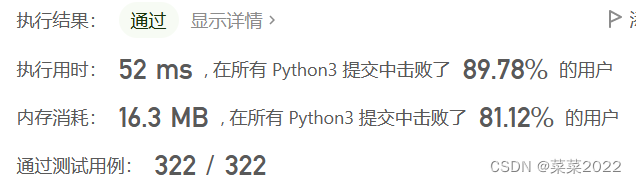
class Solution: def trap(self, height: List[int]) -> int: left,right=0,len(height)-1 left_max,right_max,ans=0,0,0 while left<right: if height[left]<height[right]: if height[left]>left_max: left_max=height[left] else: ans+=left_max-height[left] left+=1 else: if height[right]>right_max: right_max=height[right] else: ans+=right_max-height[right] right-=1 return ans- 1
- 2
- 3
- 4
- 5
- 6
- 7
- 8
- 9
- 10
- 11
- 12
- 13
- 14
- 15
- 16
- 17
- 18
-
相关阅读:
R语言ggplot2可视化:使用ggpubr包的ggdonutchart函数可视化甜甜圈图(donut chart)、为甜甜圈图不同区域添加标签
第二十次CCF计算机软件能力认证
AI智能客服机器人是什么?对企业重要吗?
【索引】常见的索引、B+树结构、什么时候需要使用索引、优化索引方法、索引主要的数据结构、聚簇索引、二级索引、创建合适的索引等重点知识汇总
1034 Head of a Gang
kotlin协程withContext的使用
oracle的使用sqlplush
Vue Router路由
vue环境搭建
第七章第二节:B树和B+树
- 原文地址:https://blog.csdn.net/kz_java/article/details/126679091
