-
<数据结构> - 数据结构在算法比赛中的应用(下)
目录
Trie树
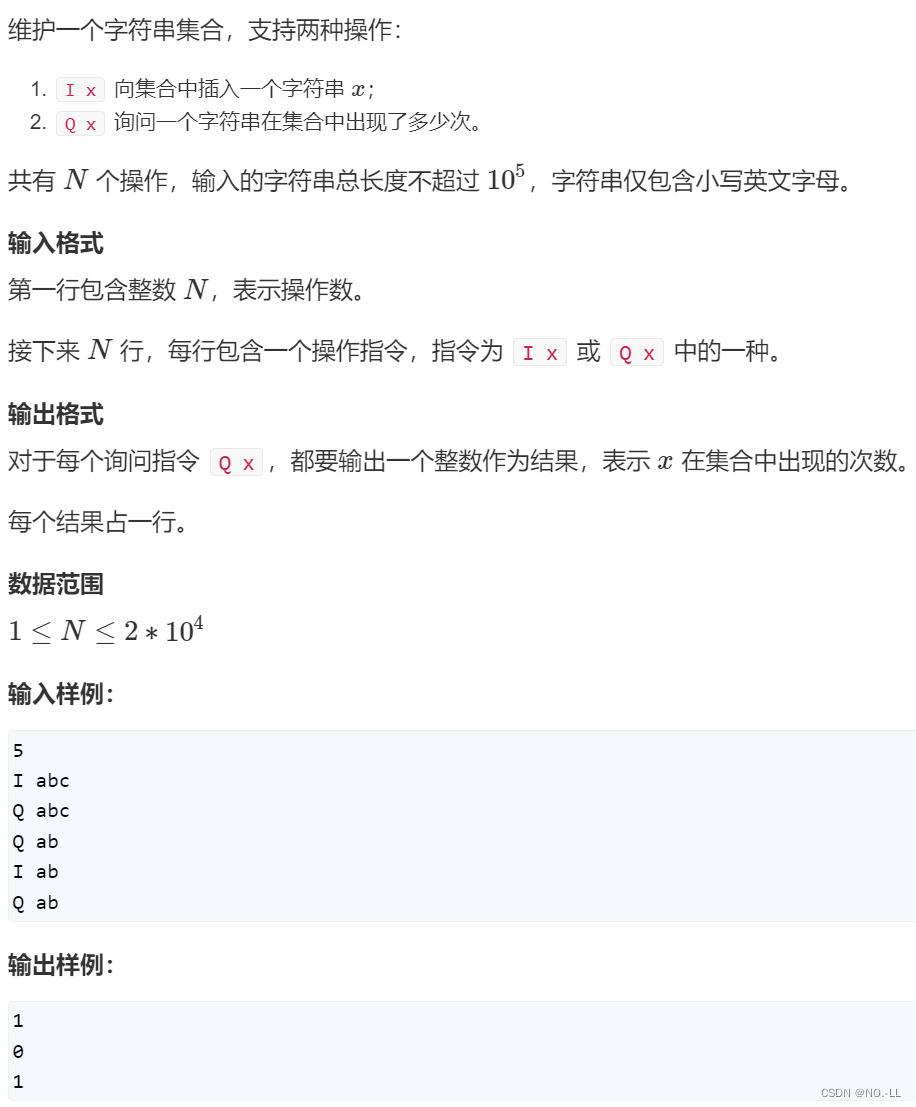
Trie字符串统计
思路:
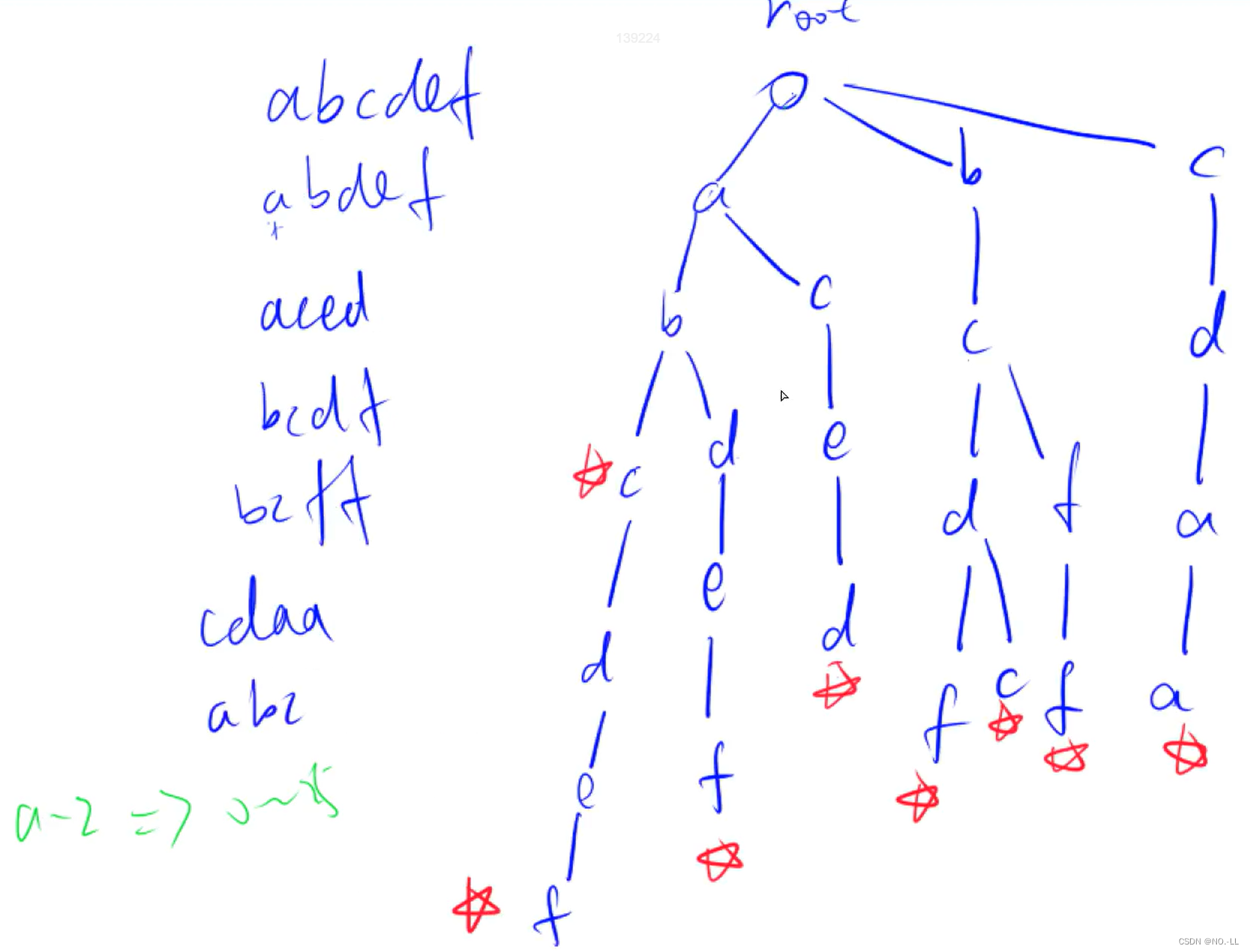
设 idx索引用于构建树, 结点son[节点位置][节点分支指针],cnt[]记录单词个数
- #include
- using namespace std;
- const int N = 100010;
- int son[N][26], cnt[N], idx; //因为只包含小写字母,所以每个节点最多有26个子节点
- char str[N];
- void insert(char *str)
- {
- int p = 0; //下标是0的点即是根节点,又是空节点,如son[0][0]为根节点的分支'a'
- for (int i = 0; str[i]; i ++ ) //字符串末尾有'\0'
- {
- int u = str[i] - 'a';
- if (!son[p][u]) son[p][u] = ++ idx;
- p = son[p][u];
- }
- cnt[p] ++ ; //记录这个单词
- }
- int query(char *str)
- {
- int p = 0;
- for (int i = 0; str[i]; i ++ )
- {
- int u = str[i] - 'a';
- if (!son[p][u]) return 0;
- p = son[p][u];
- }
- return cnt[p];
- }
- int main()
- {
- int n;
- scanf("%d", &n);
- while (n -- )
- {
- char op[2];
- scanf("%s%s", op, str);
- if (*op == 'I') insert(str);
- else printf("%d\n", query(str));
- }
- return 0;
- }
最大异或对
思路:
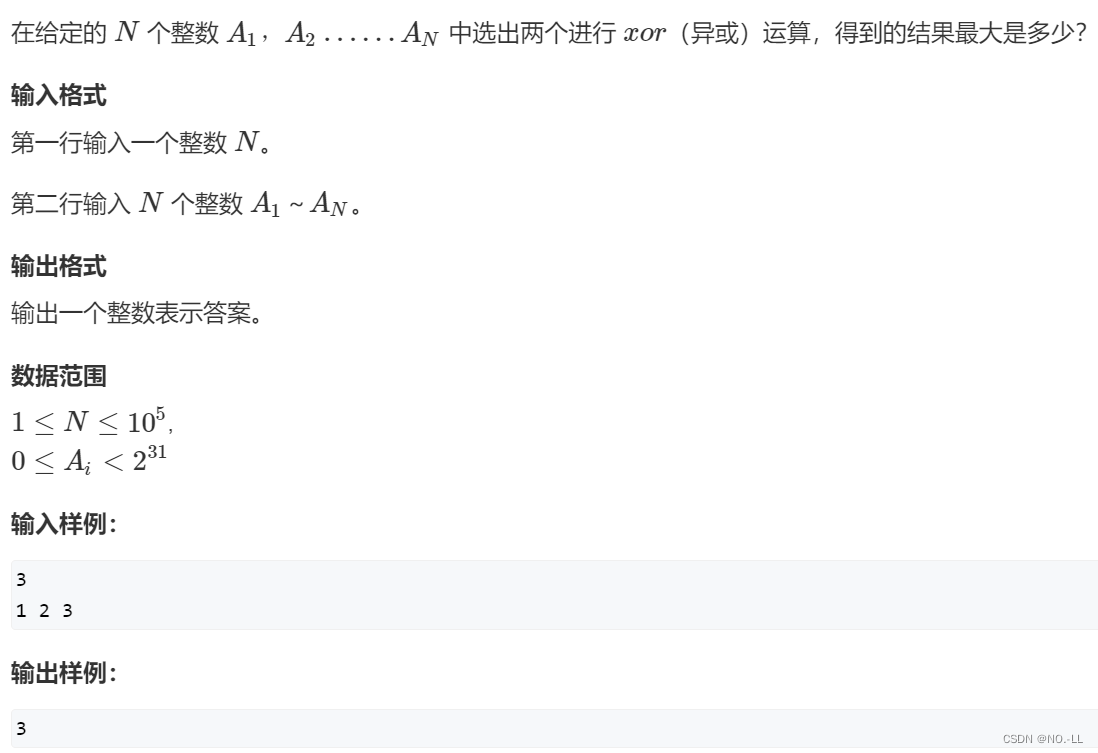
字典树不单单可以高效存储和查找字符串集合,还可以存储二进制数字:将每个数以二进制方式存入字典树,找的时候从最高位去找有无该位的异.

 取x的第i位二进制数作为结点
- #include
- #include
- using namespace std;
- int const N=100010,M=31*N; //M表示trie树的结点个数,即:31个二进制长度*总数
- int n,idx;
- int a[N];
- int son[M][2]; //因为只需要存二进制1和0,所以2即可
- void insert(int x)
- {
- int p=0;
- for(int i=30;i>=0;i--)
- {
- int u=x>>i&1; //取x的第i位二进制数是什么
- if(!son[p][u]) son[p][u]=++idx;
- p=son[p][u];
- }
- }
- int search(int x)
- {
- int p=0,res=0;
- for(int i=30;i>=0;i--) //遍历31个二进制位
- {
- int u=x>>i&1;
- if(son[p][!u]) //为了取异或后最大值,如果有不同的就先走
- {
- p=son[p][!u];
- res=res*2+1; //异或相异为1,res整体向前挪一位+1
- }
- else
- {
- p=son[p][u];
- res=res*2+0; //相同为0
- }
- }
- return res;
- }
- int main()
- {
- cin>>n;
- for(int i=0;i{cin>>a[i];insert(a[i]);}int res=0;for(int i=0;i{res=max(res,search(a[i]));}cout<return 0;}
并查集
合并集合

思路:
路径压缩具体操作:
如图
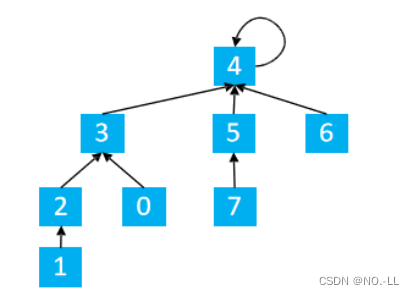
find(1) p[1] = 2 p[1] = find(2)
find(2) p[2] = 3 p[2] = find(3)
find(3) p[3] = 4 p[3] = find(4)
find(4) p[4] = 4 将p[4]返回于是一路回溯;4=p[4]=p[3]=p[2]=p[1];

- #include
- using namespace std;
- int p[100010];
- int find(int x)
- {
- if(p[x]!=x) p[x]=find(p[x]);
- return p[x];
- }
- int main()
- {
- int n,m;
- cin>>n>>m;
- for(int i=1;i<=n;i++) p[i]=i;
- while(m--)
- {
- char op;
- int a,b;
- cin>>op>>a>>b;
- if(op=='M') p[find(a)]=find(b); //将a的根插到b的根下,成为b分支
- else
- {
- if(find(a)==find(b))
- printf("Yes\n");
- else
- printf("No\n");
- }
- }
- return 0;
- }
连通块中点的数量
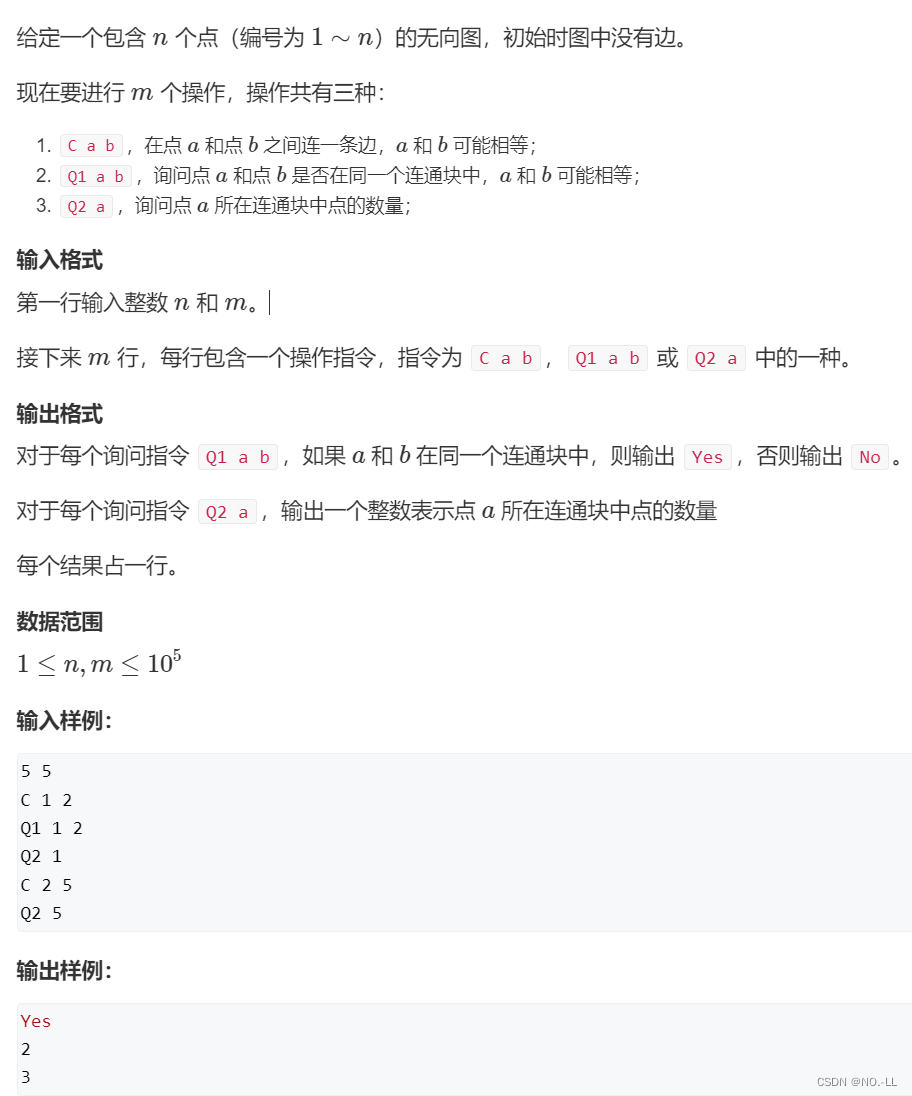
算法 - 并查集详解:
- #include
- using namespace std;
- int n,m;
- int p[100010],cnt[100010];
- int find(int x)
- {
- if(p[x]!=x) p[x]=find(p[x]);
- return p[x];
- }
- int main()
- {
- cin>>n>>m;
- for(int i=1;i<=n;i++)
- {
- p[i]=i;
- cnt[i]=1;
- }
- while(m--)
- {
- int a,b;
- string s;
- cin>>s;
- if(s=="C")
- {
- cin>>a>>b;
- a=find(a),b=find(b);
- p[a]=b;
- if(a!=b) cnt[b]+=cnt[a];
- }
- else if(s=="Q1")
- {
- cin>>a>>b;
- a=find(a),b=find(b);
- if(a==b) puts("Yes");
- else puts("No");
- }
- else
- {
- cin>>a;
- cout<}}return 0;}
食物链

思路
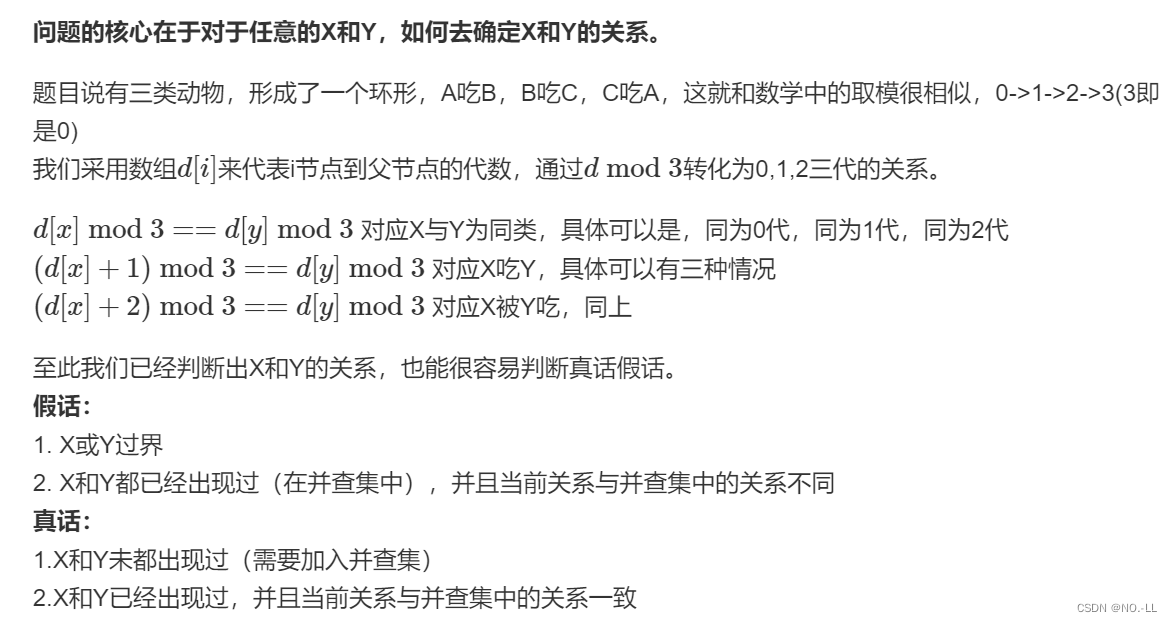

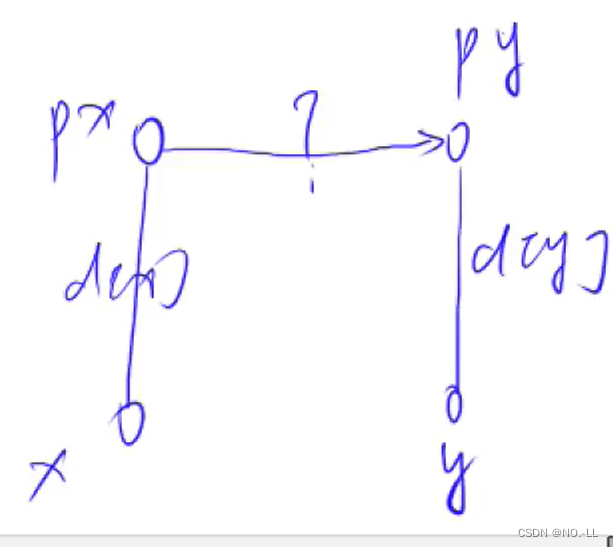
如果不是同一颗树,就把x树插到y树下,成为分支;由前面的合并操作,我们已经算出x到根px的距离d[x],y到根py的距离d[y];那么如何算px到py的距离呢?
我们设距离为 ?;
由于需要满足是同一种类,即最终的x到根距离%3==y到根距离%3
公式为(d[x]+?)%3==(d[y])%3;
简化得 ?=d[y]-d[x];
- else if (px != py) //如果是不同的树
- {
- p[px] = py; //把x树插到y树下,成为分支
- d[px] = d[y] - d[x]; //
- }
- #include
- using namespace std;
- const int N = 50010;
- int n, m;
- int p[N], d[N];
- int find(int x)
- {
- if (p[x] != x)
- {
- int t = find(p[x]);
- d[x] += d[p[x]]; //d[p[x]]就指p[x]到上一个节点的距离,最终d[x]为该节点到宗结点距离
- p[x] = t;
- }
- return p[x];
- }
- int main()
- {
- scanf("%d%d", &n, &m);
- for (int i = 1; i <= n; i ++ ) p[i] = i; //有n种动物
- int res = 0;
- while (m -- )
- {
- int t, x, y;
- scanf("%d%d%d", &t, &x, &y);
- if (x > n || y > n) res ++ ; //大于范围,直接假
- else
- {
- int px = find(x), py = find(y); //找x和y的根节点
- if (t == 1) //判断同类,顺手记录
- {
- if (px == py && (d[x] - d[y]) % 3) res ++ ; //x和y在同一颗树上,
- //两个值到根节点的距离%3不同,说明不是同一类
- else if (px != py) //如果是不同的树
- {
- p[px] = py; //把x树插到y树下,成为分支
- d[px] = d[y] - d[x]; //根px到根py的距离
- }
- }
- else //判断是否x吃y
- {
- if (px == py && (d[x] - d[y] - 1) % 3) res ++ ;//x和y在同一颗树上,
- //x值到根节点的距离没有比y距离多1,说明吃不掉
- else if (px != py)
- {
- p[px] = py;
- d[px] = d[y] + 1 - d[x]; //同理
- }
- }
- }
- }
- printf("%d\n", res);
- return 0;
- }
堆
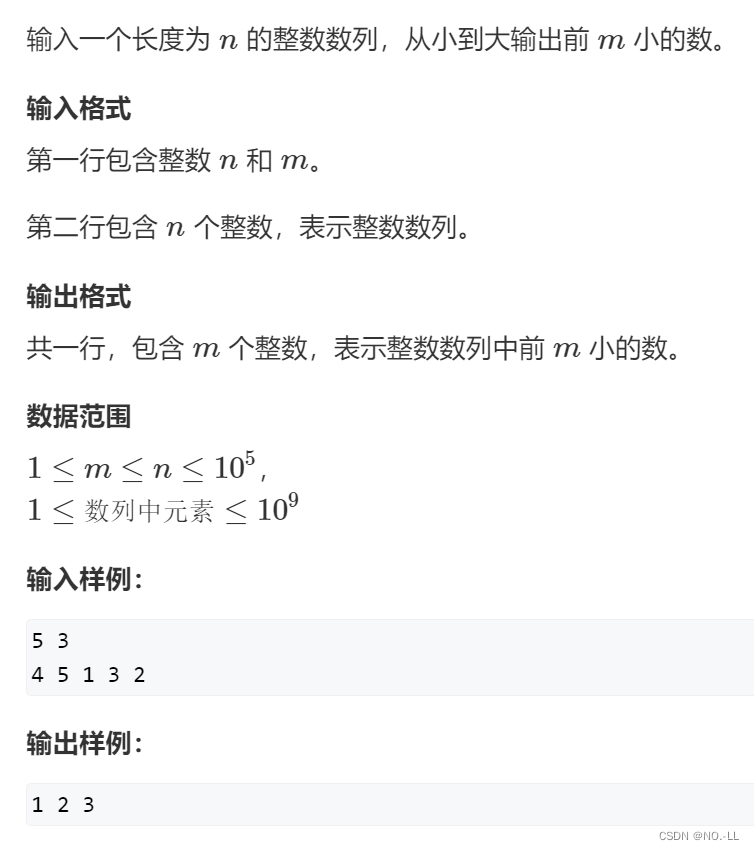
堆排序
思路:
1、向上调整算法:
- void up(int u)
- {
- while(u/2&&h[u/2]>h[u])
- {
- swap(h[u/2],h[u]);
- u/=2;
- }
- }
2、向下调整算法 :
- void down(int u)
- {
- int t = u;
- if (u * 2 <= cnt && h[u * 2] < h[t]) t = u * 2;
- if (u * 2 + 1 <= cnt && h[u * 2 + 1] < h[t]) t = u * 2 + 1;
- if (u != t)
- {
- swap(h[u], h[t]);
- down(t);
- }
- }
如何手写一个堆?完全二叉树 5个操作
- 插入一个数 heap[ ++ size] = x; up(size);
- 求集合中的最小值 heap[1]
- 删除最小值 heap[1] = heap[size]; size -- ;down(1);
- 删除任意一个元素 heap[k] = heap[size]; size -- ;up(k); down(k);
- 修改任意一个元素 heap[k] = x; up(k); down(k);
h[i] 表示第i个结点存储的值,i从1开始,2*i是左子节点,2*i + 1是右子节点
size 既表示堆里存储的元素个数,又表示最后一个结点的下标i为什么从n/2开始down?
因为n是最大值,n/2是n的父节点,因为n是最大,所以n/2是最大的有子节点的父节点,所以从n/2往前遍历,就可以把整个数组的父节点遍历一遍
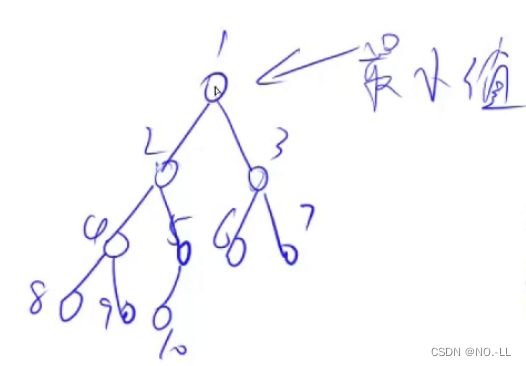
如图,我们找到最大父节点5,然后向上遍历4321都是父节点,而5就是n/2
- #include
- using namespace std;
- int const N = 100010;
- int h[N], siz; //堆有两个变量h[N],size; 怎么这里的size和文件里有冲突,只能改成siz了
- void down(int u)
- {
- int t = u;//t存储三个结点中存在的最小的结点的下标,初始化为当前结点u
- if (u * 2 <= siz && h[u * 2] < h[t]) t = u * 2; // 左子节点存在并且小于当前结点,更新t的下标
- if (u * 2 + 1 <= siz && h[u * 2 + 1] < h[t]) t = u * 2 + 1;//右子节点存在并且小于当前结点,更新t的下标
- if (t != u)//如果t==u意味着不用变动,u就是三个结点中拥有最小值的结点下标,否则交换数值
- {
- swap(h[t], h[u]);
- down(t); //交换数值后,t这个结点存储原本u的值,u存储存储t的值(三个数中的最小值)。u不用调整了,但t情况不明,可能需要调整。直到它比左右子节点都小
- }
- }
- int main()
- {
- int n, m;
- cin >> n >> m;
- for (int i = 1; i <= n; i ++ ) scanf("%d", &h[i]);
- siz = n; //初始化size,表示堆里有n 个元素
- for (int i = n / 2; i; i --) down(i); //把堆初始化成小根堆,从二叉树的倒数第二行开始,把数字大的下沉
- while (m -- )
- {
- printf("%d ", h[1]);
- h[1] = h[siz];
- siz --;
- down(1);
- }
- return 0;
- }
模拟堆
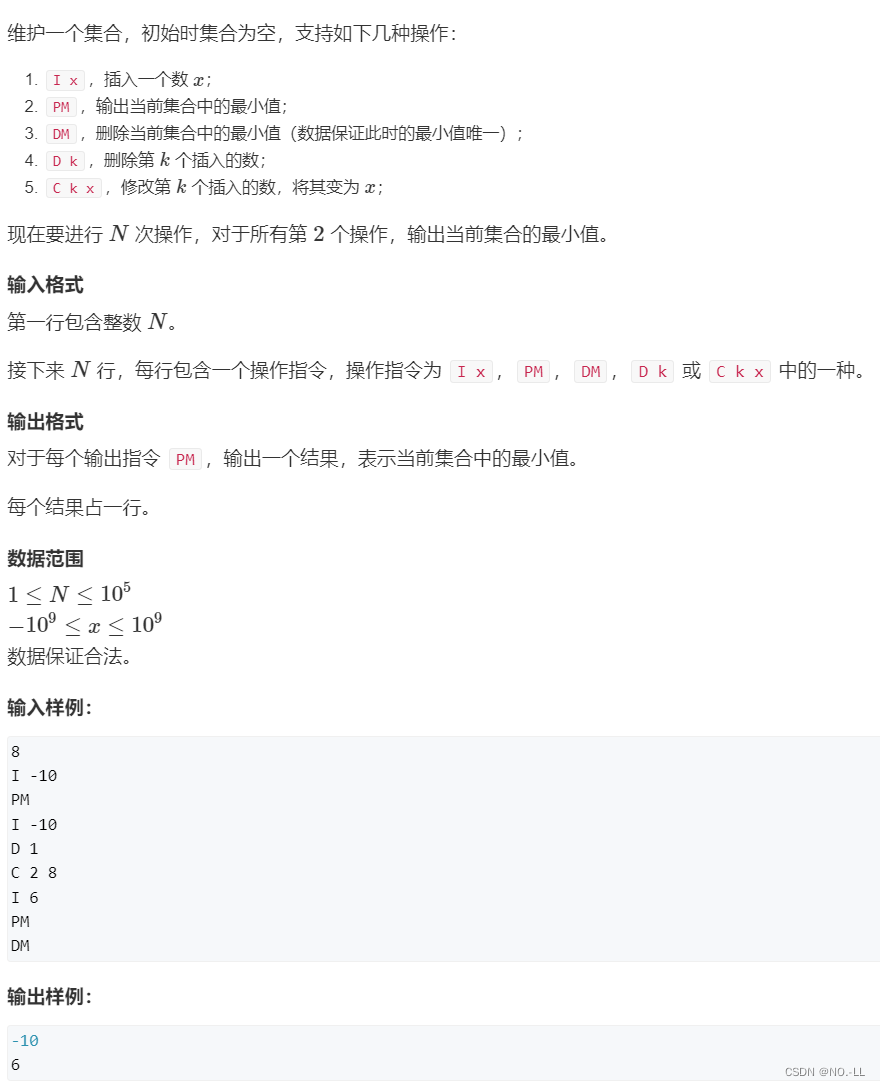
思路:
操作与堆排序一样,但由于需要插入和删除第k个数,要用额外数组作为指针存储位置,以便快速找到k,于是交换位置的同时也要交换指针
因为需要插入和删除第k个数,所以需要用hp[]记录idx值,然后用ph[]记录hp[]对应的结点

理解hp与ph数组,以及为什么需要它们
- 堆h[i]只能存放数据,不能存放是第几个数字,所以需要ph[k] = i来指明,第k个数字在h[]中对应的i是多少
- 在执行交换操作的时候,可以直接交换数字,swap(h[a],h[b])
- 但是对于ph[k_1] = a和ph[k_2] = b来说,a和b是它们存放的值,不 能通过值来找下标,也就是找不k_1,k_2是多少
- 于是引入hp[a] = k_2,hp[b] = k_2,则可以实现反向的操作
例如:
h[a] = 10, h[b] = 20 swap: h[a] = 20,h [b] = 10
hp[a] = 1 ,hp[b] = 2 swap:hp[a] = 2 ,hp[b] = 1
ph[1] = a ,ph[2] = b swap:ph[1] = b ,ph[2] = a- #include
- #include
- #include
- using namespace std;
- const int N = 100010;
- int h[N], ph[N], hp[N], cnt;
- void heap_swap(int a, int b)
- {
- swap(ph[hp[a]],ph[hp[b]]);
- swap(hp[a], hp[b]);
- swap(h[a], h[b]);
- }
- void down(int u)
- {
- int t = u;
- if (u * 2 <= cnt && h[u * 2] < h[t]) t = u * 2;
- if (u * 2 + 1 <= cnt && h[u * 2 + 1] < h[t]) t = u * 2 + 1;
- if (u != t)
- {
- heap_swap(u, t);
- down(t);
- }
- }
- void up(int u)
- {
- while (u / 2 && h[u] < h[u / 2])
- {
- heap_swap(u, u / 2);
- u >>= 1;
- }
- }
- int main()
- {
- int n, m = 0;
- scanf("%d", &n);
- while (n -- )
- {
- char op[5];
- int k, x;
- scanf("%s", op);
- if (!strcmp(op, "I"))
- {
- scanf("%d", &x);
- cnt ++ ;
- m ++ ;
- ph[m] = cnt, hp[cnt] = m;
- h[cnt] = x;
- up(cnt);
- }
- else if (!strcmp(op, "PM")) printf("%d\n", h[1]);
- else if (!strcmp(op, "DM"))
- {
- heap_swap(1, cnt);
- cnt -- ;
- down(1);
- }
- else if (!strcmp(op, "D"))
- {
- scanf("%d", &k);
- k = ph[k];
- heap_swap(k, cnt);
- cnt -- ;
- up(k);
- down(k);
- }
- else
- {
- scanf("%d%d", &k, &x);
- k = ph[k];
- h[k] = x;
- up(k);
- down(k);
- }
- }
- return 0;
- }
哈希表
模拟散列表

拉链法:
- //拉链法
- #include
- #include
- using namespace std;
- const int N = 100003;//取大于1e5的第一个质数
- int h[N],e[N],ne[N],idx;//开一个h槽,邻接表,h[]表示每个链表头节点,e[]表示x值,ne[]下一个节点下标
- int n;
- void insert(int x)
- {
- int k = (x % N + N) % N;//c++中如果是负数,那他取模也是负的,加N再%N就一定是一个正数
- e[idx] = x;
- ne[idx] = h[k]; //相当于创建单链表
- h[k] = idx++;
- }
- bool find(int x)
- {
- int k = (x % N + N) % N;
- for(int i = h[k];i != -1;i = ne[i]) //遍历链表
- {
- if(e[i] == x) return true;
- }
- return false;
- }
- int main()
- {
- cin >> n;
- memset(h,-1,sizeof h);//先将槽清空,用-1表示
- while(n--)
- {
- string op;
- int x;
- cin >> op >> x;
- if(op == "I")
- {
- insert(x);
- }
- else
- {
- if(find(x))
- {
- puts("Yes");
- }
- else
- {
- puts("No");
- }
- }
- }
- return 0;
- }
开放选址法
- #include
- #include
- using namespace std;
- const int N=1e6+9; //开放寻址法一般开 数据范围的 2~3倍, 这样大概率就没有冲突了(我开了10倍)
- //开成质数取模时减小冲突概率
- const int null=0x3f3f3f3f; //比1e9大的数(在数据范围找不到的数)
- int h[N],n;
- int find(int x)
- {
- int t=(x%N+N)%N;
- while(h[t]!=null&&h[t]!=x) //如果位置不空并且不是x(不是自己)
- {
- t++; //就找下一个位置
- if(t==N) t=0; //找到最后一个时再从0开找
- }
- return t; //如果这个位置是空的, 则返回的是他应该存储的位置
- }
- int main()
- {
- cin>>n;
- memset(h,0x3f,sizeof h); //将每个值变为0x3f3f3f3f(以字节赋值 int4字节)
- while(n--)
- {
- string op;
- int x;
- cin>>op>>x;
- if(op=="I")
- {
- h[find(x)]=x;
- }
- else
- {
- if(h[find(x)]==null) puts("No");
- else puts("Yes");
- }
- }
- return 0;
- }
字符串哈希


设 h[i]前i个字符的hash值;

为什么是h[l-1]? 由题意得,在abcdef中2 4为bcde,那么就是h[4]-h[2-1];
为什么是P^(r-l+1)? ABCDE 与 ABC 的前三个字符值是一样,只差两位,乘上 P^2 把 ABC 变为 ABC00,再用 ABCDE - ABC00 得到 DE 的哈希值。而P^2==p[3]==p[r-l+1](p从0次幂开始)- #include
- using namespace std;
- typedef unsigned long long ull;
- const int N=1e5+10,P=131; //或者P=13331
- ull h[N],p[N]; //非常刚好的免去了取模的操作
- ull find(int l,int r)
- {
- return h[r]-h[l-1]*p[r-l+1]; //部分求和
- }
- int main()
- {
- int n,m;
- cin>>n>>m;
- string x;
- cin>>x;
- p[0]=1; //p^0==1
- h[0]=0; //hash表从1开始有值,处理边界
- for(int i=0;i{p[i+1]=p[i]*P;h[i+1]=h[i]*P+x[i]; //前缀和}while(m--){int l1,r1,l2,r2;cin>>l1>>r1>>l2>>r2;if(find(l1,r1)==find(l2,r2)) puts("Yes");else puts("No");}return 0;}
-
相关阅读:
链动2+1模式系统,是如何成为人、货、场资源流动加速器?
算法设计与分析 | 输油管道
Linux进程优先级与环境变量初识
《canvas》之第7章 变形操作
Llama 2 70B 问答 - 由人工神经网络训练的程序,与使用编程语言和数学算法编写的程序之间有何区别?
微前端 - micro-app
数据库连接池的概念和原理
AI推介-大语言模型LLMs论文速览(arXiv方向):2024.01.10-2024.01.20
热忱与专业齐飞 | 微软最有价值专家项目,广纳微软技术贡献者!
Linux 多线程多进程
- 原文地址:https://blog.csdn.net/qq_61386381/article/details/126545392
