-
【数据结构】单链表经典面试题10道及详细思路代码
目录
3. 给定一个带有头结点 head 的非空单链表,返回链表的中间结点。如果有两个中间结点,则返回第二个中间结点。
5. 将两个有序链表合并为一个新的有序链表并返回。新链表是通过拼接给定的两个链表的所有节点组成的。
6. 编写代码,以给定值x为基准将链表分割成两部分,所有小于x的结点排在大于或等于x的结点之前 。
10. 给定一个链表,返回链表开始入环的第一个节点。 如果链表无环,则返回 NULL
1. 删除链表中等于给定值 val 的所有节点。
leetcode 203 移除链表元素

- typedef struct ListNode Node;
- struct ListNode* removeElements(struct ListNode* head, int val){
- Node* cur = head;
- Node *prev = NULL;//保存cur的前一个结点
- while(cur)
- {
- if(cur->val == val)
- {
- if(NULL == prev)
- {
- //需要删除的cur刚好是链表第一个结点,此时prev是空
- //需要修改head的指向
- head = cur->next;
- free(cur);
- cur = head;
- }
- else
- {
- //删除cur
- //让prev的next指向此时cur的next
- prev->next = cur->next;
- free(cur);
- //将prev赋值给cur
- cur = prev->next;
- }
- }
- else
- {
- prev = cur;
- cur = cur->next;
- }
- }
- return head;
- }
2. 反转一个单链表。
leetcode 206 反转链表

- typedef struct ListNode Node;
- struct ListNode* reverseList(struct ListNode* head){
- Node* prev = NULL;
- Node* cur = head;
- Node* next = NULL;
- //以左图为例子,此时,cur在1,其他在null
- while(cur)
- {
- next = cur->next; //next在2,cur在1,prev在空
- cur->next = prev;//改变链表指向,让cur指向空
- prev = cur; //prev在1
- cur = next;//cur在2,依次改变链表每个结点指向
- }
- return prev;
- }
3. 给定一个带有头结点 head 的非空单链表,返回链表的中间结点。如果有两个中间结点,则返回第二个中间结点。
leetcode 876
给定一个头结点为
head的非空单链表,返回链表的中间结点。如果有两个中间结点,则返回第二个中间结点。思路:
给两个指针fast slow,fast每次走2步,slow走一步,fast到末尾,slow在中间
- typedef struct ListNode Node;
- struct ListNode* middleNode(struct ListNode* head){
- Node* fast = head;
- Node* slow = head;
- //fast和接下来2步都不为空
- //fast不为null,可以保证fast第一步成功
- //fast->next 不为空,保证第二部走成功
- while(fast && fast->next)
- {
- fast = fast->next->next;
- slow = slow->next;
- }
- return slow;
- }
拓展:要求假设返回中间的第一个结点
- Node* fast = head;
- Node* slow = head;
- Node* prev =NULL;
- while(fast && fast->next)
- {
- fast = fast->next->next;
- prev = slow;
- slow = slow->next;
- }
- if(fast) //总数是奇数
- {
- return slow;
- }
- else //总数是偶数
- {
- return prev;
- }
4. 输入一个链表,输出该链表中倒数第k个结点。
最优思路:先让front走k步,再让back和front同时走,当front到末尾,back就是倒数第k结点
- struct ListNode* FindKthToTail(struct ListNode* pListHead, int k ) {
- // write code here
- //先让front走k步,再让back和front同时走,当front到末尾,back就是倒数第k结点
- //1.对参数进行检测
- if(NULL ==pListHead || k <= 0)
- return NULL;
- //2.定义两个指针
- struct ListNode* front = pListHead;
- struct ListNode* back = pListHead;
- //注意K可能会大于链表长度
- while(k)
- {
- if(NULL == front)
- return NULL;
- front = front->next;
- k--;
- }
- while(front != NULL)
- {
- front = front->next;
- back = back->next;
- }
- return back;
- }
5. 将两个有序链表合并为一个新的有序链表并返回。新链表是通过拼接给定的两个链表的所有节点组成的。
(Leetcode 21.合并两个有序链表)

思路:
1.先创建一个新的链表
2.让cur1 和 cur2遍历两个链表,遇到的节点逐个比较,将值小的节点往新链表的末尾tail进行尾插
3.上述循环结束后,要判断有无链表还有剩余元素,把剩余的元素尾插到新链表的末尾。
- typedef struct ListNode Node;
- struct ListNode* mergeTwoLists(struct ListNode* list1, struct ListNode* list2){
- if(NULL == list1)
- return list2;
- if(NULL == list2)
- return list1;
- //走到这里,说明两个链表均不为空,需要合并
- Node* pNewList =NULL;
- Node* cur1 = list1;
- Node* cur2 = list2;
- //在pnewlist中插入第一个节点,第一个节点要修改pnewlist的指向
- if(cur1 -> val <= cur2->val)
- {
- pNewList = cur1;
- cur1 = cur1->next;
- }
- else
- {
- pNewList = cur2;
- cur2 = cur2->next;
- }
- Node* tail = pNewList;//新链表的尾部
- //让cur1 和 cur2遍历两个链表,遇到的节点逐个比较
- //将值小的节点往新链表的末尾tail进行尾插
- while(cur1 && cur2)
- {
- if(cur1->val <= cur2->val)
- {
- tail->next = cur1;
- cur1 = cur1->next;
- }
- else
- {
- tail->next = cur2;
- cur2 = cur2->next;
- }
- tail = tail->next;
- }
- if(cur1)
- {
- tail->next =cur1;
- }
- else if(cur2)
- {
- tail->next = cur2;
- }
- else{
- return pNewList;
- }
- return pNewList;
- }
6. 编写代码,以给定值x为基准将链表分割成两部分,所有小于x的结点排在大于或等于x的结点之前 。
OJ链接
思路:
1.创建两个链表,一个链表尾插值小于x的节点,另一个链表中插值大于等于x的节点
2.遍历原链表,将链表中的节点往两个新链表中尾插--新链表最好将其给成带头节点的单链表
3.将两个链表拼接
- class Partition {
- public:
- ListNode* partition(ListNode* pHead, int x) {
- if(NULL == pHead)
- return pHead;
- //less链表中尾插小于x的节点
- ListNode less(0);
- ListNode* lessTail = &less;
- //尾插大于等于x的节点
- ListNode greater(0);
- ListNode* greaterTail = &greater;
- ListNode* cur = pHead;
- //利用cur去遍历phead
- while(cur)
- {
- if(cur->val < x)
- {
- lessTail->next = cur;
- lessTail = lessTail->next;
- }
- else
- {
- greaterTail->next = cur;
- greaterTail = greaterTail->next;
- }
- cur = cur->next;
- }
- //拼接两个链表
- lessTail ->next = greater.next;
- greaterTail->next = NULL;
- return less.next;
- }
- };
7. 链表的回文结构。
对于一个链表,请设计一个时间复杂度为O(n),额外空间复杂度为O(1)的算法,判断其是否为回文结构。给定一个链表的头指针A,请返回一个bool值,代表其是否为回文结构。保证链表长度小于等于900。OJ链接
思路1:
题目中条件:保证链表长度小于等于900,所以额外空间创建如下 为o(1)
1.给一个900的Int类型的数组
2.遍历链表,让每个节点的值放入数组
3.检测数组中保存的元素是否为回文结构
- class PalindromeList {
- public:
- bool chkPalindrome(ListNode* A) {
- int array[900];
- ListNode* cur = A;
- int size = 0;
- //遍历链表
- while(cur)
- {
- array[size] = cur-> val;
- cur = cur->next;
- size++;
- }
- int left = 0;
- int right = size-1;
- while(left < right)
- {
- if(array[left] != array[right])
- {
- return false;
- }
- else
- {
- left++;
- right--;
- }
- }
- return true ;
- }
- };
对于一个链表,请设计一个时间复杂度为O(n),额外空间复杂度为O(1)的算法,判断其是否为回文结构。给定一个链表的头指针A,请返回一个bool值,代表其是否为回文结构。(去掉一个条件)
思路2:
1.找到链表的中间节点,从中间节点的位置将链表分开,形成2个链表---->找中间节点:采用快慢指针ok
2.对后半部分进行逆置---链表的逆置ok
3.将两个链表从前往后逐个节点进行比对,如果比对之后发现所有节点的值域都相同,则是回文链表,否则不是
4.将链表还原成原链表
注意:一般情况下不要破坏链表的结构,如果破坏了最后最好将其恢复- class PalindromeList {
- public:
- ListNode* getMiddleNode(ListNode* plist)
- {
- ListNode* fast = plist;
- ListNode* slow = plist;
- while(fast && fast->next)
- {
- fast = fast->next->next;
- slow = slow->next;
- }
- return slow;
- }
- ListNode* reverseList(ListNode* plist)
- {
- ListNode* cur = plist;
- ListNode* prev = NULL;
- ListNode* next = NULL;
- while(cur)
- {
- next = cur->next;
- cur->next = prev;
- prev = cur;
- cur = next;
- }
- return prev;
- }
- bool chkPalindrome(ListNode* A)
- {
- if(NULL == A || NULL == A->next)
- return true;
- //找到A链表中间节点,然后从中间节点的位置将其断开
- ListNode* list1 = A;
- ListNode* midNode = getMiddleNode(A);
- ListNode* list2 = midNode->next;
- midNode->next = NULL;
- //将后半部分进行逆置
- list2 = reverseList(list2);
- //将list1和list2中的节点逐个比较
- bool ret = true;
- ListNode* cur1 = list1;
- ListNode* cur2 = list2;
- while(cur1 && cur2)
- {
- if(cur1->val != cur2->val)
- {
- ret = false;
- break;
- }
- cur1 = cur1->next;
- cur2 = cur2->next;
- }
- //还原链表
- list2 = reverseList(list2);
- midNode->next = list2;
- return ret;
- }
- };
8. 输入两个链表,找出它们的第一个公共结点。
leetcode 160.相交链表
下面是两个节点相交的各类情况:


在相交的情况下,求交点的方式:
1.让较长的链表先走两个链表的差值步数
2.在让两个链表同时往后走,直到遇到地址相同的交点
- struct ListNode *getIntersectionNode(struct ListNode *headA, struct ListNode *headB) {
- //参数检测,如果有一个链表为空,不可能相交
- if(NULL == headA || NULL == headB)
- {
- return NULL;
- }
- //1.检测headA和headB是否相交
- //分别找到两个链表最后一个节点,相同就相交,不同则不交
- struct ListNode* curA = headA;
- int sizeA = 1;
- int sizeB = 1;
- while(curA ->next)
- {
- curA = curA->next;
- sizeA++;
- }
- struct ListNode* curB = headB;
- while(curB->next)
- {
- curB = curB->next;
- sizeB++;
- }
- if(curB != curA)
- return NULL;
- //2.执行到此处说明相交
- int gap = sizeA - sizeB;
- curA = headA;
- curB = headB;
- if(gap > 0)
- {
- //headA长
- while (gap--)
- {
- curA = curA->next;
- }
- }
- else
- {
- while(gap++)
- {
- curB = curB->next;
- }
- }
- while(curA != curB)
- {
- curA = curA->next;
- curB = curB->next;
- }
- return curA;
- }
9. 给定一个链表,判断链表中是否有环。
leetcode 141,环形链表
给你一个链表的头节点
head,判断链表中是否有环。如果链表中有某个节点,可以通过连续跟踪
next指针再次到达,则链表中存在环。
思路:
快慢指针,即慢指针一次走一步,快指针一次走两步,两个指针从链表其实位置开始运行,如果链表带环则一定会在环中相遇,否则快指针率先走到链表的末尾为什么快指针每次走两步,慢指针走一步可以?假设链表带环,两个指针最后都会进入环,快指针先进环,慢指针后进环。当慢指针刚进环时,可能就和快指针相遇了,最差情况下两个指针之间的距离刚好就是环的长度。此时,两个指针每移动一次,之间的距离就缩小一步,不会出现每次刚好是套圈的情况,因此:在满指针走到一圈之前,快指针肯定是可以追上慢指针的,即相遇快指针如果走3、4步,可能存在永远不能遇到的可能- bool hasCycle(struct ListNode *head) {
- struct ListNode* fast = head;
- struct ListNode* slow = head;
- while(fast && fast->next)
- {
- fast= fast->next->next;
- slow = slow->next;
- if(fast == slow)
- return true;
- }
- return false;
- }
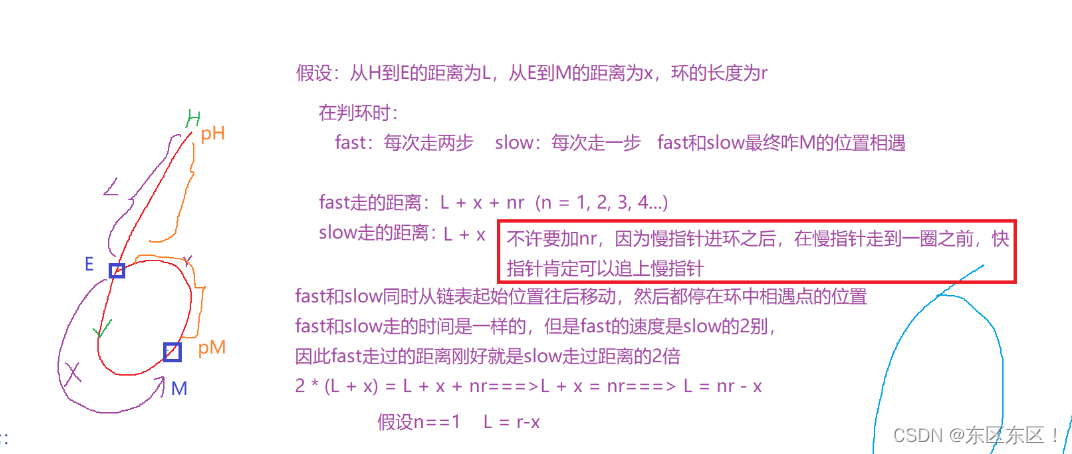
10. 给定一个链表,返回链表开始入环的第一个节点。 如果链表无环,则返回 NULL
leetcode 142环形链表2
如果链表中有某个节点,可以通过连续跟踪 next 指针再次到达,则链表中存在环。 为了表示给定链表中的环,评测系统内部使用整数 pos 来表示链表尾连接到链表中的位置(索引从 0 开始)。如果 pos 是 -1,则在该链表中没有环。



- struct ListNode *detectCycle(struct ListNode *head) {
- struct ListNode* fast = head;
- struct ListNode* slow = head;
- int hasCycle = 0; //标记链表是否带环
- while(fast && fast->next)
- {
- fast= fast->next->next;
- slow = slow->next;
- if(fast == slow)
- {
- hasCycle = 1;
- break;
- }
- }
- if(!hasCycle)//链表不带环
- return NULL;
- struct ListNode* pH = head;
- struct ListNode* pM = fast; //相遇点
- while(pH != pM)
- {
- pH = pH->next;
- pM = pM->next;
- }
- return pM;
- }
-
相关阅读:
【JavaEE】Spring AOP (面向切面)详解
祝贺!Databend Cloud 入驻 AWS 云市场
一个简单的微信小程序表单提交样式模板
Kubernetes教程(十一)---使用 KubeClipper 通过一条命令快速创建 k8s 集群
C语言——深度剖析数据在内存中的存储
外包干了5天,技术明显退步
无人不识又无人不迷糊的this
数据分析和可视化必备的几大软件,你用过几个?
AI 视频 | 文本生视频工具又迎来重大更新,Runway Gen-2 到底有多强?Gen-2 怎么用(保姆级教程)
数据脱敏的功能与技术原理【详解】
- 原文地址:https://blog.csdn.net/weixin_59215611/article/details/126518620
