-
Dubbo(五):Dubbo 2.7 服务导出引入调用
Spring 整合 Dubbo 源码: https://blog.csdn.net/menxu_work/article/details/126418487?spm=1001.2014.3001.5502
服务导出 — ContextRefreshedEvent
服务导出的入口为ServiceBean中的export()方法
当Spring启动完之后,通过接收Spring的ContextRefreshedEvent事件来触发export()方法的执行。
一个ServiceBean对象就表示一个Dubbo服务,ServiceBean对象中的参数就表示服务的参数,比如timeout,该对象的参数值来至@Service注解中所定义的。
服务导出主要得做两件事情:
- 根据服务的参数信息,启动对应的网络服务器(netty、tomcat、jetty等),用来接收网络请求
- 将服务的信息注册到注册中心
但是在做这两件事情之前得先把服务的参数确定好,因为一个Dubbo服务的参数,除开可以在@Service注解中去配置,还会继承Dubbo服务所属应用(Application)上的配置,还可以在配置中心或JVM环境变量中去配置某个服务的参数,所以首先要做的是确定好当前服务最终的(优先级最高)的参数值。
确定好服务参数之后,就根据所配置的协议启动对应的网络服务器。在启动网络服务器时,并且在网络服务器接收请求的过程中,都可以从服务参数中获取信息,比如最大连接数,线程数,socket超时时间等等。
启动完网络服务器之后,就将服务信息注册到注册中心。同时还有向注册中心注册监听器,监听Dubbo的中的动态配置信息变更。
服务导出思路
- 确定服务的参数
- 确定服务支持的协议
- 构造服务最终的URL
- 将服务URL注册到注册中心去
- 根据服务支持的不同协议,启动不同的Server,用来接收和处理请求
- 因为Dubbo支持动态配置服务参数,所以服务导出时还需要绑定一个监听器Listener来监听服务的参数是否有修改,如果发现有修改,则需要重新进行导出

导出服务
ServiceBean extends ApplicationListener
ServiceBean.onApplicationEvent(ContextRefreshedEvent event)
ServiceBean.export(); // 服务导出(服务注册)
super.export()
ServcieConfig.export()
-
ServcieConfig.checkAndUpdateSubConfigs(); // 准备服务参数
-
- ServiceConfig中的某些属性如果是空的,那么就从ProviderConfig、ModuleConfig、 ApplicationConfig中获取
-
- 从配置中心获取配置,包括应用配置和全局配置
-
- 从配置中心获取Provider配置
-
- 从配置中心获取Protocol配置
-
- 如果ApplicationConfig为空,则构造一个ApplicationConfig
-
- 从配置中心获取Registry配置
-
- 更新ServiceConfig中的属性为优先级最高的配置
-
- 更新MetadataReportConfig中的属性为优先级最高的配置
-
- 检查当前服务是不是一个泛化服务
- 10.检查Stub和Local
- 11.检查Mock
-
-
ServcieConfig.doExport(); // 导出服务
-
doExportUrls();
-
- 得到服务注册url list
registry://zookeeper.local.com:2181/org.apache.dubbo.registry.RegistryService?application=dubbo-demo-provider1-application&dubbo=2.0.2&logger=log4j&pid=42222®istry=zookeeper&release=2.7.0×tamp=1661236388599
- 得到服务注册url list
-
- 遍历每个协议 每种协议导出一个单独的服务,注册到各个注册中心
-
-
ServcieConfig.doExportUrlsFor1Protocol(protocolConfig, registryURLs); //导出一个单独的服务,注册到各个注册中心
- 组装url的map参数, 并拼接URL
dubbo://192.168.1.5:20881/org.apache.dubbo.demo.DemoService?anyhost=true&application=dubbo-demo-provider1-application&bean.name=ServiceBean:org.apache.dubbo.demo.DemoService&bind.ip=192.168.1.5&bind.port=20881&deprecated=false&dubbo=2.0.2&dynamic=true&generic=false&interface=org.apache.dubbo.demo.DemoService&logger=log4j&methods=sayHello&pid=42222&release=2.7.0&side=provider×tamp=1661236769839
- 组装url的map参数, 并拼接URL
-
for registryURLs //遍历注册中心–将服务注册到注册中心
registry://zookeeper.local.com:2181/org.apache.dubbo.registry.RegistryService?application=dubbo-demo-provider1-application&dubbo=2.0.2&logger=log4j&pid=42222®istry=zookeeper&release=2.7.0×tamp=1661236388599-
Invoker invoker = PROXY_FACTORY.getInvoker(ref, (Class) interfaceClass, registryURL.addParameterAndEncoded(EXPORT_KEY, url.toFullString()));
// 1. 生成一个当前服务接口的代理对象
// 2. 使用代理生成一个Invoker,Invoker表示服务提供者的代理,可以使用Invoker的invoke方法执行服务
// 3. 对应的url为registry://zookeeper.local.com:2181/org.apache.dubbo.registry.RegistryService?application=dubbo-demo-provider1-application&dubbo=2.0.2&export=dubbo%3A%2F%2F192.168.1.5%3A20881%2Forg.apache.dubbo.demo.DemoService%3Fanyhost%3Dtrue%26application%3Ddubbo-demo-provider1-application%26bean.name%3DServiceBean%3Aorg.apache.dubbo.demo.DemoService%26bind.ip%3D192.168.1.5%26bind.port%3D20881%26deprecated%3Dfalse%26dubbo%3D2.0.2%26dynamic%3Dtrue%26generic%3Dfalse%26interface%3Dorg.apache.dubbo.demo.DemoService%26logger%3Dlog4j%26methods%3DsayHello%26pid%3D42222%26release%3D2.7.0%26side%3Dprovider%26timestamp%3D1661236769839&logger=log4j&pid=42222®istry=zookeeper&release=2.7.0×tamp=1661236388599
// 4. 这个Invoker中包括了服务的实现者、服务接口类、服务的注册地址(针对当前服务的,参数export指定了当前服务)
// 5. 此invoker表示一个可执行的服务,调用invoker的invoke()方法即可执行服务,同时此invoker也可用来导出 -
Exporter exporter = protocol.export(wrapperInvoker);
// 使用特定的协议来对服务进行导出,这里的协议为RegistryProtocol,导出成功后得到一个Exporter (借助SPIExtensionLoader.getExtensionLoader(Protocol.class).getAdaptiveExtension();)
// 1. 先使用RegistryProtocol进行服务注册
// 2. 注册完了之后,使用DubboProtocol进行导出
-
-
RegistryProtocol.export(wrapperInvoker) // 特定的协议来对服务进行导出
- 得到registryUrl:
zookeeper://zookeeper.local.com:2181/org.apache.dubbo.registry.RegistryService?application=dubbo-demo-provider1-application&dubbo=2.0.2&export=dubbo%3A%2F%2F192.168.1.5%3A20881%2Forg.apache.dubbo.demo.DemoService%3Fanyhost%3Dtrue%26application%3Ddubbo-demo-provider1-application%26bean.name%3DServiceBean%3Aorg.apache.dubbo.demo.DemoService%26bind.ip%3D192.168.1.5%26bind.port%3D20881%26deprecated%3Dfalse%26dubbo%3D2.0.2%26dynamic%3Dtrue%26generic%3Dfalse%26interface%3Dorg.apache.dubbo.demo.DemoService%26logger%3Dlog4j%26methods%3DsayHello%26pid%3D42222%26release%3D2.7.0%26side%3Dprovider%26timestamp%3D1661236769839&logger=log4j&pid=42222&release=2.7.0×tamp=1661236388599 - 服务提供者 providerUrl:
dubbo://192.168.1.5:20881/org.apache.dubbo.demo.DemoService?anyhost=true&application=dubbo-demo-provider1-application&bean.name=ServiceBean:org.apache.dubbo.demo.DemoService&bind.ip=192.168.1.5&bind.port=20881&deprecated=false&dubbo=2.0.2&dynamic=true&generic=false&interface=org.apache.dubbo.demo.DemoService&logger=log4j&methods=sayHello&pid=42222&release=2.7.0&side=provider×tamp=1661236769839
- 得到registryUrl:
-
overrideSubscribeListener = new OverrideListener(overrideSubscribeUrl, originInvoker);
- 事件监听
- overrideSubscribeUrl对应一个OverrideListener,用来监听变化事件
- providerConfigurationListener表示应用级别的动态配置监听器
- serviceConfigurationListener表示服务级别的动态配置监听器
-
exporter = doLocalExport(originInvoker, providerUrl); // 根据动态配置重写了providerUrl之后,就会调用DubboProtocol或HttpProtocol去进行导出服务
- RegistryProtocol.doLocalExport(originInvoker,providerUrl)
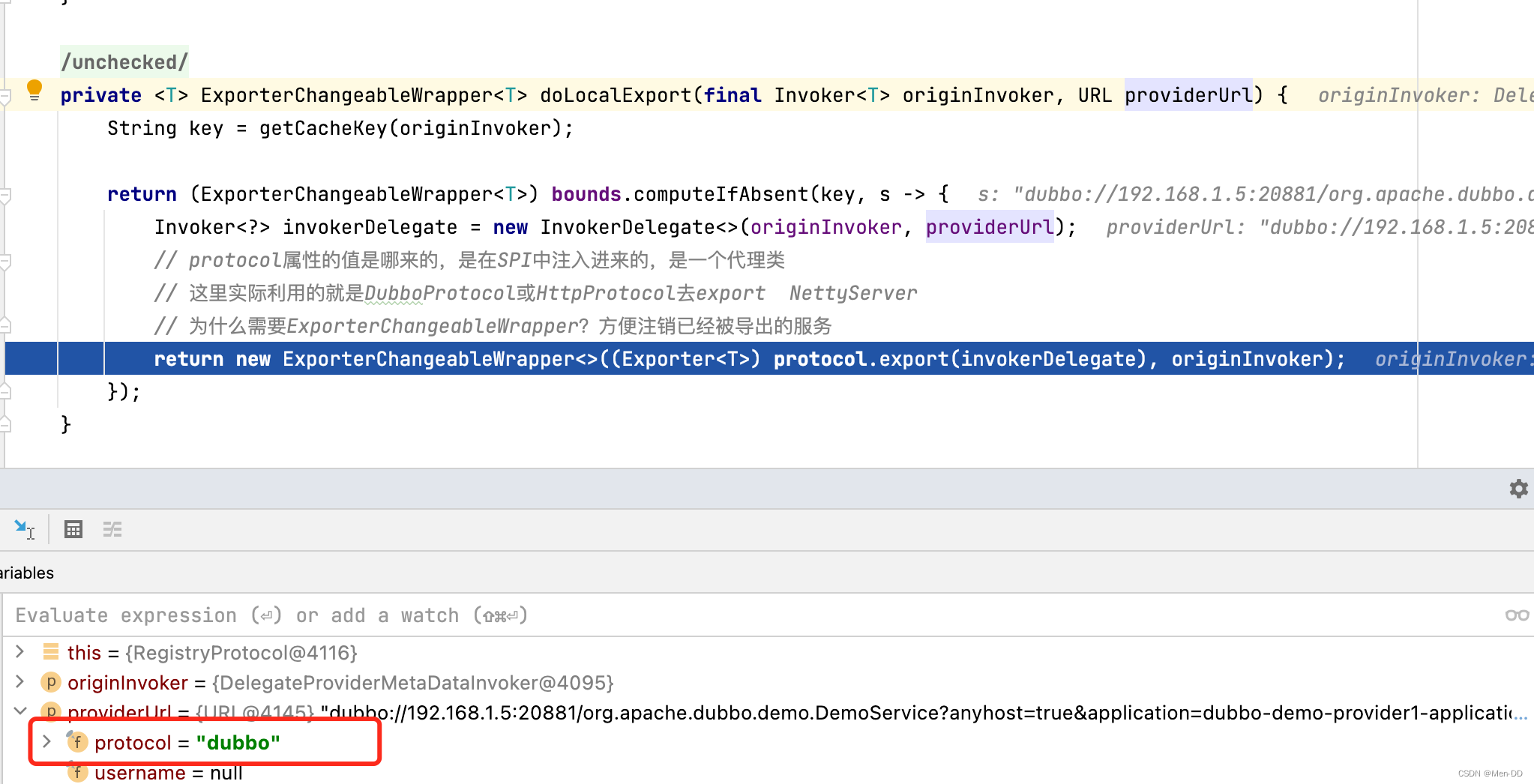
- DubboProtocol.export
- exporterMap.put(“org.apache.dubbo.demo.DemoService:20881”, DubboExporter)
- openServer(url); // 开启NettyServer
- server.reset(url); // 服务重新导出时,配置有变化:关闭当前定时,新启定时任务 ==》任务超时关闭Channel
channel.close();
- RegistryProtocol.doLocalExport(originInvoker,providerUrl)
-
registry.register(registeredProviderUrl); //注册服务,把简化后的服务提供者url注册到registryUrl中去
- final Registry registry = getRegistry(originInvoker); //得到注册中心-ZookeeperRegistry
- final URL registeredProviderUrl = getRegisteredProviderUrl(providerUrl, registryUrl); //得到存入到注册中心去的providerUrl,会对服务提供者url中的参数进行简化
服务引入
服务目录
- 查询注册中心
- 服务提供者URL —> 配置优先级 --> 动态配置 —> List
- 路由链 ---- tagRouter --> AppRouter --> ServiceRouter https://dubbo.apache.org/zh/docs/v2.7/user/examples/routing-rule/
- 监听
代理对象.method() ----- invoker.invoke(Invocation)
- 生成Invocation
- 获取服务提供者列表
- mock MockClusterInvoker.invoke(Invocation)
- 路由
- 负载均衡
- 集群容错 FailoverClusterInvoker.invoke(Invocation)
- 构造NettyClient DubboInvoker.invoke(Invocation)
- 发送数据(Invocation)
服务引入 ReferenceBean implements FactoryBean
@Override public Object getObject() { return get(); } public synchronized T get() { ..... if (ref == null) { // 入口 init(); } return ref; // Invoke代理 }- 1
- 2
- 3
- 4
- 5
- 6
- 7
- 8
- 9
- 10
- 11
- 12
- 13
链路
- ReferenceBean.getObject
- ReferenceBean.get
- ReferenceBean.init
- ReferenceBean.createProxy
- ReferenceBean --> PROXY_FACTORY.getProxy(invoker);
- AbstractProxyFactory.getProxy(invoker);
- AbstractProxyFactory.getProxy(invoker, interfaces)
- JavassistProxyFactory default
- JdkProxyFactory
- JavassistProxyFactory.getProxy(Invoker invoker, Class[] interfaces)
public <T> T getProxy(Invoker<T> invoker, Class<?>[] interfaces) { return (T) Proxy.newProxyInstance(Thread.currentThread().getContextClassLoader(), interfaces, new InvokerInvocationHandler(invoker)); }- 1
- 2
- 3
- InvokerInvocationHandler.invoke //服务调用
@Override public Object invoke(Object proxy, Method method, Object[] args) throws Throwable { String methodName = method.getName(); Class<?>[] parameterTypes = method.getParameterTypes(); if (method.getDeclaringClass() == Object.class) { return method.invoke(invoker, args); } if ("toString".equals(methodName) && parameterTypes.length == 0) { return invoker.toString(); } if ("hashCode".equals(methodName) && parameterTypes.length == 0) { return invoker.hashCode(); } if ("equals".equals(methodName) && parameterTypes.length == 1) { return invoker.equals(args[0]); } // 这里的recreate方法很重要,他会调用AppResponse的recreate方法, // 如果AppResponse对象中存在exception信息,则此方法中会throw这个异常 return invoker.invoke(new RpcInvocation(method, args)).recreate(); }- 1
- 2
- 3
- 4
- 5
- 6
- 7
- 8
- 9
- 10
- 11
- 12
- 13
- 14
- 15
- 16
- 17
- 18
- 19
- 20
- 21
- MockClusterInvoker implements Invoker
- no mock
- force:direct mock
- fail-mock
- AbstractClusterInvoker.invoke(invocation).doInvoke
- FailoverClusterInvoker
- FailfastClusterInvoker
- …
- AbstractClusterInvoker.invoke(invocation).doInvoke
AbstractClusterInvoker.invoke(invocation).doInvoke
@Override public Result invoke(final Invocation invocation) throws RpcException { checkWhetherDestroyed(); // binding attachments into invocation. Map<String, String> contextAttachments = RpcContext.getContext().getAttachments(); if (contextAttachments != null && contextAttachments.size() != 0) { ((RpcInvocation) invocation).addAttachments(contextAttachments); } List<Invoker<T>> invokers = list(invocation); //路由 LoadBalance loadbalance = initLoadBalance(invokers, invocation); //负载均衡 RpcUtils.attachInvocationIdIfAsync(getUrl(), invocation); return doInvoke(invocation, invokers, loadbalance); //服务容错 }- 1
- 2
- 3
- 4
- 5
- 6
- 7
- 8
- 9
- 10
- 11
- 12
- 13
- 14
- 15
FailoverClusterInvoker

服务调用


发送 DubboInvoker.doInvoke
- CompletableFuture responseFuture = currentClient.request(inv, timeout);
- HeaderExchangeClient.request
- HeaderExchangeChannel.request
@Override public CompletableFuture<Object> request(Object request, int timeout) throws RemotingException { if (closed) { throw new RemotingException(this.getLocalAddress(), null, "Failed to send request " + request + ", cause: The channel " + this + " is closed!"); } // create request. Request req = new Request(); req.setVersion(Version.getProtocolVersion()); req.setTwoWay(true); req.setData(request); //构建DefaultFuture、同时添加一个超时任务task DefaultFuture future = DefaultFuture.newFuture(channel, req, timeout); try { channel.send(req); } catch (RemotingException e) { future.cancel(); throw e; } return future; }- 1
- 2
- 3
- 4
- 5
- 6
- 7
- 8
- 9
- 10
- 11
- 12
- 13
- 14
- 15
- 16
- 17
- 18
- 19
- 20
- channel.send(req);
- AbstractPeer.send
- AbstractClient.send
- org.apache.dubbo.remoting.transport.netty4.NettyChannel.send
@Override public void send(Object message, boolean sent) throws RemotingException { // whether the channel is closed super.send(message, sent); boolean success = true; int timeout = 0; try { ChannelFuture future = channel.writeAndFlush(message); //sent=true 等待消息发出,消息发送失败抛异常 //sent=false 不等待消息发出,将消息放入IO队列,直接返回 if (sent) { // wait timeout ms timeout = getUrl().getPositiveParameter(TIMEOUT_KEY, DEFAULT_TIMEOUT); success = future.await(timeout); } Throwable cause = future.cause(); if (cause != null) { throw cause; } } catch (Throwable e) { throw new RemotingException(this, "Failed to send message " + message + " to " + getRemoteAddress() + ", cause: " + e.getMessage(), e); } if (!success) { throw new RemotingException(this, "Failed to send message " + message + " to " + getRemoteAddress() + "in timeout(" + timeout + "ms) limit"); } }- 1
- 2
- 3
- 4
- 5
- 6
- 7
- 8
- 9
- 10
- 11
- 12
- 13
- 14
- 15
- 16
- 17
- 18
- 19
- 20
- 21
- 22
- 23
- 24
- 25
- 26
- 27
- 28
接收 NettyServerHandler.channelRead
…
- HeaderExchangeHandler.received
- HeaderExchangeHandler.handleResponse(channel, (Response) message);
- DefaultFuture.received(channel, response);
public static void received(Channel channel, Response response, boolean timeout) { try { // response的id, DefaultFuture future = FUTURES.remove(response.getId()); if (future != null) { Timeout t = future.timeoutCheckTask; if (!timeout) { // decrease Time t.cancel(); } future.doReceived(response); } else { logger.warn("The timeout response finally returned at " + (new SimpleDateFormat("yyyy-MM-dd HH:mm:ss.SSS").format(new Date())) + ", response " + response + (channel == null ? "" : ", channel: " + channel.getLocalAddress() + " -> " + channel.getRemoteAddress())); } } finally { CHANNELS.remove(response.getId()); } }- 1
- 2
- 3
- 4
- 5
- 6
- 7
- 8
- 9
- 10
- 11
- 12
- 13
- 14
- 15
- 16
- 17
- 18
- 19
- 20
- 21
- 22
-
相关阅读:
[ESP] 私有版Rainmaker User Mapping
想知道哪些软件可以做到免费去视频水印吗?这篇文章告诉你答案
Vue3:proxy数据取值proxy[Target]取值
Linux kernel之中断
c语言基础知识+OS+数据结构
IPython Jupyter NumPy Pandas Matplotlib Scikit-Learn statsmodels
STM32中除零运算,为何程序不崩溃?
Java --- 期末复习卷
IPv6协议报文头
C#性能优化-树形结构递归优化
- 原文地址:https://blog.csdn.net/menxu_work/article/details/126467202