-
数据结构 手撕AVL树(C++实现)
前言
如果map/set的底层使用二叉搜索树实现,当插入数据接近有序时,二叉搜索树就会退化成单支树,搜索效率退化成O(n)。为解决退化的问题,需要map/set底层实现的二叉搜索树做平衡处理
AVL树的概念
作为平衡树的一种,AVL树有以下性质
1.左右子树都是AVL树
2.左右子树的高度差(又称平衡因子,平衡因子=右树高度-左树高度)的绝对值不超过1AVL树的搜索效率为O(logN),如果树有n个节点,它的高度保持在logN,AVL树做到了严格的平衡
AVL树实现
结构定义
template <class K, class V> struct AVLNode { pair<K, V> _kv; AVLNode* _left; AVLNode* _right; AVLNode* _parent; int _bf; AVLNode(const pair<K, V>& kv) :_left(nullptr) ,_right(nullptr) ,_parent(nullptr) ,_bf(0) ,_kv(kv) {} }; template <class K, class V> class AVLTree { typedef AVLNode<K, V> Node; public: bool Insert(const pair<K, V>& kv); void Inorder() { _Inorder(_root); } void Leorder() { _Leorder(_root); } bool IsAVLTree() { return _IsAVLTree(_root); } private: Node* _root = nullptr; void RotateL(Node* parent); void RotateR(Node* parent); void RotateRL(Node* parent); void RotateLR(Node* parent); void _Inorder(Node* root); void _Leorder(Node* root); int _Height(Node* root); bool _IsAVLTree(Node* root); };- 1
- 2
- 3
- 4
- 5
- 6
- 7
- 8
- 9
- 10
- 11
- 12
- 13
- 14
- 15
- 16
- 17
- 18
- 19
- 20
- 21
- 22
- 23
- 24
- 25
- 26
- 27
- 28
- 29
- 30
- 31
- 32
- 33
- 34
- 35
- 36
- 37
- 38
- 39
- 40
AVL树的节点实现了三叉链,即增加了一个parent指针,另外bf作为平衡因子用来平衡整颗树。
左单旋

A,B,C是三颗高度相同的子树左单旋:往较高的右子树的右边插入节点,由于parent右子树subR比parent左子树A高出一个节点,所以只要往右子树的subR插入节点,subR的高度都将会高于2个节点,不满足AVL树的性质。由于parent小于subR,将parent作为subR的左子树,B大于parent,将B作为parent的右子树。旋转前subR的平衡因子为1,右边较高,旋转后subR达到平衡,subR作为新的根节点。
template <class K, class V> void AVLTree<K, V>::RotateL(Node* parent) { Node* subR = parent->_right; Node* subRL = subR->_left; subR->_left = parent; parent->_right = subRL; pparent = parent->_parent; parent->_parent = subL; if (subRL) subRL->_parent = parent; if (_root == parent) { _root = subL; subR->_parent = nullptr; } else // 该子树是树的一部分,将子树链接到原树 { subR->_parent = pparent; if (subR->_kv.first < pparent->_kv.first) { pparent->_left = subR; } else { pparent->_right = subR; } } parent->_bf = 0; subR->_bf = 0; if (subRL) subRL->_bf = 0; }- 1
- 2
- 3
- 4
- 5
- 6
- 7
- 8
- 9
- 10
- 11
- 12
- 13
- 14
- 15
- 16
- 17
- 18
- 19
- 20
- 21
- 22
- 23
- 24
- 25
- 26
- 27
- 28
- 29
- 30
- 31
- 32
- 33
- 34
- 35
- 36
- 37
右单旋
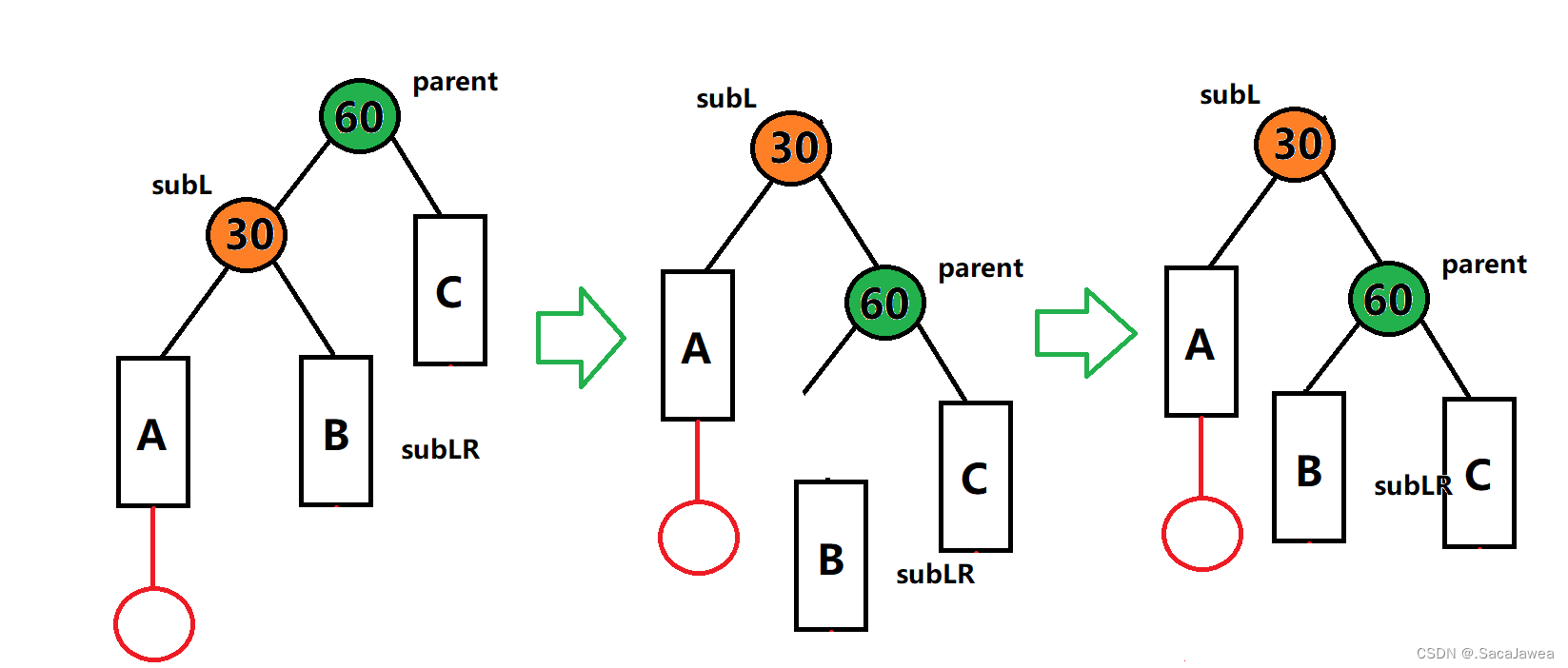
右单旋:往较高的左子树的左边插入节点,将parent向右旋转,parent做subL的右孩子,subL的右孩子做parent的左孩子,subL做根。template <class K, class V> void AVLTree<K, V>::RotateR(Node* parent) { Node* subL = parent->_left; Node* subLR = subL->_right; subL->_right = parent; parent->_left = subLR; pparent = parent->_parent; parent->_parent = subL; if (subLR) subLR->_parent = parent; if (_root == parent) { _root = subL; subL->_parent = nullptr; } else { subL->_parent = pparent; if (subL->_kv.first < pparent->_kv.first) { pparent->_left = subL; } else { pparent->_right = subL; } } parent->_bf = 0; subL->_bf = 0; if (subLR) subLR->_bf = 0; }- 1
- 2
- 3
- 4
- 5
- 6
- 7
- 8
- 9
- 10
- 11
- 12
- 13
- 14
- 15
- 16
- 17
- 18
- 19
- 20
- 21
- 22
- 23
- 24
- 25
- 26
- 27
- 28
- 29
- 30
- 31
- 32
- 33
- 34
- 35
- 36
- 37
- 38
右左双旋

右左双旋:插入较高右子树的左边,parent的平衡因子为1,插入后为2,需要进行调整。其中B,C的高度为h-1,只有当h大于等于1时才符和上图的情况。parent的右子树subR较高,往subR的右边插入节点,需要左单旋,而往subR的左边subRL的任意子树插入节点就需要进行右左双旋。以往B子树插入节点,subRL的平衡因子为-1,subR也为-1,parent为2,先对subR进行右单旋,subR做subRL的右子节点,subRL之前的右子节点做subR的左子节点,旋转后的树就是一个左单旋的情况,对parent进行左单旋,完成后parent的平衡因子为0,subR为1,subRL为0。当往subRL的右子树插入节点,右左双旋之后subRL的平衡因子为0,parent为-1,subR为0。
还有一种特殊情况,上面讨论的范围都是在h大于等于1时,当h为0,即只有parent,subR,subRL的情况,旋转后每个节点的平衡因子都为0。
template <class K, class V> void AVLTree<K, V>::RotateRL(Node* parent) { Node* subR = parent->_right; Node* subRL = subR->_left; size_t bf = subRL->_bf; RotateR(subR); RotateL(parent); if (bf == 0) { subR->_bf = 0; subRL->_bf = 0; parent->_bf = 0; } else if (bf == -1) { subR->_bf = 1; subRL->_bf = 0; parent->_bf = 0; } else if (bf == 1) { subR->_bf = 0; subRL->_bf = 0; parent->_bf = 1; } else { assert(false); } }- 1
- 2
- 3
- 4
- 5
- 6
- 7
- 8
- 9
- 10
- 11
- 12
- 13
- 14
- 15
- 16
- 17
- 18
- 19
- 20
- 21
- 22
- 23
- 24
- 25
- 26
- 27
- 28
- 29
- 30
- 31
- 32
- 33
左右双旋

同样,往较高左子树的左边插入节点,需要右单旋,而往较高左子树的右边插入节点需要左右双旋,之后平衡因子的更新看着图就能很快分析出来。如果节点插入到B后面,subL平衡因子为0,parent为1,subLR为0;插入到C后面,subL为-1,parent为0,subLR为0;当只有parent,subL,subLR三个节点时,三者都为0。
template <class K, class V> void AVLTree<K, V>::RotateLR(Node* parent) { Node* subL = parent->_left; Node* subLR = subL->_right; size_t bf = subLR->_bf; RotateL(subL); RotateR(parent); if (bf == 0) { subL->_bf = 0; subLR->_bf = 0; parent->_bf = 0; } else if (bf == -1) { subL->_bf = 0; subLR->_bf = 0; parent->_bf = 1; } else if (bf == 1) { subL->_bf = -1; subLR->_bf = 0; parent->_bf = 0; } else { assert(false); } }- 1
- 2
- 3
- 4
- 5
- 6
- 7
- 8
- 9
- 10
- 11
- 12
- 13
- 14
- 15
- 16
- 17
- 18
- 19
- 20
- 21
- 22
- 23
- 24
- 25
- 26
- 27
- 28
- 29
- 30
- 31
- 32
- 33
Insert代码
template <class K, class V> bool AVLTree<K, V>::Insert(const pair<K, V>& kv) { // 先按搜索树的规则插入 // 然后更新平衡因子 if (_root == nullptr) { _root = new Node(kv); _root->_bf = 0; return true; } Node* cur = _root; Node* parent = nullptr; while (cur) { if (kv.first < cur->_kv.first) { parent = cur; cur = cur->_left; } else if (kv.first > cur->_kv.first) { parent = cur; cur = cur->_right; } else { return false; } } if (kv.first < parent->_kv.first) { cur = new Node(kv); parent->_left = cur; cur->_parent = parent; } else { cur = new Node(kv); parent->_right = cur; cur->_parent = parent; } // 更新平衡因子 while (parent) { if (parent->_left == cur) { parent->_bf--; } else { parent->_bf++; } // 检查平衡因子,是否要旋转 if (parent->_bf == 0) { break; } else if (parent->_bf == 1 || parent->_bf == -1) { // 继续更新 cur = parent; parent = parent->_parent; } else if (parent->_bf == 2 || parent->_bf == -2) { // 左单旋 // 较高右子树的右边插入 if (parent->_bf == 2 && cur->_bf == 1) { RotateL(parent); } // 右单旋 // 较高左子树的左边插入 else if (parent->_bf == -2 && cur->_bf == -1) { RotateR(parent); } // 右左双旋 // 较高右树的左边插入 else if (parent->_bf == 2 && cur->_bf == -1) { RotateRL(parent); } // 左右双旋 // 较高左树的右边插入 else if (parent->_bf == -2 && cur->_bf == 1) { RotateLR(parent); } break; } else { // 未插入前的平衡树出现问题 assert(false); } } return true; }- 1
- 2
- 3
- 4
- 5
- 6
- 7
- 8
- 9
- 10
- 11
- 12
- 13
- 14
- 15
- 16
- 17
- 18
- 19
- 20
- 21
- 22
- 23
- 24
- 25
- 26
- 27
- 28
- 29
- 30
- 31
- 32
- 33
- 34
- 35
- 36
- 37
- 38
- 39
- 40
- 41
- 42
- 43
- 44
- 45
- 46
- 47
- 48
- 49
- 50
- 51
- 52
- 53
- 54
- 55
- 56
- 57
- 58
- 59
- 60
- 61
- 62
- 63
- 64
- 65
- 66
- 67
- 68
- 69
- 70
- 71
- 72
- 73
- 74
- 75
- 76
- 77
- 78
- 79
- 80
- 81
- 82
- 83
- 84
- 85
- 86
- 87
- 88
- 89
- 90
- 91
- 92
- 93
- 94
- 95
- 96
- 97
- 98
- 99
- 100
- 101
- 102
- 103
- 104
- 105
验证AVL树
根据AVL树的特征:左右子树高度差不超过1,所有的子树都是AVL树,递归树的每个节点,以每个节点为根节点,判断这样的树是否为AVL树。
template <class K, class V> bool AVLTree<K, V>::_IsAVLTree(Node* root) { assert(root); int LHeight = _Height(root->_left); int RHeight = _Height(root->_right); if (RHeight - LHeight == -2 || RHeight - LHeight == 2) { cout << "平衡因子异常" << endl; return false; } if (RHeight - LHeight != root->_bf) { cout << "平衡因子不符合实际" << endl; return false; } if (root->_left) _IsAVLTree(root->_left); if (root->_right) _IsAVLTree(root->_right); return true; }- 1
- 2
- 3
- 4
- 5
- 6
- 7
- 8
- 9
- 10
- 11
- 12
- 13
- 14
- 15
- 16
- 17
- 18
- 19
- 20
- 21
- 22
- 23
- 24
- 25
- 26
- 求出左右子树的高度,判断相减后的绝对值是否为2,若为2,打印出错提示
- 将两者高度相减后判断是否对于平衡因子,不相等则打印出错提示
- 最后判断左右子树是否不为空,若不为空则继续递归左右子树
- 不断得用上面的三个标准判断每一颗子树是否为AVL树

最后的结果是:通过插入随机数验证
AVL树 VS 红黑树
- 相同的地方:两者的插入,删除和查找的效率都是logN
- 不同的地方:
- AVL树较红黑树严格,保持了高度的平衡,所以查找可能会快一些
- 红黑树的调整频率比AVL树低,它没有那么严格,所以插入和删除会快一些,但也只是少了几次的旋转
- 两者的实现难度都很高,需要考虑很多的边界情况,但是红黑树较AVL更好理解,它只有两种颜色,而AVL有四种平衡因子,情况越多,就越需要越细的考虑
综上所述,两种各有优劣,我们需要根据不同的场景选择不同的结构
- 如果查找操作比较频繁,插入和删除操作少,那么选择AVL树合适
- 如果插入和删除的操作频繁,删除操作较少,那么选择红黑树合适
-
相关阅读:
【SpringBoot+MyBatisPlus】利用线程特性与ThreadLocal来解决公共字段自动填充问题
C# 通讯 HslCommunication
git-使用命令笔记
STM32单片机远程控制大棚种植系统
C4D遇到的动力学模拟问题怎么办?看完本文就知道
LC1713. 得到子序列的最少操作次数(java - 动态规划)
理解Mysql索引原理及特性
【MySQL】19-MySQL中如何创建数据库和管理数据库
Windows版本 - MySQL卸载
D. Meta-set #824 div2
- 原文地址:https://blog.csdn.net/weixin_61432764/article/details/126516991
