-
pytorch(11)-- crnn 车牌端到端识别
一、前言
本文主要记录了使用crnn 对车牌图片做端到端识别,即不用对车牌字符做逐个字符分割识别,车牌第一个字符为汉字,共有31个,第2个字符为去除了“O”和“I”这2个大写字母,工24个大写字母,其余5位均为24个大写字母+10个阿拉伯数字的形式,再加上使用CRNN,需要有空白字符,放在第65位,共有66个字符
二、数据集处理
本文使用的数据集为人工生成,这方面网上很多
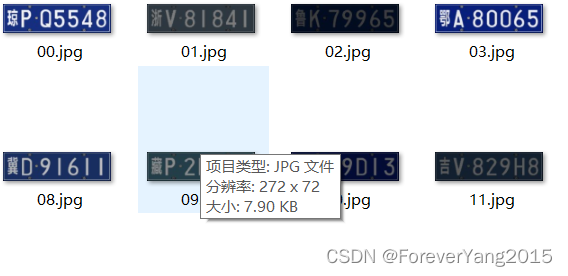
分辨率(h,w)为(72,272),训练集共有50000张,测试集共有10000张图片
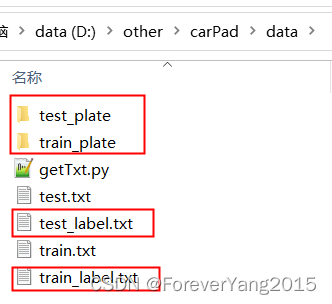
train_label.txt和test_label.txt 为车牌的汉字字符标签
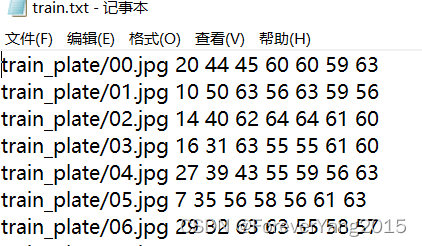
如 train_plate文件夹中 03.jpg车牌为鄂A80065,则train_label.txt中的第4行为鄂A80065 , 故需要getTxt.py将汉字标签转换为数字类别标签,生成train.txt和test.txtimport os root = "." ch_1 = ["京","津","冀","晋","蒙","辽","吉","黑","沪","苏","浙","皖","闽", "赣","鲁","豫","鄂","湘","粤","桂","琼","渝","川","贵","云","藏","陕","甘","青","宁","新"] ch_2 = [ "A","B","C","D","E","F","G" , "H" , "J" ,"K" ,"L","M","N","P","Q" , "R","S","T" , "U","V","W","X","Y","Z" ] ch_3 = ch_1+ch_2+[str(i) for i in range(10)]+[" ",] if os.path.exists("test.txt"): os.remove("test.txt") if os.path.exists("train.txt"): os.remove("train.txt") def getTrainTxt( train_label , train_txt , f_path ): f = open( train_label, "r" , encoding='UTF-8' ) i = 0 train_info = [] for line in f.readlines(): if len(line) <2 : continue line = line.rstrip("\n").strip(" ") #7位字符 if i <10: jpg = "0{}.jpg".format( i ) else: jpg = "{}.jpg".format( i ) i+=1 pad_info = [jpg, ] for j , e in enumerate( line ): if j==0: pad_info.append( ch_3.index( e ) ) elif j==1: pad_info.append( ch_3.index( e ) ) else: pad_info.append( ch_3.index( e ) ) train_info.append( pad_info ) with open(train_txt,"a") as ftxt: for e in train_info: s = f_path for d in e: s+= str(d)+" " ftxt.write( s[:-1]+"\n" ) getTrainTxt( "train_label.txt" , "train.txt" ,"train_plate/" ) getTrainTxt( "test_label.txt" , "test.txt" , "test_plate/" )- 1
- 2
- 3
- 4
- 5
- 6
- 7
- 8
- 9
- 10
- 11
- 12
- 13
- 14
- 15
- 16
- 17
- 18
- 19
- 20
- 21
- 22
- 23
- 24
- 25
- 26
- 27
- 28
- 29
- 30
- 31
- 32
- 33
- 34
- 35
- 36
- 37
- 38
- 39
- 40
- 41
- 42
- 43
- 44
- 45
- 46
- 47
三、crnn模型文件
crnn模型将图像原始(h,w)为(72,272),按高度缩放为32的比例缩放为(32,120),并且转为单通道图像,文字识别不需要颜色信息,不一定要32,48,64都可,只是此处实验定为32 , 输出变换为[seq,batch,类别总数] , seq表示该批次图片最多输出seq个字符 , batch为批次大小,类别总数为66
#crnn.py import argparse,os import torch import torch.nn as nn class BidirectionalLSTM(nn.Module): def __init__(self, nInput_size, nHidden,nOut): super(BidirectionalLSTM, self).__init__() self.lstm = nn.LSTM(nInput_size, nHidden, bidirectional=True) self.linear = nn.Linear(nHidden * 2, nOut) def forward(self, input): recurrent, (hidden,cell)= self.lstm(input) T, b, h = recurrent.size() t_rec = recurrent.view(T * b, h) output = self.linear(t_rec) # [T * b, nOut] output = output.view(T, b, -1) #输出变换为[seq,batch,类别总数] return output class CNN(nn.Module): def __init__(self,imageHeight,nChannel): super(CNN,self).__init__() assert imageHeight % 32 == 0,'image Height has to be a multiple of 32' self.depth_conv0 = nn.Conv2d(in_channels=nChannel,out_channels=nChannel,kernel_size=3,stride=1,padding=1,groups=nChannel) self.point_conv0 = nn.Conv2d(in_channels=nChannel,out_channels=64,kernel_size=1,stride=1,padding=0,groups=1) self.relu0 = nn.ReLU(inplace=True) self.pool0 = nn.MaxPool2d(kernel_size=2,stride=2) self.depth_conv1 = nn.Conv2d(in_channels=64,out_channels=64,kernel_size=3,stride=1,padding=1,groups=64) self.point_conv1 = nn.Conv2d(in_channels=64,out_channels=128,kernel_size=1,stride=1,padding=0,groups=1) self.relu1 = nn.ReLU(inplace=True) self.pool1 = nn.MaxPool2d(kernel_size=2,stride=2) self.depth_conv2 = nn.Conv2d(in_channels=128,out_channels=128,kernel_size=3,stride=1,padding=1,groups=128) self.point_conv2 = nn.Conv2d(in_channels=128,out_channels=256,kernel_size=1,stride=1,padding=0,groups=1) self.batchNorm2 = nn.BatchNorm2d(256) self.relu2 = nn.ReLU(inplace=True) self.depth_conv3 = nn.Conv2d(in_channels=256, out_channels=256, kernel_size=3, stride=1, padding=1, groups=256) self.point_conv3 = nn.Conv2d(in_channels=256, out_channels=256, kernel_size=1, stride=1, padding=0, groups=1) self.relu3 = nn.ReLU(inplace=True) self.pool3 = nn.MaxPool2d(kernel_size=(2,2),stride=(2,1),padding=(0,1)) self.depth_conv4 = nn.Conv2d(in_channels=256, out_channels=256, kernel_size=3, stride=1, padding=1, groups=256) self.point_conv4 = nn.Conv2d(in_channels=256, out_channels=512, kernel_size=1, stride=1, padding=0, groups=1) self.batchNorm4 = nn.BatchNorm2d(512) self.relu4 = nn.ReLU(inplace=True) self.depth_conv5 = nn.Conv2d(in_channels=512, out_channels=512, kernel_size=3, stride=1, padding=1, groups=512) self.point_conv5 = nn.Conv2d(in_channels=512, out_channels=512, kernel_size=1, stride=1, padding=0, groups=1) self.relu5 = nn.ReLU(inplace=True) self.pool5 = nn.MaxPool2d(kernel_size=(2,2),stride=(2,1),padding=(0,1)) #self.conv6 = nn.Conv2d(in_channels=512, out_channels=512, kernel_size=2, stride=1, padding=0) self.depth_conv6 = nn.Conv2d(in_channels=512, out_channels=512, kernel_size=2, stride=1, padding=0, groups=512) self.point_conv6 = nn.Conv2d(in_channels=512, out_channels=512, kernel_size=1, stride=1, padding=0, groups=1) self.batchNorm6 = nn.BatchNorm2d(512) self.relu6= nn.ReLU(inplace=True) def forward(self,input): depth0 = self.depth_conv0(input) point0 = self.point_conv0(depth0) relu0 = self.relu0(point0) pool0 = self.pool0(relu0) # print(pool0.size()) depth1 = self.depth_conv1(pool0) point1 = self.point_conv1(depth1) relu1 = self.relu1(point1) pool1 = self.pool1(relu1) #print(pool1.size()) depth2 = self.depth_conv2(pool1) point2 = self.point_conv2(depth2) batchNormal2 = self.batchNorm2(point2) relu2 = self.relu2(batchNormal2) #print(relu2.size()) depth3 = self.depth_conv3(relu2) point3 = self.point_conv3(depth3) relu3 = self.relu3(point3) pool3 = self.pool3(relu3) #print(pool3.size()) depth4 = self.depth_conv4(pool3) point4 = self.point_conv4(depth4) batchNormal4 = self.batchNorm4(point4) relu4 = self.relu4(batchNormal4) #print(relu4.size()) depth5 = self.depth_conv5(relu4) point5 = self.point_conv5(depth5) relu5 = self.relu5(point5) pool5 = self.pool5(relu5) #print(pool5.size()) depth6 = self.depth_conv6(pool5) point6 = self.point_conv6(depth6) batchNormal6 = self.batchNorm6(point6) relu6 = self.relu6(batchNormal6) #print(relu6.size()) return relu6 class CRNN(nn.Module): def __init__(self,imgHeight, nChannel, nClass, nHidden): super(CRNN,self).__init__() self.cnn = nn.Sequential(CNN(imgHeight, nChannel)) self.lstm = nn.Sequential( BidirectionalLSTM(512, nHidden, nHidden), BidirectionalLSTM(nHidden, nHidden, nClass), ) def forward(self,input): conv = self.cnn(input) # pytorch框架输出结构为BCHW batch,channel,height,width = conv.size() assert height==1,"the output height must be 1." # 将height==1的维度去掉-->BCW conv = conv.squeeze(dim=2) # 调整各个维度的位置(B,C,W)->(W,B,C),对应lstm的输入(seq,batch,input_size) conv = conv.permute(2,0,1) output = self.lstm(conv) return output if __name__=="__main__": x = torch.rand(1,1, 32 , 120 ) model = CRNN(imgHeight=32,nChannel=1,nClass=66,nHidden=256) y = model(x) print( y.shape )- 1
- 2
- 3
- 4
- 5
- 6
- 7
- 8
- 9
- 10
- 11
- 12
- 13
- 14
- 15
- 16
- 17
- 18
- 19
- 20
- 21
- 22
- 23
- 24
- 25
- 26
- 27
- 28
- 29
- 30
- 31
- 32
- 33
- 34
- 35
- 36
- 37
- 38
- 39
- 40
- 41
- 42
- 43
- 44
- 45
- 46
- 47
- 48
- 49
- 50
- 51
- 52
- 53
- 54
- 55
- 56
- 57
- 58
- 59
- 60
- 61
- 62
- 63
- 64
- 65
- 66
- 67
- 68
- 69
- 70
- 71
- 72
- 73
- 74
- 75
- 76
- 77
- 78
- 79
- 80
- 81
- 82
- 83
- 84
- 85
- 86
- 87
- 88
- 89
- 90
- 91
- 92
- 93
- 94
- 95
- 96
- 97
- 98
- 99
- 100
- 101
- 102
- 103
- 104
- 105
- 106
- 107
- 108
- 109
- 110
- 111
- 112
- 113
- 114
- 115
- 116
- 117
- 118
- 119
- 120
- 121
- 122
- 123
- 124
- 125
- 126
- 127
- 128
- 129
- 130
- 131
- 132
- 133
- 134
- 135
- 136
- 137
- 138
- 139
- 140
- 141
四、训练验证代码
需要注意的是需要修改代码中的总类别数
train() 中的n_class = 66
train() 中的loss_func = torch.nn.CTCLoss(blank=n_class-1)
decode(preds) 中的if preds[i] != 65 and ((i == 65) or (i != 65 and preds[i] != preds[i-1])):import os import torch import cv2 from torchvision import transforms from torch.utils.data import Dataset,DataLoader from crnn import CRNN import time # 调整图像大小和归一化操作 class resizeAndNormalize(): def __init__(self,size,interpolation=cv2.INTER_LINEAR): # 注意对于opencv,size的格式是(w,h) self.size = size self.interpolation = interpolation # ToTensor属于类 """Convert a ``PIL Image`` or ``numpy.ndarray`` to tensor. self.toTensor = transforms.ToTensor() def __call__(self, image): # (x,y) 对于opencv来说,图像宽对应x轴,高对应y轴 image = cv2.resize(image,self.size,interpolation=self.interpolation) #转为tensor的数据结构 image = self.toTensor(image) #对图像进行归一化操作 image = image.sub_(0.5).div_(0.5) return image class CRNNDataSet(Dataset): def __init__(self,imageRoot,labelRoot): self.image_root = imageRoot self.image_dict = self.readfile(labelRoot) self.image_name = [fileName for fileName,_ in self.image_dict.items()] def __getitem__(self, index): image_path = os.path.join(self.image_root,self.image_name[index]) keys = self.image_dict.get(self.image_name[index]) label = [int(x) for x in keys] image = cv2.imread(image_path,cv2.IMREAD_GRAYSCALE) # if image is None: # return None,None (height,width) = image.shape size_height = 32 #由于crnn网络输入图像的高为32,故需要resize原始图像的height ratio = 32/float(height) size_width = int(ratio * width) transform = resizeAndNormalize((size_width,size_height)) #图像预处理 image = transform(image) #标签格式转换为IntTensor label = torch.IntTensor(label) return image,label def __len__(self): return len(self.image_name) def readfile(self,fileName): res = [] with open(fileName, 'r') as f: lines = f.readlines() for line in lines: res.append(line.strip()) dic = {} total = 0 for line in res: part = line.split(' ') #由于会存在训练过程中取图像的时候图像不存在导致异常,所以在初始化的时候就判断图像是否存在 if not os.path.exists(os.path.join(self.image_root, part[0])): print(os.path.join(self.image_root, part[0])) total += 1 else: dic[part[0]] = part[1:] print(total) return dic trainData = CRNNDataSet(imageRoot="D:\other\carPad\data\\", labelRoot="D:\other\carPad\\data\\train.txt") trainLoader = DataLoader(dataset=trainData,batch_size=32,shuffle=True,num_workers=0) valData = CRNNDataSet(imageRoot="D:\other\carPad\data\\", labelRoot="D:\other\carPad\\data\\test.txt") valLoader = DataLoader(dataset=valData,batch_size=100,shuffle=True,num_workers=1) def decode(preds): pred = [] for i in range(len(preds)): if preds[i] != 65 and ((i == 65) or (i != 65 and preds[i] != preds[i-1])): # 注意,修改为 总类别数-1,总类别数是包含空白的,66-1=5 pred.append(int(preds[i])) return pred def val(model, loss_function, max_iteration,use_gpu=True): # 将模式切换为验证评估模式 model.eval() k = 0 totalloss = 0 correct_num = 0 total_num = 0 val_iter = iter(valLoader) max_iter = min(max_iteration,len(valLoader)) for i in range(max_iter): k = k + 1 data,label = val_iter.next() labels = torch.IntTensor([]) for j in range(label.size(0)): labels = torch.cat((labels,label[j]),0) if torch.cuda.is_available() and use_gpu: data = data.cuda() output = model(data) input_lengths = torch.IntTensor([output.size(0)] * int(output.size(1))) target_lengths = torch.IntTensor([label.size(1)] * int(label.size(0))) loss = loss_function(output,labels,input_lengths,target_lengths) / label.size(0) totalloss += float(loss) pred_label = output.max(2)[1] pred_label = pred_label.transpose(1,0).contiguous().view(-1) pred = decode(pred_label) total_num += len(pred) for x,y in zip(pred,labels): if int(x) == int(y): correct_num += 1 accuracy = correct_num / float(total_num) * 100 test_loss = totalloss / k print('Test loss : %.3f , accuary : %.3f%%' % (test_loss, accuracy)) def train(): use_gpu = False # True learning_rate = 0.001 weight_decay = 1e-4 max_epoch = 10 modelpath = './pytorch-crnn.pth' #char_set = open('../train/char_std_5990.txt','r',encoding='utf-8').readlines() #char_set = ''.join([ch.strip('\n') for ch in char_set[1:]] +['卍']) n_class = 66 #len(char_set) #注意,需更改为总类别数 model = CRNN(imgHeight=32,nChannel=1,nClass=n_class,nHidden=256) if torch.cuda.is_available() and use_gpu: model.cuda() loss_func = torch.nn.CTCLoss(blank=n_class-1) # 注意,这里的CTCLoss中的 blank是指空白字符的位置,在这里是第65个,也即最后一个 optimizer = torch.optim.Adam(model.parameters(),lr=learning_rate,weight_decay=weight_decay) if os.path.exists(modelpath): print("load model from %s" % modelpath) model.load_state_dict(torch.load(modelpath)) print("done!") lossTotal = 0.0 k = 0 printInterval = 100 #每隔多少步打印一次训练的loss valinterval = 1000 #每隔多少步做一次测试集测试,输出测试准确率 start_time = time.time() for epoch in range(max_epoch): for i,(data,label) in enumerate(trainLoader): k = k + 1 #开启训练模式 model.train() labels = torch.IntTensor([]) for j in range(label.size(0)): labels = torch.cat((labels,label[j]),0) if torch.cuda.is_available and use_gpu: data = data.cuda() loss_func = loss_func.cuda() labels = labels.cuda() output = model(data) #log_probs = output #example 建议使用这样,貌似直接把output送进去loss fun也没发现什么问题 #log_probs = output.log_softmax(2).detach().requires_grad_() #注意 detach 要去掉好像 log_probs = output.log_softmax(2).requires_grad_() targets = labels input_lengths = torch.IntTensor([output.size(0)] * int(output.size(1))) target_lengths = torch.IntTensor([label.size(1)] * int(label.size(0))) #forward(self, log_probs, targets, input_lengths, target_lengths) loss = loss_func(log_probs,targets,input_lengths,target_lengths) / label.size(0) lossTotal += float(loss) if k % printInterval == 0: print("[%d/%d] [%d/%d] loss:%f" % ( epoch, max_epoch, i + 1, len(trainLoader), lossTotal/printInterval)) lossTotal = 0.0 torch.save(model.state_dict(), './pytorch-crnn.pth') optimizer.zero_grad() loss.backward() optimizer.step() if k % valinterval == 0: val(model,loss_func , 10000) end_time = time.time() print("takes {}s".format((end_time - start_time))) if __name__ == '__main__': train()- 1
- 2
- 3
- 4
- 5
- 6
- 7
- 8
- 9
- 10
- 11
- 12
- 13
- 14
- 15
- 16
- 17
- 18
- 19
- 20
- 21
- 22
- 23
- 24
- 25
- 26
- 27
- 28
- 29
- 30
- 31
- 32
- 33
- 34
- 35
- 36
- 37
- 38
- 39
- 40
- 41
- 42
- 43
- 44
- 45
- 46
- 47
- 48
- 49
- 50
- 51
- 52
- 53
- 54
- 55
- 56
- 57
- 58
- 59
- 60
- 61
- 62
- 63
- 64
- 65
- 66
- 67
- 68
- 69
- 70
- 71
- 72
- 73
- 74
- 75
- 76
- 77
- 78
- 79
- 80
- 81
- 82
- 83
- 84
- 85
- 86
- 87
- 88
- 89
- 90
- 91
- 92
- 93
- 94
- 95
- 96
- 97
- 98
- 99
- 100
- 101
- 102
- 103
- 104
- 105
- 106
- 107
- 108
- 109
- 110
- 111
- 112
- 113
- 114
- 115
- 116
- 117
- 118
- 119
- 120
- 121
- 122
- 123
- 124
- 125
- 126
- 127
- 128
- 129
- 130
- 131
- 132
- 133
- 134
- 135
- 136
- 137
- 138
- 139
- 140
- 141
- 142
- 143
- 144
- 145
- 146
- 147
- 148
- 149
- 150
- 151
- 152
- 153
- 154
- 155
- 156
- 157
- 158
- 159
- 160
- 161
- 162
- 163
- 164
- 165
- 166
- 167
- 168
- 169
- 170
- 171
- 172
- 173
- 174
- 175
- 176
- 177
- 178
- 179
- 180
- 181
- 182
- 183
- 184
- 185
- 186
- 187
- 188
- 189
- 190
- 191
- 192
- 193
- 194
- 195
- 196
- 197
- 198
- 199
- 200
- 201
- 202
- 203
- 204
- 205
- 206
- 207
- 208
- 209
- 210
- 211
- 212
五、测试代码
需要调整:
decode(preds,char_set)中的
if preds[i] != 65 and ((i == 65) or (i != 65 and preds[i] != preds[i-1])):import os # os.environ['CUDA_VISIBLE_DEVICES'] = '7' import torch #from config import opt from crnn import CRNN from PIL import Image from torchvision import transforms class resizeNormalize(object): def __init__(self, size, interpolation=Image.BILINEAR): self.size = size self.interpolation = interpolation self.toTensor = transforms.ToTensor() def __call__(self, img): img = img.resize(self.size, self.interpolation) img = self.toTensor(img) img.sub_(0.5).div_(0.5) return img def decode(preds,char_set): pred_text = '' for i in range(len(preds)): if preds[i] != 65 and ((i == 65) or (i != 65 and preds[i] != preds[i-1])): #5989 需改为 包含空白的总字数-1 pred_text += char_set[int(preds[i]) ] #这里不需减1的,因为空白字符在最后 return pred_text # test if crnn work if __name__ == '__main__': imagepath = '../data/test_plate/06.jpg' img_h = 32 #opt.img_h 图高度限制32,可以自行设置 use_gpu = False # opt.use_gpu 是否使用gpu modelpath = './pytorch-crnn.pth' #modelpath = '../train/models/pytorch-crnn.pth' # modelpath = opt.modelpath #char_set = open('char_std_5990.txt', 'r', encoding='utf-8').readlines() #char_set = ''.join([ch.strip('\n') for ch in char_set[1:]] + ['卍']) ch_1 = ["京","津","冀","晋","蒙","辽","吉","黑","沪","苏","浙","皖","闽", "赣","鲁","豫","鄂","湘","粤","桂","琼","渝","川","贵","云","藏","陕","甘","青","宁","新"] ch_2 = [ "A","B","C","D","E","F","G" , "H" , "J" ,"K" ,"L","M","N","P","Q" , "R","S","T" , "U","V","W","X","Y","Z" ] char_set = ch_1+ch_2+[str(i) for i in range(10)]+[ " " , ] #最后加上空白字符,空白是放最后,包含空白是66个字符,空白位置在第65 n_class = len(char_set) print(n_class) #from crnn_new import crnn model = CRNN(img_h, 1, n_class, 256) if os.path.exists(modelpath): print('Load model from "%s" ...' % modelpath) model.load_state_dict(torch.load(modelpath)) print('Done!') if torch.cuda.is_available and use_gpu: model.cuda() image = Image.open(imagepath).convert('L') (w,h) = image.size size_h = 32 ratio = size_h / float(h) size_w = int(w * ratio) # keep the ratio transform = resizeNormalize((size_w, size_h)) image = transform(image) image = image.unsqueeze(0) if torch.cuda.is_available and use_gpu: image = image.cuda() model.eval() preds = model(image) preds = preds.max(2) preds = preds[1] preds = preds.squeeze() pred_text = decode(preds,char_set) print('predict == >',pred_text )- 1
- 2
- 3
- 4
- 5
- 6
- 7
- 8
- 9
- 10
- 11
- 12
- 13
- 14
- 15
- 16
- 17
- 18
- 19
- 20
- 21
- 22
- 23
- 24
- 25
- 26
- 27
- 28
- 29
- 30
- 31
- 32
- 33
- 34
- 35
- 36
- 37
- 38
- 39
- 40
- 41
- 42
- 43
- 44
- 45
- 46
- 47
- 48
- 49
- 50
- 51
- 52
- 53
- 54
- 55
- 56
- 57
- 58
- 59
- 60
- 61
- 62
- 63
- 64
- 65
- 66
- 67
- 68
- 69
- 70
- 71
- 72
- 73
- 74
- 75
- 76
- 77
- 78
- 79
- 80
- 81
实测效果:

还是挺准确的六、代码搬自
链接: 点击这里
-
相关阅读:
基于JAVA图像AI风格转换系统(Springboot框架+AI人工智能) 开题报告
Spring IOC源码:obtainFreshBeanFactory 详解(上)
mybatuis update批量更新
写完Numpy100道基础练习题后的错误总结和语法总结
在CentOS上使用Gunicorn和systemd完整部署Flask应用:详细指南
物联网行业知识概览(一)
计算机图形学实验——2023-09-28
如何解决由触发器导致 MySQL 内存溢出?
基于springboot的ShardingSphere5.2.1的分库分表的解决方案之数据加密之AES的解决方案(八)
DQL语言进阶2
- 原文地址:https://blog.csdn.net/AP1005834/article/details/126539667