-
【C++】C向C++的知识过度(上)
一、C与C++的区别
1.1 C是面向过程的
C语言是面向过程的:就是分析出解决问题所需要的步骤,然后用函数把这些步骤一步一步实现,使用的时候一个一个依次调用就可以了。但是随着程序大型化之后,C也暴露了不足之处。
C语言的缺点:程序大型化所带来的分解的难度的提高,当程序过大时,就会出现难以分解,以及分解所带来的代码的严重冗余,及后期维护成本的提高。1.2 C++是面向对象的
C++是面向对象的:把构成问题事务分解成各个对象,建立对象的目的不是为了完成一个步骤,而是为了描叙某个事物在整个解决问题的步骤中的属性,行为。
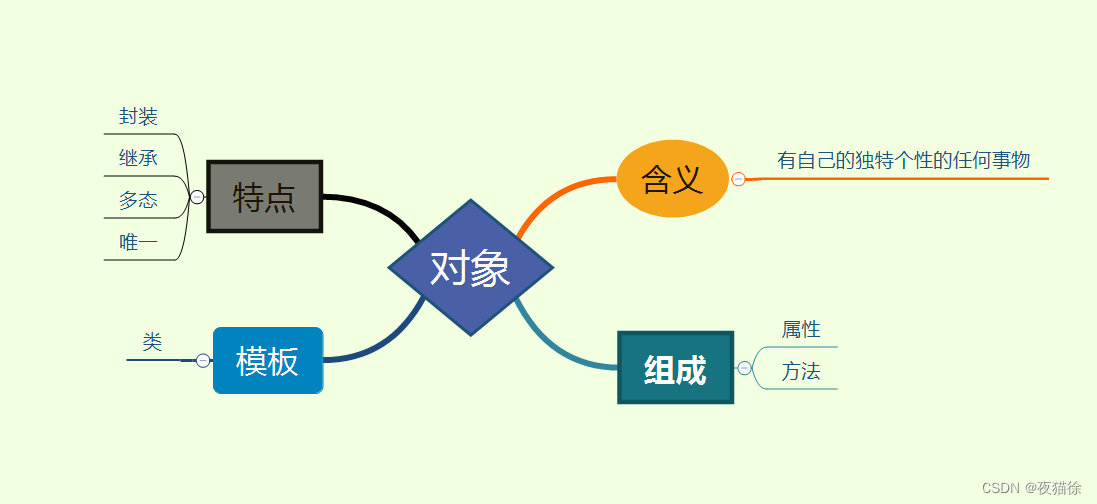
面向对象有三大特性:封装性,继承性和多态性总之,面向对象就是高度实物抽象化、面向过程就是自顶向下的编程。
1.3 编译器的区别
编译器不同:Linux中 C++程序使用g++编译器,C程序使用gcc编译器。使用g++也可以编译c程序。但是gcc是无法编译C++程序的。
二、C与C++默认代码的不同
以hello world!为例:
#includeusing namespace std; int main() { cout << "Hello World!" << endl; return 0; } - 1
- 2
- 3
- 4
- 5
- 6
- 7
- 8
- 9
与C语言相比,C++标准库的头文件是都不带.h的
#include- 1
C++中在使用C表准库时,头文件前要加c
#include- 1
<<是一个运算符重载函数operatoer<<(形参列表)
cout <<等价于cout.operator<<(实参),相当于C库函数printf
endl相当于C语言的换行符;C库的输入函数:scanf
在C++中的输入函数cin >>相当于scanf在C++中表示字符串有了专门类型:string类型。
在C中字符串是没有类型,只有表现形式:字符指针,字符数组。但是会有容量和尾部\0的问题。#includeusing namespace std; int main() { cout << "Hello World!" << endl; string buff; cin >> buff; cout << buff <<endl; return 0; } - 1
- 2
- 3
- 4
- 5
- 6
- 7
- 8
- 9
- 10
- 11
- 12
结果展示:

三、命名空间
3.1 关键字
namespace去定义自己的名字空间。namespace yemaoxu//名字空间标识符 { //在自定义的命名空间中定义自己的变量或函数或类。 int a=10; //... }- 1
- 2
- 3
- 4
- 5
- 6
所有的名字空间就是在全局空间中定义的,相当于是在全局空间中又自定义一个不同名字的全局作用域。
3.2 访问不同命名空间中的变量或函数
使用
::域名访问符来访问指定空间中的变量或函数名或类。访问命名空间中的变量的方式: 名字空间名 + :: 域名访问符 指定访问某个名字空间中的变量或函数。
对于嵌套的名字空间,使用
::逐级访问。#includeusing namespace std; namespace yemaoxu//名字空间标识符 { //在自定义的命名空间中定义自己的变量或函数或类。 int a=10; void my_func() { cout << "我是夜猫徐" << endl; } } namespace study { int a=100; void my_func() { cout << "学习C++" << endl; } } //名字空间嵌套 namespace A { namespace B { int a=1000; void my_func() { cout << "请关注我吧!" << endl; } } } int main() { cout << yemaoxu::a << endl; cout << study::a << endl; yemaoxu::my_func(); study::my_func(); cout << A::B::a << endl; A::B::my_func(); return 0; } - 1
- 2
- 3
- 4
- 5
- 6
- 7
- 8
- 9
- 10
- 11
- 12
- 13
- 14
- 15
- 16
- 17
- 18
- 19
- 20
- 21
- 22
- 23
- 24
- 25
- 26
- 27
- 28
- 29
- 30
- 31
- 32
- 33
- 34
- 35
- 36
- 37
- 38
- 39
- 40
- 41
- 42
- 43
- 44
- 45
代码结果展示:

3.3 using关键字
- 导入具体的标识符:
使用using + 名字空间名 + 具体的哪一个变量或函数或类 的名字标识符。 - 导入名字空间中的所有标符识 :
using + namespece + 哪个名字空间。
#include//using namespace std; using std :: cout; using std :: endl; namespace yemaoxu//名字空间标识符 { //在自定义的命名空间中定义自己的变量或函数或类。 int a=10; void my_func() { cout << "我是夜猫徐" << endl; } } namespace study { int a=100; void my_func() { cout << "学习C++" << endl; } } //名字空间嵌套 namespace A { namespace B { int a=1000; void my_func() { cout << "请关注我吧!" << endl; } } } using namespace A::B; int main() { using yemaoxu::a;//就近原则 cout << a << endl; my_func(); return 0; } - 1
- 2
- 3
- 4
- 5
- 6
- 7
- 8
- 9
- 10
- 11
- 12
- 13
- 14
- 15
- 16
- 17
- 18
- 19
- 20
- 21
- 22
- 23
- 24
- 25
- 26
- 27
- 28
- 29
- 30
- 31
- 32
- 33
- 34
- 35
- 36
- 37
- 38
- 39
- 40
- 41
- 42
- 43
- 44
- 45
- 46
- 47
代码结果展示:
四、C++中的struct结构体与字符串
4.1 C++中的结构体与C中结构体的区别
C中使用struct结构体:
是不可以直接在结构体内部定义函数的。只能通函数指针的方式间接调用一个全局函数的形式来表示。
#includetypedef struct { char name[32]; int age; void (*pfunc)(); }stu_t; void my_func() { printf("学习C++\n"); } int main() { stu_t stu={"yemaoxu",20,my_func}; printf("%s \n",stu.name); printf("%d \n", stu.age); //通过函数指针的回调调用一个全局函数来表示stu这个结构体变量的行为。 stu.pfunc(); return 0; } - 1
- 2
- 3
- 4
- 5
- 6
- 7
- 8
- 9
- 10
- 11
- 12
- 13
- 14
- 15
- 16
- 17
- 18
- 19
- 20
- 21
代码结果展示:

C++中结构体:
多了封装性,只不过默认采用的公有的访问权限public。
C++中的结构体的大小与非静态属性有关,同时遵从C中的结构体对齐原则,与结构体中成员函数无关。因为C++中的类就是从C中的结构体衍生而来。把这种定义在结构内部的函数称之为成员函数。
#includeusing namespace std; struct stu { public://共有访问权限 char name[32]; int age; void my_func() { printf("学习C++\n"); } private://私有访问权限 void you_func() { printf("学习C++\n"); } }; int main() { stu a={"yemaoxu",20}; cout << a.name << endl; cout << a.age << endl; a.my_func(); //a.you_func();私有访问权限会报错 return 0; } - 1
- 2
- 3
- 4
- 5
- 6
- 7
- 8
- 9
- 10
- 11
- 12
- 13
- 14
- 15
- 16
- 17
- 18
- 19
- 20
- 21
- 22
- 23
- 24
- 25
- 26
- 27
- 28
代码结果展示:

4.2 认识C++中string类:
C中是没有字符串的类型,只有字符串的表示形式:1.字符指针 2.字符数组。
在C使用字符串要注意:字符长度及尾\0的问题。在C++的面向对象这个世界中,对于底层数据元素操作,我们把这个底层操作封装了起来,成为了一个专属性字符串类型。String类型。
C++string 字符串类的API的使用:
- at()接口
查看第几个元素的字符; - size()接口
查看有多少个字符; - []中括号与at()一样
在使用string定义的字符串,当访问指定的字符时,我们更推荐使用at,因为他有边界检查; - +号运算符重载
连接两个字符串; - append()接口
连接一个字符串
#includeusing namespace std; int main() { string str1; str1="yemaoxu"; string str2; str2=" study C++"; cout << str1 << endl; cout << str1.size() <<endl; cout << str1.at(2) << endl; cout << str1[2] << endl; cout << "---------------------------" << endl; cout << str1+str2 << endl; string str=str1+=str2; cout << str << "," << str1 <<endl; string str3=str1.append(" very good"); cout << str3 << "," << str1 << endl; return 0; } - 1
- 2
- 3
- 4
- 5
- 6
- 7
- 8
- 9
- 10
- 11
- 12
- 13
- 14
- 15
- 16
- 17
- 18
- 19
- 20
- 21
- 22
代码结果展示:

五、C++中bool变量
在C中,0为假,非0为真,即使是个负数也是为真。
在C++中我们表示布尔有了专门一个布尔类型,内置类型,使bool来表示。
真关键字:true
假关键字:false
都是unsigned char 类型1字节,true为1,false为0。#includeusing namespace std; int main() { bool ok; ok = true; cout << ok <<endl; ok = false; cout << ok << endl; cout << sizeof (bool) << endl; return 0; } - 1
- 2
- 3
- 4
- 5
- 6
- 7
- 8
- 9
- 10
- 11
- 12
代码结果展示:

-
相关阅读:
PCL_点云分割_基于法线微分分割
基于lex和yacc的词法分析器+语法分析器
MySQL安装
MassTransit 入门(一)
16: KEil5的配置
async-await与try-catch
在Gitlab平台及Jenkins平台中如何实现ci的过程
天天基金股票数据爬取
Android,GreenDao数据库框架
QT中sqlite的使用
- 原文地址:https://blog.csdn.net/m0_65835264/article/details/126472469