-
Spring 源码阅——忽略感知接口对应成员变量的自动装配
BeanFactory 的实例化是在
AbstractRefreshableApplicationContext#createBeanFactory方法中完成的,这里会通过构造方法创建一个DefaultListableBeanFactory类型的 BeanFactory,如下:- protected DefaultListableBeanFactory createBeanFactory() {
- return new DefaultListableBeanFactory(getInternalParentBeanFactory());
- }
这里的
getInternalParentBeanFactory()获取的是当前容器的父容器对应的 BeanFactory,在创建当前容器的时候,父容器是空的。DefaultListableBeanFactory的构造方法源码如下:- public DefaultListableBeanFactory(@Nullable BeanFactory parentBeanFactory) {
- super(parentBeanFactory);
- }
这里直接调用了父类
AbstractAutowireCapableBeanFactory的构造方法:- public AbstractAutowireCapableBeanFactory(@Nullable BeanFactory parentBeanFactory) {
- this();
- setParentBeanFactory(parentBeanFactory);
- }
代码中有两个步骤,这篇文章主要分析一下这两部分的源码。
顺便把
DefaultListableBeanFactory的类继承关系放在这里供参考: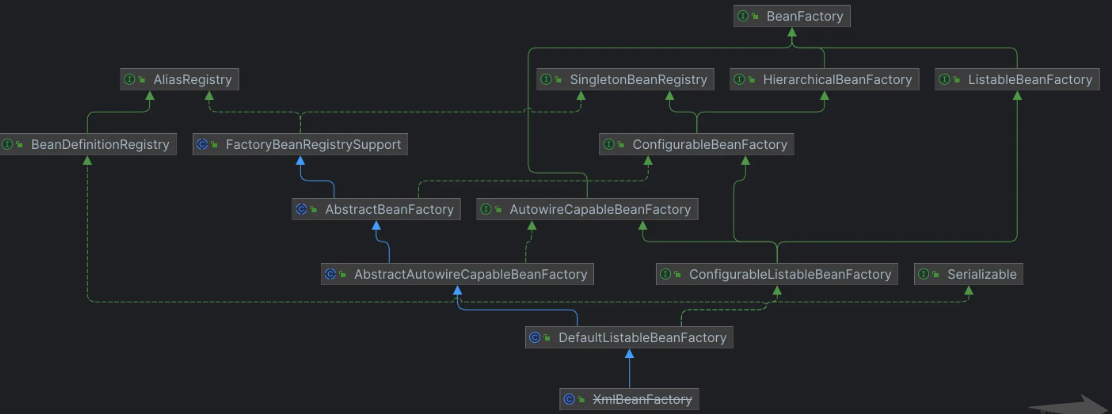
无参构造方法
第一个步骤,是调用了本身的无参构造方法,源码如下:
- public AbstractAutowireCapableBeanFactory() {
- super();
- ignoreDependencyInterface(BeanNameAware.class);
- ignoreDependencyInterface(BeanFactoryAware.class);
- ignoreDependencyInterface(BeanClassLoaderAware.class);
- }
这里首先调用了父类的构造方法,不过父类的构造方法是一个空方法,因此我们重点关注下面的逻辑,也就是 3 次
ignoreDependencyInterface方法的调用。我们查看ignoreDependencyInterface的源码:- public void ignoreDependencyInterface(Class ifc) {
- this.ignoredDependencyInterfaces.add(ifc);
- }
逻辑很简单,就是当前的 BeanFactory 有一个集合类型的成员变量
ignoredDependencyInterfaces,三次调用这个方法就是把BeanNameAware、BeanFactoryAware、BeanClassLoaderAware这三个接口放在了这个集合里面。接下来,我们的任务就是分析出将接口放在
ignoredDependencyInterfaces的作用是什么。感知接口
先看被添加到
ignoredDependencyInterfaces中的三个接口。
这三个接口的名字都是
XXXAware,都继承自Aware接口,并且都只包含一个与接口名对应的setXXX方法。相信使用 Spring 框架的小伙伴对 Aware 接口都非常了解,这里在简单总结一下。
在 Spring 中,Aware 接口也被叫做感知接口,当一个 Bean 实现了感知接口的时候,Spring 创建 Bean 的时候,就会通过调用感知接口的方法注入相应的数据。
举个例子,我需要在一个 Bean 中使用当前 Bean 在 Spring 容器中的名称,也就是
beanName,那么,我在开发这个类的时候,就可以实现BeanNameAware接口,并实现其setBeanName(String name)方法。当 Spring 实例化这个类的时候,发现其实现了BeanNameAware接口,然后,就会通过调用setBeanName方法,将 Bean 的名称传递进来。忽略指定接口的自动感知功能
了解了感知接口及其作用,我们再来看
ignoredDependencyInterfaces的作用。通过在 IDE 中查找ignoredDependencyInterfaces的用法,发现除了调用add和addAll方法向集合中添加接口意外,只有isExcludedFromDependencyCheck方法地方用到了它:
我们找到这个方法的源码:
- /**
- * Determine whether the given bean property is excluded from dependency checks.
- * <p>This implementation excludes properties defined by CGLIB and
- * properties whose type matches an ignored dependency type or which
- * are defined by an ignored dependency interface.
- * @param pd the PropertyDescriptor of the bean property
- * @return whether the bean property is excluded
- * @see #ignoreDependencyType(Class)
- * @see #ignoreDependencyInterface(Class)
- */
- protected boolean isExcludedFromDependencyCheck(PropertyDescriptor pd) {
- return (AutowireUtils.isExcludedFromDependencyCheck(pd) ||
- this.ignoredDependencyTypes.contains(pd.getPropertyType()) ||
- AutowireUtils.isSetterDefinedInInterface(pd, this.ignoredDependencyInterfaces));
- }
根据方法的名称和注释判断,这个方法的作用是判断一个 Bean 的成员变量是否要从依赖检查中排除掉。我们只看跟
ignoredDependencyInterfaces有关的最后一个判断条件:- AutowireUtils.isSetterDefinedInInterface(pd, this.ignoredDependencyInterfaces)
被调用的
AutowireUtils.isSetterDefinedInInterface方法的源码如下:- /**
- * Return whether the setter method of the given bean property is defined
- * in any of the given interfaces.
- * @param pd the PropertyDescriptor of the bean property
- * @param interfaces the Set of interfaces (Class objects)
- * @return whether the setter method is defined by an interface
- */
- public static boolean isSetterDefinedInInterface(PropertyDescriptor pd, Set<Class<?>> interfaces) {
- Method setter = pd.getWriteMethod();
- if (setter != null) {
- Class<?> targetClass = setter.getDeclaringClass();
- for (Class<?> ifc : interfaces) {
- if (ifc.isAssignableFrom(targetClass) && ClassUtils.hasMethod(ifc, setter)) {
- return true;
- }
- }
- }
- return false;
- }
方法中传入的两个参数,一个表示要进行判断的属性,另一个则是
ignoredDependencyInterfaces。首先,获取给定属性的setter方法及其对应的类,遍历ignoredDependencyInterfaces中的每一个接口,并判断这个类是否实现了当前遍历到的接口,以及接口中是否包含同样的setter方法。如果以上两个判断的结果都是true,整个方法的返回值也就是true,就代表这个属性需要通过感知接口的方法来进行诸如,Spring 就不会在创建这个 Bean 的时候通过自动装配来给这个属性注入值。setParentBeanFactory
第二个步骤是通过调用
parentBeanFactory将构造方法参数中的parentBeanFactory赋值给对应的成员变量:- @Override
- public void setParentBeanFactory(@Nullable BeanFactory parentBeanFactory) {
- if (this.parentBeanFactory != null && this.parentBeanFactory != parentBeanFactory) {
- throw new IllegalStateException("Already associated with parent BeanFactory: " + this.parentBeanFactory);
- }
- if (this == parentBeanFactory) {
- throw new IllegalStateException("Cannot set parent bean factory to self");
- }
- this.parentBeanFactory = parentBeanFactory;
- }
这一步骤比较简单。
-
相关阅读:
Linux笔记 Linux中的进程
Spring学习从练气到化虚
PV、EV、AC、BAC、EAC、ETC等计算公式含义
全开源无加密跨境电商购物网站系统源码(无货源模式+多语言+多货币)
LeetCode-895. 最大频率栈以及HashMap的存值取值操作
一行log日志,结果引发了P1的线上事故!
电力输送、材料和互连领域即将发生巨大变化
通过对比3PL和4PL,来了解什么是4PL
【力扣-1337打卡】
【算法练习Day48】回文子串&&最长回文子序列
- 原文地址:https://blog.csdn.net/Java_ttcd/article/details/126423280
