-
使用py-redis分布式锁解决超卖问题——微服务总结(一)
py-redis 分布式锁
电商库存服务
电商的库存为核心服务,一般抽离为独立的服务
用户查看商品信息中的库存量,以及下单时扣除库存都需要与库存服务交互
下边的案例为简化的电商下单扣除库存的案例

- 用户下单后并不会直接扣除库存量,而是预扣除
- 当订单超时,或者用户支付失败时,会归还库存
库存表设计
为了使用代码演示库存并发问题,设计一个简单的库存ORM, 这里使用的是Python 的peewee 库:
from datetime import datetime from peewee import * from playhouse.shortcuts import ReconnectMixin from playhouse.pool import PooledMySQLDatabase from inventory_srv.settings import settings class ReconnectMySQLDatabase(ReconnectMixin, PooledMySQLDatabase): pass db = ReconnectMySQLDatabase("airflow_test", host="127.0.0.1", port=3306, user="dbadmin", password="hE4sqSfuCQeXEXwz") class BaseModel(Model): add_time = DateTimeField(default=datetime.now, verbose_name="添加时间") is_deleted = BooleanField(default=False, verbose_name="是否删除") update_time = DateTimeField(verbose_name="更新时间", default=datetime.now) def save(self, *args, **kwargs): # 判断这是一个新添加的数据还是更新的数据 if self._pk is not None: # 这是一个新数据 self.update_time = datetime.now() return super().save(*args, **kwargs) @classmethod def delete(cls, permanently=False): # permanently表示是否永久删除 if permanently: return super().delete() else: return super().update(is_deleted=True) def delete_instance(self, permanently=False, recursive=False, delete_nullable=False): if permanently: return self.delete(permanently).where(self._pk_expr()).execute() else: self.is_deleted = True self.save() @classmethod def select(cls, *fields): return super().select(*fields).where(cls.is_deleted == False) class Meta: database = settings.DB class Inventory(BaseModel): # 商品的库存表 # stock = PrimaryKeyField(Stock) goods = IntegerField(verbose_name="商品id", unique=True) stocks = IntegerField(verbose_name="库存数量", default=0) version = IntegerField(verbose_name="版本号", default=0) # 分布式锁的乐观锁- 1
- 2
- 3
- 4
- 5
- 6
- 7
- 8
- 9
- 10
- 11
- 12
- 13
- 14
- 15
- 16
- 17
- 18
- 19
- 20
- 21
- 22
- 23
- 24
- 25
- 26
- 27
- 28
- 29
- 30
- 31
- 32
- 33
- 34
- 35
- 36
- 37
- 38
- 39
- 40
- 41
- 42
- 43
- 44
- 45
- 46
- 47
- 48
- 49
- 50
- 51
- 52
- 53
- 54
- 55

初始库存表:有4个商品的库存都为100
并发问题
超卖问题
使用多线程模拟并发扣除库存:
import threading import time from random import randint def sell0(user): """ 使用Mysql的事务机制,当库存不足时回滚操作 模拟并发下超卖问题: 先查询剩余库存,如果剩余库存不足,回滚操作 """ goods_list = [(1, 99), (2, 20), (3, 30)] with db.atomic() as txn: for goods_id, num in goods_list: # 查询库存 goods_inv = Inventory.get(Inventory.goods == goods_id) time.sleep(randint(1, 3)) if goods_inv.stocks < num: print(f"商品:{goods_id} 库存不足") txn.rollback() break else: # 让数据库根据自己当前的值更新数据, 这个语句能不能处理并发的问题 query = Inventory.update(stocks=Inventory.stocks - num).where(Inventory.goods == goods_id) ok = query.execute() if ok: print(f"{user}购买商品{goods_id} 售出 {num}件") else: print(f"{user}购买商品失败") if __name__ == "__main__": t1 = threading.Thread(target=sell0, args=("用户1", )) t2 = threading.Thread(target=sell0, args=("用户2", )) t1.start() t2.start() t1.join() t2.join()- 1
- 2
- 3
- 4
- 5
- 6
- 7
- 8
- 9
- 10
- 11
- 12
- 13
- 14
- 15
- 16
- 17
- 18
- 19
- 20
- 21
- 22
- 23
- 24
- 25
- 26
- 27
- 28
- 29
- 30
- 31
- 32
- 33
- 34
- 35
- 36
- 37
- 38
- 39
运行结果如下:
用户2购买商品1 售出 99件 用户2购买商品2 售出 20件 用户1购买商品1 售出 99件 用户1购买商品2 售出 20件 用户2购买商品3 售出 30件 用户1购买商品3 售出 30件- 1
- 2
- 3
- 4
- 5
- 6
商品1总共只有100件,但是两个用户都卖出了99件,查看数据库发现库存变为了负数:
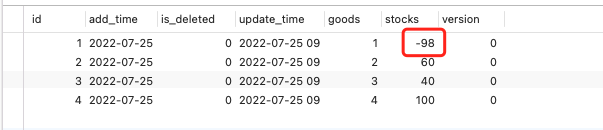
- 之所以引起超卖问题是因为我们在卖出前查询库存的时候,两个线程基本同时查询出来的库存都是100件,导致两个线程都更新成功
解决方案
使用悲观锁
- 悲观锁就是直接将整个扣除操作加上互斥锁,多个线程同时只有一个可以执行扣除操作
- 使用悲观锁最大的问题就是并发性不高,而且为单机的
当应用以分布式的方式部署时,将不适用
代码实现
只需要修改上边的代码,增加锁即可,在执行代码前需要重置下数据库的商品库存
import threading import time from random import randint R = threading.Lock() def sell(user): goods_list = [(1, 99), (2, 20), (3, 30)] with db.atomic() as txn: for goods_id, num in goods_list: # 查询库存 R.acquire() # 获取锁 goods_inv = Inventory.get(Inventory.goods == goods_id) import time from random import randint time.sleep(randint(1, 3)) if goods_inv.stocks < num: print(f"商品:{goods_id} 库存不足") txn.rollback() break else: query = Inventory.update(stocks=Inventory.stocks - num).where(Inventory.goods == goods_id) ok = query.execute() if ok: print(f"{user}购买商品{goods_id} 售出 {num}件") else: print(f"{user}购买商品失败") R.release() # 释放锁 if __name__ == "__main__": t1 = threading.Thread(target=sell1, args=("用户1", )) t2 = threading.Thread(target=sell1, args=("用户2", )) t1.start() t2.start() t1.join() t2.join()- 1
- 2
- 3
- 4
- 5
- 6
- 7
- 8
- 9
- 10
- 11
- 12
- 13
- 14
- 15
- 16
- 17
- 18
- 19
- 20
- 21
- 22
- 23
- 24
- 25
- 26
- 27
- 28
- 29
- 30
- 31
- 32
- 33
- 34
- 35
- 36
- 37
- 38
- 39
- 40
代码执行结果如下:
用户1购买商品1 售出 99件 用户1购买商品2 售出 20件 用户1购买商品3 售出 30件 商品:1 库存不足- 1
- 2
- 3
- 4
可以发现枷锁之后没有出现超卖现象
使用分布式锁
基于MySQL的乐观锁
-
使用乐观锁就需要在表中增加一个version 字段,当执行更新操作的时候,判断version 是否为当前参数版本,如果不是就不执行更新操作如果是就执行更新操作,并且version 加 一
-
该方式实现简单,但是会增加MySQL的压力,影响性能
import threading import time from random import randint def sell2(user): # 演示基于数据库的乐观锁机制 goods_list = [(1, 10), (2, 20), (3, 30)] with db.atomic() as txn: # 超卖 for goods_id, num in goods_list: # 查询库存 while True: goods_inv = Inventory.get(Inventory.goods == goods_id) print(f"当前的版本号:{goods_inv.version}") time.sleep(randint(1, 3)) if goods_inv.stocks < num: print(f"商品:{goods_id} 库存不足") txn.rollback() break else: query = Inventory.update(stocks=Inventory.stocks - num, version=Inventory.version + 1).where( Inventory.goods == goods_id, Inventory.version==goods_inv.version) ok = query.execute() if ok: print(f"{user}购买商品{goods_id} 售出 {num}件") else: print(f"{user}购买商品失败") if __name__ == "__main__": t1 = threading.Thread(target=sell2, args=("用户1", )) t2 = threading.Thread(target=sell2, args=("用户2", )) t1.start() t2.start() t1.join() t2.join()- 1
- 2
- 3
- 4
- 5
- 6
- 7
- 8
- 9
- 10
- 11
- 12
- 13
- 14
- 15
- 16
- 17
- 18
- 19
- 20
- 21
- 22
- 23
- 24
- 25
- 26
- 27
- 28
- 29
- 30
- 31
- 32
- 33
- 34
- 35
- 36
- 37
- 38
执行结果:
当前的版本号:0 当前的版本号:0 用户1购买商品1 售出 10件 当前的版本号:1 用户2购买商品失败 当前的版本号:1 用户1购买商品1 售出 10件 当前的版本号:2 用户2购买商品失败 当前的版本号:2 用户2购买商品1 售出 10件 当前的版本号:3 用户1购买商品失败 当前的版本号:3 用户1购买商品1 售出 10件 当前的版本号:4 用户2购买商品失败 当前的版本号:4 用户1购买商品1 售出 10件 当前的版本号:5 用户2购买商品失败 当前的版本号:5 用户1购买商品1 售出 10件 当前的版本号:6 用户2购买商品失败 当前的版本号:6 用户1购买商品1 售出 10件 当前的版本号:7 用户2购买商品失败 当前的版本号:7 用户1购买商品1 售出 10件 当前的版本号:8 用户2购买商品失败 当前的版本号:8 用户1购买商品1 售出 10件 当前的版本号:9 用户2购买商品失败 当前的版本号:9 用户1购买商品1 售出 10件 当前的版本号:10 商品:1 库存不足 用户2购买商品失败 当前的版本号:10 当前的版本号:0 用户1购买商品2 售出 20件 当前的版本号:1 商品:1 库存不足 当前的版本号:1 用户1购买商品2 售出 20件 当前的版本号:2 用户2购买商品失败 当前的版本号:2 用户1购买商品2 售出 20件 当前的版本号:3 用户2购买商品失败 当前的版本号:3 用户2购买商品2 售出 20件 用户1购买商品失败 当前的版本号:4 当前的版本号:4 用户2购买商品2 售出 20件 当前的版本号:5 商品:2 库存不足 当前的版本号:0 用户1购买商品失败 当前的版本号:5 商品:2 库存不足 当前的版本号:0 用户2购买商品3 售出 30件 当前的版本号:1 用户2购买商品3 售出 30件 当前的版本号:2 用户1购买商品失败 当前的版本号:2 用户1购买商品3 售出 30件 当前的版本号:3 用户2购买商品失败 当前的版本号:3 商品:3 库存不足 商品:3 库存不足- 1
- 2
- 3
- 4
- 5
- 6
- 7
- 8
- 9
- 10
- 11
- 12
- 13
- 14
- 15
- 16
- 17
- 18
- 19
- 20
- 21
- 22
- 23
- 24
- 25
- 26
- 27
- 28
- 29
- 30
- 31
- 32
- 33
- 34
- 35
- 36
- 37
- 38
- 39
- 40
- 41
- 42
- 43
- 44
- 45
- 46
- 47
- 48
- 49
- 50
- 51
- 52
- 53
- 54
- 55
- 56
- 57
- 58
- 59
- 60
- 61
- 62
- 63
- 64
- 65
- 66
- 67
- 68
- 69
- 70
- 71
- 72
- 73
- 74
- 75
- 76
- 77
- 78
- 79
- 80
基于redis的乐观锁
-
基于redis的乐观锁就是在更新数据库前,从Redis中获取锁,更新后再将Redis中的锁释放
-
从Redis 中获取锁:就是每次操作的时候在Redis 中设置一个锁的key
释放锁:就是每次在操作完后删除key
使用redis 作为分布式锁需要注意的问题:
- 获取释放锁原子性问题
-
- 使用redis 的set NX 操作保证获取和释放锁为一个原子性操作
- redis 是使用lua语言编写的,为了保证获取锁和释放锁操作的原子性,会将这些关键操作封装为Lua 脚本代码,然后再使用的时候去调用这些脚本代码
- 死锁问题
-
- 获取锁的客户端因为某些原因而宕机,而未能释放锁,其他客户端无法获取此锁,需要有机制来避免该类问题的发生
- 每一个锁都应该有一个过期时间,过期后如果该锁没有被续租,那么该锁应该自动被释放
- 锁过期续租问题
-
- 在锁的过期时间内,业务逻辑没有执行完,需要有机制保证该线程可以继续拥有该锁
- 在执行业务逻辑的线程中,当获取锁的时候,需要开启一个守护线程,该线程就是用来监视锁过期的问题,如果需要续租,该线程就会重新设置该锁的过期时间
- 锁唯一性问题
-
- 一个完整的锁包括id 和 name, 该id 一般使用uuid保证其唯一性,线程在获取锁的时候,需要同时传递id 和name
第三方开源分布式redis 锁:
https://github.com/ionelmc/python-redis-lock
核心源码分析:
import sys import threading import weakref from base64 import b64encode from logging import getLogger from os import urandom from redis import StrictRedis __version__ = '3.6.0' logger = getLogger(__name__) text_type = str binary_type = bytes # Check if the id match. If not, return an error code. # 这里的KEYS[1]就是在获取锁的时候传递的id, KEYS[2] 为锁的name # 为了保证锁的唯一性,当释放锁的时候需要先判断 id 是否一致 UNLOCK_SCRIPT = b""" if redis.call("get", KEYS[1]) ~= ARGV[1] then return 1 else redis.call("del", KEYS[2]) redis.call("lpush", KEYS[2], 1) redis.call("pexpire", KEYS[2], ARGV[2]) redis.call("del", KEYS[1]) return 0 end """ # Covers both cases when key doesn't exist and doesn't equal to lock's id # 续租:在续租的前也需要判断锁的id 是否一致 # ARGV[2]续租时间,也就是新的TTL,默认为expire*2/3 EXTEND_SCRIPT = b""" if redis.call("get", KEYS[1]) ~= ARGV[1] then return 1 elseif redis.call("ttl", KEYS[1]) < 0 then return 2 else redis.call("expire", KEYS[1], ARGV[2]) return 0 end """ # 重置锁 RESET_SCRIPT = b""" redis.call('del', KEYS[2]) redis.call('lpush', KEYS[2], 1) redis.call('pexpire', KEYS[2], ARGV[2]) return redis.call('del', KEYS[1]) """ # 重置所有锁 RESET_ALL_SCRIPT = b""" local locks = redis.call('keys', 'lock:*') local signal for _, lock in pairs(locks) do signal = 'lock-signal:' .. string.sub(lock, 6) redis.call('del', signal) redis.call('lpush', signal, 1) redis.call('expire', signal, 1) redis.call('del', lock) end return #locks """ class AlreadyAcquired(RuntimeError): pass class NotAcquired(RuntimeError): pass class AlreadyStarted(RuntimeError): pass class TimeoutNotUsable(RuntimeError): pass class InvalidTimeout(RuntimeError): pass class TimeoutTooLarge(RuntimeError): pass class NotExpirable(RuntimeError): pass class Lock(object): """ A Lock context manager implemented via redis SETNX/BLPOP. """ unlock_script = None extend_script = None reset_script = None reset_all_script = None def __init__(self, redis_client, name, expire=None, id=None, auto_renewal=False, strict=True, signal_expire=1000): """ :param redis_client: An instance of :class:`~StrictRedis`. :param name: The name (redis key) the lock should have. :param expire: The lock expiry time in seconds. If left at the default (None) the lock will not expire. :param id: The ID (redis value) the lock should have. A random value is generated when left at the default. Note that if you specify this then the lock is marked as "held". Acquires won't be possible. :param auto_renewal: If set to ``True``, Lock will automatically renew the lock so that it doesn't expire for as long as the lock is held (acquire() called or running in a context manager). Implementation note: Renewal will happen using a daemon thread with an interval of ``expire*2/3``. If wishing to use a different renewal time, subclass Lock, call ``super().__init__()`` then set ``self._lock_renewal_interval`` to your desired interval. :param strict: If set ``True`` then the ``redis_client`` needs to be an instance of ``redis.StrictRedis``. :param signal_expire: Advanced option to override signal list expiration in milliseconds. Increase it for very slow clients. Default: ``1000``. """ if strict and not isinstance(redis_client, StrictRedis): raise ValueError("redis_client must be instance of StrictRedis. " "Use strict=False if you know what you're doing.") if auto_renewal and expire is None: raise ValueError("Expire may not be None when auto_renewal is set") self._client = redis_client if expire: expire = int(expire) if expire < 0: raise ValueError("A negative expire is not acceptable.") else: expire = None self._expire = expire self._signal_expire = signal_expire if id is None: self._id = b64encode(urandom(18)).decode('ascii') elif isinstance(id, binary_type): try: self._id = id.decode('ascii') except UnicodeDecodeError: self._id = b64encode(id).decode('ascii') elif isinstance(id, text_type): self._id = id else: raise TypeError("Incorrect type for `id`. Must be bytes/str not %s." % type(id)) self._name = 'lock:' + name self._signal = 'lock-signal:' + name self._lock_renewal_interval = (float(expire) * 2 / 3 if auto_renewal else None) self._lock_renewal_thread = None self.register_scripts(redis_client) @classmethod def register_scripts(cls, redis_client): global reset_all_script if reset_all_script is None: reset_all_script = redis_client.register_script(RESET_ALL_SCRIPT) cls.unlock_script = redis_client.register_script(UNLOCK_SCRIPT) cls.extend_script = redis_client.register_script(EXTEND_SCRIPT) cls.reset_script = redis_client.register_script(RESET_SCRIPT) cls.reset_all_script = redis_client.register_script(RESET_ALL_SCRIPT) @property def _held(self): return self.id == self.get_owner_id() def reset(self): """ Forcibly deletes the lock. Use this with care. """ self.reset_script(client=self._client, keys=(self._name, self._signal), args=(self.id, self._signal_expire)) @property def id(self): return self._id def get_owner_id(self): owner_id = self._client.get(self._name) if isinstance(owner_id, binary_type): owner_id = owner_id.decode('ascii', 'replace') return owner_id def acquire(self, blocking=True, timeout=None): """ 默认以阻塞的方式获取锁,redis 维护了一个等待获取锁的客户端队列 将以阻塞方式获取锁的客户端放进队列中,每当释放对应的锁后,就会从队列中 在取出一个客户端获取该锁 :param blocking: Boolean value specifying whether lock should be blocking or not. :param timeout: An integer value specifying the maximum number of seconds to block. """ logger.debug("Getting %r ...", self._name) if self._held: raise AlreadyAcquired("Already acquired from this Lock instance.") if not blocking and timeout is not None: raise TimeoutNotUsable("Timeout cannot be used if blocking=False") if timeout: timeout = int(timeout) if timeout < 0: raise InvalidTimeout("Timeout (%d) cannot be less than or equal to 0" % timeout) if self._expire and not self._lock_renewal_interval and timeout > self._expire: raise TimeoutTooLarge("Timeout (%d) cannot be greater than expire (%d)" % (timeout, self._expire)) busy = True blpop_timeout = timeout or self._expire or 0 timed_out = False while busy: busy = not self._client.set(self._name, self._id, nx=True, ex=self._expire) if busy: if timed_out: return False elif blocking: timed_out = not self._client.blpop(self._signal, blpop_timeout) and timeout else: logger.debug("Failed to get %r.", self._name) return False #是否应该取刷新过期时间,不是一定要这样做, 这是有风险, 如果当前的进程没有挂,但是一直阻塞,退不出来,就会永远续租 logger.debug("Got lock for %r.", self._name) if self._lock_renewal_interval is not None: self._start_lock_renewer() return True def extend(self, expire=None): """Extends expiration time of the lock. 续租锁的过期时间 :param expire: New expiration time. If ``None`` - `expire` provided during lock initialization will be taken. """ if expire: expire = int(expire) if expire < 0: raise ValueError("A negative expire is not acceptable.") elif self._expire is not None: expire = self._expire else: raise TypeError( "To extend a lock 'expire' must be provided as an " "argument to extend() method or at initialization time." ) error = self.extend_script(client=self._client, keys=(self._name, self._signal), args=(self._id, expire)) if error == 1: raise NotAcquired("Lock %s is not acquired or it already expired." % self._name) elif error == 2: raise NotExpirable("Lock %s has no assigned expiration time" % self._name) elif error: raise RuntimeError("Unsupported error code %s from EXTEND script" % error) @staticmethod def _lock_renewer(lockref, interval, stop): """ Renew the lock key in redis every `interval` seconds for as long as `self._lock_renewal_thread.should_exit` is False. """ log = getLogger("%s.lock_refresher" % __name__) while not stop.wait(timeout=interval): log.debug("Refreshing lock") lock = lockref() if lock is None: log.debug("The lock no longer exists, " "stopping lock refreshing") break lock.extend(expire=lock._expire) del lock log.debug("Exit requested, stopping lock refreshing") def _start_lock_renewer(self): """ Starts the lock refresher thread. """ if self._lock_renewal_thread is not None: raise AlreadyStarted("Lock refresh thread already started") logger.debug( "Starting thread to refresh lock every %s seconds", self._lock_renewal_interval ) self._lock_renewal_stop = threading.Event() self._lock_renewal_thread = threading.Thread( group=None, target=self._lock_renewer, kwargs={'lockref': weakref.ref(self), 'interval': self._lock_renewal_interval, 'stop': self._lock_renewal_stop} ) self._lock_renewal_thread.setDaemon(True) self._lock_renewal_thread.start() def _stop_lock_renewer(self): """ Stop the lock renewer. This signals the renewal thread and waits for its exit. """ if self._lock_renewal_thread is None or not self._lock_renewal_thread.is_alive(): return logger.debug("Signalling the lock refresher to stop") self._lock_renewal_stop.set() self._lock_renewal_thread.join() self._lock_renewal_thread = None logger.debug("Lock refresher has stopped") def __enter__(self): #用来使用with语句 acquired = self.acquire(blocking=True) assert acquired, "Lock wasn't acquired, but blocking=True" return self def __exit__(self, exc_type=None, exc_value=None, traceback=None): self.release() def release(self): """Releases the lock, that was acquired with the same object. .. note:: 释放锁,当我们在不同的线程中去获取和释放锁的时, 在实例化Lock的时候必须带上id If you want to release a lock that you acquired in a different place you have two choices: * Use ``Lock("name", id=id_from_other_place).release()`` * Use ``Lock("name").reset()`` """ if self._lock_renewal_thread is not None: self._stop_lock_renewer() logger.debug("Releasing %r.", self._name) error = self.unlock_script(client=self._client, keys=(self._name, self._signal), args=(self._id, self._signal_expire)) if error == 1: raise NotAcquired("Lock %s is not acquired or it already expired." % self._name) elif error: raise RuntimeError("Unsupported error code %s from EXTEND script." % error) def locked(self): """ Return true if the lock is acquired. Checks that lock with same name already exists. This method returns true, even if lock have another id. """ return self._client.exists(self._name) == 1 reset_all_script = None def reset_all(redis_client): """ Forcibly deletes all locks if its remains (like a crash reason). Use this with care. :param redis_client: An instance of :class:`~StrictRedis`. """ Lock.register_scripts(redis_client) reset_all_script(client=redis_client) # noqa- 1
- 2
- 3
- 4
- 5
- 6
- 7
- 8
- 9
- 10
- 11
- 12
- 13
- 14
- 15
- 16
- 17
- 18
- 19
- 20
- 21
- 22
- 23
- 24
- 25
- 26
- 27
- 28
- 29
- 30
- 31
- 32
- 33
- 34
- 35
- 36
- 37
- 38
- 39
- 40
- 41
- 42
- 43
- 44
- 45
- 46
- 47
- 48
- 49
- 50
- 51
- 52
- 53
- 54
- 55
- 56
- 57
- 58
- 59
- 60
- 61
- 62
- 63
- 64
- 65
- 66
- 67
- 68
- 69
- 70
- 71
- 72
- 73
- 74
- 75
- 76
- 77
- 78
- 79
- 80
- 81
- 82
- 83
- 84
- 85
- 86
- 87
- 88
- 89
- 90
- 91
- 92
- 93
- 94
- 95
- 96
- 97
- 98
- 99
- 100
- 101
- 102
- 103
- 104
- 105
- 106
- 107
- 108
- 109
- 110
- 111
- 112
- 113
- 114
- 115
- 116
- 117
- 118
- 119
- 120
- 121
- 122
- 123
- 124
- 125
- 126
- 127
- 128
- 129
- 130
- 131
- 132
- 133
- 134
- 135
- 136
- 137
- 138
- 139
- 140
- 141
- 142
- 143
- 144
- 145
- 146
- 147
- 148
- 149
- 150
- 151
- 152
- 153
- 154
- 155
- 156
- 157
- 158
- 159
- 160
- 161
- 162
- 163
- 164
- 165
- 166
- 167
- 168
- 169
- 170
- 171
- 172
- 173
- 174
- 175
- 176
- 177
- 178
- 179
- 180
- 181
- 182
- 183
- 184
- 185
- 186
- 187
- 188
- 189
- 190
- 191
- 192
- 193
- 194
- 195
- 196
- 197
- 198
- 199
- 200
- 201
- 202
- 203
- 204
- 205
- 206
- 207
- 208
- 209
- 210
- 211
- 212
- 213
- 214
- 215
- 216
- 217
- 218
- 219
- 220
- 221
- 222
- 223
- 224
- 225
- 226
- 227
- 228
- 229
- 230
- 231
- 232
- 233
- 234
- 235
- 236
- 237
- 238
- 239
- 240
- 241
- 242
- 243
- 244
- 245
- 246
- 247
- 248
- 249
- 250
- 251
- 252
- 253
- 254
- 255
- 256
- 257
- 258
- 259
- 260
- 261
- 262
- 263
- 264
- 265
- 266
- 267
- 268
- 269
- 270
- 271
- 272
- 273
- 274
- 275
- 276
- 277
- 278
- 279
- 280
- 281
- 282
- 283
- 284
- 285
- 286
- 287
- 288
- 289
- 290
- 291
- 292
- 293
- 294
- 295
- 296
- 297
- 298
- 299
- 300
- 301
- 302
- 303
- 304
- 305
- 306
- 307
- 308
- 309
- 310
- 311
- 312
- 313
- 314
- 315
- 316
- 317
- 318
- 319
- 320
- 321
- 322
- 323
- 324
- 325
- 326
- 327
- 328
- 329
- 330
- 331
- 332
- 333
- 334
- 335
- 336
- 337
- 338
- 339
- 340
- 341
- 342
- 343
- 344
- 345
- 346
- 347
- 348
- 349
- 350
- 351
- 352
- 353
- 354
- 355
- 356
- 357
- 358
- 359
- 360
- 361
- 362
- 363
- 364
- 365
- 366
- 367
- 368
- 369
- 370
- 371
- 372
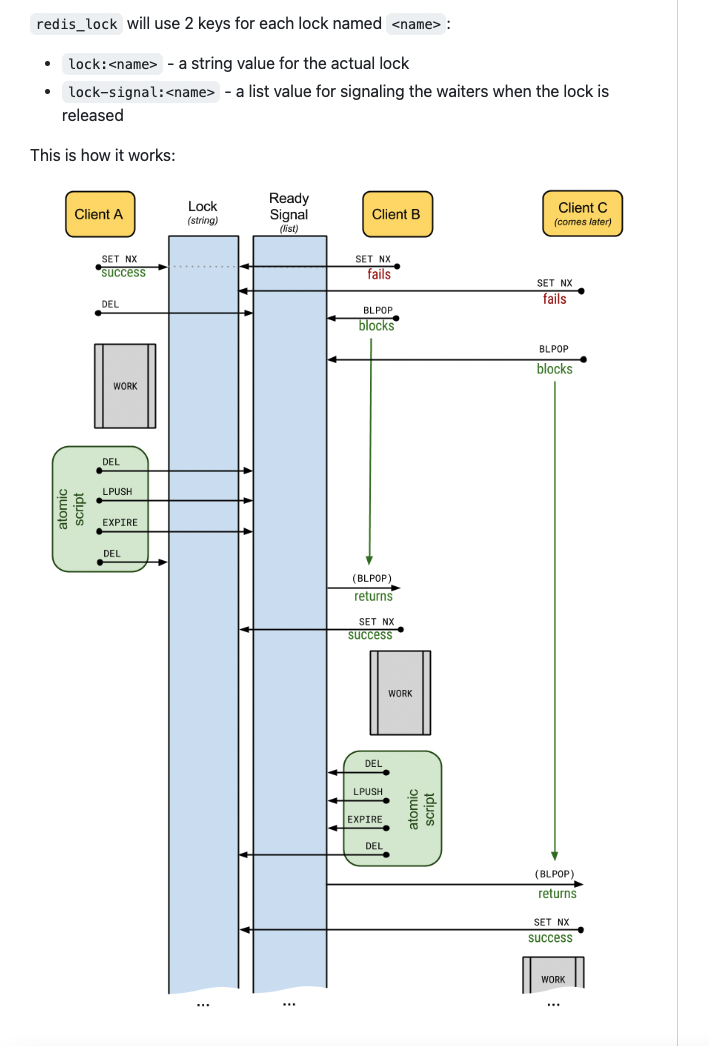
源码逻辑比较简明:
但是成功解决了上边提到的使用redis 作为分布式乐观锁的问题:
-
原子性问题:这里直接使用Lua脚本语言操作锁的核心逻辑
-
死锁问题:这里使用过期时间解决了死锁的问题
-
续租问题:预留了续租的接口参数,当我们指定需要续租的时候,会开启守护进程来监控过期时间
但是如果由于业务代码异常导致一直续租,也会导致死锁问题,斟酌使用
-
锁唯一性问题:redis 中使用key 作为锁的name, value 作为锁的唯一id, 当客户端操作锁的时候,如果不显示的指定id,会默认生成一个唯一id
但是当在分布式线程中获取锁的时候,最好自己指定id, 然后在释放锁的时候带上id
简单使用demo
import time from redis import Redis conn = Redis(host='localhost', port=6379, db=15, password='IyY1NA3Zre76542M') import redis_lock import uuid lock_id = str(uuid.uuid4()) lock = redis_lock.Lock(conn, "name-of-the-lock", expire=3, id=lock_id, auto_renewal=True) if lock.acquire(blocking=True): while True: print("Got the lock.") print("busy...") # 获取锁后,模拟耗时业务,这个时候该锁应该被续租 time.sleep(10) break print("release the lock") lock.release() else: print("Someone else has the lock.")- 1
- 2
- 3
- 4
- 5
- 6
- 7
- 8
- 9
- 10
- 11
- 12
- 13
- 14
- 15
- 16
- 17
- 18
- 19
- 20
- 21
使用redis 分布式锁解决库存并发问题
from redis import Redis import redis_lock import uuid import time conn = Redis(host='localhost', port=6379, db=15, password='IyY1NA3Zre76542M') def sell3(user): goods_list = [(1, 10), (2, 20), (3, 30)] with db.atomic() as txn: for goods_id, num in goods_list: lock_id = str(uuid.uuid4()) lock = redis_lock.Lock(conn, "buy-goods-lock", expire=3, id=lock_id, auto_renewal=True) lock.acquire() goods_inv = Inventory.get(Inventory.goods == goods_id) time.sleep(5) if goods_inv.stocks < num: print(f"商品:{goods_id} 库存不足") txn.rollback() break else: query = Inventory.update(stocks=Inventory.stocks - num).where(Inventory.goods == goods_id) ok = query.execute() if ok: print(f"{user}购买商品{goods_id} 售出 {num}件") else: print(f"{user}购买商品失败") lock.release() if __name__ == "__main__": t1 = threading.Thread(target=sell3, args=("用户1", )) t2 = threading.Thread(target=sell3, args=("用户2", )) t1.start() t2.start() t1.join() t2.join()- 1
- 2
- 3
- 4
- 5
- 6
- 7
- 8
- 9
- 10
- 11
- 12
- 13
- 14
- 15
- 16
- 17
- 18
- 19
- 20
- 21
- 22
- 23
- 24
- 25
- 26
- 27
- 28
- 29
- 30
- 31
- 32
- 33
- 34
- 35
- 36
- 37
-
相关阅读:
Spring boot 通过 wkhtmltopdf 实现URL转PDF
【机器学习】无监督学习:探索数据背后的隐藏模式
python爱心代码高级
系统编程 day11 信号量 (我也不知道是什么东西,不好解释 )(和之前的信号有一些不同 (函数), 但是也有一些操作相同 ,比如说 p v 操作 , )
阿里最新分享的《多线程核心技术第三版》神书就此霸榜GitHub,3天点击量已破百万
搭建Android自动化python+appium环境
Java入门基础知识
spark集成hive
C语言学习笔记(四)
Zookeeper集群Leader选举源码剖析
- 原文地址:https://blog.csdn.net/qq_42586468/article/details/126317336
