-
C++--list的使用和模拟实现
前言
今天我们学的是C++的STL容器中的list,是一个双向的带头的链表,在任意位置的插入和删除的时间复杂度为O(1),今天我们首先结合C++中list文档了解关于list容器的函数接口来实现链表的增删查改等内容,到文章最后我们自己也来模拟实现list容器。
正文开始一、list的介绍及使用
1.1 list的介绍
- list是可以在常数范围内在任意位置进行插入和删除的序列式容器,并且该容器可以前后双向迭代。
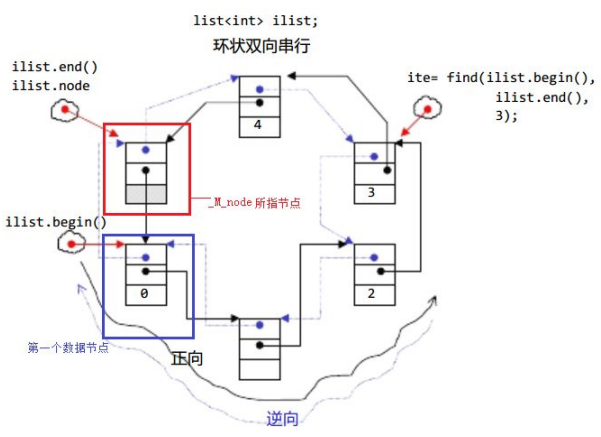
- list的底层是双向链表结构,双向链表中每个元素存储在互不相关的独立节点中,在节点中通过指针指向
其前一个元素和后一个元素。 - list与forward_list非常相似:最主要的不同在于forward_list是单链表,只能朝前迭代,已让其更简单高
效。(forward后面在了解,就是一个单链表) - 与其他的序列式容器相比(array,vector,deque),list通常在任意位置进行插入、移除元素的执行效率
更好。 - 与其他序列式容器相比,list和forward_list最大的缺陷是不支持任意位置的随机访问,比如:要访问list
的第6个元素,必须从已知的位置(比如头部或者尾部)迭代到该位置,在这段位置上迭代需要线性的时间
开销;list还需要一些额外的空间,以保存每个节点的相关联信息(对于存储类型较小元素的大list来说这
可能是一个重要的因素)
1.2 list的使用
list中的接口比较多,此处类似,只需要掌握如何正确的使用,然后再去深入研究背后的原理,已达到可扩展
的能力。以下为list中一些常见的重要接口1.2.1 list的构造
构造函数( (constructor)) 接口说明 list() 构造空的list list (size_type n, const value_type& val = value_type()) 构造的list中包含n个值为val的元素 list (const list& x) 拷贝构造函数 list (InputIterator first, InputIterator last) 用[first, last) 区间中的元素构造list // constructing lists #include#include - 1
- 2
- 3
- 4
- 5
- 6
- 7
- 8
- 9
- 10
- 11
- 12
- 13
- 14
- 15
- 16
- 17
- 18
- 19
- 20
- 21
- 22
- 23
- 24

其他list的对象也可以按照这个方法打印1.2.2 list iterator的使用
函数声明 接口说明 begin + end 返回第一个元素的迭代器+返回最后一个元素下一个位置的迭代器 rbegin + rend 返回第一个元素的reverse_iterator,即end位置,返回最后一个元素下一个位置的reverse_iterator,即begin位置 
【注意】
- begin与end为正向迭代器,对迭代器执行++操作,迭代器向后移动
- rbegin(end)与rend(begin)为反向迭代器,对迭代器执行++操作,迭代器向前移动

1.2.3 list capacity
函数声明 接口说明 empty 检测list是否为空,是返回true,否则返回false size 返回list中有效节点的个数 1.2.4 list element access
函数声明 接口说明 front 返回list的第一个节点中值的引用 back 返回list的最后一个节点中值的引用 1.2.5 list modifiers
函数声明 接口说明 push_front 在list首元素前插入值为val的元素 pop_front 删除list中第一个元素 push_back 在list尾部插入值为val的元素 pop_back 删除list中最后一个元素 insert 在list position 位置中插入值为val的元素 erase 删除list position位置的元素 swap 交换两个list中的元素 clear 清空list中的有效元素 #include- 1
- 2
- 3
- 4
- 5
- 6
- 7
- 8
- 9
- 10
- 11
- 12
- 13
- 14
- 15
- 16
- 17
- 18
- 19
- 20
- 21
- 22
- 23
- 24
- 25
- 26
- 27
- 28
- 29
- 30
- 31
- 32
- 33
- 34
- 35
- 36
- 37
- 38
- 39
- 40
- 41
- 42
- 43
- 44
- 45
- 46
- 47
- 48
- 49
- 50
- 51
- 52
- 53
- 54
- 55
- 56
- 57
- 58
- 59
- 60
- 61
- 62
- 63
- 64
- 65
- 66
- 67
- 68
- 69
- 70
- 71


list中还有一些操作,需要用到时大家可参阅list的文档说明1.2.6 list的迭代器失效
前面说过,此处大家可将迭代器暂时理解成类似于指针,迭代器失效即迭代器所指向的节点的无效,即该节
点被删除了。因为list的底层结构为带头结点的双向循环链表,因此在list中进行插入时是不会导致list的迭代
器失效的,只有在删除时才会失效,并且失效的只是指向被删除节点的迭代器,其他迭代器不会受到影响。void TestListIterator1() { int array[] = { 1, 2, 3, 4, 5, 6, 7, 8, 9, 0 }; list<int> l(array, array + sizeof(array) / sizeof(array[0])); auto it = l.begin(); while (it != l.end()) { // erase()函数执行后,it所指向的节点已被删除,因此it无效,在下一次使用it时,必须先给其赋值 l.erase(it); ++it; } } // 改正 void TestListIterator() { int array[] = { 1, 2, 3, 4, 5, 6, 7, 8, 9, 0 }; list<int> l(array, array + sizeof(array) / sizeof(array[0])); auto it = l.begin(); while (it != l.end()) { l.erase(it++); // it = l.erase(it); } }- 1
- 2
- 3
- 4
- 5
- 6
- 7
- 8
- 9
- 10
- 11
- 12
- 13
- 14
- 15
- 16
- 17
- 18
- 19
- 20
- 21
- 22
- 23
二、list的模拟实现
2.1 模拟实现list
要模拟实现list,必须要熟悉list的底层结构以及其接口的含义,通过上面的学习,这些内容已基本掌握,现
在我们来模拟实现list。namespace rose { template<class T> struct _list_node { T _val; _list_node<T>* _prev; _list_node<T>* _next; _list_node(const T& val=T()) :_val(val) ,_prev(nullptr) , _next(nullptr) {} }; //原生指针(节点指针),已经无法完成迭代器的功能 //list::iterator ->Node* //通过两个模板参数控制 template<class T,class Ref,class Ptr> struct _list_iterator //_list_iterator去封装Node*,重载这个类的operator*,++等运算符,去模拟像指针一样的访问行为 { //节点的指针原生行为不满足迭代器定义 //这里迭代器通过类去封装节点的指针,重载运算符来控制 typedef _list_node<T> node; typedef _list_iterator<T, Ref, Ptr> self; node* _pnode; _list_iterator(node* pnode) :_pnode(pnode) {} //拷贝构造,operator=,析构我们不写,编译器默认生成就可以用 Ref operator*() { return _pnode->_val; } //这里本来应该是两个->,第一个是it->去调用重载的operator->返回T*的指针,第一个箭头去T*的指针去,访问对象中的成员 //但是两个箭头,程序的可读性很差,所以编译器做了特殊的识别处理,为了可读性,省略了一个箭头 Ptr operator->() { return &(_pnode->_val); } bool operator!=(const self& s)const { return _pnode != s._pnode; } bool operator==(const self& s)const { return _pnode == s._pnode; } //it++ -> it.operator(&it); self& operator++() { _pnode = _pnode->_next; return *this; } self& operator--() { _pnode = _pnode->_prev; return *this; } //it++ -> it.operator(&it,0); self operator++(int) { self tmp(*this); _pnode = _pnode->_next; return tmp; } self operator--(int) { self tmp(*this); _pnode = _pnode->_prev; return tmp; } }; //有了这样的方式,不关心容器底层结构到底是数组,链表,树形结构等等,封装隐藏了底层的细节 //让我们可以用简单统一的方式去访问修改容器,这个也就是迭代器真正的价值 template<class T> class list { typedef _list_node<T> node; public: typedef _list_iterator<T,T&,T*> iterator; typedef _list_iterator<T,const T&,const T*> const_iterator; //只能读不能写,如何控制_list_iterator中如何控制写呢? //typedef _list_const_iteratorconst_iterator; iterator begin() { return iterator(_head->_next); } const_iterator begin()const { return const_iterator(_head->_next); } iterator end() { return iterator(_head); } const_iterator end()const { return const_iterator(_head); } list() { //_head = new node(T()); _head = new node; _head->_next = _head; _head->_prev = _head; } list(const list<T>& lt) { _head = new node; _head->_next = _head; _head->_prev = _head; for (const auto& e : lt) { push_back(e); } } //list& operator=(const list //{ // if (this != <) // { // clear(); // for (const auto& e : lt) // { // push_back(e); // } // } // return *this; //} list<T>& operator=(list<T> lt) { swap(_head, lt._head); return *this; } ~list() { clear(); delete _head; _head = nullptr; } void clear() { iterator it = begin(); while (it != end()) { //it=erase(it); erase(it++); } } void push_back(const T& x) { //node* newnode=new node(x); //node* tail = _head->_prev; //tail->_next = newnode; head tail newnode //newnode->_prev = tail; //newnode->_next = _head; //_head->_prev = newnode; insert(end(), x); } void push_front(const T& x) { insert(begin(), x); } void pop_front() { erase(begin()); } void pop_back() { assert(_head->next != _head); /*node* tail = _head->_prev; node* prev = tail->_prev; prev->_next = _head; _head->_prev = prev; delete tail;*/ erase(--end()); } void insert(iterator pos,const T& x) { node* cur = pos._pnode; node* prev = cur->_prev; node* newnode = new node(x); prev->_next = newnode; newnode->_prev = prev; newnode->_next = cur; cur->_prev = newnode; } iterator erase(iterator pos) { assert(pos._pnode); assert(pos!=end()); node* cur = pos._pnode; node* prev = cur->_prev; prev->_next = cur->_next; cur->_next->_prev = prev; delete cur; return (iterator)prev->_next; } bool empty() { return begin() == end(); } size_t size() { size_t sz = 0; iterator it = begin(); while (it != end()) { sz++; it++; } return sz; } private: node* _head; };& lt) - 1
- 2
- 3
- 4
- 5
- 6
- 7
- 8
- 9
- 10
- 11
- 12
- 13
- 14
- 15
- 16
- 17
- 18
- 19
- 20
- 21
- 22
- 23
- 24
- 25
- 26
- 27
- 28
- 29
- 30
- 31
- 32
- 33
- 34
- 35
- 36
- 37
- 38
- 39
- 40
- 41
- 42
- 43
- 44
- 45
- 46
- 47
- 48
- 49
- 50
- 51
- 52
- 53
- 54
- 55
- 56
- 57
- 58
- 59
- 60
- 61
- 62
- 63
- 64
- 65
- 66
- 67
- 68
- 69
- 70
- 71
- 72
- 73
- 74
- 75
- 76
- 77
- 78
- 79
- 80
- 81
- 82
- 83
- 84
- 85
- 86
- 87
- 88
- 89
- 90
- 91
- 92
- 93
- 94
- 95
- 96
- 97
- 98
- 99
- 100
- 101
- 102
- 103
- 104
- 105
- 106
- 107
- 108
- 109
- 110
- 111
- 112
- 113
- 114
- 115
- 116
- 117
- 118
- 119
- 120
- 121
- 122
- 123
- 124
- 125
- 126
- 127
- 128
- 129
- 130
- 131
- 132
- 133
- 134
- 135
- 136
- 137
- 138
- 139
- 140
- 141
- 142
- 143
- 144
- 145
- 146
- 147
- 148
- 149
- 150
- 151
- 152
- 153
- 154
- 155
- 156
- 157
- 158
- 159
- 160
- 161
- 162
- 163
- 164
- 165
- 166
- 167
- 168
- 169
- 170
- 171
- 172
- 173
- 174
- 175
- 176
- 177
- 178
- 179
- 180
- 181
- 182
- 183
- 184
- 185
- 186
- 187
- 188
- 189
- 190
- 191
- 192
- 193
- 194
- 195
- 196
- 197
- 198
- 199
- 200
- 201
- 202
- 203
- 204
- 205
- 206
- 207
- 208
- 209
- 210
- 211
- 212
- 213
- 214
- 215
- 216
- 217
- 218
- 219
- 220
- 221
- 222
- 223
- 224
- 225
2.2对模拟的rose::list进行测试
void PrintList(const list<int>& lt) { list<int>::const_iterator it = lt.begin(); while (it != lt.end()) { cout << *it << " "; it++; } cout << endl; } class Date { public: int _year = 0; int _month = 1; int _day = 1; }; void test_list1() { list<int> lt; lt.push_back(1); lt.push_back(2); lt.push_back(3); lt.push_back(4); list<int>::iterator it = lt.begin(); while (it != lt.end()) { cout << *it << " "; it++; } cout << endl; PrintList(lt); } void test_list2() { list<Date> lt; lt.push_back(Date()); lt.push_back(Date()); lt.push_back(Date()); lt.push_back(Date()); list<Date>::iterator it = lt.begin(); while (it!=lt.end()) { cout << it->_year << " " << it->_month << " " << it->_day << " " << endl;; it++; } } void test_list3() { list<int> lt; lt.push_back(1); lt.push_back(2); lt.push_back(3); lt.push_back(4); lt.clear(); }- 1
- 2
- 3
- 4
- 5
- 6
- 7
- 8
- 9
- 10
- 11
- 12
- 13
- 14
- 15
- 16
- 17
- 18
- 19
- 20
- 21
- 22
- 23
- 24
- 25
- 26
- 27
- 28
- 29
- 30
- 31
- 32
- 33
- 34
- 35
- 36
- 37
- 38
- 39
- 40
- 41
- 42
- 43
- 44
- 45
- 46
- 47
- 48
- 49
- 50
- 51
- 52
- 53
- 54
- 55
- 56
- 57
- 58
- 59
- 60
三、list与vector的对比
vector与list都是STL中非常重要的序列式容器,由于两个容器的底层结构不同,导致其特性以及应用场景不
同,其主要不同如下:使用 vector list 底层结构 动态顺序表,一段连续空间 带头结点的双向循环链表 随机访问 支持随机访问,访问某个元素效率O(1) 不支持随机访问,访问某个元素效率O(N) 插入和删除 任意位置插入和删除效率低,需要搬移元素,时间复杂度为O(N),插入时有可能需要增容,增容:开辟新空间,拷贝元素,释放旧空间,导致效率更低 任意位置插入和删除效率高,不需要搬移元素,时间复杂度为O(1) 空间利用率 底层为连续空间,不容易造成内存碎片,空间利用率高,缓存利用率高 底层节点动态开辟,小节点容易造成内存碎片,空间利用率低,缓存利用率低 迭代器 原生态指针 对原生态指针(节点指针)进行封装 迭代器失效 在插入元素时,要给所有的迭代器重新赋值,因为插入元素有可能会导致重新扩容,致使原来迭代器失效,删除时,当前迭代器需要重新赋值否则会失效 插入元素不会导致迭代器失效,删除元素时,只会导致当前迭代器失效,其他迭代器不受影响 使用场景 需要高效存储,支持随机访问,不关心插入删除效率 大量插入和删除操作,不关心随机访问
总结
例如:以上就是今天要讲的内容,本文仅仅简单介绍了list的使用和模拟实现,最后我们还将list和vector两个重要的容器进行了对比。文章主要的一部分迭代器失效需要大家多多注意一些细节就好了,今天就到这里啦!
-
相关阅读:
maven 本地jar打包到镜像仓库
标签类目体系(面向业务的数据资产设计方法论)-读书笔记6
Oracle之删除数据之后如何恢复的方法
四十年编程感悟
linux 文件系统命令
保姆级Ubuntu从下载到正常使用,遇到各种问题解决方案。
车载网关通信能力解析——SV900-5G车载网关推荐
「随笔」前端面试 | 2022年前端面试基础必备
【MySQL】MySQL的安装
Spring Boot进阶(94):从入门到精通:Spring Boot和Prometheus监控系统的完美结合
- 原文地址:https://blog.csdn.net/m0_61560468/article/details/126305346
